Lip Cancer: Causes, Symptoms, Diagnosis, and Treatment
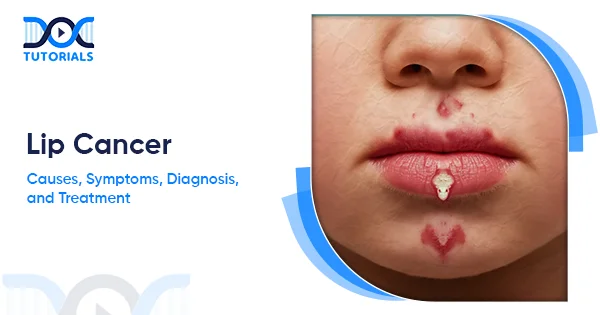
Lip cancer is one of the most common types of cancer found in the mouth. It develops when these cells, called squamous cells, cover the outer part of the lips and begin to multiply abnormally.
Generally, lip cancer appears just like other cancers of the oral cavity, i.e., arising from the cells of the lining of the lips, tongue, cheeks, and throat. It may call for interventions like surgery, radiation therapy, and chemotherapy. With a frequency of 0.5 cases per 100,000 individuals per year, preventive measures and early diagnosis play a significant role.
In this article, we will explore the causes, early symptoms, diagnostic methods, and the most effective treatment options available for lip cancer. Read on for a comprehensive analysis.
What is Lip Cancer?
Lip cancer is a kind of oral cancer that comes from the squamous cells of the lips and is most commonly related to smoking, heavy alcohol use, and sun exposure. The cancer is highly curable if it is caught at an early stage, usually by a dentist.
Lip cancer develops when the cells in the lips become abnormal and start to multiply rapidly, eventually forming sores or tumours. Basically, it is a cancer of the oral cavity. The cancer develops in the cells that make up a single layer of the cells that form the:
- Lips
- Mouth
- Tongue
- Cheeks
- Sinuses
- Throat
- Hard and soft palates
Lip cancer, like many other oral cancers, falls under the broader group of head and neck cancers.
Dentists often identify the earliest signs of lip cancer during routine checkups, spotting subtle changes that may otherwise go unnoticed. The positive side is that lip cancer has an excellent prognosis when detected at an early stage, making timely evaluation incredibly important.
What are the Causes of Lip Cancer?
The primary causes include UV radiation from the sun or tanning beds and tobacco use. The risk is significantly heightened by heavy alcohol use and a history of infections like HIV/HPV or use of immunosuppressive drugs.
As with most cancers, lip cancer develops due to multiple factors. However, several causes are pointed out that increase the chance of lip cancer:
- UV (ultraviolet) radiation from the sun or tanning beds
- Tobacco use
- Heavy alcohol use (especially in combination with tobacco use)
- History of human immunodeficiency virus (HIV) or human papillomavirus (HPV) infections
- History of immunosuppressive medications (such as those used after organ transplant)
What are the Risk Factors of Lip Cancer?
Key risk factors are tobacco use and heavy alcohol consumption, which synergistically increase risk. Other factors include excessive sun exposure, having fair skin, being over 40 (especially males), and having a weakened immune system.
Several risk factors contribute to the development of lip cancer. They are as follows:
- Smoking: This refers to the smoking of cigarettes, cigars or pipes, and the use of snuff and chewing tobacco. Most lip cancer cases are related to smoking.
- Heavy Alcohol Consumption: The risk of lip cancer may be 30 times higher if you are a smoker who also drinks heavily.
- Too Much Sun Exposure: This also refers to the use of artificial tanning lamps or tanning beds.
- Having Fair Skin: People with fair skin and light features are at the highest risk.
- Being Over 40: Most people get lip cancer when they are in their 50s and 60s.
- Gender: Men are up to three times more likely to develop lip cancer than women.
- Weakened immune system.
What are the Symptoms of Lip Cancer?
Symptoms often resemble benign issues but persist for weeks, most notably a persistent sore or blister that doesn’t heal within two weeks and bleeds easily. Other signs include a discoloured patch (reddish, grey, or dark brown), swelling, a growth on the neck, or pain/numbness in the mouth.
Lip cancer symptoms can be easily mistaken for common lip problems such as cold sores or mouth ulcers. However, if these symptoms last for more than a couple of weeks, you should definitely see a doctor.
Some of the most frequent lip cancer symptoms are:
- A continuously recurring sore, lesion, or blister on the lip that bleeds easily and does not heal within two weeks.
- A little coloured patch (usually white or reddish in colour on light skin, or dark brown or grey on dark skin).
- Swelling of the jaw.
- A lump on the neck.
- Loose teeth.
- Non-stop bleeding, pain, numbness, or tingling of the lips or mouth.
The presence of sores or lumps on your lips does not necessarily mean that you have lip cancer. If you see any of these symptoms, talk to your dentist or doctor about them.
What is the Diagnosis of Lip Cancer?
Diagnosis starts with a physical examination by a doctor or dentist, who checks the lips, mouth, and neck. If suspicion remains, a biopsy is performed to confirm the presence of cancer cells. If confirmed, tests like CT, MRI, or PET scans determine the stage and spread.
If you experience signs or symptoms of lip cancer, visiting a doctor is the right thing to do. They will conduct a physical examination of your lips and other areas of your mouth to look for any abnormal or potentially cancerous regions.
To examine the inside of your lips, your doctor will use a gloved finger and will inspect them using mirrors and lights. If there are swollen lymph nodes, the doctor might also check your neck. Additionally, your doctor would like to know about your:
- Health history
- Smoking and drinking history
- Previous illnesses
- Medical and dental treatments
- Family history of diseases
- Any medications you are taking
If lip cancer is a possibility, a biopsy is the way to go for a definite answer. A biopsy sample is a small portion of the affected area taken out. A pathologist then examines that sample under a microscope in a laboratory.
Upon confirmation of lip cancer through biopsy, your doctor may then perform many other tests to determine how far the cancer has progressed, or if it’s spread to other parts of the body. The list of tests may be:
- CT (computed tomography) scan.
- MRI (magnetic resonance imaging).
- PET (positron emission tomography) scan.
- Chest X-ray.
- Complete blood count (CBC).
- Endoscopy.
What is the Treatment for Lip Cancer?
Treatment depends on the tumour size and stage. Surgery to remove the lesion is typical, often paired with radiation therapy to kill remaining cells. For advanced cases, systemic treatments like chemotherapy, targeted therapy, or immunotherapy may be used, sometimes for palliative care.
The most effective treatment for you greatly depends on the size of the tumour or lesion and the stage of the cancer.
Usually, doctors can manage precancerous lip cancer (a condition where abnormal lesions have a chance to become malignant) and lip cancer at its early stage with the aid of surgery only. If your situation is complicated, then a mixture of treatments may be required.
Some methods to treat lip cancer are:
- Surgery: With surgery, your doctor removes the parts that contain the lesion or tumour and then mends your lip. In addition, they might take out lymph nodes from your neck if they are sure that the cancer has moved there.
- Radiation Therapy: Radiation is used to eradicate cancer cells. The hospital can suggest either external beam radiation therapy (EBRT) or brachytherapy (internal radiation therapy).
- Chemotherapy: This approach uses powerful medications to destroy cancer cells and, in some cases, may be paired with radiation therapy for better results. If the cancer has advanced and other treatment options are limited, chemotherapy may be recommended to help manage discomfort as part of palliative care.
- Targeted Therapy: This treatment focuses on cancer cells’ genes and proteins and thus destroys them. Usually, people with lip cancer obtain it along with chemo.
- Immunotherapy: These drug treatments boost your body’s immune system and help it fight off cancer cells. In most cases, when the cancer has spread and other treatments are not viable options, lip cancer patients are given immunotherapy.
What is the Prevention for Lip Cancer?
Prevention focuses on protecting the lips from sun exposure using SPF 30+ balm and hats, avoiding all tobacco products, and limiting alcohol intake. Regular dental checkups and promptly examining any sore that lasts longer than 2 weeks are also critical preventive measures.
Even though you can’t stop the development of stress-induced lip cancer in all cases, you can take some measures to tone down your risk:
- Safeguard your lips against the sun. Use lip balm with SPF 30+, reapply often, wear a wide-brimmed hat, and limit your time in the intense midday sun.
- Cut back on your alcohol intake, and do not mix smoking with drinking, as this increases your risk even more.
- See your dentist regularly and check your lips yourself. Any sore or change that lasts more than 2 weeks should be examined immediately.
- If you have precancerous lip conditions, such as actinic cheilitis, follow your physician’s advice regarding therapy and checkups.
- Maintain good oral hygiene, eat nutritious food, and avoid chronic irritation from factors such as ill-fitting dentures or chewing tobacco.
FAQs about Lip Cancer
- At what age is lip cancer most common?
Lip cancer is most frequent in people with light skin and men who smoke pipes, especially those aged between 50 and 70 years. In the United States, lip cancer is the cause of around 0.6% of all malignant tumours; the majority of these are ulcerative or erosive lesions that affect one side of the vermilion border.
- What could be mistaken for lip cancer?
The primary sign of lip cancer we most commonly see is an ulcer or sore that doesn’t heal. Typical viral ulcers typically resolve within a couple of weeks. Early lip cancer can be indistinguishable from a cold sore, but cold sores eventually heal.
- Where is lip cancer located?
It can be anywhere along the upper or lower lip; however, lip cancer is most commonly found on the lower lip. Lip cancer is counted as one of the oral (mouth) cancers.
The majority of lip cancers are squamous cell carcinomas, i.e., they arise in the thin, flat cells of the middle and outer layers of the skin (squamous cells).
- Can a dermatologist diagnose lip cancer?
In most instances, your dermatologist can detect signs of lip cancer visually during a routine skin examination. If a concerning spot is found, your dermatologist will often perform a biopsy by removing a small sample of skin from the affected area.
- What colour is lip cancer?
It may sometimes resemble scar tissue. For instance, in those with light skin, it may take on a reddish colour. In those with darker skin, the area might appear grey or dark brown. New lip cancer lesions can also look similar to cold sores.
Conclusion
Recognising the early signs of lip cancer can make a significant difference in timely diagnosis and treatment. Although it most commonly affects older males with lighter skin tones, lip cancer can develop in anyone, making awareness essential. Ultimately, staying alert to changes and prioritising oral health play a crucial role in safeguarding long-term well-being.
To understand more such complex NEET PG concepts, DocTutorials can be your study partner. We offer crisp videos, clinical Qbank, exam-focused notes, flashcards, and mindmaps, ensuring aspirants gain complete clarity over these concepts.
Join DocTutorials today and explore our NEET PG course to excel in your medical career!


Latest Blogs
-

INI CET Exam 2026: Your Roadmap to Success – Key Topics, Strategies, and Lessons from Last Year’s Papers
The INI CET exam is more than just a test; it’s a significant milestone for many medical students aiming to…
-

INI CET Exam Success: Previous Year Question Papers & Ultimate Guide – INI CET PYQ
One can feel overwhelmed while preparing for the INI CET (Institute of National Importance Combined Entrance Test). A vast syllabus,…
-

NEET PG 2026 Preparation with Live Power Pack: Your Path to Success in 2026
Preparing for the NEET PG 2026 can be an overwhelming journey because of its vast syllabus and the pressure to…
Our Courses
Our Offline Centers

Scan and download the app

OR