Emergency Medicine: Components, Course Types & More
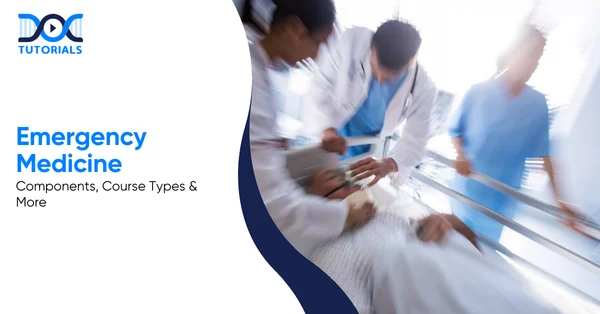
Emergency medicine refers to a medical speciality that is dedicated to the diagnosis and treatment of unforeseen medical conditions/illnesses. It plays a vital role in providing time-sensitive intervention in cases of trauma, respiratory failures, strokes, cardiac arrests, etc., thus constituting a critical branch of healthcare.
For medical students and healthcare professionals who desire to expand their skill set and career prospects, emergency medicine can be a viable choice.
Check out the course types, eligibility criteria, course duration, and other details regarding emergency medicine to make an informed decision!
What are the Roles and Components of Emergency Medicine?
Emergency medicine involves dealing with critical care patients, performing urgency assessment, determining the care order based on the patient’s condition, administering resuscitation techniques like CPR, ALS, and ED Thoracotomy, etc.
Emergency medicine is a speciality in which doctors must make split-second decisions for critically ill patients. They may need to decide whether an individual requires basic care, hospital admission, surgery, or transfer to a specialised centre.
Emergency medicine professionals also handle a wide range of cases, from snake bites to heart attacks, requiring in-depth diagnosis and critical care skills.
The key components of emergency medicine are as follows:
- Triage
This is the initial step in sorting patients by condition severity to determine the care order. Triage generally involves the following steps:
- Urgency Assessment: Assigning patients to different categories (non-urgent, urgent, or immediate) based on their care needs. This step involves quickly assessing the patient’s condition, gathering key information, and performing physical examinations.
- Dynamic Decision Making: Modifying care-related decisions as new data comes forward during the patient’s evaluation.
- Resource Allocation: Ensuring that the hospital’s resources (equipment, rooms, and staff) are properly utilised to meet patient care needs.
- Resuscitation
Resuscitation involves rapid intervention to stabilise critically ill patients. It may include the following:
- Cardiopulmonary Resuscitation (CPR): Rescue breaths, airway management, and chest compressions are crucial for managing cardiac arrest patients.
- Advanced Life Support (ALS): Includes defibrillation, advanced airway management, and drug administration.
- Intraosseous Line Placement: Intraosseous lines enable rapid drug delivery when intravenous access is challenging.
- ED Thoracotomy: Emergency department thoracotomy may become crucial in critical cases (e.g., trauma).
What are the Types of Emergency Medicine Courses?
The different types of available emergency medicine courses are Certificate Course in Emergency Medicine, Diploma Course in Emergency Medicine, MD in Emergency Medicine, Fellowship in Emergency Medicine, and Correspondence/Online Course in Emergency Medicine.
Various medical institutions in India offer a wide variety of emergency medicine courses. Check them out below:
- Certificate Course in Emergency Medicine
This short-term course provides essential knowledge and practical skills in emergency medicine and care. It is ideal for medical students who want to pursue a career in emergency medicine.
- Diploma Course in Emergency Medicine
It provides more in-depth knowledge regarding trauma management and patient stabilisation. The course often requires hospital-based training under the guidance of experienced practitioners and is suitable for paramedics or practising physicians.
- MD in Emergency Medicine
This is a three-year, curriculum-based, regular course recognised by the medical council, offering detailed, in-depth knowledge of emergency medicine and critical care. It is the highest formal degree in the field of emergency medicine.
- Fellowship in Emergency Medicine
This provides advanced training in emergency and critical care and is designed for practicing doctors who want to assume leadership roles in emergency management.
- Correspondence/Online Course in Emergency Medicine
Those who cannot enrol in a regular course can pursue correspondence/online education in emergency medicine to continue learning about emergency and critical care. This course does not provide hands-on training, but it will add theoretical value.
What are the Eligibility Criteria for Different Emergency Medicine Courses?
The eligibility criteria for emergency medicine courses depend on the selected programme. The basic criteria are 10+2 with a science background (physics, chemistry, biology) and an MBBS degree from a recognised university.
Check out the eligibility criteria for various emergency medicine courses in the table below:
| Type of Course in Emergency Medicine | Eligibility |
| Certificate Course | 10+2 with a science background (physics, chemistry, biology) |
| Diploma Course | 10+2 with a science background (physics, chemistry, biology) |
| MD in Emergency Medicine | Only MBBS graduates can enrol after clearing NEET PG |
| Fellowship | MBBS from a recognised university and a valid registration with the Medical Council of India |
| Correspondence/Online Course | General physicians, paramedics, and nurses. |
Note: The eligibility criteria will also vary based on the institution from which you are planning to pursue the emergency medicine course.
What is the Duration of the Emergency Medicine Course?
Generally, emergency medicine courses usually range from 6 months to 1 year. Fellowship and MD courses can have a longer duration compared to certificate and correspondence courses.
The following table shows the durations of various emergency medicine courses:
| Emergency Medicine Course Type | Duration |
| Certificate course | 6 months to 1 year |
| Diploma course | 1 year to 2 years |
| MD in Emergency Medicine | 3 years |
| Fellowship Programme | 1 year to 2 years |
| Correspondence/Online Course | 6 months to 1 year (flexible) |
What is the Course Fee Structure of Emergency Medicine Courses?
The cost of emergency medicine courses varies by course type, institution, and educational level. Generally, they start from ₹30,000 and can go up to ₹25 Lakh.
The cost for different courses in emergency medicine is as follows:
| Type of Course in Emergency Medicine | Course Fee |
| Certificate Course | ₹50,000 – ₹1,50,000 |
| Diploma Course | ₹1,00,000 – ₹3,00,000 |
| MD in Emergency Medicine | ₹10,00,000 – ₹25,00,000 |
| Fellowship | ₹1,50,000 – ₹4,00,000 |
| Correspondence/Online Course | ₹30,000 – ₹1,20,000 |
FAQs about Emergency Medicine
- Does emergency medicine need NEET PG qualification?
An MD in emergency medicine requires NEET PG qualification. Other specialised emergency medicine courses do not require NEET Pg, but they can have their own eligibility criteria that candidates need to adhere to.
- Do emergency medicine courses offer hands-on training?
Most courses offer practical training schedules to help participants become accustomed to trauma care, the emergency unit, the surgical unit, and other urgent medical situations. This helps them gain in-depth knowledge of clinical and radiological diagnostic procedures.
- What is the qualification for emergency medicine courses?
From the 10+2 level to an MBBS degree and NEET PG qualification, different courses require different academic qualifications.
- Which degree is the best for emergency medicine practice?
An MD in emergency medicine is the highest and best degree you can aspire to in the field. Qualified people receive recognition in any global emergency care unit and trauma care, and can attain leadership roles.
- Will emergency medicine help manage the side effects of drugs?
Yes, any side effect of a drug can be treated with emergency medicine specialists. They are well-experienced in trauma care and have in-depth knowledge of clinical diagnosis.
- What does an emergency medicine practitioner do?
Emergency medicine practitioners provide crucial care to patients in critical situations, including urgent, emergency, or preliminary care in the emergency or critical care unit. They also perform anaesthesia to make sure the patient is safe before surgery.
- What is the golden rule of emergency medicine?
The golden rule of emergency medicine is as follows:
- Prioritise and assess the situation and the victim.
- Call for help.
- Control bleeding.
- Treatment of shock.
- Be mindful of head and spinal injuries.
- Attend to burns.
- What are the 3 C’s of emergency care?
The 3 C’s of emergency or critical care are check, call, and care.
- What are the most common medical emergencies?
The most common medical emergencies are breathing difficulties, severe pain, someone collapsing, epileptic seizures, heart attacks, and strokes.
- Who should opt for emergency medical courses?
Medical graduates, doctors, paramedics, nurses, and allied health professionals can consider pursuing emergency medicine courses to upgrade their skill sets and explore new career opportunities.
Conclusion
Emergency medicine is a challenging, high-risk field where practitioners make split-second decisions to save the lives of critical care patients. In this regard, emergency medicine courses play a pivotal role in enhancing knowledge and clinical skills for aspirants pursuing a career in this field.
Need the proper guidance to learn more about emergency medicine or clear a related certification course?
Trust DocTutorials. Our expert faculty, crisp notes, animated video lectures, and mock tests help take your preparation to the next level.
Check out our courses today!

Latest Blogs
-

NEET SS Exam 2024: Analysis, Key Dates, Counselling
The NEET SS 2024 exam kicked off on March 29, 2025. Over two days and two slots, candidates across 13…
-

NEET SS 2025 Exam Date, Syllabus, Pattern, PYQs, and Cutoff Marks
The NEET Superspeciality [NEET SS] exam is a computer-based examination that is very important for medical graduates pursuing super-specialty courses…