How to Become a Dermatologist in India: Responsibilities and Career Path
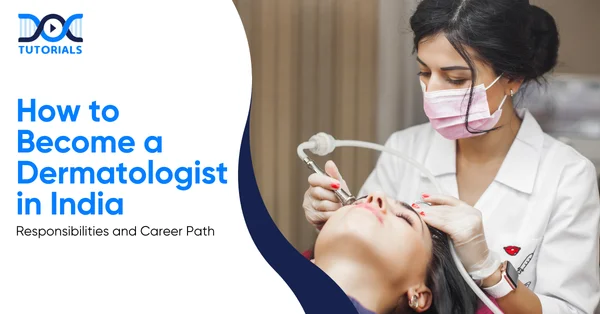
Dermatology has become one of the most popular fields in medicine in India. It presents a blend of clinical expertise, procedural skills, and rapidly growing skincare practices. As public awareness of skin health has become prominent, the role of a contemporary dermatologist is now crucial.
In this guide, we will explain how to become a dermatologist after 12th in India. Keep reading for a detailed insight.
Who are Dermatologists?
Dermatologists are medical professionals who deal with the treatment of skin, hair, and nails. They also diagnose and prevent medical as well as cosmetic skin conditions. Their skills are useful in protecting the largest organ of the human body.
Dermatologists refer to medical doctors who focus on the diagnosis, treatment, and prevention of skin, nail, as well as hair diseases. They look after the largest organ in the human body, which plays a critical role in protecting and regulating body temperature, among other functions.
The medical conditions that they handle include infections, as well as skin cancer, whereas the cosmetic conditions include hair loss and scars, among others.
What are the Responsibilities of a Dermatologist?
Dermatologists focus on diagnosing and treating skin, hair, and nail disorders. They detect any skin characteristics that may indicate internal conditions. In addition, they protect skin health as well as well-being through various medical, surgical, and cosmetic interventions.
A dermatologist plays a crucial role in diagnosing the underlying causes of skin problems and providing appropriate treatments. In addition to addressing skin conditions, they also recognise skin symptoms that may signal serious internal health issues, such as organ disease or failure.
They often carry out specialised procedures to identify skin-related problems. Their treatment options include:
- Injected medications for external application
- Ultraviolet (UV) light therapy is aimed at specific skin conditions
- Chemical peels
- Sclerotherapy
- Laser therapies
- Dermabrasion
- Medications that are either injected or applied externally
- UV light therapy
- A variety of dermatologic surgical interventions, including mole excisions and skin biopsies
Steps to Become a Dermatologist in India
Being a dermatologist in India is a highly competitive field that requires years of medical education, training, and skill development. Right from treating various medical skin disorders to performing cosmetic surgery, dermatology offers a range of career options and excellent growth prospects.
To become a dermatologist, there is a systematic process that must be followed strictly, from education at the school level to postgraduate specialisation.
Here’s how to become a dermatologist in India:
- Step 1: Complete 10+2 with Science (PCB)
The process starts after Class 10, when the Science stream with subjects such as Physics, Chemistry, and Biology (PCB) must be opted for in Classes 11 and 12.
It is crucial to be strong in subjects like biology and chemistry, which are the backbone of studying medicine. It is important to pass the minimum qualifying criteria in order to take the entrance tests to get into medical colleges.
- Step 2: Qualify for the NEET UG Examination
After the 12th class, one needs to qualify for the National Eligibility cum Entrance Test (NEET-UG), which is a requirement to hold an MBBS course in India.
Preparing for this examination requires proficiency in Physics, Chemistry, and Biology. Having high scores in these subjects is vital for admission to a prestigious medical college.
- Step 3: Complete MBBS Degree
Once NEET UG is cleared, students enrol in the MBBS programme, which lasts 5.5 years, including 4.5 years of academic study and 1 year of compulsory rotating internship. During MBBS, they gain comprehensive knowledge of human anatomy, physiology, pathology, pharmacology, medicine, and surgery.
In the course of an internship, clinical postings offer early exposure to dermatology departments, helping students understand real-world patient care.
- Step 4: Prepare for and Clear NEET PG
After completing MBBS, aspiring dermatologists must appear for NEET-PG to pursue postgraduate programs. NEET-PG tests the aspirants in Pre-clinical, Para-clinical, and Clinical disciplines.
As dermatology is a highly competitive stream, it is essential to secure a good rank to get into a top college and secure a seat in MD Dermatology.
- Step 5: Dermatology MD or Diploma in Dermatology
Based on the rank obtained in NEET-PG, the candidate can go for postgraduate education in dermatology.
Currently, the most popular course among candidates is MD Dermatology, Venereology, and Leprosy, a three-year course offering an advanced learning experience in medical dermatology, dermatosurgery, venereology, and cosmetic procedures.
Even though MD offers better career growth, academic opportunities, and specialisation prospects, some candidates opt for a two-year course to pursue the Diploma in Dermatology (DDVL).
- Step 6: Acquire Hands-On Clinical and Procedural Expertise
During postgraduate training, residents develop skills in diagnosing and performing procedures. These encompass managing cases of skin diseases, performing biopsies, handling cases of sexually transmitted diseases (STDs), and hands-on experience with lasers and basic cosmetic surgery procedures.
- Step 7: Opt for Super Specialisation or Fellowship Programme (Optional)
After the MD Dermatology course, many dermatologists pursue fellowship programmes or further training for specialisation. Fellowships in Cosmetic Dermatology, Dermatosurgery, Lasers and Aesthetic Medicine, Dermatopathology, Paediatric Dermatology, or Trichology allow dermatologists to further specialise in specific niches.
This advanced training becomes a significant career booster for dermatologists and is associated with greater remuneration in the private and aesthetic dermatology sectors.
- Step 8: Obtain Medical Registration and License
To practice as dermatologists in India, registration with either the National Medical Commission or the State Medical Council is necessary. This is a requirement for these practitioners to operate in their capacity in hospitals, clinics, or as private practitioners.
- Step 9: Begin Career Practice or Select Career Path
After getting the license, dermatologists can embark on their professional journey as a consultant dermatologist in a hospital or a multi-speciality clinic or start practising privately.
There are dermatologists who opt for an academic career and become teaching faculty in medical colleges. Others may pursue specialised programmes in research or teledermatology or opportunities worldwide.
- Step 10: Continuous Learning and Skill Enhancement
Dermatology as a branch is constantly growing and improving with innovations in treatment modalities, biologicals, lasers, and aesthetics.
Successful dermatologists stay updated with new developments and keep learning by participating in workshops, seminars, online learning, and formal learning systems. Continuing education leads to seamless practice and long-term success.
What is the Eligibility Criteria for Dermatology Courses?
Becoming a dermatologist begins with an academic background in science studies and awareness of medical entry requirements. Candidates must complete a proper medical education, including MBBS, followed by postgraduate studies in dermatology.
The following are the eligibility criteria to become a dermatologist in India:
- Candidates have to complete their 10+2 or equivalent examination from a recognised board with Physics, Chemistry, and Biology PCB as compulsory subjects.
- They have to attain the minimum aggregate marks prescribed by the medical colleges and regulatory authorities of the entrance examination, which generally range from 50% and above in the general category.
- Qualification in NEET is mandatory, as it is a national-level entrance exam for MBBS admissions across India.
- A candidate has to undergo postgraduate medical training after completing the MBBS course to become a qualified dermatologist.
Why Should You Become a Dermatologist?
Dermatology is one of the most popular medical specialities due to its increasing demand and the possibility of flexible work-life balance, offering a wide range of careers. It offers a rare combination of medical professionalism and successful patient-oriented outcomes, making it lucrative and productive.
Here are the key reasons why a lot of medical graduates choose to become dermatologists:
- High Demand Field: Dermatology is a speciality in high demand. This is because experiencing skin and hair issues is often common regardless of age and lifestyle.
- Wide Range of Career Options: The speciality offers a variety of career options, allowing dermatologists to practice in medical dermatology, cosmetic and aesthetic practice, surgical dermatology, research, or teaching, according to their preferences.
- Excellent Work-Life Balance: Dermatology offers one of the best work-life balances among medical fields, as its practitioners can have predictable hours, few emergencies, and, in the long run, less burnout and stress.
- Strong Financial Rewards: Financial returns in dermatology are high, especially in private practice and cosmetic clinics, where advanced procedures such as lasers, injectables, and aesthetic treatments are the main factors that enhance earning potential.
- Versatile Career: Dermatologists have the opportunity to work in a variety of settings, ranging from private practices to multispecialty hospitals, research and academic institutions, and cosmetic centres, making dermatology a versatile medical career.
FAQs about How to Become a Dermatologist in India
- Is dermatology an MD or an MS?
The postgraduate specialisation in dermatology is an MD degree. The Doctor of Medicine in Dermatology is a 3-year postgraduate programme.
- What do dermatologists study and train to perform?
Dermatologists are trained to assess and manage various skin, hair, nail, and cosmetic disorders by utilising their broad range of medical and procedural skills.
Advanced techniques include Mohs surgery for the delicate removal of skin cancer, sclerotherapy for varicose veins, excision of moles or lesions, and tumescent liposuction for subcutaneous fat removal.
- How long does it take to become a dermatologist?
It takes around 12 to 16 years of study and training to be a dermatologist, including a four-year bachelor’s degree, 4 years attending medical school, and a 4-year dermatology residency. There is also an optional additional one to two years of fellowship training in a subspecialty.
- What are the salary and growth prospects in dermatology?
Dermatology has an immense scope in terms of pay scale. Freshers or young dermatologists begin with a maximum of ₹15 to 20 lakhs per annum, and middle-class dermatologists who have specialisation start earning ₹25 to 40 lakhs per annum.
On the other hand, senior dermatologists who have a successful private or cosmetic set-up start earning ₹50 lakhs per annum or even more.
- What are the different specialities of dermatology?
Dermatology has splintered into various sub-specialities so that dermatologists can pursue their areas of interest. Some of the sub-specialities in dermatology include dermatosurgery, cosmetic dermatology, dermatopathology, trichology, immunodermatology, Mohs surgery, paediatric dermatology, teledermatology, and dermatoepidemiology.
- What are the different types of dermatologists?
Dermatologists can be categorised in various ways according to their specialities. Clinical dermatologists commonly handle skin, hair, and nail problems, while cosmetic dermatologists primarily deal with aesthetic treatments.
Paediatric dermatologists specialise in treating children’s skin problems; dermatopathologists diagnose diseases by microscopic examination of skin samples; and procedural dermatologists perform minor operations.ch
- What is the future scope of Dermatologists in India?
The prospect of a bright future in dermatology in India is assured, owing to rising awareness of skin, its aesthetic qualities, and related issues. The field is growing in cosmetic dermatology, laser technology, tele-dermatology, and research, among others.
Dermatology is expected to have strong market growth prospects by 2030, ensuring a diverse and specialised profession for aspiring doctors.
- What are the key things to remember while choosing to become a Dermatologist?
Dermatology is a rewarding speciality, but the competition level is high, particularly in metropolitan cities. This speciality demands the purchase of expensive cosmetic equipment, high patient demand, and the need to acquire new technologies periodically and stay up to date. This makes continuous learning essential in this prestigious field.
- Is it possible to become a Dermatologist after a B.Sc degree?
No. Dermatology is a specialised medical field that requires completing an MBBS degree followed by postgraduate training in dermatology.
- Is Dermatology a suitable career option for women doctors?
Yes, Dermatology is highly favoured by women for its flexible work hours, strong income potential, and balanced professional and personal life.
Conclusion
Dermatology is a dynamic medical field that involves scientific knowledge, discipline, and expertise. Now that you know how to become a dermatologist after 12th in India, you can pursue your dreams with clear planning.
At DocTutorials, we offer a range of medical courses to help aspirants gain complete clarity over every complex medical concept. In collaboration with the leading hospitals in the country, we offer strong academic support and real-world clinical insights.
Join DocTutorials today and explore our MBBS curriculum to excel in your dermatology career!

Latest Blogs
-
INI CET Exam Pattern 2027: A Complete Guide with Subject-Wise Weightage
INI CET Exam Pattern 2027: A Complete Guide with Subject-Wise Weightage The Institute of National Importance Combined Entrance Test (INI…
-

NEET PG Registration 2027: An Essential Guide For Exam Prep
The NEET PG registration, which is conducted online, is a crucial step in the exam process. Filling out the NEET…
-

NEET PG Exam 2025- Date, Pattern, Marking Scheme, Subject Wise Weightage, and Exam Mode
NEET PG Exam 2025 is the ultimate gateway for medical graduates aspiring to pursue postgraduate courses in medicine, including MD,…