Hamartoma: Causes, Symptoms, Diagnosis, and Treatment
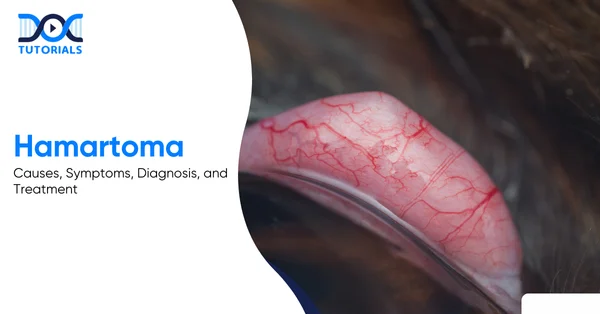
Hamartomas are non-cancerous growths composed of the same surrounding tissues that grow in an unorganised manner, causing a tumour-like structure. The majority of them do not cause any symptoms and are not harmful. If found to be causing health issues, they are surgically removed by an appropriate surgeon. However, the cause is mainly idiopathic, and genetic syndromes are sometimes included in the aetiology.
Although a hamartoma is non-cancerous, avoiding treatment may result in dysfunction of other organs. Hence, keep reading to learn about hamartomas, their types, and the best available treatment for managing them.
What is a Hamartoma?
A hamartoma is a non-cancerous, benign growth of disorganised mature tissue that can develop anywhere in the body. There are some key characteristics to identify a hamartoma, such as disorganisation in tissue growth, benign nature, location throughout the body, etc.
Mostly harmless, hamartomas are masses of disorganised tissue that can grow anywhere in the body. However, they can hamper bodily functions if they grow big enough to suppress other organs. If hamartomas grow abnormally large, they need to be removed surgically to relieve the patient.
Some of the key distinguishing features of a hamartoma are:
- Benign
- Disorganised growth
- Symptoms are found incidentally
- Developmental error
- Can develop anywhere in the body
How are Hamartomas Classified?
Hamartomas do not spread to other parts of the body because they are benign and found in places such as the heart, lungs, brain, and breast, causing cardiac rhabdomyoma, hypothalamic hamartoma, etc.
Hamartomas don’t metastasise like malignant tumours and remain in one place. However, their size increases, putting pressure on other organs in the body. The following section lists the places where hamartomas can grow:
- Heart (Cardiac Rhabdomyoma): Hamartomas in the heart can result in cardiac arrest and heart failure, which is very common in children.
- Brain (Hypothalamic Hamartoma): When hamartomas grow in the brain, the main changes are seen in the behaviour and mood. If they grow in the hypothalamus, epileptic seizures and early puberty are also seen.
- Breast: A breast hamartoma is a benign tumour that can develop at any age. However, women above 35 are more prone to breast hamartoma, which can cause breast deformities.
- Lungs: Pulmonary hamartomas, or lung hamartomas, are the most common type of tumour that can cause difficulty breathing or trigger pneumonia. In severe cases, tissue damage is also seen.
- Spleen: Splenic hamartomas are the rarest form of hamartomas, which are seen more in females than males. Hamartomas on the spleen manifest as abdominal discomfort and pain.
- Neck and Chest: Hamartomas in the neck region can cause abnormal swelling and hoarseness, and respiratory issues if they grow in the chest region as well.
- Skin: Skin hamartomas can grow anywhere on the skin, with no explicit limitation of the risk area.
What are the Causes of Hamartomas?
The cause of a hamartoma is idiopathic; however, it is believed to result from various factors such as a genetic mutation, congenital defect, developmental abnormality, genetic defect, etc.
The exact cause of a hamartoma is still unknown, and they are rare. Scientists say that hamartomas result from a genetic mutation in one of the biological parents. However, the following list explains some of the probable causes behind developing a hamartoma:
- Congenital Defect: In these cases, hamartomas are present at birth but are detected later in life.
- Developmental Abnormality: These hamartomas develop as a result of disorganised tissue growth during the foetal stage.
- Genetic Defect: Some hamartomas develop as a result of a genetic mutation, or they may be genetically inherited.
- Abnormal Tissue Growth: The affected area exhibits tissue growth in an abnormal pattern, resulting in a hamartoma.
What are the Risk Factors of Hamartomas?
The risk factors behind developing a hamartoma include Neurofibromatosis Type 1, Pallister-Hall Syndrome, Peutz-Jeghers Syndrome, PTEN Hamartoma Tumour Syndrome, and Tuberous Sclerosis.
Although the exact cause behind hamartomas is unknown, certain risk factors make a person more likely to develop them:
- Neurofibromatosis Type 1: Hamartomas mainly grow in the brain, spinal cord, and skin.
- Pallister-Hall Syndrome: Hamartomas grow on the hypothalamus.
- Peutz-Jeghers Syndrome: In this condition, hamartomas grow in the bladder, intestines, stomach, and lungs.
- PTEN Hamartoma Tumour Syndrome: In PHTS, hamartomas are seen on the breasts, GI tract, uterus, and thyroid.
- Tuberous Sclerosis: In this condition, hamartomas grow in various organs, such as the eyes, heart, kidneys, brain, and skin.
What are the Symptoms of Hamartoma?
In general, hamartomas are asymptomatic; however, symptoms depend on their location, like breast hamartomas cause swelling in the breast and a palpable lump, liver hamartomas cause abdominal discomfort and pain, lung hamartomas cause respiratory distress, etc. Some of these symptoms may cause severe discomfort and pain, depending on their location.
The location of the hamartoma can trigger harmful effects, the main issue being the pressure exerted by the large mass. In severe cases, the hamartoma can turn out to be fatal when it starts pushing on the other organs.
The following section lists the symptoms depending on the location of the hamartoma:
- Breast: Swelling in the breast, palpable lump, or deformity
- Liver: Abdominal discomfort and pain
- Kidneys: Haematuria (blood in the urine) and flank pain
- Skin: Discolouration of the skin, visible and palpable growths, and lumps
- Lungs: Haemoptysis (blood with cough), respiratory distress, shortness of breath, cough, chest pain, and fever
- Brain: Early puberty, behavioural changes like rage and emotional issues, headaches, visual problems, seizures, and learning difficulties.
- Heart: Signs of heart failure include cyanosis and oedema, chest pain, arrhythmia, and palpitation.
How to Diagnose a Hamartoma?
If a hamartoma is suspected, the physician may order imaging tests, including USG, mammograms, X-rays, CT scans, and MRIs, depending on its location.
Imaging tests are generally ordered to confirm the diagnosis of a hamartoma. The imaging tests include:
- Ultrasound: The first investigation advised in cases of suspected hamartoma is ultrasound, which helps identify benign lesions, where the hamartoma appears as a well-defined mass.
- Mammogram: Mammography is performed in cases of breast hamartomas, which reveal a well-circumscribed mass that gives a ‘breast within a breast’ appearance.
- X-ray: Although not much used in other hamartomas, X-rays are helpful in the case of pulmonary hamartomas, which show a coin-shaped lesion with popcorn-like calcification.
- Computed Tomography: Also known as a CT Scan, Computed Tomography is very useful in lung and deeply located hamartomas, providing a detailed view of the internal structures.
- Magnetic Resonance Imaging (MRI): MRI provides soft-tissue contrast essential for diagnosing a brain or soft-tissue hamartoma and helps develop a better treatment plan.
A biopsy might also be needed to rule out the possibility of a cancerous tumour.
What are the Available Treatment Options for Hamartoma?
Usually, surgery is not advised; however, severe cases may need ablation therapy and GammaKnife Radiosurgery.
When the hamartoma lies too close to the essential tissues and organs, surgery becomes too risky, causing life-threatening conditions for the patient. In such severe cases, the following two methods are adopted:
- Ablation Therapy: It uses extreme heat to destroy tissue.
- GammaKnife Radiosurgery: A form of radiation therapy that eliminates tissue with high precision.
What are the Complications of Hamartomas?
Generally, hamartomas are not a serious condition but can lead to complications if they grow abnormally and affect nearby organs.
Developing hamartomas is not a serious condition; however, they can damage the nearby organs if they grow abnormally.
For example, hamartomas in the hypothalamus can start seizures and lead to developmental delays.
FAQs about Hamartoma
- What is the difference between a tumour and a hamartoma?
A hamartoma is a non-cancerous, benign growth of disorganised tissue, whereas a tumour is an umbrella term encompassing any abnormal growth, benign or malignant. Tumours result from uncontrolled cell division.
- What are hamartoma and choristoma?
Hamartomas are disorganised growths of normal tissues, while choristomas are groups of mature tissues that grow in a completely different location, e.g., pancreatic tissue in the brain.
- Should the hamartoma be removed?
Surgical intervention to remove a hamartoma is not always required; however, the symptoms improve with surgery.
- How fast do hamartomas grow?
Generally, hamartomas grow a few millimetres per year, with a volume doubling time (VDT) exceeding 400 days.
- Can a hamartoma become cancerous?
Although rare, malignancy can occur in patients with risk factors like Neurofibromatosis Type 1, Pallister-Hall Syndrome, Peutz-Jeghers Syndrome, PTEN Hamartoma Tumour Syndrome, and Tuberous Sclerosis.
Conclusion
Hamartomas can be scary because they appear out of nowhere. However, they are benign and do not cause serious harm to people. Hamartomas can be managed without surgery, but surgery is more effective at improving symptoms. If you feel any abnormal lump in your body, do not hesitate to consult the appropriate physician and seek treatment.
At DocTutorials, you will find several other topics related to NEET PG, along with concise video lectures, high-yield notes, expert guidance, and more. Check out our NEET PG courses today!


| > Bed Sores | > Pruritus |
| > Polycythemia Vera | > Corticosteroids |
| > Biomedical Waste Management | > Hot Flashes |
| > Tinea Versicolor | > Xerostomia |
| > Kwashiorkor | > Narcolepsy |
Latest Blogs
-

INI CET Exam 2026: Your Roadmap to Success – Key Topics, Strategies, and Lessons from Last Year’s Papers
The INI CET exam is more than just a test; it’s a significant milestone for many medical students aiming to…
-

INI CET Exam Success: Previous Year Question Papers & Ultimate Guide – INI CET PYQ
One can feel overwhelmed while preparing for the INI CET (Institute of National Importance Combined Entrance Test). A vast syllabus,…
-

NEET PG 2026 Preparation with Live Power Pack: Your Path to Success in 2026
Preparing for the NEET PG 2026 can be an overwhelming journey because of its vast syllabus and the pressure to…