
Twin Pregnancy: Risk Factors, Symptoms, and Complications
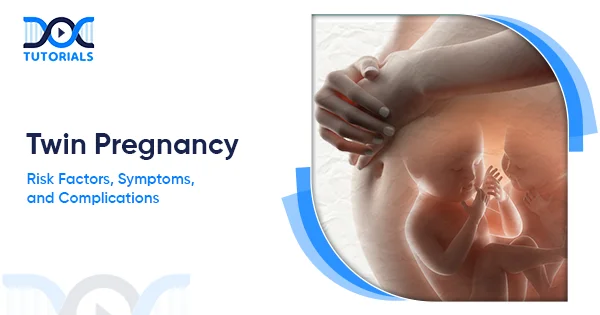
Twin pregnancy is an important concept in Obstetrics and Gynaecology, as it is a special type of multiple gestation in which two fetuses grow simultaneously in the womb.
This knowledge is essential because twin gestation is associated with greater maternal and fetal risks than singleton gestation. Thus, early detection, adequate monitoring, and timely intervention are necessary for a safe result.
This guide describes the types, causes, symptoms, and complications of twin pregnancy and helps students and practitioners establish a reliable background of knowledge. Keep reading to learn more.
What is a Twin Pregnancy?
A twin pregnancy implies the transfer of two embryos. These twins may produce either of two fertilised eggs (identical twins) or one (fraternal twins), and they may have a common or dissimilar placenta and sacs.
The most prevalent type of multiple gestation is a twin pregnancy, where the woman is carrying two fetuses concurrently. Identical (monozygotic) twins occur when a fertilised egg divides into two embryos, resulting in babies of the same sex whose genes never mix.
This division makes the difference between separate and common placentas as well as common and separate amniotic sacs, depending on the time of this split. Non-identical (dizygotic or fraternal) twins are where two distinct eggs are fertilised by two different sperm in the same cycle.
Other terms used to describe twin pregnancies include chorionicity (number of placentas) and amnionicity (number of amniotic sacs).
The NICE (National Institute for Health and Care Excellence) guidelines include the following primary forms:
- Dichorionic–Diamniotic (DCDA): Indicates two placentas and two sacs. Every fetus contains its placenta and amniotic sac. (The majority of fraternal twins, a few early-separated identical twins).
- Monochorionic–Diamniotic (MCDA): Depicts one shared placenta and two sacs. The twins’ condition is characterised by a common placenta and distinct amniotic sacs. This is the case with the twins. (Occurs only in identical twins).
- Monochorionic–Monoamniotic (MCMA): Means one shared placenta and one sac. The two twins share the same placenta and amniotic sac. (Hardly, only identical twins separating late).
- Conjoined Twins: Indicates a scarce variant, in which the twins are physically attached; they are invariably monochorionic-monoamniotic.
The twin pregnancies in most cases are diagnosed early in the form of a first-trimester ultrasound, which may reveal two gestational sacs or embryos.
In some cases, a second sac develops later (with the onset of the twin’s appearance), or there are clinical indications that raise suspicion. Twin gestations are high-yield topics in Obstetrics and Gynaecology due to their distinct anatomy and management.
What are the Risk Factors of Twin Pregnancy?
Twin pregnancy has a range of factors that tend to increase the chances of an occurrence: genetic predisposition (preferentially fraternal twins), maternal age, high parity, and fertility treatment.
The reasons for twin pregnancy are different between identical and fraternal twins. Identical (monozygotic) twinning is said to be random during the development of the embryo and is normally not influenced by the family background or maternal characteristics. In contrast, fraternal (dizygotic) twinning is influenced by genetics and maternal factors.
The risk factors that significantly increase the risk of twin pregnancy are:
- Genetic Predisposition (Maternal Lineage): The presence of twins in the family raises the chances of fraternal twins. (Fathers’ twin history has much less effect.)
- Advanced Maternal Age: Females above 35 are much more exposed to a higher chance of getting twins as compared to younger females. Optimal ovulation at the age of approximately 37 raises the probability of releasing multiple eggs.
- High parity (Many Prior Pregnancies): With each additional pregnancy, the probability of twins increases. Women with multiple previous pregnancies have 2–3 times the twin rate of nulliparous women.
- Use of Fertility Drugs or Assisted Reproductive Technology (ART): Ovulation-inducing drugs such as clomiphene and gonadotropins may result in numerous ovulations. In one out of every five to twelve pregnancies, clomiphene may lead to twins.
- Maternal Nutrition and Body Habitus: Females who are well-nourished, taller, or heavier are more likely to have fraternal twins due to better, healthier physiology and hormonal levels. In the past, the rate of twins was lower in regions affected by famine.
Localised research indicates that twinning occurs at 10-12 per 1000 births, but the prevalence is higher in fraternal twins. This increase is attributed to an increased maternal age, fertility treatment, yet nonetheless, a disproportional number of perinatal deaths is presented through twin pregnancies.
What are the Symptoms and Diagnosis of Twin Pregnancy?
Twin pregnancy has exaggerated initial symptoms (e.g., severe nausea, rapid growth of the uterus), and diagnosis depends upon ultrasound and prenatal screening.
Clinically, the early signs of a pregnancy in twins can be very insidious or confused with a single pregnancy. A woman with pregnant twins may experience the following symptoms:
- Severe Fatigue: Most women experience more severe fatigue or nausea (elevated hCG hormone levels) with having twins, although this is not universal.
- Rapid Uterine Growth: Fundal height (compared to the distance between the pubic bone and that of the uterus) is usually large when compared to the gestational age.
- Elevated Pregnancy Blood Tests: Maternal serum screening markers may be abnormal. As an illustration, a markedly elevated AFP (alpha-fetoprotein) or β-hCG during second-trimester screening may indicate twins (though it may also indicate other conditions).
- Physical Exam Clues: An experienced clinician or Doppler device may hear more than one fetal heartbeat later in the first or early second trimester. But the separation of two heartbeats can hardly be detected, and therefore, this is only a suggestion, not an absolute.
Diagnosis of Twin Pregnancy
| Diagnostic Clue | Description |
| Stronger Pregnancy Symptoms | More severe nausea or fatigue, which is usually caused by high levels of hCG. |
| Rapid Uterine Growth | The fundal height is more than expected for gestational age. |
| Abnormal Maternal Serum Markers | High levels of AFP or β-hCG in second-trimester screening. |
| Physical Examination Clues | There is a possibility of more than one fetal heartbeat detected using Doppler (not definitive). |
| Ultrasound (Gold Standard) | Confirms there are said fetal number, chorionicity, and gestational age; recognises two sacs, yolk sacs or fetal poles by week 6-8. |
| Early Ultrasound Findings | One placenta with a membrane → monochorionic-diamniotic; two placentas → dichorionic twins. |
| Special Cases | Vanishing twin syndrome or appearing twin syndrome is identified by serial scans. |
Practically, when a twin pregnancy is suspected clinically, the doctors will request a serial scan and prenatal tests.
What are the Complications of a Twin Pregnancy?
Twin gestation is associated with high maternal and fetal risks compared to singletons. Preterm birth, fetal growth issues, and placenta syndromes are the most significant complications.
A twin pregnancy is said to be high-risk because of a range of potential complications. Crowding in the uterus leads to fetal risks. Common complications include:
- Preterm Birth: The greatest risk during pregnancy of twins is preterm birth. Premature infants can be both spontaneous and planned, and they tend to cause neonatal problems of respiratory distress, feeding disorders, and prolonged NICU (neonatal intensive care unit) stays.
- Preeclampsia and Hypertension: The risk of developing hypertensive disorders of pregnancy (gestational hypertension or preeclampsia) is high in twins due to the size of the placenta. It is also recommended to carefully monitor blood pressure; low-dose aspirin can be considered in case of other risk factors.
- Gestational Diabetes Mellitus (GDM): Being pregnant with more than one fetus increases insulin resistance as the levels of pregnancy hormones increase. Twin pregnancy has been linked with increased cases of GDM.
- Maternal Anaemia: Twin pregnancies often demonstrate decreased maternal hemoglobin because of increased volume of blood and iron requirement of two fetuses. Iron supplementation is frequently required to prevent or cure anemia.
- Placental Complications: Having two placentas (or an abnormally large single placenta), the problems of placenta previa or abruption may become more prevalent.
- Fetal Growth Restriction: Even in uncomplicated twins, each fetus is likely to develop slightly poorer than singletons because of the limits of uterine space. The IUGR (Intrauterine Growth Restriction) or slow growth (10th percentile or below) is usual; approximately (40-50)% twins have some growth retardation.
- Congenital Anomalies: The rate of anomalies with twin pregnancies is a bit greater, and that could be due to intrinsic factors that tend to cause a twin pregnancy. In addition, identical twins have all the genes in common, and therefore the genetic disorder will be observed in both.
- Delivery Complications: A mother is at risk of postpartum bleeding since it occurs due to overdistension of the uterus. In case of a first twin being vertex, vaginal delivery of twins can be tried; C-section is more commonly used, particularly when the first twin is breech, or when there are complications.
The challenges that require close monitoring among the carriers of twin gestations include hypertension, diabetes, and premature labor. Early identification of such complications is one of the key elements in obstetric management.
What are the Treatment Options for Twin Pregnancy?
The treatment of twin pregnancy is aimed at close attention and care. Carrying twins has no cure; however, they can be alleviated through measures taken to reduce risks.
Although no particular form of treatment is needed to change the state of preventing a twin pregnancy, the current obstetric management of the issue strives to maximise the results of both the mother and the babies. Key approaches include:
- Frequent Prenatal Care and Monitoring: Women carrying twins require more frequent antenatal check-ups and ultrasounds. Getting scans every 3-4 weeks- or sooner in the case of monochorionic twins- measures growth, amniotic fluid, and placental activity. Visits involve blood pressure, weight, and urine protein checks, and later a non-stress test or biophysical profile to gauge the health of the fetus.
- Nutritional Support: Twin pregnancies have higher caloric requirements and weight-gain needs. Higher protein diets and sufficient folate and iron (including in the form of supplements) are crucial, and positive birth weights of twins correlate with better health.
- Lifestyle Adjustments: Moderate exercise (such as walking or swimming) has generally been advised except in cases of contraindication, and full bed rest is discouraged. Cleanse up tobacco, alcohol, and other threats to pregnancy, and focus on management and rest since the physical demands are increased in the case of twin pregnancies.
- Specialist Interventions: Fetal therapies may be used in complex pregnancies that are monochorionic. In case of severe polyhydramnios, Amnioreduction (removal of excess fluid) may be undertaken. These processes involve making a referral to a fetal medicine centre.
- Planning Delivery: Planned cesarean or induction is usual, especially when the first of the twins is not head-down. Pregnancy expansion to more than the suggested weeks is associated with higher chances of stillbirth; hence, early birth is safer.
- Birth Preparedness and Support: Planning the postpartum assistance at home, since taking care of two newborns is quite challenging. Often, nutritional counseling and even lactation consultation are provided that way because by means of it, some women are able to breastfeed twins.
Altogether, managing twin pregnancies can be supportive through healthy nutrition, diabetes or hypertension management, and early warning sign check-ups.
It is best followed up by a special obstetric team frequently. Risks are more, but most twins can be fine with adequate care, and realistic counselling lets families realise that in-care antenatal management has a significant enhancement effect on outcome.
FAQs about Twin Pregnancy
- Are identical twins hereditary?
No. There is no correlation between family history and identical (monozygotic) twins. The primary effect of heredity is that it elevates the probability of fraternal twins as a result of a predilection to multiple ovulation.
- Can I safely prolong a twin pregnancy to full term?
Usually not. Exceeding the recommended boundaries of 37+6 weeks in dichorionic and 36 +6 weeks in monochorionic twins increases stillbirth chances. Doctors strike a balance between prematurity risks and the risks of remaining in the womb, and usually examine near-term weekly.
- Are twin pregnancies high-risk?
Yes. Twin pregnancies are associated with increased risks of complications such as preterm delivery, preeclampsia, gestational diabetes, and birth problems. It is the reason why high-risk obstetric care of specialists is recommended.
- Will I definitely need a C-section?
Not necessarily. Delivery can occur at the vagina when the first twins are in a head-down position, and there are no complications. But C-section is standard – of course, not prevalent in case Twin A is not in a cephalic position. There could be cases when the second twin might require an emergency C-section.
- How can I prepare for having twins?
Find out about twin-specific care, write prenatal counseling, and make additional home arrangements. You can be prepared in case you need to receive NICU care and plan out exercises, traveling, and feeding with your doctor to be on track.
Conclusion
Twin pregnancies are high risk, both identical and fraternal. It is important to learn their causes, early symptoms, and complications, such as preterm birth and growth complications, and to be able to effectively provide antenatal care. Timely interventions, close monitoring, and early diagnosis can be used to guarantee better outcomes for mothers and babies.
To understand more such complex NEET PG concepts, DocTutorials can be your study partner. We offer crisp video lectures, clinical Qbank, exam-focused notes, flashcards, and mind maps to help aspirants gain complete clarity.
Join DocTutorials today and explore our NEET PG course to excel in your medical career!


Latest Blogs
-

INI CET Exam 2026: Your Roadmap to Success – Key Topics, Strategies, and Lessons from Last Year’s Papers
The INI CET exam is more than just a test; it’s a significant milestone for many medical students aiming to…
-

INI CET Exam Success: Previous Year Question Papers & Ultimate Guide – INI CET PYQ
One can feel overwhelmed while preparing for the INI CET (Institute of National Importance Combined Entrance Test). A vast syllabus,…
-

NEET PG 2026 Preparation with Live Power Pack: Your Path to Success in 2026
Preparing for the NEET PG 2026 can be an overwhelming journey because of its vast syllabus and the pressure to…