Vaccine Cold Chain: Flowchart, Guiding Parameters & More
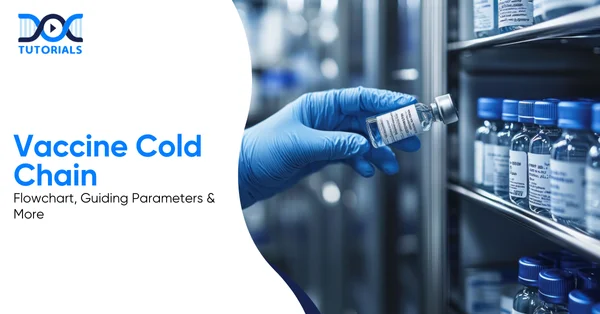
The method of storing a vaccine in proper condition is called the cold chain or immunisation supply chain. It refers to a series of procedures designed to maintain the vaccine’s efficacy from manufacturing through administration and to deliver the same in proper condition to the consumer. The vaccine must be kept at the WHO-recommended temperature to maintain its effectiveness throughout the supply chain.
In this guide, we will discuss the vaccine cold chain in detail to show how vaccine efficiency is maintained across different storage units throughout the supply chain.
Keep reading!
What is a Vaccine Cold Chain?
The vaccine cold chain is a supply chain that ensures the medicine is maintained in proper condition during transportation and delivered to the right place in appropriate condition and on time. This supply chain comprises different stages, such as daily record-keeping, a monthly report to understand demand and calculate quantities, and shipping the vaccine through several levels to end users.
The vaccine cold chain is depicted as follows:
| Daily Record |
| ↓ |
| Monthly Report |
| ↓ |
| Analysis |
| ↓ |
| Annual Statistics and Estimates |
| ↓ |
| Request For Supply |
| ↓ |
| Manufacturer |
| ↓ |
| Airport |
| ↓ |
| Central Store |
| ↓ |
| District/Regional Store |
| ↓ |
| Healthcare Centre |
| ↓ |
| Vaccinator |
What are the Guiding Parameters in the Vaccine Cold Chain?
Light, temperature, and heat are the major factors that control the vaccine’s efficiency as it moves through the vaccine cold chain. The people who handle the medicine in the immunisation chain must know all these parameters and the ideal range to ensure the immunisation is suitable before it is applied to the patient.
Vaccines are a sensitive medical product. They are sensitive to freezing, heat, and light. Vaccine efficacy, that is, the ability to protect the vaccinated patient, is compromised when they are exposed to improper conditions. Once its efficacy is lost, it cannot be regained.
To maintain efficacy, it must remain in a suitable condition during movement through the supply chain. Thus, it is mandatory for those who handle the vaccine nationwide to know the conditions for maintaining its quality:
- It is crucial to keep the vaccine, which does not contain a preservative, at a temperature between +2°C and +8°C during the immunisation session.
- Vaccines produced with virals and/or lyophilised diluents must be stored between -15°C and -25°C.
- Some vaccines are sensitive to exposure to light. These vaccines must be protected from sunlight and intense artificial light during movement throughout the cold chain. Vaccines, which are light-sensitive, are usually packaged in dark glass containers to maintain their quality.
Norms to Maintain the Vaccine’s Quality During the Vaccine Cold Chain
To ensure the vaccine’s efficacy during movement in the vaccine cold chain, some norms specify where to store it, the conditions under which it must be kept, and how it must be transported.
Health workers who are involved in the vaccine cold chain have to maintain the following guidelines to ensure the product’s quality:
- Store the vaccine in the respective refrigeration place.
- Use a temperature-measuring device to check the temperature and ensure it remains between +2°C and +8°C to preserve quality.
- The vaccine must be packed in a vaccine carrier along with cooling pads in place to ensure the correct temperature is maintained during transport in the immunisation chain.
What are the Recommended Storage Equipments in the Vaccine Cold Chain?
During the immunisation chain, the vaccine must be stored in various storage units to maintain its efficacy. Recommended storage units for the immunisation chain are refrigerators, vaccine carriers, and cold boxes. To monitor temperature within the specified limits, Vaccine Vial Monitors (VVMs) are recommended.
At different levels of the vaccine cold chain, the product must be stored in various storage units or carriers. These are classified into three categories:
- Primary Level (National): In this phase, the vaccines are kept in freezers, freezer rooms, refrigerators, cold boxes, and refrigerated trucks (in some cases) for mobilisation.
- Intermediate Level (Province or District): At this level, vaccines are stored in freezer rooms, refrigerators, cold boxes, carriers, and, in some cases, in refrigerated trucks, depending on capacity.
- Peripheral Level (Health Centres or Clinics): In the peripheral level, the medicine is stored mainly in refrigerators and also in vaccine carriers and cold boxes.
- Refrigerator
Refrigerators in the vaccine cold chain are driven by electricity, solar energy, or gas. Among the three, any one type is chosen based on the intermittent availability of the energy source needed to keep the vaccine within the specified temperature range continuously. All these types of refrigerators are specially designed to maintain the temperature range required for vaccine monitoring.
Domestic refrigerators are not designed to store vaccines continuously because they lack a temperature control device. That is why the World Health Organisation (WHO) does not recommend domestic refrigerators for storing vaccines. Moreover, during a prolonged power cut, domestic refrigerators cannot maintain the WHO-specified temperature range for vaccine immunisation.
- Cold Boxes
When the refrigerator is out of order or there is a prolonged power cut, cold boxes are used to store vaccines for up to 2 days. Also, the vaccines are stored in the cold boxes during short-term travel. It is an insulated box lined with water or ice packs to keep the vaccine within the required temperature range. Once packed, the cold boxes must not be opened until the vaccine is needed.
“Cold Life” of a cold box refers to the maximum time it can maintain the temperature of the vaccine vials below +10 °C when packed with ice packs. Usually, the cold life of a cold box is two to seven days when tested at a constant atmospheric temperature of +43 °C.
The “Cool life” of a cold box is the maximum time period during which it can maintain the medicine’s temperature below +20 °C, with cool water packs inside it that have been stored in a refrigerator. A cold box’s cool life is 12 hours to two days when tested at a constant atmospheric temperature of +43 °C.
There are different models of cold boxes available in the market with different vaccine-carrying capacities. Various models require different numbers and sizes of water packs to store the vaccines. It is essential to use the exact number and size of water packs as specified by the manufacturer; otherwise, the cold life will be compromised.
- Vaccine Carriers
These are smaller vaccine storage units compared to a cold box. It is easier to carry than the cold box. A prequalified vaccine carrier has a cold life of 18 to 50 hours at +43 °C and a cool life of 3 to 18 hours with cool water packs. The vaccine carriers are used for the following purposes:
- During mobilisation to other places and for short-term storage in a health centre within the vaccine cold chain.
- It is used to temporarily store the vaccine at the peripheral level when the refrigerator is out of order or defrosted.
- For transporting the monthly vaccine demand from the district storage to small health facilities.
The type of vaccine carrier is chosen depending on the following factors:
- Quantity of the vaccine and type of diluents to be mobilised.
- The cold life, or cool life, that is required for the longest planned shipment.
- The type of transport media used.
- Vaccine Vial Monitors (VVMs)
It is the sole temperature-monitoring indicator provided with the vaccine vial by the manufacturer. The VVM indicates whether the vaccine’s quality is maintained during movement along the cold supply chain. It is a chemical indicator label placed on the vaccine container. When the product moves through the immunisation chain, it indicates the condition of the vaccine after exposure to heat and light by a change in colour codes during mobilisation in the supply chain.
There are four types of VVMs available to ensure the quality of the heat-sensitive vaccines at every stage in the supply chain. They are:
- VVM2
- VVM7
- VVM14
- VVM30
The number indicates the number of days it takes for the colour of the VVM to reach a discard point when the vaccine is exposed to a constant temperature of +37 °C. The VVM is used with the vaccine container to discard heat-damaged vials and minimise vaccine wastage.
What are the Basic Methods of Maintenance for Cold Chain Equipment?
For different cold chain equipment, you need to perform proper maintenance so that the storage unit remains in good condition and retains the vaccine’s quality. Defrosting a refrigerator, checking and ensuring the availability of the energy source for different energy-driven refrigerators, and properly drying the cold boxes and vaccine carriers are such maintenance methods for the respective equipment.
The basic maintenance methods for cold chain vaccines are as follows:
- Defrosting the Vaccine Refrigerator
A vaccine refrigerator remains in optimised condition when it is cleaned, properly installed, and defrosted regularly. When thick ice forms in the freezing compartment and on the evaporator plate, the vaccine refrigerator does not operate correctly, and cooling is not carried out within the required temperature range.
Additionally, a thick layer of ice increases power consumption from the energy source. The vaccine refrigerator must be defrosted regularly or when there is a 0.5mm thick layer of ice in the storage places, whichever comes first.
- Maintenance of the Energy Source for the Vaccine Refrigerators
The energy source for the vaccine refrigerators is electricity, solar power, and fuel (gas/kerosene). You have to check the specific energy consumption data for the energy source as per the manufacturer’s user manual for daily, periodic, and yearly use.
If the energy source is maintained within the specified consumption limits, the storage unit operates optimally throughout its product life cycle. This optimised running condition of the different energy-driven vaccine refrigerators ensures the vaccine remains healthy without compromising quality.
- Maintenance of Cold Boxes and Vaccine Carriers
Cold boxes and vaccine carriers must be dried and the lids opened after use to prevent them from becoming mouldy and moist. A mouldy, moisture-containing cold box or vaccine carrier can contaminate the vaccine vials inside it. All this vaccine storage equipment must be stored with the lid popped open.
Knocks and sunlight cause cracks in the walls of the cold box and vaccine carrier. A crack can compromise insulation and increase the risk of heat exposure during transportation. Also, cracked containers degrade vaccine quality, which is undesirable in the vaccine cold chain. You can use adhesive tape to repair the small crack on the walls until the undamaged cold box or vaccine carrier arrives.
What is a Shake Test?
A shake test is carried out to avoid frozen vaccines that are no longer usable by the vaccinator. By comparing two vials of the same category, one accidentally frozen and the other deliberately frozen, the shake test is done to identify the damaged vaccine, discard it, and reduce wastage.
The shake test is performed to determine whether a freeze-sensitive vaccine is damaged when exposed to temperatures below 0 °C. After it is stored below 0 °C, a frozen vaccine vial no longer appears cloudy but tends to form flakes that sediment at the bottom of the vial.
To perform the shake test, you need two identical vaccine vials from the same manufacturer with the same batch number. One of them is deliberately frozen overnight, and the other is suspected to be frozen. Shake both vials in one hand, then compare the settlement process by placing them side-by-side. If the suspected frozen vial settles at the same speed as the deliberately frozen vial, then you know it has frozen. And if it settles relatively slowly, then it has not frozen.
Why is the Shake Test Needed?
If a freeze-sensitive vaccine is accidentally thawed, it is likely damaged. In these circumstances, the shake test is required to identify damaged vaccine vials and to discard them before moving them in the vaccine cold chain or using them for patient use.
What is the Importance of the Vaccine Cold Chain?
Storing the vaccine at the WHO-recommended temperature maintains its potency throughout the immunisation chain. This ensures that the vaccine’s effectiveness remains unchanged until it is administered to the patient.
The significance of the immunisation chain is as follows:
- Maintain the Vaccine’s Potency: Vaccines are an essential biological product. Through the vaccine cold chain, it is protected from extreme heat, light, and temperature to retain its potency; otherwise, it will become less effective, causing permanent damage to the product.
- Prevent Disease Outbreaks: An immunised vaccine, when administered to the patient, helps improve immunity, thus preventing various critical illnesses for which it is intended.
- Less Wastage: A vaccine vial stored at the WHO-recommended temperature throughout the immunisation chain is used for application to the patient. Strictly maintaining such parameters minimises wastage.
- Healthy Global Population: The vaccine cold chain ensures the supply of the medicine under extreme environmental conditions to the remote areas, as well as to urban regions, ensuring a healthy global population.
FAQs about Vaccine Cold Chain
- What is the vaccine cold chain?
The vaccine cold chain is the set of rules to follow during the distribution of the medicine from the national level to the peripheral or local level. The WHO defines a temperature range that must be maintained for the immunisation chain to maintain the vaccine’s potency.
- What is the vaccine storage temperature?
Depending on the type of vaccine, two temperature ranges are specified. The freeze-sensitive vaccines must be stored between +2°C and +8°C, and vaccines produced with viral and/or lyophilised diluents must be stored between -15°C and -25°C.
- What is the vaccine supply chain?
A vaccine supply chain is defined as the shipment of the vaccine from the national level to the peripheral or local level at the right time, in the right amount, and in the proper condition and temperature.
Conclusion
The vaccine cold chain is required for retaining the medicine’s efficacy at every stage of the supply chain. The vaccine vials are kept in the WHO-recommended temperature range in the suitable storage units. This enables medical personnel to access high-quality vaccines for patient administration, thereby improving public health and the global safety environment. It has a challenging, complex logistics procedure that requires precise temperature control.
A well-stored vaccine helps achieve the desired immunity for the patient, thereby preventing critical disease outbreaks and keeping the situation under control during epidemics or pandemics.
To help you gain more insight about NEET PG topics, DocTutorials provides crisp visual content, quality question banks, exam-specific mock tests, and roadmaps that help aspirants become more confident and well-prepared for the examination.
Check out our NEET PG courses today!

| > Bed Sores | > Pruritus |
| > Polycythemia Vera | > Corticosteroids |
| > Biomedical Waste Management | > Hot Flashes |
| > Tinea Versicolor | > Xerostomia |
| > Kwashiorkor | > Narcolepsy |
Latest Blogs
-

INI CET Exam 2026: Your Roadmap to Success – Key Topics, Strategies, and Lessons from Last Year’s Papers
The INI CET exam is more than just a test; it’s a significant milestone for many medical students aiming to…
-

INI CET Exam Success: Previous Year Question Papers & Ultimate Guide – INI CET PYQ
One can feel overwhelmed while preparing for the INI CET (Institute of National Importance Combined Entrance Test). A vast syllabus,…
-

NEET PG 2026 Preparation with Live Power Pack: Your Path to Success in 2026
Preparing for the NEET PG 2026 can be an overwhelming journey because of its vast syllabus and the pressure to…