NEET PG Preparation: What Should Your Ideal Study Timetable Look Like?
Preparing for NEET PG is a wonderful journey of converting your hard work into a dream postgraduate seat. You’re putting in an incredible effort every single day Your absolute best friend in making this journey super smooth and rewarding is having a brilliant plan. Today we will learn just how to create a NEET PG revision schedule that fits your lifestyle and maximizes your chances of success. Let us dive right in and create a roadmap to your amazing success!
Get free, handwritten-style notes covering the most high-yield NEET PG topics!
Why You Absolutely Need a Structured Study Plan
Medical science is huge. You have 19 big subjects to master. A well-planned schedule makes sure you cover all of them without feeling lost or overloaded. When you know how to make a proper timetable, you give your brain clear targets for the day instead of just opening random books.
The Real Benefits of a Brilliant Plan
A good strategy helps you finish revising all subjects in a fixed time. The timetable is the best way to focus on important facts, practice multiple choice questions daily, and check your progress with mock tests. Best of all, it keeps your mind completely calm and confident. Studies show that sticking to a strict calendar helps you remember complex medical topics much better for the final day.
Step by Step Guide: How to Make a NEET PG Revision Timetable
Creating your schedule is exactly like building a strong foundation for a skyscraper. It needs a mix of broad vision and daily precision. Here is a highly effective way to structure your time when you sit down to plan how to make a NEET PG revision timetable.
Phase One: High Weightage Clinical Subjects
Top rankers always start with subjects that carry the most marks. Keep your first few weeks for big subjects like General Medicine, General Surgery, Obstetrics and Gynecology, and Pediatrics. Finishing these early gives you a huge confidence boost. Make sure to practice previous year questions every day to understand what the examiner exactly wants. This clinical phase is the main anchor of your timetable.
Phase Two: Pre-Clinical and Volatile Topics
Once you finish the major clinical subjects, move smoothly to your pre-clinical and para clinical subjects. This includes Anatomy, Physiology, Pathology, and Pharmacology. Subjects like Pharmacology and Microbiology give you easy marks, but they require you to read them again and again because they are full of facts. Always keep Pharmacology in your daily reading rotation.
Question: Should I dedicate equal time to all nineteen subjects during my final phase?
Answer: This is a very common question. No, you should distribute your time based on the marks weightage of the subject, how confident you feel, and the mistakes you make in your mock tests. Heavy clinical subjects and highly volatile topics will naturally need more of your time, so you do not forget them.
Subject Wise Allocation Chart
To help you organize your daily routine, here is a simple table showing some highly volatile but scoring topics you must include in your daily review.
| Subject | Highly Volatile Topics to Review Daily |
| Pharmacology | Drug classifications and side effects |
| Microbiology | Culture media and specific tests |
| Biochemistry | Enzyme deficiencies and cycles |
| PSM | Vaccination schedules and formulas |
| Pediatrics | Developmental milestones |
Supercharging Your Prep with the Right Ecosystem
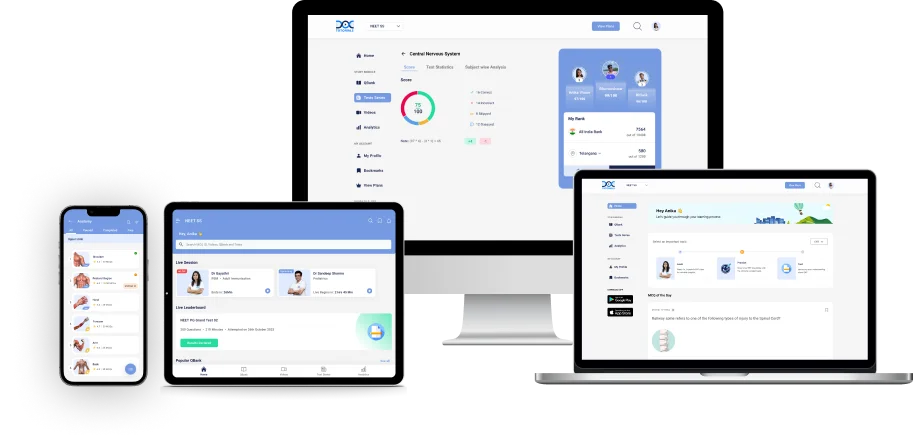
You are already studying hard. But to make your journey completely smooth, having all the right study materials in one single place is a huge advantage. This is exactly where the DocTutorials NEET PG Power Pack helps you. It is a complete setup designed beautifully for medical students who want to clear NEET PG and INI CET. It perfectly solves your daily problem of searching for the right books and apps.
Easy to Understand Video Classes
The Power Pack gives you access to the new V6 Videos. You get over 1500 detailed syllabus videos and special videos explaining previous year questions. For your final quick revision, the Quick Revision Program gives you 500 high yield videos in Hinglish to save your precious time.
India’s Most Trusted Question Bank
For your daily practice, the V6 QBank is your best friend. It has over 20000 multiple choice, image based, and video based questions made by top teachers. You can easily create your own custom tests, bookmark tough questions, and read detailed explanations. The System Based Videos are also included here, and they are truly special because they connect topics from different subjects to make your clinical thinking very sharp.
Real Exam Practice and Smart Tools
You can easily learn time management with the Test Series. It offers 60 Grand Tests that look exactly like the real computer exam, and 200 topic wise mini tests with a smart dashboard to track your performance. The Smart Flashcards and Mindmaps make remembering tough drugs and clinical signs on the go very fun and easy. It also includes special study modules and mock tests made strictly for INI CET. It is a complete system for your final success.
Pro Tips for Your Daily Study Routine
Your daily routine is the heart of your success. When making your timetable, divide your day into smart study blocks. Start your fresh morning by solving thirty previous year questions with a timer. Keep your mid morning for reading your main heavy subject. After a good lunch, pick up a smaller minor subject. In the evenings, always keep some time for rotation revision, where you solve ten to fifteen questions from subjects you finished last week. This beautiful trick keeps older subjects completely fresh in your memory.
10 Frequently Asked Questions
10 Frequently Asked Questions
1. What is the best strategy for making a NEET PG timetable?
The best plan allows you to revise all subjects at least twice, practice questions every day, give regular grand tests, and carefully check your mistakes to improve.
2. How many months do I need to review everything?
Keeping two to three months purely for your final revision phase is ideal and brings fantastic results for your rank.
3. How should I do rapid reviews for the exams?
For fast reviews, rely completely on your short notes, high yield topics, image-based questions, and your own mistake notebook.
4. What should I review in the last ten days?
In your final ten days, put all your energy into volatile facts, bookmarked questions, grand test mistakes, images, formulas, tables, and flowcharts.
5. Is last minute reading genuinely useful?
Yes, absolutely. Reviewing tough tables, formulas, and smart flashcards in the final days strongly helps you remember them exactly during the exam.
6. Should I start reading new textbooks during this phase?
No, it is highly recommended to stick entirely to your old trusted notes and familiar resources. This ensures you remember everything and keeps your mind peaceful.
7. How often should I attempt full length mock exams?
Writing one full mock test every week is a wonderful habit. It keeps you familiar with the exam pattern and improves your time management.
8. Which topics fall under the highly volatile category?
These include Pharmacology drug names, Microbiology culture media, enzyme deficiencies, pediatric milestones, and community medicine vaccination schedules.
9. How can I improve my speed for the actual exam day?
Practicing multiple choice questions with a strict timer every single day is the absolute best way to naturally increase your reading and solving speed.
10. How do I keep myself motivated while following my schedule?
Celebrate your small daily wins. Finishing your daily study targets, improving your mock test scores, and picturing your success will keep you happily on track.

Latest Blogs
-

INI CET Exam 2026: Your Roadmap to Success – Key Topics, Strategies, and Lessons from Last Year’s Papers
The INI CET exam is more than just a test; it’s a significant milestone for many medical students aiming to…
-

INI CET Exam Success: Previous Year Question Papers & Ultimate Guide – INI CET PYQ
One can feel overwhelmed while preparing for the INI CET (Institute of National Importance Combined Entrance Test). A vast syllabus,…
-

NEET PG 2026 Preparation with Live Power Pack: Your Path to Success in 2026
Preparing for the NEET PG 2026 can be an overwhelming journey because of its vast syllabus and the pressure to…