mbbs syllabus Archives - Page 4 of 4 -

Top Medical Colleges in Punjab
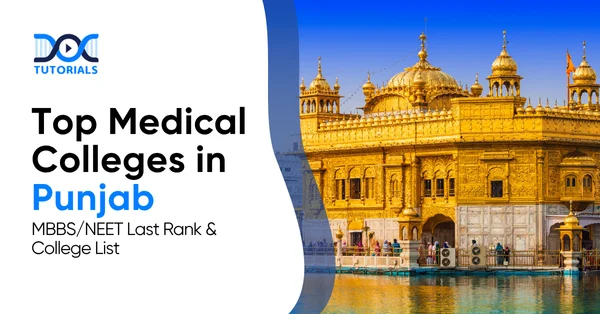
Medical Colleges in Punjab

Punjab is emerging as an aspirational destination to pursue medical education in India, with a high-end MBBS course provided by its government medical colleges. These colleges have skilled professors, state-of-the-art infrastructure, and practical clinical experience; hence, they are very sought after by NEET candidates.

Admission in these colleges is strictly offered through NEET Punjab counselling based on their marks and ranking on the merit list. Each year, the NEET cut-off for Punjab medical colleges varies, reflecting the competitiveness and demand for seats.

In this article, we will present a comprehensive list of Punjab government medical colleges, MBBS seats, NEET cut-off, and last rank details to assist aspirants with an informed decision. Keep reading for a detailed insight.

Overview of Medical Colleges in Punjab

Presently, there are a total of 5 government medical colleges in Punjab that offer a combined strength of approximately 850 MBBS seats. These publicly funded or state-owned educational institutions are affiliated with Baba Farid University of Health Sciences (BFUHS). Admission to these colleges is primarily based on the NEET-UG score.

Out of the total seats, 85% are allotted to the Punjab NEET State Quota, the rest being AIQ seats. AIQ seats are allocated through a counselling session conducted by the Medical Counselling Committee (MCC).

List of Government Medical Colleges in Punjab

Below is the list of government medical colleges in Punjab, along with the year of establishment and the number of seats per year:

College NameYear of InceptionSeats
Guru Govind Singh Medical College, Faridkot1973150
All India Institute of Medical Sciences, Bhatinda2019100
Government Medical College, Patiala1953250
Government Medical College, Amritsar1943250
Dr. B.R. Ambedkar State Institute of Medical Sciences, SAS2021100

List of Private Medical Colleges in Punjab

Punjab also has seven private medical colleges offering MBBS admissions through NEET UG. This includes four private non-minority colleges and three private minority institutions.

College NameYear of InceptionSeats
Adesh Medical College, Bathinda2006150
Christian Medical College, Ludhiana1953100
Dayanand Medical College, Ludhiana1963100
Gian Sagar Medical College and Hospital, Banur2020150
Punjab Institute of Medical Sciences, Jalandhar2011150
Sri Guru Ram Das University of Health Sciences, Amritsar1997150
RIMT Medical College and Hospital, Gobindgarh202450

Punjab MBBS Fees Structure in Government Medical Colleges 2025

Here’s the MBBS fee structure of the government medical colleges in Punjab:

College NameFees Per Annum
Government Medical College, Patiala₹1,83,000
Government Medical College, Amritsar₹1,83,000
Guru Govind Singh Medical College, Faridkot₹1,83,000
Dr. B.R. Ambedkar State Institute of Medical Sciences, SAS Nagar, Mohali₹1,83,000

Note: The tuition fees of government and private medical colleges in Punjab will be paid in one semester to Baba Farid University of Health Sciences, Faridkot, directly. Hostel fees are paid annually for all colleges. Fees are subject to change as per government notifications.

Punjab MBBS Fees Structure in Private Medical Colleges 2025

Here’s the MBBS fees structure of private medical colleges in Punjab:

College NameGovernment Quota (Per Annum)Management Quota (Per Annum)
Christian Medical College, Ludhiana₹6,60,000₹6,60,000
Sri Guru Ram Das Institute of Medical Sciences and Research, Amritsar₹10,94,000₹10,94,000
Dayanand Medical College & Hospital, Ludhiana₹4,26,825₹10,94,000
Punjab Institute of Medical Sciences, Jalandhar₹4,26,825₹10,94,000
Gian Sagar Medical College & Hospital, Patiala₹4,26,825₹10,94,000
Adesh Institute of Medical Sciences & Research, Bathinda₹10,94,000₹10,94,000
RIMT Medical College and Hospital, Gobindgarh₹4,26,825₹10,94,000

Note: There is a 10% increment in tuition fees every year for both Government and Management Quota seats.

NEET 2025 Punjab Cutoff: Qualifying Percentile & Score (All Categories)

Here’s the qualifying percentile and score of NEET 2025 in Punjab:

CategoryQualifying PercentileExpected Cut-off Score
UR / EWS50th686 – 144
OBC40th143 – 113
SC40th143 – 113
ST40th143 – 113
UR/EWS – PwBD45th143 – 127
OBC/SC/ST – PwBD40th126 – 113

Factors Affecting Punjab NEET 2025 MBBS Cutoff

  • Total number of candidates appearing for NEET 2025.
  • Difficulty level of the NEET 2025 examination.
  • Number of MBBS and BDS seats available in Punjab.
  • Reservation criteria and category-wise seat distribution.
  • Overall trends in NEET 2025 results.

Note: Punjab MBBS admissions under the 15% All India Quota (AIQ) are managed by the Medical Counselling Committee (MCC), whereas the 85% state quota and private college admissions are conducted by BFUHS. Each quota has its own set of closing ranks and marks, which are published after every round of counselling.

Punjab NEET MBBS Cutoff 2025: College-Wise (Expected based on 2023–2024 Trends)

Here’s the college-wise NEET MBBS cut-off in Punjab for 2023 and 2024:

College NameAIQ Opening Rank (2024)AIQ Closing Rank (2024)Expected 2025 Closing Rank
Government Medical College, Patiala3738,052Up to 8,000
Government Medical College, Amritsar1,05922,174Up to 22,000
Guru Gobind Singh Medical College, Faridkot8,40824,641Up to 25,000
Dr. B.R. Ambedkar State Inst. of Medical Sciences, Mohali8,42124,798Up to 25,000
Christian Medical College, Ludhiana10,32634,136Up to 34,000

Note: Cut-offs for private medical colleges and minority quota seats are usually lower. Admission opportunities increase in subsequent counselling rounds as vacated seats are filled.

Previous Year Trend: MBBS Government College Closing Ranks (Punjab)

Here are the MBBS government college closing ranks based on the previous year’s trend in Punjab:

YearGovt MBBS Lowest Closing Rank (Patiala)Govt MBBS Lowest Closing Rank (Amritsar)
20239,08923,615
20248,05222,174
2025 (est.)~8,000~22,000

This year-on-year trend depicts the slight increase in closing scores, which enables the aspirants to predict the realistic cut-offs of both state and AIQ quotas. Since the distribution of marks may differ depending on the difficulty of the exam, candidates should always check the official qualifying percentile once the results are announced.

Punjab Medical Colleges MBBS Admission 2025: Eligibility

Here are the admission eligibility criteria as per the Punjab medical colleges:

  • Candidates must have passed 10+2 with at least 50% aggregate marks.
  • Only science stream students are allowed to apply, and Biology must be a compulsory subject.
  • Candidates must have a valid NEET scorecard and admit card.
  • The candidates must be at least 17 years of age.
  • Candidates should be residents of Punjab to apply for the state quota.

What are the Factors to Consider Before Choosing a Punjab Medical College?

When selecting a medical college in Punjab, candidates should carefully evaluate the following factors, as these provide a strong indication of the overall quality of education, infrastructure, and professional exposure the institution offers:

  1. Accreditation and Recognition

The accreditation and official recognition of a certain medical college are the most important aspects to be taken into consideration. Accreditation is the guarantee that the institution complies with all the academic and regulatory standards established by the national authorities.

Students should look for colleges that have been recognised by the National Medical Commission (NMC, formerly MCI) or other authorised regulatory bodies. Choosing an accredited college guarantees a high-quality education that is widely accepted in the medical profession.

  1. Tuition Fees

Being a costly program, MBBS requires comprehensive financial planning before applying. The candidates need to take into account not only the tuition fees but also the living costs that comprise accommodation, food, transport, study materials, and other daily necessities.

Although many students opt for government medical colleges because of the low fees, they need to check if they are eligible to take part in the NEET exam and whether there are enough seats in the colleges. Proper financial planning is the key to your academic progression.

  1. Faculty and Teaching Methodology

Highly qualified and experienced faculty are crucial for excellent medical education. Institutions with a high faculty-to-student ratio often provide more personalised attention, leading to better learning outcomes and stronger conceptual understanding.

  1. Facilities

The on-campus resources, such as laboratories, libraries, research centres, and simulation labs, are key indicators of a college’s academic prowess. The up-to-date facilities enable students to conduct research, take part in groundbreaking projects, and work closely with experts, thus equipping them with the necessary skills and knowledge for their future careers.

  1. Location

The academic and personal experience can be affected by the geographical location of a medical college. In remote locations, colleges can list fewer clinical exposure opportunities, but urban ones can offer a more varied population of patients and more learning opportunities. Living expenses also vary by location, making it an important consideration for financial planning.

  1. Clinical Exposure

Medical education is based on clinical training. A college which provides holistic exposure to out and inpatient departments, well-equipped wards and practical exposure must ensure that students learn the necessary practical skills that are needed in medical practice.

  1. Average Patient Flow

The larger the number of patients visiting a hospital, the more beneficial it will be to students as they will have sufficient clinical experience. From the very first year of anatomy classes for MBBS to long advanced clinical rotations, meeting a large number of patients is considered a major boost to the whole process.

  1. Hostel and Accommodation

In cases where the students are living on campus, they must evaluate the hostel facilities, such as the conditions of the room, the quality of food, the security, and other facilities. Comfortable accommodation fosters a balanced lifestyle, allowing students to focus on academics without unnecessary stress.

  1. Placement and Career Opportunities

A college’s reputation is reflected in the career prospects of its graduates. Look at the history of the institution in terms of placing students in reputable hospitals, research centres, and other professional opportunities. Strong placement support can significantly boost career growth after completing MBBS.

FAQs about Top Medical Colleges in Punjab

  1. Is the Punjab NEET cut-off equal for 15% All India Quota (AIQ) and 85% State Quota?

The cut-off NEET is different for AIQ and State Quota in Punjab. AIQ cut-offs are generally higher than those for the State Quota because of the competitive nature at the national level.

While 15% AIQ seats are controlled by MCC’s centralised counselling, the 85% State Quota is managed by BFUHS. Candidates need to check the final ranks published for both quotas on the MCC NEET UG portal.

  1. How many MBBS seats in Punjab are available for AIQ 2025?

There are about 1,750 MBBS seats available in 12 Punjab medical colleges. The All India Quota allocates about 15% of the total seats, and these are distributed among central institutions and government institutions and are filled under MCC counselling.

  1. What are the top government medical colleges in Punjab for NEET 2025 AIQ seats?

The most sought-after government colleges offering AIQ admissions in Punjab include Government Medical College, Patiala; Government Medical College, Amritsar; Guru Gobind Singh Medical College, Faridkot; Dr. B.R. Ambedkar Institute of Medical Sciences, Mohali; and AIIMS Bathinda. They are preferred the most because of quality education and clinical exposure.

  1. Is the result of NEET 2025 enough for Punjab MBBS admission, or is individual registration required?

NEET qualification in 2025 is mandatory, but state quota counselling registration at BFUHS is also required. The candidates will only be considered eligible for seat allocation if they are registered, and official BFUHS announcements about application dates and procedures should be adhered to.

  1. Which authority is responsible for releasing the Punjab NEET cut-off and conducting counselling?

The Baba Farid University of Health Sciences (BFUHS), Faridkot, is the official authority for Punjab MBBS/BDS counselling and state quota NEET cut-offs. For the 15% All India Quota, the Medical Counselling Committee (MCC) manages the process. Official updates are available on the BFUHS Punjab website and the MCC portal.

  1. How many MBBS seats are there in DMC Ludhiana?

There are 150 MBBS seats available for admission each year at Dayanand Medical College (DMCH) in Ludhiana.

  1. Who is eligible for the state quota in Punjab?

In order to be eligible for a state quota, you must first be a domicile holder of the state of Punjab. In addition to that, you must have cleared your 10+2 level with physics, chemistry, biology, and English from a recognised board, along with being at least 17 years old as of December 31st of the admission year. The management quota is only open to candidates who are from other states.

  1. What is the fee for the MBBS course in Guru Gobind Singh Medical College?

Guru Gobind Singh Medical College, Faridkot, is a government college recognised for its low fee structure. The total MBBS tuition fee is paid on a yearly basis, starting at approximately ₹1.74 lakh for the very first year and then reducing to about ₹1.06 lakh specifically for the final half-year of study.

  1. What is the NRI quota fee for MBBS in Punjab?

The annual cost for MBBS courses in the state of Punjab under the NRI quota varies greatly, ranging approximately from $60,000 to $125,000 annually. For a more general comparison, the annual cost for the management quota seats comes out to be approximately ₹10.94 lakhs, while the regular seats without the NRI quota are approximately ₹4.26 lakhs annually.

  1. What is the fee for MBBS at GMC Patiala?

One of the primary reasons why the Government Medical College in Patiala is a favoured choice among students is the fee structure of the college. The first-year tuition fee is set at around ₹1.74 lakhs, and for each of the subsequent academic years, it costs approximately ₹1.50 lakhs per annum.

Conclusion

Selection of the proper medical college in Punjab is an important process for any aspiring doctor. Your medical education and career as a professional are influenced by the accreditation level, the quality of the faculty, the infrastructure, the clinical exposure, and the charges, among other factors. 

There are numerous opportunities available in government and in private medical colleges in Punjab, and the knowledge of NEET cut-offs, seat allocation, and the eligibility criteria can help students make competent decisions.

To stay ahead in your medical journey, DocTutorials can be your trusted study partner. With interactive animated video lectures, a CMBE-focused syllabus, structured mentorship, and comprehensive hard copy notes, DocTutorials equips you with the tools to master your MBBS curriculum and achieve academic excellence.

Join DocTutorials today and explore our MBBS curriculum to excel in your medical career.

DocTutorials App Download Now

Latest Blogs

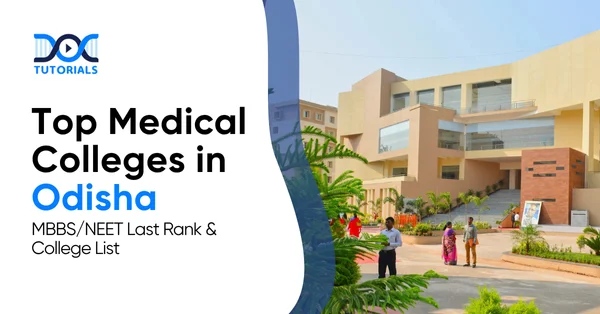
Top Medical Colleges in Odisha: MBBS/NEET Last Rank & College List

Medical Colleges in Odisha

Medical colleges in Odisha are praised for their quality infrastructure, experienced faculty, and large number of patients, which results in great clinical exposure for students. With several reputed institutions like AIIMS Bhubaneswar and SCB Medical College, Cuttack, the state continues to attract aspiring doctors from across India. 

In this guide, we’ll look at the top medical colleges in Odisha, along with their MBBS/NEET last ranks, seat intake, and admission details to allow students to make informed decisions about their medical careers.

Overview of Medical Education in Odisha

The National Medical Commission (NMC) is the regulatory authority for medical education in Odisha and ensures that the standards of medical education are the same in the state. Odisha has a number of different types of medical universities: government, private, and deemed. All of them offer undergrad and post-grad degrees in medicine. 

Students can opt for MBBS (5.5 years including internship), MD/MS (3 years), and super-speciality courses like DM and MCh.

Some of the best medical colleges in Odisha are SCB Medical College, Cuttack; AIIMS Bhubaneswar; and MKCG Medical College, Berhampur. These institutions are widely recognised for their academic excellence, research achievements, and quality healthcare services, making Odisha a preferred destination for medical aspirants.

List of Government Medical Colleges in Odisha

Below is a complete list of government medical colleges in Odisha that offer the MBBS programme:

Name and Address of Medical CollegeYear of InceptionAnnual Intake (Seats)Name and Address of Medical College / Medical InstitutionAnnual Intake
Government Medical College and Hospital, Jajpur, Odisha2,02450
Government Medical College, Bhawanipatna2023100
SCB Medical College, Cuttack1,944250
MKCG Medical College, Berhampur1,962250
Veer Surendra Sai Institute of Medical Sciences and Research, Burla1,959200
All India Institute of Medical Sciences (AIIMS), Bhubaneswar2,012125
Sri Jagannath Medical College & Hospital, Puri2,021100
Fakir Mohan Medical College & Hospital, Balasore (formerly Government Medical College & Hospital, Balasore)2,018100
Bhima Bhoi Medical College & Hospital, Balangir (formerly Government Medical College & Hospital, Balangir)2,018100
Pt. Raghunath Murmu Medical College and Hospital, Baripada2,017125
Saheed Laxman Nayak Medical College & Hospital, Koraput2,017125
Government Medical College, Sundargarh2,022100
Government Medical College, Keonjhar2,022100

Private MBBS Colleges in Odisha

Below is the list of private MBBS colleges in Odisha, along with their eligibility criteria and total course fees:

College NameEligibility CriteriaTotal Course Fees (₹)
SOA Bhubaneswar10+2 with 50% + NEET99.8 Lakh
SLN Medical College and Hospital, Koraput10+2 with 50% + NEET1.53 Lakh
IMS & SUM Hospital, Bhubaneswar10+2 with 50% + NEET99.8 Lakh
KIMS, Bhubaneswar10+2 + NEET93.25 Lakh
KIIT, Bhubaneswar10+2 + NEET74.91 Lakh
DRIEMS University, Cuttack10+2₹9.08 Lakh (annually)
HMCH, Bhubaneswar10+2 with 50% + NEET55 Lakh
Hi-Tech Medical College & Hospital, Rourkela10+222.58 Lakh

Odisha Government MBBS College Fee Structure 2025–26

The fee structure for government MBBS colleges in Odisha for the academic year 2025–26 has been released with only minor revisions from the previous year. These fees are designed to make medical education affordable for meritorious students while maintaining access to quality infrastructure and faculty. 

Below is a detailed breakdown of the academic and other associated fees applicable to MBBS students in Odisha’s government colleges:

Sr. No.Type of FeesAmount
1Admission Fees (One-time)₹1,500
2Tuition Fees (Per Annum)₹25,000
3Fees for Supply of Blank Answer Books (Per Annum)₹500
Total (A)₹27,000

Other Fees Structure 2025–26

Sr. No.Type of FeesAmount
1Security Deposit (One-time & Refundable)₹10,000
2Student Union Fees (Per Annum)₹1,000
3Academic Society Fees (Per Annum)₹500
4Games Fees (Per Annum)₹500
5Magazine Fees (Per Annum)₹400
6Cultural Society Fees (Per Annum)₹400
7Audio Visual Society Fees (Per Annum)₹400
8Dramatic Society Fees (Per Annum)₹400
9Identity Card Fees (Per Annum)₹100
10Orissa Red Cross Society Fees (Per Annum)₹200
11Students’ Aid Fund Fees (Per Annum)₹50
Total (B)₹13,950

Grand Total (First-Year Fees): ₹40,950

From Second Year Onwards: ₹27,450 (excluding one-time payments)

Note: The fee structure given is derived from the latest data available. However, students should check the final structure after the official notification from DMET Odisha is released, as there might be slight changes every session.

Odisha Private MBBS College Fee Structure 2025–26

The private MBBS colleges in Odisha are known to provide advanced academic infrastructure and top-notch medical training. The 2025–26 fee structure for private MBBS colleges consists of annual tuition, NRI quotas, hostel, and mess charges. 

The total fees for one college may be different from another due to the college, its facilities, and the category of the student:

  1. Kalinga Institute of Medical Sciences (KIMS), Bhubaneswar
CourseMBBS Fee (Per Annum)MBBS NRI Fee (Per Annum)Hostel Fee (2-Bedded AC) (Per Annum)Mess (Per Month)
MBBS₹6,75,000USD 16,000₹1,50,000₹5,000

Additional Charges:

  • Admission Fee (One-time): ₹30,000
  • Caution Money (Refundable): ₹20,000
  • Examination Fee (Per Annum): ₹7,500
  • Library Fee (Per Annum): ₹3,000
  1. Institute of Medical Sciences & SUM Hospital, Bhubaneswar
CourseMBBS Fee (Per Annum)MBBS NRI Fee (Per Annum)Hostel Fee (2-Bedded AC) (Per Annum)Mess (Per Month)
MBBS₹6,75,000USD 16,000₹1,30,000₹4,500

Additional Charges:

  • Admission Fee (One-time): ₹25,000
  • Caution Deposit (Refundable): ₹15,000
  • Development Fee (Per Annum): ₹12,000
  1. Hi-Tech Medical College & Hospital, Bhubaneswar
CourseMBBS Fee (Per Annum)MBBS NRI Fee (Per Annum)Hostel Fee (2-Bedded AC) (Per Annum)Mess (Per Month)
MBBS₹6,50,000USD 15,000₹1,10,000₹4,200

Summary of Total Expenses for Private MBBS Colleges (2025–26)

  • Average Annual Cost: ₹8,00,000 – ₹9,00,000
  • Total Estimated Cost for 5.5 Years: ₹42,00,000 – ₹48,00,000
  • For NRI Students: Around 4× regular fees

These costs cover tuition, hostel, and additional institutional fees and present a clear overview for students planning to do private MBBS in Odisha.

Odisha NEET Cut Off 2025 (Expected)

The Odisha NEET 2025 cut-off refers to the lowest marks and percentile that a candidate must have to be considered for MBBS admission in government and private medical colleges in the state. The predicted cutoff is derived from last year’s data and the opinion of experts. Here is an overview:

CategoryExpected NEET Cut-Off (Marks)Percentile
General720 – 13850th
General-PH137 – 12245th
SC/ST/OBC137 – 10840th
SC/OBC-PH121 – 10840th
ST-PH121 – 10840th

Expected NEET Cut Off 2025 for MBBS Colleges in Odisha (Under 15% All India Quota)

Medical aspirants from any state can apply for seats in the government medical colleges of Odisha under the 15% All India Quota (AIQ). The expected NEET 2025 marks and ranks for admission under the AIQ category are given in the table below.

College Name CategoryNEET Marks (Expected)NEET Rank
SCB Medical College, CuttackOPEN5951,872
OBC47233,468
SC41467,347
ST43652,650
MKCG Medical College, BerhampurOPEN5419,274
OBC43652,650
SC40275,594
ST40176,629
Veer Surendra Sai Institute of Medical Sciences & Research (VSSIMSR), BurlaOPEN5399,957
OBC42757,891
SC40176,629
Pt. Raghunath Murmu Medical College, BaripadaOPEN53710,285
OBC42361,148
SC40077,671
Saheed Laxman Nayak (SLN) Medical College, KoraputOPEN53710,324
OBC42261,257
SC40176,583

Expected Odisha NEET Cutoff 2025 for 85% State Quota Seats

Most of the MBBS seats in medical colleges in Odisha are reserved for domiciles of Odisha. These seats, which are also called State Quota Seats, constitute 85% of the total intake. Students must meet the residency criteria and get a score that is equal to or greater than the minimum qualifying marks in NEET. 

The NEET 2025 cutoff predicted at different government medical colleges in Odisha for the state quota is given in the table below:

College NameCategoryNEET MarksNEET Rank
SCB Medical College, CuttackGeneral5595999
SC46635962
ST351121281
MKCG Medical College, BerhampurGeneral53311362
SC44348177
ST313164627


VSSIMSR, Burla
General53111886
SC44249147
ST327147182
Pt. Raghunath Murmu Medical College, BaripadaGeneral51316926
SC43155875
ST299183193
SLN Medical College, KoraputGeneral51017948
SC42062921
ST286200676
Government Medical College, BalangirGeneral50818621
SC42658855
ST287199012
Government Medical College, BalasoreGeneral51217325
SC42062639
ST281208285

Factors Determining Odisha NEET Cutoff

The NEET Odisha cut-off for 2025 will be influenced by several factors. This includes:

  • Difficulty Level of NEET Exam

The difficulty level of the NEET paper, in most cases, will be the main factor deciding the cut-off trends. When the exam is difficult, the cut-off will be lower and vice versa.

  • Seat Availability

The total number of seats available for MBBS and BDS in all the medical colleges of Odisha will collectively determine the degree of competition for admission. The cutoffs are higher, most of the time, if the available seats are fewer.

Additionally, competition will be more intense if there is a large number of applicants for the medical institutions of Odisha. Consequently, the cutoff will be compelled to move up.

  • Reservation Policies

The cutoffs in various categories are different due to the reservation norms followed in Odisha. The cutoffs of reserved categories like SC, ST, OBC, and PwD are usually lower than those of the general category.

  • Previous Year Cutoff Trends

Predicting the cutoff for this year becomes easier if one studies the changes in cutoffs over the last few years. Students get an opportunity to be more realistic in their assessment of chances for admission.

MBBS Admission Process in Odisha Through NEET

The Odisha MBBS admission process is streamlined yet requires meticulous attention to eligibility and deadlines. Here’s a step-by-step breakdown:

Step 1: Qualify NEET UG

A candidate must obtain at least the minimum qualifying marks in NEET UG to be allowed to enter the counselling process. The qualifying marks change every year depending on the difficulty of the exam and the number of candidates.

Step 2: Participate in Counselling

Couples in Odisha have the option to select from two types of counselling: one is the 15% All India Quota (AIQ), while the other is the 85% State Quota.

For All India Quota (AIQ):

  • The Medical Counselling Committee (MCC) is responsible for the process.
  • It includes online registration, option filling, and seat allocation.
  • The candidates must do document verification before the last allocation.

For State Quota (Odisha Domicile Students):

  • Issued by the Odisha Joint Entrance Examination (OJEE) authority.
  • Distinct registration and choice-filling process.
  • State-domiciled candidates are given the first preference.
  • Includes multiple rounds of seat allotment based on NEET scores.

Step 3: Document Verification

The students must bring their original documents for verification. The list includes:

  • NEET UG scorecard and admit card
  • 10th and 12th mark sheets and certificates
  • Odisha domicile certificate
  • Caste or category certificate (if applicable)
  • Medical fitness certificate
  • Character certificate

Step 4: Seat Allotment & Final Admission

The seats are allocated based on merit, choices, and category reservation. The selected candidates must visit their colleges within the specified time to confirm their admission.

Factors to Consider While Choosing a Medical College in Odisha

The right medical college in Odisha helps you shape your academic and professional journey. In order to make a wise decision, students need to assess multiple factors that impact the quality of education, exposure, and career opportunities:

  • Accreditation and Affiliation

Ensure the college is approved by the National Medical Commission (NMC) or other recognised authorities to maintain academic credibility and international degree acceptance.

  • Ranking and Reputation

Use ratings like NIRF and other national frameworks to get an idea about the institution’s scholastic standing, staff instructional ability, and research quality.

  • Campus Location and Infrastructure

Factors such as location, standard of living, and availability of good facilities should all be considered when selecting between colleges.

  • Academic and Clinical Exposure
  • New Laboratories and Modern Technology: Search for a college that employs state-of-the-art diagnostic techniques and international standards for both normal and simulation-based training.
  • Hospital Tie-ups: To achieve proper clinical exposure through practice, it is better to take a college that is related to a hospital with a high rate of patients, such as SCB Medical College or AIIMS Bhubaneswar.

  • Courses and Specialisations

You should select colleges offering the possibility of MD, MS, DM, or MCh for further educational advancement besides medical courses. An institution that is involved in genomics, AI in health care, telemedicine, etc., is usually the one that gives you the most advanced learning experiences.

  • Fee Structure

Although government medical colleges with reasonably low fees are good, private ones may charge more but still offer you excellent infrastructure and facilities.

  • Cutoff and Admission Insights

Study the past NEET cutoff thoroughly and estimate the colleges that would be accessible for you based on the scores you get. Further, understand the difference between the seats under the All India Quota (15%) and the State Quota (85%) for better planning of admission.

  • Career Opportunities and Placements
  • Internships & Residency: Colleges associated with reputed hospitals offer excellent internship opportunities and practical exposure.
  • Postgraduate Opportunities: Students graduating from renowned universities have access to MS seats in universities of their choice, and also hospital recruitments abroad made possible by the network connection with the university.
  • Alumni Network and Student Feedback: You can get real-life advice about life on campus and the opportunities that follow graduation if you talk to the alumni. Furthermore, check out information on faculty, facilities, and studies from online forums and student reviews.
  • Campus Life and Support Facilities: Hostels should offer not only cleanliness, nutritious food, and security but also provide a healthy living environment for students. Being a part of sports, clubs, and cultural events not only ensures you lead a balanced lifestyle but also keeps your mental health in check.

FAQs About Top Medical Colleges in Odisha

  1. What are the main exams that are taken into account for admission to MBBS colleges in Odisha?

The main exam that forms the basis for admission to MBBS colleges in Odisha is NEET. After that, the State-level Counselling Quota and All India Quota, followed by the NEET results, are considered.

  1. Is it possible for me to get an MBBS spot at AIIMS Bhubaneswar if my NEET rank is 1000?

It is quite difficult to secure a seat at AIIMS Bhubaneswar with a NEET rank of 1000. Nevertheless, you can aim for other government colleges like SCB Medical College, Cuttack; VIMSAR Sambalpur; and MKCG Berhampur.

  1. How many MBBS seats are there in Odisha that can be filled through NEET?

The state of Odisha offers more than 2,100 MBBS seats in government and private colleges, out of which 85% of the seats are reserved for the state quota and 15% for the All India Quota.

  1. What are the top three MS colleges in Odisha?

The most prominent colleges where you can take MS courses in Odisha are SOA University, AIIMS Bhubaneswar, and SCB Medical College, Cuttack.

  1. Will the management quota seats be available in MBBS colleges of Odisha?

Yes, a few privately owned medical colleges offer management quota seats, which come with higher fees as compared to government quota seats.

  1. Are KIMS and SUM Hospital government colleges?

No, the Institute of Medical Sciences and SUM Hospital and Kalinga Institute of Medical Sciences (KIMS) are Private Deemed to be Universities in Bhubaneswar. Both have their own fee structure and admission is through counseling in Deemed University, not through any Quota System of State Government.

  1. Are drop-year or long-term students eligible for Odisha state quota MBBS seats?

Yes, candidates from the drop year and long-term courses will be eligible for the 85% Odisha state quota seats in the MBBS course, provided all other eligibility criteria are fulfilled. This includes fulfilling Odisha domicile requirements, passing 10+2 from a recognised Odisha board, and submitting the required documents during counselling.

  1. Does Odisha MBBS admission provide EWS reservation?

Yes, in Odisha, there is a provision of giving a 10% reservation under the EWS category to the eligible candidates of the Economically Weaker Section. This is in accordance with the norms of the Central and State Governments. The cutoff for EWS is released separately during counselling by OJEE.

  1. Can non-domicile students apply for MBBS in Odisha government colleges?

Non-domicile students are eligible to apply for the 15% AIQ seats in government medical colleges in Odisha. The 85% seats under the state quota are reserved for Odisha domicile students only. Admission rules for private colleges may be different for each college.

  1. What are the steps after the NEET result for Odisha MBBS/BDS counselling?

After the NEET results are announced, the following steps must be followed for counselling in MBBS or BDS in Odisha:

  • Complete online registration on the OJEE counselling portal
  • Upload documents for verification
  • Fill and lock the choices of colleges and courses
  • Verify cut-off and seat allotment results
  • Report to the allotted institute within the given schedule and guidelines

Conclusion

Odisha has established itself as one of India’s key destinations for medical education, offering a perfect blend of affordability, academic excellence, and hands-on clinical exposure. Well-known institutions like AIIMS Bhubaneswar, SCB Medical College, Cuttack, and advanced private universities such as KIMS and IMS & SUM Hospital provide students with excellent facilities and highly competent faculties to prepare them for a successful medical career.

As the competition for NEET intensifies, choosing the right college and maintaining a strong study strategy are equally important. To be successful in your medical journey, DocTutorials is indeed a study partner you can rely on. Our MBBS curriculum comprises engaging video lectures, a CBME-centric syllabus, planned mentorship, and elaborated hard copy notes that promote students’ academic growth.

Get started with DocTutorials to avail a comprehensive MBBS learning experience that empowers you to shine in your medical career with confidence and clarity!

DocTutorials App Download Now

Latest Blogs

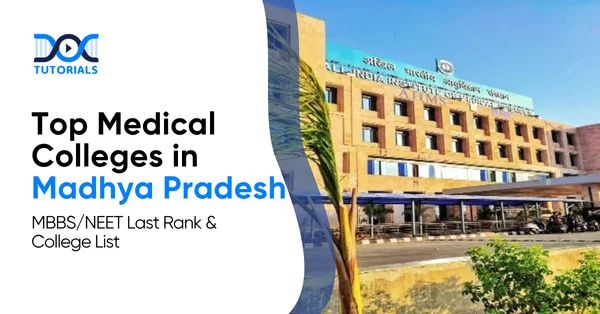
Top Medical Colleges in Madhya Pradesh

Top Medical colleges in Madhya Pradesh

Madhya Pradesh (MP) has become a top choice for medical education in India, effectively blending theoretical and practical learning. It has 18 government medical colleges that jointly provide close to 2,700 MBBS seats via NEET for an 85% state quota.

Renowned institutions like AIIMS Bhopal, Gandhi Medical College, Bhopal, and NSCB Medical College, Jabalpur have established themselves as top choices for aspiring doctors due to their advanced facilities, experienced faculty, and extensive clinical training opportunities.

In this article, we’ll explore the top medical colleges in Madhya Pradesh, their NEET last ranks, and provide complete details to help you make an informed choice for your MBBS journey. Keep reading for a detailed insight.

An Overview of Medical Colleges in Madhya Pradesh

The medical education scenario in Madhya Pradesh is dynamic, and it offers a good mix of government and private colleges that have been approved by the National Medical Commission (NMC). Instead of just focusing on academic opportunities, these institutions prepare their students for clinical exposure in real-life situations.

The following is a summary of the leading medical colleges in Madhya Pradesh:

  • Govt. Medical Institutions: There are about 18 government medical colleges, including the reputed All India Institute of Medical Sciences (AIIMS) Bhopal, which provide excellent standards of education at highly affordable fees along with state-of-the-art training facilities, besides great clinical exposure.
  • Private Colleges: It is estimated that the number of private institutions is between 12 and 15. These colleges provide students with modern infrastructure, specialised programs, and personalised learning, thus offering premium medical education.
  • Total Colleges: The total number of MBBS colleges in Madhya Pradesh goes from 27 to 33, taking into consideration the latest changes and the criteria of inclusion, which reflects the state’s growing commitment to producing competent medical professionals.

The Directorate of Medical Education (DME), Madhya Pradesh, takes total responsibility for MBBS admissions for 2025. This includes 85% state quota seats in government colleges as well as 100% seats in private colleges. On the other hand, the Medical Counselling Committee (MCC) manages the 15% All India Quota (AIQ) for government medical seats.

List of Top Government Medical Colleges in Madhya Pradesh

Government medical colleges in Madhya Pradesh are highly regarded for their affordability, quality of education, and extensive hands-on clinical exposure. These colleges provide a solid foundation in medical sciences while ensuring students gain practical experience in large teaching hospitals. 

The table below lists the key government medical colleges:

State RankMedical CollegeLast Rank AllottedAlloted Quota
1AIIMS-Bhopal510Open Seat Quota
2M.G.M. Medical College, Indore3732All India
3Gandhi Medical College, Bhopal4,668All India
4Gajra Raja Medical College, Gwalior5,674All India
5Netaji Subhash Chandra Bose Medical College, Jabalpur6,583All India
6Atal Bihari Vajpayee Government Medical College, Vidisha6,894All India
7S.S. Medical College, Rewa7,920All India
8Bundelkhand Medical College, Sagar8,986All India
9Govt Medical College Ratlam10,113All India
10Govt Medical College Shivpuri10,169All India
11Government Medical College, Seoni11,202All India
12Government Medical College, Datia11,440All India
13Govt. Medical College, Khandwa11,588All India
14Chhindwara Institute of Medical Sciences12,368All India
15Govt Medical College Shahdol13,104All India
16Government Medical College, Satna13,348All India
17Sundarlal Patwa Government Medical College, Mandsaur14,215All India
18Virendra Kumar Sakhlecha Government Medical College, Neemuch14,277All India

Facilities of Government Medical Colleges in Madhya Pradesh

The government medical colleges in Madhya Pradesh offer a variety of programs in medicine that are backed by good infrastructure and facilities for the training of healthcare professionals. They are known for low tuition fees, a faculty that is experienced, and close associations with large teaching hospitals.

Clinical exposure through hands-on practice is the main advantage that students get in their controlled and comprehensive learning environment. Key facilities include:

  • New lecture halls and classrooms have been built to provide a more effective learning environment.
  • Cutting-edge medical laboratories provide practical training in various medical disciplines.
  • Libraries which are fully equipped and with a selection of books, journals and online sources for research.
  • Attached teaching hospitals offering multi-speciality patient care and real-world clinical experience.
  • Hostels for boys and girls that are separate and built with safety and comfort in mind.
  • Research centres and e-learning platforms that foster scientific exploration and new ideas.
  • Recreation and sports facilities to encourage students’ holistic development.

List of Top Private Medical Colleges in Madhya Pradesh

Private medical colleges in Madhya Pradesh enrich the medical education landscape with their advanced infrastructure, modern facilities, and a more personalised approach to training. These are the best medical colleges in Madhya Pradesh that are fit for students who want to pursue a specialised program and also have practical exposure.

The following are some of the detailed descriptions of private medical institutions in the state:

Name of College/UniversityEstablished
Amaltas Institute of Medical Sciences2,016
Chirayu Medical College2,011
Index Medical College2007
LN Medical College2009
LNCT Medical College2021
Mahaveer Institute of Medical Science2020
RD Gardi Medical College2001
RKDF Medical College2014
Sri Aurobindo Institute of Medical Sciences2003
Sukh Sagar Medical College2021

NEET 2025 Minimum Qualifying Percentile & Expected Score in Madhya Pradesh

The NEET 2025 minimum qualifying criteria for MBBS/BDS admission in Madhya Pradesh are expected to be as follows:

CategoryQualifying PercentileExpected Cut-off Score
UR/EWS50th percentile686 – 144
OBC40th percentile143 – 113
SC40th percentile143 – 113
ST40th percentile143 – 113
UR/EWS – PwBD45th percentile143 – 127
OBC/SC/ST – PwBD40th percentile126 – 113

These are the minimum qualifying thresholds, and it is important to note that the actual admission cut-offs for MBBS and BDS seats in Madhya Pradesh are usually much higher, especially in government colleges, due to higher competition.

MP NEET 2025 Expected Government Medical College Cut Off (State Quota)

The expected closing ranks for government medical colleges in Madhya Pradesh under the state quota are estimated based on previous year trends. Actual 2025 ranks may vary depending on seat availability and competition.

College NameExpected UR Closing RankExpected OBC Closing RankExpected SC Closing RankExpected ST Closing Rank
Gandhi Medical College, Bhopal~12,000~13,500~55,000~60,000
Mahatma Gandhi Memorial Medical College, Indore~10,500~15,000~48,000~52,000
Netaji Subhash Chandra Bose Medical College, Jabalpur~23,000~25,000~71,000~75,000
Bundelkhand Medical College, Sagar~34,000~36,000~83,000~90,000

MP NEET 2025 Expected Private Medical College Cut Off (State Quota)

Generally, private medical colleges in Madhya Pradesh have lower closing ranks than government colleges, especially for reserved categories and management quota seats. The expected ranks are:

College NameExpected Closing Rank (UR)Expected Closing Rank (OBC/ST/SC)
LN Medical College and JK Hospital, Bhopal~110,000~800,000
Index Medical College, Indore~107,000~550,000
RD Gardi Medical College, Ujjain~70,000~700,000
People’s College of Medical Sciences, Bhopal~90,000~950,000

MP NEET 2025 BDS Cut Off in Government & Private Colleges Ranks

The cut-offs for BDS admissions in government colleges are significantly higher than those in private dental colleges. The approximate expected closing ranks are:

InstitutionExpected UR Closing RankExpected Other Category Closing Rank
Government College of Dentistry, Indore~75,000~2,10,000
Top Private Dental Colleges (e.g., Bhabha, Index, Mansarovar)2,00,000–5,00,000~8,00,000–13,00,000

These ranks can vary due to the yearly demand, counselling rounds, and the distribution of seats by category. For full information, always look at the official opening and closing ranks during NEET counselling.

Previous Years’ MP NEET Closing Ranks: 2023 vs 2024

The table below shows the MP colleges and their closing ranks in the last two years:

College2023 UR Closing Rank2024 UR Closing Rank
Gandhi Medical College, Bhopal16,6251,18,360
MGM Medical College, Indore10,5961,07,040
Bundelkhand Medical College, Sagar33,37234,370
Government Medical College, Ratlam39,6203,19,105

The closing ranks can differ a lot depending on how popular a college is, the category, and how many seats are available in each round. So, always check the official list in the current year to know the final allotments.

Admission Eligibility Criteria for Medical Colleges in Madhya Pradesh

The eligibility criteria for MP MBBS 2025 admission include:

  • 15% All India Quota (AIQ) Seats: Admission will be given to the 15% AIQ seats based on a candidate’s NEET 2025 rank. Candidates first have to apply at mcc.nic.in for MCC NEET 2025 counselling, then proceed to choice filling and seat allotment.
  • Central/Deemed Universities: The candidates who are eligible for MBBS/BDS seats in the central and the deemed universities in Madhya Pradesh (MP) will get the seats through NEET 2025 counselling.
  • 85% State Quota Seats: The online counselling procedure to fill 85% state quota seats is conducted by the Directorate of Medical Education (DME), MP.
  • Private Colleges: Apart from the seats in the government colleges, the DME controls the entire process of counselling for the private institutions. The admissions to the private MBBS colleges in MP are solely through the MP MBBS counselling.

Fee Structure of MBBS in Medical Colleges in Madhya Pradesh

The fee structure for MBBS in Madhya Pradesh medical colleges varies significantly between government and private colleges, providing options for different budgets:

For Government Colleges

  • Annual Fee Range: ₹65,255 – ₹1,14,000
  • Total Course Cost (5.5 years): ₹3–6 lakhs

For Private Colleges

  • Annual Fee Range: ₹9,50,000 – ₹12,00,000
  • Total Course Cost (5.5 years): ₹45–70 lakhs

Additionally, there are also expenditures such as the hostel (approximately ₹1–2 lakhs/year), mess charges, and one-time security deposits (approximately ₹1–3 lakhs). This mixture of affordable government choices and high-end private colleges attracts MBBS candidates from various financial backgrounds, hence making Madhya Pradesh a preferred location.

Factors to Consider While Choosing a Medical College in Madhya Pradesh

Choosing the right medical college is a critical decision for MBBS aspirants and their parents. While personal preferences may vary, several common factors can help evaluate the quality and suitability of a medical college in Madhya Pradesh.

Here are some factors to take into consideration:

  • Tuition Fees

Among the deciding factors when it comes to selecting an MBBS college, tuition fees are the primary concern. Tuition fee of government colleges in Madhya Pradesh ranges from ₹1,360 per year to around₹50 lakhs per year in private colleges; however, it also varies depending on the quota and type of the institution.

The candidates may compare the colleges on the basis of tuition fees and think of other relevant issues such as location, patient flow, availability of PG courses, and infrastructure.

  • Age of the Medical College

The experience and reputation of a medical college are closely related to its age. The majority of parents consider this factor while ranking colleges, especially during All India Counselling.

  • Number of MBBS Seats

The number of MBBS seats available in a college can be a good indication of the quality of that college in terms of infrastructure and facilities. The National Medical Commission (NMC) has specified that a medical college with 150 MBBS seats should have 300 hospital beds along with an average daily patient flow of 300.

Such medical colleges in Madhya Pradesh, which have 250 MBBS seats, are usually equipped with excellent infrastructure, as they have more than 1200 beds and 2000+ patients daily, and thus provide ample clinical exposure.

  • PG Courses

The number of postgraduate (PG) and super-speciality courses in a medical college reflects the range of specialised departments available. More departments mean better guidance for UG students, as junior and senior resident doctors provide mentorship during clinical practice.

If you plan to pursue PG studies in Madhya Pradesh, check the number of DM/MCh and other speciality courses offered by the college.

  • Average Patient Flow

Clinical exposure is the major need in medical education. A high patient flow in the colleges allows the students to gain experience on a wide range of cases. Some private colleges may have less patient flow, and as a consequence, they might even get temporarily suspended.

Always check if a medical college in Madhya Pradesh has a history of debarment or recognition issues and avoid such colleges.

  • Total Hospital Beds

Generally, a higher number of inpatient beds is seen as a positive factor for clinical practice opportunities. In such cases, colleges with hospitals with more than 500 beds are considered ideal for hands-on training. It is also important to know the total number of beds available in all the departments.

  • Compulsory Rural Service

Some state government medical colleges in Madhya Pradesh may require UG students to complete a 1-year rural service under a bond. Penalties for not completing the service can range significantly. Candidates should confirm the rules for each college before admission.

  • Internal PG Quota

Certain colleges in Madhya Pradesh may offer an internal PG quota for students who have studied in affiliated colleges. This allows for a relatively easier path to PG admission if the PG-to-UG seat ratio is favourable.

  • Internship Stipend

Stipends for the internship vary depending on the area and the college. The monthly stipend for MBBS interns in Madhya Pradesh is usually ₹7000. This may not be a significant factor when choosing a college, but it can be a handy extra advantage.

  • College Location

The location of the hospital supports patient exposure, availability of PG coaching centres, and connectivity. Colleges located in big cities or district headquarters of Madhya Pradesh offer higher patient flow, more varied clinical cases, and better facilities.

FAQs about Top Medical Colleges in Madhya Pradesh

  1. How many marks are required in NEET for MBBS in Madhya Pradesh?

For NEET 2025, the expected cut-off marks for government MBBS colleges in Madhya Pradesh (state quota) are 620–635 for the General (UR) category, 610–625 for OBC/EWS, 480–560 for SC, and 400–525 for ST. These marks are indicative and may vary slightly depending on seat availability and competition.

  1. Which medical college is ranked number 1 in Madhya Pradesh?

AIIMS Bhopal holds the top rank among medical colleges in Madhya Pradesh. It is renowned for its advanced infrastructure, experienced faculty, and extensive clinical training opportunities.

  1. Is a 60,000 rank in NEET considered good?

A NEET rank of 60,000 is considered moderate to low. While it may not secure admission in top government colleges, candidates can explore private or deemed universities or state-level government colleges with lower competition.

  1. What is the NEET cut-off for MBBS in Madhya Pradesh 2025?

The qualifying percentile for NEET 2025 in Madhya Pradesh is 50th for UR/EWS and 40th for OBC, SC, and ST categories. Corresponding expected cut-off scores range from 686–144 for UR/EWS and 143–113 for reserved categories.

  1. Can a candidate with a 30,000 NEET rank get admission in a government medical college?

Admission with an AIR of 30,000 is generally possible only for candidates in the SC or ST categories. Candidates in the General, OBC, or EWS categories would need a higher rank to secure a government MBBS seat.

  1. Are there private medical colleges in Madhya Pradesh?

Yes, there are many reputed private medical science colleges and deemed universities in Madhya Pradesh. For more information on private medical science colleges, students can refer to the official website of the Directorate of Medical Education, Madhya Pradesh.

  1. Is GMC Bhopal a good option for the MBBS course?

Gandhi Medical College (GMC), located in Bhopal, is definitely a top MBBS institution in India, as it provides 180 MBBS seats every year through NEET, an entrance exam conducted by the National Testing Agency (NTA).

  1. How many marks are required in NEET for MBBS in MGM Indore?

For eligibility criteria, General category students require 145-165 marks (50th percentile), while SC/ST and OBC category students require 110-140 marks (40th percentile). However, actual admission to MBBS in MGM Indore usually requires a much higher score, typically 500–650+ marks. Top institutes like AIIMS or MAMC often need 650+ marks for the General category, while most state government colleges require between 500–600 marks.

  1. How much NEET score is required for AIIMS Bhopal?

The NEET UG 2025 cutoff has been announced for MBBS, BDS, and BSc Nursing courses. For AIIMS Bhopal MBBS, the Round 2 closing rank in 2025 was 634 for the General All India category. In comparison, the closing rank was 79 in 2024 and 579 in 2023, showing yearly variation based on competition.

  1. What is the fee for MBBS in MGM College Indore?

The fee structure of MBBS in Mahatma Gandhi Memorial Medical College, Indore, is ₹1.18 lakh annually. The MD courses across different specialisations also have a similar fee structure of ₹1.18 lakh per year.

Conclusion

Madhya Pradesh offers a diverse medical education landscape, with top government and private colleges providing quality teaching, advanced infrastructure, and extensive clinical exposure. Institutions like AIIMS Bhopal continue to be preferred choices due to their affordability, experienced faculty, and practical training opportunities. 

Private colleges also offer modern facilities and personalised attention, making the state a hub for aspiring doctors. Understanding NEET 2025 cut-offs, eligibility criteria, and State vs. All India quota seats is crucial for securing admission. 

To stay ahead in your medical journey, DocTutorials can be your study partner. Our MBBS curriculum provides interactive animated video lectures, a CMBE-focused syllabus, structured mentorship, and hard copy notes to help students reach their true academic potential.

Join DocTutorials today and explore our MBBS curriculum to excel in your medical career!

DocTutorials App Download Now

Latest Blogs

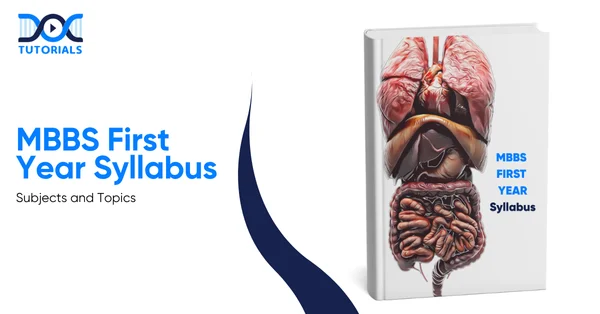
MBBS First Year Subjects: Syllabus and Topics

Mbbs first year syllabus | DocTutorials

If you’re preparing for your MBBS journey, knowing the first year syllabus of MBBS is essential. The first year lays the groundwork for your medical profession, and it will be beneficial to learn the subjects in advance. The 1st year MBBS syllabus is divided into semesters and includes three main pre-clinical subjects: Anatomy, Biochemistry, and Physiology.

Along with the syllabus, it is crucial to know about the sub-branches in-depth, along with the recommended books that will help you study. In this guide, we will explore a brief description of what and how you can learn from your MBBS first-year syllabus.

Keep reading for a detailed insight.

MBBS First Year Subjects & Syllabus

In the first year of MBBS, students have the opportunity to study 3 core subjects that constitute the foundation of medical sciences. They include:

  1. Anatomy

Anatomy covers the exploration of the organisation and structure of the human body. It describes bones, muscles, joints, organs, and tissues, and how they are connected to one another.

It is necessary to study thoroughly since it gives a structural and visual comprehension of the body so that future physicians can better understand disease and conduct clinical practice. The students are taught how the different systems communicate with one another and work together to maintain the body in balance and in good health overall.

  1. Biochemistry

Biochemistry delves into the body at the chemical and molecular levels. It studies significant processes like metabolism, enzymatic activity, genetic material, and the biochemical function of vitamins and hormones.

  1. Physiology

Physiology is concerned with the manner in which the human body operates at the cellular and systemic levels. It outlines the functioning of systems like the cardiovascular, nervous, respiratory, renal, and endocrine systems.

With the 1st year MBBS Biochemistry syllabus, students can get educated on how different chemical reactions maintain life and how their imbalances cause diseases.

Sub-branches of the MBBS First Year Subjects

All 3 subjects have their own elaborate syllabus through which students are introduced to theoretical knowledge as well as its application. The following is an overview:

  1. Anatomy Sub-branches

The subject of Anatomy is vast, and its syllabus is divided into different branches to help students understand the body systematically. Here is the Anatomy syllabus for MBBS first year:

  • Gross Anatomy: This department teaches students the basics of anatomy, such as the definition, body positions, body planes, tissues, and movements. It forms the basis of learning the intricate composition of various parts of the body.
  • Muscular System: Here, students learn about the grouping of muscles, identification of the muscles, origin, insertion points, innervation, and microscopic arrangement of the muscle tissue. It also involves the way the muscles respond to nerve endings in order to produce movement.
  • Arthrology: It deals with the examination of joints, their definition, classification, and fundamental features. The subject involves the study of big limb joints, their structure, movements, and microscopic anatomy, like articular cartilage and synovial fluid.
  1. Biochemistry Sub-branches

The study of Biochemistry is organised into specific sections that explain the molecular processes and their clinical significance. Following is the Biochemistry 1st year MBBS syllabus:

  • Biomolecules: This section of the Biochemistry syllabus MBBS 1st year deals with the classification and role of carbohydrates, proteins, lipids, and amino acids. Students are also introduced to molecular mechanisms, plasma protein function, their role in the body, and their clinical importance.
  • Enzymes: This subject covers the fundamentals of enzymes, including nomenclature, classification, kinetics, and mode of action. It also addresses how the action of the enzymes is controlled and why enzymes are an essential component of metabolic reactions.
  • Metabolic Pathways, Their Regulation and Interrelationships: In this subject of Biochemistry syllabus for MBBS 1st year students learn about the metabolism of lipids, proteins, carbohydrates, and the tricarboxylic acid (TCA) cycle. 

It also emphasises the coordination of such metabolic reactions, assimilation of food, nutrition, and the role of energy production in sustaining life.

  1. Physiology Sub-branches

The syllabus of Physiology provides students with a clear understanding of how the body’s separate systems function individually and in coordination with each other. The topics include:

  • General Physiology: This unit familiarises students with fundamental physiological concepts, including homeostasis, body regulating mechanisms, cellular physiology, and effective learning approaches in physiology. It forms the basis for a more detailed study of the organ systems.
  • Nerve-Muscle Physiology: This topic covers cell membrane physical and chemical characteristics, bioelectric principles, resting membrane potential genesis, action potential, and functional anatomy of the nerve and muscle tissue.
  • Blood Environmental: Here, the students study plasma proteins and their role, hematopoiesis, anaemia types and causes, functions of white blood cells, hemostasis, blood groups, functions of platelets, and mechanisms for the regulation of normal physiology of blood.

List of MBBS 1st Year Books

The books of the MBBS first year syllabus for 1st semester are recommended by the Medical Council of India (MCI). They are generally used in medical colleges, and the students also recommend them for advanced knowledge. They provide a solid foundation for a better understanding of the concepts.

The tabulated list of some key recommended books is as follows:

SubjectBook NameAuthor(s)
AnatomyTextbook of Anatomy: Upper Limb and Thorax Vol. 1Vishram Singh
AnatomyTextbook of AnatomyVishram Singh
PhysiologyHuman PhysiologyChandi Charan Chatterjee
PhysiologyMedical PhysiologyGuyton and Hall
BiochemistryTextbook of Biochemistry for Medical StudentsDamodaran M. Vasudevan, S. Sreekumari
Medical EmbryologyTextbook of Medical EmbryologyLangman’s
BiologyMolecular BiologyVasudevan

How to Make the Syllabus Work for Proper Study?

After knowing the MBBS first-year syllabus well, now it’s time to plan it smartly to organise your studies. The following are some practical tips that can help you use it in the best possible way:

  • Subject Breakdown

Rather than attempting to study the whole syllabus at one time, break it into compartments. Study one subject or sub-topic at a time to develop clarity and avoid confusion.

  • Prepare a Timetable

Develop a realistic timetable by assigning specific time intervals for every subject. Spend more time on your weak subject areas, but never at the expense of losing regularity on all subjects. Following the schedule develops a certain level of discipline needed for steady progress. 

  • Regular Revision

Revision is the secret to memorisation. Go through the portions covered earlier at regular intervals. This not only consolidates your knowledge but also improves long-term memory, which comes in handy while preparing for exams.

  • Make Use of Diagrams and Charts

Subjects like Anatomy are highly diagrammatic in nature. When you are learning, using charts, flow charts, and simple hand-drawn figures will make it easier to memorise and enhance your recall when you are taking exams.

FAQs about MBBS First Year Syllabus

  1. How many subjects are there in the first year of MBBS?

MBBS is divided into 3 subjects in the first year, which are Anatomy, Biochemistry, and Physiology. These are the core of advanced medical education and form the major part of the early semesters.

  1. What is the first year MBBS syllabus?

Anatomy, Biochemistry, and Physiology are the core subjects studied in the first year of study. Other topics include learning gross anatomy, microanatomy, biomolecules, enzymes, metabolic pathways, blood physiology, nerve-muscle functions, and food assimilation.

These learnings give a close understanding of the human body structure, functions, and chemical processes.

  1. Is the 1st year of MBBS hard?

Yes, the first year of MBBS is generally one of the most challenging phases. The syllabus is vast and entirely new to the majority of students. However, students can adapt to the load with proper management of time, continued revision and focus on the three important subjects.

  1. What is the most difficult subject in the MBBS first year?

Difficulty level is different for every student, but Anatomy is generally considered the most challenging subject in the first year. It’s because it encompasses a huge amount of factual information, diagrams, spatial visualisation, and memorisation. It becomes difficult for most students to memorise the complex structures of the human body.

  1. Is there any Physics in the MBBS first year?

Yes, though Physics, Chemistry, and Biology are mostly covered during the pre-medical phase, they still have relevance in MBBS. Physiology and Biochemistry make use of concepts of Physics, like concepts of bioelectricity and fluid dynamics, and are thus indirectly part of the first-year syllabus.

  1. Is MBBS easy?

The 1st-year MBBS syllabus is not at all easy. It required constant hard work and dedication to clear the MBBS to live your dream as a doctor. The complexity and difficulty of the MBBS examination decrease as the student gains expertise across different branches. 

  1. Can I complete MBBS in 3 years?

No, there is no fast-track way to complete the MBBS course early. It is essential for the candidates to undergo 5.5 years of training and classroom lectures, including the MBBS first year syllabus.

  1. Is MBBS tougher than IIT?

The difficulty levels of MBBS and IIT depend on the individual preferences and perceptions. Some students who have strong memorisation and social skills find the Biochemistry syllabus for MBBS 1st-year students easy, while others find engineering topics easy, as they require conceptual and analytical skills.

  1. What is the 4 attempt rule in MBBS?

The 4 attempts rule in MBBS in India limits students to a maximum of 4 attempts to clear the 1st-year MBBS syllabus, including supplementary exams, within 4 consecutive academic years. Failing to pass within this limit or to complete the course within 9 years in total typically leads to disqualification from continuing the MBBS program. 

  1. Is the MBBS semester easy?

The 1st-semester MBBS syllabus is not easy at all, given its prolonged duration, academic intensity, and the responsibility of preparing for a career in saving lives, which makes MBBS significantly more challenging than other undergraduate programmes.

Conclusion

The MBBS 1st year syllabus is the base of medical education, with Anatomy, Physiology, and Biochemistry being the cornerstone. With expert guidance and systematic learning assistance from DocTutorials, students can approach the first year with ease and lay a solid base for their future medical career.

For students preparing for MBBS, DocTutorials is a trustworthy medical education platform. Our in-depth MBBS curriculum includes 2D & 3D animated lectures, Qbank, and previous year question papers.

Join DocTutorials today to excel in your medical exam!

DocTutorials App Download Now

Latest Blogs

NEET PG Online Live Power Pack
DocTutorials App Download Now