Air Pollution: Types, Indicators, and Measurements
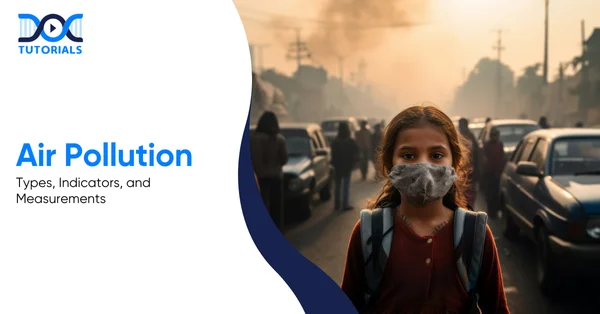
Air pollution is a widespread environmental and public-health challenge that occurs when harmful substances enter the air we breathe. Globally, air pollution contributes to millions of premature deaths every year, making it one of the most significant environmental health threats faced by children and adults alike.
All ages are vulnerable to the effects of air pollution, but children, the elderly, and those with underlying medical conditions are especially at risk. Although the effects of poor air quality may not be immediately apparent, long-term exposure without treatment can cause permanent harm to your health.
Keep reading to learn more!
What is Air Pollution?
Air pollution occurs when harmful gases and particles from vehicles, factories, and burning fuels contaminate the air. It can cause health problems, especially in children and the elderly, and also damage the environment.
Air pollution affects both human health and the environment by contaminating the atmosphere with harmful substances such as gases, particles, chemicals, and biological agents from sources like cars, factories, fires, and household fuels.
Key pollutants, such as particulate matter (PM2.5), ozone, carbon monoxide, and nitrogen/sulfur dioxides, are present both indoors and outdoors and present a risk to everyone, particularly young people and the elderly.
Air pollution can cause significant health risks, including the development of illnesses and potentially fatal consequences. In addition to adversely affecting other living things, such as crops and animals, it also damages natural environments through acid rain, ozone depletion, habitat degradation, and climate change.
What are the Types of Air Pollution?
Air pollution has two types: primary pollutants, which are directly released from vehicles and factories, and secondary pollutants, which form when these react in the air. Both are harmful to health and the environment.
There are 2 types of air pollutants, which are as follows:
- Primary Pollutants: These are the main causes of air pollution, released into the atmosphere by sources such as automobiles, industrial processes, and natural occurrences.
Both the environment and human health may be negatively impacted by these pollutants. Carbon monoxide (CO), sulfur dioxide (SO2), nitrogen oxides (NOx), volatile organic compounds (VOCs), and particulate matter (PM) are a few examples of primary pollutants.
- Secondary pollutants: Secondary pollutants develop when primary pollutants react chemically with other atmospheric substances rather than being released directly into the atmosphere. Sunlight or other catalysts are typically present during these reactions.
Ground-level ozone (O3), photochemical smog, and peroxyacetyl nitrate (PAN, C2H3NO5) are a few examples. When pollutants such as nitrogen oxides (NOx) and volatile organic compounds (VOCs) interact with sunlight, they are produced.
They can harm the environment and human health, especially in urban areas with high emissions.
The economy, ecosystems, human health, and air quality can all be adversely affected by primary and secondary air pollutants. Therefore, managing and reducing their emissions is essential for enhancing air quality and lowering health risks related to pollution.
What are the Sources of Air Pollution?
Sources of air pollution include industries, vehicles, agriculture, and wildfires. Factories and power plants release harmful gases, vehicles cause urban smog, farming activities emit pollutants, and wildfires spread smoke and particles into the air.
Air pollution sources can also be either natural or anthropogenic. Here are the main contributors:
- Industrial Emissions
Factories, power plants, and refineries are among the sources. These facilities are major sources of pollution, producing a variety of pollutants, including nitrogen oxides and sulfur dioxide.
- Transportation
Among the primary causes of air pollution are cars, trucks, buses, and aeroplanes. Carbon monoxide, nitrogen oxides, and hydrocarbons released by automobiles cause smog and contaminated air in urban areas.
- Agriculture
Poisonous gases are released into the atmosphere by agricultural operations, including fertiliser use and pesticide spraying.
- Wildfires
Forest fires are also a natural source of air pollution. They release large amounts of smoke and particulate matter into the atmosphere, polluting the air over large areas.
What are the Air Pollution Indicators and Measurements?
Air pollution indicators and measurements are used to check how clean or polluted the air is. The Air Quality Index (AQI) combines these measurements to show overall air quality and tracks major pollutants, including PM2.5, PM10, nitrogen dioxide, sulfur dioxide, carbon monoxide, ozone, ammonia, and lead.
Air pollution indicators and measurements refer to specific pollutants and parameters used to evaluate the quality of the air and assess its impact on human health and the environment.
The air pollution indicators are:
- The most significant sign of air pollution is sulfur dioxide.
- A photoelectric meter is used to measure the stain after a predetermined volume of air is filtered through filter paper.
- Measurement of grit and dust determines the amount of dust, grit deposits, and tiny particles in the air.
- The coefficient of haze quantifies the amount of smoke and other airborne particles.
- A composite index that considers a number of air pollutants with specified upper limits.
The Air Quality Index (AQI) is a metric used to measure the quality of the air. The AQI will show variations in environmental air pollution.
For both the ecosystem and human health. Oxygen and nitrogen are the 2 main gases that make up our atmosphere and are essential for life on Earth. 8 primary air contaminants are measured by AQI, which are as follows:
- Particulate Matter (PM10)
- Particulate Matter (PM2.5)
- Nitrogen Dioxide (NO₂)
- Sulphur Dioxide (SO₂)
- Carbon Monoxide (CO)
- Ozone (O₃)
- Ammonia (NH₃)
- Lead (Pb)
FAQs about Air Pollution
- What is the main cause of air pollution?
The main cause of air pollution is the burning of fossil fuels (coal, oil, and gas) for energy in power plants, industry, and vehicles, which releases harmful gases.
- How does air pollution impact health?
Air pollutants contain particles known as PM 2.5. These particles are about the size of one-thirtieth the width of a human hair and can be carried across thousands of miles. PM 2.5 can pass into our lungs and enter the bloodstream, which increases the risk of heart and respiratory diseases, strokes, and lung cancer.
- How do we know if the air is polluted?
Air pollution levels can vary depending on the place and time of day. Check if air quality information is available on weather apps or local news for where you live. Air pollution cannot always be seen, but if the air outside looks polluted, or if you can see a grey or yellow haze, then it is often an indication of poor air quality.
- What are the different types of air pollutants?
Air pollutants include particulate matter (PM₂.₅ and PM₁₀), nitrogen oxides (NOₓ), sulfur dioxide (SO₂), carbon monoxide (CO), ozone (O₃), and volatile organic compounds (VOCs).
- How can we reduce air pollution?
Air pollution can be reduced by using cleaner energy sources, improving public transportation, reducing vehicle use, increasing green spaces, and adopting energy-efficient technologies.
Conclusion
Air pollution is one of the most important environmental and public health challenges of our time, affecting people of all ages, ecosystems, and the global climate. By monitoring key pollutants and evaluating overall air quality using tools, these measurements help identify risks and guide effective intervention strategies.
To understand more such concepts in the NEET PG, DocTutorials can be your study partner. We offer crisp videos, clinical Qbank, exam-focused notes, flashcards, and mindmaps to ensure aspirants have complete clarity over these topics and are always well-prepared.
Join DocTutorials today and explore our NEET PG course to excel in your medical career!


Latest Blogs
-

INI CET Exam 2026: Your Roadmap to Success – Key Topics, Strategies, and Lessons from Last Year’s Papers
The INI CET exam is more than just a test; it’s a significant milestone for many medical students aiming to…
-

INI CET Exam Success: Previous Year Question Papers & Ultimate Guide – INI CET PYQ
One can feel overwhelmed while preparing for the INI CET (Institute of National Importance Combined Entrance Test). A vast syllabus,…
-

NEET PG 2026 Preparation with Live Power Pack: Your Path to Success in 2026
Preparing for the NEET PG 2026 can be an overwhelming journey because of its vast syllabus and the pressure to…