Subscapularis Muscle: Anatomy, Function, and Clinical Relevance
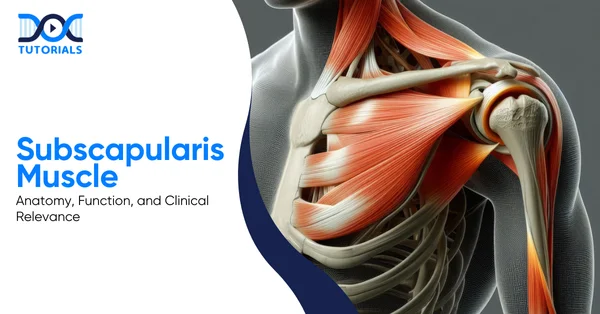
The subscapularis muscle is a very strong and important, though often neglected, portion of the rotator cuff; it is integral to the movement and stabilisation of the shoulder. One important fact is that it’s the only rotator cuff muscle responsible for internal rotation; thus, even a minor injury disrupts regular arm movement.
Understanding of the subscapularis is important for MBBS students, as it relates core anatomy to commonly recommended clinical tests, imaging, and shoulder pathologies in both exams and practice. Throughout this guide, we detail the anatomy, functions, pathologies, and clinical relevance of the subscapularis muscle.
Keep reading!
What is the Subscapularis Muscle?
The subscapularis is a broad anterior shoulder muscle. It is also a prominent rotator cuff muscle. It is involved in stabilising the head of the humerus. The action of this muscle is unique and powerful, so it cannot be compared with the rest of the cuff muscles. Therefore, it must be tested separately because of the importance of its role in the shoulder joint stabilisation function.
The subscapularis is a broad, triangular muscle of the shoulder. The muscle is located on the anterior or costal surface of the scapula, where it attaches this bone to the humerus. As part of the rotator cuff muscles, which include supraspinatus, infraspinatus, and teres minor, this muscle is very important in maintaining shoulder stability.
The rotator cuff muscles coordinate to stabilise and assist in guiding the humeral head into the glenoid cavity during upper limb movement. However, the action of the subscapularis muscle is unique and powerful; therefore, it should be tested individually during a clinical assessment.
What is the Anatomy of the Subscapularis Muscle?
The subscapularis is the largest muscle in the rotator cuff and is triangular in shape. It has a close association with the axilla, nerves, blood vessels, bursae, and shoulder joint. Additionally, it has an extensive attachment, a strong tendon inserting into the lesser tubercle, a close association with the teres major, and innervation from C5-C6 and axillary roots.
The anatomy of the subscapularis muscle is explained in the sections below:
Shape and Location
The subscapularis is a strong and triangular muscle in shape, which fills in completely the subscapular fossa of the scapula. It lies posterolateral to the thoracic cage and forms a major part of the posterior wall of the axilla. Since it is so large, it is considered the largest and most powerful muscle of the rotator cuff.
Origin
The subscapularis originates from:
- The medial two-thirds of the subscapular fossa on the anterior surface of the scapula
- Tendinous intramuscular septa along the ridges of the fossa
- An aponeurosis covering the posterior surface of the lateral third of the muscle
Therefore, its origin is broad and able to generate a strong force.
Insertion
The muscle fibres converge laterally to form a thick, rounded tendon. This tendon:
- Inserts on the lesser tubercle of the humerus
- Blends with the anterior part of the glenohumeral joint capsule
- The tendon, near its insertion, is continuous with the tendon of the teres major
Since the two muscles also share somewhat similar actions and innervation, they are often considered as a functional unit.
A large subscapular bursa, which communicates with the shoulder joint, separates the tendon from the neck of the scapula. This reduces friction; hence, smooth movement is possible.
Relations
The subscapularis forms important anatomical relations; hence, it cannot be ignored in any examination:
- Anteriorly: Faces the contents of the axilla
- Superolaterally: Covered by serratus anterior
- Inferomedially: The relation of coracobrachialis and biceps brachii
- Centrally: Crossed by cords of the brachial plexus, axillary nerve, axillary artery, and vein
Its posteriorly blending tendon inserts into the fibrous capsule of the shoulder joint and continues with other tendons of the rotator cuff, forming the rotator cuff capsule.
The subscapularis also forms the boundaries of major axillary spaces:
- Quadrangular space
- Upper triangular space
- Lower triangular space, also known as the triangular interval
Since these areas transmit major nerves and vessels, trauma or inflammation within this space has the potential to cause significant complications.
Innervation
The muscle is supplied by:
- Upper subscapular nerve
- Lower subscapular nerve
Originating from the posterior cord of the brachial plexus, both nerves carry fibres from C5–C6. The upper nerve supplies the upper part, and the lower nerve supplies the lower part of the muscle. In case of injury to these nerves, internal rotation strength won’t be normal.
Blood Supply
Blood supply is mainly derived from branches of the subclavian system:
- Subscapular artery (branch of axillary artery)
- Axillary artery
- Suprascapular artery
Adequate blood supply is important; compromised vascularity will negatively impact tendon healing efficiency.
Lymphatic Drainage
Clinically, lymph from the subscapularis muscle flows into the axillary lymph nodes, important during infections or malignancy spread.
What Are the Functions of the Subscapularis Muscle?
The subscapularis primarily produces internal rotation of the shoulder. The action of adduction of the joint also receives a certain amount of assistance from it, so actions such as reaching, walking, or reaching overhead would not be possible without the aid of this muscle. Also, it stabilises the humeral head by compressing the concavity, and if this ligament isn’t functioning properly, shoulder movement will not be normal, as the stability would be missing.
The subscapularis muscle functions are explained below:
Primary Function: Internal (Medial) Rotation
The major role of the subscapularis muscle is to internally rotate the arm at the glenohumeral joint:
- Medially rotates the humeral head in the glenoid fossa
- Engages actions such as reaching across the body and arm swing in walking
- Can work effectively in different arm positions, including overhead positions
As no other rotator cuff muscle assists in this action, a loss of function in this muscle leads to a weak internal rotation. Therefore, this action is strongly emphasised in both evaluation and rehabilitation.
Adduction of the Arm
To a lesser degree, the subscapularis muscle helps in the addition of the arm:
- Draws the arm towards the body’s midline
- Acts in conjunction with internal rotation
- The sequence of rotation, followed by adduction, is a common sequence observed in normal arm movement during walking.
Otherwise, this is a subtle but important function, since everyday gestures do not exist in isolation.
Shoulder Stability and Concavity Compression
Apart from movement, another role of the subscapularis muscle is to provide stability to the shoulder joint:
- This assists in concavity compression, which pushes the humeral head into the glenoid cavity
- Stabilises and prevents anterior and superior migration of the humerus
- Teaming with other rotator cuff muscles in opposition to the translating forces
But this function assumes a very important role when you do overhead work. When it comes to using heavy muscles such as the deltoid, pectoralis major, biceps, and triceps, this muscle prevents dislocation of the head of the humerus in an upward direction. But in these very functions, this particular muscle is most liable to impingement.
Shoulder and Scapular Movements Coordination
The subscapularis muscle is also responsible for the coordination of movement between the glenohumeral joints and scapulothoracic joints:
- Facilitates scapular motion to parallel shoulder movements
- Enables actions such as reaching for objects placed above
- Acting in coordination with the back muscles, which mainly regulate scapular movement
Owing to this function, shoulder motion will not have a fluid appearance if the subscapularis is not working properly.
The summary of the functions of the subscapularis muscle is given below in this table:
| Function | Role of the Subscapularis Muscle |
| Internal Rotation | Primary and exclusive rotator cuff action |
| Arm Adduction | Assists movement toward the body |
| Joint Stability | Prevents dislocation via concavity compression |
| Movement Coordination | Links glenohumeral and scapulothoracic actions |
What Are the Pathologies Related to the Subscapularis Muscle?
Subscapularis pathologies include trigger points, tendonitis, and tendon tears, also causing referred pain, weakness, and limited internal rotation, so shoulder function cannot remain normal. Since the tendon endures high mechanical stress, overuse or trauma may lead to tears and instability; hence, early diagnosis and treatment are vital because symptoms won’t settle if ignored.
Common pathologies associated with the muscular part of the subscapularis include overuse, degeneration, and traumatic injuries. Given the important role played by this muscle during rotation and stabilising functions of the shoulder joint, pathologies can have a marked impact on everyday functions.
Myofascial Trigger Points
The infraspinatus muscle can have myofascial pain sites, which most likely arise because of overuse. The subscapularis may have up to three trigger points. The common sites tend to be in the area towards the outer edge of the muscle.
Referred pain is usually perceived in:
- Posterior shoulder
- Shoulder blade area
- Back of the upper arm
In certain instances, a characteristic pain pattern may appear in a band form around the wrist. Wrist pain may be attributed by patients, but they do not connect it with a shoulder problem.
Subscapularis Tendonitis and Overuse Injuries
Subscapularis tendonitis can be common in people in jobs that involve constant overhead or throwing motions.
Common characteristics include:
- Pain and tenderness at the tendon insertion in the inner upper arm.
- Worsening pain with raising an arm above the level of the shoulder.
- Discomfort during shoulder movement.
An overworked subscapularis can also present with a feeling of heavy arm or difficulty in lifting the arm. In other instances, it can present with a frozen shoulder because pain limits movement.
Subscapularis Muscle Tear
Subscapularis tendon tears can be considered a serious type of rotator cuff damage because they impact both internal rotation and anterior shoulder stability. The subscapularis tendon is considered to be the largest and most powerful among all rotator cuff muscles.
As a consequence, heavy mechanical pressure is imposed on this tendon, especially in overhead and throwing motions. Tearing can be a consequence of acute trauma, overuse, and/or degeneration in elderly people.
Most tears affect the part where this tendon attaches to the humerus. Additionally, they can relate to biceps tendon diseases.
| Aspect | Description |
| Common Causes | Trauma or overextension (younger individuals); age-related degeneration (older individuals); chronic overuse; shoulder impingement |
| Site of Tear | Usually near the tendon insertion on the lesser tubercle of the humerus |
| General Symptoms | Anterior shoulder pain; pain worsening at night; shoulder or arm weakness; pain during arm elevation |
| Specific Clinical Signs | Difficulty reaching behind the back or into the back pocket; biceps weakness; pain beneath the clavicle; passive outward rotation of the arm without voluntary control |
| Associated Findings | Clicking or catching sensation during shoulder rotation; possible biceps tendon involvement |
| Clinical Tests | Lift-off test; Bear hug test; Belly press test |
| Imaging | MRI (confirms diagnosis and assesses size and severity of tear) |
| Conservative Treatment | Rest; activity modification; ice or heat; NSAIDs; physiotherapy (preferred for small tears with minimal functional loss) |
| Surgical Treatment | Arthroscopic repair for full-thickness tears or when symptoms haven’t improved after 3–6 months of conservative care |
| Complications | Tear progression; muscle atrophy; increased stress on other rotator cuff muscles; secondary biceps pathology |
| Prognosis | Generally good; most patients regain near-normal shoulder function with appropriate treatment and rehabilitation |
What Are the Tests for the Subscapularis Muscle?
The integrity of the subscapularis is tested with the lift-off, bear hug, and belly press tests, as they emphasise internal rotation strength. Therefore, general rotator cuff testing is not adequate. The impairment in these tests is an indication of tendon dysfunction or tear, and early recognition helps in conservative management.
Clinical tests are essential for assessing the integrity and function of the subscapularis muscle, especially when a subscapularis muscle tear or dysfunction is suspected. These tests mainly evaluate internal rotation strength and help differentiate a torn subscapularis muscle from other rotator cuff pathologies.
Lift-Off Test (Gerber’s Test)
The “lift-off” test, first described by Gerber and Krushell in 1991, is one of the earliest tests and most specific for dysfunction of the subscapularis.
The patient is placed in a standing position, with a request to put the hand behind the back and place the dorsum of the hand over the middle part of the lumbar region. Then, the patient is asked to raise the hand away from the back by rotating the humerus maximally inwards and extending the shoulder.
The indication of a normal test is the capacity to actively raise the dorsum of your hand away from your back.
An abnormal test occurs when the patient can’t lift the hand away, which suggests subscapularis rupture or dysfunction. This usually points toward a significant or complete tear, hence it’s considered highly specific.
Bear Hug Test
The bear hug test is very helpful in assessing a partial tear of the subscapularis tendon.
To carry out this test, the patient holds the palm of the affected side on the shoulder opposite to it, with the elbow in front of the body. The patient is asked to hold this position while a rotational force is applied to the forearm by the examiner.
The test will be considered positive if the patient is unable to do this or if they have weak internal rotation when compared to the other side. This will reveal a tear in, or a weakening of, the subscapularis muscle. Additionally, this particular test will be simpler in patients with difficulty bringing their hands behind their backs.
Belly Press Test
Another assessment is the belly press test, which is especially relevant in circumstances where shoulder mobility is poor.
In this position, the patient’s affected limb is placed on the side with the arm bent at a 90-degree angle at the shoulder. The patient’s palm is placed on the stomach, and they are asked to press it against the stomach through internal rotation.
The test is positive if the patient shows weakness compared to the opposite side or compensates by extending the elbow or shoulder instead of internally rotating the arm. This compensation occurs because the subscapularis isn’t functioning properly, therefore indicating a tear or dysfunction.
After identification of a tear or tendinopathy in the subscapularis muscle, treatment will depend on the level of damage. Subscapularis tendonitis and tendinopathy of the subscapularis tendon can be successfully managed with non-operative methods, which include rest, modification of activity, pain medication, application of ice, and rehabilitation exercises.
Applying ice can help to ease pain and reduce inflammation. Therefore, it is a common treatment in the early stages.
FAQs about the Subscapularis Muscle
- What is a subscapularis muscle tear?
A torn subscapularis muscle is an injury to the tendon of the subscapularis muscle, which attaches to the lesser tuberosity of the humerus. Such a tear can be partial or a full-thickness tear, which means a tear in part of the tendon or in the whole tendon. Such an injury can come about due to overuse, trauma, or degeneration.
- Why is the subscapularis important in shoulder stability?
As the subscapularis wraps around the front part of the shoulder joint and attaches to the humerus, this muscle assists in keeping the head of the humerus in the glenoid cavity of the scapula. In this particular function, it is termed concavity compression, where it presses the head into its socket to keep it from dislocation.
- What clinical problems can affect the subscapularis muscle?
The subscapularis can be affected in the following conditions:
- Tendinopathies or overuse injuries, especially in throwers
- Trigger points that produce referred pain in the shoulder region
- Partial or complete tears of the tendon, especially in the region around the humeral attachment.
Such issues can lead to a weakness in internal rotation, pain in the shoulder joint, and functional impairment. Tearing and tendinosis are usually assessed via tests and imaging studies.
- How is the subscapularis muscle supplied with nerves and blood?
The subscapularis receives its nerve supply from the upper and lower subscapular nerves, which are derived from the posterior cord of the brachial plexus. The blood supply can be traced to various branches of the axillary artery, which include the subscapular and suprascapular arteries.
- What are the main functions of the subscapularis muscle?
Its main function is the medial rotation of the arm, which means rotating the arm towards the mid-plane of the body. Medial rotation of the arm is very important in a lot of functions, such as reaching across the chest or holding up a load above the head. Secondly, this muscle assists in maintaining the head of the humerus in the scapular socket to prevent it from coming out of place during a movement. To a smaller degree, it assists in the adduction of the arm to bring it towards the side of the body.
Conclusion
Given the significance of the subscapularis muscle in supporting rotation and stability in the shoulders, any damage to this part can have a great impact on upper limb functions. For MBBS students, the relevance of the subscapularis lies in its connection with different aspects of medicine.
An understanding of this topic can help in comprehending rotator cuff tears, shoulder pain, and correlations during examinations. Hence, it can in no way be overlooked when learning or during testing.
DocTutorials assists medical students with high-yield video lectures, Qbanks, and revision programmes, which help students master difficult topics quickly. Additionally, it assists in filling the gap between learning and application in medical studies.
Check out our MBBS courses today!


| > Bed Sores | > Pruritus |
| > Polycythemia Vera | > Corticosteroids |
| > Biomedical Waste Management | > Hot Flashes |
| > Tinea Versicolor | > Xerostomia |
| > Kwashiorkor | > Narcolepsy |
Latest Blogs
-

INI CET Exam 2026: Your Roadmap to Success – Key Topics, Strategies, and Lessons from Last Year’s Papers
The INI CET exam is more than just a test; it’s a significant milestone for many medical students aiming to…
-

INI CET Exam Success: Previous Year Question Papers & Ultimate Guide – INI CET PYQ
One can feel overwhelmed while preparing for the INI CET (Institute of National Importance Combined Entrance Test). A vast syllabus,…
-

NEET PG 2026 Preparation with Live Power Pack: Your Path to Success in 2026
Preparing for the NEET PG 2026 can be an overwhelming journey because of its vast syllabus and the pressure to…