Fellowship in Neurology: Overview, Eligibility, Admission & More
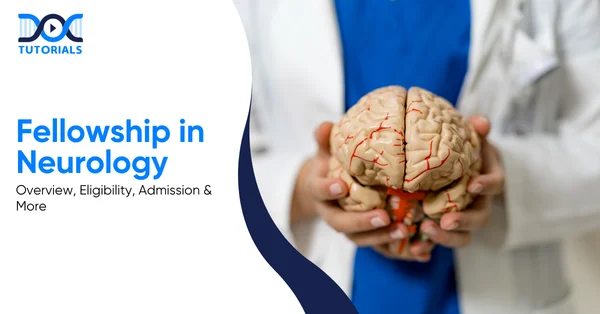
The human nervous system is one of the most complex systems found in the human body. It requires dedication, in-depth knowledge, and training to understand. For aspiring doctors who wish to specialise beyond general neurology, pursuing a Neurology Fellowship can be ideal. It provides comprehensive training across various subspecialities of the field.
The young budding doctors who are keen to specialise in brain health and medicine research will benefit immensely by pursuing a Fellowship in Neurology.
Continue reading to know more about how a Fellowship in Neurology can assist you in developing your career!
Partnering with top super specialty hospitals in India, DocTutorials provides medical fellowship programs that sharpen clinical expertise, refine practical abilities, and unlock fresh career pathways for healthcare professionals
Fellowship in Clinical Neurology: Programme Overview
A Fellowship in Clinical Neurology is an advanced postgraduate course that focuses on the diagnosis and management of complex cases of neurological disorders. It offers direct clinical experience, academic education, and research-based training for aspiring neurologists. This fellowship assists doctors in developing strong skills in neurology subspecialities.
The table below highlights the programme overview of a Fellowship in Neurology:
| Particulars | Details |
| Course Name | Fellowship in Clinical Neurology |
| Course Type | Fellowship (Postgraduate Programme) |
| Focus Area | Diagnosis and management of neurological disorders |
| Duration | 1 to 2 years (varies by institution and subspeciality) |
| Eligibility | Post MD/MS/DNB or equivalent degree. |
| Training Format | Full-time clinical posting, blended online and in-hospital training, observational or hands-on rotations. (can vary across institutions) |
| Clinical Exposure | Stroke, epilepsy, Parkinson’s disease, multiple sclerosis, neuromuscular disorders, neurocritical care |
| Fees | Based on the institution and programme structure, the fees range from ₹2 to ₹10 lakhs. |
| Skills Gained | Advanced neurological examination, diagnostic interpretation, patient management, clinical decision-making |
| Research Component | Case reports, clinical research, academic presentations (programme-dependent) |
Fellowship in Neurology: Programme Details
The Fellowship in Clinical Neurology provides an organised and comprehensive curriculum covering core and advanced knowledge in neurology. It is intended to develop solid clinical roots with subspeciality experience over a series of semesters. The syllabus integrates theory, diagnosis, patient care, and research training.
Neurology Fellowships covers a wide range of neurological sciences through structured semesters. Find the detailed curriculum below:
Semester 1
- Introduction to Clinical Neurology
- Techniques for Neurological Assessment
- Neuroanatomy and Neurophysiology
- Neurological Rehabilitation for Movement Disorders
- Headache Disorders and Migraine Management
- Advanced Neuroimaging Techniques
- Epilepsy and Seizure Management
- Stroke and Cerebrovascular Disease
Semester 2
- Genetic and Metabolic Neurological Disorders
- Disorders of the Neuromuscular System
- Pain Management Strategies in Neurology
- Neurophysiological Techniques
- Infections and Inflammatory Neurological Disorders
- Research in Clinical Neurology
- Cognitive Impairment and Dementia
- Brain Tumours and Neuro-Oncology
- Neuro-Ophthalmology
- Neuro-Otology
Key Features of Neurology Fellowship
A Fellowship in Neurology is probably the best way for young doctors to specialise in the treatment of complicated neurological conditions. Due to the increased burden of neurological diseases, specialist neurologists are in high demand. Such advanced training fosters confidence, specialisation, and professional growth in the field of neuroscience.
Choosing a Fellowship in Neurology is a strategic decision for medical students and early-career doctors who want to excel in this evolving speciality. Moreover, given the rising cases of neurological disorders like stroke, epilepsy, dementia, and neurodegenerative diseases all over the world, the demand for skilled neurologists has increased manifold.
Below are the key features of this programme:
- Early and Focused Specialisation: Fellowship programmes enable medical professionals to move towards specialisation relatively early in their careers, earlier than super-speciality programmes. The programme duration usually ranges from 1 to 2 years.
- Improved Clinical Skills and Confidence: The fellowship will provide hands-on exposure to EEG, EMG, NCS, neuroimaging studies, stroke management, and diagnostic skills.
- Access to Sophisticated Neurological Care: Students take an active role in the management of difficult cases, including acute stroke, refractory epilepsy, neuromuscular conditions, and neurocritical illnesses. This helps a physician prepare to manage a neurological emergency.
- Long-Term Professional Growth: Completing a fellowship course significantly boosts your identity in the field of neurology. It can also open many opportunities for you to enhance your job prospects and professional growth in neurology clinical practice, academic institutions, tele-neurology, and more.
- Keeping Up with the Dynamic World of Medicine: Neurology is a rapidly evolving field. Completing a fellowship training thus helps keep doctors updated with the latest diagnostic tools, treatment protocols, and evidence-based practices, ensuring high-quality patient care.
Fellowship Programme in Neurology: Eligibility Criteria
The Fellowship in Neurology programme is aimed at those medical practitioners who want to enhance their knowledge of neurological sciences. Candidates should have a valid MD/MS/DNB in Neurology, Internal Medicine, or Paediatrics, a valid NEET-PG qualification, and relevant work experience in neurology or related medical specialities.
Below are the eligibility criteria for Neurology Fellowships:
- Candidates should possess an MD/MS/DNB degree recognised by the Medical Council of India or a statutory body concerned with medical qualifications.
- They should have an MD/DNB, Internal Medicine, Paediatrics, etc.
- Several institutions may require a valid NEET-PG qualification, depending on the programme’s guidelines.
- Relevant clinical experience in neurology or related medical specialities may be an added advantage.
Application Process for Fellowship in Neurology
Applying for a Fellowship in Neurology involves submitting an application form, passing an entrance exam, waiting for the shortlist, clearing the interview round, and completing the required admission procedures.
To apply for a Fellowship in Neurology, follow the steps mentioned below:
Step 1: Application Submission: The application form is to be submitted to the concerned institution offering the fellowship programme, along with other academic documents.
Step 2: Entrance Examination (if applicable): Appear for the entrance exam and achieve the required marks for qualification.
Step 3: Shortlisting: Candidates are shortlisted based on eligibility criteria, academic performance, and entrance exam performance (if required).
Step 4: Interview or Counselling: Participate in the interview or counselling round. You may need to visit in person for the interview.
Step 5: Final Selection and Admission: Complete the admission process after meeting all eligibility criteria and receiving the offer letter.
Career Opportunities After Fellowship in Neurology
Neurology Fellowships provide opportunities to pursue a variety of occupations in clinical work, academics, research, and international health projects.
Apart from providing further specialisation in the field, a Fellowship in Neurology provides the following career opportunities:
- Professional Activity: Work as a neurologist/specialist in tertiary institutions, stroke units, epilepsy clinics, private hospitals, diagnostic laboratories (EEG/EMG), outreach clinics, and tele-neurology services.
- Teaching and Learning Positions: Offer services as a teacher/lecturer, tutor, or academic staff in medical colleges and institutes to impart knowledge and facilitate leadership development in neurology.
- Research and Innovation: Participate in neuroscience studies, clinical trials, neurotechnology development, and neurorehabilitation innovations.
- Further Specialisation: Obtain higher qualifications like a DM in Neurology, a PhD in Neurology or related subjects, and certificates in neuroimaging and neurorehabilitation.
- Corporate and Consultancy Careers: Become a consultant or medical advisor for healthcare organisations, pharmaceutical companies, and medical technology firms.
- Global Health and Telemedicine: Take part in global neurology projects, telemedicine services, and distance care programmes, particularly in low-resource areas.
FAQs about Fellowship in Neurology
- What are the eligibility criteria to pursue a Fellowship in Clinical Neurology?
Applicants must hold an MD/MS/DNB degree from a medical college/university recognised by the Medical Council of India (MCI) or an equivalent authority, and many institutions prefer candidates with an MD in medicine or paediatrics. Some programmes may also require NEET-PG qualification or relevant clinical experience.
- What skills and competencies do doctors learn during a Neurology Fellowship?
After completing the Fellowship in Neurology course, you will gain proficiency in neurological clinical history and examination and a comprehensive understanding of the interpretation of EEG, EMG, NCS, CT/MRI, and LP studies. All these will help you comprehend neuro-diagnostic procedures, research methods, and ethical neurological practice.
- What is the duration of a Fellowship in Clinical Neurology?
The Fellowship in Clinical Neurology programme typically lasts 1 to 2 years, depending on the curriculum design, subspeciality focus, and institution-specific training requirements.
- What is the fee structure for a Fellowship in Clinical Neurology course?
The fee for a Fellowship in Neurology programme generally ranges from ₹2 to ₹10 lakhs, depending on the institution, location, training format, and the clinical exposure offered.
- Is a fellowship required to practice neurology or a neurology subspeciality?
A Fellowship in Neurology is not required for general neurology work. It is advisable for doctors to focus on a sub-speciality as well as participate in a larger neurology group practice. This will provide them with better training and more exposure to research and sub-speciality training in neurology.
6. What is the highest qualification for a Fellowship in Neurology?
The highest educational qualification in neurology may include: completing MD/MS/DNB, followed by MD in General Medicine and Paediatrics, and then super-specialisation in Neurology with DM or DNB. This allows for super-speciality expertise in addition to the expertise offered in general medicine.
7. Does neurology offer a healthy work-life balance?
Neurology can be very demanding, with a considerable rate of burnout, according to studies. However, obtaining a Fellowship in Neurology can provide a specialist with the opportunity to pursue niche areas, analyse complex cases, and find potentially better career paths that are more aligned with personal or professional goals.
8. Why are fellowships important after DM/DNB in Neurology?
Fellowships allow neurologists to sub-specialise in areas such as stroke, epilepsy, movement disorders, paediatric neurology, and neurocritical care. It improves advanced clinical skills, keeps training on par with the needs of the healthcare sector, and offers career pathways through specialisation and access to international institutions, among others.
9. How does a Fellowship in Neurology add professional credibility?
A Fellowship in Neurology helps build your credibility with a recognition of your expertise in this specialised field. It certifies your skills from a reputable organisation and provides you with access to trusted academic resources and research materials, thereby helping you build strong clinical knowledge and confidence in your professional skills.
Conclusion
A Fellowship in Neurology is not only an advanced course but also an all-inclusive experience that develops capable and confident neurologists. It enables medical students and practising doctors to gain valuable hands-on experience of complex cases, interpret EEG, EMG, NCS, CT/MRI, and LP studies, and learn how to handle neurological emergencies.
If you desire to pursue a career in this field and become an efficient neurologist, join us at DocTutorials. Our Fellowship in Clinical Neurology is offered in association with the top super-speciality hospitals across the country, along with expert mentorship and the opportunity to learn from leading & experienced consultants. Check out our fellowship programmes today!