Vocal Cord and Supraglottic Diseases: Common Disorders, Diagnosis & Treatment
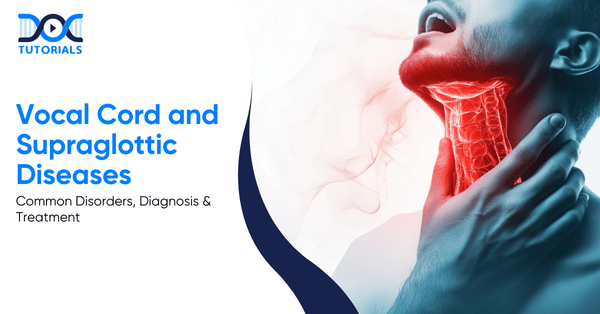
The vocal cords are an essential structural component of our body that helps in the production of sound and is an important part of the airway tract. They are covered by a superior cartilaginous structure called the supraglottis or the epiglottis. Any form of abnormality in the vocal cord and supraglottic structure and function can lead to serious complications, which can turn life-threatening.
These abnormalities constitute the vocal cord and supraglottic diseases. Learning about these conditions is essential for both early detection and FMGE preparation.
Keep scrolling for a detailed guide covering the types, disorders, diagnosis, treatment, and other crucial aspects related to vocal cord and supraglottic diseases.
What are the Types of Vocal Cord Disorders?
Vocal cord disorders refer to any anatomical or physiological anomaly that affects the vocal cords. These can be due to multiple causes, which divide them into various types.
Vocal cord disorders are mainly organic, neurological, and functional. These types have been further described below:
- Organic: These are due to anomalies in the structure of the vocal cords, larynx, or lungs. These can include disorders like vocal cord polyps.
- Neurological: Disorders due to abnormalities in the nerves controlling the vocal cords.
- Functional: Mainly occurs due to decreased or absent function of the vocal cords. It is mostly due to problems with the vocal cord muscles.
What are the Common Vocal Cord Disorders?
Common vocal cord disorders include conditions caused by inflammation or stress on the vocal cords. In this regard, vocal cord paralysis is one of the most dreaded conditions, as it can be life-threatening if ignored.
Some of the common vocal cord problems have been tabulated below:
| Vocal Cord Disorder | Feature |
| Laryngitis | Inflammation of the vocal cords that leads to a raspy and hoarse voice. |
| Vocal Nodules | Non-malignant calluses that are usually formed due to continuous pressure on the vocal cords. They generally occur in pairs, one in each cord. This condition can be commonly seen in professional singers. |
| Vocal Polyps | These are soft, non-malignant growths, similar to a blister. The blisters may contain blood, which turns clear with time. |
| Vocal Cord Paralysis | It refers to paralysis of one or both cords, which can lead to weakening of voice, problems in swallowing, aspiration of food or fluid, and more. |
What is Vocal Cord Paralysis?
Vocal cord paralysis usually occurs when one or both of the cords do not open or close properly. This can cause the voice to be weak. Other symptoms of vocal cord paralysis include:
- Aspiration of food or liquid into the trachea or the lungs
- Choking or coughing while eating
- Dyspnoea (trouble in breathing)
The causes for vocal cord paralysis include:
- Head, neck, or chest injury
- Problem during surgery
- Stroke
- Tumour
- Lung or thyroid cancer
- Certain neurological disorders, such as multiple sclerosis or Parkinson’s disease
- Viral infection
Treatment for vocal cord paralysis includes surgery and speech therapy. Many times, the person may recover spontaneously and require no treatment at all.
What are the Common Supraglottic Diseases?
Supraglottic diseases commonly constitute inflammation and abnormalities in the supraglottis, which can go from inflammation to even scarring.
The common supraglottic diseases include:
- Supraglottitis
It is defined as an acute bacterial infection of the epiglottis and other supraglottic structures. It can cause acute, severe airway obstruction, making breathing difficult. The most common causative organism of supraglottitis is Haemophilus influenzae type b.
- Supraglottic Stenosis
Supraglottic stenosis is a disorder characterised by fibrotic changes and/or scarring of the supraglottic structures. Common symptoms for supraglottic stenosis include dysphagia, dyspnoea, stridor, and airway obstruction. The major causes for supraglottic stenosis primarily include laryngotracheal stenoses and can be secondary to autoimmune diseases, trauma, infections, or irradiation.
- Supraglottic Cancer
Supraglottic cancer is mostly a squamous cell type of cancer. This is a rare condition and can be life-threatening, as it causes disruption in the normal mechanisms of swallowing, respiration, and speech.
- Autoimmune Conditions of the Supraglottis
IgG4-related disease is an autoimmune condition in which there are fibroinflammatory changes in the supraglottis and laryngeal structures. It is mediated by IgG4, and these antibodies attack the self-tissues, leading to inflammation and scarring.
What are the Symptoms of Vocal Cord and Supraglottic Disorders?
The symptoms of vocal cord disorders most commonly affect the breathing and swallowing process of an individual. They are sufficient for the diagnosis of a vocal cord disorder. Supraglottic disease is usually characterised by symptoms like dysphagia, odynophagia, dyspnoea and a mass in the neck.
The common symptoms of a vocal cord disorder include changes in the voice, which may be:
- Strained
- Gurgly or wet
- Raspy or hoarse
- Breathy or airy
- Uneven or shaky, with breaks or gaps in sound
- Weak and hard to project
- Too high or too low
- Too loud or too soft
In case of a supraglottic disease, the symptoms are similar to those of a vocal cord disorder. In addition to that, there are symptoms like
- Dysphagia
- Odynophagia
- Dyspnoea
- Mass in the neck
What are the Causes of Vocal Cord and Supraglottic Disorders?
The causes of vocal cord disorders include overuse, infection, allergy, or autoimmune conditions. In cases of supraglottic disease, the aetiology remains similar.
The most common cause of voice disorders is overuse of the voice, such as excessive yelling, singing, or talking. Additionally, voice disorders sometimes result from acute, short-term conditions like a cold, allergic reactions, or sinusitis.
Such disorders cause inflammation of the laryngopharyngeal area and change airflow. Once resolved, a return to a normal voice usually occurs within days to weeks. More severe voice disorders occur when an impairment affects the structure, muscles, or nerves of the larynx or the vocal cords.
What Diagnostic Tests are Available for Vocal Cord and Supraglottic Disorders?
The diagnostic modalities for vocal cord and supraglottic disorders include detailed history taking and clinical examination before proceeding with diagnostic tests, like laryngoscopy, videostroboscopy, laryngeal electromyography (LEMG) or imaging studies.
Vocal cord and supraglottic disorders are mostly evaluated using clinical examination. This is usually done by a specialist (laryngologist) by taking a detailed history and performing a clinical examination. The specialist can then suggest some diagnostic tests. These tests include:
- Laryngoscopy: It uses a thin, flexible scope with an attached video camera to view the back wall of the pharynx and larynx. Clinicians can take a biopsy of nodules, polyps, or cysts for disease testing.
- Videostroboscopy: Utilises a scope attached to a special camera to visualise the slow-motion movement of the vocal cord during phonation.
- Laryngeal electromyography (LEMG): Applies an electrode to measure the neural electrical activity of the laryngeal muscles during voice use.
- Imaging: Includes obtaining an MRI or CT scan that allows detailed views of the vocal cords and other laryngeal structures to be visualised for masses or other pathology.
What are the Treatment Options Available for the Vocal Cord and Supraglottic Disorders?
The treatment options available for the vocal cord and supraglottic disorders include speech therapy, drugs, and surgical procedures. The doctor first evaluates the disorder, its severity, and its course, and then prescribes the most suitable treatment method.
Some acute voice disorders may respond to vocal rest. Clinicians may recommend avoiding shouting, singing, or straining the voice for a few days and reducing voice use when possible.
Other therapeutic methods include:
- Voice Therapy: Speech-language pathologists provide techniques and exercises to achieve effective and efficient voice use.
- Pharmacologic Treatment: Medication like proton pump inhibitors or other drugs may be needed if LPR/GERD is affecting the condition. Corticosteroids or antibiotics may be prescribed in selected cases.
- Medical Procedures or Surgery: May be required to remove the lesion from the vocal cords. Botulinum toxin injections can be used to relax hypertonic laryngeal muscles. In the event of vocal cord paralysis, injectable fillers or medialization laryngoplasty may be used to decrease the distance between the laryngeal cords and improve glottal closure.
FAQs about Vocal Cord and Supraglottic Disorders
- What are the diseases affecting the vocal cords?
The vocal cord disorders include vocal nodules, vocal polyps, laryngitis, and vocal cord paralysis.
- What are the different types of vocal cord disorders?
The various types of vocal cord disorders include structural, neurogenic, and functional ones.
- Which disease attacks the vocal cords?
Laryngitis, inflammation of the larynx, is a swelling that affects the vocal cords.
- What are the early signs of vocal cord damage?
The early signs of vocal cord disorders include changes in voice, like raspiness, hoarseness, or a strained or weak voice.
- What are Supraglottic Airways or Supraglottic Airway Devices?
Supraglottic airways/airway devices are one of the most commonly used instruments to establish an airway in case of an obstruction in the original one. They are used to maintain the airway patency and enable ventilation as they are placed in the supraglottic region. These devices are an accepted standard of airway management and fall between the range of facemasks and tracheal tubes.
Conclusion
Vocal cord and supraglottic diseases are common across all age groups. In some cases, they can lead to severe airway obstruction, which can lead to life-threatening conditions. Moreover, these conditions form a major topic for the FMGE examination.
If you are looking for guidance regarding other similar topics that can aid your preparation, look no further than DocTutorials. Our concise video lectures, clinical Qbanks, exam-focused notes, and mind maps aid aspirants and guide them towards a better understanding of the medical concepts. Explore our FMGE courses today!

Latest Blogs
-

Master Your FMGE Preparation with the All-New V6 Qbank
Let’s be real. Cracking the FMGE (Foreign Medical Graduate Examination) isn’t a cake walk. The pressure is real. You have…
-
FMGE October 2026 Exam: NBEMS Latest Update, Eligibility & New Schedule
For the first time ever, the National Board of Examinations in Medical Sciences (NBEMS) is holding a third exam session…
-

FMGE 3 Times a Year: New Update | The 2026 Exam Update Explained
The National Board of Examinations in Medical Sciences (NBEMS) just dropped a massive update. FMGE three times a year is…