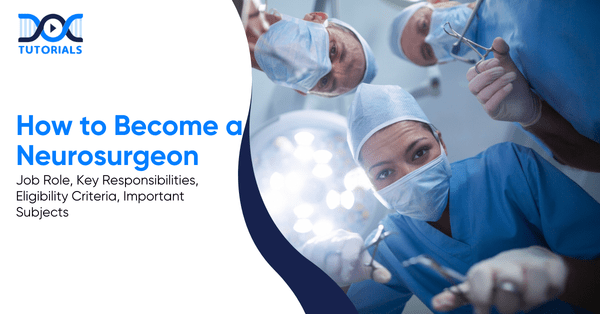
How to Become a Neurosurgeon: Job Role, Key Responsibilities, Eligibility Criteria, Important Subjects
The path to becoming a neurosurgeon involves complex challenges, long-term dedication, and an excellent academic background. Candidates interested in pursuing a career as a neurosurgeon must acquire in-depth knowledge about the human nervous system and related aspects.
Neurosurgery involves the treatment of the brain, peripheral nerves, spinal cord, etc., through surgical intervention. A neurosurgeon is one who performs these surgeries with precision.
Keep reading to learn how to become a neurosurgeon, key responsibilities, skills required, and more!
Whom Can We Refer to as A Neurosurgeon?
A neurosurgeon is a doctor who performs surgery on the brain, spinal cord, peripheral nerves, and related structures. They can handle critical head injuries, trauma cases, and congenital abnormalities through complex procedures like craniotomies, spinal fusions, minimally invasive surgeries, etc. Neurosurgeons work in collaboration with neurologists, oncologists, rehabilitation specialists, etc., in diverse setups like hospitals, private clinics, research institutes, etc.
A neurosurgeon is a specialist doctor with training in diagnosing and treating nervous system disorders. This includes the spinal cord, brain, peripheral nerves, etc. However, they are different from neurologists as they specifically perform surgical procedures to fix issues like brain tumours, aneurysms, spinal cord injuries, etc.
Neurosurgeons can manage congenital abnormalities, head injuries, and other trauma cases and handle complex procedures like spinal fusions, craniotomies, minimally invasive surgeries for nerve compression relief, etc. They usually work in diverse working environments such as private clinics, specialised research institutes, hospitals, etc., in collaboration with oncologists, neurologists, and rehabilitation specialists.
Medical professionals interested in pursuing this career can opt for fellowship programmes and neurosurgical courses, such as vascular neurosurgery, paediatric neurosurgery, and spinal surgery.
What are the Steps to Become a Neurosurgeon?
To become a neurosurgeon, candidates need to go through a few steps. First, they need to acquire an MBBS degree, followed by an internship of 1 year. Next, they need to complete the PG or residency course and apply for a fellowship programme (optional). Finally, they must clear the board exams to start practicing independently.
Here are the steps one can follow to become a neurosurgeon:
Step 1: Completing Bachelor of Medicine, Bachelor of Surgery (MBBS)
To become a neurosurgeon, the candidate should complete their MBBS or similar medical degree in the first place. This is the basic qualification for entering the medical profession, and the course usually lasts 4.5 years. In this programme, candidates learn medical sciences, including physiology, anatomy, pathology, and pharmacology, and get clinical training in multiple specialities.
Step 2: Complete Your Medical Internship
MBBS graduates need to complete a 1-year internship. This includes rotation through various hospital departments, gaining hands-on experience in surgery and patient care.
Step 3: Complete PG in MS or Residency in Neurosurgery
Aspiring neurosurgeons need to complete their PG training in neurosurgery after completing the internship. In India, neurosurgery candidates should complete the Master of Surgery (MS) or Master of Chirurgiae (MCh) in neurosurgery. The duration of PG courses is usually 3 years, including study and hands-on training in a clinical setup.
Candidates opting for MS in General Surgery will need to clear NEET SS to opt for MCh in neurosurgery.
Step 4: Opt for a Fellowship Programme
Though optional, you can opt for a fellowship programme in neurosurgery after completing PG or residency. The duration of a fellowship programme is usually 1 to 2 years.
Step 5: Board Certification
The final step is to appear for the board exams in India if you want to become a certified neurosurgeon. Professionals who want to practice neurosurgery independently must clear the board exams.
What are the Key Responsibilities of a Neurosurgeon?
A neurosurgeon has multiple responsibilities, such as diagnosing the condition, preparing a treatment plan, and adopting surgical procedures. They also plan for postoperative care and work in collaboration with other specialists such as neurologists, radiologists, and oncologists.
There are several roles and responsibilities of a neurosurgeon. They are as follows:
- Treatment Planning
Neurosurgeons diagnose the patient’s condition that affects their nervous system. Based on the diagnosis, they devise the necessary treatment plan, which can include surgery as well.
- Surgical Method
Upon detecting severe conditions like trauma, tumours, and aneurysms, neurosurgeons perform critical surgeries on the nervous system, brain, and spine.
- Necessary Care After Operation
Neurosurgeons monitor the patient’s recovery after surgery. This helps manage any complications that may arise after the procedure.
- Collaboration
To provide comprehensive patient care, neurosurgeons often work in collaboration with oncologists, neurologists, radiologists, and other specialists.
- Research and Education
Numerous neurosurgeons are engaged in ongoing research to create new surgical methods and improved therapies for neurological disorders.
What are the Skills Required for a Neurosurgeon?
Neurosurgeons should have cognitive, technical, and interpersonal skills to handle patients who have undergone critical neurological surgeries. Such professionals must possess a comprehensive understanding of physiology, human anatomy, and other subjects related to neurosurgery. Moreover, they should understand the critical procedures of neurosurgery, know how to use robotic devices, and quickly recollect the history of a patient.
Becoming a neurosurgeon requires strong determination and a combination of cognitive, technical, and interpersonal skills. Here are some of the skills that a neurosurgeon must have:
- Understanding of Physiology, Human Anatomy, and other subjects that are related to neurosurgery
- In-depth knowledge and understanding of complex and critical procedures of neurosurgery
- Must know the usage of robotic devices for neurosurgery
- Should have the ability for quick recollection of patient history
What are the Important Subjects for a Neurosurgeon?
Medical students preparing to become neurosurgeons should study some crucial subjects. This includes Biochemistry, Human Anatomy, Pathology, Human Physiology, Community Medicine, Microbiology, Forensic Medicine and Toxicology, Radiology, Spinal Surgery, Infection, etc.
Here are some of the important subjects to become a neurosurgeon:
- Pathology
- Biochemistry
- Forensic Medicine and Toxicology
- Infection
- Human Anatomy
- Human Physiology
- Neurology
- Paediatric Neurosurgery
- Neurotrauma and Neurosurgical Critical Care
- Community Medicine
- Microbiology
- Radiology
- Neuropathology
- Surgery of the Peripheral Nervous System
- Neuroanatomy
- Psychiatry
- Spinal Surgery
- Neurosurgical Oncology
- Cerebral Vascular Surgery and many more
FAQs about How to Become a Neurosurgeon
- How many years does it take to become a neurosurgeon?
It takes 8-10 years to become a neurosurgeon. First, you need to complete MBBS for 4.5 years, then a 1-year internship, followed by 3 years of postgraduate programmes, and then a year-long fellowship programme, though it is optional.
- What conditions does a neurosurgeon treat?
Neurosurgeons deal with conditions like brain tumours, epilepsy, spinal cord injuries, traumatic brain injuries, aneurysms, Parkinson’s disease, etc. They diagnose these issues and treat them surgically.
- What qualifications are needed to become a neurosurgeon?
You need to clear MBBS, complete your medical internship, and then pass the Master of Surgery (MS) or Master of Chirurgiae (MCh) in neurosurgery course to become a neurosurgeon.
- Which undergraduate subject is best for neurosurgery?
Subjects like Pathology, Biochemistry, Forensic Medicine and Toxicology, Infection, Human Anatomy, Human Physiology, Neurology, Paediatric Neurosurgery, etc., are the best if you aim to become a neurosurgeon.
- Is neurosurgery a rewarding career?
Yes, neurosurgeons thrive in a tight-knit, elite community of highly motivated peers and mentors. The field offers constant inspiration from dedicated colleagues in high-stakes hospital environments.
- Do neurosurgeons hold an MD or MS degree?
In India, neurosurgeons need to complete an MS (Master of Surgery) in General Surgery, followed by a super-speciality degree, or a direct MCh (Master of Chirurgiae) in Neurosurgery.
- What are the steps after MBBS to specialise in neurosurgery?
Clear NEET-PG for 3-year MS General Surgery, then pass NEET-SS for 3-year MCh Neurosurgery. Alternatives include DNB pathways for advanced brain and spine training.
- What career options exist for neurosurgeons?
Neurosurgeons work as hospital consultants, professors, or researchers. Demand for this profession rises in India due to an increase in neurological cases.
- Can I become a neurosurgeon directly after MBBS?
Yes, you can by opting for the 6-year post-MBBS DNB Neurosurgery course. However, admission to this course will depend upon an entrance exam and centralised merit-based counselling, both conducted by the National Board of Examinations.
- What is the average salary of a neurosurgeon in India?
Beginner neurosurgeons generally earn between ₹1,200,000 and ₹2,500,000 per annum, while professionals with experience and specialisation can earn more than ₹5,000,000 annually, based in private practice or top-tier cities.
Conclusion
Becoming a neurosurgeon demands 8 to 10 years of rigorous training. The courses include MBBS, MS General Surgery via NEET-PG, and MCh Neurosurgery through NEET-SS. Despite intense challenges, it offers elite status, high earnings, and profound impact, saving lives via brain and spine expertise.
Candidates preparing to become neurosurgeons can successfully join reliable coaching platforms like DocTutorials. We provide detailed study materials, advanced teaching methods, and an immersive learning environment to ensure candidates receive the support they need to pursue their careers effectively.
Latest Blogs
-
INI CET Exam Pattern 2026: A Complete Guide with Subject-Wise Weightage
The Institute of National Importance Combined Entrance Test (INI CET) is your key to entering some of the most prestigious…
-

NEET PG Registration 2026: An Essential Guide For Exam Prep
The NEET PG registration, which is conducted online, is a crucial step in the exam process. Filling out the NEET…
-

NEET PG Exam 2025- Date, Pattern, Marking Scheme, Subject Wise Weightage, and Exam Mode
NEET PG Exam 2025 is the ultimate gateway for medical graduates aspiring to pursue postgraduate courses in medicine, including MD,…