Students Gray’s Anatomy for MBBS 1st Year Students: Syllabus, Authors & More
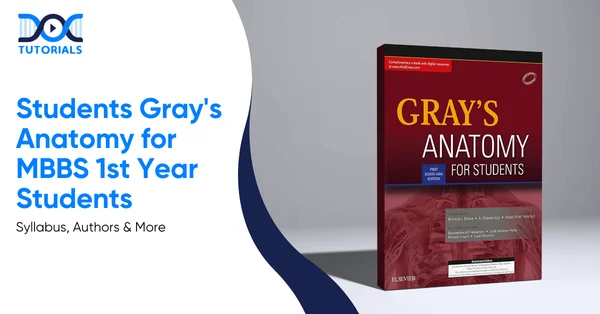
It is not an easy task to start your MBBS journey, especially when anatomy becomes your very first academic challenge. In this regard, Gray’s Anatomy is the first textbook that an MBBS first-year student comes across in their academic journey, which forms the basis for understanding the human body in detail.
Now, with so many books available for anatomy, it can be challenging to decide whether this book may form a reliable base for your studies. Having an idea beforehand of the book’s contents, past editions, authors, and other crucial aspects can help you make an informed decision.
Read on to discover how the Gray’s Anatomy book for students, the latest edition, can help you prepare for the MBBS 1st year smartly and effectively.
Overview of Gray’s Anatomy
Gray’s Anatomy is a world-renowned reference textbook now in its 43rd edition, which provides a comprehensive, evidence-based integration of regional anatomy, neuroanatomy, and embryology with modern medical imaging.
First published in 1858 and continuously in print ever since, Gray’s Anatomy has earned the trust of generations of clinicians worldwide as the leading reference text in human anatomy.
Continuing this tradition of excellence, the latest edition of Gray’s Anatomy for Students, the 43rd edition, has been thoroughly revised and updated by internationally renowned anatomists, scientists, and surgeons. It provides in-depth, evidence-based coverage of regional anatomy, neuroanatomy, cell biology, embryology, and human development.
Additionally, readers get the benefit of a systems-based approach, which is supported by additional chapters in the accompanying Gray’s Anatomy e-book. Clear, concise text is paired with high-quality illustrations, detailed photographs, and modern medical imaging.
In combination with an expanded selection of digital material, it is a comprehensive and well-integrated learning tool, presented in a clear and visually appealing style. In its 43rd edition, new perspectives are offered, while its depth, accuracy, and clinical relevance are maintained as with any other edition of this leading textbook.
Key Features of the Latest Edition of Gray’s Anatomy
Gray’s Anatomy for Students, the latest edition, features expert-revised chapters, advanced cinematic-rendered radiological imaging, and an enhanced eBook with 3D videos and systemic anatomy supplements for a complete learning experience.
The key features of the latest Gray’s Anatomy book student edition are as follows:
- Each chapter is expertly revised by international experts to include current, evidence-based, and clinically relevant anatomy that is essential for safe medical practice.
- The latest radiological imaging is included, such as high-resolution X-ray, multiplanar CT, and MRI views, using advanced cinematic rendering for better clarity.
- Renowned Gray’s anatomical illustrations are included, with refinements for greater consistency, accuracy, and clarity.
- The print edition includes full access to the enhanced eBook, which offers:
- Additional text tables and illustrations
- Two dedicated chapters on the systemic anatomy of the peripheral nervous system and the vascular and lymphatic systems
- 2D and 3D videos
- An annotated list of eponyms
- Specially commissioned commentaries on emerging topics in clinical anatomy.
Table of Contents of Gray’s Anatomy, Latest Edition
Gray’s Anatomy, latest edition, is systematically organised into nine sections covering everything from cellular biology and embryology to detailed regional anatomy of the head, neck, thorax, and limbs.
The table of contents of the latest student’s Gray’s Anatomy edition is as follows:
SECTION 1: Cells, Tissues, and Systems
- 1. Basic structure and function of cells
- 2. Integrating cells into tissues
- 3. Nervous system
- 4. Blood, lymphoid tissues, and haemopoiesis
- 5. Functional anatomy of the musculoskeletal system
- 6. Smooth muscle and the cardiovascular and lymphatic systems
- 7. Skin and its appendages
SECTION 2: Embryogenesis and Development
- 8. Preimplantation development
- 9. Implantation and placentation
- 10. Cell populations at gastrulation
- 11. Overarching concepts in development
- 12. Cell populations at the start of organogenesis
- 13. Development of the heart and circulation
- 14. Development of the nervous system
- 15. Development of the skin and appendages
- 16. Development of the eye
- 17. Development of the ear
- 18. Development of the head and neck
- 19. Development of the back
- 20. Development of the limbs
- 21. Development of lungs, thorax, and diaphragm
- 22. Development of the peritoneal cavity, gastrointestinal tract, and its adnexae
- 23. Development of the urogenital system
- 24. Pre- and postnatal growth and the neonate
SECTION 3: Neuroanatomy
- 25. Overview of the nervous system
- 26. Autonomic nervous system
- 27. Ventricular system
- 28. Vasculature of the brain
- 29. Spinal cord
- 30. Brainstem
- 31. Cerebellum
- 32. Diencephalon
- 33. Basal ganglia
- 34. Cerebral hemispheres
SECTION 4: Head and Neck
- 35. Head and neck: overview and surface anatomy
- 36. Skull
- 37. Intracranial region
- 38. Neck
- 39. Face and scalp
- 40. Mouth
- 41. Infratemporal and pterygopalatine fossae and temporomandibular joint
- 42. Nose, nasal cavity, and paranasal sinuses
- 43. Pharynx
- 44. Larynx
- 45. External and middle ear
- 46. Internal ear
- 47. Orbit and accessory visual apparatus
- 48. Eye
SECTION 5: Back
- 49. Back
- 50. Spinal cord and spinal nerves: gross anatomy
SECTION 6: Pectoral Girdle and Upper Limb
- 51. Pectoral girdle and upper limb: overview and surface anatomy
- 52. Shoulder girdle and arm
- 53. Elbow and forearm
- 54. Wrist and hand
SECTION 7: Thorax
- 55. Thorax: overview and surface anatomy
- 56. Thoracic wall and breast
- 57. Pleura, lungs, trachea, and bronchi
- 58. Diaphragm and phrenic nerves
- 59. Mediastinum
- 60. Heart
- 61. Great and major systemic blood vessels
SECTION 8: Abdomen and Pelvis
- 62. Abdomen and pelvis: overview and surface anatomy
- 63. Anterolateral abdominal wall
- 64. Posterior abdominal wall and retroperitoneum
- 65. Mesentery, peritoneum, and peritoneal cavity
- 66. Abdominal oesophagus and stomach
- 67. Small intestine
- 68. Large intestine
- 69. Liver
- 70. Gallbladder and biliary tree
- 71. Pancreas
- 72. Spleen
- 73. Suprarenal gland
- 74. Lesser pelvis and perineum
- 75. Kidney and ureter
- 76. Urinary bladder, prostate, and urethra
- 77. Male reproductive system
- 78. Female reproductive system
SECTION 9: Pelvic Girdle and Lower Limb
- 79. Pelvic girdle and lower limb: overview and surface anatomy
- 80. Pelvic girdle, hip, gluteal region, and thigh
- 81. Knee and leg
- 82. Ankle and foot Systemic anatomy
- 83. The systemic anatomy of the peripheral nervous system
- 84. The systemic anatomy of the vascular and lymphatic systems
Gray’s Anatomy: Past Popular Editions
While the 42nd edition is used as a reference by professionals, the 5th edition of Gray’s Anatomy for Students and the 3rd edition of Gray’s Basic Anatomy have more student-friendly formats.
Gray’s Anatomy – 42nd Edition
The 42nd edition of Gray’s Anatomy was revised entirely to present the latest information based on the current understanding of clinical anatomy. It has contributions from the most respected clinicians and biomedical scientists. The book’s renowned artwork and clear text were refined, and significant advances in imaging, including X-ray, CT, MRI, and ultrasound, are fully incorporated to provide precise anatomical views.
Comprehensive electronic resources are included to provide information about all areas of the body, cell biology, development, and embryology. Two more chapters are included to provide information about different body systems and to add interactivity to the content. This is the hallmark of Gray’s Anatomy, which has been consistent since the first edition was published.
Check out some of the key features of Gray’s Anatomy – 42nd Edition below:
- Chapters edited by international experts to provide access to the latest evidence-based information.
- Over 150 new images for radiology, including X-ray, CT scans, and MRI scans with cinematic rendering.
- Additional digital content, including extra text, tables, illustrations, images with labels, videos, and 21 commentaries by experts on new areas of anatomical study.
- Two extensive electronic chapters covering the peripheral nervous system and vascular and lymphatic systems.
This edition remains a practical and engaging resource for clinicians seeking detailed anatomical knowledge.
Gray’s Anatomy for Students – 5th Edition
Gray’s Anatomy, 5th edition, features clear and concise text along with an excellent collection of illustrations by Richard Tibbitts and Paul Richardson. It has over 1,000 original illustrations for the benefit of medical students.
Here are the key features:
- Emphasises clinical relevance with surface anatomy, correlated diagnostic imaging, and case studies.
- Expands diversity representation with varying shades of skin tones and accommodations for transgender and intersex individuals.
- Organises content by body region, with bonus eBook chapters for each central system.
- Offers self-assessment questions, clinical cases, and an Interactive Surface Anatomy tool.
- Updates clinical content with new In the Clinic boxes, images, and correlations; revised clinical cases are included in the enhanced eBook.
- Features an updated neuroanatomy chapter and visual maps of cranial nerve distribution.
- Provides schematic drawings of essential structures, conceptual overviews of each chapter, and an eBook with search, note-taking, highlighting, and text-to-speech functionality.
Gray’s Basic Anatomy – 3rd Edition
Gray’s Anatomy for Students, 3rd edition, is a concise, accessible text developed in response to global student and faculty feedback. The 3rd edition of Gray’s Anatomy textbook covers essential anatomical concepts with high-quality, full-colour illustrations and a practical, clinically focused approach.
Take a look at the key highlight below:
- Provides concise, complete coverage with realistic illustrations and clinical examples.
- Features updated content, including non-binary information, balanced male and female anatomy, and surface anatomy illustrations representing people of colour.
- Integrates anatomy with modern imaging, clinical correlations, and surface anatomy.
- Includes conceptual overviews and simplified schematic diagrams for each chapter.
- Highlights cranial nerve classifications and lymphatic structures in the CNS.
- Offers digital resources, including a bonus neuroanatomy eBook chapter, an interactive surface anatomy tool, self-assessment questions, and clinical cases.
- Enhanced eBook allows access to all text, figures, and references across devices.
Authors of Gray’s Anatomy
Students Gray’s Anatomy is authored by a prestigious team including Dr. Richard Drake, Dr. A. Wayne Vogl, and Dr. Adam Mitchell, combining academic expertise with practical surgical and radiological insights.
The following authors have shaped the Grays Anatomy textbook with their expertise in anatomy and clinical practice. Their combined experience ensures that the book delivers both accurate anatomical knowledge and practical clinical insight.
- Richard L. Drake
Richard L. Drake, PhD, FAAA, is the Director of Anatomy and Professor of Surgery at the Cleveland Clinic Lerner College of Medicine, Case Western Reserve University, Cleveland, Ohio. He is internationally recognised for his innovative approaches to teaching anatomy and has received numerous awards for excellence in medical education.
- A. Wayne Vogl
A. Wayne Vogl, PhD, serves as Professor of Anatomy and Cell Biology in the Department of Cellular and Physiological Sciences at the Faculty of Medicine, University of British Columbia, Vancouver, Canada. He combines expertise in both cellular and gross anatomy, providing a distinctive perspective in anatomical education.
- Adam W. M. Mitchell
Adam W. M. Mitchell, MB BS, FRCS, FRCR, is a lecturer and Interventional Fellow in the Department of Interventional Radiology at Hammersmith Hospital, London, UK. His clinical background strengthens the book’s focus on radiological imaging and practical applications in medicine.
What You Will Gain from the Students Gray’s Anatomy Book?
Students will gain conceptual understanding with over 1,000 high-quality illustrations, “In the Clinic” boxes for practical application, and chapter overviews for clear understanding of complex anatomical structures.
Gray’s Anatomy for students latest edition is designed to make learning anatomy clear, efficient, and clinically relevant. It helps students not just memorise structures, but also understand their practical importance in real-world medicine. Here’s how:
- Easily Identify and Retain Specific Structures: Over 1,000 original illustrations by renowned medical illustrators Richard Tibbitts and Paul Richardson provide detailed images of the human body.
- Understand the Practical Application: Surface anatomy, diagnostic imaging, and clinical cases highlight the significance of the anatomical information you are studying.
- Quickly Review the Material You Need to Learn: Conceptual Overviews at the beginning of each chapter provide an overview of the material you are about to learn.
- Stay Engaged in your Studies: “In the Clinic” boxes offer detailed discussions about specific diseases and procedures.
Myths About Gray’s Anatomy for Students
Despite being labelled “difficult” or “exam-unfriendly,” Gray’s is actually a logical, narrative-driven resource that builds the clinical foundation necessary for NEXT, USMLE, and long-term medical practice.
Here are some of the common myths regarding students Gray’s Anatomy:
MYTH 1: “Gray’s Anatomy for Students is too Difficult for MBBS students.”
Truth:
Grays student Anatomy is not a difficult book. It is simply different.
It is more about understanding than memorising. Once you are comfortable with the book, its flow, concept, structure, and its ‘In the Clinic’ box, you will realise that this book makes learning anatomy much simpler.
It is only as difficult as you think it is if you are using the BDC method, i.e., line by line and memorising everything you read.
MYTH 2: “It’s Not Helpful for University Exams.”
Truth:
It is partially true, especially for short-term scoring, as BDC and Vishram Singh have more exam-oriented terms and diagrams.
However, it has a clinical context and logical presentation and fosters retention of concepts, which are essential for:
- Viva exams
- NEXT pattern tests
- Long-term subjects such as Surgery, Medicine, PMR, and Radiology
MYTH 3: “Gray’s is Only for Toppers or USMLE Aspirants.”
Truth:
Gray’s is for anyone.
The trick is to use the proper technique:
- Focus on one section at a time.
- Make simple diagrams for easier revision.
- Use an Atlas such as Netter’s along with Gray’s.
Gray’s is for all, not just toppers!
MYTH 4: “It has No Diagrams, Only Text.”
Truth:
Gray’s has excellent diagrams. Perhaps they are not too “label-oriented,” but they do emphasise the “functional” and “three-dimensional” aspects.
The best visual aid is to use it along with another book, such as “Netter’s Atlas of the Human Body.”
MYTH 5: “It’s useless if I have BDC or Vishram Singh.”
Truth:
If you are just looking to pass exams, then perhaps you do not need it.
But for students aiming to be clinically competent doctors or preparing for NEXT, USMLE, or PLAB, Gray’s provides insights that BDC or Vishram Singh cannot. This book fosters an understanding of the importance of anatomy in practice.
MYTH 6: “It’s Boring and too Wordy.”
Truth:
Gray’s has a narrative style that links well with the topics of embryology, function, and practice. Try to understand it, and you will find it an interesting book that is easier to comprehend, too.
FAQs about Students’ Gray’s Anatomy
- What is the latest edition of Gray’s Anatomy?
The latest Gray’s Anatomy student edition is the 43rd one, which has been fully revised and updated by internationally renowned anatomists, scientists, and surgeons.
- How is students’ Gray’s Anatomy different from BDC or Vishram Singh?
The main difference is that BDC and Vishram Singh are more exam-oriented with a focus on short-term results, whereas Gray’s Anatomy is more conceptual.
- Do I need to memorise everything in Gray’s Anatomy?
No. The book focuses on understanding the structures and their relevance. Memorisation is only necessary for key facts, while conceptual understanding aids exams and clinical practice.
- How should I study Gray’s Anatomy effectively?
- Read one section at a time.
- Use the Conceptual Overviews found at the beginning of each chapter.
- Try sketching out simplified diagrams.
- Review the “In the Clinic” sections.
- Are there digital resources included with Gray’s Anatomy?
Yes. The enhanced Gray’s Anatomy for students e book contains additional text, tables, illustrations, 2D/3D videos, and additional chapters on the systemic anatomy of the peripheral nervous and vascular/lymphatic systems.
- Does Gray’s Anatomy have diagrams?
Yes. The diagrams included with Gray’s Anatomy MBBS are modern, clean, and clinically relevant.
- Is Gray’s Anatomy only for high-performing students?
No. Any student can use it effectively if they know the right strategy.
- Can I rely solely on Gray’s Anatomy for university exams?
It can be enough for conceptual understanding, though, for exam points, students use BDC or Vishram Singh for high-yield points.
- Does Gray’s Anatomy contain clinical cases?
Yes. “In the Clinic” boxes offer insights on diseases, procedures, etc., in relation to the concerned anatomical part.
- How are the illustrations in Gray’s Anatomy helpful?
Over 1,000 illustrations are provided, which are clear, 3D, and integrated with clinical contexts, making it easier to understand and memorise complex concepts.
Conclusion
It is very important for first-year MBBS students to study from Gray’s Anatomy, as it is considered a foundation for all the medical knowledge that is to be acquired in the future. It is easier for students to understand and memorise concepts from the latest edition of Gray’s Anatomy book, as it is provided with clear illustrations. This will boost the confidence of students for their dissection, viva, and theory exams.
In order to get further help for studying anatomy, students can rely on DocTutorials. We offer detailed, exam-oriented study materials, animated videos, high-yield notes, mock tests, and more.
Check out our anatomy notes today!

Latest Blogs
-
INI CET Exam Pattern 2026: A Complete Guide with Subject-Wise Weightage
INI CET Exam Pattern 2026: A Complete Guide with Subject-Wise Weightage The Institute of National Importance Combined Entrance Test (INI…
-

NEET PG Registration 2026: An Essential Guide For Exam Prep
The NEET PG registration, which is conducted online, is a crucial step in the exam process. Filling out the NEET…
-

NEET PG Exam 2025- Date, Pattern, Marking Scheme, Subject Wise Weightage, and Exam Mode
NEET PG Exam 2025 is the ultimate gateway for medical graduates aspiring to pursue postgraduate courses in medicine, including MD,…