Guyton and Hall Medical Physiology: Key Features, Latest Edition, and Table of Contents
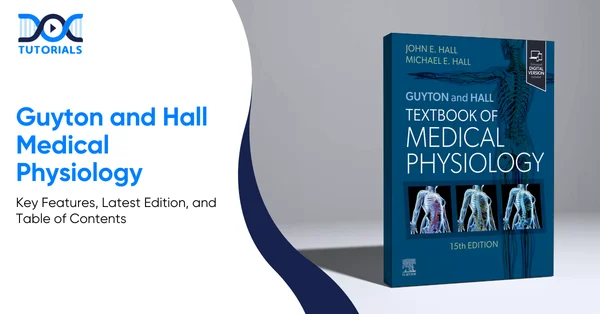
To become a skilled physician, having a profound knowledge of physiology is necessary. In this regard, Guyton and Hall’s Medical Physiology plays a crucial role in providing clear, concise knowledge of human physiology.
Each chapter of this textbook provides detailed information to readers through clinical examples, coloured visuals, tables, and charts. Keep reading to learn more about this book, its latest edition, table of contents, features, and more.
A Brief Overview of Guyton and Hall Textbook of Medical Physiology
In 1956, Professor Arthur Guyton published Medical Physiology for the first time. It covers crucial aspects of Physiology in easy-to-understand language, includes clinical studies, highlights in pale blue and short front text, etc. It is focused on clinical and pre-clinical students, upgrading each edition in line with advancements in the subject.
Guyton and Hall Medical Physiology was first published by Professor Arthur Guyton in 1956. The book is preferred among medical students and professionals for its clear and simple presentation style, focus on clinical and pre-clinical aspects, single-author voice, etc.
Since its first edition, every version of this book has been updated to align with advances in physiology, helping readers stay up to date and informed. It employs a unique format that makes complex concepts easy to understand. The book uses a larger font to highlight crucial details, enhancing readability.
It provides detailed information in simple language, includes clinical examples, and more to ensure readers can easily grasp complex concepts. Clinical case studies are highlighted in pale blue and a smaller font to draw the readers’ attention.
All these outstanding features of this book mark its popularity in the field of physiology among readers across the world.
What is the Latest Edition of Guyton and Hall Medical Physiology?
Guyton Physiology was revised by Prof. John Hall in 2006 after Prof. Guyton’s death in 2003. For MBBS students, clinicians, and pre-clinical learners, the 2025 15th edition, a bestseller, provides simple, up-to-date information on difficult subjects, such as the role of thyroid hormones in foetal, neonatal, and infant brain development.
After Professor Guyton’s death in 2003, Professor John Hall has been responsible for publishing the updated versions of this book since 2006. Guyton Physiology, the latest edition (15th edition), was published in 2025, delivering detailed knowledge on complex topics in an easy-to-digest format.
It is the bestselling version of this book, featuring fully updated information, broad coverage of various topics, and simple, clear language. The book includes chapters relevant to students with a clinical and pre-clinical background.
Each topic in this textbook is best suited for practising physicians and candidates preparing for the MBBS. For instance, the book explains how thyroid hormone supports brain growth and development during the foetal, neonatal, and infantile periods.
This topic is of crucial importance in physiology, and this book explains it in easily understandable texts to deliver in-depth knowledge to the readers.
What are the Features of Guyton and Hall Latest Edition?
Guyton and Hall’s Physiology book has been updated to include advanced topics (gut microbiome, sex differences) and short, readable chapters on basic concepts like homeostasis. It includes dual fonts for clinical examples and fundamentals, 1200+ colourful diagrams, and eBook extras like animations.
Here are some of the notable features of Guyton and Hall latest editions:
- This book emphasises the essential principles of physiology that enhance readers’ knowledge for making clinical decisions later in professional practice. It focuses on topics such as how your body can remain healthy by maintaining homeostasis, and other core materials.
- The information in this book is presented in short chapters, in simple, readable language, with little exaggeration, to facilitate easy retention and learning.
- Focusing on delivering up-to-date knowledge on physiology, this book includes new information on the subject, the gut microbiome, sex differences, and clinical aspects of physiology, such as lab values.
- The book includes two font sizes. Larger font is used for fundamentals, while a smaller font highlights clinical examples and integrated sciences relevant to physiology, pathophysiology, and other detailed mechanisms.
- The book includes more than 1200 coloured diagrams and drawings to make physiology easier to understand for readers.
- Readers can get access to animations, heart sounds, self-assessment questions, etc., through the eBook version. It allows online access to texts, diagrams, etc., enabling readers to search for what they are looking for, take notes, highlight important sections, and have the texts read aloud.
What is the Table of Contents for Guyton & Hall Textbook of Medical Physiology?
Guyton and Hall 15th edition is the latest version of this book. It is divided into 15 sections, and each section includes multiple chapters. There are 85 chapters in total. Unit 1 is an introduction to physiology, with three chapters. Unit 2 is about membrane physiology, muscle, nerve, etc., with 5 chapters.
UNIT I: Introduction to Physiology: The Cell and General Physiology
Chapter 1: Functional Organisation of the Human Body and Control of the “Internal Environment”
- Cells are the Living Units of the Body
- Extracellular Fluid—The “Internal Environment”
- Homeostasis—Maintenance of a Stable Internal Environment
- Control Systems of the Body
- Physiological Variability
Chapter 2: The Cell and Its Functions
- Organisation of the Cell
- Cell Structure
- Functional Systems of the Cell
- Locomotion of Cells
Chapter 3: Genetic Control of Protein Synthesis, Cell Function, and Cell Reproduction
- Cell Nucleus Genes Control Protein Synthesis
- Transcription—Transfer of Cell Nucleus DNA Code to Cytoplasm RNA Code
- Translation—Formation of Proteins on the Ribosomes
- Protein Enzymes Control the Synthesis of Other Substances in the Cell
- Regulation of Gene Function and Biochemical Activity in Cells
- The DNA–Genetic System Controls Cell Reproduction
- Cell Differentiation
- Apoptosis—Programmed Cell Death
- Cancer
UNIT II: Membrane Physiology, Nerve, and Muscle
Chapter 4: Transport of Substances through Cell Membranes
- The Cell Membrane Is a Lipid Bilayer with Cell Membrane Transport Proteins
- Diffusion
- Active Transport of Substances through Membranes
Chapter 5: Membrane Potentials and Action Potentials
- Basic Physics of Membrane Potentials
- Resting Membrane Potential of Neurons
- Neuron Action Potential
- Propagation of the Action Potential
- Importance of Energy Metabolism for Reestablishing Sodium and Potassium Ionic Gradients after Action Potentials Are Completed
- Plateau in Some Action Potentials
- Rhythmicity of Some Excitable Tissues—Repetitive Discharge
- Special Characteristics of Signal Transmission in Nerve Trunks
- Excitation—The Process of Eliciting the Action Potential
Chapter 6: Contraction of Skeletal Muscle
- Physiological Anatomy of Skeletal Muscle
- General Mechanism of Muscle Contraction
- Molecular Mechanisms of Muscle Contraction
- Energetics of Muscle Contraction
- Characteristics of Whole Muscle Contraction
Chapter 7: Excitation of Skeletal Muscle: Neuromuscular Transmission and Excitation-Contraction Coupling
- Neuromuscular Junction and Transmission of Impulses from Nerve Endings to Skeletal Muscle Fibres
- Muscle Action Potential
- Excitation-Contraction Coupling
Chapter 8: Excitation and Contraction of Smooth Muscle
- Contraction of Smooth Muscle
- Regulation of Contraction by Calcium Ions
- Nervous and Hormonal Control of Smooth Muscle Contraction
UNIT III: The Heart
Chapter 9: Cardiac Muscle; The Heart as a Pump and Function of the Heart Valves
- Cardiac Muscle Physiology
- The Cardiac Cycle
- Regulation of Heart Pumping
Chapter 10: Rhythmical Excitation of the Heart
- Specialised Excitatory and Conductive System of the Heart
- Control of Excitation and Conduction in the Heart
Chapter 11: Fundamentals of Electrocardiography
- Waveforms of the Normal Electrocardiogram
- Flow of Current Around the Heart During the Cardiac Cycle
- Electrocardiographic Leads
Chapter 12: Electrocardiographic Interpretation of Cardiac Muscle and Coronary Blood Flow Abnormalities: Vectorial Analysis
- Vectorial Analysis of Electrocardiograms
- Vectorial Analysis of the Normal Electrocardiogram
- Mean Electrical Axis of the Ventricular QRS and Its Significance
- Conditions that Cause Abnormal Voltages of the QRS Complex
- Prolonged and Bizarre Patterns of the QRS Complex
- Current of Injury on the Electrocardiogram
- Abnormalities in the T Wave
Chapter 13: Cardiac Arrhythmias and Their Electrocardiographic Interpretation
- Abnormal Sinus Rhythms
- Heart Block Within the Intracardiac Conduction Pathways
- Premature Contractions
- Paroxysmal Tachycardia
- Ventricular Fibrillation
- Atrial Fibrillation
- Atrial Flutter
- Cardiac Arrest
UNIT IV: The Circulation
Chapter 14: Overview of the Circulation: Pressure, Flow, and Resistance
- Physical Characteristics of the Circulation
- Basic Principles of Circulatory Function
- Interrelationships of Pressure, Flow, and Resistance
Chapter 15: Vascular Distensibility and Functions of the Arterial and Venous Systems
- Vascular Distensibility
- Arterial Pressure Pulsations
- Veins and Their Functions
Chapter 16: The Microcirculation and Lymphatic System: Capillary Fluid Exchange, Interstitial Fluid, and Lymph Flow
- Structure of the Microcirculation and Capillary System
- Vasomotion Causes Intermittent Capillary Blood Flow
- Exchange of Substances Between the Blood and Interstitial Fluid
- Interstitium and Interstitial Fluid
- Fluid Filtration Across Capillaries
- Lymphatic System
Chapter 17: Local and Humoral Control of Tissue Blood Flow
- Local Blood Flow is Controlled in Response to Tissue Needs
- Mechanisms of Local Blood Flow Control
- Humoral Control of the Circulation
Chapter 18: Nervous Regulation of the Circulation and Rapid Control of Arterial Pressure
- Nervous Regulation of the Circulation
- Special Features of Nervous Control of Arterial Pressure
Chapter 19: Role of the Kidneys in Long-Term Control of Arterial Pressure and in Hypertension: The Integrated System for Arterial Pressure Regulation
- Renal–Body Fluid System for Arterial Pressure Control
- Role of the Renin-Angiotensin System in Arterial Pressure Control
- Summary of Integrated Multifaceted Systems for Arterial Pressure Regulation
Chapter 20: Cardiac Output, Venous Return, and Their Regulation
- Normal Values for Cardiac Output at Rest and During Activity
- Control of Cardiac Output by Venous Return—Frank-Starling Mechanism of the Heart
- Methods for Measuring Cardiac Output
Chapter 21: Muscle Blood Flow and Cardiac Output During Exercise; The Coronary Circulation and Ischemic Heart Disease
- Blood Flow Regulation in Skeletal Muscle at Rest and During Exercise
- Coronary Circulation
Chapter 22: Heart Failure
- Circulatory Dynamics in Heart Failure
- Unilateral Left Heart Failure
- Low-Output Cardiac Failure—Cardiogenic Shock
- Oedema in Patients with Heart Failure
- Cardiac Reserve
- Quantitative Graphic Analysis of Cardiac Failure
- Heart Failure with Preserved Ejection Fraction
- High-Output Heart Failure
Chapter 23: Heart Valves and Heart Sounds; Valvular and Congenital Heart Defects
- Heart Sounds
- Abnormal Circulatory Dynamics in Valvular Heart Disease
- Abnormal Circulatory Dynamics in Congenital Heart Defects
- Use of Extracorporeal Circulation During Cardiac Surgery
- Hypertrophy of the Heart in Valvular and Congenital Heart Disease
Chapter 24: Circulatory Shock and Its Treatment
- Physiological Causes of Shock
- Hypovolemic Shock Due to Haemorrhage
- Distributive Shock is Characterised By Severe Peripheral Vasodilation
- Obstructive Shock is Usually Due to Noncardiac Causes of Reduced Cardiac Output
- Physiology of Treatment in Shock
- Circulatory Arrest
UNIT V: The Body Fluids and Kidneys
Chapter 25: Regulation of Body Fluid Compartments: Extracellular and Intracellular Fluids; Oedema
- Long-Term Steady-State Fluid and Solute Balance
- Body Fluid Compartments
- Constituents of Extracellular and Intracellular Fluids
- Measurement of Body Fluid Volume—Indicator-Dilution Principle
- Fluid Exchange and Osmotic Equilibrium Between Intracellular and Extracellular Fluid
- Volume and Osmolality of Extracellular and Intracellular Fluids in Abnormal States
- Glucose and Other Solutions for Nutrition
- Clinical Abnormalities of Fluid Volume Regulation: Hyponatremia and Hypernatremia
- Oedema: Excess Fluid in the Tissues
- Fluids in Potential Spaces of the Body
Chapter 26: The Urinary System: Functional Anatomy and Urine Formation By the Kidneys
- Functions of the Kidneys
- Physiological Anatomy of the Kidneys
- Urine Formation Results from Glomerular Filtration, Tubular Reabsorption, and Tubular Secretion
- Micturition
Chapter 27: Glomerular Filtration, Renal Blood Flow, and Their Control
- Glomerular Filtration—The First Step in Urine Formation
- Determinants of GFR
- Renal Blood Flow
- Physiological Control of GFR and Renal Blood Flow
- Autoregulation of GFR and Renal Blood Flow
Chapter 28: Renal Tubular Reabsorption and Secretion
- Tubular Reabsorption is Quantitatively Large and Highly Selective
- Passive and Active Mechanisms of Reabsorption
- Reabsorption and Secretion Along Different Parts of the Nephron
- Regulation of Tubular Reabsorption
- Use of Clearance Methods to Quantify Kidney Function
Chapter 29: Urine Concentration and Dilution; Regulation of Extracellular Fluid Osmolarity and Sodium Concentration
- Excretion of Excess Water by Dilute Urine
- Conservation of Water by Concentrated Urine
- Countercurrent Multiplier Mechanism
- Control of Extracellular Fluid Osmolarity and Sodium Concentration
Chapter 30: Renal Regulation of Potassium, Calcium, Phosphate, and Magnesium; Integration of Renal Mechanisms for Control of Blood Volume and Extracellular Fluid Volume
- Regulation of Internal Potassium Distribution
- Renal Potassium Excretion
- Renal Calcium Excretion and Extracellular Calcium Ion Concentration
- Renal Phosphate Excretion
- Renal Magnesium Excretion and Extracellular Magnesium Ion Concentration
- Integration of Renal Mechanisms for Control of Extracellular Fluid and Distribution of Extracellular Fluid
- Nervous and Hormonal Factors in Renal–Body Fluid Feedback Control
- Responses to Changes in Sodium Intake
- Conditions Causing Large Increases in Blood and Extracellular Fluid Volume
Chapter 31: Acid–Base Regulation
- Hydrogen Ion Concentration Regulation
- Acids and Bases—Definitions
- Defences Against Changes in H+ Concentration: Buffers, Lungs, and Kidneys
- Buffering of H+
- Bicarbonate Buffer System
- Phosphate Buffer System
- Proteins as Intracellular Buffers
- Respiratory Regulation of Acid–Base Balance
- Renal Control of Acid–Base Balance
- Secretion and Reabsorption of H+ and HCO3− in Tubules
- Generation of “New” HCO3− in the Tubule
- Quantification of Renal Acid–Base Excretion
- Renal Adjustment in Acidosis and Alkalosis
Chapter 32: Diuretics and Kidney Diseases
- Mechanisms of Action of Diuretics
- Kidney Diseases
- Acute Kidney Injury
- Chronic Kidney Disease (CKD) and Loss of Nephrons
UNIT VI: Blood Cells, Immunity, and Blood Coagulation
Chapter 33: Red Blood Cells, Anaemia, and Polycythemia
- Red Blood Cells (Erythrocytes)
- Iron Metabolism
- Anemias
- Polycythemia
Chapter 34: Resistance of the Body to Infection: I. Leukocytes, Granulocytes, the Monocyte-Macrophage System, and Inflammation
- Leukocytes (White Blood Cells)
- Neutrophils and Macrophages Defend Against Infections
- Monocyte-Macrophage Cell System (Reticuloendothelial System)
- Inflammation: Role of Neutrophils and Macrophages
- Eosinophils
- Basophils
- Leukopenia
- Leukemias
Chapter 35: Resistance of the Body to Infection: II. Immunity and Allergy
- Acquired (Adaptive) Immunity
- Allergy and Hypersensitivity
- Sex Differences in Innate and Adaptive Immunity
Chapter 36: Blood Types, Transfusion, and Tissue and Organ Transplantation
- Antigenicity Causes Immune Reactions in the Blood
- O-A-B Blood Types
- Rh Blood Types
- Transfusion Reactions Resulting From Mismatched Blood Types
- Transplantation of Tissues and Organs
- Immunological Aspects of Transplantation
Chapter 37: Haemostasis and Blood Coagulation
- Haemostasis Events
- Mechanism of Blood Coagulation
- Conditions That Cause Excessive Bleeding in Humans
- Thromboembolic Conditions
- Anticoagulants for Clinical Use
- Blood Coagulation Tests
UNIT VII: Respiration
Chapter 38: Pulmonary Ventilation
- Mechanics of Pulmonary Ventilation
- Pulmonary Volumes and Capacities
- Alveolar Ventilation
Chapter 39: Pulmonary Circulation, Pulmonary Oedema, and Pleural Fluid
- Physiological Anatomy of the Pulmonary Circulatory System
- Pressures in the Pulmonary Circulatory System
- Blood Volume of the Lungs
- Blood Flow Through the Lungs and Its Distribution
- Effect of Hydrostatic Pressure Gradients in the Lungs on Regional Pulmonary Blood Flow
- Pulmonary Capillary Dynamics
- Fluid in the Pleural Cavity
Chapter 40: Principles of Gas Exchange; Diffusion of Oxygen and Carbon Dioxide Through Respiratory Membranes
- Compositions of Alveolar Air and Atmospheric Air are Different
- Diffusion of Gases Through the Respiratory Membrane
Chapter 41: Transport of Oxygen and Carbon Dioxide in Blood and Tissue Fluids
- Transport of Oxygen from the Lungs to the Body Tissues
- Transport of CO2 in Blood
- Respiratory Exchange Ratio
Chapter 42: Regulation of Respiration
- Respiratory Centre
- Chemical Control of Respiration
- Peripheral Chemoreceptor System—Role of Oxygen in Respiratory Control
- Regulation of Respiration During Exercise
Chapter 43: Respiratory Insufficiency—Pathophysiology, Diagnosis, Oxygen Therapy
- Methods for Studying Respiratory Abnormalities
- Pathophysiology of Specific Pulmonary Abnormalities
- Hypoxia and Oxygen Therapy
- Hypercapnia—Excess Carbon Dioxide in the Body Fluids
- Respiratory Resuscitation and Mechanical Ventilators
UNIT VIII: Aviation, Space, and Deep-Sea Diving Physiology
Chapter 44: Aviation, High Altitude, and Space Physiology
- Effects of Low Oxygen Pressure on the Body
Chapter 45: Physiology of Deep-Sea Diving and Other Hyperbaric Conditions
- Effect of High Partial Pressures of Individual Gases on the Body
- Self-Contained Underwater Breathing Apparatus (SCUBA) Diving
UNIT IX: The Nervous System: A. General Principles and Sensory Physiology
Chapter 46: Organisation of the Nervous System, Basic Functions of Synapses and Neurotransmitters
- General Design of the Nervous System
- Major Levels of Central Nervous System Function
- Comparison of the Nervous System to a Computer
- Central Nervous System Synapses
- Special Characteristics of Synaptic Transmission
Chapter 47: Sensory Receptors and Neuronal Circuits for Processing Information
- Types of Sensory Receptors and the Stimuli They Detect
- Transduction of Sensory Stimuli into Nerve Impulses
- Signal Intensity Transmission in Nerve Tracts—Spatial and Temporal Summation
- Transmission and Processing of Signals in Neuronal Pools
- Instability and Stability of Neuronal Circuits
Chapter 48: Somatic Sensations: I. General Organisation, Tactile and Position Senses
- Classification of Somatic Senses
- Detection and Transmission of Tactile Sensations
- Sensory Pathways for Transmitting Somatic Signals into the Central Nervous System
- Transmission in the Dorsal Column–Medial Lemniscal System
- Transmission of Sensory Signals in the Anterolateral Pathway
Chapter 49: Somatic Sensations: II. Pain, Headache, and Thermal Sensations
- Fast Pain and Slow Pain and Their Qualities
- Pain Receptors (Nociceptors) and Their Stimulation
- Dual Pathways for Transmission of Pain Signals Into the Central Nervous System
- Pain Suppression (Analgesia) System in the Brain and Spinal Cord
- Referred Pain
- Visceral Pain
- Thermal Sensations
UNIT X: The Nervous System: B. The Special Senses
Chapter 50: The Eye: I. Optics of Vision
- Physical Principles of Optics
- Optics of the Eye
- Fluid System of the Eye—Intraocular Fluid
Chapter 51: The Eye: II. Receptor and Neural Function of the Retina
- Anatomy and Function of Structural Elements of the Retina
- Photochemistry of Vision
- Colour Vision
- Neural Function of the Retina
Chapter 52: The Eye: III. Central Neurophysiology of Vision
- Visual Pathways
- Organisation and Function of the Visual Cortex
- Neuronal Patterns of Stimulation During Analysis of Visual Images
- Eye Movements and Their Control
- Autonomic Control of Accommodation and Pupillary Aperture
Chapter 53: The Sense of Hearing
- Tympanic Membrane and the Ossicular System
- Cochlea
- Central Auditory Mechanisms
Chapter 54: The Chemical Senses—Taste and Smell
- Sense of Taste
- Sense of Smell
UNIT XI: The Nervous System: C. Motor and Integrative Neurophysiology
Chapter 55: Spinal Cord Motor Functions; The Cord Reflexes
- Organisation of the Spinal Cord for Motor Functions
- Muscle Sensory Receptors—Muscle Spindles and Golgi Tendon Organs—Their Roles in Muscle Control
- Flexor Reflex and the Withdrawal Reflexes
- Crossed Extensor Reflex
- Reciprocal Inhibition and Innervation
- Reflexes of Posture and Locomotion
Chapter 56: Cortical and Brain Stem Control of Motor Function
- Motor Cortex and Corticospinal Tract
- Control of Motor Functions by the Brain Stem
- Vestibular Sensations and Maintenance of Equilibrium
Chapter 57: Cerebellum and Basal Ganglia Contributions to Overall Motor Control
- The Cerebellum and Its Motor Functions
- The Basal Ganglia and Their Motor Functions
- Integration of the Entire Motor Control System
Chapter 58: Cerebral Cortex, Intellectual Functions of the Brain, Learning, and Memory
- Physiological Anatomy of the Cerebral Cortex
- Functions of Specific Cortical Areas
- The Corpus Callosum and Anterior Commissure
- Thoughts, Consciousness, and Memory
Chapter 59: The Limbic System and the Hypothalamus—Behavioural and Motivational Mechanisms of the Brain
- Activating—Driving Systems of the Brain
- Limbic System
- The Hypothalamus, a Major Control Headquarters for the Limbic System
- Functions of Other Parts of the Limbic System
Chapter 60: States of Brain Activity—Sleep, Brain Waves, Epilepsy, Psychoses, and Dementia Sleep
UNIT XII: Gastrointestinal Physiology
Chapter 63: General Principles of Gastrointestinal Function—Motility, Nervous and Hormonal Control, Blood Circulation, and Microbiota
- Gastrointestinal Motility
- Neural Control—Enteric Nervous System
- Hormonal Control
- Gastrointestinal Microbiota
Chapter 64: Propulsion and Mixing of Food in the Alimentary Tract
- Ingestion of Food
- Stomach Movements
- Small Intestine Movements
- Colon Movements
- Autonomic Reflexes Influencing Bowel Activity
Chapter 65: Secretory Functions of the Alimentary Tract
- Principles of Secretion
- Saliva Secretion
- Gastric Secretion
- Pancreatic Secretion
- Bile Secretion by the Liver
- Small Intestine Secretion
- Mucus Secretion by the Large Intestine
Chapter 66: Digestion and Absorption in the Gastrointestinal Tract
- Hydrolysis of Foods
- Gastrointestinal Absorption Principles
- Absorption in the Small Intestine
- Absorption in the Large Intestine and Faeces Formation
Chapter 67: Physiology of Gastrointestinal Disorders
UNIT XIII: Metabolism and Temperature Regulation
Chapter 68: Metabolism of Carbohydrates and Formation of Adenosine Triphosphate
Chapter 69: Lipid Metabolism
Chapter 70: Protein Metabolism
Chapter 71: The Liver
Chapter 72: Dietary Balances; Regulation of Feeding; Obesity and Starvation; Vitamins and Minerals
Chapter 73: Energetics and Metabolic Rate
Chapter 74: Body Temperature Regulation and Fever
UNIT XIV: Endocrinology and Reproduction
Chapter 75: Introduction to Endocrinology
Chapter 76: Pituitary Hormones and Their Control By the Hypothalamus
Chapter 77: Thyroid Metabolic Hormones
Chapter 78: Adrenocortical Hormones
Chapter 79: Insulin, Glucagon, and Diabetes Mellitus
Chapter 80: Parathyroid Hormone, Calcitonin, Calcium and Phosphate Metabolism, Vitamin D, Bone, and Teeth
Chapter 81: Reproductive and Hormonal Functions of the Male (and Function of the Pineal Gland)
Chapter 82: Female Physiology Before Pregnancy and Female Hormones
Chapter 83: Pregnancy and Lactation
Chapter 84: Foetal and Neonatal Physiology
UNIT XV: Sports Physiology
Chapter 85: Sports Physiology
How Does Guyton and Hall Physiology Help MBBS 1st year Students?
Guyton and Hall’s Medical Physiology approach focuses on the clinical aspects of the subject. It is an ideal handbook for MBBS 1st-year students, as it connects basic physiology to pathophysiology for preclinical students. This book emphasises how the human body maintains health (homeostasis) and includes short chapters with concise notes.
Here’s how Guyton Human Physiology stands out as a valuable resource for MBBS students:
- It focuses on the fundamentals of homeostasis, or how the body maintains health, laying the groundwork for future clinical judgments, such as the treatment of metabolic disorders.
- The short, manageable chapters, written in an approachable style, help with learning and retention. It is perfect for first-year students with hectic schedules leading up to tests.
- This book includes more than 1,200 full-colour illustrations that help make abstract ideas concrete by providing visual explanations of intricate processes such as heart cycles and nerve impulses.
- Interactive figures, heart sound audios, animations, and self-assessments are examples of online resources that support interactive study and increase exam confidence through practice questions.
FAQs about Guyton and Hall Physiology
- What is the purpose of Guyton Physiology?
Guyton and Hall Physiology Review is a perfect study aid for medical candidates alongside the leading physiology textbook.
This prepares them for exams and the USMLE Step 1 physiology section, with over 1,000 questions and explanations to master this challenging topic.
- What is Guyton and Hall renowned for?
Guyton and Hall are known for their pioneering research in physiology that underpins modern medicine. Arthur Guyton contributed to the advancement of cardiovascular physiology and blood pressure regulation.
His inventions helped those with mobility challenges. All his textbooks are always edited solely by Dr John Hall.
- What is the latest edition of Guyton and Hall’s Medical Physiology?
The 15th Edition is the most recent version of the Guyton and Hall textbook. It is fully updated to deliver clear, in-depth coverage of key topics most relevant for clinical and preclinical students.
- When was Guyton and Hall first published?
The Medical Physiology book by Guyton and Hall was first published in 1956, covering important topics of Physiology, focusing mostly on clinical aspects.
- How many chapters are there in Guyton and Hall Medical Physiology?
There are a total of 15 sections in Guyton and Hall Medical Physiology book. Each section includes chapters on multiple topics, totalling 85 chapters.
- What are the key features of Guyton and Hall Medical Physiology?
This book includes short chapters in simple language for quick understanding. Moreover, it includes texts in large and small fonts to highlight different aspects. The eBook version allows audio and visual access for better interpretation of topics.
- What are the main principles of physiology?
The key principles of physiology include the following:
(1) Cells form life’s basic functional units; (2) Physiological systems maintain homeostasis for health; (3) Bodily mechanisms follow physical and chemical laws; (4) Human bodies evolved from ancestral forms; (5) Bodies convert matter and energy into tissues and work.
Others include (6) Structure determines function; (7) Signalling coordinates systems across all levels; (8) Controls rely on negative feedback, feed-forward, or thresholds; (9) Physiology involves quantitative analysis.
- What are physiology’s four major themes?
This text explores complex systems while emphasising their harmony for health. Key themes in physiology include structure-function relationships, maintenance of homeostasis, organisation across biological levels, and the integration of body systems.
- What are the different types of physiology?
The three main branches of physiology are Cell Physiology, Evolutionary Physiology, and System Physiology.
- What are the 4 essential concepts of physiology?
The crucial concepts of physiology are understanding oxygen transport, acid-base balance, cardiac electromechanical activity, and regulatory mechanisms that help maintain homeostasis across body systems.
Conclusion
Guyton and Hall Medical Physiology is a notable handbook for medical students, especially MBBS 1st year students. It includes clear explanations of critical topics and focuses on clinical and pre-clinical aspects. However, MBBS candidates may also need a mentor for professional guidance.
In this regard, DocTutorials can be your study partner. We provide online coaching for MBBS through video lectures, Qbank for formative assessment, 2D and 3D visuals for better comprehension, and more.
Join our MBBS course for further information!

Latest Blogs
-
INI CET Exam Pattern 2027: A Complete Guide with Subject-Wise Weightage
INI CET Exam Pattern 2027: A Complete Guide with Subject-Wise Weightage The Institute of National Importance Combined Entrance Test (INI…
-

NEET PG Registration 2027: An Essential Guide For Exam Prep
The NEET PG registration, which is conducted online, is a crucial step in the exam process. Filling out the NEET…
-

NEET PG Exam 2025- Date, Pattern, Marking Scheme, Subject Wise Weightage, and Exam Mode
NEET PG Exam 2025 is the ultimate gateway for medical graduates aspiring to pursue postgraduate courses in medicine, including MD,…