Essentials of Pharmacology by KD Tripathi: MBBS 2nd Year Guide
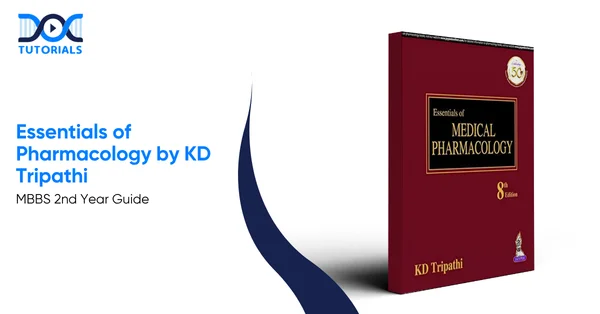
Essentials of Medical Pharmacology by KD Tripathi is a trusted, student-friendly textbook for MBBS students. Since pharmacology is the foundation of rational drug therapy and clinical decision-making, this textbook is central to the development of pharmacology concepts.
It gives a strong conceptual framework by articulating the complex drug actions in a well-organised manner. The book is also aligned with the National Medical Commission (NMC) competency-based curriculum, making it a dependable book in Indian medical colleges.
Keep reading to know more about the Essentials of Medical Pharmacology book, along with its key details.
Overview of Pharmacology Book By KD Tripathi, Latest Edition
The book of Pharmacology by KD Tripathi bridges basic pharmacology with clinical therapeutics. With strong emphasis on rational drug use, its logical progression from general to system-wise pharmacology makes it valuable for MBBS, BDS, nursing, pharmacy, and allied health students.
The latest version contains essential revisions in the various sections to make the material up to date and appropriate in clinical practice:
- Overview of the Latest Edition
The latest edition of KDT Pharmacology combines core pharmacological concepts with recent advances in drug therapy. It is designed to be practical and student-friendly, supporting MBBS students, PG aspirants, and clinicians who need a reliable reference.
- Updated and Clinically Relevant Content
This edition includes newly approved drugs, revised dosages, expanded indications, and updated safety information. Greater focus is placed on patient-centred care, pharmacovigilance, and emerging areas such as personalised medicine. It also maintains the familiar structure of earlier editions.
- Depth and Systematic Organisation
The mechanisms of drugs, pharmacokinetics, pharmacodynamics, and clinical applications are described in an understandable manner across the prominent systems, such as autonomic, cardiovascular, antimicrobial, anticancer, and biologic drugs.
Chapters are logically arranged for structured learning and efficient revision.
- Clear Language and Readability
Simple, precise language makes complex topics easy to understand. Highlighted points, summaries, and revision notes aid exam preparation and quick clinical review.
- Strong Visual Support
High-quality diagrams, flowcharts, and tables enhance conceptual clarity and improve retention, especially for visual learners.
Key Features of Essentials of Medical Pharmacology by KD Tripathi
Essentials of Medical Pharmacology by KD Tripathi remains popular for its clear structure and exam focus. Regular updates, evidence-based therapy, national health program coverage, and alignment with the National Medical Commission curriculum make it a comprehensive, clinically relevant resource.
The key features of KD Tripathi include:
- Updated Drug Content
This edition presents newly approved drugs, biosimilars, and newer therapeutic agents, and also revises the existing drug profiles with recent dosage recommendations, safety data, adverse effects, and significant drug interactions. - Improved Visual Presentation
The book features enhanced diagrams, flowcharts, and tables that simplify the understanding of complex drug mechanisms, classifications, and pharmacokinetic concepts. - Stronger Clinical Integration
More clinical correlations, case-based scenarios, and practice guidelines are added in this edition to assist in bridging theoretical concepts and real clinical practice. - Clear and Well-Structured Content
Planning and organisation have gone into each chapter to make them comprehensive yet concise so that reading and revising become easier. This helps to retain the information in the long run. - Supplementary Online Support
Most recent editions now offer online learning facilities such as supplementary study content, self-help examinations, and updates to enable readers to remain abreast with the latest developments in pharmacology.
Major Topics Covered in KD Tripathi Pharmacology
Essentials of Medical Pharmacology by KD Tripathi covers general pharmacology, ANS, cardiovascular, CNS, chemotherapy, and endocrine drugs. Its mechanism-based, system-wise approach builds strong fundamentals, supports clinical correlation, and helps students perform confidently in exams, vivas, and clinical practice.
Below are the key topics comprehensively covered in KD Tripathi Pharmacology:
1. General Pharmacology
This foundational section is the backbone of the subject. It includes:
- Pharmacokinetics (absorption, distribution, metabolism, excretion)
- Pharmacodynamics and receptor theory
- Dose–response relationships and therapeutic index
- Drug toxicity and adverse drug reactions
- Drug interactions
- Clinical trials and drug development
- Pharmacovigilance
Mastering this section is crucial for understanding all subsequent topics and performing well in university exams and viva voce.
2. Autonomic Nervous System (ANS) Drugs
This section explains drugs affecting involuntary bodily functions and is considered high-yield for exams. Topics include:
- Cholinergic agonists and anticholinergic drugs
- Adrenergic agonists (sympathomimetics)
- Adrenergic blockers (alpha and beta blockers)
- Neuromuscular blocking agents
- Ganglionic stimulants and blockers
Understanding receptor distribution and physiological effects makes this section logical rather than memory-intensive.
3. Cardiovascular Pharmacology
Cardiovascular drugs are among the most commonly prescribed medications in clinical practice. This section covers:
- Antihypertensive drugs (diuretics, ACE inhibitors, ARBs, beta-blockers, calcium channel blockers)
- Antianginal agents
- Antiarrhythmic drugs
- Drugs used in heart failure
- Anticoagulants and antiplatelet agents
- Lipid-lowering drugs
These topics are highly relevant for an internship and are frequently tested in exams.
4. Central Nervous System (CNS) Drugs
This section focuses on drugs that alter brain and spinal cord function, including:
- Sedative-hypnotics
- Antipsychotics
- Antidepressants
- Antiepileptic drugs
- Opioid analgesics and antagonists
- General and local anaesthetics
- CNS stimulants
Mechanism-based understanding is essential due to overlapping drug actions and adverse effects.
5. Chemotherapy
One of the most extensive and clinically important sections, chemotherapy includes:
- Antibiotics
- Antitubercular drugs
- Antimalarial agents
- Antiviral and antifungal drugs
- Anticancer agents
Integration with microbiology significantly enhances understanding and retention.
6. Endocrine Pharmacology
This section includes:
- Insulin and oral hypoglycemic agents
- Thyroid hormones and antithyroid drugs
- Corticosteroids
- Sex hormones and oral contraceptives
Why Should You Choose the Latest Edition of KD Tripathi Pharmacology?
Essentials of Medical Pharmacology by KD Tripathi is widely recommended for its clear, concept-based approach, strong clinical relevance, and exam-focused content. Compared with Goodman and Gilman and Katzung, it is more concise and better suited for MBBS students.
Choosing the most recent edition brings several benefits that make it a valuable and dependable study resource. Here’s what it offers:
- Credibility and Accuracy: The book is scientifically precise, with updated content and reliable explanations, having a high level of accuracy, thus making it easy to revise before exams.
- Student-Adequate Presentation: The book is well organised with headings, a brief overview, tables, and some highlighting of the most important points so that it is easy to revise before exams.
- Exam-Oriented Content: The content is well-aligned to the university syllabuses, licensing exams of medicine, and postgraduate entrance exams.
- Wide-Ranging Coverage: It covers everything from fundamental pharmacological concepts to advanced drug groups, ensuring a complete and thorough understanding of the subject.
- Good Clinical Relevance: Clinical examples and correlations allow translating theoretical understanding into actual medical practice and help prepare students to practice with patients.
How to Make the Most of KD Tripathi Pharmacology?
To get the most from Essentials of Medical Pharmacology, focus on active reading with concise notes, use comparative tables for high-yield topics, and integrate learning with pathology and microbiology. Regular MCQ practice strengthens concepts and improves performance in clinical vignettes and competitive exams.
By approaching the KD Tripathi Pharmacology book with the following study methods, you can maximise its usefulness:
- Revise Regularly: Make use of summaries, tables, and highlighted sections for frequent revision.
- Link with Clinical Cases: Connect drug mechanisms with clinical scenarios to strengthen understanding and recall.
- Use Supplementary Online Material: Explore additional resources, quizzes, and updates available online.
- Solve Previous Exam Questions: Apply textbook concepts to past questions to enhance exam preparedness.
- Engage in Group Discussions: Explaining topics to peers reinforces concepts and improves confidence.
Benefits and Limitations of the KD Tripathy Pharmacology Textbook
Benefits
- Regularly updated and clinically relevant.
- Clear, easy-to-understand language.
- Logical organisation for quick reference.
- Excellent use of tables and diagrams.
- Useful for both undergraduate and early postgraduate students.
Limitations
- Content density may feel heavy for beginners.
- Advanced topics like pharmacogenomics are briefly covered.
- Bulky physical size reduces portability.
- Limited digital or online supplementary resources.
How is KD Tripathi Different from Other Pharmacology Textbooks?
KDT Pharmacology stands out among pharmacology textbooks for its simple language, exam-oriented approach, and easy revision format. While books like Goodman & Gilman offer research-focused content, KD Tripathi remains the preferred choice for conceptual clarity.
When compared with other well-known pharmacology textbooks, such as Goodman & Gilman and Katzung, KD Tripathi is generally seen as more approachable for students. Its simple language and strong exam-oriented focus make it easier to grasp concepts quickly and revise efficiently.
The latest edition features updated drug information and helpful visual aids, making it particularly useful for students preparing for competitive exams like NEET. In contrast, Goodman & Gilman offers much greater depth and is more research-focused.
For those looking for detailed explanations or engaging in postgraduate study and research, more comprehensive texts such as Goodman & Gilman may be a better choice.
FAQs about KD Tripathi Pharmacology Textbook
- Is KD Tripathi good for the MBBS 2nd year?
Yes. KD Tripathi is best suited to the 2nd-year MBBS. The content is well aligned with the NMC curriculum and focuses on building strong concepts required for exams and clinical understanding.
- What is the latest edition of KD Tripathi Pharmacology?
The most recent version is the 9th edition, which features revised drug classifications, drugs approved since 2002, revised treatment recommendations, and material that is consistent with competency-based medical education (CBME).
- Is KD Tripathi sufficient for MBBS pharmacology exams?
Yes. For the MBBS 2nd year university theory exams and viva, KD Tripathi is more than sufficient. Most exam questions can be answered directly from the book when studied thoroughly.
- Does KD Tripathi Pharmacology include clinical correlations?
Yes. One of the major strengths of KD Tripathi is its emphasis on rational therapeutics and clinical relevance. Drug mechanisms are frequently linked to disease conditions, helping students understand how and why drugs are used in real clinical practice.
- What is the best way in which MBBS students should study KD Tripathi?
To enhance retention, students are encouraged to read system-wise chapters, emphasise the mechanisms of action, construct comparative tables, and combine pharmacology with pathology and microbiology.
- Is KD Tripathi good for preparation for PG entrance exams?
Yes. It is good for developing strong concepts needed for solving clinical MCQs for exams like NEET PG, INI-CET, although it is a textbook for undergraduate students.
- Is KD Tripathi preferred over Goodman & Gilman for MBBS?
KD Tripathi is mostly suitable for undergraduate students. It is concise, more reader-friendly, and more exam-oriented compared to Goodman and Gilman, which is more suitable for higher or postgraduate levels.
- Are drug doses included in KD Tripathy?
Basic dosage information is mentioned where necessary, but detailed and exam-ready drug doses are better covered in the companion handbook.
- How many hours should I study Pharmacology in the 2nd year of MBBS?
Approximately 2 to 3 hours of study per day would be sufficient to grasp the concepts, make revisions, and prepare for the exams.
- Does KDT Pharmacology help with viva voce preparation?
Yes. The concise presentation, clear classifications, and emphasis on mechanisms and adverse effects help students before viva exams.
Conclusion
Regardless of whether you are preparing for your viva exam or preparing for the PG Entrance exam, KD Tripathi is an excellent book to have by your side. It has a clear presentation, a robust structure, and strong alignment with examination needs, which explains its constant popularity among MBBS students.
For added guidance with MBBS concepts, DocTutorials can be your study partner. We offer in-depth resource materials, including 2D & 3D video lectures and structured mentorship by expert faculty to help aspirants gain clarity over medical topics.
Join DocTutorials today and explore our MBBS curriculum to excel in your medical career!

Latest Blogs
-
INI CET Exam Pattern 2026: A Complete Guide with Subject-Wise Weightage
INI CET Exam Pattern 2026: A Complete Guide with Subject-Wise Weightage The Institute of National Importance Combined Entrance Test (INI…
-

NEET PG Registration 2026: An Essential Guide For Exam Prep
The NEET PG registration, which is conducted online, is a crucial step in the exam process. Filling out the NEET…
-

NEET PG Exam 2025- Date, Pattern, Marking Scheme, Subject Wise Weightage, and Exam Mode
NEET PG Exam 2025 is the ultimate gateway for medical graduates aspiring to pursue postgraduate courses in medicine, including MD,…