MBBS 2nd Year Pharmacology: Shanbhag Pharmacology Textbook Guide
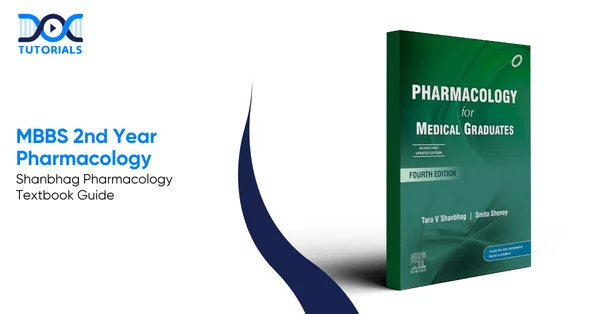
Shanbhag Pharmacology is a well-known and student-friendly pharmacology textbook widely used by MBBS students across India. The book has been designed to make a conceptually heavy course easier to understand.
This helps students develop early clinical understanding and pass university examinations with ease. For second-year MBBS students, mastering pharmacology is important for passing exams and for developing therapeutic judgment. Keep reading to know more details about the book.
Overview of Shanbhag Pharmacology, Latest Edition
Tara Shanbhag Pharmacology offers a link between core pharmacology concepts and real-world clinical use through its system-wise approach. The book remains concise, exam-focused, and well aligned with the NMC curriculum, while staying up to date with newer drugs, revised guidelines, and safety information.
Shanbhag acts as an effective bridge between clinical application and basic pharmacological principles. The book is presented in a system-based approach, starting with general pharmacology and then proceeding to the systems of the organisms.
The recent editions of Shanbhag Pharmacology have made these changes while maintaining the simplicity that has made the book popular among students. The book remains concise without sacrificing clarity, making it suitable for regular reading as well as last-minute revision.
Key Highlights of the Latest Edition:
- Updated drug classifications and therapeutic uses.
- Focus on the adverse drug reactions and drug safety.
- Addition of more recent drugs pertinent to present clinical practice.
- Focus on the drugs commonly asked in MBBS examinations.
- Congruence with the National Medical Commission (NMC) competency-based curriculum.
How is the Organisation of the Shanbhag Pharmacology Book?
The Shanbhag Pharmacology book is organised in a clear, systematic format that makes learning and revision easier for students. Each chapter follows a uniform structure, helping students quickly understand and revise topics before exams.
The systematic structure of Pharmacology is one of the strongest points of the Shanbhag. This allows the students to navigate through the topic with confidence. Each chapter typically includes:
- Drug classification
- Mechanism of action
- Pharmacokinetics (where relevant)
- Therapeutic uses
- Adverse effects
- Contraindications and precautions
- Important drug interactions
This uniform pattern reduces confusion and makes revision faster before exams.
What are the Major Topics Covered in Shanbhag Pharmacology?
Pharmacology offers thorough coverage of all core topics needed for the MBBS 2nd year. Its system-wise approach ensures a balanced understanding of mechanisms, therapeutic uses, and clinical relevance across major drug groups.
Tara Shanbhag Pharmacology provides comprehensive coverage of all essential areas required for MBBS 2nd-year students:
1. General Pharmacology
- Introduction to pharmacology
- Routes of drug administration
- Pharmacokinetics
- Pharmacodynamics
- Adverse drug reactions
- Drug interactions
- Clinical pharmacology
- Pharmacogenetics
- Drug development and clinical trials
- Essential medicines & rational drug use
2. Autonomic Nervous System Pharmacology
- Neurotransmission in ANS
- Cholinergic drugs
- Anticholinergic drugs
- Adrenergic drugs
- Antiadrenergic drugs
- Drugs used in glaucoma
- Drugs used in myasthenia gravis
3. Cardiovascular System Drugs
- Drugs for hypertension
- Antianginal drugs
- Drugs for heart failure
- Antiarrhythmic drugs
- Drugs affecting blood and coagulation
- Hypolipidemic drugs
4. Central Nervous System Drugs
- General anesthetics
- Local anesthetics
- Sedatives and hypnotics
- Antiepileptic drugs
- Antipsychotic drugs
- Antidepressants
- Drugs used in Parkinson’s disease
- Opioid analgesics & NSAIDs
- Drugs of abuse
5. Autacoids & Related Drugs
- Histamine and antihistamines
- Serotonin
- Prostaglandins & leukotrienes
- NSAIDs and anti-inflammatory drugs
- Drugs used in gout
6. Respiratory System
- Drugs for bronchial asthma
- Antitussives and expectorants
- Drugs for allergic disorders
7. Gastrointestinal System
- Drugs for peptic ulcer disease
- Antiemetics
- Laxatives
- Antidiarrheal drugs
8. Endocrine Pharmacology
- Pituitary hormones
- Thyroid and antithyroid drugs
- Antidiabetic drugs (insulin & oral agents)
- Corticosteroids
- Sex hormones and contraceptives
9. Chemotherapy
- General principles of chemotherapy
- Antibacterial drugs
- Antitubercular drugs
- Antileprotic drugs
- Antifungal drugs
- Antiviral drugs
- Antimalarial drugs
- Anticancer drugs
10. Miscellaneous Topics
- Vitamins and minerals
- Immunopharmacology & vaccines
- Drugs affecting renal function
- Toxicology (common poisons & antidotes)
- Drugs in pregnancy & lactation
What are the Key Features of Shanbhag Pharmacology?
Tara V Shanbhag Pharmacology is popular for its student-focused approach. It uses simple language to explain complex concepts, is exam-oriented content, has strong clinical relevance, and is concise. This makes revision easier.
Tara V Shanbhag Pharmacology continues to be popular because of the following features:
- Exam-Oriented Presentation: The book focuses on drugs and topics that are frequently asked in university exams. This makes preparation more targeted and efficient.
- Concise Yet Comprehensive: The content is not overly detailed but is comprehensive enough to encompass all the critical concepts. This provides a balanced approach that is appropriate to the learning requirements of the MBBS students.
- Clinical Relevance: Therapeutic uses, adverse effects, and precautions are also clearly highlighted to allow students to acquire clinical reasoning.
- Easy Revision: The clear classifications, well-organised headings, and neatly displayed tables can be quickly revised, particularly in the last few days before the examinations.
What is the Shanbhag Pharmacology Price?
The price of Pharmacology by Shanbhag varies with the edition. Older editions, like the 4th, cost less, while newer editions, such as the 5th and 6t,h are priced higher due to updated content and curriculum alignment.
The price range of the pharmacology book by Shanbhag depends on the edition:
| Edition | Approximate Price Range |
| 4th Edition | ₹800–₹900 |
| 5th Edition | ₹900–₹1,250 |
| 6th Edition | ₹800–₹950 |
What are the Advantages and Limitations of Shanbhag Pharmacology?
The Tara V Shanbhag Pharmacology book is presented in a beginner-friendly manner. In addition, the book remains affordable and practical. However, it is less detailed when compared to advanced reference texts, and may not be sufficient on its own for postgraduate-level preparation.
Advantages of Shanbhag
- Helps students understand the rationale behind drug use, not just drug names and actions.
- Builds strong conceptual clarity.
- Covers the MBBS syllabus comprehensively.
- Simple, clear language.
- Well-suited for undergraduate exam preparation.
- More affordable compared to bulky international reference textbooks.
Disadvantages of Shanbhag
- Less detailed than standard advanced pharmacology reference books.
- Limited coverage of newer and evolving areas.
- Fewer clinical case-based discussions.
- May require supplementation with other books for in-depth study.
Shanbhag Pharmacology: Comparison with Other Pharmacology Textbooks
In comparison to Goodman and Gilman, Shanbhag is easy to read and is better exam-oriented. It is ideal for MBBS students, while KD Tripathi offers more clinical depth, and Goodman & Gilman is better suited for advanced and postgraduate study.
Shanbhag is much simpler and exam-oriented when compared to the Pharmacological Basis of Therapeutics by Goodman and Gilman and Basic and Clinical Pharmacology by Katzung. It is also ideal for revising before exams.
- Shanbhag Pharmacology: Best for MBBS students, concise, easy to revise.
- KD Tripathi: More detailed, strong clinical correlation.
- Goodman & Gilman: Research-oriented, suited for postgraduate study.
How to Study Shanbhag Pharmacology Effectively?
To study Tara V Shanbhag Pharmacology effectively, read the book system-wise with regular revision. Focus on mechanisms of action and adverse effects, create comparative tables, and integrate learning with pathology and microbiology. Practice MCQs and previous university questions regularly to strengthen concepts.
To get maximum benefit from the Shanbhag Pharmacology book:
- Read system-wise and revise regularly.
- Emphasise action and side effects.
- Compare tables of similar drugs.
- Integrate pharmacology with pathology and microbiology.
- Practice MCQs and previous university questions.
Who Should Use Shanbhag Pharmacology?
The Shanbhag Pharmacology textbook is particularly beneficial to MBBS 2nd-year students, interns revising the fundamentals, and teachers who teach pharmacology at the undergraduate level.
Shanbhag Pharmacology is an ideal resource for anyone seeking a clear, exam-focused understanding of core pharmacology concepts at the undergraduate level:
- MBBS 2nd-year students
- Students preparing for university exams
- Interns who revise basic pharmacology
- Educators teaching undergraduate pharmacology
FAQs about Shanbhag Pharmacology Textbook
- Who should prefer Shanbhag Pharmacology?
Shanbhag Pharmacology is well-suited for MBBS students who are looking for a simple, easy-to-follow, and exam-oriented textbook. - Is Shanbhag Pharmacology suitable for MBBS 2nd-year students?
Yes, the textbook is appropriate for MBBS 2nd-year students. It covers the entire undergraduate pharmacology syllabus in a clear and concise manner and matches well with university examination patterns. - Does Shanbhag Pharmacology follow the NMC curriculum?
Yes, the book broadly follows the National Medical Commission (NMC) competency-based curriculum. It focuses on core concepts, commonly used drugs, adverse effects, and rational drug use relevant to undergraduate training. - Which topics are covered in Shanbhag Pharmacology?
The book covers all major areas of pharmacology, including general pharmacology, autonomic nervous system drugs, cardiovascular pharmacology, central nervous system drugs, chemotherapy, endocrine pharmacology, and drugs acting on different body systems. - Is Shanbhag Pharmacology good for university exams?
Yes, it is strongly exam-oriented. The textbook emphasises drug classifications, mechanisms of action, therapeutic uses, and adverse effects, which are frequently tested in theory exams and viva voce. - Does the book explain mechanisms of action clearly?
Yes, mechanisms of action are explained in a simple and logical manner. Complex drug actions are broken down into clear steps, making them easier for beginners to understand. - Are adverse drug reactions and contraindications well covered in Shanbhag Pharmacology?
Yes, adverse drug reactions, contraindications, and precautions are clearly highlighted. This helps students develop an understanding of drug safety and improves clinical awareness. - Is Shanbhag Pharmacology useful for viva preparation?
Yes, the concise format, clear classifications, and focus on commonly prescribed drugs make it very useful for viva voce and practical examinations. - How does Shanbhag Pharmacology compare with KD Tripathi?
Shanbhag Pharmacology is generally more concise and straightforward, making it suitable for quick learning and revision. KD Tripathi provides greater depth and clinical correlation, while Shanbhag is often preferred for focused exam preparation. - Does the Shanbhag Pharmacology book include newer drugs and updated information?
Recent editions include important updates on newer drugs and revised therapeutic uses. However, highly advanced or experimental therapies are kept limited to maintain relevance for undergraduate students.
Conclusion
Shanbhag Pharmacology has continued to be a trustworthy, student-friendly, and examination-oriented textbook among MBBS 2nd-year students. The simple language, logical structure, and emphasis on commonly used drugs make the textbook especially valuable for undergraduate medical students encountering pharmacology for the first time.
For MBBS students aiming to build strong concepts, perform well in exams, and develop rational prescribing skills, Shanbhag Pharmacology is a reliable guide. To strengthen your preparation further, DocTutorials can be your study partner. We offer in-depth study resources, such as 2D & 3D video lectures and structured mentorship.
Join DocTutorials today and explore our MBBS curriculum to excel in your medical career!

Latest Blogs
-
INI CET Exam Pattern 2026: A Complete Guide with Subject-Wise Weightage
INI CET Exam Pattern 2026: A Complete Guide with Subject-Wise Weightage The Institute of National Importance Combined Entrance Test (INI…
-

NEET PG Registration 2026: An Essential Guide For Exam Prep
The NEET PG registration, which is conducted online, is a crucial step in the exam process. Filling out the NEET…
-

NEET PG Exam 2025- Date, Pattern, Marking Scheme, Subject Wise Weightage, and Exam Mode
NEET PG Exam 2025 is the ultimate gateway for medical graduates aspiring to pursue postgraduate courses in medicine, including MD,…