Davidson’s Principles and Practice of Medicine: A Guide for Medical Students
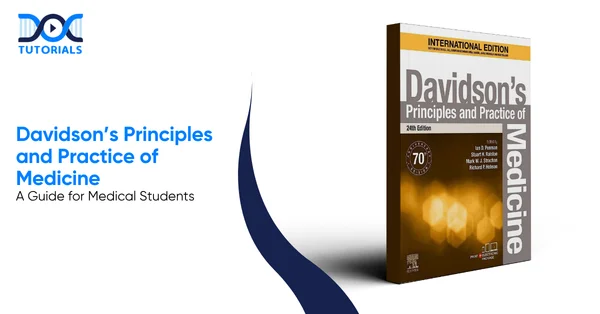
Internal medicine is one of the most concept-heavy MBBS subjects, and Davidson’s Principles and Practice of Medicine presents it clearly with a strong clinical focus. Davidson’s Medicine explains medical concepts in a systematic, clinically oriented, and evidence-based manner.
The latest edition of Davidson’s reflects significant updates in medical science, including revised diagnostic terminology, updated treatment strategies, new medications, and novel investigative approaches.
Keep reading to know more about the Davidson book of medicine, topics covered, and more details.
Overview of Davidson’s Principles and Practice of Medicine: Latest Edition
The latest Davidson’s Principles and Practice of Medicine offers updated, guideline-based coverage across all specialties, with strong foundations, emergency care, COVID-19 insights, clear clinical reasoning frameworks, and rich illustrations.
The most current version of the Principles and Practice of Medicine by Davidson incorporates thorough updates on all the major medical specialties. The content has been revised to align with modern clinical practice and international treatment protocols.
Important updates include:
- Part 1: Fundamentals of Medicine provides a solid foundation in genetics, immunology, infectious diseases, population health, oncology, and pain management. It also addresses the main principles of clinical decision-making and rational prescribing that enable students to build appropriate clinical judgments.
- Part 2: Emergency and Critical Care Medicine focuses on the recognition and management of medical emergencies. It includes poisoning, medicine in austere environments, common acute medical presentations, and the systematic approach to critically ill patients.
- Part 3: Clinical Medicine is a complete review of all major medical specialties that have been well revised and updated. A separate section devoted to COVID-19 has also been included, and the effects of the infection have been integrated throughout the book where relevant.
Practice point summaries focus on the key practical skills that medical students and junior doctors should have, and emergency boxes focus on the fundamental knowledge necessary when handling acutely ill patients.
Special sections addressing care in old age, pregnancy, and adolescence underline how medical practice varies across these patient groups and demonstrate the interface between medicine, obstetrics, and paediatrics.
The book is extensively illustrated, with over 1,000 diagrams, clinical photographs, and radiology and pathology images that enhance understanding and support visual learning.
Its global perspective is strengthened by contributions from an International Advisory Board representing 11 countries, along with leading authors from around the world.
Why is Davidson’s Principles and Practice of Medicine Highly Regarded?
Davidson’s Principles and Practice of Medicine is trusted worldwide for its clinical accuracy and real-world approach. Updated, award-winning, and richly illustrated, it builds strong diagnostic and management skills while remaining practical for busy wards and long-term learning.
Davidson’s Medicine book is widely recommended for its exceptional clinical focus and scientific accuracy. Unlike purely exam-oriented guides, it teaches medicine as it is practiced in real hospital settings. It helps students develop strong diagnostic reasoning and effective management skills.
Some of the key strengths of the Davidson textbook include:
- Trusted by over two million medical professionals worldwide for more than 70 years.
- Regularly updated content covering modern pathophysiology and clinical features.
- Clear format that can be easily read during hectic clinical practice.
- Strong global perspective with contributions from leading international experts.
- Winner of various awards, which are indicative of its quality.
- Includes interactive self-assessment tools and curriculum guidance to support continuous professional development.
- Comprehensive coverage from basic principles to emergency and critical care medicine.
- Practical, clinically relevant guidance that enhances real-world diagnostic and management skills.
- Rich visual support with more than 1,000 diagrams, clinical images, and investigative illustrations.
Topics Covered in Davidson’s Principles and Practice of Medicine
Davidson’s Principles and Practice of Medicine covers internal medicine from core fundamentals to cardiology, neurology, endocrinology, infectious diseases, oncology, and rheumatology. This makes it a reliable, all-in-one reference that builds concepts step by step for MBBS students.
Davidson’s Medicine provides exhaustive coverage of internal medicine, making it a one-stop reference for MBBS students. The book is divided into logical sections that gradually build understanding.
Section I: Fundamentals of Medicine
- Clinical examination and diagnostic reasoning
- Evidence-based medicine
- Genetics and molecular medicine
- Immunology and inflammation
- Infection and host response
Section II: Cardiovascular Medicine
- Hypertension
- Ischemic heart disease
- Heart failure
- Arrhythmias
- Valvular heart diseases
- Cardiomyopathies
- Peripheral vascular diseases
Section III: Respiratory Medicine
- Asthma and COPD
- Pneumonia
- Tuberculosis
- Interstitial lung diseases
- Pleural diseases
- Lung cancer
Section IV: Gastroenterology and Hepatology
- Esophageal disorders
- Peptic ulcer disease
- Inflammatory bowel disease
- Liver cirrhosis
- Hepatitis
- Pancreatic disorders
Section V: Renal Medicine
- Acute kidney injury
- Chronic kidney disease
- Glomerulonephritis
- Electrolyte and acid–base disorders
Section VI: Endocrinology
- Diabetes mellitus
- Thyroid disorders
- Adrenal diseases
- Pituitary disorders
- Metabolic bone diseases
Section VII: Neurology
- Stroke
- Epilepsy
- Movement disorders
- Neuromuscular diseases
- Multiple sclerosis
Section VIII: Infectious Diseases
- HIV/AIDS
- Tropical infections
- Sepsis
- Emerging infections
Section IX: Hematology and Oncology
- Anemias
- Leukemias
- Lymphomas
- Bleeding disorders
- Principles of cancer therapy
Section X: Rheumatology and Connective Tissue Disorders
- Rheumatoid arthritis
- Systemic lupus erythematosus
- Vasculitis
- Spondyloarthropathies
How to Study Medicine with the Davidson Practice of Medicine?
Davidson’s Principles and Practice of Medicine works best as a concept-building reference. Read it alongside clinical postings, focus on pathophysiology, revise summaries before exams, and pair it with exam notes. It’s especially valuable during an internship for sharpening diagnosis and management skills.
Davidson’s Medicine is best used as a concept-building and reference textbook. It rewards consistent reading and thoughtful study rather than last-minute memorisation.
Here are some tips that will help you study Davidson’s effectively:
- Davidson should ideally be read alongside clinical postings by students. When a patient with a specific condition is seen in the ward, reading the corresponding chapter reinforces learning and makes concepts memorable.
- You must focus on the knowledge of pathophysiology because the way Davidson explains the mechanisms of disease is detailed. When the underlying process is properly understood, it is much easier to recall clinical features and management.
- The summary sections and tables must be actively revised. These are particularly useful before exams when one has limited time.
- Davidson is best used in combination with exam-oriented notes or review books when preparing for examinations.
- The Davidson textbook is especially useful in internships where understanding diagnosis and management directly impacts patient care. Interns tend to revisit Davidson to clear up their doubts and enhance their clinical judgment.
Price of Davidson’s Principles and Practice of Medicine
Davidson’s Principles and Practice of Medicine is priced higher than most Indian textbooks, but its depth and quality justify the cost. Prices range from about ₹4,000 for older editions to ₹10,000 for the latest, depending on format and seller.
The price of Davidson’s Medicine varies depending on the edition, format, and seller. Being an international textbook, it is relatively expensive compared to Indian undergraduate books, but the quality and depth justify the cost.
The approximate price range is as follows:
| Edition | Approximate Price Range |
| Older Editions (23rd Edition) | ₹1500-1600 |
| Latest Edition (24th Edition) | ₹1900-2995 |
The prices can differ based on the availability, discounts, and whether the book is paperback or hardcover.
How is Davidson Different from Other Medicine Textbooks?
The most remarkable point about Davidson is that it emphasises understanding rather than memorisation. It trains students to think clinically, explains the rationale behind management decisions, follows international standards, and offers lasting, practical knowledge.
Davidson’s Principles and Practice of Medicine focuses on understanding rather than memorisation. In contrast to most exam-centred books, Davidson teaches students how to think like doctors. It teaches students about disease patterns and their management rather than isolated facts.
This is particularly helpful with clinical examination, viva voce work, and practice. In addition, Davidson also clarifies the reasoning behind treatment choices and investigations, which enhances analytical thinking.
The Davidson textbook maintains international standards of care, making it relevant for students planning postgraduate training in India or abroad. Despite its depth, it avoids unnecessary complexity and presents information in a readable and structured manner.
Advantages and Limitations of Davidson’s Medicine
Davidson’s Principles and Practice of Medicine provides clear evidence-based information to develop effective clinical reasoning that is applicable even after MBBS. Nevertheless, it is time-consuming to read, expensive, and might need additional resources during exams.
Here are the advantages of Davidson’s Principles & Practice of Medicine:
- Precise and evidence-based material.
- Good for concept building and clinical reasoning.
- Close interaction of fundamental science and clinical medicine.
- Globally accepted.
- Useful beyond MBBS, especially during internship and early postgraduate training.
Here are the limitations of Davidson’s Principles & Practice of Medicine:
- Content is extensive and may feel overwhelming initially.
- Not purely exam-oriented.
- Requires time, patience, and consistent reading.
- Expensive as compared to Indian textbooks.
FAQs about Davidson’s Principles and Practice of Medicine
- Is Davidson appropriate for MBBS students?
Yes. Davidson suits MBBS students who desire a strong grasp of concepts. It is useful for understanding disease mechanisms, clinical reasoning, and principles of clinical management in medical school.
- Is Davidson enough to pass the MBBS medicine examinations?
Davidson provides a good conceptual understanding to pass exams in universities. However, it is suggested to read other supplementary books to be able to answer the frequently asked questions.
- Is Davidson helpful for viva and clinical exams?
Yes, Davidson is useful in viva and clinical exams as it presents the explanation of clinical features, investigations, and management in a logical way. This helps the students to respond with confidence.
- Is Davidson useful for NEET PG preparation?
The Davidson medicine textbook builds a good foundation in internal medicine, which is extremely essential for NEET PG. However, it should be combined with regular MCQ practice and other short revision materials for the best results.
- Is Davidson too hard for beginners?
At first, beginners may feel overwhelmed by the content. However, it becomes easier with continued reading and gradual familiarity.
- Does Davidson follow the MBBS syllabus?
Yes. Davidson covers all key areas of the MBBS medicine syllabus, though in some areas it goes beyond undergraduate requirements to enhance knowledge.
- Is Davidson superior to Indian medicine textbooks?
Davidson is stronger in conceptual and clinical reasoning, whereas Indian textbooks are more exam-oriented. Using both together is beneficial for many students.
- Can Davidson be used during an internship?
Absolutely. During the internship, Davidson helps with understanding diagnosis, investigations, and logical patient management in daily clinical practice.
- Does Davidson have enough diagrams and tables for revision?
The diagrams and tables in the Davidson textbook are quite useful for revision and quick recall, though students may still prefer short notes or summaries before exams.
- Is it necessary to read Davidson cover to cover?
No. Students are not required to read the entire book. They should prioritise high-yield topics and use Davidson selectively based on clinical exposure and exam requirements.
Conclusion
Davidson’s Principles and Practice of Medicine is regarded as one of the most reliable textbooks in medicine. It is clear, profound, and clinically pertinent. It is an essential guide for those desiring to understand medicine without just memorising it.
To further strengthen your preparation, DocTutorials can be your study partner. We offer in-depth study materials, such as 2D & 3D video lectures with CBME-aligned syllabus and structured mentorship. We ensure aspirants gain clarity over complex medical concepts.
Join DocTutorials today and explore our MBBS curriculum to excel in your medical career!

Latest Blogs
-
INI CET Exam Pattern 2027: A Complete Guide with Subject-Wise Weightage
INI CET Exam Pattern 2027: A Complete Guide with Subject-Wise Weightage The Institute of National Importance Combined Entrance Test (INI…
-

NEET PG Registration 2027: An Essential Guide For Exam Prep
The NEET PG registration, which is conducted online, is a crucial step in the exam process. Filling out the NEET…
-

NEET PG Exam 2025- Date, Pattern, Marking Scheme, Subject Wise Weightage, and Exam Mode
NEET PG Exam 2025 is the ultimate gateway for medical graduates aspiring to pursue postgraduate courses in medicine, including MD,…