Embryology by Inderbir Singh: Overview, Features, and Table of Contents
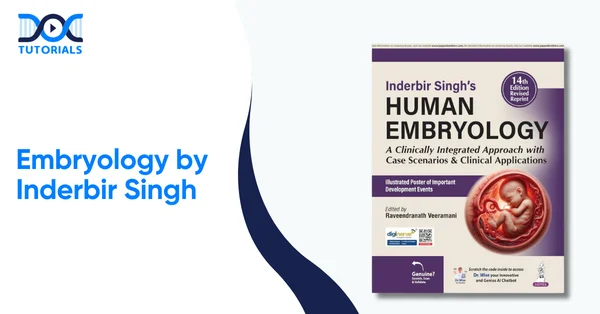
Embryology by Inderbir Singh is one of the most essential and student-friendly books for MBBS 1st year students. It is the early phase of human anatomy and is an essential component of the MBBS curriculum for aspiring doctors.
The Human Embryology by Inderbir Singh is well written and designed to provide information, beginning with competencies and progressing to core concepts. The book includes engaging illustrations and flowcharts to provide clear, easy-to-understand information for MBBS students, making it an essential resource. Keep reading to know more about this book!
Overview of the Inderbir Singh Embryology, Latest Edition
Inderbir Singh’s Human Embryology is an important textbook for medical students designed for deeper understanding and self-assessment, making it suitable for anatomy studies in particular and medical understanding in general.
The IB Singh Embryology latest edition has been revised as per the National Medical Commission (NMC) prescribed competencies in the field of embryology.
Additionally, the contents of the new edition have been reorganised between the textbook and the online additional resources. It is aligned with the chapter-wise Multiple Choice Questions (MCQs) for Self Assessment, which provide a feedback platform for students.
The book also includes flowcharts of weekwise embryonic development for quick review and easy understanding by the students. It has replaced most figures with easy-to-draw, student-friendly diagrams to improve understanding and support meticulous academic performance.
The book is designed to serve as an essential resource, providing a detailed understanding of the principles and concepts governing embryonic development, making it a key component of initial anatomy.
Every chapter of the latest edition of the book is filled with specific information to keep readers engaged and foster deeper understanding. The end of each chapter includes summaries and self-assessment questions to support students’ exam preparation and help them assess their progress.
Key Features of the Inderbir Singh Embryology 13th Edition
IB Singh Embryology, 13th edition, includes competencies, highlights at the start, and multiple-choice questions (MCQs) at the end of every chapter to make it more comprehensive and easier to understand for students.
Here are the essential features of the Ibir Singh Embryology, 13th edition, making it a suitable book for medical students who want to study human anatomy:
- The textbook includes clinical case scenarios in embryology to provide early clinical exposure for students.
- The book includes several boxes on clinical correlation and clinical importance to support clinical integration.
- Week-by-week development of the embryo is presented as flowcharts at the end of each chapter for easy revision and quick review.
- The diagrams from the previous edition have been replaced with easier-to-reproduce versions to improve understanding.
- The clinical images have been updated in the new edition to provide real time understanding and effective learning.
- The latest edition of Human Embryology has fewer pages, making it more compact and comprehensive for improved retention.
- The chapters include competencies that help students learn more effectively.
- All the chapters of the latest edition start with highlights to provide a first glance of the chapter.
- The textbook includes multiple-choice questions (MCQs) at the end of each chapter for self-assessment and feedback.
Table of Contents of the IB Singh Human Embryology
The IB Singh Human Embryology book is well-structured, covering the embryo’s early stages and the phased development of several essential organs, providing a detailed analysis of human anatomy at the embryonic stage.
The human embryology, Inderbir Singh’s latest edition, includes the following contents for a comprehensive study of human anatomy:
- Introduction and Some Preliminary Considerations
- Genetics and Molecular Biology in Embryology
- Reproductive System, Gametogenesis, Ovarian and Menstrual Cycles
- Fertilisation and Formation of Germ Layers
- Further Development of Embryonic Disc
- Placenta, Fetal Membranes and Twinning
- Formation of Tissues of the Body
- Integumentary System (Skin and Its Appendages, Mammary Gland)
- Pharyngeal Arches
- Skeletal System and Muscular System
- Face, Nose, and Palate
- Alimentary System—I: Mouth, Pharynx, and Related Structures
- Alimentary System—II: Gastrointestinal Tract
- Liver and Biliary Apparatus; Pancreas and Spleen; Respiratory System; Body Cavities and Diaphragm
- Cardiovascular System
- Urogenital System
- Nervous System
- Endocrine Glands
- Development of the Eye
- Development of the Ear
- Clinical Applications of Embryology
- Embryology Ready Reckoner
What Makes Human Embryology by IB Singh Stand Out?
The Human Embryology by Inderbir Singh is a unique textbook as it contains simple and easy-to-understand diagrams and updated content, including the careful organisation of the contents.
Human embryology is an early stage of human development, making it an important branch of anatomy. Here are the features that make Human Embryology by Inderbir Singh stand out from other anatomy books:
- Updated Content for Latest Information
Anatomy is an important branch of medicine, and like other branches, it is constantly evolving with new discoveries and research. The latest edition of the Human Embryology book contains up-to-date information, essential for readers to grasp the latest concepts. The book provides up-to-date information on anatomy, including the development of key organs.
- Simple Language and Illustrations
One of the most striking features of the Human Embryology book is the use of easy-to-understand language, diagrams, and illustrations. Complex physiological concepts are explained in detail and broken down into easily digestible parts. This helps in easy learning and understanding of the concepts.
- Organised Structure for Better Learning
The Embryology by IB Singh is well-structured and logically organised, with simpler concepts first, followed by more complex concepts and systems. This supports effective learning and understanding of the concepts.
How to Make the Most of the Human Embryology by IB Singh?
Students and readers should carefully review the essential textbook sections of Embryology by IB Singh, such as multiple-choice questions (MCQs), to reinforce retention and receive feedback to improve understanding.
Use the following tips to make the maximum use of Human Embryology by IB Singh:
- Active Reading and Note-Taking: Instead of passively reading chapters, actively engage with the content. Summarise key points in your own words, highlight important terms, and create diagrams or flowcharts to visualise processes. This technique reinforces memory and aids quick revision.
- Utilise End-of-Chapter Questions: The latest edition includes review questions and multiple-choice questions that test comprehension. Attempt these regularly to assess your understanding and identify areas needing improvement. Practising these questions also builds confidence for competitive exams.
- Link Physiology with Clinical Cases: Clinical correlations are one of the strengths of human embryology, by IB Singh. Attempt to correlate physiological ideas with the medical reality. This approach deepens your understanding but also prepares you for practical applications in healthcare settings.
- Complement with Online Resources: The book is exhaustive, but to clear concepts, interactive videos, animation, and lectures may be used. Numerous online platforms offer physiology tutorials similar to those in the textbook, creating a multidimensional learning experience.
FAQs about Human Embryology by Inderbir Singh
- Why is Embryology by Inderbir Singh preferred over other embryology texts?
The Human Embryology by Inderbir Singh is said to have simplified the complex developmental processes using easy-to-reproduce diagrams and simple language.
It is much more conceptual, less dense with international texts, and yet still highly clinical and structurally understandable compared to larger international texts.
- Is the 13th or 14th edition of Human Embryology by Inderbir Singh better for current students?
Inderbir Singh, 14th Edition of the book Human Embryology should be recommended because it is directly congruent with the most recent NMC competency-based curriculum.
It includes more recent clinical case scenarios, additional multiple-choice questions for self-assessment, and improved illustrations that facilitate a more effective transition from theory to clinical practice.
- Does the Embryology by IB Singh cover clinical correlations and birth defects?
Yes, each of the chapters of the book Human Embryology by Inderbir Singh has specific sections of Clinical Correlation and Congenital Anomalies.
These sections explain how developmental errors lead to specific clinical conditions. It helps students understand the underlying causes of the syndromes and malformations they may encounter in pediatric and surgical wards.
- How helpful are the illustrations for university exams?
The drawings are probably the book’s strongest feature. They are developed as schematic line diagrams that students can easily practise and redraw during a handwriting test.
This is very efficient in marking descriptive questions when a visual representation is also mandatory.
- Does Human Embryology by Inderbir Singh include a timeline of human development?
Yes, Human Embryology by Inderbir Singh provides a clear chronological summary of developmental milestones.
It breaks down the embryonic period (weeks 1–8) and the fetal period (week 9 to birth) into digestible tables and charts, making it easier to memorise when specific organs and systems begin to form.
- Are there practice questions or MCQs included in Human Embryology by Inderbir Singh?
The latest editions of Human Embryology by Inderbir Singh include multiple-choice questions (MCQs) and high-yield review questions at the end of chapters.
These are tailored to help students prepare for both internal university assessments and competitive entrance exams like NEET-PG or NEXT, focusing on high-probability topics.
- Is Human Embryology by Inderbir Singh sufficient for USMLE or NEXT preparation?
Although Human Embryology by Inderbir Singh provides a solid foundation, students aiming to pass the USMLE often use it as a primary conceptual reference, supplementing it with review-specific sources.
In the case of NEXT, its alignment with the Indian competency-based curriculum made it a strong primary source for developing the required integrated clinical knowledge.
- How does Human Embryology by Inderbir Singh handle the complexities of molecular embryology?
Inderbir Singh’s Human Embryology presents the basics of molecular and genetic simplicity.
It does not load students with too much biochemical detail, but instead focuses on the key signalling pathways and genes (such as SHH or HOX genes) that are central to understanding structural development and its common defects.
- Does Human Embryology by Inderbir Singh cover “General” and “Systemic” embryology equally?
Yes, the Human Embryology by Inderbir Singh is balanced. General Embryology (gametogenesis, fertilisation, and formation of the germ layer) is the focus of the first half, and Systemic Embryology (development of the heart, lungs, GI tract, etc.) is the focus of the second half. Equally high-quality visual aids have been provided to both sections.
- Can a beginner understand Human Embryology by Inderbir Singh without prior knowledge?
Absolutely. The style of Inderbir Singh is pedagogical and accessible to beginners. It begins with basic biological concepts and progresses to more advanced areas. These flowcharts, which represent complex series of events concisely, will ensure that developmental logic is easily followed by even students new to the subject.
Conclusion
Human Embryology by Inderbir Singh is a trusted and student-friendly resource for MBBS first-year students. Its integrated summaries and week-by-week development flowcharts help support the MBBS candidates in preparing for the exam.
Overall, it serves as a comprehensive and practical guide for building a strong foundation in embryology and early human development. For further guidance, DocTutorials can be your study partner. We offer 2D & 3D video lectures and structured mentorship and guidance to help aspirants gain clarity over medical concepts.
Join DocTutorials today and explore our MBBS curriculum to excel in your medical career!

Latest Blogs
-
INI CET Exam Pattern 2027: A Complete Guide with Subject-Wise Weightage
INI CET Exam Pattern 2027: A Complete Guide with Subject-Wise Weightage The Institute of National Importance Combined Entrance Test (INI…
-

NEET PG Registration 2027: An Essential Guide For Exam Prep
The NEET PG registration, which is conducted online, is a crucial step in the exam process. Filling out the NEET…
-

NEET PG Exam 2025- Date, Pattern, Marking Scheme, Subject Wise Weightage, and Exam Mode
NEET PG Exam 2025 is the ultimate gateway for medical graduates aspiring to pursue postgraduate courses in medicine, including MD,…