Intermittent Explosive Disorder: Causes, Symptoms, and Treatment
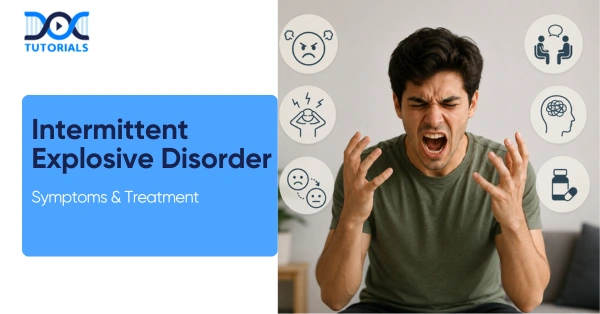
Intermittent Explosive Disorder (IED) is an impulse-control disorder characterised by unexpected aggressive outbursts (verbal or physical). Episodes can include yelling, throwing, or physical assault, usually accompanied by relief or remorse, and can interfere with social and occupational functioning.
It typically starts during childhood or adolescence (age ≥6) and can improve over time. The behaviour is unplanned, disproportionate and impulsive; it is not due to a different disorder. Keep reading to know more about IED.
What are the Causes of Intermittent Explosive Disorder?
IED is probably caused by the interaction between genetically susceptible personality, particularly brain differences with serotonin, and environmental stressors such as maltreatment. The combination of all these factors can lead to the inability to control anger and aggression.
The aetiology of IED is multifactorial, involving genetic, neurobiological, and environmental factors. It is argued that inherited traits and brain chemistry are key factors:
- Genetic Factors: A strong genetic component is exhibited by family and twin studies. Impulsive aggression is approximately 45-50% hereditary, and a first-degree relative with IED is approximately a threefold risk factor. The overall genetic contribution is between 28-45% (verbal aggression and aggression towards others).
- Neurobiological Factors: IED reveals chemical and brain changes. Impulsive aggression has been associated with low serotonin (5-HT), fronto-limbic grey matter and increased amygdala reactivity. Serotonin dysfunction is the most consistent finding.
- Environmental Factors: Childhood experiences play a significant role in the risk of IED. The probability of subsequent abuse, trauma, violence, chronic stress or family conflict is enhanced by exposure to abuse, trauma, violence, chronic stress or family conflict.
What are the Risk Factors of Intermittent Explosive Disorder?
Intermittent Explosive Disorder (IED) has risk factors that predispose it. It affects more men and normally starts in childhood or adolescence, with few new cases after 40. Risk factors include family history, exposure to violence in childhood, exposure to violence, co-morbid conditions, and other factors.
Causes refer to aetiology, whereas risk factors are those attributes that relate to an increased risk of developing IED. Major risk factors are:
- Gender: IED rates are higher among males. Impulsive acts of aggression are more prevalent in men and boys than in females.
- Age: Onset often occurs in childhood or adolescence; symptoms peak in the second decade of life. After 40 years, new cases are uncommon.
- Family History: Family history of IED or impulse-control disorders increases risk.
- Childhood Trauma: A history of childhood abuse (physical/verbal) or witnessing violence strongly predisposes one to IED.
- Psychiatric Comorbidity: Comorbid mental disorders, particularly impulsivity or aggressive ones, are risk factors. These include:
- Attention-Deficit/Hyperactivity Disorder (ADHD).
- Conduct Disorder or Oppositional Defiant Disorder (particularly in youth).
- Personality Disorders (e.g. antisocial, borderline, narcissistic).
- Substance use disorders (alcohol, drugs) – both a risk and a common co-occurrence.
- Personality Traits: Traits like impulsivity, hostility, and poor anger control (even without a formal disorder) predispose to IED.
What are the Symptoms of Intermittent Explosive Disorder?
IED patients experience unpredictable, brief flashes of intense anger or violence, which may lack obvious causes. Outbursts are disproportionate and can involve yelling, aggression, or property damage, accompanied by physical arousal such as a racing heart. Between episodes, they appear normal.
The 7 signs of intermittent explosive disorder include:
- Aggressive Outbursts: Verbal (shouting, insults, threats) or physical (hitting, slapping) aggressive behaviour.
- Impulse-driven: The aggression is impulsive, not pre-planned or used for secondary gain. Patients frequently report experiencing an accumulation of tension that bursts out.
- Destructive Behaviour: The episodes may lead to property damage or assault.
- Ouburst Duration: The outbursts are usually less than 30 minutes. Frequency can vary: some people experience multiple episodes within a week; others have months between episodes.
- Emotional Cycle: Patients usually experience irritability, tension or an energy surge just before an outburst.
- Physical Symptoms: The physical symptoms are rapid heart rate, shaking, heat flushes or tightness in the chest.
- Repentance after Outburst: They often feel remorse, guilt or embarrassment.
Examples of behaviours (episodes) include:
- Yelling/screaming (often profanely)
- Intense arguments and temper tantrums
- Threatening gestures or menacing postures
- Road rage, violence toward strangers or family members
- Punching walls, breaking dishes or furniture
- Slapping, pushing, or kicking others
- Threatening weapons or verbally assaulting others
- Physical fights or sexual/ domestic assaults
- Sexual or romantic jealousy outbursts (less common)
Physical/emotional signs during outbursts:
- Sudden increase in energy or adrenaline (“rush”)
- Racing heart, palpitations, chest tightness
- Trembling or shaking hands
- Headache
- Tingling or hot flush sensation
- Feeling out of control or detached
Feelings of relief and exhaustion are common after an episode, but guilt or remorse are also common. Most individuals who have IED are aware of their excessive response and might apologise when they calm down. Yet, they can do little to prevent the next outburst without assistance.
In NEET PG Psychiatry, keep in mind that IED disorder episodes are brief, impulsive, and remorseful. This assists in differentiating between IED and planned aggression or between chronic anger disorders. The presence of remorse and episodic nature are characteristic.
What is the Diagnosis of Intermittent Explosive Disorder?
Intermittent Explosive Disorder (IED) is a clinically diagnosed disorder under DSM-5 or ICD-11 criteria, as a recurrent, disproportionate, impulsive, explosive outburst. No lab tests are available; diagnosis is based on history, pattern of episodes, and ruling out medical, substance-related, or other psychiatric etiologies.
The diagnosis of IED disorder is carried out according to clinical criteria (DSM-5 or ICD-11) and episode pattern. There are no laboratory tests; it relies on a thorough history and ruling out other causes.
Key DSM-5 criteria include recurrent impulsive aggressive outbursts (verbal or physical) that are grossly out of proportion to triggers. Specifically:
Either,
A. Minor Outbursts: Verbal or short-term physical aggression at least 2 times a week during 3 months, causing no serious harm, or,
B. Major Outbursts: 3 outbursts in a year, resulting in property damage or physical assault on others.
- The aggression is impulsive or anger-based, not premeditated for gain.
- Outbursts result in significant distress or social/occupational dysfunction.
- The patient is at least 6 years old (or at the developmental level).
- The behaviours cannot be attributed to other psychiatric disorders (e.g. not just in bipolar mania or substance withdrawal).
ICD-11 criteria involve recurrent short spells of verbal or physical aggression and lack of impulse control and outbursts that are evidently disproportional to provocation.
IED is not diagnosed when aggression is attributed to other disorders (e.g. adjustment disorder, bipolar disorder, ASD or conduct/ODD in youth).
Diagnostic Workup
- Clinical Interview: Evaluate frequency, nature, and circumstances of outbursts. Take patient history, family/friend history.
- Medical Evaluation: Eliminate neurological or medical conditions (e.g. brain tumours, head injury, dementia, thyroid problems, hypoglycemia) that may result in aggression.
- Substance Use: Screen for intoxication/withdrawal from alcohol or stimulants, as these can mimic or exacerbate IED.
- Psychiatric Differential: Rule out mood disorders (particularly bipolar), PTSD, personality disorders, ADHD, conduct disorder, ODD and substance use disorders. These may co-exist with IED, but the diagnosis of aggression must be excessive compared to that of the other disorder.
- Severity Assessment: Aggression level can be determined using tools such as the Life History of Aggression Scale or anger questionnaires (primarily in research).
The table below shows the major differences in the DSM-5 and ICD-11 diagnostic criteria of Intermittent Explosive Disorder (IED):
| Criterion / Aspect | DSM-5 (312.34) | ICD-11 (6C73) |
| Core Definition | Frequent outbursts of aggression are caused by the inability to suppress. | Frequent short-term verbal or physical aggression or property damage as a result of impulsiveness. |
| Frequency Threshold | ≥2 minor outbursts/week for ≥3 months OR ≥3 major outbursts/year. | None based on a particular numerical limit; characterised by a pattern of repeated outbursts. |
| Intent | Anger-driven/impulsive (no external gain, such as money or power). | Episodes of anger that are grossly out of proportion to stress. |
| Exclusions | Failure to be better explained by some other disorder or substances; age 6 or older. | None of the other mental/neurodevelopmental disorders explains it; it is not included in the chronic anger pattern. |
What is the Treatment for Intermittent Explosive Disorder?
Successful management of IED often incorporates medications and psychotherapy. The aim is to decrease outbursts and severity and enhance impulse control. The first-line treatment is Cognitive-Behavioural Therapy (CBT) and other psychotherapies that are typically used in combination with pharmacotherapy to normalise mood and aggression.
IED is managed through a mixture of psychotherapy and medications to help decrease the impulsive aggression and enhance emotional control. Here are the treatment options for IED disorder:
1. Non-pharmacological Treatment
- Cognitive-Behavioural Therapy (CBT): CBT for anger management is the cornerstone. It assists the patients in identifying triggers, developing coping skills and altering hostile thinking.
Research demonstrates that anger, hostility, and impulsivity can be reduced within minutes and over about 12 weeks with the aid of relaxation, cognitive restructuring, coping, and relapse prevention.
- Anger Management Programs: These are planned programs (often conducted in groups) that concentrate on impulse control, communication skills, and conflict management.
- Family Therapy or Education: The use of family involvement can help to enhance the dynamics and support. Incidents can be minimised by teaching communication and de-escalation techniques.
- Stress Reduction and Lifestyle: Regular physical activity, sleep, and stress management (e.g. meditation) can help to decrease impulsivity. Treatment may be facilitated by lifestyle changes such as a balanced diet, good sleep hygiene, and substance avoidance, but these are all adjunctive.
2. Pharmacotherapy
There are no FDA-approved, specifically IED-reducing drugs, though many medications are used off-label to minimise aggression:
- SSRIs (Selective Serotonin Reuptake Inhibitors): First-line medication class. Fluoxetine is best supported: A placebo-controlled trial showed that it significantly reduced the number of aggressive outbursts.
Other SSRIs (citalopram, sertraline) are also prescribed. The way SSRIs work is by raising brain serotonin, which is normally low in IED.
- Mood Stabilisers / Anticonvulsants: These are particularly applied where mood swings or impulsivity are high. Options include:
- Lithium: Evidence of decreasing aggression.
- Carbamazepine & Oxcarbazepine: Are capable of decreasing impulsive aggression. Oxcarbazepine, e.g., was identified as decreasing total, verbal, and object-directed aggression.
- Valproate (divalproex): It was previously in use, but it was found to be ineffective in the case of IED with some side effects.
- Phenytoin: Minimal evidence indicates that it could potentially decrease impulsivity (used in some studies).
- Antipsychotics: A typical antipsychotic (e.g. risperidone) can be used in cases of severe aggression, though this is less convincingly supported. They do not have a direct role in IED alone.
- Anxiolytics (e.g. benzodiazepines) are not recommended because they can lead to dependence and may cause disinhibition. The extreme cases may include short-term use.
There are some reports of buspirone or beta-blockers being used to help with anger, although they are not routine. The following table describes a probable prescribed medication:
| Medication Class | Examples | Notes/Effects |
| SSRIs (Antidepressants) | Fluoxetine, Sertraline, Escitalopram | Most researched class; enhances serotonin, and impulsive aggression diminishes. It can take approximately 2-3 months to take effect. |
| Mood stabilisers / Anticonvulsants | LithiumCarbamazepine, OxcarbazepinePhenytoin | Lithium is effective at decreasing aggression (observed levels); oxcarbazepine decreases aggressive acts; valproate is ineffective. |
| Antipsychotics | Risperidone, Quetiapine | Consider for refractory cases with severe aggression; evidence is limited. |
| Anxiolytics | None routinely recommended | (Minimal relaxation of anxiety but disinhibition and dependency risk). |
What are the Prevention Strategies for Intermittent Explosive Disorder?
There is no established way of totally preventing IEDs. Nevertheless, severity and better results can be alleviated by early management and targeted control of risk factors. Strategies concentrate on education, early therapy and control of related conditions.
IED disorder prevention is aimed at early treatment and not necessarily a cure. Upon the detection of symptoms or comorbidities, timely assessment and therapies such as CBT (Cognitive Behavioural Therapy) may reduce the risk and avoid progression, particularly among young people.
- Early Identification: Careful identification of potentially at-risk youth (e.g., having ADHD or conduct problems, abused in the past) and the administration of interventions (anger management training, counselling) could aid in avoiding the transition to the full-blown IED level.
- Treatment of Comorbidities: The presence of aggressive or impulsive symptoms should not be overlooked; early intervention in conditions such as ADHD or substance abuse can decrease the risk of IED.
- Family Support: Families with a history of violence or IED should be offered support, parenting classes, and stress management, as this can make the situation more stable.
- Anger Management Education: Impulse control could be enhanced by teaching children and adolescents frustration-coping skills (e.g., deep breathing, time-outs, communication).
- Avoiding Substance Abuse: Avoiding alcohol/drug abuse in individuals at risk is significant, as these substances may provoke or aggravate outbursts.
- Community Programs: In high-risk populations, school or community interventions that educate on emotional regulation may be beneficial.
What are the Complications of Intermittent Explosive Disorder?
IED may contribute to severe psychosocial and legal issues. Recurring aggressive behaviours not only decrease quality of life but also may harm health, relationships, education and career. It is important to understand these complications to appreciate the importance of treatment.
Major complications include:
- Psychosocial Impairment: Individuals with IED generally lack good social functioning as they have bonding difficulties and poor family life. This impacts work and school performance, exposure to job loss or discipline, and reduced quality of life.
- Legal Problems: Impulsive aggression might result in criminal offences, such as assault, restraining order, or road rage DUI (Driving Under the Influence). The repeated outbursts can lead to imprisonment or a lawsuit due to property damage.
- Physical Injuries: Outbursts can lead to self- or other-directed destructive behaviours, including cuts, bruises, or worse. Long-term anger may also lead to hypertension and other diseases related to stress.
- Co-occurring Disorders: IED is frequently associated with conditions such as depression, anxiety, substance abuse, and other impulse-control disorders. It is also associated with increased prevalence of physical health conditions such as headache, heart disease and diabetes.
- Suicidality: Self-harm and suicide risks are high in people with IED, so it is important to monitor suicidal intentions.
- Long-term Consequences: IED may be chronic when left unattended. Although outbursts can decrease in the later years, long-term consequences such as legal matters and broken relationships can still persist.
Since IED disorder creates severe impairment, comparable to or greater than other psychiatric disorders, it is not taken lightly. Treatment not only seeks to prevent the outbursts, but also to avert these extreme implications in life.
FAQs about Intermittent Explosive Disorder
- What differentiates IED from normal anger?
IED includes repetitive, severe, and impulsive violence that is disproportionate to provocations, in contrast to common anger that is more restrained and context-specific.
- How common is IED?
The prevalence of IED disorder is relatively high; approximately 4-7% of individuals experience it at some point in their lives, more so in males and often in youth.
- At what age is IED diagnosed?
IED is diagnosed in people 6 years of age or older because small children can experience developmentally normal tantrums.
- What are the main symptoms of IED?
The main symptoms comprise abrupt verbal or physical outbursts, loss of control, and disproportionate reactions, with subsequent regret.
- What causes IED?
IED is caused by a set of genetic, neurobiological (e.g. serotonin malfunction), and environmental (such as childhood trauma) factors.
- How is IED diagnosed?
It is clinically diagnosed, focusing on recurrent impulsive aggression and excluding other causes, on the basis of DSM-5 or ICD-11.
- What is the first-line treatment for IED?
The first-line treatment is Cognitive-Behavioural Therapy (CBT) that may be used in combination with medication, such as SSRIs, to control the symptoms.
- How is IED different from ODD or conduct disorder?
IED is impulsive and episodic in nature, whereas ODD (Oppositional Defiant Disorder) and conduct disorder display consistent behavioural patterns, and they may involve planned aggression.
- Can IED be prevented?
Prevention is not certain; however, early intervention, treatment, and control of risk factors can diminish the severity.
- What are the key exam points about IED?
Key points to remember include impulsive, disproportionate aggression, diagnosis only in individuals aged 6 years or older, and the need to rule out other disorders. The initial treatment is Cognitive-Behavioral Therapy (CBT).
Conclusion
Intermittent Explosive Disorder is a chronic psychiatric disorder characterised by impulsive aggression outbursts. It is important for NEET-PG Psychiatry due to clear DSM-5/ICD-11 criteria, identifiable risk factors, and defined management (CBT and SSRIs).
To strengthen your understanding of topics like Intermittent Explosive Disorder in Psychiatry, DocTutorials can support your preparation. We offer structured exams, high-quality video lectures, Qbank, and clinical case questions in specific formats to suit NEET PG aspirants.
Join DocTutorials today and explore our NEET PG course to stay ahead in your medical career.


Latest Blogs
-
INI CET Exam Pattern 2027: A Complete Guide with Subject-Wise Weightage
INI CET Exam Pattern 2027: A Complete Guide with Subject-Wise Weightage The Institute of National Importance Combined Entrance Test (INI…
-

NEET PG Registration 2026: An Essential Guide For Exam Prep
The NEET PG registration, which is conducted online, is a crucial step in the exam process. Filling out the NEET…
-

NEET PG Exam 2025- Date, Pattern, Marking Scheme, Subject Wise Weightage, and Exam Mode
NEET PG Exam 2025 is the ultimate gateway for medical graduates aspiring to pursue postgraduate courses in medicine, including MD,…