Meningitis: Causes, Symptoms, Diagnosis, and Treatment
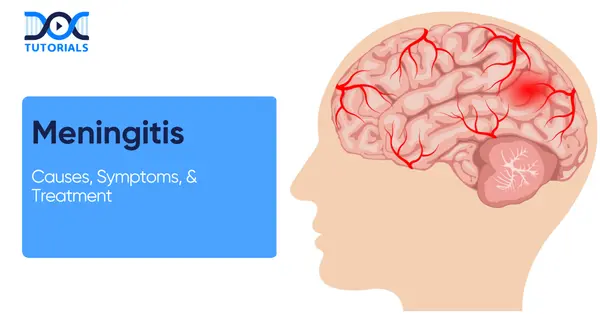
Meningitis is the swelling of the membranes (meninges) that surround the brain and the spinal cord. It is a severe disorder which may develop quickly and has to be treated immediately. It can be triggered by different organisms (bacteria, viruses, fungi, parasites) or noninfectious factors (drugs, autoimmune processes).
Acute bacterial meningitis is life-threatening, but viral meningitis is typically mild. Treatment involves a rapid diagnosis (physical examination and CSF culture) and appropriate therapy (antibiotics, antivirals, steroids). This guide addresses the aetiology and pathophysiology of meningitis relevant to NEET-PG aspirants. Keep reading to know more.
What is the Pathophysiology of Meningitis?
Meningitis is characterised by the inflammation of the subarachnoid space. Bacterial infection causes a neutrophil-rich exudate, leading to brain oedema, raised intracranial pressure, and tissue damage. Viral meningitis presents a mild lymphocytic inflammation. Cases that are not treated can cause infarction, herniation or hydrocephalus.
In bacterial meningitis, the pathogens penetrate the meninges via the bloodstream or by direct spread. They multiply in the CSF, leading to a neutrophilic reaction with purulent exudates and oedema. This causes increased intracranial pressure and disorders such as infarction, herniation and subsequent hydrocephalus.
Viral meningitis is less severe and is characterised by lymphocytic inflammation. It leads to cytokine release and mild neuronal irritation, and minimal or no pus. The course is typically subacute, with good recovery, but some viruses, such as Herpes Simplex Virus (HSV), can lead to meningoencephalitis and require specific treatment.
Fungal meningitis and tuberculosis progress gradually. Cryptococcus is prevalent in immunocompromised individuals, and tuberculosis leads to basal exudates, vasculitis, and other complications such as hydrocephalus. CSF is usually characterised by elevated leukocytes, elevated protein, and low glucose.
What are the Causes of Meningitis?
There are various causes of meningitis. Types of infections are bacterial, viral, fungal, parasitic, and tubercular. Noninfectious causes include drugs, autoimmune disorders, and cancer. Identifying the cause is key to proper treatment and prevention.
Meningitis is caused by a broad spectrum of infectious and non-infectious agents, which may vary in severity, progression, and management. The cause of meningitis varies according to region and age.
Major causes include bacterial, viral, fungal, tubercular, parasitic, and non-infectious causes, each with its own clinical and pathological characteristics. Here are the causes of meningitis:
- Bacterial Meningitis (Acute and Life-threatening): Streptococcus pneumoniae is the most prevalent, although Neisseria meningitidis is a source of outbreaks in the youth. Vaccination has reduced Hib cases.
Listeria affects all newborns, the older generation, and those with frail immune systems, whereas Group Bacillus, Streptococcus, and Escherichia coli are prevalent among newborns. Other bacteria (such as Staphylococcus aureus and Pseudomonas) can occur after injury or surgery.
- Viral (Aseptic) Meningitis: Mainly caused by enteroviruses. HSV (particularly HSV-2) may lead to recurrent disease. Other causes include varicella-zoster, mumps, measles, HIV, and arboviruses. Usually milder with a lymphocytic response.
- Fungal Meningitis: Uncommon in healthy people. Cryptococcus neoformans thrives most among immunodeficient patients. Others (Histoplasma, Coccidioides, Candida) cause chronic or subacute meningitis with high protein and lymphocytes.
- Tubercular Meningitis: As a result of Mycobacterium tuberculosis. Slow onset with basal exudates, granulomas, and infarcts. CSF shows lymphocytes, very low glucose, and high protein. Common in India; needs specific therapy.
- Parasitic and Other Causes: Parasites (e.g. Angiostrongylus, Gnathostoma) cause eosinophilic meningitis. Naegleria fowleri causes an acute, fatal infection. Others (cysticercosis, malaria) may involve the meninges. The non- infectious causes are malignancy, autoimmune disease, drugs and sarcoidosis.
Risk Factors of Meningitis
Poor housing hygiene increases the risk of meningococcal meningitis (a bacterial infection transmitted through respiratory droplets). Risk is increased by a lack of vaccination (pneumococcal, Hib, meningococcal). Immunosuppression (HIV, chemotherapy, and splenectomy) predisposes to many forms.
Ear/sinus infections, skull fractures or neurosurgery can directly introduce bacteria into the meninges. Infants inherit risk through maternal infection (GBS, E. coli). Pregnancy predisposes to Listeria.
What are the Symptoms and Signs of Meningitis?
Meningitis is usually characterised by fever, neck stiffness and headache. Other aspects are the altered mental status, photophobia, nausea/vomiting and rash. Infants might exhibit non-specific symptoms (irritability, bulging fontanelle).
Meningitis results in a mixture of systemic and neurological manifestations. Symptoms can build up very quickly in acute cases, but can be mild or slow in some populations, such as infants or those with chronic infections.
Typical signs and red flags must be identified early to enable prompt diagnosis and treatment:
- Patients typically experience rapid-onset fever and severe headache.
- Neck stiffness (nuchal rigidity) is the typical feature: patients have difficulty flexing the neck.
- Photophobia (sensitivity to light) is frequent.
- Meningeal irritation also causes positive Kernig’s sign (pain on extending the knee when the hip is flexed) and Brudzinski’s sign (hip/knee flexion when the neck is flexed).
- In addition to meningitis, neurological symptoms present can be confusion, drowsiness, or coma when encephalitis is present. In the severe cases, there may be seizures.
- A typical rash (petechial or purpuric) indicates Neisseria meningitidis.
- Headache and photophobia are prominent in adults.
- In children and infants, presentation is more variable: children may reject feeds, become fussy or sleepy, develop a bulging fontanelle, or cry inconsolably.
- Fever may even be absent in neonates. Among the red flags are a sudden increase in fever, an intense headache, neck soreness, and a change in consciousness. (“Classic triad: fever, headache, neck stiffness)
Systemic signs include:
- Tachycardia
- Hypotension
- Septic meningitis may be accompanied by shock.
Rapid progression, rash, and Disseminated Intravascular Coagulation (DIC) are observed in meningococcemia. Chronic or tubercular meningitis can have a subacute onset with progressive confusion, cranial nerve palsies (Most IV nerve inducing vision in both eyes), and hydrocephalus (nausea/vomiting due to increased ICP).
What is the Diagnosis of Meningitis?
Diagnosis is based on clinical features and lab tests. Suspected cases should be urgently tested by history, exam, and lumbar puncture (CSF analysis), the gold standard. Treatment should not be withheld in possible cases of bacterial meningitis.
Suspected meningitis presents with fever and signs of meningitis (stiff neck, photophobia, altered mentation). Imaging and lumbar puncture are a part of the evaluation.
In cases of focal deficits, seizures, or changes in consciousness, a CT/MRI (computed tomography/magnetic resonance imaging) scan must be performed initially to exclude increased intracranial pressure or mass lesions.
- Lumbar Puncture (LP)
Take CSF of cell count, chemistry (protein, glucose), Gram stain, and culture. Other tests can include PCR of viruses (enterovirus, HSV), Tuberculosis Polymerase Chain Reaction (TB PCR) or acid-fast stain (in the event of suspicion of TB), and fungal antigen (cryptococcal) in immunocompromised patients.
Laboratories will then perform specific tests with CSF or blood to identify the organism. An overview of typical CSF results is as follows:
| CSF Parameter | Bacterial Meningitis | Viral Meningitis | Tubercular Meningitis |
| WBC (cells/µL) | 100–10,000 (mostly neutrophils) | <100 (mostly lymphocytes) | <100 (lymphocytes 50–1000) |
| Neutrophils (%) | Predominant (>50%) | It may seem (particularly early) | Predominant early (50–1000 total) |
| Protein | >1.0 g/L | 0.4–1.0 g/L | 1.0–5.0 g/L |
| Glucose (ratio CSF: serum) | <0.4 | Normal (>0.6) | <0.3 |
| Lactate (mmol/L) | >2.0 (often >4.0) | <2.0 | >2.0 |
| Gram stain/Culture | Frequently positive for bacteria. | Negative (PCR for viruses) | May be negative (AFB stain, culture can take weeks) |
Additional tests include:
- Blood cultures must be taken.
- Brain imaging (CT/MRI) can demonstrate meningeal enhancement or exclude an abscess.
Other supportive tests:
- Complete blood count (typically presents with leukocytosis),
- Inflammatory markers (CRP, procalcitonin),
- Serum chemistry (to measure dehydration, organ functionality).
Polymerase chain reaction (PCR) tests (e.g. BioFire panel) can quickly detect bacterial and viral DNA (deoxyribonucleic acid) in CSF. Nonetheless, empirical therapy should not be delayed due to PCR results.
What is the Treatment for Meningitis?
The course of treatment is based on the cause. Bacterial meningitis is a medical emergency: administer high-dose IV antibiotics and usually IV corticosteroids. Viral meningitis is largely supportive; antivirals are administered in cases of suspected herpes. Fungal meningitis is treated using suitable antifungals. In every case, supportive care is essential.
Meningitis management necessitates cause-specific urgent treatment and supportive care to minimise mortality and complications. Since delays—especially in bacterial meningitis—can be life-threatening, therapy is often started empirically based on clinical suspicion and patient factors such as age and immune status.
After the underlying cause is diagnosed, treatment is customised accordingly, with efforts to reduce inflammation, prevent complications, and support essential functions. The treatment depends on the aetiology, but in any case, the main focus is to prevent complications and minimise mortality.
- Bacterial Meningitis: Needs broad-spectrum IV antibiotics immediately, regardless of test results, depending on age and risk factors.
The therapy is then streamlined based on culture and sensitivity reports. Close contacts of Meningococcal cases require chemoprophylaxis.
- Role of Steroids: Corticosteroids are also administered as an adjunct to minimise inflammation and neurological destruction, especially in bacterial or tubercular meningitis. They are best initiated at an early age.
- Viral Meningitis: Usually mild and self-limiting. The treatment is primarily supportive, and antivirals are only used in certain infections,s such as herpes viruses.
- Tubercular Meningitis: Managed with prolonged multi-drug anti-tubercular therapy along with steroids. It is vital to initiate early treatment to avoid long-term complications.
- Fungal Meningitis: Needs long-term antifungal treatment, usually in stages (induction and maintenance). Immunocompromised people have a more intensive management.
- Supportive and Adjunctive Care: Involves fluid and oxygen therapies, and surveillance for seizures and complications, such as elevated intracranial pressure or hydrocephalus. In some cases, surgical operations might be necessary.
Here is a table for key treatment modalities:
| Type of Meningitis | Immediate Management | Definitive / Targeted Therapy |
| Bacterial | Urgent empiric IV antibiotics (ceftriaxone/cefotaxime + vancomycin +/- ampicillin), administer dexamethasone, fluids, and observe closely. | Adjust antibiotics in accordance with culture susceptibility (e.g. penicillin, ceftriaxone, ampicillin).Time depends on the organism (7-21 days). The close contact chemoprophylaxis in meningococcal cases. |
| Viral | Supportive care: hydration, antipyretics, observation; hospitalise for severe and uncertain diagnosis. | Antivirals only if indicated (e.g. acyclovir for HSV/VZV). The majority of cases do not require special treatment. |
| Tubercular | Early anti-TB therapy initiation using corticosteroids; treatment of elevated ICP and complications. | Long-term ATT regimen (HRZE → HR for 12 months). Steroids were maintained during the first weeks to minimise complications. |
| Fungal | Begin antifungal treatment immediately; control intracranial pressure (e.g. repeated LPs when necessary). | Amphotericin B + flucytosine as induction and fluconazole as maintenance. Long-term treatment according to immune status. |
| Parasitic / Other | Supportive care and stabilisation; prompt diagnosis of the underlying cause. | Antiparasitic drugs, when available (e.g. miltefosine), steroids in inflammatory forms, and underlying disease (autoimmune, malignancy, etc.). |
What are the Major Complications of Meningitis?
Meningitis can lead to serious, sometimes permanent complications such as hearing loss, seizures, memory and concentration problems, limb amputations (after severe sepsis), and even death. Bacterial meningitis carries the highest risk, with up to 1 in 5 survivors experiencing long-term effects.
Here are some of the key complications of meningitis based on neurological, physical and systemic classification:
Neurological Complications
- Hearing Loss (Partial or Total): One of the most common long-term effects.
- Vision Loss: Damage to the optic nerves or brain pathways.
- Seizures (Epilepsy): Recurrent episodes due to brain irritation.
- Cognitive Problems: Memory loss, poor concentration, and learning difficulties.
- Movement and Balance Issues: Coordination problems, muscle weakness.
- Behavioural Changes: Personality shifts, emotional instability, or developmental delays in children.
Physical Complications
- Limb Loss/Amputation: Especially in meningococcal meningitis, where sepsis damages tissues.
- Bone and Joint Problems: Arthritis or chronic pain due to infection spreading.
- Kidney Damage: From septicemia or complications of treatment.
Systemic Complications
- Sepsis: Widespread infection in the bloodstream, often fatal if untreated.
- Increased Intracranial Pressure: Swelling of the brain leading to coma or death.
- Hydrocephalus: Buildup of cerebrospinal fluid in the brain.
- Blood Vessel Damage: Stroke or reduced blood supply to parts of the brain.
What is the Prevention for Meningitis?
Prevention is crucial, especially when there are complications of meningitis. The most important measures are vaccination (Hib, pneumococcal, meningococcal), prophylactic antibiotics among close contacts, and good hygiene. Avoid sharing drinks, cover coughs, and ensure proper sanitation. To minimise the risk of listeria, pregnant women must avoid unpasteurised foods.
The prevention of meningitis aims to minimise exposure to infectious agents and enhance immunity, particularly against vaccine-preventable pathogens.
The combination of immunisation, timely prophylaxis, hygiene measures, and lifestyle measures is important in reducing the risk of infection and managing outbreaks.
- Vaccination: Hib and Streptococcus pneumoniae conjugate vaccines are commonly administered to children. At-risk groups are vaccinated against Neisseria meningitidis. These greatly reduce the incidence of bacterial meningitis.
- Antibiotic Prophylaxis: Antibiotics (rifampin, ciprofloxacin, or ceftriaxone) should be administered to close contacts of meningococcal cases. Unvaccinated people may need prophylaxis with Hib exposure; this is not standard with pneumococcus.
- General Hygiene: Handwashing, using separate utensils/drinks, covering coughs, and maintaining space will reduce the transmission. Masks or avoiding crowds may be advised during outbreaks.
- Safe Food Practices: To prevent listeria, avoid unpasteurised dairy and cook meats properly, particularly in pregnant or immunocompromised people.
- Vector Control: Prevention of some viral meningitides (arboviruses) may occur through avoidance of mosquito/tick bites, i.e., the use of insect repellent and protective clothing.
FAQs about Meningitis
- How quickly can meningitis become dangerous?
Bacterial meningitis may deteriorate in a matter of hours and cause serious complications or death. It is important to have early medical attention.
- Can meningitis spread from person to person?
Some types, particularly meningococcal meningitis, are transmitted via respiratory droplets (coughing, sneezing, close contact).
- Who is at the highest risk of meningitis?
People at risk are infants, elderly people, immunocompromised patients, and those who live in crowded environments.
- Can meningitis occur without fever?
Yes, particularly in neonates, elderly patients or immunocompromised patients where the symptoms can be atypical.
- Why is a lumbar puncture important in meningitis?
Lumbar puncture in meningitis assists in the diagnosis and determining the exact cause through analysis of cerebrospinal fluid.
- Can meningitis cause long-term disability?
Yes, survivors can have complications such as hearing loss, learning disabilities or neurological impairments.
- Is meningitis always contagious?
No, not every form is contagious, fungal, tubercular, or non-infectious; they do not normally pass on between individuals.
- What is the role of imaging in meningitis?
In some cases, CT or MRI is performed before lumbar puncture to eliminate elevated intracranial pressure or brain lesions.
- Can meningitis recur?
Yes, meningitis can also possibly have recurrent episodes, particularly with some viral infections or immune defects.
- Why is early treatment started before confirmation?
Delays in treatment, particularly in bacterial meningitis, may lead to high mortality and morbidity.
Conclusion
Meningitis is a severe disorder that entails inflammation of the meninges and has diverse etiologies. Bacterial forms result in neutrophilic exudates, and viral forms present lymphocytic inflammation. It is important to identify the symptoms early and analyse the CSF as soon as possible. Early intervention and therapy are life-saving.
For NEET-PG students, a clear understanding of the pathology and management of meningitis is crucial not only for exam preparation but also for future clinical practice. For additional guidance, DocTutorials can be your study companion. We offer crisp videos, clinical Qbank, exam-focused notes, flashcards, and mind maps. This helps ensure aspirants gain complete clarity over complex medical topics.
Join DocTutorials today and explore our NEET PG course to excel in your medical career!

Latest Blogs
-

INI CET Exam 2026: Your Roadmap to Success – Key Topics, Strategies, and Lessons from Last Year’s Papers
The INI CET exam is more than just a test; it’s a significant milestone for many medical students aiming to…
-

INI CET Exam Success: Previous Year Question Papers & Ultimate Guide – INI CET PYQ
One can feel overwhelmed while preparing for the INI CET (Institute of National Importance Combined Entrance Test). A vast syllabus,…
-

NEET PG 2026 Preparation with Live Power Pack: Your Path to Success in 2026
Preparing for the NEET PG 2026 can be an overwhelming journey because of its vast syllabus and the pressure to…