Entropion: Causes, Symptoms, Diagnosis, and Treatment
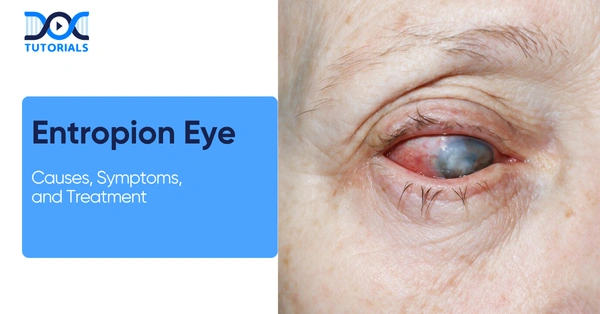
Entropion is an eye condition characterised by the abnormal inward turning of the eyelids, leading to friction with the skin. It is common among elderly patients with weak eyelid muscles and can also be caused by scarring, inflammatory reactions, eyelid muscle spasm, or congenital factors.
Failure to treat entropion may lead to corneal damage, infections, and poor vision. To avoid the above complication, it is necessary to recognise entropion early and provide adequate treatment. It is important to understand the symptoms and treatment options of entropion eye, which is crucial for NEET PG preparation. Keep reading to know more!
What is Entropion?
Entropion is the inversion of the lower lid margin, during which the eyelashes start to come into contact with the ocular surface, leading to irritation, watering, and pain. While most of the time, only the bottom eyelid is affected, the condition can appear in both eyes simultaneously.
Entropion is a condition in which the eyelid folds inwards towards the eyeball. This results in friction between the eyelid skin and eyelashes and the eyeball’s surface, causing pain and irritation of the cornea (the front part of the eyeball). It is different from ectropion, wherein the eyelid folds inwards.
Entropion typically affects the lower eyelid and can be unilateral (one-sided) or bilateral (both sides). Patients suffer from redness, tearing, grittiness, and irritation. Even though the symptoms might be mild at first, they will continue to progress until the patient gets treatment.
What are the Types of Entropion?
There are 4 types of entropion, each with distinct causes, symptoms, and possible complications. These include cicatricial, spastic, involutional, and congenital entropion. Identifying the correct type of disorder allows specialists to choose the appropriate treatment method to achieve positive outcomes for a patient.
Depending on the causes of entropion eye, there are 4 major types:
1. Congenital Entropion
Congenital entropion is a relatively uncommon condition that affects infants and young children. It is caused by the failure of the eyelid muscles to develop properly, resulting in entropion.
It commonly affects the lower eyelid. The symptoms may include watering, redness, and constant eye rubbing. In some cases, it becomes apparent only when the affected person squints. Sometimes the issue resolves itself, but when the child is suffering from progressive entropion, the surgical procedure is needed.
2. Involutional Entropion
Involutional entropion is the most frequent case of this disease. This type of entropion occurs when the muscles of the eyelids weaken as people age. As a result, the eyelid rolls inwards.
Patients experience irritation, tearing, redness, and a gritty sensation in the eye. During the early stages, patients experience periodic entropion that can be alleviated by the use of lubricating drops, but eventually needs to be corrected surgically.
3. Cicatricial Entropion
It is the type of entropion where eyelids are rolled inward due to the formation of scar tissue in the conjunctiva area. In some cases, it affects the upper or lower eyelids and can be induced by trauma, infections, inflammation, or surgery.
Treatment options for cicatricial entropion include surgical removal of scars or eyelid reconstruction, treatment of underlying causes, and prevention.
4. Spastic Entropion
Spastic entropion occurs due to muscle spasm around the eye caused by irritation, dryness, or inflammation of the eye area. Spastic entropion is prevalent among older patients because of weaker muscles supporting the eyelids.
The severity of the symptoms varies depending on the severity of the spasm. Usually, the removal of irritation helps patients to overcome this issue, but sometimes it requires more invasive treatment.
What are the Causes of Entropion?
Entropion occurs when the normal anatomy of the eyelids is altered, affecting how the eyelids function. Most often, this condition results from age-related muscle weakness; however, there are many other causes, including scarring, infections, inflammation, or congenital abnormalities.
Entropion may result from any of the following causes:
- Weak Eye Muscles: Ageing weakens the muscles around the eyes while stretching the tendons. This is the most frequent cause of entropion.
- Scar Tissue: Scarred tissues on the eyelid due to chemical burns, injury, or surgery cause irregularity on the eyelid surface.
- Eye Infection: Trachoma, an eye infection, is prevalent in developing countries across Africa, Asia, Latin America, the Middle East, and the Pacific Islands and is another identified cause of entropion. It also causes eyelid scarring, entropion, and blindness.
- Inflammatory Reaction: Eye irritation from dryness and inflammation may cause the urge to rub or squeeze the eyelids together for relief. Such action can cause eyelid muscle spasms and inward-turning of the eyelid margins against the cornea.
- Genetic Problem: Congenital entropion, which has been present since birth, occurs due to an additional eyelid fold causing inward eyelashes.
What are the Risk Factors of Entropion?
Multiple risk factors might contribute to the development of entropion. Ageing is the most common cause, while environmental conditions that expose people to excessive dust and smoke may also cause eye discomfort.
There are certain conditions that can make one prone to entropion, especially when they affect the structure of the eyelids, their muscle strength, or the eyes. Here are the common risk factors of entropion eye:
- Age: Age is one of the conditions that could make one suffer from entropion because, as one gets older, there would be weakness in the muscles surrounding the eyelid.
- Gender: Women are said to be at risk of suffering from entropion more than men due to their anatomy.
- Exposure to Environmental Conditions: When one lives in environments that contain dust, wind, and pollutants, their eyes could become irritated.
- Health Condition: Some medical conditions include Bell’s palsy, infection, or eye surgery, which can increase one’s risk of suffering from entropion.
What are the Symptoms of Entropion?
Common symptoms of entropion include irritation of the affected eye(s), redness, tearing, sensitivity to light, and a gritty sensation in the eye, usually accompanied by tearing. If left untreated, symptoms may become severe and include eye pain, vision changes, swelling, and discharge.
Signs and symptoms of Entropion may be mild or severe initially and include:
- Irritation: Sensation of irritation in your eyes all the time in your eyes.
- Redness: Your eye may be red and swollen due to irritation caused by lashes rubbing on your cornea.
- Tears: Excess tearing due to irritation.
- Sensitivity to Light: Photophobia, or sensitivity to light, may occur.
- Visual Effects: Visual problems may arise when irritation is severe.
Some symptoms are more serious due to a prolonged condition and require prompt medical care. These are:
- Pain: Intense eye pain despite taking pain medication.
- Vision Problems: Sudden vision problems or loss of vision.
- Swelling: Rapidly increasing redness and swelling.
- Discharge: Unusual secretion or discharge from the eyes.
What is the Diagnosis of Entropion?
The diagnosis of entropion is made by a thorough eye examination by a specialist. Although it is easy to identify entropion during an eye exam in clear cases, intermittent cases may require additional tests. The most commonly used examinations include the snap-back test, eyelid distraction test, orbicularis override test, and eyelid digital eversion test.
Diagnosis of entropion involves careful examination of the eye. Abnormal eyelid margin positioning can be seen in some cases, whereas intermittent entropion requires more careful inspection, as it does not occur at rest.
Tests used to examine and establish the diagnosis include the following:
- Snap Back Test: This test assesses the eyelid’s ability to return to its original position when pulled downward.
- Eyelid Distraction Test: This tests the looseness of the eyelid by pulling it out from its usual position.
- Orbicularis Override Test: This test assesses eyelid position during a forceful blink, revealing muscle override of the eyelid.
- Digital Eversion Test: This test assesses eyelid stability and identifies different types of entropion, such as cicatricial or involutional.
The table below shows the findings of the severity type of entropion, guiding appropriate treatment decisions:
| Test | Negative (Normal) | Mild | Moderate | Severe / Positive |
| Snap-back Test | Eyelid returns quickly (<2 sec) to normal position. | Returns slowly (>2 sec) before blink. | Returns only after blink. | Does not return even after blinking. |
| Eyelid Distraction Test | The eyelid can be pulled only 2–3 mm from the globe. | — | — | Eyelid can be pulled ≥7 mm (laxity). |
| Orbicularis Override Test | Normal alignment, even with forced blink. | — | — | Lid margin turns inward on forced blink. |
| Digital Eversion Test | Normal alignment at rest and on pulling. | Entropion at rest, normal on gentle pull (involutional). | Entropion persists when pulled (cicatricial). | — |
What is the Treatment for Entropion?
The treatment of entropion is intended to relieve irritation and correct the abnormal placement of the eyelid. The type of approach to the problem should depend on the severity of the condition and the reasons for its development.
Treatment approaches for entropion focus on minimising irritation and fixing the inverted eyelid. This depends on factors such as the severity of the condition, the underlying cause, and whether it is temporary or permanent.
Non-surgical methods include temporary options or mild cases:
- Eye Lubrication with Drops and Ointments: This keeps the eyes moisturised and minimises irritation from friction between the eyelids and the eyes. However, these cannot fix eyelid inversion.
- Contact Lenses: Special contact lenses can serve as an external barrier to protect the cornea from irritation caused by lashes.
- Use of Skin Adhesive: The eyelid is held in place by adhesive skin tape to ensure it moves outwards. This method is temporary and mostly used as a stopgap measure before definitive treatment.
- Temporary Suturing: The eyelid is surgically stitched into a more favourable position. The stitches can also lead to scarring that maintains the position of the eyelid outside the eyeball for a few months.
- Botox Treatment: This involves injecting small amounts of Botox into the muscles pulling the eyelid inward. This temporarily reduces the effect of these muscles.
- Eyelash Removal (Epilation): This option entails the removal of misdirected eyelashes that irritate the cornea. They tend to regrow in their former positions.
Although non-surgical options can alleviate the symptoms, surgery is necessary for permanent correction. Surgical methods are performed under local anaesthesia with sedation, and patients can return home on the same day.
- Tarsal Strip (Lateral Tarsal Strip Surgery): In this procedure, the eyelid is shortened and tightened.
- Reinsertion of Retractors: It aims to strengthen the muscles involved in eyelid movement.
- Debulking of Orbicularis Oculi: This weakens the muscle pulling the eyelid inward.
- Eyelid Reconstruction: This is recommended in cases of traumatic damage or disease. Techniques like electrocautery or cryosurgery are used to permanently change lash direction.
What are the Complications of Entropion?
Untreated cases of entropion may result in serious consequences, such as worsening of symptoms, eye problems that are difficult to cure, or loss of vision. In this case, frequent friction of the eyelashes leads to corneal scratches and subsequent infection and corneal scarring, thus causing further difficulties and complications.
Entropion can cause serious eye damage over time due to persistent friction between the eyelashes and the cornea. Several complications can arise:
- Corneal Scratches: The constant rubbing against the cornea causes scratch marks on the eye that can cause eye pain, light sensitivity, and loss of vision.
- Eye Infections: The continual irritation makes the eyes vulnerable to infections by bacteria that can damage the eye.
- Scarring: Persistent irritation can scar the cornea or eyelids, which can affect vision and complicate treatment.
What are the Prevention Strategies for Entropion?
Although not all cases of entropion are preventable, implementing eye care techniques can help reduce risk and preserve overall eye health. Thus, protecting your eyes from irritants, maintaining proper eyelid hygiene, following a balanced diet, and attending your eye appointments regularly will be crucial to avoiding complications.
Even though entropion is not fully preventable, some precautions will help in minimising its occurrence and maintaining eye wellness:
- Eye Protection: Use sunglasses or goggles in dusty, windy, and polluted surroundings to avoid irritating and damaging your eyes.
- Proper Eye Care: Cleanliness of the eyelids and maintenance of a clean surrounding of the eyes will prevent eye infections and inflammations.
- Nutritious Diet: Eating a nutritious diet that contains vitamins and antioxidants ensures optimal eye wellness and healthy tissue.
- Routine Eye Checkups: Periodic eye checks will ensure the early diagnosis of eyelid alterations, thus preventing complications.
Practising these simple measures will help you prevent entropion.
FAQs about Entropion
1. What is entropion of the eye?
Entropion is an ocular condition in which the eyelid folds itself inside, resulting in the eyelashes and skin rubbing on the surface of the eye. This leads to irritation, redness, watering, and pain. Over time, entropion can damage the cornea and affect a person’s vision.
2. What causes entropion?
Entropion occurs as a result of ageing and associated weakening of the eyelid muscles. It may also develop because of scars, infections, inflammation, muscle spasm, and congenital problems in rare cases.
3. Is entropion a serious condition?
Yes, this ocular condition can become quite severe if it is not treated appropriately. Friction may lead to the formation of abrasions, make the patient more prone to infections, and result in vision loss in certain cases.
4. What are the first symptoms of entropion?
First symptoms that might occur in the case of entropion are redness, watering, irritation, a feeling of grittiness or a foreign body presence, light sensitivity, and blurry vision, should the latter happen due to damage to the cornea.
5. Will the health condition of entropion go away without treatment?
Yes, entropion may go away spontaneously in certain cases, including mild ones associated with irritation or occurring in children. However, it is usually better to treat this problem with surgery since other solutions may bring only temporary relief.
6. How is entropion diagnosed?
The diagnosis of this condition requires performing a complete eye examination during which eyelid movement and eyelid laxity will be assessed, and a slit lamp test will be conducted.
7. What is the best treatment option for entropion?
Surgery remains the best treatment option since it is able to solve the problem on a fundamental level, unlike taping, injection of a chemical into the eyelid, or the application of eye drops.
8. Are eye drops capable of curing this entropion condition?
No, this ocular condition cannot be cured by using eye drops. In fact, these medications only help to relieve irritating symptoms by lubricating the eye.
9. Is entropion surgery dangerous?
No, this procedure is rather safe and common. The doctor uses local anaesthesia, which does not take too much time, and the patient recovers rapidly after it.
10. How to avoid the entropion eye condition?
To prevent the development of entropion, one should protect their eyes from dust and windy weather, maintain proper hygiene of the eyelid area, avoid infections, and have their eyes regularly checked.
Conclusion
The entropion eye may seem progressive, but with proper diagnosis and management, it can be treated effectively. The first step is to identify the symptoms and determine the underlying cause. Once the causative factor is identified, selecting the right treatment, whether non-surgical or surgical, can effectively prevent future complications.
For NEET-PG aspirants and students who wish to learn about entropion in depth for their board exams, DocTutorials can be your study partner in this journey.
We offer crisp videos, clinical Qbank, exam-focused notes, flashcards, and mind maps to ensure aspirants are well prepared and gain complete clarity on complex NEET PG concepts. Join DocTutorials today and explore our NEET PG course to excel in your medical career!

Latest Blogs
-

INI CET Exam 2026: Your Roadmap to Success – Key Topics, Strategies, and Lessons from Last Year’s Papers
The INI CET exam is more than just a test; it’s a significant milestone for many medical students aiming to…
-

INI CET Exam Success: Previous Year Question Papers & Ultimate Guide – INI CET PYQ
One can feel overwhelmed while preparing for the INI CET (Institute of National Importance Combined Entrance Test). A vast syllabus,…
-

NEET PG 2026 Preparation with Live Power Pack: Your Path to Success in 2026
Preparing for the NEET PG 2026 can be an overwhelming journey because of its vast syllabus and the pressure to…