Hirsutism: Causes, Symptoms, Diagnosis, and Treatment
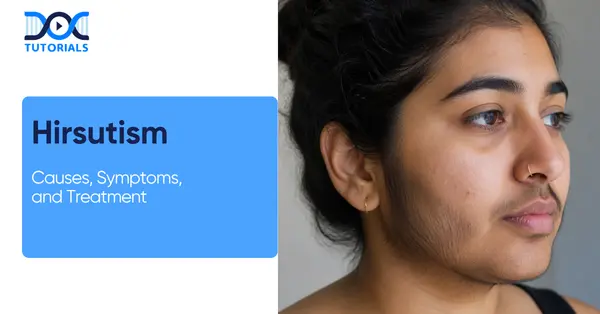
Hirsutism is characterised by the growth of coarse, terminal hair in females in a distribution pattern typically seen in males. It affects about 5-10% of women and is a frequent presenting complaint for cosmetic reasons in dermatology outpatient departments. Its importance lies in its physical presentation and the need for a systematic approach to its management.
For clinicians and NEET PG aspirants, a clear grasp of the endocrine basis, evaluation framework, and management options for hirsutism is essential. Keep reading to know more about the key mechanisms, diagnostic approach, and evidence-based hirsutism treatment.
What is Hirsutism?
Hirsutism is when women develop thick, dark hair in areas like the face, lower abdomen, or inner thighs, where hair is usually minimal. It usually happens due to higher levels of male hormones, especially testosterone.
Hirsutism refers to the presence of thick, dark, coarse hair in women in areas where hair growth is typically minimal or absent. This includes the face, lower stomach and the inner thighs. Extra hair growth is often caused by excess male hormones called androgens. The main androgen involved is testosterone.
Hirsutism is to be distinguished from hypertrichosis, which is a separate condition of generalised excess hair growth that is not androgen-dependent and not limited to male-pattern distribution. Hirsutism, in contrast, is distributed in certain androgen-sensitive areas and has diagnostic implications for hormonal excess.
Although many conditions can lead to hirsutism, polycystic ovary syndrome and idiopathic hyperandrogenism account for more than 85% of cases. This distribution is directly relevant to clinical practice and exam preparation, as it informs both the diagnostic approach and the likelihood of finding a treatable underlying cause.
What are The Types of Hirsutism?
Hirsutism is classified according to its underlying origin. Identifying the correct type is an essential first step in directing both the diagnostic workup and the hirsutism treatment plan. Broadly, the condition falls into 2 principal categories:
- Androgen-dependent
- Androgen-independent
The following are the types of Hirsutism:
- Idiopathic Hirsutism: Occurs in women with regular menses, normal ovarian morphology, and normal androgen levels. It is a diagnosis of exclusion, thought to arise from increased follicular sensitivity or elevated 5-alpha-reductase activity within the skin.
- PCOS-Related Hirsutism: The most prevalent type, accounting for over 70% of cases. It is driven by chronic hyperandrogenism, anovulation, and insulin resistance working in combination.
- Adrenal Hirsutism: Arises from adrenal disorders such as congenital adrenal hyperplasia or Cushing syndrome, where excess adrenal androgen production stimulates terminal hair growth.
- Tumour-Induced Hirsutism: The rarest but most serious type, caused by androgen-secreting ovarian or adrenal tumours. It is characterised by a rapid onset and frequent signs of virilisation.
- Drug-Induced Hirsutism: Results from exogenous androgenic compounds and is typically reversible upon withdrawal of the offending medication.
What are the Causes of Hirsutism?
Hirsutism can have different causes, mainly related to hormones or sometimes other factors. The most common type is linked to conditions like polycystic ovary syndrome, while others may be due to adrenal issues, medications, or rarely, tumours. Knowing these causes helps doctors choose the right treatment.
Hirsutism develops when there is excess androgen present in the body, or when hair follicles are sensitive to normal androgens. Both ovaries and adrenal glands produce androgens in females.
When production exceeds normal physiological levels or when the skin’s androgen receptors respond with disproportionate sensitivity, terminal hair growth is stimulated in male-patterned areas. The most common underlying hirsutism causes are:
- Polycystic Ovary Syndrome (PCOS): The most common underlying cause is Polycystic Ovary Syndrome (PCOS), which accounts for the majority of cases.
In PCOS, hormonal imbalance leads to increased levels of free testosterone along with reduced sex hormone-binding globulin (SHBG), making more active androgen available in the body.
- Idiopathic Hirsutism: Idiopathic hirsutism occurs despite normal androgen levels, due to increased peripheral 5-alpha-reductase activity or increased follicular androgen sensitivity.
- Congenital Adrenal Hyperplasia (CAH): Less commonly, hirsutism may result from this condition. It is an inherited disorder affecting adrenal hormone production.
- Cushing Syndrome: In this condition, excess cortisol is often accompanied by elevated androgen levels. This causes hirsutism.
- Androgen-Secreting Tumours: In rare instances, androgen-secreting tumours of the ovaries or adrenal glands can directly increase androgen levels in the bloodstream, leading to hirsutism symptoms.
- Medications: Certain medications can also contribute to hirsutism. Drugs such as danazol, minoxidil, anabolic steroids, and external testosterone are known to influence androgen activity and may trigger excessive hair growth.
- Other Endocrine Disorders: Hyperprolactinaemia, hypothyroidism, hyperthyroidism, and acromegaly are uncommon but documented causes of isolated hirsutism.
What are the Risk Factors of Hirsutism?
Certain factors can increase the chance of developing hirsutism, such as a family history of hormonal conditions, being overweight, or having insulin resistance. It is also more commonly seen in women of certain ethnic backgrounds and can sometimes be triggered by certain medications.
Listed below are a few patient-specific factors that increase the likelihood of developing hirsutism:
- Family History: Conditions such as PCOS and CAH have a heritable component, and a positive family history significantly raises clinical suspicion.
- Ethnicity: Women of Mediterranean, Middle Eastern, and South Asian descent are more likely than other women to have extra body hair for no clear cause. This variation reflects differences in androgen sensitivity rather than androgen levels per se.
- Obesity: Excess adipose tissue contributes to elevated androgen production and reduced sex hormone-binding globulin (SHBG) levels, resulting in higher concentrations of biologically active free testosterone in the circulation.
- Insulin Resistance: Hyperinsulinaemia affects more than one-half of women with PCOS, triggering an increase in gonadotropin-releasing hormone pulse frequency, which subsequently increases production of ovarian and adrenal androgens whilst reducing hepatic SHBG production.
- Prolonged Use of Certain Medications: Androgenic compounds, anabolic steroids, and drugs such as danazol and minoxidil represent a direct pharmacological cause that must be considered during clinical evaluation.
What are the Symptoms of Hirsutism?
Hirsutism causes slow, excessive growth of thick, dark hair in women on areas like the face, chest, and abdomen. In some cases, it may be accompanied by acne, irregular periods, or more severe signs like voice deepening.
Hirsutism refers to the abnormal growth of coarse hair in women on areas of the body where men normally develop terminal hair. The condition usually develops slowly, and it varies from one woman to another, depending first on how much androgen there is and second on how sensitive her hair follicles are to it.
The chin, upper lip, sideburns, chest, back and abdomen are common sites. Clinically observed key hirsutism symptoms are:
- Facial Hair Growth: Coarse, dark hair appearing on the upper lip, chin, cheeks, and sideburns, often the earliest and most distressing feature for patients.
- Body Hair Growth: Excess hair on the chest, abdomen, lower back, inner thighs, and buttocks in a distinctly male-pattern distribution.
- Signs of Virilisation: In more advanced cases, hirsutism may be accompanied by voice deepening, male-patterned scalp hair loss, acne, reduced breast size, increased muscle mass, and clitoral enlargement.
- Menstrual Irregularities: Particularly in PCOS-related hirsutism, irregular or absent menstrual cycles frequently accompany excess hair growth.
- Rapid Onset: Women with a rapid onset of hirsutism over a few months or signs of virilisation are at high risk of having an androgen-secreting tumour and require urgent evaluation.
The psychological effects of hirsutism are usually downplayed. Many women experience emotional distress caused by the condition, resulting in reduced self-esteem, public participation, and overall quality of life.
Because of this, the patient’s emotional experience also needs to be cared for with as much care and thoroughness as the physical. That’s why hirsutism self-care and emotional well-being support are really necessary for these patients.
How is Hirsutism Diagnosed?
Hirsutism is diagnosed by learning your symptoms, checking your medical history, and doing a physical exam. Doctors may also use blood tests and scans to find the underlying cause, such as a hormonal imbalance.
The diagnosis of hirsutism requires a systematic and structured approach. The process starts with an extensive clinical examination and is followed by specific lab and imaging tests.
The most important diagnostic goal is to identify or exclude whether there is a significant underlying disorder, most notably androgen-secreting tumours, PCOS, CAH and Cushing syndrome.
The following are the diagnosis processes:
- Clinical History: The first step is a thorough clinical history, ideally covering the timing and rate of hair growth, menstruation (regular/irregular), reproductive health, medication use, and family history of androgen-related disorders.
- Ferriman-Gallwey Scoring: Ferriman-Gallwey scoring is a common diagnostic method for hirsutism within 9 body areas considered sensitive to androgens. Scores of 15 and higher indicate mild hirsutism, and scores greater than 25 indicate severe hirsutism.
- Physical Examination: A thorough abdominal and pelvic examination is performed to exclude palpable masses. Acanthosis nigricans, a recognised marker of insulin resistance, should also be noted during examination.
- Hormonal Blood Tests: Screening for levels of serum testosterone and 17-alpha-hydroxyprogesterone is sufficient in most cases. Women with irregular menses and hirsutism should be screened for thyroid dysfunction and prolactin disorders.
- Specialised Endocrine Tests: According to the clinical findings, one may add a short dexamethasone suppression test for Cushing syndrome, an ACTH (Adrenocorticotropic Hormone Stimulation Test) stimulation test, or a carbohydrate tolerance test for insulin resistance syndrome.
- Imaging Studies: If an androgen-secreting tumour is suspected, abdominal or pelvic ultrasound or a CT (computed tomography) scan may be employed. Pelvic ultrasound is also the primary imaging modality for confirming polycystic ovarian morphology.
What are the Treatment Options for Hirsutism?
Hirsutism is treated using a combination of medications and cosmetic methods. Medicines help reduce hormone levels, while options like laser hair removal or creams help manage visible hair. Lifestyle changes, especially weight management in some cases, can also improve symptoms over time.
Hirsutism treatment is generally classified as pharmacological and non-pharmacological, and both are often used in combination. Below are the treatment options for hirsutism:
1. Pharmacological Treatment
- Combined Oral Contraceptives: Treatment of non-tumoral hirsutism includes oral contraception. It works by inhibiting the hypothalamic-pituitary axis through its progestogen component.
This reduces ovarian androgen production. The oestrogen component increases sex hormone-binding globulin. This dual action decreases both the production and the biological activity of circulating androgens.
- Anti-Androgens: Anti-androgen therapy is often used when oral contraceptives alone are not enough. The most common anti-androgen for treating hirsutism is spironolactone.
The results are modest and can take at least six months to appear. Side effects may include irregular periods, and the hirsutism medication can also lead to birth defects. Therefore, they are prescribed along with contraception for women of reproductive age.
Flutamide is another hirsutism treatment option, but it is expensive and can potentially cause liver damage. Cyproterone acetate has strong progestogenic and anti-androgen effects. It decreases circulating testosterone and androstenedione levels by lowering luteinising hormone levels.
- 5-Alpha Reductase Inhibitors: Finasteride is used to treat hirsutism and is preferred because it lacks oestrogenic or progestogenic activity. However, it is not recommended for women of childbearing age as there is a risk of ambiguous genitalia in the fetus.
- Insulin-Sensitising Agents: In women with PCOS-related hirsutism and concurrent insulin resistance, metformin therapy and weight loss are typically recommended, as they can decrease serum testosterone levels and improve ovulation rates.
- Topical Agents: Fine hair growth can be inhibited with twice-daily topical eflornithine. This agent works by inhibiting an enzyme required for hair follicle cell proliferation and is particularly useful for facial hirsutism.
- Low-Dose Corticosteroids: Adrenal hyperandrogenism is slowed by low-dose corticosteroids, possibly in association with the treatments mentioned above. This approach is specifically relevant in cases of CAH-related hirsutism, where suppressing excess adrenal androgen production is the therapeutic goal.
2. Non-Pharmacological Treatment
The following cosmetic and procedural approaches are an important adjunct to pharmacological management, particularly given the delay in visible response to drug therapy:
- Laser Hair Removal (Photoepilation): Photoepilation destroys pigmented terminal hair follicles via thermal damage from one of four laser types, depending on the patient’s hair colour and skin pigmentation.
Trials have shown hair reduction of 40% to 80%, depending on the type of laser used and the number of treatments provided. Despite its limitations, photoepilation is the preferred treatment for permanent hair removal, as it is up to 60 times faster than electrolysis.
- Electrolysis: Electrolysis is less used now, except for coarse white hairs and also in cases of polycystic ovaries without insulin resistance. It remains, however, a reliable option for individuals in whom laser therapy is unsuitable due to hair or skin pigmentation.
- Weight Management: In women with obesity-related hyperandrogenaemia, structured weight loss is an effective and evidence-based intervention.
Reduction in adipose tissue improves insulin sensitivity, lowers androgen levels, and increases SHBG, thereby reducing the degree of hirsutism independently of pharmacological treatment.
FAQs about Hirsutism
- Who does hirsutism affect?
This condition mostly affects women and people who were born female. While it can show up at any age, it’s most common during the years when people can have children. Especially around puberty, when hormone imbalances are more likely.
- How common is hirsutism?
About 5 to 10% of women are affected by hirsutism. It’s actually a pretty common reason women visit a skin doctor: they’re concerned about how it looks. It’s also one of the most frequent hormone problems that doctors come across, no matter if they specialise in skin, women’s health, or hormones.
- Does hirsutism always mean PCOS?
No, not always. Even though PCOS is the reason for over 70% of cases, you can also get hirsutism from other things, like a certain type of adrenal problem that you’re born with, Cushing syndrome, tumours that produce male hormones, specific medications, or sometimes doctors just don’t know the exact cause.
- How can one reduce the risk of developing hirsutism?
Maintaining a healthy weight, managing insulin resistance, avoiding unnecessary androgenic medications, and seeking early medical review for menstrual irregularities are the most practical measures for reducing the risk of developing or worsening hirsutism.
- Do side effects of medication cause hirsutism?
Yes, they can. Some medications are known to cause extra hair growth. These include things like danazol, minoxidil, anabolic steroids, testosterone that’s given externally, and DHEA (dehydroepiandrosterone).
In most situations, if you stop taking the medicine that’s causing the extra hair, the hair growth usually reverses with a doctor’s guidance.
- Which tests does a patient need for hirsutism?
Initial tests typically include serum testosterone and 17-alpha-hydroxyprogesterone levels. Depending on clinical findings, additional tests may include thyroid function, prolactin, cortisol, a dexamethasone suppression test, pelvic ultrasound, or CT imaging to exclude tumours and other endocrine disorders.
- Does laser hair removal work for hirsutism?
Photoepilation has shown hair reduction of 40-80%, depending on the type of laser used and the number of treatments. It is the preferred method for long-term hair removal, though it works best on dark, coarse hair and requires multiple sessions.
- Can hirsutism go away on its own?
Hirsutism rarely resolves without intervention. When caused by a reversible factor such as medication or a temporary hormonal fluctuation, it may improve spontaneously.
In most cases, however, sustained management through pharmacological treatment, hair removal, or addressing the underlying cause is required for meaningful improvement.
Conclusion
Hirsutism is a potential marker of underlying endocrine pathology, including PCOS, congenital adrenal hyperplasia, Cushing syndrome and androgen-secreting tumours and warrants a thorough, structured approach to diagnosis rather than being relegated to a cosmetic issue.
Hirsutism treatment, whether pharmacological or procedural, should be individualised based on the hormonal profile, reproductive goals, and underlying aetiology. Hirsutism is a high-yield concept of Endocrinology, Gynaecology and Dermatology for NEET PG aspirants.
For additional guidance, DocTutorials can be your study companion. We offer crisp videos, clinical Qbank, exam-focused notes, flashcards, and mind maps. This helps ensure aspirants gain complete clarity over complex medical topics.
Join DocTutorials today and explore our NEET PG course to excel in your medical career!


Latest Blogs
-
INI CET Exam 2026: Your Roadmap to Success – Key Topics, Strategies, and Lessons from Last Year’s Papers
The INI CET exam is more than just a test; it’s a significant milestone for many medical students aiming to…
-
INI CET Exam Success: Previous Year Question Papers & Ultimate Guide – INI CET PYQ
One can feel overwhelmed while preparing for the INI CET (Institute of National Importance Combined Entrance Test). A vast syllabus,…
-

NEET PG 2026 Preparation with Live Power Pack: Your Path to Success in 2026
Preparing for the NEET PG 2026 can be an overwhelming journey because of its vast syllabus and the pressure to…