MBBS 1st Year: Self Assessment and Review of Biochemistry Guide
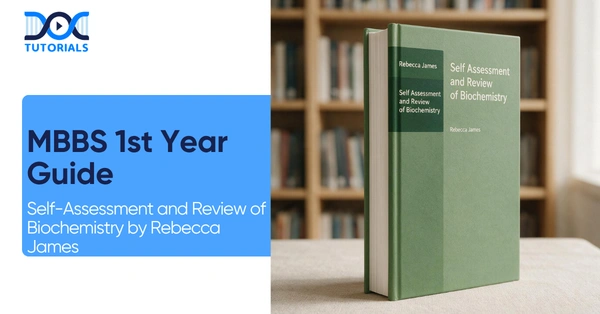
For 1st-year MBBS students, studying biochemistry is essential to build a strong foundation in medical science. In this regard, the Biochemistry Rebecca James book, widely known as Self Assessment and Review of Biochemistry, is a popular resource that helps students understand complex biochemical concepts in a simplified and exam-oriented manner.
Keep reading to learn more about why the Self Assessment and Review of Biochemistry by Rebecca James is considered a helpful study companion for MBBS students.
Overview of the Self Assessment and Review of Biochemistry
Rebecca James biochemistry book simplifies core biochemistry topics through structured sections and a clinical approach. It helps MBBS students understand metabolism, molecular biology, and key biochemical processes while preparing effectively for examinations.
The Self Assessment and Review of Biochemistry by Rebecca James is designed to help students focus on concept-based learning and self-evaluation in biochemistry. Since biochemistry is a vast and evolving field with growing importance in genetics and medical research, this book helps students understand its applications in modern medicine.
The Rebecca James Biochemistry book is organised into 5 sections and eighteen chapters covering key topics such as amino acids, carbohydrates, lipids, nucleotides, molecular biology, vitamins, minerals, and metabolism.
Written in a review-style format with a clinical approach, it enables students to understand concepts clearly and answer exam questions with ease.
Key Features of the Rebecca James Biochemistry Book
The Rebecca James biochemistry book includes chapter-wise concept study, recent exam questions, image-based learning, standard textbook references, strong clinical correlations, and high-yield mnemonics. It has tables, quick revision tools, updated content, author support, and recommendations from PG entrance exam toppers.
The Biochemistry Rebecca James book is designed as a concept-oriented review resource that helps students understand and revise important biochemistry topics efficiently. Its structured approach and exam-focused content make it highly useful for medical entrance examinations. Here are the key features:
- Chapter-wise Concept-Based Study
It is structured into chapters where the students can learn the concepts of biochemistry systematically with proper references and structured explanations.
- Coverage of Recent Exam Questions
The book covers approximately 99% of recent questions and 96% of questions asked in major exams between 2019 and 2024, as it can help students learn crucial exam patterns.
- Image-Based Learning
The chapters are also accompanied by picture-based data and graphs that could help the students visualise the complicated biochemical processes.
- Standard Reference-Based Reviews
Chapter reviews are based on well-known textbooks such as Harper’s Biochemistry (32nd edition), Lehninger Principles of Biochemistry (9th edition), and Robbins Pathologic Basis of Disease (10th edition).
- Strong Clinical Correlation
The references to the Principles of Internal Medicine (21st edition), Nelson Textbook of Paediatrics (22nd edition), and Current Medical Diagnosis and Treatment (CMDT 2024) are used to integrate the clinical insights.
- High-Yield Study Aids
The book has high-yield points, mnemonics, and tables are provided so that the students can remember fast information when preparing for exams.
- Quick Revision Tools
Reviews of the book are given at the end of each chapter, revision checklists are given, and the book also gives concise summaries, which make it easier to revise the book at the last moment.
- Updated and Exam-Oriented Content
The most recent one has been completely updated with reference and is relevant in the present-day PG medical entrance test.
- Author and Peer Learning Support
The online author assistance and the enormous community in studying are also beneficial to students, as they have over 80,000 members in the social media study group to discuss and clarify.
- Trusted by PG Entrance Aspirants
The book is highly reviewed by toppers in the medical entrance exam PCG, and is authored by a professional subject expert who is an active participant in post-graduate training programs.
Self Assessment and Review of Biochemistry: Table of Contents Overview
The book is structured into five sections and eighteen chapters covering biomolecules, metabolism, molecular genetics, and clinical biochemistry topics, helping students understand core concepts systematically while preparing for medical examinations.
The book is organised to provide a clear and systematic review of important biochemistry topics for medical students. It is divided into five sections comprising 18 chapters, covering fundamental biochemical concepts along with their clinical relevance.
The structured layout helps students understand theory while preparing effectively for examinations. Here is an overview of the table of contents:
Section I: Amino Acids & Proteins
- Chapter 1: Chemistry and Metabolism of Amino Acids
- Chapter 2: Proteins
- Chapter 3: Enzymes
Section II: Carbohydrates
- Chapter 4: Chemistry of Carbohydrates
- Chapter 5: Metabolism of Carbohydrates
Section III: Lipids
- Chapter 6: Chemistry of Lipids
- Chapter 7: Metabolism of Lipids
Section IV: Molecular Genetics
- Chapter 8: Chemistry and Metabolism of Nucleotides
- Chapter 9: Organisation and Structure of DNA
- Chapter 10: DNA Replication
- Chapter 11: Transcription
- Chapter 12: Translation
- Chapter 13: Regulation of Gene Expression
- Chapter 14: Molecular Biology Techniques
Section V: Miscellaneous
- Chapter 15: Vitamins and Minerals
- Chapter 16: Heme Metabolism and Haemoglobins
- Chapter 17: TCA Cycle and Biological Oxidation
- Chapter 18: Free Radicals, Xenobiotics, Metabolism of Alcohol, Biomembranes and Cell Organelles
How Does the Rebecca James Biochemistry Book Help Medical Students?
The book supports medical students through exam-oriented questions, concept-based chapter organisation, image-based learning, and references from standard textbooks. High-yield points and mnemonics make revision easier, making it a reliable resource for PG entrance exam preparation.
The Rebecca James Biochemistry book supports medical students in understanding key biochemical concepts. It strengthens exam preparation and improves the ability to apply biochemistry in clinical and academic contexts. Here’s how:
- Exam-Oriented Question Practice: The book includes multiple-choice and short-answer questions, as well as case-based scenarios grounded in clinical practice. It closely mirrors the format of MBBS and PG entrance examinations to help students practise and assess their preparation.
- Concept-Based Chapter-Wise Learning: The material is arranged chapter by chapter, with detailed references. The students may learn biochemistry in an orderly manner and solidify their conceptual knowledge of key biochemical concepts.
- Image-Based and Visual Learning: Image-based information and questions presented in each chapter review aim to help students visualise biochemical structures and pathways. It enhances conceptual clarity and prepares them to solve image-based questions during medical exams.
- Based on Standard Medical Textbooks: The material covered in the review is consistent with familiar reference books such as Harper, Biochemistry; Lehninger, Principles of Biochemistry; and Robbins, Pathologic Basis of Disease, thus providing reliable and academically relevant information.
- High-Yield Revision Support: The book provides high-yield points, mnemonics, and tables. This helps students quickly remember important biochemical concepts during revision and memorisation for exams.
- Trusted Resource for PG Entrance Preparation: Written by an experienced subject expert and recommended by many PG entrance exam toppers, the book serves as a valuable study resource for medical students preparing for postgraduate medical entrance examinations.
FAQs about Self Assessment and Review of Biochemistry
- Who should use Self Assessment and Review of Biochemistry?
The book is mainly designed for MBBS students and medical graduates preparing for postgraduate medical entrance examinations such as NEET PG, INI-CET, and other PGMEEs.
- What are the features of Self Assessment and Review of Biochemistry that make it useful for medical students?
The book focuses on concept-based learning and exam-oriented preparation. It includes MCQs, clinical scenarios, high-yield points, and structured chapter reviews to help MBBS students effectively revise key biochemistry topics.
- What type of questions are included in the Self Assessment and Review of Biochemistry?
The book contains multiple-choice questions, short-answer questions, and clinically oriented case-based questions designed to reflect the pattern commonly seen in MBBS and postgraduate medical entrance examinations.
- Does Self Assessment and Review of Biochemistry include image-based questions?
Yes, each chapter review includes image-based information and questions that help students prepare for diagram-based and visual questions often asked in medical entrance exams.
- Which standard textbooks are referenced in Self Assessment and Review of Biochemistry?
The review content in Self Assessment and Review of Biochemistry is based on well-known medical textbooks such as Harper’s Biochemistry, Lehninger’s Principles of Biochemistry, and Robbins Pathologic Basis of Disease. This ensures reliable and academically relevant information for students.
- How is the content structured in Self Assessment and Review of Biochemistry?
The book is organised into 5 major sections and 18 chapters, covering core biochemistry topics such as amino acids, carbohydrates, lipids, molecular genetics, and other clinically relevant biochemical concepts.
- Is the Self Assessment and Review of Biochemistry updated with recent references?
Yes, the latest edition of the book has been thoroughly revised with updated references and exam-relevant information. This makes it useful for current PG medical entrance examinations.
- How many recent exam questions are covered in Self Assessment and Review of Biochemistry?
The book includes around 99% of recent questions and 96% of questions asked in major medical entrance exams between 2019 and 2024, helping students understand important exam trends and frequently tested topics.
- How can Self Assessment and Review of Biochemistry help students during last-minute revision?
The book provides concise summaries, high-yield points, and quick revision tools to help students efficiently review key biochemical concepts before examinations.
- Does Self Assessment and Review of Biochemistry cover important metabolic pathways?
Yes, the book covers major metabolic pathways, including carbohydrate, lipid, and amino acid metabolism. It also explains key processes such as the TCA cycle and biological oxidation, which are essential topics in medical biochemistry.
Conclusion
Self Assessment and Review of Biochemistry by Rebecca James Perumcheril is a trusted review resource for MBBS students and PG aspirants. It simplifies complex biochemical concepts through structured chapters, exam-oriented questions, high-yield points, and image-based learning for effective revision.
For structured academic support, DocTutorials can be your study partner. We offer 3D & 2D animated videos, CBME-based video lectures, and structured mentorship and guidance by experts. This ensures aspirants gain complete clarity over complex medical concepts.
Join DocTutorials today and explore our MBBS curriculum to excel in your medical career!
Latest Blogs
-
9 Essential MBBS Preparation Tips for Success
Achieving the dream of becoming a doctor is not easy. You need to be determined and have the right mindset…