fmge Archives - Page 5 of 10 -

FMGE vs NEET PG: Key Differences in Syllabus & Strategy
FMGE vs NEET PG DocTutorials

The FMGE and NEET PG are crucial examinations for medical professionals who want to decide their post-MBBS career options. The two tests provide the necessary benchmarks through their results in postgraduate training and medical practice, helping doctors identify their career paths.

Applicants will create effective learning plans, examination objectives, and career advancement models if they are consistent with the differences between FMGE and NEET PG. The article describes the key differences between FMGE vs NEET PG by examining their respective curricula and approaches.

Keep reading to know more.

FMGE vs NEET PG: An Overview

The National Board of Examinations in Medical Sciences provides the two major medical entrance examinations, FMGE and NEET PG. In India, NEET PG is an entry/ranking examination in MD, MS, and PG Diploma courses, but FMGE is a licensing examination.

Here’s a brief overview of both the NEET PG vs FMGE examination:

1. FMGE (Foreign Medical Graduate Examination)

The FMGE is a licensing screening test conducted by the National Board of Examinations in Medical Sciences. It is given to Indian nationals or to those who hold an OCI card and are studying MBBS in a foreign country and wish to practice in India.

No negative mark when on 300 multiple-choice questions distributed in two papers. To pass, a candidate must get 150 out of 300 (50) points. This is not a ranked test but merely a pass/fail test.

2. NEET PG (National Eligibility cum Entrance Test, Post Graduate)

In India, the national entrance examination for MD, MS, and PG Diploma programs is NEET PG. It is also administered by the National Board of Examinations in Medical Sciences (NBEMS), which controls FMGE.

The test is based on a +4/-1 marking system, and it is a two-hour test that has 200 multiple-choice questions. Unlike FMGE, this exam is rank-based, with the seats being allocated by relative merit.

NEET PG vs FMGE: Key Differences

The FMGE is a test for international graduates, which is a screening test containing 300 multiple-choice questions with no negative marking, with a pass/fail result. NEET PG, a rank-based postgraduate entrance examination, has 200 multiple-choice questions, negative marking, percentile cut-offs, and clinical emphasis.

Planning the licensure or postgraduate pathway, relying on medical graduates, should help them understand the distinction between FMGE vs NEET PG.

The key differences in evaluation, pattern, and purpose are as described in the table below:

FeatureFMGENEET PG
PurposeScreening exam for foreign graduatesEntrance exam for PG medical seats in India
EligibilityIndian/OCI nationals with MBBS abroadMBBS graduates from NMC-recognised Indian colleges
Conducting BodyNational Board of Examinations in Medical SciencesNational Board of Examinations in Medical Sciences
ModeOnline CBTOnline CBT
No. of Questions300 (2 papers)200 (single paper)
Marking Scheme+1 correct, no negative marking+4 correct, –1 wrong answer
Qualifying Criteria150/300 (50%)Percentile cut-off (category-wise)
Result FormatPass/FailRank-based merit list
Syllabus FocusRecall-heavy, factualClinical, application-based

FMGE vs NEET PG: Syllabus Differences

FMGE and NEET PG are dissimilar in their syllabus orientation, even though they both use the same 19 MBBS subjects. Although NEET PG has a more clinically integrated focus, FMGE has a greater weight on factual recall and core competency in basic sciences.

FMGE and NEET PG syllabuses have identical 19 MBBS syntheses, although they vary in depth, combination and enquiry format based on the goals of the exam.

FMGE Syllabus Focus

  • Cover all the undergraduate (MBBS) program courses.
  • Dwelling on simple concepts and the fact memory.
  • Most of the questions are not practically based and have no clinical assimilation.
  • The key objective is to have a minimum standard of capability to practice medicine in India.
  • The sciences are weighted, such as anatomy, physiology, pharmacology, pathology, and microbiology.

NEET PG Syllabus Focus

  • It covers all 19 MBBS subjects, though these are also applicable to postgraduates.
  • The case-based approach to problem solving and clinical practice.
  • Ask multiple topics on the same question.
  • Assess existing policies, leadership practices, and diagnostic thinking.
  • Heightened control over the clinical specialities of medicine, surgery, obstetrics, and gynaecology.

FMGE vs NEET PG: Strategy Differences

FMGE and NEET PG need different preparation strategies. NEET PG is more focused on clinical integration, conceptual focus, MCQ practice and finding a balance between speed and accuracy via frequent tests and mocks, whereas FMGE also focuses on recall, high-yield topics, PYQs, and revision without negative marking.

The methods of preparation for FMGE and NEET PG differ, as they assess different skills.

According to the exam pattern, less emphasis on syllabus, and the clinical or recall-based approach to clear in every test, the major differences in the strategy between FMGE and NEET preparation are presented below:

FMGE Strategy

  • Because the foreign graduates may often be taught under a diversity of curricula, begin by aligning your preparations with the Indian MBBS syllabus.
  • Study on high yield and repeated topics like slides in pathology, drug classifications, microbiology of importance, and pharmacology.
  • Owing to the high repetition of questions in FMGE, the Previous Years’ Questions (PYQs) are extensively used.
  • Take practice exams to build speed and familiarity with the exam. Work to get through all 300 questions without a failing grade.
  • Regular revision plays a significant role and hence should be given the first priority in a series of revision processes.

NEET PG Strategy

  • Encourage conceptual understanding and clinical use rather than memorisation.
  • Connect topics; e.g., connect pathology and surgery, and physiology and medicine.
  • To enhance your ability to analyse and solve problems, practice combining multiple-choice questions.
  • Since negative marking is a risky affair based on guesswork, focus on time without compromising accuracy.
  • Taking grand mocks and subject-wise regular tests is recommended to duplicate the test conditions of the real exam.
  • Priority should be given to clinical subjects when pre-clinical fundamentals are being reviewed so that ideas are fortified.

FAQs about FMGE vs NEET PG: Key Differences in Syllabus & Strategy?

  1. Which is tougher, NEET PG or FMGE?

NEET PG is generally tougher due to competitive ranking, negative marking, and advanced clinical questions, whereas FMGE is a pass-fail screening exam. However, FMGE’s increasing clinical focus has made certain questions equally challenging.

  1. What is the difference between NEET PG and FMGE?

NEET PG is a competitive exam for admission to MD, MS, and Diploma courses, focusing on ranking and merit, whereas FMGE is a screening test for foreign medical graduates to obtain a license to practice in India.

  1. What are the differences in syllabus and exam format between FMGE and NEET PG?

FMGE tests the entire MBBS syllabus, assessing knowledge required to practice medicine in India. NEET PG focuses on subjects relevant to postgraduate training, with a computer-based MCQ format set by the National Board of Examinations (NBE).

  1. How should candidates prepare differently for NEET PG vs FMGE exams?

FMGE preparation requires students to review all MBBS material while they practice MCQs and build their basic knowledge to pass the licensing exam.

NEET PG preparation focuses on postgraduate subjects through clinical case studies and advanced medical material, which enables students to score competitively.

  1. What is the significance of passing the FMGE compared to qualifying in NEET PG for medical professionals?

Passing the FMGE allows foreign medical graduates to obtain medical registration and practice in India.

NEET PG qualification enables students to enrol in postgraduate medical programs, which lead to specialised medical practice, research or healthcare management career advancement.

  1. Can an FMGE topper crack NEET PG in the first attempt?

Yes, absolutely. The new clinical approach of FMGE, which requires conceptual understanding, enables candidates to succeed in NEET PG after they study for FMGE because they already possess the essential knowledge base of the exam.

  1. What is the most important skill to develop for NEET PG after clearing FMGE?

The key skill is mastering calculated risk-taking and question elimination to handle NEET PG’s negative marking, which shows a difference between NEET PG and FMGE study requirements.

  1. Is the syllabus for NEET PG different from FMGE?

No, both exams cover the same 19 medical subjects. The key difference is that NEET PG requires a deeper understanding, clinical application, and integration, whereas FMGE focuses on basic knowledge for licensing purposes.

  1. Is there a quota for FMGs in NEET PG?

No. Foreign Medical Graduates (FMGs) do not have a dedicated quota in NEET PG. They compete in the Open/General category or their applicable reserved category with a valid Indian caste certification, alongside Indian Medical Graduates.

  1. Can you do PG after FMGE directly without an internship?

No. The Indian medical registration process requires candidates to complete the Compulsory Rotatory Medical Internship (CRMI), which lasts for 12 months after they pass FMGE. The medical admission process for PG studies starts after candidates finish their internship.

Conclusion 

It is important to understand the differences between FMGE and NEET PG to plan careers in India or abroad. While FMGE qualifies foreign graduates to practice, NEET PG determines entry into postgraduate specialisations across medical colleges.

Clearing these exams requires focused preparation and the right guidance. For structured learning, DocTutorials offers comprehensive coaching support through video lectures, clinical Qbank, revision tools, and exam-oriented study resources.

Join DocTutorials today and move one step closer to achieving your medical career goals with our dedicated NEET PG and FMGE courses!

DocTutorials App Download Now

Latest Blogs

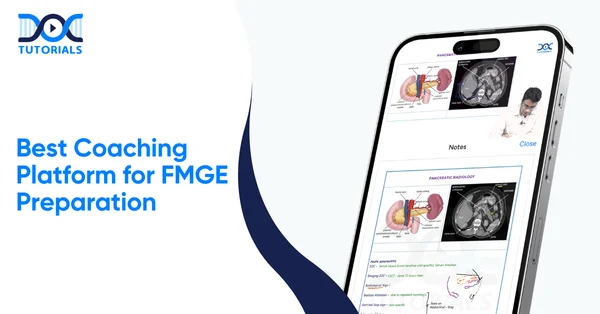
What is the Best Coaching Platform for FMGE Preparation in India?

Best App for fmge preparation

The Foreign Medical Graduate Examination (FMGE) is a mandatory licensing examination for foreign medical graduates seeking to practice medicine in India. The test will consist of 19 MBBS subjects and around 300 questions, and a set cutoff.

There are increasing numbers of coaching institutes and online study materials. Therefore, students must choose the most suitable study materials for FMGE preparation. With those, the students will gain a structured preparation plan, including the best MCI coaching in India, access to video lessons from top teachers, and much more. Read on to know more!

Why Should You Choose FMGE Online Classes?

The online coaching for FMGE preparation helps students access highly demanding topics. The expert faculty provides high-quality video lectures and personalised learning, offering students convenience and flexibility in their preparation.

Choosing the best FMGE online classes helps students gain access to recent study materials prepared by expert teachers to meet the examination’s requirements. Here are some of the reasons for selecting an online coaching institute for FMGE preparation:

  1. Convenience and Flexibility

Many students preparing for the FMGE usually reside abroad. In this scenario, students can study at their convenience and on their own schedule. It helps them manage internships, travel, and clinical work alongside their preparation, as all study materials and expert faculty are available on the online portal or application.

  1. Focus on Demanding Topics

Students can save a lot of time by using a single platform to study subject-wise topics and practice multiple-choice questions. They will have access to expert notes, allowing them to focus on the essential topics that are frequently asked without having to compile scattered resources.

  1. Access to the Best Faculty

The top 10 FMGE coaching institutes in India include subject-matter experts who provide authentic and reliable study materials to students. These expert faculty bring years of teaching experience and clinical expertise to solve complex issues and make the study easier.

  1. High-Quality Video Lectures

The online FMGE videos cover all subjects in the FMGE and feature clinically focused content. The lectures align with the FMGE syllabus and feature strong clinical correlations, providing a practical understanding of the subject. Moreover, the topics are aligned to provide a structured, step-by-step learning experience for better memorisation.

  1. Personalised Demands

The learning and grasping abilities of every student differ. The expert faculty available on online coaching platforms understands the different demands of every student and addresses their queries accordingly to help them prepare effectively for the FMGE.

The DocTutorials application for FMGE preparation offers the best platform for FMGE enthusiasts to prepare effectively through video lectures and expert faculty.

Factors to Look for When Choosing the Best Coaching for FMGE in India

Before choosing the best coaching for FMGE in India, it is essential to check the faculty’s expertise, the study materials provided by the institute, the mode of study, students’ feedback, and the institute’s success rate. It helps you to choose the top coaching to pass the examination easily.

Selecting the best FMGE coaching in India is essential for preparation, as it sets the foundation of your medical journey in India. Medical students should consider these factors before choosing the best coaching institution for FMGE preparation:

  1. Expert Faculty

When choosing FMGE online classes, students should check the faculty’s qualifications and expertise. Experienced and passionate faculty members at the coaching institute, with a strong track record, make a difference through effective strategies and valuable insights. This helps students easily clear the exam.

  1. Updated Study Materials

Expertly curated examination notes and high-quality content are essential for effective preparation. The coaching should provide updated, easy-to-understand study material and ensure that the content is periodically revised to maintain relevance to the examination. It helps the students save time and focus on the frequently asked topics.

  1. Online or Offline Classes

Choosing between online and offline coaching is essential to fulfil the student’s needs. Students usually prefer online study due to different time zones and work pressure. The flexibility and convenience provided by the online coaching help the student to focus on the examination demands without the worry of travelling for studies.

  1. Check Feedback and Reviews

Ensure you check students’ feedback and reviews to understand the coaching institution’s reputation. Select a coaching that offers quality education, as reflected in past students’ reviews.

  1. Success Rate or Pass Percentage

One of the most important factors to consider when choosing an FMGE online coaching is the success rate or pass percentage. Check the coaching’s success rate by searching the official websites and choosing the institute with the highest pass percentage.

The DocTutorials application offers various advantages, such as an expert faculty, a high success rate, and the best reviews from the students.

What are the Benefits of Choosing FMGE Online Classes?

Online coaching classes for FMGE preparation offer several benefits to the students, including flexibility and convenience, interactive learning tools, cost-effective study materials, and access to expert tutors, helping them prepare effectively for the FMGE.

Due to rising internship demand and varying preparation locations, students prefer online coaching as it offers the following benefits:

  1. Flexibility and Convenience

Students can access lectures anytime, anywhere, and practice the tests at their convenience. It helps them balance their studies with other commitments, such as internships or work. Additionally, the students can access the tests multiple times for better revision.

  1. Access to Expert Tutors

Students can access video lectures from domain experts delivered from different locations. It ensures that the students can receive high-quality education and expertly curated examination notes from experienced professionals.

  1. Interactive Learning Tools

Online coaching platforms utilise a range of interactive learning tools, such as live classes, multiple-choice questions, mock tests, discussion forums, peer groups, and video lectures, to enhance the learning experience.

  1. Cost-Effective

Online coaching platforms are more cost-effective than the traditional coaching system, as travel and accommodation expenses are reduced. This offers competitive pricing and affordable learning for FMGE courses.

What are the Tips to Prepare for the FMGE Examination?

Consistent hard work and a preparation strategy will help the student clear the FMGE easily.  Understanding the paper pattern and taking mock tests with a focus on high-scoring topics is essential for preparing for the FMGE.

FMGE might sound challenging at first. However, with effective preparation and smart study, students can easily clear this examination. Here are the tips that can help the students score well in this examination:

  1. Understand the Examination Pattern

Students must devote significant time to understanding the pattern and types of questions asked in the FMGE examination. They must also have a clear idea of the subjects covered and identify the high-yield topics for strategic preparation.

  1. Build a Realistic Study Plan

Don’t overload your schedule with bulky texts and concepts all at once. It is advised to break your syllabus into weekly targets and specify time for revision and question practice. Smart study using technology, such as online applications, can help students clear the examination easily.

  1. Attempt Mock Tests

Giving mock tests in an exam-like scenario will help you reveal your strong areas, understand your weaknesses, and train your brain for the actual examination day for better success.

Students must attempt full-length mock tests that can increase their productivity and strengthen their weak points.

  1. Maintain Consistency

Do not overload yourself with endless studying and continuous cramming of concepts. Consistent study is better than intensive study, so a focused study session of a few hours each day is better than a long, random one.

  1. Focus on High-Scoring Topics

Not all subjects in the FMGE carry equal weight in terms of the number of questions and the scores. Analyse the different high-yielding subjects, such as medicine, surgery, pharmacology, and pathology, and begin your preparation accordingly.

FAQs about the Best FMGE Coaching in India

  1. What is FMGE coaching?

The Foreign Medical Graduate Examination (FMGE) is a mandatory licensing test for foreign medical graduates who desire to practice medicine in India. The test will consist of 19 MBBS subjects and around 300 questions, and a set cutoff.

  1. Why should I join the best FMGE coaching in India?

The most appropriate FMGE coaching is backed with well lectured faculty, revised study material and regular mock examinations. Enrolling in a reputable institute makes things easier and prevents the common errors most students make when studying alone.

  1. How do I choose the best FMGE coaching institute?

Faculty experience, previous performance, student ratings, and theory help the students choose the best FMGE coaching.

Search institutions that offer mock tests like the actual exam. Demo classes are also helpful in knowing the quality of teaching. Consider both online and offline alternatives and then decide.

  1. Is online FMGE coaching effective?

Online coaching will be quite effective when it is accompanied by live classes, recorded lectures, and regular test series. It is favoured by many students because it is time-saving and allows them to fit learning into their schedules.

  1. How long should I prepare for FMGE?

The majority of the students prepare for 6 to 12 months. This will vary depending on your basics and frequency of study. If your medical ideas are good, then you might take a shorter time. Nonetheless, revision and mock practice are essential to pass the exam.

  1. What features should the best FMGE coaching provide?

The best institutes tend to offer subject-based classes, high-yield notes, daily MCQs, mock tests, doubt clearing, and one-on-one mentoring. It is also important to conduct regular performance analysis.

These features assist in identifying areas of weakness and improving at a slow pace until the real exam.

  1. Are FMGE mock tests really important?

Yes, mock tests are crucial. They help with understanding the exam pattern, time management, and exam-related fears. Trying full-length tests on a regular basis is a confidence-building exercise and demonstrates areas that require greater revision.

  1. Is DocTutorials good for FMGE preparation?

DocTutorials is regarded as one of the best options in FMGE preparation. It offers comprehensive video tutorials, a large QBank, and competitive exam-style tests.

It is popular among the aspirants of FMGE due to its conceptual clarity and practice focused on exams, particularly with subjects such as Medicine and Pathology.

  1. Can I clear FMGE without coaching?

Yes, there are students who pass FMGE by studying on their own. Nevertheless, coaching offers systematic assistance, adequate learning schedules, and expert assistance.

When you are not good at discipline or have a problem with clarity of concepts, you can consider joining a good coaching institute and make preparation easy.

  1. Which subjects are most important for FMGE?

Every subject is important; however, the pre-clinical and para-clinical subjects can be more demanding. High-scoring areas include Medicine, Surgery, Pathology, Pharmacology, and Microbiology. Observe concepts and do not memorise answers to get good results.

Conclusion

Choosing the best FMGE coaching in India requires careful analysis of updated study material, expert faculty, the mode of study, and student reviews. DocTutorials offers the most extensive study material, including V5 integrated videos, a quick revision program (QRP), a crisp Qbank with 8000+ MCQs, and mind maps for retention.
Moreover, the students will be able to identify their weak points and work on them with individual mentors. Explore DocTutorials today and explore our FMGE course to excel in your medical career!

DocTutorials App Download Now

Latest Blogs

What is the Best App for FMGE Preparation?

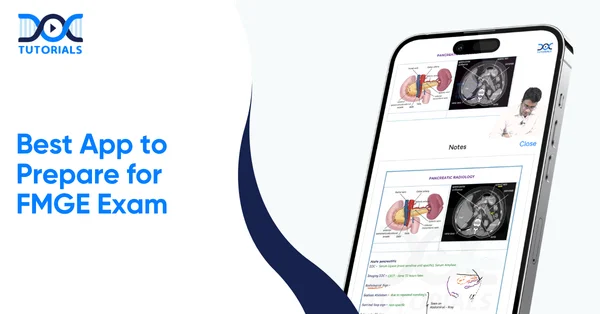
Best App to prepare for FMGE Preparation

The Foreign Medical Graduate Examination (FMGE) is a mandatory licensing exam for foreign medical graduates who wish to practice medicine in India. It covers all 19 MBBS subjects and over 300 questions, with a fixed qualifying cut-off. Moreover, the FMGE exam questions are becoming more clinically-oriented over time and demand sharp problem-solving skills and real-world application from candidates. 

Now, there are numerous study materials available online, such as YouTube videos, Telegram notes, coaching applications, etc. However, students need a structured preparation approach. In this regard, opting for the best app for FMGE preparation enables them to access exam-specific study materials, video lectures, and question banks; practice MCQs; participate in mock tests; and more.    

Keep reading for a detailed guide!

What are the Benefits of Using the Best App for FMGE Preparation?

By using the best app for FMGE preparation, aspirants can get reliable study materials, access quality education remotely, take digital notes, practice MCQs, and even interact with peer groups. 

Modern study applications and technological advancements have made FMGE preparation easier than before. Here are some of the advantages of using online applications for FMGE preparation:

  1. Source the Best Study Material

Students usually find it difficult to access high-quality study material, as the FMGE syllabus is extremely broad and vast. Additionally, many reference books are hard to cover in a limited time frame. 

In these cases, the best FMGE preparation app can help students access high-quality study material and concise notes for all subjects, along with interactive video content for effective learning and revision. 

  1. Access Quality Education Remotely

FMGE coaching is mostly limited to metro cities, making it tough for students in remote areas to access study materials. In this regard, online apps have made it easy for medical graduates to access study materials from across the world.  

It also helps foreign graduates work and study simultaneously without compromising either. They can access quality education and video lectures anytime, anywhere.

  1. Digital Note-Taking

Making notes of bulky books and extensive chapters requires a lot of time. Students preparing for FMGE can use digital note-taking on online preparation apps to revise concepts at their convenience and organise them more easily in less time. 

Additionally, the digital notes are easy to update with the latest developments in the study applications. Foreign medical graduates can also access well-elaborated, up-to-date information from digital notes prepared by experts, helping them manage time effectively. 

  1. MCQ Practice

Just completing the FMGE syllabus and learning the concepts is not enough; students need to practice multiple-choice questions in an exam-like setting to prepare effectively for high-stress scenarios. Online study applications dedicated to FMGE preparation offer students a fun way to practice, allowing them to solve MCQs after completing a specific topic. 

Furthermore, digital question-solving helps them get a quick recap of the studied chapter and aids in exam-level practice for better understanding. 

  1. Peer Group

One of the most challenging tasks for foreign medical graduates is finding a peer group to study with. Online applications connect students with one another and with experts from different locations, facilitating productive learning. 

Additionally, students can connect with their mentors via study applications to clear their doubts. Talking with the peer group helps students discuss exam questions and preparation strategies, share notes, and maintain positive mental health without feeling isolated. 

What Should the Best App for FMGE Preparation Include?

The best app for FMGE preparation should include video lectures, question banks, mind maps, quick revision plans, test series, expert notes, and expert guidance. This enables students to comprehensively prepare for the exam while reducing the hassle of switching between various platforms.   

When you are looking for the best app for FMGE preparation, check for the following aspects:

  1. Video Lectures

FMGE applications should include top-quality video lectures from expert educators covering the entire exam syllabus, with live sessions, simplified videos for complex topics, discussions after every test, revision notes, and case scenarios to help students succeed in the FMGE examination. 

  1. Question Bank

Several online applications for FMGE preparation include question banks comprising multiple-choice questions and previous years’ FMGE question papers. They can help students bookmark important questions and study the high-yield topics accordingly. Additionally, students can generate topic-specific questions using the custom module to enhance their learning.

  1. Mind Maps

Mind maps synchronised with the video lectures are the most effective way to condense high-yield content and retain information in the best possible way. It helps students break complex topics down into simpler terms for better memorisation, leading to success in the FMGE examination. 

These mind maps are curated by expert faculties, which helps in easy learning and topic-wise retention. 

  1. Quick Revision Plan

A quick revision plan available on online applications for FMGE preparation is one of the best tools that can help students succeed in the examination. It helps them recall important topics and high-yield content by testing their knowledge and sharpening their skills. 

Additionally, it offers quick recall of the full FMGE syllabus through crisp, concise revision videos. 

  1. Test Series

The wide variety of test series available on online apps can help the students prepare effectively by practicing the questions asked in the FMGE examination. Mock tests and test series help students identify their strengths and pinpoint areas of weakness that require more practice and topic-wise analysis. 

  1. Expert Notes

Expert notes created by professional faculties provide clear, concise, and fully aligned content related to the FMGE syllabus. Each chapter includes flowcharts and easy-to-understand explanations for better revision and recall. These are reviewed by expert faculty and focus on high-yield preparation for better scores. 

  1. Expert Guidance

Expert guidance on the online applications for FMGE preparation provides extensive mentorship from medical experts. They help students simplify complex topics and make preparation easier. 

Moreover, guidance from expert doctors offers a seamless path to FMGE success by enabling students to learn from the finest faculty members with their unique teaching styles.   

Top 5 Tips for FMGE Preparation

A student requires consistent hard work to prepare for the FMGE. Focusing on high-scoring topics and taking part in mock tests alongside a realistic study plan is important for success in FMGE.

FMGE might sound tough and complex at first. However, with strategic preparation and smart study, students can easily clear this examination. Here are the tips that can help the students score well in this examination:

  1. Understand the Pattern and Syllabus

Students must devote significant time to understanding the pattern and types of questions asked in the FMGE examination. They must also have a clear idea of the subjects covered and identify the high-yield topics for strategic preparation.  

  1. Build a Realistic Study Plan

Don’t overload your schedule with bulky texts and concepts all at once. It is advised to break your syllabus into weekly targets and specify time for revision and question practice. Smart study using technology, such as online applications, can help students clear the examination easily. 

  1. Focus on High-Scoring Topics

Not all subjects in the FMGE carry equal weight in terms of the number of questions and the scores. Analyse the different high-yielding subjects, such as medicine, surgery, pharmacology, and pathology, and begin your preparation accordingly. 

Focusing on recurring topics will maximise efficiency and lead to better scores. 

  1. Attempt Mock Tests

Giving mock tests in an exam-like scenario will help you reveal your strong areas, understand your weaknesses, and train your brain for the actual examination day for better success. Students must attempt full-length mock tests that can increase their productivity and strengthen their weak points.

  1. Maintain Consistency

Do not overload yourself with endless studying and continuous cramming of concepts. Consistent study is better than intensive study, so a focused study session for a few hours each day is better than a long, random study session. 

Furthermore, try to focus on your physical and mental health by eating healthy, sleeping well, and taking regular breaks so you can study effectively without burning out. 

FAQs about the Best App for FMGE Preparation

  1. Which app is the best for FMGE preparation?

The best app for FMGE preparation is one that offers updated syllabus coverage, high-quality video lectures, QBank practice, mock tests, and detailed explanations. Popular apps like DocTutorials are widely trusted by FMGE aspirants for structured content and exam-focused preparation strategies.

  1. What features should a good FMGE preparation app have?

A good FMGE app must include a comprehensive question bank, subject-wise video lectures, previous year questions, mock tests, performance analytics, and regular updates as per the latest NMC guidelines. Detailed explanations and revision notes are essential to strengthen concepts and improve retention before the exam.

  1. Is DocTutorials good for FMGE preparation?

DocTutorials is considered one of the top choices for FMGE preparation. It provides detailed video lectures, a vast QBank, and grand tests designed for competitive exams. Many FMGE aspirants prefer it for conceptual clarity and exam-oriented practice, especially for subjects like Medicine and Pathology.

  1. Can I crack FMGE using only an app?

Yes, you can crack FMGE using only an app if you follow a disciplined study plan. Consistent revision, regular mock tests, and thorough practice of MCQs are crucial. However, self-discipline and proper time management play a major role in achieving a qualifying score.

  1. Which app has the best Question Bank for FMGE?

Apps like DocTutorials are known for their extensive question banks. They offer clinically oriented questions with detailed explanations. Practicing these regularly helps in understanding exam patterns and improving speed and accuracy in the actual FMGE exam.

  1. Are FMGE preparation apps expensive?

FMGE apps usually offer different subscription plans ranging from monthly to yearly access. While some may seem expensive, they provide comprehensive resources, including videos, QBank, and mock tests. Many students consider them cost-effective compared to offline coaching classes.

  1. Do FMGE apps provide mock tests similar to the real exam?

Yes, most top FMGE apps provide full-length grand tests designed to simulate the actual exam pattern. These mock tests help students assess their preparation level, identify weak areas, and build confidence before appearing for the final FMGE examination.

  1. Is DocTutorials suitable for FMGE beginners?

DocTutorials is suitable for beginners because it offers structured video lectures and concise notes. It simplifies complex topics and provides systematic guidance. Beginners can build strong basics and gradually move toward advanced-level question practice.

  1. How many months are required to prepare for the FMGE using an app?

Most aspirants require 6–12 months for thorough FMGE preparation using an app. The duration depends on your basics, consistency, and revision strategy. A well-planned schedule with daily practice and regular mock tests improves your chances of clearing the exam.

  1. Do FMGE apps provide updated syllabus content?

Reputed apps regularly update their content as per the latest FMGE syllabus and NMC guidelines. They also revise question banks and mock tests to match current exam trends, ensuring aspirants stay aligned with recent changes and important topics.

Conclusion

Technological advancements, such as the availability of mobile applications and various study resources, can help students prepare effectively for the FMGE. Choosing the best app, such as DocTutorials for FMGE preparation, can make a significant difference in your journey toward clearing this crucial exam. 

DocTutorials not only provides comprehensive subject coverage but also offers high-quality video lectures, updated question banks, detailed explanations, mock tests, and performance analysis to help you identify and improve your weak areas. 

With smart study tools, personalised learning features, and exam-oriented content, the best app for FMGE preparation transforms your prep into a more structured, efficient, and result-driven process.

Check out our FMGE preparation courses today!

DocTutorials App Download Now

Latest Blogs

Cell Injury: Mechanism, Types, Causes, and Cell Adaptation

Cell Injury | DocTutorials

A cell is the fundamental unit of an organism, and a collection of cells forms tissues that make various important parts of the organism, which together give a living being its characteristics. An injured cell is a case study for various malfunctioning states of a living being. Cell injury results from endogenous and exogenous stimuli, leading to significant changes in the cell and, often, cell death. Therefore, the basis of different pathological findings starts with the study of an abnormal or injured cell.

This guide will help you understand the various aspects of cell injury, its causes, mechanisms, types, and more!

What is the Definition of Cell Injury?

A cell can be damaged by internal and external influences that cause reversible or irreversible injuries and often lead to cell death. Reversible injuries allow the cell to regain its original shape and properties after temporary damage, whereas irreversible injuries do not, leading to permanent damage and sometimes cell death.

Cell injury is defined as the loss of homeostasis in any cellular constituent caused by various exogenous and endogenous factors, including microorganisms, genetic changes, invasion by toxic substances, and metabolic changes. Cells have an inbuilt mechanism for recovering from injury and maintaining homeostasis. Still, persistent injuries, if irrecoverable, lead to adaptation, degeneration, and cell death. 

What are the Types of Cell Injury?

Depending on the extent of cell recovery after injury, cell injury is categorised into two types: reversible and irreversible. In the first type, the cell recovers due to its own homeostatic mechanisms, whereas in the latter type, the cell’s original state and properties are not restored.

Cell injury is divided into two types as follows:

  1. Reversible Cell Injury 

Reversible cell injury is a type of injury in which the cell can regain homeostasis and a functionally normal state after temporary internal or external influences are resolved. Acute swelling is the basic morphological change in reversible cell injury. 

In this case, regardless of the nature of the initial injury, hypoxia is the ultimate cause of cell swelling because it leads to depletion of adenosine triphosphate (ATP). In many situations, this is the early change of irreversible cell injury.

  1. Irreversible Cell Injury

In the case of irreversible cell injury, if the internal or external factor causing the damage persists for a long time, the cell fails to maintain homeostasis and a functionally steady state, and its response to the injury may be adaptive or degenerative, sometimes causing cell death. 

What is the Difference between Reversible and Irreversible Cell Injury?

The reversible cell injury is mild and temporary. Upon removal of the adverse situation, the cell recovers and attains the functionally steady state. But irreversible cell injury does not recover; it leads to adaptation or degeneration and often to permanent cell rupture, resulting in cell death.

What are Myelin Figures?

It is the cytoplasmic figures that are visible in the cell by electron microscopy after injury. They are composed of whorls of membrane formed by damaged cytoplasmic constituents, such as mitochondria or RER. 

In Tay-Sachs disease of the neuron, the myelin figures are prominent, as are other inborn errors of metabolism that rupture the cytoplasmic membrane. Myelin figures are taken up by autophagosomes, similar to other residues of harmed organelles. 

What is the Mechanism of Cell Injury?

The fundamental pathogenesis of cell injury is disturbed homeostasis. Initiation of cell injury begins at the molecular level, and the specific causes are numerous. The mechanism is categorised into four types: mitochondrial dysfunction, disruption of cellular membranes, impaired protein synthesis, and disturbed calcium homeostasis.   

The different mechanisms that result in cell injury are as follows: 

  1. Mitochondrial Dysfunction

The well-being of a cell is dependent on the healthy function of mitochondria, which is also called the powerhouse of a healthy cell and is primarily responsible for adenosine triphosphate (ATP) production. 

Mitochondrial dysfunction leads to ATP depletion, causing cell damage and swelling. These damaged cells due to an abnormality in mitochondrial function cannot be reversed.

  1. Disruption of Cellular Membranes

When the cell membrane is exposed to adverse conditions, such as free radical formation or oxygen deprivation, its permeability increases. This change results in an increase in the sodium or water levels in the cell, leading to swelling, and is recognised as reversible cell injury.

  1. Impaired Protein Synthesis

Protein synthesis is an essential process of a cell to maintain its function. Adverse influences that harm the cell disrupt protein synthesis, including RNA and ribosome production, leading to irreversible cell injury and, in some cases, cell death. 

  1. Disturbed Calcium Homeostasis

Disturbance in calcium homeostasis reduces ATP generation and leads to cell swelling due to an imbalance in ion equilibrium. This imbalance causes irreversible cell injury by disrupting energy-dependent ion pumps that slow sodium ion influx.

What are the Causes of Cell Injury?

Exogenous and endogenous factors can harm a cell. Factors responsible for cell injury from outside the organism are referred to as exogenous, and disturbances in certain constituents and internal processes of the cell that cause cell injury are referred to as endogenous factors. 

The causes of cell injury can be classified as 

  1. Exogenous factors responsible for cell injury include physical, chemical, and biological agents such as heat and cold, drugs and toxins, and bacteria and viruses.
  2. Endogenous factors that are responsible for cell injury include genetic defects, metabolites, hormones, cytokines, and other ‘bioactive’ substances.

What is Cell Adaptation?

When a cell undergoes irreversible injury, it sometimes undergoes adaptive changes. Changes due to injury may involve structural, morphological, or functional aspects. There are several types of adaptation, including atrophy, hypertrophy, hyperplasia, metaplasia, and dysplasia.

Cellular adaptation is the physiological changes that occur in response to a new environment, including physical/chemical factors and exposure to other stimuli. This is reflected in changes in cell size and number, as well as in morphological and functional changes. 

It is divided into two categories: reversible damage resulting from temporary changes induced by exposure to influencing factors, and irreversible damage resulting from continuous exposure to adverse stimuli. 

The adaptations are of different types as listed below:

  1. Atrophy.
  2. Hypertrophy.
  3. Hyperplasia.
  4. Metaplasia.
  5. Dysplasia.

FAQs about Cell Injury

  1. What is the key reason for cell injury?

Hypoxia is the primary cause of cell injury. It is a deficiency of oxygen, which is caused by disturbed aerobic oxidative respiration.

  1. How does cell injury affect organs?

In living organisms, cell injury triggers various vascular, inflammatory, and immune-mediated responses, as well as disrupting growth.

  1. What are the types of cell injury?

There are two types of cell injury: reversible and irreversible. 

  1. Which ions are important in cell injury?

Calcium ions are responsible for toxic cell injury and are implicated as mediators of cell injury mechanisms under a variety of pathological conditions.

  1. What is released when a cell suffers injury?

Different parts of an organism behave differently when they are injured. For example, damaged tissues release inflammatory chemicals that trigger dilation of blood vessels.

  1. How does cell injury affect cellular function?

While a cell sustains injury, it elicits a variety of vascular, inflammatory, and immune-mediated responses, as well as disturbances in growth. 

  1. Why does cell swelling occur in cell injury?

Cell swelling is a degenerative change characterised by an influx of sodium and water into the cell, mainly due to the malfunction of sodium and potassium ion pumps. If not reversed, it results in cell lysis and death. 

  1. How does the body repair cell injury?

Oxygen-rich red blood cells arrive at injured tissues to build new cells and maintain homeostasis. 

  1. What are the irreversible forms of cell injury?

All injuries that lead to cell death are irreversible forms of cell injury. There are six types of irreversible injury, such as Apoptosis, Necrosis, Autophagy, Oxidative Stress, Ischaemia, and Hypoxia. 

  1. Which cell never regenerates after injury?

The most common cell that does not regenerate after injury is Neurons (nerve cells). Most neurons in the central nervous system never regenerate after injury.

Conclusion

Monitoring cell injury, such as DNA damage, cell membrane damage, or tissue damage, can provide insights into the disease and aid its diagnosis and progression. Molecular imaging methods combined with biochemical analysis are essential tools to identify individual cell injury with great precision. Thus, gaining knowledge and an in-depth understanding of cell injury can deepen your understanding of the illness and help you improve your clinical skills throughout your medical career.  

For more detailed information, updated reading materials, informative animated videos, and expert guidance, join DocTutorials’ FMGE courses today!

DocTutorials App Download Now

Latest Blogs

FMGE June 2026: Application Form, Eligibility, Syllabus, Exam pattern & Admit card

FMGE June Session

Indian citizens or overseas Indian citizens with an MBBS degree from any medical institution outside India need to appear for the FMGE exam to be eligible for permanent registration with the MCI (Medical Council of India). The Foreign Medical Graduate Examination (FMGE) has been mandatory after 15th March 2002 as per the Screening Test Regulations 2002. 

The test is conducted by NBEMS (National Board of Examinations in Medical Sciences), and they also distribute the results. Keep reading to learn more about the FMGE application form, syllabus, eligibility, and more.

How to Fill Out the Application Form for FMGE June 2026?

Filling out the FMGE application form requires you to create your ID and password in the FMGE section on the official NBE website, upload your documents, select the preferred exam centres, and then make the payment.  

Candidates can fill out the FMGE application form 2026 online from the official website of NBE. Here are the steps to follow:

Step 1: Visit the official website of NBE (www.natboard.edu.in) and locate the FMGE section.

Step 2: Use your email ID and mobile number to register yourself and get your ID and password via email.

Step 3: Use your ID and password to log in and fill in your details like name, contact number, date of birth, educational information, etc. 

Step 4: Upload the scanned copies of your ID proof, such as passport, PAN, Aadhaar card, etc., passport-size photographs, signature, certificate of MBBS or equivalent, internship, and eligibility certificate. 

Step 5: Select the exam centre from the list of cities available. Allotment of exam seats is done on a first-come, first-served basis. 

Step 6: Next, pay the FMGE application fee using your preferred payment method, such as net banking, credit, or debit card, etc. The expected fees can be INR 6,195 (INR 5,200+ Step 18% GST).

Step 7: Review all the information carefully and submit the FMGE form. Download the submission page and take a printout for future reference.

Step 8: A correction period is provided by NBE so that candidates can fix issues such as spelling of name, photo or signature errors, etc. However, this is for minor issues only; you cannot change details related to qualifications or nationality.

Who Can Apply for FMGE June 2026?

Indian citizens or Overseas Citizens of India with an MBBS or equivalent medical qualification can apply for FMGE 2026. They should complete the necessary clinical rotations, medical courses, internships, etc., within the date specified by NBE. 

The following candidates are eligible for the FMGE application 2026:

  • An Indian citizen or OCI (Overseas Citizen of India) can apply for FMGE 2026
  • Candidates must hold an MBBS or equivalent primary medical qualification from a recognised foreign medical university that is listed in the WDOMS (World Directory of Medical Schools)
  • Candidates should complete their medical course, internship, and clinical rotations before the NBE-specified date.
  • Documents such as the NMC-issued eligibility certificate, provisional certificate, original medical degree, proof of nationality, and a valid passport must be produced. If they qualify from a non-recognised institution, candidates need to produce an equivalence certificate. 

Note: Candidates who are licensed to practice medicine in the United States, the United Kingdom, Canada, Australia, or New Zealand are exempt from the FMGE and may apply straight for NMC registration.

What is the Syllabus of FMGE 2026?

The FMGE 2026 syllabus covers a comprehensive curriculum. It includes anatomy, biochemistry, physiology, pathology, pharmacology, microbiology, forensic medicine, general surgery, anaesthesia, radiotherapy, paediatrics, orthopaedics, radio-diagnosis, medicine, etc.

Here is the detailed syllabus for the FMGE exam:

Anatomy

  • Embryology: Development of individual organs and systems, Postnatal growth & development
  • Surface Anatomy: In cadavers, in the living
  • General Anatomy: Basic tissues of the body, Terminology & Nomenclature
  • Elements of Anatomy: Osteology, Arthrology, Myology, Angiology, Neurology
  • Regional Anatomy: Upper limb, Lower limb, Thorax-including diaphragm, Abdomen and Pelvis, Head, Neck, Brain, and Spinal cord
  • Sectional Anatomy: Thorax, Abdomen, Head, Neck, and Brain
  • Histology: General Histology Microanatomy of individual organs and systems
  • Human Genetics: Principles of Human Genetics and Molecular Biology
  • Radiological Anatomy: Skiagrams, Special X-rays, Principles of imaging techniques.

Physiology

  • Kidney
  • Endocrine Glands
  • Cardiovascular System
  • Special Senses
  • General Physiology
  • Body fluids – Blood
  • Nerve and Muscle
  • Gastrointestinal Tract
  • Respiratory System
  • Central Nervous Systems
  • Skin and Body Temperature
  • Reproduction

Biochemistry

  • Protein and Amino Acid Metabolism
  • Carbohydrate Metabolism
  • Biochemical Genetics and Protein Biosynthesis
  • Lipid Metabolism
  • Cell and Sub-cellular structures
  • Hydrogen Ion concentration: Acid, Bases, Buffers, Henderson-Hasselbach equation
  • Isotopes and Their Application
  • Lipids
  • Nuclear Acids
  • Minerals
  • Carbohydrates
  • Enzymes
  • Vitamins
  • Amino Acids, Peptides, and Proteins
  • Nutrition and Energy Metabolism
  • Liver Functions
  • Biological Oxidation
  • Digestion and Absorption from the GI Tract
  • Intermediary Metabolism
  • Purine and Pyrimidine Metabolism
  • Tissue Biochemistry

Pathology

  • Hepato-Biliary Pathology
  • Pathology of Kidney and Urinary Tract
  • Respiratory Pathology
  • Cardiovascular Pathology
  • Endocrine pathology
  • Reproductive System (Male & Female)
  • Musculoskeletal System
  • Ocular Pathology
  • Lymphoreticular System/Spleen
  • Cell injury
  • Inflammation and Repair
  • Immunopathology
  • Infectious diseases
  • Circulatory disturbances
  • Growth Disturbances and Neoplasia
  • Nutritional and other disorders
  • Genetic disorder
  • Haematology
  • Diseases of the Breast
  • Neuropathology
  • Dermato-Pathology

Microbiology

  • Systemic Virology
  • Clinical/Applied Microbiology
  • Parasitology
  • General Virology
  • General Microbiology
  • Immunology
  • Bacteriology
  • Mycology

Pharmacology

  • Endocrine pharmacology
  • Clinical Pharmacology and Rational Drug Use
  • Psychopharmacology
  • Toxicology
  • Gastrointestinal System
  • Central Nervous System
  • General Pharmacology
  • Autonomic Nervous System
  • Diuretics
  • Drugs affecting the blood and blood formation
  • Autocoids and related drugs
  • Respiratory System
  • Drugs in Anaesthetic Practice
  • Chemotherapy

Forensic Medicine

  • Definitions
  • Courts of India
  • Medical Certifications & medico-legal reports, including the dying declaration
  • Death
  • Forensic Psychiatry
  • Asphyxial death
  • Changes after death: Inquest by police, magistrate, and coroner. Identification
  • Examination of mutilated human remains
  • Medico-legal autopsies
  • Examination of an Injury Case
  • Injuries due to physical agents & their medico-legal importance
  • Seminal stains
  • Mechanical injuries and wounds
  • Court procedures
  • Medical Jurisprudence
  • Infanticide
  • Toxicology
  • Death due to malnutrition, neglect, and battered babies
  • Dowry death
  • Virginity, sexual offences, sexual perversions
  • Legitimacy
  • Pregnancy and delivery
  • Biological fluids

General Surgery

  • Abdominal Wall
  • Umbilical granuloma, fistula, adenoma
  • Infections of the Hand and Foot
  • Tumours, Cysts, Ulcers, Sinuses, and Fistulae
  • Thyroid Glands, Thyroglossal Tract, and Endocrines
  • Breast
  • Lymphatic and Lymph Nodes
  • Urinary Bladder
  • Cardiothoracic System
  • Sympathetic System
  • Kidneys and Ureters
  • Face, Teeth, Gums, Mouth, Tongue, Salivary glands, Neck
  • Haemorrhage and shock
  • Fluid, Electrolyte, and Acid Balance, Nutrition, Skin Tumours, Burns, Skin Grafting
  • Arterial diseases
  • Venous diseases
  • Wounds
  • Specific and non-specific injections
  • Diseases of muscle, tendons, bursae, and fascia, Hernia
  • Cranio-Cerebral injuries
  • Brain, Nerves
  • Rectum and Anal Canal
  • Oesophagus, Stomach, and Duodenum
  • Intestines, intestinal obstruction
  • Genito-Urinary System
  • Prostrate
  • Urethra
  • Penis, Testis, and Scrotum
  • Vasectomy and Recanalisation
  • Spleen, Liver, Gall Bladder, and Bile Ducts Pancreas
  • Peritoneum

Anaesthesia

  • Local Anaesthesia
  • Spinal/Epidural Anaesthesia
  • IPPV, Endotracheal Intubations
  • Muscle Relaxants
  • Blood Transfusion and Fluid Electoral
  • Poisoning
  • ICU: The role of an anaesthesiologist in the ICU
  • Anatomy of the upper airway
  • Physiology of Respiration O2/CO2
  • Methods of oxygen therapy.
  • Pre-operative evaluation/pre-medication
  • Anaesthetic agents, stages of Anaesthesia
  • Principles and mechanisms of administration of general anaesthetics, balanced Anaesthesia
  • Cardiopulmonary resuscitation basics, use of simple ventilators
  • Monitoring
  • Shock
  • Balance Sites of respiratory obstruction and Management of the Airway in an unconscious patient
  • Role of anaesthesiologist in acute and chronic relief.

Orthopaedics

  • Cold Orthopaedics
  • Physical Medicine and Rehabilitation
  • Neuro-Muscular Disorder
  • Regional Conditions
  • Traumatology
  • Injuries to bones and joints
  • Injuries of the Lower Extremities
  • Injuries of the Spine: Vascular Injuries
  • Bone and Joint Tuberculosis

Radio-Diagnosis

  • Central Nervous System
  • Gastrointestinal System
  • Respiratory System
  • Cardiovascular System
  • Skeletal System
  • Excretory System

Radiotherapy

  • Radiotherapy and chemotherapy in commonly seen cancers
  • Principles of Nuclear Medicine
  • Radioisotopes in diagnosis and therapy
  • Common radiation reactions and management
  • Principles of Radiotherapy
  • Principles of Chemotherapy
  • Prevention and Early Diagnosis of Cancer

Paediatrics

  • Gastroenterology
  • Vital statistic
  • Respiratory System
  • Paediatric Emergencies
  • Neonatology Growth & Development
  • Nutrition
  • Genetics
  • Central Nervous System
  • Infections
  • Nephrology
  • Endocrinology

Medicine

  • Gastrointestinal Tract
  • Endocrine System
  • Cardio-Vascular System
  • Nephrology & Urinary System Connected to Tissue Disorders
  • Neurological System
  • Clinical Methods in the Practice of Medicine
  • Common symptoms of the disease
  • Nutrition/Exposure to Physical & Chemical Agents
  • Infections
  • Haematology
  • Respiratory System
  • Emergency Medicine
  • Geriatrics

Tuberculosis and Respiratory Diseases

Diagnosis and treatment of common chest conditions, with a focus on the National Tuberculosis Control Programme and the prevention and treatment of tuberculosis.

Psychiatry

  • Schizophrenia
  • Alcoholism Drug Abuse
  • Dementia
  • Historical aspects and diagnosis & treatment of mental illness
  • Conduction of Mental Status Examination
  • Different psychoses
  • Clinical features, diagnosis, and management of psychiatric disorders of childhood and adolescence
  • Clinical features, diagnosis, and management of:
  • Mania and depression
  • Anxiety disorders and hysteria
  • Personality disorder
  • Behavioural Sciences
  • Psychiatric emergencies

Dermatology and Sexually Transmitted Diseases

  • Allergic Disorders
  • Structure and Functions of Sebaceous Glands and Disease
  • Dermatological therapy
  • Leprosy
  • STD
  • Lichen Planus
  • Diseases caused by Nutritional and Environmental Factors
  • Infective Disorders
  • Melanocytes, pigment metabolism, and other disorders of Pigmentation
  • Vesiculobullous Diseases
  • Alopecia and Hirsutism
  • Psoriasis
  • Dermatitis and Eczema

Ophthalmology

  • Conjunctiva
  • Sclera
  • Uveal Tract
  • Optic Nerve
  • Orbit
  • Basic sciences – Anatomy, Physiology, Pharmacology, Pathology, Elementary Optics, Eye Diseases
  • Cornea
  • Lens
  • Vitreous
  • Ophthalmic Surgery
  • Community Ophthalmology
  • Glaucoma
  • Retina
  • Intra-Ocular Tumours
  • Squint
  • Lacrimal System
  • Lids
  • Refractive Errors
  • Injuries
  • Miscellaneous

Otorhinolaryngology

  • Nasopharynx Diseases
  • Ear Diseases
  • Trachea Diseases
  • Nose and Paranasal Sinus Diseases
  • Oesophagus

Obstetrics and Gynaecology

  • Family planning
  • Normal labour
  • Operative obstetrics
  • Safe motherhood
  • Pharmacotherapeutics in obstetrics
  • Normal puerperium
  • Anatomy of the Female Reproductive Tract
  • Physiology of conception
  • Development of fetus and placenta, Diagnosis of pregnancy
  • Maternal changes in pregnancy
  • Antenatal care
  • Abnormal obstetrics
  • Breast Feeding
  • Care of newborn
  • Medical termination of pregnancy
  • Post-caesarean pregnancy
  • Maternal morbidity and mortality
  • Medico-legal aspects
  • Diseases of the breast
  • Carcinoma
  • Chemotherapy in gynaecology
  • Genitals prolapse
  • RCH
  • Current topics
  • Vaginal discharge
  • Menstrual Disorder, Fertility, and Infertility
  • Endometriosis and the Allied States
  • Genital injuries and fistulae
  • Genital infections
  • Tumours
  • Radiotherapy in gynaecology
  • Endoscopy
  • Operative gynaecology

Community Medicine

  • Nutrition and Dietetics
  • Communicable and Non-Communicable Diseases
  • Health Planning and Management, including Disaster Management
  • Basic Epidemiology
  • Urban Health
  • International Health
  • Fundamentals of Biostatistics
  • Evaluation of Public Health and Concepts of Health
  • Environment and Health Education
  • Occupational Health
  • Medical Sociology and Community Mental Health
  • Epidemiology of Specific Diseases
  • Demography, Reproductive and Child Health
  • School Health
  • Health System in India

What is the Exam Pattern for FMGE 2026?

The FMGE 2026 exam pattern consists of 300 multiple-choice questions, which are equally distributed in two different sections. 2.5 hours is allotted for each section and each correct answer. There is no negative marking in this exam.

The FMGE 2026 exam pattern is as follows:

FeatureExam Details
Exam ModeComputer-based test online
SectionPart A (Pre- and Paraclinical) and Part B (Clinical)
Total Questions300
Question TypeMultiple Choice Question
Marking Scheme+1 for each correct answer and no negative marking
Duration2.5 hours for each section (5 hrs in total)
LanguageEnglish

FMGE 2026 Admit Card

Candidates can download their FMGE admit card online. They will receive notification regarding the admit card release from the issuing authority through email or SMS. To download the admit card, candidates should visit the official website and enter their login details. Keep a printout of the hard copy of your admit card for future reference. 

Candidates can log in to the official website of the NBE using their credentials and download the admit card. The FMGE admit card contains the following details:

  • Name of the Candidate
  • Roll Number
  • FMGE application form
  • Address of the exam centre
  • Reporting time
  • Date and time of examination

FAQs about FMGE 2026

  1. When is the FMGE June 2026 exam date?

FMGE June 2026 is scheduled for June 28, 2026, as a computer-based test. Part I runs from 9:00 AM–11:30 AM; Part II from 2:00 PM–4:30 PM across multiple centres.

  1. What is FMGE 2026 eligibility?

Candidates need an MBBS or equivalent from a foreign institution verified by the Indian Embassy, Indian/OCI citizenship, and completion before the cut-off. No exemptions for specific countries like the US/UK grads.

  1. What is the FMGE exam pattern?

Computer-based with 300 MCQs (150 per part, 2 sections each), 5 hours total (150 min/part), English only, 4 options per question, no negative marking.

  1. What are the passing marks for FMGE?

Minimum 150/300 marks (50%) required to pass, fixed regardless of difficulty or candidates. Results show pass/fail; no re-evaluation.

  1. How to apply for FMGE 2026?

Register online at natboard.edu.in, fill the form, upload documents, pay the fee INR ₹6,195, submit, and print confirmation. Edit window for deficiencies.

  1. What is the FMGE marks distribution?

For pre-clinical subjects, the marks are Anatomy/Physio/Biochem (17 each), Pathology/Micro/Pharma (13). For clinical subjects, the marks are Medicine (33), Surgery (32), OBGY/Community Med (30 each), and others vary.

  1. Is there negative marking in FMGE?

No negative marking; +1 for correct answers only. Attempt all 300 questions confidently in the 5-hour CBT format.

  1. How many attempts are allowed for FMGE 2026?

Unlimited attempts allowed until passing. Post-pass retakes void the result.

  1. How many times are the FMGE exams conducted in a year?

The FMGE exam is conducted twice a year. Preferably, one session is held in June and another in December.

  1. When was the result for the FMGE 2026 June session released?

The result for the FMGE exam held on 28 June 2026 will be released soon.

Conclusion

Candidates appearing for this exam must understand the FMGE application procedure and meet the eligibility criteria. Besides, they need professional guidance to ensure success in their exam. In this regard, DocTutorials can help them prepare effectively for the exam. 

We focus on strengthening their foundational knowledge in pre-clinical subjects like Anatomy, Physiology, and Biochemistry, vital for exam success. Additionally, we excel in clinical topics, offering extensive MCQs, mock tests, and revision resources to cover the full FMGE syllabus and boost pass rates.

Check out our FMGE courses today!

DocTutorials App Download Now

Latest Blogs

Vocal Cord and Supraglottic Diseases: Common Disorders, Diagnosis & Treatment

Vocal Cord and Supraglottic Diseases

The vocal cords are an essential structural component of our body that helps in the production of sound and is an important part of the airway tract. They are covered by a superior cartilaginous structure called the supraglottis or the epiglottis. Any form of abnormality in the vocal cord and supraglottic structure and function can lead to serious complications, which can turn life-threatening. 

These abnormalities constitute the vocal cord and supraglottic diseases. Learning about these conditions is essential for both early detection and FMGE preparation. 

Keep scrolling for a detailed guide covering the types, disorders, diagnosis, treatment, and other crucial aspects related to vocal cord and supraglottic diseases.

What are the Types of Vocal Cord Disorders?

Vocal cord disorders refer to any anatomical or physiological anomaly that affects the vocal cords. These can be due to multiple causes, which divide them into various types.

Vocal cord disorders are mainly organic, neurological, and functional. These types have been further described below:

  1. Organic: These are due to anomalies in the structure of the vocal cords, larynx, or lungs. These can include disorders like vocal cord polyps.
  2. Neurological: Disorders due to abnormalities in the nerves controlling the vocal cords.
  3. Functional: Mainly occurs due to decreased or absent function of the vocal cords. It is mostly due to problems with the vocal cord muscles.

What are the Common Vocal Cord Disorders?

Common vocal cord disorders include conditions caused by inflammation or stress on the vocal cords. In this regard, vocal cord paralysis is one of the most dreaded conditions, as it can be life-threatening if ignored.

Some of the common vocal cord problems have been tabulated below:

Vocal Cord DisorderFeature
LaryngitisInflammation of the vocal cords that leads to a raspy and hoarse voice.
Vocal NodulesNon-malignant calluses that are usually formed due to continuous pressure on the vocal cords. They generally occur in pairs, one in each cord. This condition can be commonly seen in professional singers.
Vocal PolypsThese are soft, non-malignant growths, similar to a blister. The blisters may contain blood, which turns clear with time.
Vocal Cord ParalysisIt refers to paralysis of one or both cords, which can lead to weakening of voice, problems in swallowing, aspiration of food or fluid, and more.

What is Vocal Cord Paralysis?

Vocal cord paralysis usually occurs when one or both of the cords do not open or close properly. This can cause the voice to be weak. Other symptoms of vocal cord paralysis include: 

  • Aspiration of food or liquid into the trachea or the lungs 
  • Choking or coughing while eating 
  • Dyspnoea (trouble in breathing)

The causes for vocal cord paralysis include:

  • Head, neck, or chest injury
  • Problem during surgery
  • Stroke
  • Tumour
  • Lung or thyroid cancer
  • Certain neurological disorders, such as multiple sclerosis or Parkinson’s disease
  • Viral infection

Treatment for vocal cord paralysis includes surgery and speech therapy. Many times, the person may recover spontaneously and require no treatment at all.

What are the Common Supraglottic Diseases?

Supraglottic diseases commonly constitute inflammation and abnormalities in the supraglottis, which can go from inflammation to even scarring.

The common supraglottic diseases include:

  1. Supraglottitis

It is defined as an acute bacterial infection of the epiglottis and other supraglottic structures. It can cause acute, severe airway obstruction, making breathing difficult. The most common causative organism of supraglottitis is Haemophilus influenzae type b. 

  1. Supraglottic Stenosis

Supraglottic stenosis is a disorder characterised by fibrotic changes and/or scarring of the supraglottic structures. Common symptoms for supraglottic stenosis include dysphagia, dyspnoea, stridor, and airway obstruction. The major causes for supraglottic stenosis primarily include laryngotracheal stenoses and can be secondary to autoimmune diseases, trauma, infections, or irradiation.

  1. Supraglottic Cancer

Supraglottic cancer is mostly a squamous cell type of cancer. This is a rare condition and can be life-threatening, as it causes disruption in the normal mechanisms of swallowing, respiration, and speech. 

  1. Autoimmune Conditions of the Supraglottis

IgG4-related disease is an autoimmune condition in which there are fibroinflammatory changes in the supraglottis and laryngeal structures. It is mediated by IgG4, and these antibodies attack the self-tissues, leading to inflammation and scarring.

What are the Symptoms of Vocal Cord and Supraglottic Disorders?

The symptoms of vocal cord disorders most commonly affect the breathing and swallowing process of an individual. They are sufficient for the diagnosis of a vocal cord disorder. Supraglottic disease is usually characterised by symptoms like dysphagia, odynophagia, dyspnoea and a mass in the neck. 

The common symptoms of a vocal cord disorder include changes in the voice, which may be:

  • Strained
  • Gurgly or wet
  • Raspy or hoarse
  • Breathy or airy
  • Uneven or shaky, with breaks or gaps in sound
  • Weak and hard to project
  • Too high or too low
  • Too loud or too soft

In case of a supraglottic disease, the symptoms are similar to those of a vocal cord disorder. In addition to that, there are symptoms like

  • Dysphagia
  • Odynophagia
  • Dyspnoea
  • Mass in the neck

What are the Causes of Vocal Cord and Supraglottic Disorders?

The causes of vocal cord disorders include overuse, infection, allergy, or autoimmune conditions. In cases of supraglottic disease, the aetiology remains similar.

The most common cause of voice disorders is overuse of the voice, such as excessive yelling, singing, or talking. Additionally, voice disorders sometimes result from acute, short-term conditions like a cold, allergic reactions, or sinusitis. 

Such disorders cause inflammation of the laryngopharyngeal area and change airflow. Once resolved, a return to a normal voice usually occurs within days to weeks. More severe voice disorders occur when an impairment affects the structure, muscles, or nerves of the larynx or the vocal cords.

What Diagnostic Tests are Available for Vocal Cord and Supraglottic Disorders?

The diagnostic modalities for vocal cord and supraglottic disorders include detailed history taking and clinical examination before proceeding with diagnostic tests, like laryngoscopy, videostroboscopy, laryngeal electromyography (LEMG) or imaging studies.    

Vocal cord and supraglottic disorders are mostly evaluated using clinical examination. This is usually done by a specialist (laryngologist) by taking a detailed history and performing a clinical examination. The specialist can then suggest some diagnostic tests. These tests include:

  • Laryngoscopy: It uses a thin, flexible scope with an attached video camera to view the back wall of the pharynx and larynx. Clinicians can take a biopsy of nodules, polyps, or cysts for disease testing.
  • Videostroboscopy: Utilises a scope attached to a special camera to visualise the slow-motion movement of the vocal cord during phonation.
  • Laryngeal electromyography (LEMG): Applies an electrode to measure the neural electrical activity of the laryngeal muscles during voice use.
  • Imaging: Includes obtaining an MRI or CT scan that allows detailed views of the vocal cords and other laryngeal structures to be visualised for masses or other pathology.

What are the Treatment Options Available for the Vocal Cord and Supraglottic Disorders?

The treatment options available for the vocal cord and supraglottic disorders include speech therapy, drugs, and surgical procedures. The doctor first evaluates the disorder, its severity, and its course, and then prescribes the most suitable treatment method.

Some acute voice disorders may respond to vocal rest. Clinicians may recommend avoiding shouting, singing, or straining the voice for a few days and reducing voice use when possible.

Other therapeutic methods include: 

  • Voice Therapy: Speech-language pathologists provide techniques and exercises to achieve effective and efficient voice use. 
  • Pharmacologic Treatment: Medication like proton pump inhibitors or other drugs may be needed if LPR/GERD is affecting the condition. Corticosteroids or antibiotics may be prescribed in selected cases. 
  • Medical Procedures or Surgery: May be required to remove the lesion from the vocal cords. Botulinum toxin injections can be used to relax hypertonic laryngeal muscles. In the event of vocal cord paralysis, injectable fillers or medialization laryngoplasty may be used to decrease the distance between the laryngeal cords and improve glottal closure.

FAQs about Vocal Cord and Supraglottic Disorders

  1. What are the diseases affecting the vocal cords?

The vocal cord disorders include vocal nodules, vocal polyps, laryngitis, and vocal cord paralysis.

  1. What are the different types of vocal cord disorders?

The various types of vocal cord disorders include structural, neurogenic, and functional ones.

  1. Which disease attacks the vocal cords?

Laryngitis, inflammation of the larynx, is a swelling that affects the vocal cords.

  1. What are the early signs of vocal cord damage?

The early signs of vocal cord disorders include changes in voice, like raspiness, hoarseness, or a strained or weak voice.

  1. What are Supraglottic Airways or Supraglottic Airway Devices?

Supraglottic airways/airway devices are one of the most commonly used instruments to establish an airway in case of an obstruction in the original one. They are used to maintain the airway patency and enable ventilation as they are placed in the supraglottic region. These devices are an accepted standard of airway management and fall between the range of facemasks and tracheal tubes.

Conclusion

Vocal cord and supraglottic diseases are common across all age groups. In some cases, they can lead to severe airway obstruction, which can lead to life-threatening conditions. Moreover, these conditions form a major topic for the FMGE examination. 

If you are looking for guidance regarding other similar topics that can aid your preparation, look no further than DocTutorials. Our concise video lectures, clinical Qbanks, exam-focused notes, and mind maps aid aspirants and guide them towards a better understanding of the medical concepts.  Explore our FMGE courses today!

DocTutorials App Download Now

Latest Blogs

Carbohydrate Metabolism: A Comprehensive Guide

Carbohydrate Metabolism

Carbohydrate metabolism is a high-yield topic for the FMGE examination. It is a sure-shot topic from which multiple questions can arise. Therefore, it is crucial to understand the concept of carbohydrate metabolism to achieve an excellent score in the FMGE examination.

In this guide, we will cover all the important aspects of carbohydrate metabolism, including the processes, the enzymes involved, and the disorders caused by abnormalities in the pathways.

Keep reading to know more!

What are Carbohydrates?

Carbohydrates are the fundamental source of energy in our bodies. These are made up of various constituent elements and have different types, which have been mentioned below.

Carbohydrates refer to organic molecules that consist of elemental components like carbon, hydrogen, and oxygen atoms. They can be simple sugars and complex sugars. Simple sugars consist of a single molecule of carbohydrate known as a monosaccharide. These include sugars like glucose and fructose.

Complex sugars, on the other hand, are made up of multiple monosaccharide units and are known as polysaccharides. These include sugars like starch and glycogen. Another type between the monosaccharide and the polysaccharide is the oligosaccharide. These compounds are composed of 2 to 10 monosaccharide units and include sucrose, maltose, etc.

The breakdown of carbohydrates is the first step in carbohydrate metabolism, and it begins in the mouth. The process begins with the breakdown of carbohydrates and ends with the absorption of simple sugars by the intestinal epithelium. After the breakdown and absorption, the process of utilising carbohydrates for energy begins, which is cellular respiration.

What is Glycolysis in Carbohydrate Metabolism?

Glycolysis is the first breakdown reaction in the body. It helps convert glucose into energy and forms an important end product, pyruvate, which is later used in other processes to produce energy.

Glycolysis is a cytosolic, ten-step pathway by which one glucose molecule is converted to two pyruvate molecules, each containing three carbons. The process produces 2 ATP (Adenosine Triphosphate) and 2 NADH (Nicotinamide Adenine Dinucleotide) per glucose molecule under aerobic conditions.

Conceptually, glycolysis can be divided into an investment phase, in which ATP is used to phosphorylate and activate glucose, and a payoff phase, in which ATP is made, and NAD⁺ is reduced. In the investment phase, hexokinase phosphorylates glucose to glucose-6-phosphate, thereby trapping the sugar intracellularly and committing it to metabolism.

In addition, PFK-1 catalyses an irreversible, rate-limiting phosphorylation of fructose-6-phosphate to fructose-1,6-bisphosphate, utilising ATP.

The payoff phase of glycolysis includes the NADH-producing glyceraldehyde-3-phosphate dehydrogenase step and two substrate-level phosphorylation steps, catalysed by phosphoglycerate kinase and pyruvate kinase, respectively, which generate ATP.

The product, pyruvate, has multiple potential fates depending on oxygen availability and tissue type: under anaerobic conditions, lactate dehydrogenase reduces pyruvate to lactate, replenishing the NAD⁺ required for glycolysis to continue. 

Under aerobic conditions, pyruvate is converted to acetyl-CoA by PDH (Pyruvate dehydrogenase) to enter the TCA (tricarboxylic acid) cycle; or, in selected tissues, pyruvate is carboxylated to oxaloacetate for gluconeogenesis.

How is Glycolysis Regulated?

Glycolysis is highly regulated to balance energy production with biosynthetic demands.

PFK-1 is the main control point and integrates cellular energy status and hormonal signals: it is activated by AMP, fructose-2,6-bisphosphate—a potent allosteric activator made by the bifunctional enzyme PFK-2/FBPase-2—and inhibited by ATP and citrate to prevent futile cycling in the energy-sufficient state.

There are different isoforms of hexokinase with different affinities for glucose and different regulatory properties; glucokinase has a higher Km and is not inhibited by G6P so that the liver can act as a glucose sensor and take up glucose after meals.

Pyruvate kinase catalyses the last irreversible step and is subject to feed-forward activation by fructose-1,6-bisphosphate, while it is inhibited by ATP and by phosphorylation under glucagon signalling in the liver.

These multiple layers of allosteric and covalent regulation combine to ensure that the flux through glycolysis adaptively responds to variations in the demand for ATP, substrate availability, and hormonal environment.

What is the Pyruvate Cycle in Carbohydrate Metabolism?

The pyruvate cycle is an important step in carbohydrate metabolism that helps the body produce energy. After glycolysis, pyruvate is converted into acetyl-CoA by the pyruvate dehydrogenase (PDH) complex.

Pyruvate dehydrogenase (PDH) catalyses the conversion of pyruvate to acetyl-CoA. This is the link reaction between glycolysis and the TCA cycle. The activity of PDH is controlled by reversible phosphorylation:

  • PDH kinase phosphorylates and inactivates the complex upon high levels of ATP, NADH, and Acetyl CoA.
  • PDH phosphatase reactivates the complex when ADP (Adenosine Diphosphate) and pyruvate levels remain high.
  • The product Acetyl CoA from PDH is taken up by the mitochondrial TCA cycle, where FAD and NAD⁺ are converted into FADH₂ and NADH. Here, CO₂ is also formed as a by-product.
  • These reducing equivalents are then fed into the ETC (Electron Transport Chain), which results in the production of energy (ATP) via oxidative phosphorylation.

What is Gluconeogenesis in Carbohydrate Metabolism?

Another important step in carb metabolism is gluconeogenesis. This simply refers to the process of glucose synthesis. This is one of the first synthetic steps in carbohydrate metabolism.

Gluconeogenesis is a multi-step process that results in the biosynthesis of glucose from substrates such as lactate, glycerol, and amino acids such as alanine. It primarily occurs in the liver, and a small portion occurs in the renal cortex when the person is on a prolonged fast.

In gluconeogenesis, 3 new steps occur, which include:

  1. Formation of PEP (Phosphoenolpyruvate) from pyruvate due to the action of PEP carboxylase and pyruvate carboxylase.
  2. Formation of fructose-6-phosphate from fructose-1,6-bisphosphate by the action of fructose-1,6-bisphosphatase.
  3. Formation of glucose occurs when glucose-6-phosphate is hydrolysed by glucose-6-phosphatase.

The above-mentioned steps specifically include the formation of glucose from pyruvate. In the case of lactate, the lactate undergoes the Cori cycle, whose major enzyme is lactate dehydrogenase (LDH).

Similarly, for alanine, there is the glucose-alanine cycle, and for glycerol, the glycerol-3-phosphate dehydrogenase is the main cycle for the glycerol-phosphate shuttle.

What are the Other Reactions Involved in Carbohydrate Metabolism?

There are some primary steps involved in carbohydrate metabolism. However, there are further steps involved in the overall metabolism, which are mentioned below.

Many more reactions are involved in carbohydrate metabolism, which form a short portion of the total process. These processes include:

  • Glycogenolysis: It is the breakdown of glycogen and the formation of glucose from it. Glycogen is the primary storage form of carbohydrates in our bodies.
  • Glycogenesis: The formation of glycogen from glucose refers to glycogenesis. The main enzymes involved include hexokinase, phosphoglucomutase, glucoronyl-1-phosphate-uridyl transferase, etc.
  • Pentose Phosphate Pathway: It serves as an alternative to glycolysis and the TCA cycle. It takes place in all cells, and the enzymes for it are located in the cytosol itself. 

Other reactions include the glucuronic acid cycle and the fructose metabolism pathway.

What is the Clinical Significance of Carbohydrate Metabolism?

Carbohydrate metabolism is an important source of energy for our body. If there are any defects in the pathways, it can lead to serious disorders in the body.

Any abnormalities in the pathways of carb metabolism can lead to serious illnesses. Hence, understanding the cycle is of utmost importance, especially for endocrinologists. The various disorders related to carbohydrate metabolism have been tabulated below:

DiseaseFeature
Diabetes MellitusExcessive gluconeogenesis in the liver and peripheral insulin resistance.
Von-Gierke’s DiseaseGlucose-6-phosphatase deficiency
McArdle’s DiseaseMyophosphorylase deficiency
Pyruvate Dehydrogenase Complex DefectLeads to lactic acidosis and neurological defects.

Apart from these, there are specific carbohydrate disorders like glycogen storage disorders, galactosemia, essential fructosuria, essential pentosuria, etc.

FAQs about Carbohydrate Metabolism

  1. What is meant by carbohydrate metabolism?

Carbohydrate metabolism refers to the breakdown of complex sugars into simple monosaccharides for ease of intestinal absorption.

  1. What are the main types of carbohydrates?

These include monosaccharides, oligosaccharides, and polysaccharides.

  1. Which is the primary organ for carbohydrate metabolism?

The liver is the major organ where the majority of the reactions of carbohydrate metabolism take place.

  1. What are the main metabolic reactions involved in carbohydrate metabolism?

The major metabolic reactions involved in carbohydrate metabolism include glycolysis, glycogenesis, gluconeogenesis, and glycogenolysis.

  1. What are the primary functions of carbohydrates?

The carbohydrates are mainly important for the immediate requirements of energy, storage of energy, sparing of protein for muscle buildup, and helping in fat metabolism.

Conclusion

Carbohydrate metabolism is an essential process in the human body. It is important for the cycles to function properly for the proper supply of energy and replenishment of the energy stores. Moreover, it is also a crucial topic to understand, as it serves as a high-yield topic for the FMGE examination.

For added guidance in such complex FMGE concepts, DocTutorials can be your study partner. We offer V5 integrated videos, quick revision program, crisp Qbank with 8000+ MCQs, and mind maps to aid aspirants and guide them towards a better understanding of medical concepts.
Join DocTutorials today and explore our FMGE course to excel in your medical career!

DocTutorials App Download Now

Latest Blogs

FMGE Toppers: Rank Holders, Scores & Success Strategies

FGME Toppers | DocTutorials

FMGE rank holders have cleared one of the toughest licensing examinations for foreign medical graduates in India. The success of every top scorer is the result of tireless preparation, hard work, and proper usage of authentic preparation materials. The journey of the toppers not only signifies their academic achievements but also their consistency, determination, and unrelenting passion for their dream of practising in India.

For FMGE aspirants, these success stories offer valuable insights into strengthening fundamentals, managing exam pressure, and maintaining focus throughout the extensive preparation period. Continue reading to discover more about the rank, scores, strategies, and success stories of FMGE toppers!

FMGE December 2025 Toppers List

The December 2025 FMGE toppers set a high standard, with impressive scores out of 300. Their success highlights the importance of consistent revision, MCQ-based practice, and a structured study plan for FMGE aspirants.

Overall RankRoll NumberMarks (Out of 300)
12511218056251
22511208415248
32511217932243
42511237250243
52511224564242
62511234453242
72511224378240
82511224654240
92511242578240
102511203693239

Who are the FMGE December ’25 Toppers from DocTutorials?

RankNameScore (/300)
1Dr. Niravkumar248
2Dr. Sunil Samyukta238
3Dr. Khushi Niraj230
4Dr. Gayathri227
5Dr. Raj Gupta226
6Dr. Varnika Shukla224
7Dr. Anuj Pathak223
8Dr. Archana222
9Dr. Padmavathi221

FMGE December 2025 Toppers of DocTutorials– Success Stories

1. Dr. Nirav Kumar – Score: 248
Dr. Nirav Kumar emerged as one of the top scorers in FMGE December 2025 with an outstanding score of 248. His preparation focused on structured learning, high-yield revision, and intensive MCQ practice. By closely matching his practice pattern with the actual exam, he was able to approach FMGE with confidence and clarity.

2. Dr. Samyukta – Score: 238
Dr. Samyukta secured an impressive score of 238 by prioritizing conceptual understanding over shortcuts. A disciplined revision plan, combined with consistent MCQ practice and focused CPR sessions, helped her strengthen core concepts and perform confidently in the exam.

3. Dr. Varnika Shukla – Score: 224
Dr. Varnika Shukla’s FMGE success reflects the importance of consistency and concept clarity. By thoroughly understanding topics through structured video learning and maintaining regular practice with Grand Tests and daily MCQs, she successfully cleared FMGE December 2025.

4. Dr. Padmavathi – Score: 221
With a score of 221 in FMGE December 2025, Dr. Padmavathi demonstrated how steady preparation and smart revision can lead to success. Her disciplined daily MCQ practice and focused revision of critical points helped her stay exam-ready until the final day.

FMGE July 2025 Toppers List

In July 2025, there was outstanding performance in FMGE, with the highest score of 253 marks out of 300. This list contains all the top rankers, along with their application number and highest marks, which can be taken as a benchmark for performance in the latest exam cycle.

The toppers’ list of NBE FMGE 2025 includes the names of the candidates who have scored the maximum marks out of 300. Below is the list of toppers for FMGE 2025:

RankRoll numberApplication IDMarks obtainedResult
12,511,134,633FMGE25114936253PASS
22,511,104,261FMGE25126169245PASS
22,511,127,560FMGE25114455245PASS
32,511,119,536FMGE25109946244PASS
42,511,117,086FMGE25108883243PASS
52,511,109,817FMGE25119797241PASS
52,511,111,858FMGE25128194241PASS
52,511,113,933FMGE25113057241PASS
62,511,135,338FMGE25108526240PASS
72,511,105,914FMGE25112074239PASS
72,511,108,874FMGE25102562239PASS
82,511,135,228FMGE25134348236PASS
92,511,104,289FMGE25120012235PASS

Who are the FMGE July ’25 Toppers?

The FMGE July 2025 toppers are Dr. Mehmood (Scored 253), Dr. Neeraj Kumar Pandey (Scored 245), Dr. Vridhi (Scored 243 – First Attempt), Dr. Vaibhav (Scored 240), and Dr. Raja (Scored 235 – First Attempt).  

Cracking the FMGE requires more than just knowledge; it involves toughness, planning, and consistency. The rank holders of the July ’25 batch of the FMGE are the best example of how the concepts of hard work and thoughtful preparation can be transformed into outstanding performance. 

Each rank holder had their own strategy, which may be an eye-opener for the aspiring FMGE candidates. The list below includes the most inspiring FMGE toppers:

  1. Dr. Mehmood – Scored 253

Dr. Mehmood did his MBBS from the Philippines. He left everybody astonished with his excellent score of 253. While interacting with teachers during his interview, Dr. Mehmood stated that the requirement of pillar courses like Medicine, Surgery, OBG, and PSM is a necessity.

He said that only these subjects would help you decide if you could get 200+ on the exam. His plan was to revise the whole syllabus thrice and then make use of video lessons on Rapid Revision and Last Resort. 

Dr. Mehmood also spoke about how the 100 one-liners on OBSGYN saved him on the last day before the exam. His golden rule was to begin preparation six months prior to the exams and to sleep well before the exam day. 

“Even the best preparation fails without rest,” he warned.

  1. Dr. Neeraj Kumar Pandey – Scored 245

Dr. Neeraj is a doctor from the state of Bihar. He got a total of 245, which is much higher than his expected performance of 220. He found the exam quite tricky, with the questions interlinking various subjects, like “Microbiology to Pharmacology, Pathology to Surgery”.

He began giving GTs 18 months in advance, even before completing the syllabus. His target was 120. He jumped to 150+ and then further. Dr. Neeraj solved 100-200 MCQs a day and relied on LRR videos when he was exhausted.

The subjects he was weak in were Anatomy and Surgery, but he still worked on them in the last days so as not to lose marks. His advice to December candidates: “If starting late, rely on Rapid Revision, and revise it at least three times. If ahead, finish your backlogs and keep revising monthly.”

  1. Dr. Vridhi – Scored 243 (First Attempt)

Dr. Vridhi made a name for herself in the medical fraternity by scoring an impressive 243, and that too in her first attempt. Her prep work began with scores of 160s on the GTs. Then came the improvement beyond 200 with mere consistency with the GTs and Pulse Tests. She stated that she had relied on LRR, image-based sessions, and Rapid Revision in the last 3 months of her preparation. 

It made the process of revision interesting and not so boring since she watched the videos alongside the notes she had made. The key change for her was the questions. She particularly mentioned, “Videos alone will not show the gaps, and it’s the MCQs that will give you an idea about your position.” 

She also added that Paper 2 had a lot of clinical content and advised aspiring candidates to focus on clinical applications.

  1. Dr. Vaibhav – Scored 240

With a score of 240, Dr. Vaibhav began strongly by watching important videos in his MBBS days. Towards the final few months, he shifted to Rapid Revision and LRR, as well as QBank and Version X audio alerts. He attempted around 200 questions a day, applying what he knew from explanations to write in his notes. 

Despite his initial intimidation with GTs, he chose to try each one and analyse them on the same day. Biochemistry remained his most challenging subject, but he concentrated only on what was relevant to exams, so he made it one of his strengths. 

His tip: never miss GTs, as they are the best reflection of your preparation.

  1. Dr. Raja – Scored 235 (First Attempt)

Dr. Raja, a graduate of Anwar Khan Medical College, Dhaka, was successful in scoring 235 on his very first attempt. He relied on Rapid Revision with only the key videos if he felt a concept was unclear.

Consistency was his strength, and he regularly tried Pulse Tests and GTs. He also did all these under the same exam environment. Dr. Raja first felt that Pulse was too hard, but later he understood that it made the actual exam comparatively easy. 

He has also highlighted the importance of PYQs of FMGE, NEET PG, and INI-CET. His suggestions included trusting your resources, practising on a daily basis, and avoiding distractions.

FMGE Dec 2024 Topper List

Reflecting a high level of academic discipline, the list of toppers in December 2024 includes Dr. Mir Safiya Amin (212), Dr. Gaurav Kumar (202), Dr. Md Sajid (200), Dr. Sedhu Venkat (196), and Dr. Ayaan Hamza (187).        

The list below comprises the candidates who showed exemplary performance in the FMGE December 2024 session:

RankNameScore
1Dr. Mir Safiya Amin212
2Dr. Gaurav Kumar202
3Dr. Md Sajid200
4Dr. Sedhu Venkat196
5Dr. Ayaan Hamza187

FMGE July’24 Toppers’ Insights: Inspiring Success Stories and Strategies

Top performers from the July ’24 session attribute their success to early starts, the strategic use of Rapid Revision videos, and meticulous QBank analysis. Their journeys illustrate that mastering complex clinical concepts and maintaining a disciplined MCQ practice schedule are vital for first-attempt success.

The FMGE July ’24 results are a milestone for individuals who have been dreaming of pursuing a medical career. There are tales of grit and strategy beyond the marks and ranks. The winners of that season have proven that with a sound strategy and sheer consistency, one can accomplish remarkable feats. 

So, let us dig deeper and explore the experience and insights of FMGE July ’24 rank holders, beginning with the highest scorer in the examination:

  1. Dr. Dinesh: Achieving AIR 1

The efforts and resourcefulness of Dr. Dinesh in achieving AIR 1 in the FMGE July 24 exams are a testament to his efforts and resourcefulness. Dr. Dinesh started his preparations during his third year and made use of the video classes at hand, especially for medicine (Dr. Marwah), and for pathology and microbiology (Dr. Preeti Sharma).

The Rapid Revision (RR) and the Last Resort Revision (FMGE LRR) series were of paramount importance in the final months and offered a detailed and clear understanding of the areas of importance. 

The other important aspect of Dr. Dinesh’s study plan was his use of a comprehensive QBank. He carefully created bookmarks on questions, taking note of those where his responses were inaccurate and those where the descriptions were especially valuable.

He also highlighted the significance of early starts and the efficient use of resources to get the best outcomes. Dr. Dinesh’s success story is not an epic of hard work and perseverance but a narrative of making the right choice about what to study and how to study.

  1. Dr. Simran Scored 244: A Journey to Success 

Dr. Simran scored 244 in the FMGE July ’24 exam. Her story is one of grit, planning, and resourcefulness. In February, she started her preparations with the FMGE Solutions book by Dr. Marwah. She found this book quite useful in answering the past year questions (PYQs) and their descriptions as well. It was this book that assisted her in doing half of her preparation.

The last three months for Dr. Simran included practising notes and PYQs thrice. This involved answering 100-150 questions every day and taking regular grand tests (GTs). This was performed on a weekly basis, though she later changed to doing GTs twice a week before the exams.

Another key to her success was the use of Rapid Revision videos (RR) and Last Resort Revision videos (LRR). Through these, she managed to consolidate her ideas and concentrate on the high-yield topics. Dr. Simran emphasises the importance of starting early and making the most out of the complete QBanks and mock tests that mimic the actual exam setting. 

It was Dr. Simran’s discipline, together with well-organised and high-yielding materials, that contributed to her exceptional success.

  1. Dr. Kripal Jadeja Scored 238: Acing FMGE through Smart Preparation

The excellent performance by Dr. Kripal Jadeja in scoring 238 marks in the FMGE July ‘24 exam is the result of his planning and effective preparation. Dr. Kripal started preparing for FMGE in his fourth year of MBBS. He concentrated on preparing for tough subjects like Medicine and Cardiology. 

Dr. Kripal found the ECG classes held by Dr. Deepak Marwah very impressive. He believed it was a difficult subject, but the classes of Dr. Deepak Marwah made it extremely easy. 

The time spent preparing for the exam by Dr. Kripal was characterised not only by hard work and commitment but also by some smart work. He found the higher level of difficulty in QBank to be extremely effective for preparation. 

Instead of relying solely on his notes, Dr. Kripal was a great fan of the method of revising by solving problems. He regularly practised answering 100 to 200 problems a day and utilised the concept of modules to target tough spots like Cardiology, Nephrology, and Neurology.

Regular grand tests (GTs) were a critical part of Dr. Kripal’s strategy. He started with weekly GTs and progressively increased the frequency until the examination date. Although he began with average scores, he continued to improve through effort and practical evaluation of performance. 

His experience also highlights the need to practise regularly, use learning resources well, and confront complex topics directly.

  1. Dr. Mohamed Scored 235: A First-Attempt Success 

Dr. Mohamed Khalidh got a fantastic score of 235 in the FMGE July 24 exam on the first attempt itself. His preparation started during his second year of study in his MBBS course at DMSF in the Philippines, where he started working on his concepts. He found the conceptual videos extremely useful, especially the milestone videos, which were a boon in the exam.

The strategy employed by Dr. Khalidh was to rely on videos in Rapid Revision and solve questions in the QBank. His best time to look at questions was during the afternoon, when he was sleepy, and reading explanations of wrong answers was exceptionally helpful. Dr. Khalidh emphasised the need to solve questions so as to have a better understanding of concepts.

He started practising grand tests after his first reading, even though he had failed his first mock test. This experience pushed him to work on his performance, and he started achieving higher marks. In addition, Dr. Khalidh had his own notes that he would revise on a frequent basis.

Dr. Khalidh advises those who want to be like him to be consistent in their work and not give up on their dreams. They must keep on revising to reach their objectives.

FMGE 2026 Topper: Insights and Preparation Strategies

To ace the upcoming FMGE sessions, aspirants should prioritise a structured timetable that balances deep conceptual study with realistic daily goals. Essential strategies include mastering previous year questions, using standard textbooks, and participating in peer discussions to reinforce clinical knowledge.

Preparing for FMGE requires more than extensive reading; it demands a structured approach, consistent practice, and innovative revision strategies. The experiences of FMGE 2026 toppers highlight how disciplined planning and effective study techniques can simplify even the most challenging syllabus. 

Drawing from their insights, the following strategies can help FMGE aspirants refine their preparation and boost their chances of success:

  • Set Realistic Targets: It is recommended that candidates have a realistic timetable and prioritise key points. Additionally, one will have to design daily, weekly, and monthly study goals and divide the subject into smaller segments.
  • Create a Timetable: Plan a specific duration of time allocated to each subject and ensure that there is a balance between learning and breaks. To avoid exhausting yourself, make time for relaxation, practice exams, and reviewing.
  • Recommended Textbooks and Guides: Individuals attempting the exam are advised to refer to the recommended list of textbooks that are commonly followed at medical colleges and are popular among FMGE candidates. Additionally, one can refer to webinars and online courses that offer study material for the FMGE exam.
  • Previous Year Paper: Previous year question papers of FMGE can be practised so that the candidates appearing for the examination get an idea about the pattern and type of questions being asked in the examination. 

Moreover, the candidates can always use the assistance of their peers in order to work together and discuss the questions. Group discussions can assist in clearing doubts and reinforcing knowledge.

FAQs about FMGE Toppers

  1. How many months of preparation are required for FMGE?

In general, most toppers recommend a preparation time of 6-12 months, depending upon individual familiarity with concepts and past revisions.

  1. Is conceptual clarity more important than rote memorisation for FMGE?

Yes. FMGE is highly application-based. The toppers have repeatedly stressed the need to understand concepts and not mug up facts.

  1. What is the importance of Grand Tests (GTs) for FMGE preparation?

GTs play a significant part in determining preparedness, improving management of time, and identifying areas that need revision.

  1. Are Previous Year Questions (PYQs) useful for FMGE?

Yes. PYQs help grasp the pattern, topics, and difficulty level at which candidates are typically assessed in the examination.

  1. What subjects should one focus on for FMGE?

Core subjects like Medicine, Surgery, Obstetrics & Gynaecology, and PSM are essential and should be given prime importance.

  1. What is the FMGE pass rate in India?

The pass percentage of the FMGE exam is generally low, i.e., between 10-25%. To clear the FMGE exam, the student must secure at least 150 marks out of 300. The exam has 300 multiple-choice questions, split into two parts.

  1. What is an FMGE doctor’s salary in India?

In private hospitals, FMGE doctors earn between ₹40,000 and 1.2 lakh per month. Salaries are often higher in cities like Delhi, Mumbai, and Bangalore because of higher demand. Earnings can be good in the private sector, with room for growth.

  1. How long is the internship after FMGE?

A one-year internship is required. The students who have passed FMGE and completed the final year online are eligible for the two-year internship with provisional registration. 

  1. Do FMGE interns receive a stipend?

Yes. Although there is no fixed national amount, the NMC rules state that FMGE interns must be paid the same as Indian medical interns. The stipend differs by state. For the two-year internship, payment is made only in the second year.

  1. How many times can I take the FMGE exam?

According to current NMC rules, there is no limit on attempts. You can take the exam as many times as needed to pass, as long as you meet the eligibility criteria.

Conclusion

The success stories of FMGE toppers clearly indicate that there are no shortcuts or luck involved in getting ahead on such a rigorous test. It is the result of consistent effort, conceptual clarity, disciplined revision, and regular self-assessment through questions and mock tests. Every student has their own learning style, and there can be different methods, such as planning from day one, focusing on essential topics, repeated revisions, and learning from failures.

For all those appearing for FMGE exams, such success stories serve as an important reminder that it is not the number of hours spent studying that is important, but sheer consistency and planning. 

If you are an FMGE aspirant looking for concise video explanations, expert mentor support, mock tests, PYQs, and more under one roof, DocTutorials can be the ideal place. Check out our FMGE courses today!

DocTutorials App Download Now

Latest Blogs

FMGE Jan 2026: Exam Date, Schedule, Eligibility, and Preparation

FMGE Exam Schedule

Making the correct career choice after earning an international medical degree is important to Indian and OCI graduates intending to practise in India. The Foreign Medical Graduate Examination (FMGE) is a compulsory screening test administered twice a year by the National Board of Examinations in Medical Sciences (NBEMS) to assess candidates on core MBBS subjects and determine their eligibility to practise medicine in the country.

This detailed guide contains all the information related to the FMGE January 2026 exam date, the admit card date, eligibility, structure, marking, and other related aspects of the study, as well as the necessary preparation knowledge. 

Keep reading to achieve a confident, well-planned FMGE preparation!

What is the FMGE June 2026 Exam Date & Schedule?

The Exam date for FMGE June 2026 is out. It will be taken on 28, June 2026, and the NBEMS bulletin will be published soon. Registration will start on the official website after the NBEMS bulletin is released. Admit cards will be issued approximately a week before the exam, and the results date will be announced in the information bulletin.

The FMGE (Foreign Medical Graduate Examination) for the June 2026 session will be held on 28 June 2028. This is a computer-based test, administered by NBEMS, and is compulsory for Indian or OCI graduates who have completed a medical course outside India and desire to be registered in India. It is conducted twice a year and examines fundamental MBBS subjects.

Here are the key FMGE Jun 2026 exam dates:

EventDate & Time 2026
Information Bulletin releasedApril 21, 2026
Online Application startsApril 21, 2026
Online Application endsMay 11, 2026
Issue of Admit CardDate to be announced soon
FMGE Exam Date28 June 2026
Result declaration (Tentative)July 28, 2026
  • Candidates need to visit the official NBEMS site frequently to obtain updated information and changes in these dates.
  • As indicated in the information bulletin, the NBEMS application link is available through Digitalm or a direct portal link.

What are the Eligibility Criteria for FMGE June 2026?

Only those candidates who fulfil the NBEMS/NMC regulations are eligible. They need to be Indian nationals or OCI and hold a foreign MBBS degree recognised by the Indian Embassy, and take the final MBBS exam and pass it by the cut-off date. There is no age restriction, although an NMC Eligibility Certificate may be needed.

Key eligibility points:

NationalityIndian nationals or OCI/foreigners are ineligible
Medical DegreePrimary medical qualification (MBBS or equivalent) earned in a college other than in India and recognised by the concerned Indian Embassy.
InternshipShould have at least one year of internship (or equivalent) before the cut-off date.
AttemptsThere is no limit on the number of attempts. You may sit for as many FMGE sessions as needed until you pass.

Note: Get the NMC Eligibility Certificate as soon as possible, even before registering, if your medical college is in a country where the certificate is mandatory (indicating that your degree is accepted in that country). The specifics are available on the NMC webpage.

What is the Application Process for FMGE June 2026?

Registration is completely internet-based through NBEMS. Applicants must review the formal bulletin and then complete the online application on the NBEMS portal. Payment of the application fee is done online as part of this process.

To go through the registration process without any difficulties, follow the official FMGE application process as outlined below:

  • Step 1: Read the Information Bulletin

Review the complete instructions, including the course fees and requirements, and download the FMGE June 2026 bulletin once it is released.

  • Step 2: Register/Login

In the NBEMS FMGE 2026 section, register as a new user. You will need to create a username and a password.

  • Step 3: Fill Application Form

Register and enter personal information, academic qualifications, and a passport-sized photo/signature within the specified requirements. Always ensure you post the most recent, clear pictures.

  • Step 4: Upload Documents

Scan and upload the required documents (MBBS certificate/provisional certificate, internship completion certificate, passport/OCI card, etc.) in the required format.

  • Step 5: Pay Fee

You should pay the application fee via the online payment gateway (credit/debit card or net banking). The cost is ₹6,195 for all candidates (exam fee, in addition to GST). This fee is non-refundable.

  • Step 6: Submit and Print

Make a payment and submit the form. Save the confirmation. You should print a copy of the completed application form and the receipt of the application fees.

Application-related procedures – filling out forms, uploading documents, paying fees, and finally submitting the application – must be completed by the announced date. NBEMS clearly states that any form whose deadline is missed will not be accepted.

In the event of any technical failure, such as inability to log in, inability to pay, or portal difficulties, a candidate may contact NBEMS Candidate Care Support at +91-7996165333 or file a complaint via the official support portal.

What is the Exam Pattern & Syllabus for FMGE June 2026?

FMGE is a computer-based examination consisting of 300 MCQs, divided into Part A and Part B, each comprising 150 questions, with a duration of 2.5 hours. It examines preclinical, paraclinical, and clinical MBBS, and this examination is administered in English.

The FMGE June 2026 exam pattern that the candidates should be aware of is:

  • Total Questions: 300 multiple-choice questions (4 options, one of which is correct)
  • Parts: Paper 1 and Paper 2 each consisted of 150 questions. Part A is usually done during the morning shift, and Part B is conducted later (see the schedule on the admit card).
  • Duration: 150 minutes (2 hours 30 minutes) for Part A plus 150 minutes for Part B. Between the two parts, a 30-minute break is provided.
  • Marking Scheme: 1 point to be awarded to each correct answer; no negative marking for incorrect answers.
  • Passing Criteria: Minimum 150 marks out of 300 (50%). The NBEMS typically posts the marks achieved by each candidate online after the results are announced.
  • Subjects Covered: Entire MBBS curriculum. Pharmacology, Microbiology, Pathology, Obstetrics and Gynaecology, Paediatrics, Medicine, and Surgery rank high on the list of heavy topics. (See complete subject-by-topic syllabus in the NBEMS bulletin available on the NMC website.)

FMGE Syllabus Highlights: 

The syllabus of FMGE is grounded on the Graduate Medical Regulations (by MCI/NMC). It broadly includes:

  • Pre-clinical: Anatomy, Physiology, and Biochemistry
  • Para-clinical: Pathology, Pharmacology, Microbiology, Forensic Medicine, and Community Medicine
  • Clinical: General Medicine, General Surgery, Obstetrics & Gynaecology, Paediatrics, Orthopaedics, Ophthalmology, ENT, Psychiatry, Dermatology, Radiology, Anaesthesiology, etc.

It is recommended that candidates focus on fundamental concepts and clinical reasoning. Previous year’s FMGE questions and mock tests should also be practised.

What are the Exam Day Guidelines for FMGE June 2026?

Candidates need to report early at the test centre on the exam day. Biometric verification (fingerprint/face ID) will be conducted before commencing. Comply with all NBEMS regulations and exam hall regulations.

Candidates are expected to abide by the rules and instructions issued by NBEMS to ensure a stress-free, smooth experience on the day of the exam. The following are the important guidelines to consider:

  • Admit Card: Download from the BEMS portal when released (usually around May 2026). Print on white A4 paper (single-sided). Make sure you have all the information (name, photo, examination centre, etc.). No admit card means no entry.
  • Documents: In addition to the admit card, you need to bring one government-issued ID (ideally the identity proof that you used when registering), e.g., a passport or OCI card. The name and the photo should be clear.
  • Reporting Time: Be at the exam centre at least 1 hour before the exam. NBEMS typically requires candidates to report early (indicated in the sample schedule in the bulletin) to be verified and biometrically registered.
  • Stationery and Gear: Nothing but simple pens (blue/black) are required. Do not bring any electronic gadgets (mobile phones, smartwatches, or calculators) or study resources to the centre. It is all right to have a transparent bottle of water and a hand sanitiser (when permitted). Wearing jewellery or a thick watch can interfere with biometric scanning. 
  • Attendance and Bio-ID: Before the commencement of the exam, your thumb finger impression or face image will be captured. Wipe off dirty fingers, no bandages. Signing again will be done after the exam.
  • Exam Conduct: Exam rules are to be strictly adhered to. Any form of misconduct (cheating, impersonation) results in the cancellation and potential prohibition. Pay attention to the centre staff’s instructions.
  • Emergency: Any discrepancy (ID mismatch, system error) should be reported immediately to the invigilator. Don’t move out of the centre unless permitted to do so.

What are the Results & Certification for FMGE June 2026?

The FMGE outcomes will be published on the NBEMS site after the exams are completed. Passing candidates will be issued a Screening Test Pass Certificate, which is necessary to seek provisional or permanent registration by the NMC or State Medical Councils.

Once the exam is complete, candidates await their FMGE results with anticipation, as the results determine their eligibility to pursue further medical registration in India. All results, the scorecard, and the pass certificate are issued through the established NBEMS channels, and every stage is significant in progressing toward further NMC registration.

  • Result Declaration: Date to be announced soon
  • Scorecard: The official scorecard/hall ticket printout can typically be accessed either via login or by mail on the NBEMS site, under the Results section. The statement of your score (out of 300) and pass or fail will be displayed.
  • Pass Certificate: Upon passing FMGE, NBEMS will issue you a Pass Certificate (after a photo/biometric authentication), indicating that you have passed the screening test. To be registered with the National Medical Council (NMC) or any State Medical Council, this certificate is needed.
  • Failed Candidates: Having fewer than 150 marks will result in a Fail status. You have to wait until the next session (June 2026) re-emerges, but be sure to remedy any inadequacies in preparation.
  • NMC Registration: Once you pass FMGE, you may request provisional/permanent registration with NMC. In addition to the FMGE Pass Certificate, you will need your original foreign medical degree, proof of internship fulfilment, and NMC eligibility certificate.

What are the Preparation Tips for FMGE June 2026?

A structured study plan focusing on high-yield topics, regular revision, and mock tests is key. Make use of reliable FMGE preparation resources (good textbooks, NBEMS bulletins, Q-banks) and study a lot with questions from the last few years.

FMGE demands a dedicated approach and practice to prepare well. The time between the closing of registration and the exam date is limited, and candidates have to strategise their studies. The following are some of the tips that you have to practise to make the most out of your performance:

  • Create a Study Plan 

You have about a month between submitting the form and the exam (June 2026), so you need to draw a day-by-day revision plan. Dedicate additional time to weak points and strike a balance between preclinical, paraclinical, and clinical subjects.

  • Prioritise Important Topics 

Stick to high-weight subject areas in FMGE: Pharmacology, Microbiology, Pathology, Obstetrics and Gynaecology, Paediatrics, Medicine, and Surgery. Do not overlook fundamentals – e.g., Physiology and Anatomy still have a few questions.

  • Practise MCQs 

Do as many MCQs of the FMGE format as possible. Look through previous FMGE questions. Time yourself to speed up and be precise. Analyse mistakes thoroughly.

  • Make Revision Notes 

Write concise notes or points, or make flashcards, so that you can quickly memorise facts (drug names, pathway steps, diagnostics, etc.). Over the last few weeks, focus on revisions rather than learning the new.

  • Take Mock Tests 

Do full-length mock tests under exam conditions. This develops endurance and time management. Go through all the mock tests and determine errors in the pattern. 

  • Stay Healthy 

Maintain a good routine (sleep, exercise, and nutrition). Sleep and short breaks are very important to memory during intense prep. Maintain low stress by staying positive and confident.

  • Take Out Time for Document Preparation 

Ensure your application information and documents (eligibility certificate, degree, internship proof) are in order. Scan multiple copies of essential docs as backup.

  • Study Official Instructions 

Re-read the NBEMS guidelines in the information bulletin, particularly on image specifications and examination day regulations, to preclude disqualification over matters of technicalities.

FAQs about FMGE June 2026

  1. When will the FMGE Jan 2026 results be declared? 

The results should be expected by 17 February 2026, approximately a month after the exam.

  1. Are there any exemptions for FMGE 2026? 

Yes. Graduates from Australia, Canada, New Zealand, the UK, and the USA are exempt because the National Medical Commission recognises their degrees.

  1. Can I take the FMGE exam if my internship is incomplete? 

Yes, you may be allowed to do so, provided you have obtained your degree, but you are required to complete an internship before seeking registration with the NMC.

  1. What subjects carry more weight in FMGE? 

Medicine, Surgery, Obstetrics and Gynaecology, Paediatrics, and Community Medicine are examples of clinical subjects that tend to carry greater weightage.

  1. What happens after qualifying for FMGE? 

To practise in India, FMGE-qualified candidates must complete an internship (if pending) and then apply for permanent registration with the National Medical Commission (NMC).

  1. Who is eligible for the January 2026 FMGE?

Candidates must be Indian citizens or Overseas Citizens of India (OCI) with a primary medical qualification (MBBS) from a recognised institution outside India.

  1. What documents are mandatory for the January 2026 FMGE??
    A printed copy of the Admit Card with a photo affixed, and a valid original photo ID proof (Passport, PAN Card, Voter ID, or Aadhaar).
  1. When can I apply for the FMGE 2026?

The application process starts 2-3 months before the exam date. The exam is held in June and December. Start checking the official website a few months before this for the application notice.

  1. How many times can I attempt FMGE?

There is no limit on the number of attempts. You can appear for the exam as many times as needed until you qualify.

  1. Can I get into medical PG after clearing the FMGE 2026?

Yes. After qualifying the FMGE, you become eligible to appear for the NEET-PG examination, through which you can apply for postgraduate medical courses in India.

Conclusion 

The FMGE is not only an examination but also a gateway for foreign medical graduates to practise in India legally. Discipline, proper planning, revision, and clarity of exam rules and preparation strategy are the keys to success. With the appropriate focus and approach, candidates will be able to achieve the qualifying score and proceed to clinical practice with confidence.

When you pass and receive your Screening Test Pass Certificate, opportunities will open to register provisionally or permanently with the NMC or State Medical Councils, and you will be able to start your medical career proudly and purposefully in India. Keep in mind that each hour of preparation is crucial; be regular, practise mock tests, and cover the syllabus based on weightage. 

To support organised learning for aspirants, DocTutorials offers FMGE-oriented courses, subject-based MCQs, doubt groups, and mock tests. It assists students in packing. This helps you get pro-level guidance and develop an exam strategy to learn smarter and achieve better results. 

FMGE preparation simplified by DocTutorials!

DocTutorials App Download Now

Latest Blogs

FMGE 2026 December Exam Date: Fees, Process & Rules

FMGE 2026 December Exam Date

The FMGE 2026 December Exam is an excellent opportunity for foreign medical graduates who aim to get qualified for medical practice in India. The exam, conducted by the National Board of Examinations in Medical Sciences, ensures that international MBBS graduates meet the required professional standards before being allowed to proceed to internships or licensure. The December session, 2026, will involve steps such as online registration, fee payment, document upload, and a correction window, which the candidates will have to follow meticulously. 

As per the tentative schedule, the FMGE 2026 December exam is expected to be held in the 3rd week of December 2026, giving candidates time to prepare effectively. In this guide, we will cover the fees, process, rules, and important details related to the FMGE 2026 December exam. Read on for a detailed analysis!

What is FMGE?

The Foreign Medical Graduate Examination (FMGE) is a mandatory screening test for Indian citizens and OCIs who have a foreign MBBS degree and want to get a licence to practise medicine in India.

The Foreign Medical Graduate Examination (FMGE) is a test of knowledge at a national level held in India, designed for natives of India and OCIs who completed their MBBS outside India and wish to practise medicine in their home country. FMGE, started in 2002, is not an admission test for medical colleges but rather a licensing exam that allows obtaining a registration certificate from the National Medical Commission (NMC) or State Medical Councils. Usually, the test is held twice a year, typically in June and December. There is no restriction on the number of times a candidate can take the FMGE test.

FMGE 2026 Overview

This compulsory Computer-Based Test (CBT), organised by the National Board of Examinations in Medical Sciences (NBEMS), is made up of 300 Multiple Choice Questions (MCQs) divided into two sections. The test does not have any negative marking, and it requires that candidates attain a minimum score of 150 (50%) to be called qualified.

FMGE 2026 is a very significant test for Indian students and OCIs who have completed their MBBS abroad and want to practise medicine in India. The examination is held by the National Board of Examinations (NBE) twice a year. It is conducted in English, and all details are given on the official NBE website.

Here is a detailed overview:

ParticularsDetails
Exam NameFMGE
Full FormForeign Medical Graduate Examination (FMGE)
Conducting BodyNational Board of Examination (NBE)
Exam LevelNational level
Application ModeOnline
Exam ModeOnline (Computer-based) mode
Exam FrequencyTwice a year
CategoryMedical exam
Exam Fee₹6,195 (INR 5,250/- + 18% GST)
Exam DurationPart A – 150 minutesPart B – 150 minutes
Total Marks300
Total Questions300
Marking Scheme+1 mark for the right answer,
Zero negative marks for the wrong answer
Minimum Score150
Passing Percentage50%
Language/Medium of ExamEnglish
Number of Test Cities50
Official Websitenbe.edu.in
Contact DetailsHelpline no – 022 61087595;
Email ID – fmgehelpdesk@natboard.edu.in

What are the FMGE 2026 December Session Dates?

It is anticipated that the online application procedure will begin in the second week of October 2026, and the admit cards will be made available to candidates in the second week, with the examination being tentatively scheduled for the third week of December 2026.

Candidates must adhere to the official timeline strictly in order to ensure that they complete all necessary procedural steps within the allotted time. The following dates are based on the tentative schedule:

EventTentative Date
Online Application/Registration Starts2nd week of October 2026
Last Date for Application Submission4th week of October 2026
Application Edit Window Opens (First)1st week of December 2026
Availability of Admit Card2nd week of December 2026
Exam Date (Tentative)3rd week of December 2026
Result Declaration3rd week of January 2027

What are the Eligibility Criteria for the FMGE 2026 Application Process?

To be eligible, an applicant needs to be either Indian or an Overseas Citizen of India (OCI), hold a degree of Bachelor of Medicine and Bachelor of Surgery (MBBS) from a medical college abroad, and prove that they have completed their medical course before the cut-off date, which will be declared by the NBEMS.

Not all candidates are permitted to sit for the FMGE. Only those who satisfy the stringent eligibility requirements set forth by the NBEMS can proceed with the application process. Reviewing these criteria carefully is the first crucial step. 

Check them out below:

CriterionRequirement Details
Academic QualificationPossession of an MBBS degree or an equivalent primary medical qualification, officially recognised.
Institution LocationThe medical qualification must be acquired from a medical college or university located outside of India.
Course CompletionCandidates must have completed their primary medical course before the specified cut-off date announced in the official notice.
Citizenship StatusApplicants must be either an Indian Citizen or an Overseas Citizen of India (OCI).

How to Fill the FMGE 2026 Online Application?

The process requires sequential steps: online registration, accurate submission of the application form with uploaded documents in the prescribed format, payment of the mandatory ₹7080/- fee via the online portal (which is non-refundable), and finally, taking a printout of the completed form for reference.

The registration process for FMGE 2026 is entirely online and comprises several major steps:

  • Step 1: Official Website Visit: Access the dedicated NBEMS/FMGE portal on the official website.
  • Step 2: New User Registration: Fill in the first registration form so as to obtain your unique User ID and Password.
  • Step 3: Credential Receipt: The login credentials (User ID and Password) will be provided to the candidate via email to the registered address and mobile number through SMS.
  • Step 4: Application Form Completion: Using the provided credentials, open the website and complete the application form in a detailed and accurate manner.
  • Step 5: Document Upload: Upload the candidate’s latest photograph, signature, left thumb impression, and the necessary educational/identity documents after scanning, and make sure that the documents are in the correct size and format.
  • Step 6: Test City Selection: Choose the preferred examination city from the list of available options provided in the form.
  • Step 7: Application Fee Payment: Proceed to pay the required examination fee using the online payment gateway.
  • Step 8: Final Printout: After successful payment (and confirmation of the transaction ID), take a printout of the fully submitted application form for future reference.

Application Fee for FMGE 2026:

  • The FMGE 2026 application fee is to be paid through an online mode.
  • One may utilise Net Banking or a Debit/Credit card for fee payment.
  • The FMGE 2026 registration fee, once paid, will not be refunded.
  • The complete charge will be ₹7080 (₹6000 for the exam + ₹1080 for GST).

Documents Required For the FMGE 2026 Application Form

You must gather all your documents before you start. Having everything ready saves your time. It also helps prevent common mistakes. Ensure your documents are in the correct file size and format.

Here are the documents you need to upload for your FMGE 2026 application:

  • Photo
  • Signature
  • Left Thumb Impression
  • Proof of Birth
  • Medical Qualification
  • Eligibility Certificate
  • Passport
  • ID Proof

The FMGE 2026 registration document list is strict. Always double-check every file you upload.

What is the FMGE 2026 Exam Pattern?

It is a 5-hour-long comprehensive test for 300 marks, divided into two parts, covering three phases of the MBBS curriculum (Pre-clinical, Para-clinical, and Clinical subjects) to evaluate the candidate’s knowledge with the minimum passing requirement of 150 marks.

The FMGE 2026 exam format gives the details of the framework and the layout of the exam for foreign medical graduates who want to work in India. Knowing the pattern of the exam is very helpful for the candidates to prepare well and take the exam with confidence.

FeatureDetails
Total Marks300
Total Questions300 MCQs (Multiple Choice Questions)
Marking Scheme+1 mark for every correct answer
Negative MarkingNo (This is a significant advantage; candidates should attempt all questions)
Exam Duration5 hours (divided into two sessions of 2.5 hours each)
Qualifying StandardA minimum score of 150 out of 300 marks (50%)
Subjects CoveredAll subjects are taught during the MBBS curriculum (Pre-clinical, Para-clinical, and Clinical).

Key Subject Areas in the FMGE 2026 Syllabus

The FMGE 2026 syllabus explores in detail the MBBS curriculum in its entirety and is in line with the core professional knowledge that is essential for medical practice in India. It spans over pre-clinical (e.g. Anatomy, Physiology), para-clinical (e.g. Pathology, Pharmacology), and clinical (e.g. Medicine, Surgery) subjects.

The FMGE 2026 syllabus covers a vast expanse of medical knowledge, aligned with the essential requirements for medical practice in ​‍​‌‍​‍‌​‍​‌‍​‍‌India. Here is a detailed overview:

Subject CategorySample Topics Included
AnatomyGeneral Anatomy, Elements of Anatomy, Regional Anatomy, Embryology, Human Genetics, Radiological Anatomy, Surface Anatomy, Sectional Anatomy, etc.
PhysiologyGeneral Physiology, Body fluids, Nerve and Muscle, Kidney, Skin and Body temperature, Reproduction, Respiratory System, Special Senses, Cardiovascular System, etc.
PathologyCell Injury, Immunopathology, Genetic Disorder, Haematology, Musculoskeletal System, Neuropathology, Respiratory Pathology
PharmacologyDiuretics, Cardio-vascular System, Toxicology, Chemotherapy, Central Nervous System
Forensic MedicineCourts of India, Death, Court Procedure, Changes after Death, Examination of Mutilated Human Remains

What are the Top FMGE 2026 Preparation Tips?

Right preparation for the FMGE test requires a methodical approach that focuses on the knowledge of the examination scheme, giving major clinical subjects (like Medicine and Surgery) the highest priority, engaging in intensive practice through mock tests, and at the same time using only a few standard, trustworthy, and authentic sources for study material.

Adopting a disciplined and well-planned way of working is what will lead to success in the FMGE 2026. This includes:

  • Master the Exam Blueprint: Know in detail the FMGE Exam Pattern, especially the subject weightage and the ‘No Negative Marking’ feature of the test.
  • Strategic Time Management: Creating a well-thought-out study plan will not only allow a student to work efficiently but also give them an opportunity to put more effort and time into the subjects that are difficult or have more weightage.
  • Rigorous Practice: Take regular mock tests and solve previous year question papers under timed conditions. This is essential to assess preparedness, improve speed, and refine test-taking strategies.
  • Rely on Standard Resources: Stick to and revise from the standard, credible textbooks and resources for each subject, avoiding reliance on too many varied sources.
  • Stay Informed: Always stay updated by browsing through the NBEMS official website regularly to check if there are any new notices, changes in the examination pattern, or cut-off dates.

By following these FMGE preparation tips, candidates will be better equipped to tackle the exam.

FAQs about FMGE 2026 December Exam Date

  1. When will the FMGE 2026 December exam be conducted?

The FMGE 2026 December exam is expected to be held in the 3rd week of December 2026. The exact date will be announced once NBEMS releases the official notification.

  1. When is the FMGE 2026 December admit card to be released?

The admit card for the FMGE 2026 December session will probably be released in the 2nd week of December 2026. It needs to be downloaded from the official NBEMS website by the candidates.

  1. What is the exam pattern for FMGE 2026?

FMGE 2026 consists of 300 multiple-choice questions divided into Parts A and B. No negative marking is done, and to pass, candidates must get at least 150 marks out of 300.

  1. What subjects are included in the FMGE 2026 syllabus?

The syllabus covers the topics of MBBS like Anatomy, Physiology, Pathology, Pharmacology, and Clinical disciplines. The topics are based on the medical standards required for practice.

  1. What are the eligibility criteria for FMGE 2026?

Those candidates who are Indian citizens or OCIs and possess an MBBS degree from a foreign medical college are eligible for FMGE. Also, they should complete their medical course before the cut-off date.

  1. What are the FMGE passing criteria?

To pass the FMGE, candidates need to score at least 150 marks out of 300 in the exam. The passing marks are divided across two parts of the exam.

  1. When can I apply for the FMGE 2026?

The application process starts 2-3 months before the exam date. The exam is held in June and December.

  1. How many times can I attempt FMGE?

There is no limit on the number of attempts for FMGE 2026 Exam. You can take it until you pass.

  1. What is the passing mark for FMGE 2026?

Students must score at least 150 out of 300 marks to pass in the FMGE 2026 exam.

  1. How many attempts can we give for FMGE?

There is currently no limit on the number of attempts for the FMGE (Foreign Medical Graduate Examination), allowing candidates to retake the exam as many times as needed until they pass, though new NMC guidelines which might introduce future restrictions like a 3-year/6-attempt limit.

Conclusion

The FMGE​‍​‌‍​‍‌​‍​‌‍​‍‌ 2026 December exam is indeed the turning point for foreign medical graduates to start their careers in India. It has a well-organised format, straightforward eligibility requirements, and an extensive syllabus covering all the core subjects of MBBS, thus making sure that the candidates are up to the national standards for medical practice. If you prepare with the right tactics, keep tabs on NBEMS notifications, and follow the application process carefully, your chances of success increase significantly. 

As the exam is tentatively scheduled for the 3rd week of December 2026, now is the ideal time to organise your study plan and gather all required documents. With a disciplined approach and constant effort, candidates will be able to clear FMGE 2026 and move forward confidently to get their medical licence in ​‍​‌‍​‍‌​‍​‌‍​‍‌India. 

For any additional help regarding your FMGE preparation, DocTutorials offers animated video lectures, hard-copy notes, mock tests, and more, enabling you to ace the exam on your first attempt. 

FMGE preparation simplified by DocTutorials!

DocTutorials App Download Now

Latest Blogs

NEET PG Online Live Power Pack
DocTutorials App Download Now