fmge Archives - Page 8 of 10 -

FMGE Exam Results 2026: How to Check Your Result and Scoreboard?
FMGE Exam Results

The FMGE exam, also known as the MCI (Medical Council of India) Screening Test, is a crucial examination for foreign medical students who are willing to practice in India. As several Indian students obtain their medical degrees abroad but prefer to practice in India, this exam is gaining significant attention in the Indian healthcare scenario. 

The FMGE June 2026 exam was held on June 28, 2026, and the results were out now, i.e., on July 7, 2026. 

Download the FMGE July 2026 Results PDF here. 

FMGE 2026 EXAM OVERVIEW

The FMGE Examination is an important screening test for Indian Medical graduates who have finished their medical education abroad and want to practice medicine in India. The full form of FMGE is Foreign Medical Graduate Examination. This exam is conducted by the National Board of Examinations in Medical Sciences to ensure that foreign medical education meets Indian MBBS standards.

Understanding the FMGE exam pattern and results timeline is essential to keep your medical career moving forward without delays. Here are the key dates you need to track: 

EventDate
Availability of the Information BulletinApril 21, 2026,
Online Submission of Application FormApril 21, 2026, to May 11, 2026
Date of ExaminationJune 28, 2026
FMGE Exam Result June 2026 July 07, 2026 

If you are a medical candidate who has already appeared for the examination, you must be waiting for the FMGE result. Therefore, you must gain a deeper insight into the result checking process, success rate, key facts, and so on.

Read on to learn more about it.

FMGE Qualifying Marks

Candidates, to qualify for the FMG Exam, must obtain a minimum of 150 marks out of 300. Therefore, the candidates who secure the qualifying marks will be eligible for permanent registration from the National or State Medical Council.

What are the FMGE Exam Results 2026?

The National Board of Examinations in Medical Sciences (NBEMS) released the FMGE June 2026 results on July 7, 2026. Candidates can now log into the NBEMS portal to view their roll numbers, marks obtained, and overall qualifying status. (For reference, the results for previous FMGE sessions are also available on the official website.) 

Here are some of the key points on the FMGE Exam result that you should remember:

  • Official Platform: natboard.edu.in.
  • Exam Date: June 28, 2026.
  • Result Declaration: July 07, 2026 
  • Result Format: PDF list (for all takers); individual scorecards via login.
  • Conducting Body: NBEMS.

After the results are announced, successful candidates proceed to the certification and registration steps required for licensure in India.

How to Check Your FMGE 2026 Result PDF?

Here is the stepwise procedure to check your FMGE Exam result:

Step 1: Visit the NBEMS official website: natboard.edu.in.

Step 2: Click on the “FMGE Exam Result 2026″ link under the latest results or announcements.

Step 3: Log in using your date of birth and roll number.

Step 4: Check your score on the screen and download it for future reference

Always verify your details on the scorecard; any inaccuracies should be reported to NBEMS as soon as possible.

What is Included in the FMGE Scoreboard?

Candidates can access their scoreboard once the results are released. All they need to do is log in to their online account and download their scoreboard. Here’s what you get on the scoreboard:

  • Name of the Candidate
  • Roll Number of the Candidate
  • Obtained Marks
  • Status of Pass and Fail
  • Instructions on how to proceed for the next steps

After receiving your FMGE Exam result, carefully verify all details to ensure their correctness. If you spot any errors, promptly notify the authorities through the official website. Once your result is confirmed, your next steps depend on whether you have qualified or not—let’s explore both options.

What is the FMGE Success Rate or Passing Percentage?

In the most recent update, the National Board of Examinations in Medical Sciences (NBEMS) declared the FMGE June 2026 results today, July 7, 2026. This latest session witnessed a sharp decline in the success rate, with the pass percentage dropping to just 12.38%. Out of the 37,448 registered candidates, only 4,635 managed to qualify, while 31,645 failed to clear the mandatory medical licensing exam. Candidates who qualified can now check their roll numbers and overall qualifying status on the official NBEMS portal, with individual scorecards becoming available on July 16, 2026. 

This stark drop reinforces the exam’s consistent rigour and illustrates the sheer level of preparation required by foreign educated doctors to practice medicine in India, especially when compared to the previous cycle. 

In the preceding FMGE December 2025 session, whose results were released on January 29, 2026, the success rate was relatively higher at around 23.9%. Out of the 42,872 candidates who appeared for that exam, 10,262 students successfully passed, with the highest individual score reaching an impressive 251 out of 300 marks. 

However, even with the better success rate in December 2025, the exam proved to be a significant hurdle for many, as 32,610 candidates were unable to meet the passing benchmark of 150 marks. The severe dip in today’s June 2026 results aligns more closely with the FMGE’s historically low pass percentages, such as the 10.20% recorded in 2023, highlighting the stringent standards and continued competitiveness of the exam. 

FMGE Pass Percentage So Far

Understanding the passing percentage of the candidates over the years can provide a comprehensive view of the overall performance of the candidates in the FMGE over the years. To pass the FMGE exam, candidates are required to secure a minimum of 50% of the total score or 150/300.

Let us understand the previous years’ pass percentage.

S.NOYEARPASS PERCENTAGE
1202210.61%
2202310.20% 
3202425.80% 
42025 (December) 23.90% 

What are the Steps to Follow After Qualifying the FMGE Result?

Clearing the FMGE is a significant milestone, especially given the exam’s challenging pass rate of only 20–30% in recent sessions. Candidates passing the FMGE exam must follow the steps below to proceed:

  • Step 1: Apply for Provisional Registration

You can start by applying for provisional registration through either the State Medical Council (SMC) website or the National Medical Commission (NMC) portal.

Provide your original FMGE pass certificate (issued by NBEMS), degree certificates, mark sheets, and—if needed—internship request documents for those who haven’t completed their internship abroad or whose internship isn’t NMC-compliant.

  • Step 2: Internship Application (If needed)

Obtain an eligibility check if you haven’t completed a full 12-month internship overseas, or if the NMC (National Medical Commission) does not recognise it. Apply for an internship at an NMC-approved Indian medical college or hospital. Secure a slot as soon as your eligibility is confirmed to avoid delays in your licensing process.

  • Step 3: Verification Process

Go through a thorough background and academic document verification and complete biometric verification as required by NBEMS. Track timelines for FMGE pass certificate distribution; in-person collection is typically required and can only be done at specified NBEMS offices.

  • Step 4: Map Out Your Medical Career in India

Explore specialities of interest and seek mentorship. You should prepare for NEET-PG, in addition to exploring roles and internships at both government and private hospitals to gain practical experience.

FAQs About FMGE Exam Results

  1. Is it possible to request a re-evaluation or re-checking of my FMGE 2026 answer sheet?

No, you cannot request re-evaluation or rechecking of the FMGE 2026 answer sheet. The marks given are final, and NBEMS does not allow any review of answer sheets.

  1. What happens if I don’t qualify for FMGE 2026?

You can reappear in the next session; there’s no limit to the number of attempts. You must complete the application and payment process each time you submit an application.

  1. What are the next steps after passing the FMGE 2026 for foreign medical graduates?

After passing FMGE 2026, collect your pass certificate, then apply for registration with the NMC or State Medical Council to practice medicine in India legally.

  1. Does FMGE offer a re-evaluation or rechecking option for exam results?

No, the NBEMS does not permit re-evaluation or rechecking of FMGE exam papers. If you do not pass the exam, your only option is to reapply and retake the FMGE in a future session.

  1. What are the cut-off marks for the FMGE Result 2026?

The FMGE 2026 cut-off is a fixed qualifying score of 150 out of 300 marks, which is 50%. There is no category-wise relaxation, and all candidates must score at least this minimum mark to pass the exam and become eligible for medical registration in India.

  1. What was the FMGE pass percentage in 2026? 

In 2026, the FMGE pass percentage varied by session. The December 2025 session recorded a pass rate of 23.90%, while the June 2026 session had a lower pass percentage of 12.04%, reflecting the exam’s challenging nature. 

  1. Where can candidates check their FMGE 2026 results?

Candidates can check their FMGE 2026 results on the official NBEMS website: www.natboard.edu.in. Results will be available online after the exam, and candidates can download their scorecards using their application credentials.

  1. What should I do after checking my FMGE result?

If you pass, apply for provisional registration and complete any pending internship to become eligible for medical practice in India. If you do not pass, analyse weak areas, practice with mock tests, and prepare for the next FMGE session, or consider alternative exams like AMC or Gulf Medical Exams.

  1. What score do I need to pass FMGE 2026? 

To pass FMGE 2026, candidates must score at least 150 out of 300 marks (50%). Achieving this minimum score is mandatory to qualify and proceed with NMC registration for medical practice in India.

  1. What is the passing rate trend in the FMGE exam from 2013 to June 2023?

The FMGE passing rates from 2013 to June 2023 have varied significantly, ranging between 4.93% and 23.91%. This shows the exam’s consistently challenging nature and the importance of thorough preparation for foreign medical graduates.

Conclusion

The FMGE exam results signify the beginning of a career as a doctor in India. Understanding how to interpret your FMGE score, what comes next, and how to leverage expert support makes your journey easier and more successful. 

Remember, success in FMGE isn’t about one exam day—it’s about steady, strategic preparation, learning from each attempt, and seeking out the best resources.

If you want guided, expert-backed preparation to boost your chances in the FMGE Results 2026, DocTutorials can help chart your path. With our proven methodologies, access to top strategies, and expert faculty, we ensure success in your medical journey.

Join DocTutorials and explore our FMGE course to excel in your medical exam!
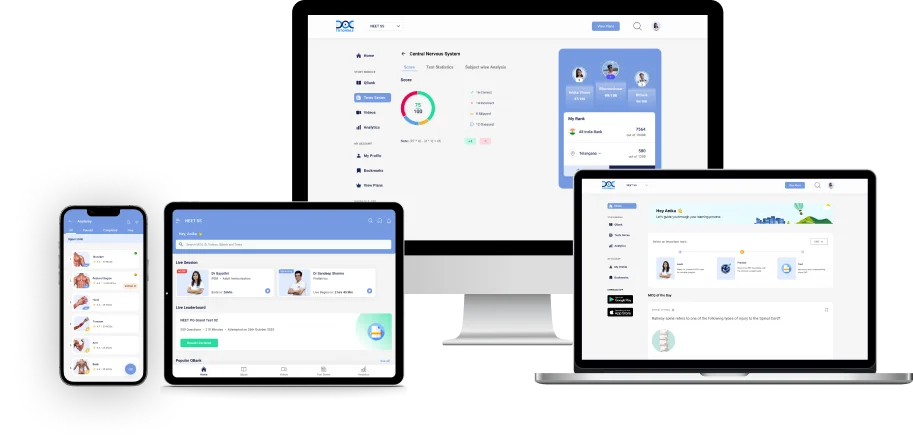
DocTutorials App Download Now

Latest Blogs

FMGE Question Paper 2026: Syllabus, Question Formats, Exam Mode, Preparation Tips, and More

FMGE Question Paper

Are you an Indian medical graduate abroad, willing to crack the FMGE 2026? Well, you are not alone in this competition—thousands of aspiring doctors strive to clear this crucial screening test. The Foreign Medical Graduate Examination (FMGE) is your ticket to a medical license in India. 

Given its huge syllabus and the toughness, having a strategic FMGE preparation plan is crucial. Fortunately, with proper resources like the FMGE previous year’s question papers, FMGE question banks, and a smart study plan, you can confidently achieve success in this exam.   

FMGE Jan 2026 Paper Analysis

FMGE Jan 2026 exam overview and recall session covering paper difficulty, subject-wise analysis, image-based and clinical questions, pattern changes, and expert faculty insights to help students assess performance and prepare ahead.

Keep reading to get a clear idea of the FMGE question paper pattern, along with a subject-wise breakdown, preparation strategies, and more.  

What is FMGE?

The Foreign Medical Graduate Examination (FMGE) is a national-level screening test organised by the National Board of Examinations in Medical Sciences (NBEMS). It is compulsory for every Indian citizen and Overseas Citizen of India (OCI) who has completed their MBBS degree outside India to clear this exam before practicing medicine in India.

Conducted twice a year, mainly in June and December, FMGE is a computer-based test (CBT) that ensures the candidate is up to the standard of Indian medical education. Knowing about the FMGE 2026 exam is more crucial than ever, considering that it will shortly be replaced by the National Exit Test (NExT).

It will help students develop a solid foundation, which will be beneficial for their NExT preparation. 

FMGE Exam Pattern 2026: An Overview

Here’s a brief overview of the FMGE 2026 exam pattern:

  • Mode of Exam: Computer-Based Test (CBT)  
  • Total Questions: 300 Multiple Choice Questions (MCQs)  
  • Duration: 5 Hours (Part A and Part B, 2.5 hours each)  
  • Time-Bound Sections: Each 2.5-hour part is further divided into three strict sections (50 questions in 50 minutes); candidates cannot skip ahead or return to a previous section once the timer expires.  
  • Marking Scheme: +1 for each correct answer; no negative marking  
  • Qualifying Marks: 150 out of 300 (50%)  
  • Division: The exam is divided into two parts (Part A and Part B) and deals with 19 medical subjects, ranging from pre-clinical to clinical. 

Click here to get a sample FMGE paper PDF

FMGE Syllabus 2026: Comprehensive Subject-Wise Breakdown

The FMGE 2026 syllabus follows the MBBS course curriculum set by the National Medical Commission (NMC), which comprises pre-clinical, para-clinical, and clinical subjects. Let’s check them out in detail:

  1. Pre-Clinical Subjects (Basic Sciences)

These are the basic subjects taught in the first half of MBBS. Although their weightage is lower, missing them can be problematic. Hence, make your preparation accurate. The major subjects involved are: 

  • Anatomy
  • Biochemistry
  • Physiology
  1. Para-Clinical Subjects

These subjects are associated with clinical practice and account for a moderate number of questions. They include: 

  • Pathology
  • Forensic Medicine
  • Pharmacology
  • Microbiology
  1. Clinical Subjects (Major Weightage)

These subjects are the major contributors to your marks and have a direct application in clinical practice and patient care. The clinical subjects comprise:

  • General Medicine
  • General Surgery
  • Obstetrics and Gynaecology
  • Ophthalmology
  • Paediatrics
  • Dermatology
  • ENT
  • Radiology
  • Orthopaedics
  • Psychiatry
  • Anaesthesia

Covering the syllabus for FMGE is not sufficient to sit for the test; you need to understand the question patterns thoroughly. Furthermore, you can consider practicing the FMGE question bank book within the scheduled time to get a better idea of the exam scenario.   

Explore our comprehensive FMGE question bank to enhance your preparation. 

Click Here to Download FMGE Last Year’s Question Paper

Subject-Wise Question Allocation: FMGE Question Paper

The FMGE question paper consists of 300 questions in total, covering a combination of pre-clinical, para-clinical, and clinical subjects. Following is a distribution of questions for each subject: 

SubjectNumber of Questions to Answer
Anatomy17
Biochemistry17
Physiology17
Pathology13
Pharmacology13
Forensic Medicine10
Microbiology13
Medicine33
Psychiatry5
Dermatology and STD5
Radiotherapy5
General Surgery32
Anaesthesiology5
Orthopaedics5
Radiodiagnosis5
Paediatrics15
Otorhinolaryngology15
Community Medicine30
Obstetrics and Gynaecology30
Ophthalmology15

Preparation Strategies for FMGE Exam 2026

To attain success in the examination and crack the FMGE test, it’s essential to follow a well-framed study plan that covers all the above-mentioned subjects. Discussed below are some effective study tips:

  • Familiarise Yourself with the FMGE Marks Distribution 

Start by determining the mark allocation for each subject. Clinical topics, including medicine, surgery, PSM, OBGYN, and community medicine, comprise more than 60–70% of the exam. Spend 70% of your preparation time on these. Short topics such as psychiatry, radiology, and anaesthesia can be revised in a matter of days.

  • Study Thoroughly and Revise Through Crisp Notes

Do not rely on bulky textbooks anymore. Instead, revise using short notes, one-liners, flashcards, and utilise smart FMGE study materials. Concentrate on major concepts and high-yield chapters instead of memorising a huge number of topics.

  • Practice FMGE Previous Year Question Papers Every Day

Practice the FMGE last 5 years’ question papers to identify question trends. Solving them assists you in identifying recurring topics and improving your MCQ speed and accuracy. In addition, use FMGE PYQ PDFs or genuine FMGE previous year question paper guides for this.

  • Attempt Mock Tests 

Take a minimum of 2–3 mock tests under simulated exam conditions well before the actual examination. This enhances time management skills, lessens exam stress, and helps develop confidence. After every mock test, go through your performance and monitor areas of improvement.

  • Keep a Mistake Diary for Last-Minute Revision

After each mock test or PYQ session, jot down wrong or tricky questions in a separate notebook. This is your reference revision tool for the final few days, preventing you from committing the same mistakes.

  • Take Breaks, Sleep Well, and Remain Positive

Do not underestimate the strength of a rested, calm mind. Make sure you are sleeping nearly 7 to 8 hours daily, drinking plenty of water, and taking regular breaks. An alert mind learns and holds information way more effectively than one that’s stressed.

  • Set Up a Realistic and Systematic Study Plan

Prepare a comprehensive study plan way before the exam. Utilise calendars, performance trackers, and exclusive FMGE study materials to strengthen your preparation. Alternate between clinical and non-clinical topics, and make self-assessment a part of your daily practice.

  • Utilise Technology

Utilise digital tools such as mobile applications and online sites for quizzes, video lectures, questionnaires, FMGE previous question papers, and progress tracking. You can get in touch with DocTutorials for detailed study materials tailored for FMGE aspirants.

  • Stay Updated with FMGE Guidelines

Look for any new updates from NBEMS on exam date, format, or syllabus revision changes. Staying informed beforehand can prevent last-minute shocks.

Click Here to Download FMGE Last 10 Years Question Papers

FAQs About FMGE Question Paper

  1. What is the structure of the question paper for the FMGE exam?

The FMGE features two papers with 150 multiple-choice questions each (300 minutes total), awarding one mark per correct response with no negative marking. 

2026 Update: Each paper is strictly divided into three 50-minute blocks of 50 questions. You cannot skip ahead or go back once a block’s timer runs out. 

  1. How can I download FMGE question papers?

To download FMGE previous year question papers, visit the official website www.natboard.edu.in, select the FMGE exam tab, and log in using your credentials. Once logged in, you can access and download the available past question papers.

  1. Is there any negative marking in the FMGE exam?

No, there is no negative marking in the FMGE examination. Hence, each student should attempt every single question. 

  1. What is the ideal duration for FMGE preparation?

A focused study period of 4 to 6 months is sufficient if you adhere to a structured schedule. However, starting earlier is advantageous.

  1. How can you enhance your FMGE preparation by utilising insights from previous exam questions?

Engaging with past-year FMGE questions enables you to pinpoint key topics, recognise prevalent question formats, and assess the exam’s difficulty. This practice hones your problem-solving abilities and helps you adjust your study approach, ultimately increasing both confidence and performance.

  1. What type of questions will there be in FMGE 2026?

All questions in FMGE 2026 are multiple-choice questions (MCQs), each with four options, of which only one is correct. Candidates must select the correct answer to earn marks.

  1. What is the syllabus for FMGE 2026? 

The FMGE 2026 syllabus covers all MBBS subjects, including pre-clinical, para-clinical, and clinical studies. Each subject carries weightage as specified in the official bulletin, ensuring a comprehensive assessment of medical knowledge.

  1. How is the FMGE computer-based format different from the paper-and-pencil format? 

The computer-based format differs only in the mode of presentation and response recording. Questions are displayed on a screen, and candidates select answers electronically, unlike paper-and-pencil exams, where answers are marked on a physical sheet.

  1. Can I take the FMGE exam from any computer?

No, candidates must take the exam on a pre-assigned workstation at the testing centre they selected during registration and scheduling. Using any other computer or location is not permitted.

  1. During FMGE, can I move back and forth between the questions?

Yes, candidates can navigate between questions within a section using the Review Screen. However, they cannot move between the two sections.

Conclusion

FMGE is more than just another examination—it’s the final hurdle in your dream of finally becoming a licensed doctor in India.  With thousands of aspirants showing up for the exam each year, your preparation should be focused, smart, competitive, and resourceful. 

Hence, apart from studying, attending lectures, group studies, video classes, etc., focus on solving FMGE question papers of previous years. 

This is where DocTutorials comes into play. Whether it’s pre-compiled FMGE previous year question papers, well-framed study materials, structured question banks, or expert-led lectures and mentorship, we have guided thousands of students in their FMGE journey. 

Check out our FMGE guide today!

DocTutorials App Download Now

Latest Blogs

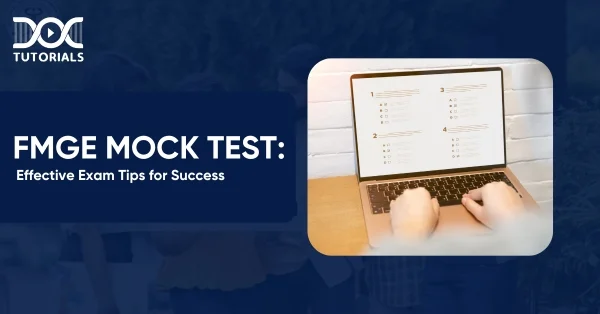
FMGE Mock Test: Effective Exam Tips for Success

FMGE Mock Test

Hundreds to thousands of medical students in India struggle to clear the Foreign Medical Graduate Examination (FMGE) every year. However, this is not due to a lack of hard work, but rather the lack of implementing innovative strategies. 

The FMGE is not a test of simple memorisation; rather, it is a test of acute clinical judgment and decision-making. That is why FMGE mock tests are the key to achieving high scores. Preparing for the FMGE exam cleverly requires many effective strategies, and online demo-free FMGE mock tests are one of them. 

Ready to boost your preparation? Continue reading to discover more about these tests and how to leverage them strategically. 

Why Should You Enroll for the FMGE Mock Test?

Mock tests offer a significant advantage for candidates who want to strengthen their preparation in key areas of the FMGE exam syllabus where they are underprepared or feel less confident. 

Taking a well-organised and demo FMGE test series will enable them to become familiar with the exam pattern and questionnaire. Additionally, this could help students manage their time more effectively.

How Can You Benefit From Mock Tests in Your FMGE Preparation?

FMGE mock tests can serve as a crucial element for your success in the exam when utilised properly. Integrating mock tests into your study routine provides numerous advantages. Here are the key reasons why students should participate in FMGE demo tests or mock tests: 

  • Familiarise with Real Exam Situation: Mock tests are like a demo of the actual FMGE format, timing, and syllabus. This alleviates exam-day tension by familiarising you with the pressure and interface well in advance.
  • Practice Under Timed Conditions: Attempting questions within the same 150-minute time frame conditions your mind to think quickly, make decisions under stress, and complete the exam within the time without panicking.
  • Sharpen Speed and Accuracy: Through successive practice, you enhance your power of speed and accuracy in solving questions, which is most important in clearing a competitive, time-bound exam like the FMGE.
  • Identify and Focus on Your Weaker Areas: Accurate analysis of tests enables you to identify your low-scoring subjects or topics. This allows you to make smarter revisions by dedicating more time to what actually needs revision.
  • Get Instant Feedback with Solutions: The majority of exemplary mock tests give instant feedback with solutions and explanations. This strengthens your learning and helps you avoid repeating the same mistakes.
  • Develop Exam Strategy: Mock testing regularly shows you how to pace yourself per section, when to skip or guess, and develop a general plan that suits you best.
  • Reduce the Probability of Making Errors: Many applicants lose marks due to minor mistakes. Repeated practice in exam-type settings keeps you on your toes and mindful, reducing these errors.
  • Develop Confidence Over Time: As your scores on mock tests increase, your confidence level will tend to increase down the line. This can be a major motivator as the actual exam date approaches.
  • Monitor Your Improvement and Development: Taking NBE FMGE mock tests periodically provides you with a clear understanding of the trends in your performance. It helps in determining how much ground you have covered and what additional efforts are needed to reach the passing mark.

Click Here to Apply for FMGE Mock Test Online

What are the Essential Tips and Tricks for FMGE Preparation?

Apart from attempting the FMGE mock test, there are several tips you should follow in order to achieve better outcomes in the examination. These include:

  • Master the Complete Syllabus Without Selectivity

Avoid falling into the trap of selective learning. Skipping one topic might cost you valuable marks. The FMGE syllabus is enormous and encompasses all pre-clinical, para-clinical, and clinical topics. A targeted approach to reading the entire syllabus, even the topics you’re weaker at, ensures you do not leave behind any gaps in knowledge. 

  • Make a Well-Structured Study Plan

With the magnitude of the FMGE syllabus, a strategic, time-framed plan is necessary. Plan your study schedule by setting daily, weekly, and monthly goals, allocating specific time for each subject.

Tackle tough subjects first and ensure that your plan includes a minimum of two revision phases before the exam. This will keep you organised and prevent last-minute anxiety.

  • Use High-Quality and Exam-Focused Study Material

Utilise concise, exam-focused resources created by subject matter experts. DocTutorials provides well-organised video lectures, clinically integrated education, and question banks tailored for FMGE candidates. This provides distinctive insight into how the topic is presented in the real exam.

  • Take Notes and Revise Regularly

Taking down important points while studying assists in quicker recall and clearer understanding. The notes serve as a rapid revision tool, particularly when there is limited time before the exam. Try to revise critical topics such as pharmacology, biochemistry, and microbiology periodically for seamless memorisation and long-term retention.

  • Work Hard on Topics You’re Weak At

Most students commit the error of concentrating solely on their well-prepared areas. To crack the FMGE exam, you should have well-rounded competence in all subjects. Identify your weak areas early on and allocate extra time to strengthen your learning curve. 

  • Practice Previous Year Questions (PYQs)

Solving previous question papers is a smart and effective approach to grasp the exam pattern, identify regularly asked questions, and understand question framing. It makes you align your preparation with actual exam trends.

Platforms like DocTutorials offer you access to years of PYQs along with explanations, which will enable you to look at trends and minimise surprises on the exam day.

  • Practice Work on MCQ Solving Techniques

Since the FMGE is a comprehensive MCQ-based exam, it is essential to master the art of solving MCQs. Study techniques such as the elimination technique, reading smartly and efficiently, and solving high-confidence questions first. Developing robust conceptual clarity can be immensely helpful in solving trickier questions.

  • Time Management During Preparation and the Exam

Devote fixed study hours daily, maintain a balance between learning, practice, and revision, and adhere to a schedule and make variations according to your progress. When actually taking the exam, allocate your time smartly so that you can avoid a last-minute rush on challenging questions.

  • Form a Study Group or Discussion Forum

Learning with fellow students allows for knowledge sharing, exposure to diverse perspectives, and a deeper understanding of the concepts. Besides, seeking assistance on doubts and tricky topics from other candidates or experts can make learning more engaging and easier to remember. 

  • Seek Expert Mentorship and Guidance

A mentor can assist you in developing a tailored plan and staying on track. They can advise you on what to learn, how to tackle challenging subject matter, and when to adjust your pace. Mentorship also assists with motivation, focus, and making decisions at the last minute.

FAQs on FMGE Mock Test

  1. Is a free FMGE mock test available online for everyone?

Yes, some educational platforms provide FMGE mock tests online for free. However, various websites do not permit free access to these assessments and require candidates to purchase a full or partial subscription in order to utilise the resources.

  1. How often should a candidate take the FMGE demo tests?

A candidate nearing the completion of the FMGE syllabus can begin by taking one mock test per week. Gradually, as the exam date approaches, they can increase the frequency to 2-3 mock tests each week to improve their exam preparation.

  1.  How many questions are there in the FMGE mock test?

The FMGE mock test consists of 150 multiple-choice questions, matching the pattern of the actual FMGE examination.

  1. What is the minimum score needed to pass the FMGE?

To successfully clear the FMGE, candidates must achieve at least 150 marks out of a total of 300. This score is the minimum requirement for obtaining medical registration with the Medical Council of India (MCI).

  1. What kind of questions are there in FMGE mock tests?

FMGE mock tests are a replica of the actual FMGE examinations, in which questions will be multiple-choice questions (MCQ) with four options, including one correct answer.

  1. Can mock tests help enhance my FMGE score?

Yes, students who take mock tests periodically can enhance not only their knowledge but also their exam-based skills, such as timing, question selection, accuracy, and speed.

  1.  Is there negative marking in the FMGE mock test?

No, there is no negative marking in either the FMGE mock test or the actual exam, so candidates are encouraged to attempt all questions.

  1.  How do I register for the FMGE mock test?

You can register through reliable mock test platforms, most of which offer free sign-up along with access to full-length tests, performance tracking, and detailed analysis.

  1.  What is the best way to use FMGE mock tests for preparation?

Attempt a full-length mock test weekly under exam-like conditions, analyse your performance carefully, identify weak areas, and revise accordingly. 

  1. Can I get into Medical PG after clearing the FMGE?

Yes. After clearing FMGE, you become eligible to appear for the NEET PG exam, through which you can apply for postgraduate medical courses in India.

Conclusion

FMGE mock tests make you exam-ready by subjecting you to real-time stress, strengthening the topics you’re underprepared in, and fine-tuning your plan. Don’t just work hard and study; instead, practice smart. 

Register at DocTutorials, perform your mock tests, and confidently crack the FMGE 2026. Get access to our FMGE course and practice our questions before undergoing a FMGE mock test online. Success in the FMGE examination depends on a systematic plan that should be developed well in advance. 

Join DocTutorials today and excel in your medical career!

DocTutorials App Download Now

Latest Blogs

FMGE Exam Date 2026 – Everything You Need to Know About the FMGE

FMGE Exam Date

The Foreign Medical Graduate Examination is the most important exam for Indian students pursuing their medical courses abroad and overseas citizens of India. Upon completion of their graduation abroad, doctors are required to take this test to be able to practice in India.

This exam is a test of their ability to adapt to the medical practices in India. This test enables foreign medical graduates to register with the Medical Council of India and their State Medical boards. 

The FMGE June 2026 is the most-awaited notification by foreign medical graduates. Every year, the FMGE examination is conducted twice, in June and December, by the National Board of Examinations in Medical Sciences (NBEMS)

You can also download the official FMGE June 2026 session notification for complete details.

Click here to download the FMGE July 2026 Results PDF 

The FMGE June 2026 exam was held on June 28, 2026, and the results were out on July 7, 2026. Here’s a timeline of the key events: 

EventDate
Availability of the Information BulletinApril 21, 2026
Online Submission of Application FormApril 21, 2026, to May 11, 2026
Date of Examination June 28, 2026
Declaration of ResultJuly 07, 2026 

In this blog, we’ll break down everything you need to know about the exam’s eligibility criteria, full syllabus, and latest testing pattern.

Eligibility Criteria 

Candidates who want to appear for FMGE must meet specific requirements. Here is a detailed eligibility criterion.

  • Applicants for FMGE must be Indian citizens or overseas citizens of India (OCIs).
  • They should have attained a primary medical qualification that is equivalent to MBBS in India.
  • They should have graduated from a recognized university, verified by the Indian embassy in that country.
  • To be eligible for the June session this year, they must have completed their graduation before 30th April 2026.

Students who have completed their graduation in countries like the United States, the United Kingdom, Australia, New Zealand, and Canada are exempt from the FMGE. 

FMGE 2026 (June) Exam Schedule

Exam Date (Based on NBEMS Tentative Schedule)June 28, 2026
FormatComputer-Based Test (CBT)
Test CentersApproximately 50 cities in India
ShiftsMorning session – 9:00 AM
Afternoon session – 2:00 PM
Exam Structure2 parts, 150 MCQs each, 2.5 hours per part
Application PeriodApril 21, 2026, to May 11, 2026
Final Application Edit WindowJune 10, 2026
Admit Card ReleaseJune 24, 2026 (Tentative)
Result Announcement July 07, 2026 

Examination Pattern

The exam is conducted in two sessions on the same day. It comprises 300 multiple-choice questions (MCQs), divided equally into two parts of 150 questions each. Both the morning session (9:00 AM to 11:30 AM) and the afternoon session (2:00 PM to 4:30 PM) last for 2.5 hours each, totaling 5 hours of exam time.

Important Update: Each 150-question session is further divided into three time-bound sections (A, B & C). You are given exactly 50 minutes to complete 50 questions per section, and you cannot move to the next section or return to a previous one once the time expires.

Each question carries one mark, and there is no negative marking. To clear the FMGE, a candidate must score a minimum of 150 out of 300 (50%).

Exam Syllabus

Since there has been an official notification about the FMGE exam date 2026, everyone wants to know about the detailed FMGE syllabus. The syllabus is in line with the MBBS curriculum in India. Foreign medical graduates are tested on pre-clinical, para-clinical, and clinical subjects. 

  • Pre-Clinical Subjects: The foundational sciences, including Anatomy, Physiology, and Biochemistry. 
  • Para-Clinical Subjects: The bridge to clinical practice, covering Pathology, Microbiology, Pharmacology, and Forensic Medicine. 
  • Clinical Subjects: The major medical disciplines, featuring Medicine, General Surgery, Obstetrics & Gynecology, Pediatrics, Community, Orthopedics, Anesthesiology, Psychiatry, and Dermatology. 

Clinical subjects are worth more points (200 marks) than pre- and para-clinical subjects. 

Preparation Tips

FMGE has a vast syllabus, and foreign medical students usually do not have enough time to prepare for the test after graduation. As the test is very competitive, you must have to start your preparation early in your medical courses. Initially, you can focus on the basics like Anatomy, Physiology, and Biochemistry, and work your way through high-yield subjects like Medicine, General Surgery, Orthopaedics, Community, and Forensic Medicine.

You can make a preparation plan that balances the syllabus for your medical graduation exams and FMGE. This saves a lot of your time.

DocTutorials offers various comprehensive study plans that fit your budget and schedule. You could take help from our compact QRPs and Q-banks to quickly revise the entire syllabus in no time. Here are some high-impact study aids from DocTutorials that could help you with your FMGE preparation.

  • High-impact Video Lectures from expert faculty.
  • Faculty-curated crisp Q-banks for practice.
  • Mock Grand Tests to help you get used to the exam pattern.
  • Expert Guidance from experienced lecturers.
  • Compact study material that covers the entire syllabus.

Exam Day Guidelines

Here are the guidelines released by NBEMS for the day of the FMGE exam date 2026. 

  • Candidates are required to report at the ‘Reporting Counter’ 30 minutes before the test. Please refer to your admit cards for test times.
  • On exam day, candidates will need to present their admit card and original ID proof at the check-in desk. An exam official will scan the admit card’s barcode and immediately assign their specific computer lab and seat number.
  • Candidates are required to bring their admit card and a valid government-issued proof of identity. It can be an Aadhaar card, a PAN card, a Passport, a Driving license, or a Voter ID. 
  • Candidates will not be allowed to take anything else beyond the security checkpoint in the examination premises under any circumstances.
  • The candidates will be frisked at the entry to the test center premises. Candidates are requested to comply with the security measures at the exam venue.
  • Finger Biometrics and a photograph of the candidates will be captured at the time of registration at the test venue in the computer-based test. 
  • Face ID shall be verified at the time of collection of the FMGE Pass Certificate, against the photographs captured on the exam day and the ones uploaded in the application form. It is crucial to upload your most recent photograph in the application to avoid a mismatch during the verification process. 
  • Any suspicious or disruptive behavior on the part of the candidate may lead to cancellation of their candidature. 

How to apply for a License after clearing the FMGE exam?

After successful completion of FMGE, you are eligible to apply for the Medical Council of India (MCI) registration to practice in India. This registration is now handled by the National Medical Council (NMC). Here is everything you need to know about the National and State registration process. 

After receiving your FMGE pass certificate, you can apply online for the MCI registration. This certificate is only valid for 5 years, so you must apply for your MCI and State Medical Council registrations before its expiration.

You would require documents like your FMGE certification, Original Medical Degree, Transcripts from your college/university, Internship completion certificate, no-objection certification from the hospital, Passport and visa copies, Medical fitness certificate, Proof of Indian citizenship, character certificate from the university, and recent passport-size photographs. 

Application Procedure  

  • Visit the official NMC website (nmc.org.in) and create an account to fill out all the application details. Upload all the necessary documents and pay the application fee.
  • Original documents need to be verified at the NMC office. Some of the documents need to be attested by the Indian embassy in the country you’ve studied in.
  • After NMC registration is approved, you must apply for the State Medical Council registration where you want to practice. 

The entire process may take anywhere between 2 months to 6 months.
The FMGE June 2026 results have finally been declared! We want to send a huge congratulations to everyone who successfully cleared the exam this year. Your hard work and late-night revisions have truly paid off. If you did not get the result you hoped for, do not lose heart; we are here to support your comeback. Whether you are celebrating a pass today or planning a strong strategy for your next attempt, DocTutorials is always here for you. 

Stay up-to-date about FMGE 2026 with DocTutorials. Let us help you take the most crucial tip in your medical career as a foreign medical graduate.

DocTutorials App Download Now

Latest Blogs

Dr Rohith Daniel – Orthopaedics

Dr Rohith Daniel | Orthopaedics

Dr. Rohith Daniel, one of the best faculties in FMGE Orthopaedics, is an Orthopaedic surgeon renowned for simplifying challenging concepts. His deep clinical knowledge and engaging teaching methods ensure that students gain a strong understanding of the subject. Dr. Daniel’s dedication to effective learning helps FMGE aspirants excel in their exams.

About Subject

What is Orthopaedics?

Orthopaedics is the branch of medicine dealing with the diagnosis and treatment of the musculoskeletal system’s disorders, including bones, joints, ligaments, tendons, and muscles. It involves both surgical and nonsurgical methods to treat injuries and diseases.

Orthopaedics

15 topics

  • Basics of Orthopaedics
  • Basics of Fractures and Fracture Healing
  • Upper limb Trauma
  • Lower Limb Trauma
  • Open Fractures and other Miscellaneous topics
  • Nerve Injury
  • Metabolic Bone Disorders
  • Tumors and Tumor Like Lesions of Bone

Concise High-Yield Videos

40 Videos

Exam-Focused QRP Videos

21 Videos

Crisp Qbank

Notes

Speciality of Orthopaedics In DocTutorials

At DocTutorials, we specialize in simplifying Orthopaedics for FMGE aspirants like you. Our dedicated faculty ensures you gain a deep understanding of Orthopaedic concepts through clear explanations, supported by illustrations and Mind Maps. We prioritize effective learning with meticulously curated videos, Edition 5 Notes, Qbank, QRP, Grand Tests, and Elite tests, all specifically tailored for FMGE Orthopaedics to ensure your success in the exam.

Top Quality Videos

Top Quality Video lectures for conceptual understanding.

Qbank

Question Bank

Practice MCQs and IBQs from our Qbank—95% aligned with previous patterns to boost your exam success.

Dr Rajesh Kaushal – Anatomy

Rajesh Kaushal

Dr. Rajesh Kaushal, one of the best faculties in FMGE Anatomy, has over 20 years of experience. Renowned for his expertise, he simplifies complex topics with conceptual clarity, clinical relevance, and line diagrams, making Anatomy easier for FMGE aspirants. His teaching has helped countless students excel, making him a highly respected mentor in the field.

About Subject

What is Anatomy?

Anatomy is the branch of medical science that studies the structure of the human body. It involves the detailed examination of the body’s bones, organs, tissues, and cells, understanding their arrangements and functions. This foundational knowledge is critical for medical professionals to diagnose, treat, and manage various health conditions.

Anatomy

11 topics

  • General Embryology
  • Histology
  • Osteology & Arthrology
  • Neuro Anatomy
  • Head And Neck
  • Back
  • Thorax
  • Upper Limb
  • Abdomen
  • Pelvis & Perineum
  • Lower Limb

Concise High-Yield Videos

Exam-Focused QRP Videos

Crisp Qbank

Notes

Speciality of Anatomy In DocTutorials

At DocTutorials, we take pride in simplifying Anatomy for FMGE aspirants like you. Our expert faculty ensures that you gain a strong understanding of Anatomy with detailed explanations and visual aids, including diagrams and Mind Maps. We focus on effective learning through carefully crafted videos, Edition 5 Notes, Qbank, QRP, Grand Tests, and Elite tests, all designed specifically for FMGE Anatomy to ensure your success in the exam.

Top Quality Videos

Top Quality Video lectures for conceptual understanding.

Qbank

Question Bank

Practice MCQs and IBQs from our Qbank—95% aligned with previous patterns to boost your exam success.

Dr Rajiv Dhawan – Otorhinolaryngology (ENT)

Rajiv Dhawan

Dr. Rajiv Dhawan, one of the best faculties in FMGE ENT, is recognized for his clinical expertise and extensive research. With a strong academic background, he simplifies complex topics through modern teaching techniques, ensuring that FMGE aspirants understand and succeed in their exams. His valuable guidance has earned him widespread respect among students.

About Subject

What is Otorhinolaryngology (ENT)?

Otorhinolaryngology, also known as ENT (Ear, Nose, and Throat), is a medical specialty dealing with disorders and conditions of the ear, nose, throat, and related structures of the head and neck. It encompasses both medical and surgical management of these areas.

Otorhinolaryngology (ENT)

5 topics

  • LARYNX
  • PHARYNX
  • Nose & Sinuses
  • Ear
  • Operative Surgeries

Concise High-Yield Videos

Exam-Focused QRP Videos

Crisp Qbank

Notes

Speciality of Otorhinolaryngology (ENT) In DocTutorials

At DocTutorials, we excel in simplifying Otorhinolaryngology (ENT) for FMGE aspirants like you. Our expert faculty ensures you gain a deep understanding of ENT concepts with clear explanations, supported by illustrations and Mind Maps. We prioritize effective learning through meticulously curated videos, Edition 5 Notes, Qbank, QRP, Grand Tests, and Elite tests, all specifically designed for FMGE Otorhinolaryngology to help you achieve exam success.

Top Quality Videos

Top Quality Video lectures for conceptual understanding.

Qbank

Question Bank

Practice MCQs and IBQs from our Qbank—95% aligned with previous patterns to boost your exam success.

Dr Nileshraj – Pharmacology

Dr. Nileshraj, one of the best faculties in FMGE Pharmacology, has over 8+ years of teaching experience. His innovative, interactive methods and case-based teaching enhance student engagement and understanding. Known for his practical application emphasis, Dr. Nileshraj’s mentorship helps FMGE aspirants develop clinical insights and excel in their exams with ease.

About Subject

What is Pharmacology?

Pharmacology is the branch of medicine that deals with the study of drugs and their effects on the body. It covers the interactions between drugs and biological systems, including drug composition, mechanism of action, properties, interactions, and therapeutic uses.

Pharmacology

14 topics

  • General Pharmacology
  • Hematopharmacology
  • Respiratory Pharmacology
  • Local Anesthetics
  • Autonomic Nervous System
  • Cardiovascular System
  • Diuretics

Concise High-Yield Videos

Exam-Focused QRP Videos

Crisp Qbank

Notes

Speciality of Pharmacology In DocTutorials

At DocTutorials, we specialize in making Pharmacology easy for FMGE aspirants like you. Our experienced faculty provides clear explanations of complex Pharmacology concepts, enhanced with illustrations and Mind Maps. We focus on effective learning through meticulously curated videos, Edition 5 Notes, Qbank, QRP, Grand Tests, and Elite tests, all specifically tailored for FMGE Pharmacology to ensure your success in the exam.

Top Quality Videos

Top Quality Video lectures for conceptual understanding.

Qbank

Question Bank

Practice MCQs and IBQs from our Qbank—95% aligned with previous patterns to boost your exam success.

Dr Sonu Panwar – Microbiology

Dr Sonu Panwar

Dr. Sonu Panwar, one of the best faculties in FMGE Microbiology, has over 15 years of teaching experience. Renowned for his clinical acumen and high-yield notes, he mentors FMGE aspirants with a strong academic foundation. His approach, which focuses on simplified concepts, has contributed to the success of numerous students in the FMGE exam.

About Subject

What is Microbiology?

Microbiology is the study of microorganisms, including bacteria, viruses, fungi, and parasites. It focuses on their physiology, genetics, and roles in disease, contributing to the development of treatments and preventive measures against infectious diseases.

Microbiology

8 topics

  • Introduction to Microbiology
  • Bacteriology
  • Mycology
  • Protozoology
  • Helminthology
  • Virology
  • Immunology
  • General Microbiology

Concise High-Yield Videos

Exam-Focused QRP Videos

Crisp Qbank

Notes

Speciality of Microbiology In DocTutorials

At DocTutorials, we are dedicated to simplifying Microbiology for FMGE aspirants like you. Our expert faculty ensures that you build a strong understanding of Microbiology concepts through clear explanations, supported by visual aids and Mind Maps. We focus on effective learning with carefully curated videos, Edition 5 Notes, Qbank, QRP, Grand Tests, and Elite tests, all designed specifically for FMGE Microbiology to maximize your exam success.

Top Quality Videos

Top Quality Video lectures for conceptual understanding.

Qbank

Question Bank

Practice MCQs and IBQs from our Qbank—95% aligned with previous patterns to boost your exam success.

Dr Priyansh Jain – Biochemistry

Pryansh

Dr. Priyansh Jain, one of the best faculties in FMGE Biochemistry, brings over 10 years of expertise. With USMLE and MRCP credentials, he integrates clinical insights with academic excellence. His seven international publications and recognition, including the President’s Award, make him a respected figure, guiding FMGE aspirants toward success with his effective teaching methodology.

About Subject

What is Biochemistry?

Biochemistry is the science that explores the chemical processes within and related to living organisms. It combines principles of biology and chemistry to understand cellular and molecular mechanisms, focusing on proteins, nucleic acids, lipids, and carbohydrates to elucidate the biochemical basis of life.

Biochemistry

11 topics

  • Amino Acids & Proteins
  • Carbohydrates
  • Lipid Metabolism
  • Molecular Biology
  • Enzyme
  • Nutrition
  • Vitamin
  • Minerals
  • Herne
  • FED State & Fasting State
  • Bio Technology

Concise High-Yield Videos

Exam-Focused QRP Videos

Crisp Qbank

Notes

Speciality of Biochemistry In DocTutorials

At DocTutorials, we excel in simplifying Biochemistry for FMGE aspirants like you. Our experienced faculty ensures that you grasp Biochemistry concepts with easy-to-understand explanations, supported by diagrams and Mind Maps. We focus on effective learning through expertly designed videos, Edition 5 Notes, Qbank, QRP, Grand Tests, and Elite tests, all tailored specifically for FMGE Biochemistry, to help you succeed in your exams.

Top Quality Videos

Top Quality Video lectures for conceptual understanding.

Qbank

Question Bank

Practice MCQs and IBQs from our Qbank—95% aligned with previous patterns to boost your exam success.

NEET PG Online Live Power Pack
DocTutorials App Download Now