Behcet’s Disease: Causes, Symptoms, Diagnosis, and Treatment
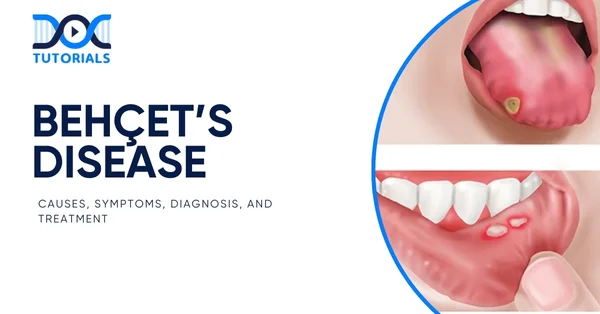
Behçet’s illness, known as Behçet syndrome, is an uncommon, multisystem inflammatory disorder that primarily impacts blood vessels and may affect the mucocutaneous, ophthalmic, vascular, and neurological systems.
Medical students getting ready for the NEET PG exam need to know about its signs and symptoms, include mouth sores, vaginal ulcers, and eye inflammation. Read further to understand the causes, symptoms, diagnosis, and management methods of Behçet disease.
What is Behçet’s Disease?
Behçet’s syndrome is an uncommon, autoimmune disease that causes inflammation. It makes the blood vessels in the body expand up. Inflammation can happen in arteries and veins of all diameters, which can cause problems in many organ systems.
Behçet’s disease is common because it is common in countries along the old Silk Road trade route. It usually shows up as severe mouth sores, vaginal sores, eye irritation, and skin lesions.
The precise aetiology of the disease is yet unidentified; research indicates its correlation with the HLA-B51 (Human Leukocyte Antigen-B51) gene and its environmental precipitants, necessitating prolonged therapy to regulate inflammation and avert severe sequelae.
What are the Causes and Risk Factors of Behçet’s Disease?
The exact cause of Behçet’s disease remains unknown but is considered to be an autoinflammatory condition, involving repeated episodes of inflammation due to immune system dysfunction.
Risk Factors of Behçet’s Disease
Listed below are the risk factors of Behçet’s disease:
- Geographical Location: Studies have revealed that the disease was most commonly associated with countries that were along the ancient Silk Road. The Middle East and Mediterranean regions showed a high prevalence of the disease.
- Ethnicity: People of Asian and Middle Eastern descent are at higher risk of the disease.
- Genetics: Behçet’s disease is associated with the HLA-B51 gene and is more common in high-risk populations.
- Age: Most common in young adults, especially between the ages of 20 and 40.
- Family History: Known cases of Behçet’s disease within the family may slightly increase the risk, although they are not considered a definite cause due to the sporadic nature of the disease.
- Environmental Triggers: Certain infectious bacterial or viral agents might trigger flares in genetically predisposed individuals.
What are the Symptoms of Behçet’s Disease?
Behçet’s disease is a chronic, relapsing, multisystem vasculitis of unknown aetiology, characterised by mucocutaneous and vascular manifestations. Listed below are the symptoms of the disease:
- Oral Ulceration: Painful shallow ulcers usually involving the non-keratinised mucosa. They are recurrent and painful, and affect almost all patients with Behçet’s Disease. The sores resemble a canker in appearance and are numerous and frequent.
- Gential Sores: Deep and well-demarcated ulcers are located on the scrotum in males and the vulva in females.
- Cutaneous Lesions: Nodule lesions, papulopustular eruptions, and acneiform nodules are typically seen in the upper and lower limb extremities.
- Ocular Manifestations: Optic uveitis is common to the condition, which requires prompt management.
- Neurological Involvement: Central nervous system involvement includes meningoencephalitis, intracranial hypertension, pyramidal signs, and brainstem syndromes.
- Gastrointestinal Manifestations: Ulcerative lesions present in the ileocecal region, which present with abdominal pain and diarrhoea.
- Vascular Involvement: Affects both the venous and arterial systems. Symptoms include thrombophlebitis, deep vein thrombosis, arterial aneurysms, and occlusive vasculitis.
- Systemic Features: Symptoms such as fatigue, malaise, and low-grade fever may be present, especially during the active stage of the condition.
What is the Diagnosis of Behçet’s Disease?
Currently, there are no definitive laboratory diagnostic methods or imaging tests available for diagnosing Behçet’s disease. However, the diagnosis is established based on the recognition of characteristics of clinical patterns.
Listed in the table below are the diagnostic criteria for Behçet’s disease:
| Criteria | Diagnostic Method | Key Features | Organ Involvement | Sensitivity | Specificity | Limitations |
| ISG(International Study Group) | Mandatory: Oral ulcers + any 2 genital ulcers, eye lesions, or skin lesions | Oral and genital ulcers, eye, skin lesions, and pathergy test. | Excludes vascular, neurological, and GI involvement | 95% | 98 % | Does not cover major organ involvement |
| Revised Japanese Criteria | Classification based on main and additional symptoms | Main:Oral ulcers, genital ulcers, eye lesions, skin lesions Additional conditions: Arthritis, gastrointestinal, central nervous system, and vascular. | Includes major organ involvement | Not specified | Not specified | Not widely used internationally |
| ICBD (International Criteria for Behcet’s Disease) | Point-based system:≥ 4 points= diagnosis | 2 points each: Oral ulcers, eye lesions 1 point each: Skin lesions, pathergy, neurological involvement. | Includes neurological and vascular features | 94.8% | 90.5% | Risk of overdiagnosis |
Other supplementary tests, such as blood tests, urine tests, X-rays, CT (computed tomography) scans, MRI (magnetic resonance imaging) scans, and biopsies, can aid in the diagnostic procedure of Behçet’s disease.
What are the Treatment Methods for Behçet’s Disease?
The treatment of Behçet’s disease depends on the severity and organ system involved. Listed below are the treatment methods used based on the type of manifestation:
- Mucocutaneous Manifestation
- Oral and Genital Lesions: Topical triamcinolone acetonide (3-4 x daily till pain subsides), topical suralfate (1g/5mL), or topical anaesthetics which provide temporary relief.
- Prevention of Recurrence: Colchicine and apremilast are used to prevent recurrence.
- Refractory Lesions: Prednisone (15mg/day), Azathioprine, and interferon alfa-2a.
- Cutaneous Lesions
- Mild Lesions: Colchinie (1-2mg/day in divided doses)
- Unresponsive Lesions: Prednisolone (40 mg/day)
- Erythema Nodosum: Prednisone (40-60 mg/day) + Azathioprine (up to 2.5 mg/kg/day)
- Arthritis
- Initial: Colchicine (1-2 mg/day) + NSAIDs (nonsteroidal anti-inflammatory drugs)
- Uncontrolled: Prednisone 10 mg/day
- Refractory: Azathioprine or TNF-alpha inhibitors
- Severe/Persistent: Interferon alfa and methotrexate
- Gastrointestinal Diseases
- Prednisone (0.5–1 mg/kg/day) + Azathioprine
- Taper steroids over 2–3 months to 10 mg/day
- Azathioprine titrated up to 2.5 mg/kg/day
- Ocular Involvement
- Anterior Uveitis: topical corticosteroids such as scopolamine and cyclopentolate
- Posterior Uveitis: Oral prednisone and azathioprine
FAQs About Behçet’s Disease
- Can Behçet’s disease be cured permanently?
No, Behçet’s disease has no permanent cure. However, proper medical management helps in the control of symptoms and improves quality of life with regular monitoring and treatment.
- Is Behçet’s disease hereditary?
Behçet’s disease is not completely hereditary, but shows a genetic predisposition, especially with the presence of the HLA-B51 gene. It develops more often in specific ethnic groups with certain environmental and immune factors.
- What are the early warning signs of Behçet’s disease?
Recurrent oral and genital ulcers are the main features of the condition. Early recognition is essential to prevent neurological damage.
- What is the role of the pathergy test in diagnosis?
The pathergy test is used to determine nonspecific skin hyperreactivity to minor trauma. The appearance of a papule or pustule at the needle site within 24–48 hours supports the diagnosis of Behçet’s disease, although results can vary based on ethnicity and geographic region.
Conclusion
Behçet’s disease is a chronic inflammatory disease that requires a diverse multidisciplinary approach. It usually affects the blood vessels and is characterised by recurrent oral and genital ulcers, skin lesions, and ocular inflammation. Therefore, early identification and prompt treatment management are essential.
Platforms like DocTutorials offer structured clinical insights that help you give your best performance in NEET PG. With precise concepts, expert guidance, and high-yield revisions, you can prepare with clarity and confidence.
Join DocTutorials today and explore our NEET PG course to excel in your medical career.


Latest Blogs
-

INI CET Exam 2026: Your Roadmap to Success – Key Topics, Strategies, and Lessons from Last Year’s Papers
The INI CET exam is more than just a test; it’s a significant milestone for many medical students aiming to…
-

INI CET Exam Success: Previous Year Question Papers & Ultimate Guide – INI CET PYQ
One can feel overwhelmed while preparing for the INI CET (Institute of National Importance Combined Entrance Test). A vast syllabus,…
-

NEET PG 2026 Preparation with Live Power Pack: Your Path to Success in 2026
Preparing for the NEET PG 2026 can be an overwhelming journey because of its vast syllabus and the pressure to…