Retinoblastoma: Causes, Symptoms, Diagnosis, and Treatment
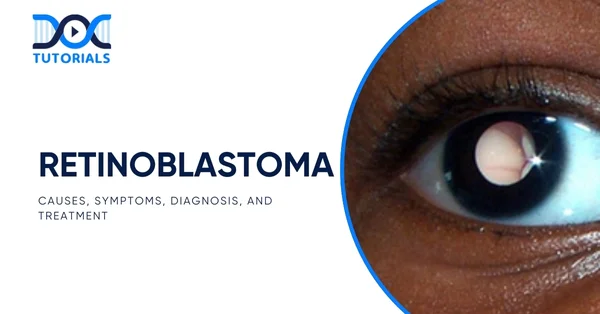
Retinoblastoma is an uncommon malignancy, occurring in 1 out of 18,000 births, but it is the most common primary intraocular malignancy of childhood, representing roughly 3% of cancer cases in children. It is also the second most frequent intraocular malignancy after uveal melanoma. The prognosis can be as high as 95% in referral centres, with preservation of vision in the majority of patients. However, outcomes are notably poorer in developing countries due to delayed diagnosis and limited access to care.
Knowledge regarding the aetiology, clinical presentation, and risk factors of retinoblastoma is required for early diagnosis and proper long-term management. This is not only essential for NEET PG medical students to prepare for exams, but it is also essential in developing a strong clinical knowledge base and enhancing outcomes of patient care.
Read on to learn more!
What is Retinoblastoma?
The retina is a light-sensitive tissue that covers the back portion of the eye. It is primarily responsible for sight by responding to light, transforming it into electrical impulses, and passing information to the brain to generate images.
The retina, at birth, contains immature cells called retinoblasts. They are supposed to develop into normal retinal nerve cells. If the cells start growing abnormally because of some changes, they tend to cause retinoblastoma. This condition develops when retinal nerve cells acquire genetic mutations that result in abnormal growth and conversion into a cancerous tumour.
During infancy and early childhood, these retinal cells divide rapidly to permit normal eye development. However, if mutations occur, then abnormal growth leads to a tumour. Babies and young children are therefore at the most significant risk, with an average age of diagnosis of approximately 2 years. It is seldom diagnosed in children over 6.
What are the Symptoms of Retinoblastoma?
Since retinoblastoma is most prevalent in infants and young children, parents are most likely to see that something is wrong with the child’s eye first. The affected eye may look unusual, irritated, or the child’s vision might seem abnormal.
Some of the typical retinoblastoma symptoms include:
- Pupil appearing as white instead of the usual black (called leukocoria), caused by light reflecting off the tumour
- A misaligned or crossed eye (strabismus), where one eye turns toward the nose or ear
- Distorted or poor vision
- Redness or irritation of the eye
- Eye pain
- Bulging of the eye (proptosis)
- A pupil or eyeball that is larger than usual (buphthalmos)
- Iris colours that are not the same in each eye
If the tumour is not diagnosed in its initial stages and not treated, it can spread outside the eye. It can spread to the second eye, surrounding tissues, brain, spine, or even distant organs by the bloodstream. Metastasis of retinoblastoma can be related to the following symptoms:
- Unexplained loss of weight or failure to thrive
- Nausea or vomiting
- Recurrent headaches
- Neurologic abnormalities
- Pain in any location in the body
- Irritability or mood change
- Severe fatigue or exhaustion
What are the Causes of Retinoblastoma?
Retinoblastoma is caused by a mutation of one particular gene that controls cell growth and division. When this gene becomes damaged, it is unable to prevent cells in the retina from growing out of control.
Most develop accidentally in one cell in the retina, causing a tumour in one eye. Other children inherit a defective copy of the gene from one or both parents. These inherited mutations are present in every cell of the child’s body and have a tendency to form tumours in both eyes. Children with inherited retinoblastoma are also more likely to develop other kinds of cancers and can pass the mutation on to their children.
What are the Risk Factors of Retinoblastoma?
There are several factors that can contribute to the increased risk of developing retinoblastoma:
- Age: In most cases, the condition is diagnosed in young children and infants, usually by age 2. It is seldom diagnosed later in life.
- Inherited Genetic Mutations: The offspring inherit gene mutations, which predispose them to retinoblastoma. Such individuals tend to develop the condition at a younger age and have a higher likelihood of developing tumours bilaterally.
How is Retinoblastoma Diagnosed?
It is most often parents or caretakers who initially recognise that there is a white glow in the child’s eye. They will then tell the child’s paediatrician, who then goes ahead and inspects the eye and confirms leukocoria.
If leukocoria is noted, the child will be referred automatically to a specialist, an ophthalmologist, for further assessment. Such experts may have to examine the inside of the eye, which may entail dilation of the pupils with special eye drops or, in young children, an extensive eye examination under anaesthesia.
Various imaging studies are employed to diagnose and determine the spread of the tumour. These are:
- Ultrasound: Useful in detecting calcium deposits within the eye, a frequent characteristic of retinoblastoma.
- CT Scan (Computed Tomography): It is helpful in detecting calcifications and provides a clear view of the eye’s structure.
- MRI Scan (Magnetic Resonance Imaging): Provides high-definition images of soft tissue and is particularly excellent at determining the size and spread of the tumour. While it takes longer and is more expensive than other scans, it is helpful in examining both eyes as well as the brain to detect a possible spread.
- PET Scan (Positron Emission Tomography): This scan can be used during the early stages or much later to identify if the cancer has spread to other body regions or if new tumours have developed.
What is the Treatment of Retinoblastoma?
Treatment of retinoblastoma is typically a collection of medical procedures that can be administered sequentially or in combination, depending on the individual case. Some of the common treatments include:
- Chemotherapy
It is a drug-based approach targeting cancer cells. It may make surgery unnecessary at times and decrease the size of the tumour to make the treatment simpler. Chemotherapy may be localised (administered by injection via arteries) or systemic (administered intravenously). The method utilised depends on the location of the tumour and also the tumour stage.
- Radiation Therapy
Tumour cells are destroyed with the help of beams of high energy. External beam radiation therapy (EBRT) or internal, like brachytherapy, are a few examples. Radiation therapy must be avoided unless there is no other possible treatment method remaining, as it has a possibility of causing permanent side effects.
- Focal Therapies (Laser, Cryotherapy, Thermotherapy)
These treatments target and kill tumour cells directly. Heat-based approaches like thermotherapy or laser therapy and cold-based cryotherapy are commonly used based on tumour location.
- Surgery
Surgery is indicated if there is any possibility that the tumour might spread beyond the eye. Enucleation, i.e., removal of the eye, is done in such a case. This typically happens when the tumour is advanced and the eye has already lost function.
- Supportive Therapies
They are employed to treat side effects like nausea induced by chemotherapy. Each patient may need diversified supportive care, which their healthcare providers customise to maximum comfort and response.
FAQs About Retinoblastoma
- How does retinoblastoma affect vision?
Unless it is treated, retinoblastoma will spread throughout most of the eyeball and interfere with the eye’s proper functioning. The tumours can block fluid flow within the eye and cause increased internal pressure, leading to the development of glaucoma. Glaucoma will also damage vision severely, resulting in partial or total vision loss in the eye.
- Does retinoblastoma require surgery?
Treatment is usually a combination of medical procedures such as chemotherapy, laser treatment, or cryoablation. Some cases may also use radiation treatment. However, enucleation, or removal of the eye, is only done if necessary, particularly in cases where there is a risk of cancer spreading or when other forms of treatment would not be effective.
- What happens if retinoblastoma is not treated?
If not treated, the tumour will continue to grow until it fills most or all of the eye. It may then invade surrounding tissue and obstruct the passage of fluid, leading to pressure and even blindness. Retinoblastoma is generally diagnosed early in the majority of cases, which is crucial in preventing complications.
- How to prevent retinoblastoma?
Retinoblastoma cannot be avoided because it’s hereditary in origin. However, early diagnosis through screening, particularly for children with a family history, can ensure that treatment begins before the condition progresses.
- Can retinoblastoma cause blindness?
Yes, retinoblastoma can destroy the very building blocks of the eye. It can cause partial or even total blindness of one or both eyes if not treated. Being a tumour, it can also spread to the rest of the body if not treated at the right time.
Conclusion
A retinoblastoma diagnosis is overwhelming, but progress in research and treatments holds hope. Clinical trials are an entrance to the latest treatments. Ask your physician if such opportunities can be pursued. Support groups also provide help and encouragement for families.
For NEET PG aspirants, it is crucial to study diseases like retinoblastoma. DocTutorials offers quality video lectures, quick revision courses (QRPs), and short notes to assist your preparations.
Join us today at DocTutorials and check out our NEET PG course to prosper in your medical profession!
Latest Blogs
-

INI CET Exam 2026: Your Roadmap to Success – Key Topics, Strategies, and Lessons from Last Year’s Papers
The INI CET exam is more than just a test; it’s a significant milestone for many medical students aiming to…
-
INI CET Exam Success: Previous Year Question Papers & Ultimate Guide – INI CET PYQ
One can feel overwhelmed while preparing for the INI CET (Institute of National Importance Combined Entrance Test). A vast syllabus,…
-

NEET PG 2026 Preparation with Live Power Pack: Your Path to Success in 2026
Preparing for the NEET PG 2026 can be an overwhelming journey because of its vast syllabus and the pressure to…