Cunningham’s Manual of Practical Anatomy: Overview, Features, and Latest Edition
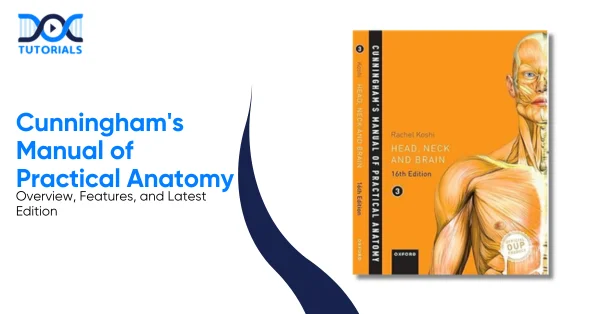
For years, Cunningham Dissection Manual has been a trusted guide for learning dissection. If you’re in your 1st-year MBBS, you need simple, practical guidance to understand the dissection process. This manual is a practical, step-by-step roadmap to navigating the complexities of the human cadaver.
Its comprehensive nature justifies its status as an indispensable tool for 1st-year MBBS students. Keep reading to know more Cunningham Practical Anatomy, its evolution, key features, latest edition and much more.
Overview of the Cunningham’s Manual of Practical Anatomy
Unlike other reference books, Cunningham Book of Anatomy helps you understand how different body parts are connected and positioned in relation to each other. It gives you a clear 3D view of the human body, making it easier to grasp how everything works together.
The Cunningham’s Manual of Practical Anatomy is a specialised guide to lead students through the intricacies of cadaver dissection. It is not like your descriptive textbooks, which focus on theory.
This Cunningham Dissection Manual emphasises the spatial relations between structures to equip you with a 3D understanding of the human body. This 3D view is important for your future in surgery. It helps you see where structures are and work more accurately and confidently.
With the use of latest edition of Cunningham’s Anatomy, it helps you connect what you learn in dissection with real clinical practice through updated terms and relevant clinical links. It also shows how to relate what you see in the dissection hall with imaging like CT (computed tomography) scans and MRIs (magnetic resonance imaging).
This makes it easier to understand how anatomy appears in real patients, helping you learn in a way that is useful for modern clinical work.
Why is Cunningham’s Anatomy Important for 1st-year MBBS Students?
Cunningham book of Anatomy is a practical guide for 1st-year MBBS students to master surgical skills. It is a tactile roadmap covering step-by-step instructions and detailed illustrations to seamlessly integrate with your clinical experience.
The Cunningham Anatomy series remains the definitive choice for medical students. Its unparalleled legacy in guiding systematic human dissection is why medical students make it their go-to dissection book.
While other textbooks focus mainly on theory, the Cunningham Manual gives you a practical, hands-on way to understand the 3D structure of the human body. Here are the reasons why you need Cunningham’s Anatomy textbook in your 1st-year of the MBBS course:
- Step-by-Step Instructions: The manual is a handy tool because it breaks down complex regions, such as your thorax, abdomen, and head, into more manageable, logical sections.
- Detailed Illustrations: Every Cunningham Anatomy Book has high-fidelity diagrams to mirror what you actually encounter on the dissection table.
- Clinical Integration: Most chapters have “Clinical Application” sections that help you link your anatomical findings to real-world medical conditions. These are pretty useful in cases like hernias, nerve palsies, and vascular blocks.
- Osteology Integration: The book integrates the osteology section with a review of relevant bones. It provides a skeletal framework before soft-tissue dissection.
- Surface Anatomy: Before performing your first incision, it guides you on how to palpate bony landmarks. This step is a skill vital for clinical physical examinations.
- Dissection Checklists: The latest editions even include checklists to ensure that no nerves or small vessels are destroyed during the process.
While considering the Cunningham Anatomy price, you should review it as a long-term investment. The cost varies. However, the value offered by a high-quality Cunningham book of Anatomy lasts throughout your entire phase of surgical or radiological residency.
Key Features of the Cunningham Dissector
Cunningham’s Anatomy is a structured guide for learning dissection. It is divided into 3 volumes covering the limbs, the thorax and abdomen, and the head, neck, and brain.
This latest series of the Cunningham dissector is your silent mentor inside the anatomy lab. It offers precise instructions on where to make initial skin incisions and how to systematically reflect tissues. The Cunningham’s Anatomy book helps you understand the importance of both steps in revealing the deeper neurovascular bundles and organ systems.
Cunningham Anatomy’s Current Edition Volumes
The Cunningham Anatomy Dissection’s latest curriculum features 3 distinct volumes. The three volumes collectively ensure a logical learning flow:
- Cunningham Anatomy Volume 1: Covers the upper and lower limbs, establishing the foundation of musculoskeletal anatomy.
- Cunningham Anatomy Volume 2: Focuses on the thorax and abdomen, essential for understanding internal organ systems.
- Cunningham Anatomy Volume 3: Details the head, neck, and brain, arguably the most challenging part of the Cunningham Lab Manual.
Overview of the 3 Volumes of Cunningham Anatomy
Cunningham Anatomy is your definitive roadmap to enter the dissection hall. It offers tactile guidance for mastering every human anatomical structure. The standard curriculum is organised into three distinct volumes, ensuring a logical learning progression throughout your 1st year of the MBBS course.
Cunningham Anatomy Volume 1: Upper and Lower Limbs
The Cunningham Anatomy Volume 1 establishes your foundation of musculoskeletal anatomy by focusing primarily on the upper and lower limbs. This volume is essential for understanding the mechanics of human movement and the distribution of your major neurovascular bundles.
You can use the Cunningham dissector to identify complex structures such as the brachial plexus and the femoral triangle. It is important to understand the mechanisms of these regions is crucial for your university viva and competitive exams, such as NEET PG.
Cunningham Anatomy Volume 2: Thorax and Abdomen
As you progress, the Cunningham’s Manual of Practical Anatomy drives you through the core of the human body. This volume focuses on your thorax and abdomen, which are crucial for understanding your internal organ system. It offers you a guided understanding of your heart, lungs, and abdominal viscera.
Referring to the Cunningham dissection manual for these regions helps you understand and appreciate the 3D relationships among organs. For example, you should be thorough in layering your abdominal wall, both in theoretical and practical exercises. This approach would build your future surgical proficiency.
Cunningham Anatomy Volume 3: Head, Neck, and Brain
The final and most challenging part of the Cunningham Lab Manual is Volume 3. It offers a detailed and guided understanding of your head, neck, and brain. These are the areas where you have high densities of vital neurovascular structures. The Cunningham’s Anatomy Dissection process for the cranial cavity requires you to be precise and patient.
How to Master Cunningham’s Anatomy Textbook?
To master Cunningham’s series, you need a three-phase workflow – pre-lab, in-lab, and post-lab. This competency-based medical education (CBME) curriculum is a real-time guide to correlate your clinical findings with the anatomy manual theory.
To use Cunningham’s Anatomy textbook effectively, you need to adopt a structured approach. It differs from reading your standard biochemistry and physiology textbooks.
Practical Dissection Workflow
| Phase | Action for Students |
| Pre-Lab Prep | Read the dissection manual Cunningham section before the lab. |
| In-Lab Execution | Use the Cunningham manual of practical anatomy, the latest edition, for real-time guidance. |
| Post-Lab Review | Correlate findings with the Cunningham anatomy manual theory. |
Cunningham Dissection builds your tactile skills and patience. Whether you are using Cunningham’s Manual of Dissection to study your upper limb or the complex cranial cavity, your goal should be to preserve every understanding related to nerves and vessels along with their functional continuity.
Ensure that you read the Cunningham Manual of Practical Anatomy latest edition. This edition is crucial because it contains the evolving medical standards and terminologies. Modern editions are focused on a “functional” approach.
They show you how your muscles work in groups rather than in isolation. It is important to understand this approach is a major focus of current MBBS university exams.
What Makes the Cunningham Anatomy Latest Edition Special for MBBS?
The latest edition of Cunningham’s Anatomy Manual provides an efficient learning structure with precise summaries at the start of each chapter. Its enhanced visuals, 3D correlations, and integrated clinical correlation make it your perfect clinical companion in your surgical journey.
The Cunningham Anatomy, latest edition, is designed to fulfil all your requirements about the competency-based medical education (CBME) curriculum. It offers you a clear understanding of each with a precise summary at the start to ensure your study stays focused and efficient.
- Enhanced Visuals and 3D Correlation
The earlier editions focused much on the text. However, the Cunningham manual of practical anatomy, latest edition, comes with new features and vibrant, colour-coded illustrations. Such diagrams assist you with your Cunningham Dissector to identify thin nerve branches and deep-seated vessels.
- Integrated Clinical Correlation
Cunningham Anatomy book stands out in its “Clinical Application” boxes. When you link your Cunningham dissection process to the common surgical procedures, it makes you feel that your subject is relevant to your future study as a physician.
For instance, while dissecting the axilla, the latest edition of this book offers useful insights into the stages of breast cancer and lymph node clearance.
FAQs about Cunningham Anatomy Manual
1. What is the primary focus of Cunningham’s Manual of Practical Anatomy?
The Cunningham’s Manual of Practical Anatomy is designed as a guide for dissecting the human cadaver. It largely focuses on spatial relationships and structural identification.
2. How should you use the Cunningham Manual effectively during your lab sessions?
Start with the basics. Read the specific dissection steps in your dissection manual, Cunningham, before you enter the dissection hall. This guided understanding helps you to maximise your hands-on time.
3. Is the Cunningham Anatomy latest edition different from older versions?
Yes, the Cunningham Anatomy, latest edition, is different from earlier editions. This edition includes updated anatomical terminology and integrates modern clinical imaging. You will have a detailed understanding of procedures like CT and MRI.
4. How many volumes are included in the Cunningham Anatomy Manual set?
The Cunningham’s Manual of Practical Anatomy typically consists of 3 volumes:
- Cunningham Anatomy Volume 1 (Limbs)
- Cunningham Anatomy Volume 2 (Thorax/Abdomen)
- Cunningham Anatomy Volume 3 (Head/Neck)
5. Is the Cunningham manual of practical anatomy useful for NEET PG?
Yes, it is quite useful in your NEET PG preparation. It helps you to build a foundational spatial memory and clinical correlation. This is an utmost requirement for your high-yield NEET PG anatomical questions.
6. Can you use Cunningham’s Manual of Practical Anatomy for quick revisions?
Yes, you can use your manual for your quick last-minute revisions. While highly detailed for lab work, it is best supplemented with medical platform’s summary videos.
7. How does Cunningham Anatomy differ from a standard manual or reference?
Other textbooks, such as Grey’s or Vishram Singh, focus on theoretical descriptions; Cunningham’s Anatomy is a dissector. It offers step-by-step instructions on identifying nerves and moving muscles.
8. Are the illustrations in the book sufficient from an exam point of view?
The manual has sufficient line diagrams and cross-sectional views for lab purposes. However, for viva-voce and theory exams, many students prefer to pair this book with a colored atlas (such as Nettar’s).
9. Why does Cunningham’s Manual emphasise ‘Spatial Memory’?
Cunningham’s manual redirects your focus to understanding 3D relationships. This spatial memory is the difference between ‘rote learning’ and actually equipping oneself to identify them during exam time.
10. Is clinical correlation included in the latest edition of Cunningham Anatomy Manual?
Yes, the latest editions have clinical notes. These notes help students to associate the anatomical structures with common medical conditions, such as pleurisy or carpal tunnel syndrome.
Conclusion
As you go through your MBBS dissection journey, Cunningham’s Anatomy Manual can help you stay clear and organised in your learning. It supports you in understanding human anatomy in a practical way, building a strong base that is useful later in areas like surgery, radiology, and clinical diagnosis.
For structured academic support, DocTutorials can be your study partner. We offer 3D & 2D animated videos, CBME-based video lectures, and structured mentorship and guidance by experts. This ensures aspirants gain complete clarity over complex medical concepts.Join DocTutorials today and explore our MBBS curriculum to excel in your medical career.

Latest Blogs
-

9 Essential MBBS Preparation Tips for Success
Achieving the dream of becoming a doctor is not easy. You need to be determined and have the right mindset…