Principles of Physiology by Debasis Pramanik: A MBBS 1st Year Guide
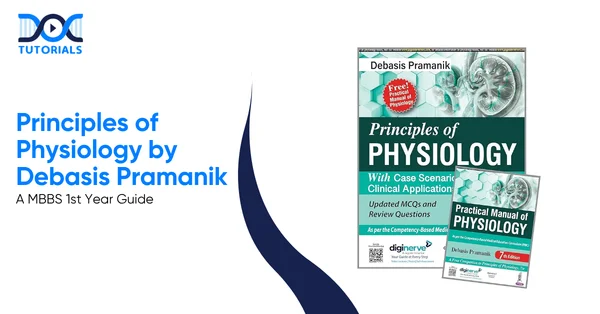
For 1st-year MBBS students, studying anatomy is essential to build a strong foundation in medical science. In this regard, principles of anatomy and physiology, as outlined in standard textbooks such as Principles of Physiology by Debasis Pramanik, are a highly recommended approach that helps students understand complex concepts clearly.
Keep reading to learn more about why principles of anatomy & physiology play a crucial role in building conceptual clarity and strengthening medical fundamentals for MBBS students.
Overview of Principles of Physiology by Debasis Pramanik
The Principles of Physiology presents updated physiological concepts using flowcharts, tables, and highlighted points. Its structured sections cover all major systems, helping students understand complex topics easily and build strong fundamentals in physiology.
Debasis Pramanik’s physiology book introduces updated concepts with coloured boxes highlighting key points and advanced topics. It simplifies learning through flowcharts and tables, making complex mechanisms easier to understand. It is similar to structured approaches seen in Principles of Anatomy and Physiology, 14th edition.
The content is organised into 12 sections covering general physiology, nerve-muscle, haematology, and major systems such as respiratory, cardiovascular, digestive, excretory, endocrine, and nervous. It concludes with the special senses for a complete understanding of the principles of human physiology.
Key Features of the Principles of Physiology
The Principles of Physiology book offers comprehensive coverage, practical exercises, clear diagrams, and a student-friendly format. Its updated content, assessment tools, and interdisciplinary approach help students understand and retain physiological concepts effectively.
The physiology Debasis Pramanik book is designed to provide a comprehensive and student-friendly learning experience. Its structured approach and updated content make it highly useful for MBBS students. The key features are as follows:
- Comprehensive Coverage
The book covers all essential physiological concepts, including cellular functions, organ systems, and homeostasis. It ensures students develop a strong understanding of how different body systems function and interact effectively.
- Practical Exercises
It includes laboratory experiments and demonstrations that help students apply theoretical knowledge in practical settings. It improves their understanding of physiological processes and strengthens their skills during practical and clinical sessions.
- Illustrative Diagrams
Simple illustrations and labelled drawings make up the complex physiological processes. Therefore, students find it easy to visualise physiological processes and improve their comprehension, memorisation, and recall, enabling them to share in exams and discussions.
- Student-Friendly Format
The content is presented in a clear, logical structure with easy-to-understand explanations. It is not hard to follow at different levels, and it can easily guide readers through simple to complex concepts in physiology.
- Assessment Tools
The book can also consist of self-assessment questions and quizzes that can assist the students to assess their knowledge, identify their areas of weakness and enhance their preparation in case of university examinations, viva, and competitive medical entry examinations.
- Interdisciplinary Approach
It also bridges the gap between physiology and other related sciences like biochemistry, genetics and pharmacology. It enables the students to see how the medical sciences are put together and how they can apply to clinical practice and patient care.
- Updated Content
The book represents the latest developments and ongoing studies in the field of physiology. It ensures that students are exposed to accurate, up-to-date information relevant to modern medical education and subsequent clinical practice.
Principles of Physiology: Table of Contents Overview
This book offers a comprehensive, well-structured syllabus covering all physiological systems through organised sections, helping students build concepts, revise efficiently, and prepare effectively for academic and competitive medical examinations.
Principles of Physiology Debasish Pramanik helps students build strong concepts and simplify complex processes. It enhances clinical understanding while supporting exam preparation, retention, integrated learning, and development of effective clinical thinking skills.
The structured layout helps students revise theoretical concepts while preparing effectively for medical entrance and university examinations. Here is an overview of the table of contents:
Appendices
- Appendix I: Additional Topics on Exercise Physiology
- Appendix II: Some More Updates
- Index
Section I: General Physiology
- Chapter 1: Structure of a Cell
- Chapter 2: Genes and Protein Synthesis
- Chapter 3: Transport Proteins in the Cell Membrane
- Chapter 4: Transport Across Cell Membranes
Section II: Nerve Muscle Physiology
- Preliminary Pages
- Appendix I: Additional Topics on Exercise Physiology
- Appendix II: Some More Updates
- Chapter 5: Resting Membrane Potential
- Chapter 6: Action Potential
- Chapter 7: Neuromuscular Junction
- Chapter 8: Mechanism of Muscle Contraction
- Chapter 9: Properties of Skeletal Muscle
Section III: Haematology
- Chapter 10: Functions of Blood and Blood Volume
- Chapter 11: Composition of Blood and Plasma Proteins
- Chapter 12: The Red Blood Cells
- Chapter 13: Haemoglobin
- Chapter 14: White Blood Cells
- Chapter 15: Platelets and Blood Coagulation
- Chapter 16: Blood Group
- Chapter 17: Immunity
Section IV: Respiratory System
- Chapter 18: Introduction
- Chapter 19: Lung Ventilation
- Chapter 20: Mechanism of Breathing
- Chapter 21: Oxygen Transport
- Chapter 22: CO2 Transport
- Chapter 23: Neural Regulation of Respiration
- Chapter 24: Chemical Control of Respiration
- Chapter 25: Miscellaneous Topics (Respiration)
- Chapter 26: Lung Function Tests
- Chapter 27: Respiratory Diseases
Section V: Cardiovascular System
- Chapter 28: Functional Anatomy
- Chapter 29: Characteristics of Cardiac Muscle
- Chapter 30: Cardiac Cycle, Venous Waves, and Venous Return
- Chapter 31: Cardiac Output
- Chapter 32: Cardiovascular Regulation
- Chapter 33: Blood Pressure and Its Regulation
- Chapter 34: Heart Rate
- Chapter 35: Cerebral Circulation
- Chapter 36: Coronary Circulation
- Chapter 37: Other Circulations
- Chapter 38: Electrocardiogram
- Chapter 39: Effect of Gravity and Exercise on Circulation
- Chapter 40: Hemodynamics
- Chapter 41: Circulatory Shock
- Chapter 42: Cardiac Failure
Section VI: The Digestive System
- Chapter 43: Introduction
- Chapter 44: Gastrointestinal Hormones
- Chapter 45: The Salivary Glands and Saliva
- Chapter 46: The Stomach
- Chapter 47: Exocrine Pancreas
- Chapter 48: The Liver
- Chapter 49: Small Intestine
- Chapter 50: Movements of the GIT
- Chapter 51: Digestion
Section VII: Excretory System
- Chapter 52: Nephron
- Chapter 53: Glomerular Filtration
- Chapter 54: Tubular Reabsorption
- Chapter 55: Concentration of Urine
- Chapter 56: Regulation of Acid-base Balance
- Chapter 57: Features of Urine
- Chapter 58: Micturition
- Chapter 59: The Skin
Section VIII: Metabolism
- Chapter 60: Enzymes and Carbohydrate Metabolism
- Chapter 61: Protein Metabolism
- Chapter 62: Lipid Metabolism
- Chapter 63: Vitamins and Nutrition
Section IX: Endocrine System
- Chapter 64: Mechanism of Hormone Action
- Chapter 65: The Pituitary Gland
- Chapter 66: Thyroid Gland
- Chapter 67: Adrenal Cortex
- Chapter 68: Adrenal Medulla
- Chapter 69: Calcium-related Hormones
- Chapter 70: Endocrine Pancreas
Section X: Reproductive System
- Chapter 71: Sex Differentiation
- Chapter 72: Male Reproductive System
- Chapter 73: Female Reproductive System
- Chapter 74: Pregnancy and Lactation
Section XI: Nervous System
- Chapter 75: Anatomical Considerations
- Chapter 76: Neuron
- Chapter 77: Synapse
- Chapter 78: Receptor
- Chapter 79: Reflex
- Chapter 80: The Sensory System
- Chapter 81: Motor System
- Chapter 82: Cerebellum
- Chapter 83: Basal Ganglia
- Chapter 84: Muscle Tone
- Chapter 85: Maintenance of Posture and Equilibrium
- Chapter 86: Hypothalamus
- Chapter 87: Autonomic Nervous System
- Chapter 88: Thalamus
- Chapter 89: Sleep and EEG
- Chapter 90: Neurotransmitters
- Chapter 91: Cerebral Cortex
- Chapter 92: The Limbic System
- Chapter 93: Higher Functions
Section XII: Special Senses
- Chapter 94: Structure of the Eye
- Chapter 95: Optics of the Eye
- Chapter 96: Photochemistry
- Chapter 97: Visual pathway
- Chapter 98: Miscellaneous Topics
- Chapter 99: Hearing
- Chapter 100: Taste Sensation
- Chapter 101: Olfactory Sensation
This book provides a complete resource for mastering physiology, ensuring strong fundamentals, a better understanding, and success in MBBS exams and clinical learning.
How Do the Principles of Physiology Help Medical Students?
Principles of Physiology help students build strong concepts, simplify complex processes, enhance clinical understanding, improve problem-solving, and support exam preparation while promoting integrated learning, retention, and effective clinical thinking skills.
The principles of physiology play a crucial role in shaping a strong medical foundation for MBBS students by helping them understand how the human body functions in normal and diseased conditions, including concepts from principles of human physiology.
Here’s how it supports their learning:
- Builds Strong Conceptual Foundation
It helps students understand basic physiological mechanisms, creating a solid base for advanced subjects like pathology, pharmacology, and clinical medicine throughout their MBBS journey.
- Simplifies Complex Processes
Difficult concepts such as nerve conduction, muscle contraction, and metabolism are explained in a simplified manner, making it easier for students to grasp and retain information effectively.
- Enhances Clinical Understanding
By linking physiological concepts to real-life medical scenarios, students develop a better understanding of disease processes, diagnosis, and treatment approaches in clinical practice.
- Improves Problem-Solving Skills
Learning about the physiological principles enables students to analyse clinical situations logically. It helps them develop critical thinking and decision-making skills essential for patient care.
- Supports Exam Preparation
Structured content and clear explanations make revision easier, helping students perform well in theory exams, viva, and practical assessments.
- Promotes Integrated Learning
It helps students connect physiology to subjects such as anatomy, biochemistry, and pharmacology, leading to a more comprehensive understanding of the human body.
- Improves Retention and Recall
Well-organised content, diagrams, and summaries enhance memory retention. It enables students to recall important concepts quickly during exams and clinical discussions.
- Encourages Self-Study
The simple language and logical flow of topics make it easier for students to study independently without constant guidance.
- Prepares for Competitive Exams
Strong conceptual clarity supports preparation for exams such as NEET PG, USMLE, and other medical entrance exams.
- Develops Clinical Thinking Skills
It helps students apply theoretical knowledge to practical situations, improving their ability to think clinically and manage patients effectively.
FAQs about Principles of Physiology
- Are the principles of physiology helpful for first-year MBBS beginners?
Yes, it starts with basic concepts and gradually progresses to advanced systems, making it suitable for beginners to build a strong foundation in physiology.
- How does the principles of physiology book simplify renal physiology concepts?
Topics such as glomerular filtration, tubular reabsorption, and urine formation are explained through diagrams and tables, making complex renal mechanisms easier to understand and remember.
- Does the book support long-term retention of concepts?
Yes, the use of tables, summaries, and visual aids enhances memory retention, making it easier to recall important concepts during exams and clinical practice.
- How does berne levy physiology compare with this book?
Berne Levy Physiology is more detailed and advanced, while this book is simpler and more exam-oriented, making it better suited for first-year MBBS students.
- Is this book useful alongside principles of plant physiology?
While principles of plant physiology focus on plant systems, this book focuses on human physiology, making it essential for medical students rather than botany learners.
- Is Physiology by Debasish Pramanik PDF reliable for study?
Physiology by Debasis Pramanik pdf can be useful for quick reference, but students should rely on official editions for accurate and updated content.
- Can it replace principles of animal physiology for medical students?
Yes, compared to principles of animal physiology, this book is more focused on human systems and clinical relevance, making it more suitable for MBBS preparation.
- Where can students find the principles of physiology by debasis pramanik pdf?
Principles of Physiology by Debasish Pramanik PDF may be available online, but it is recommended to use authorised sources or textbooks for better quality and complete content.
- Does the book cover clinical aspects of physiology?
Yes, it connects theoretical physiology with clinical relevance, helping students understand disease mechanisms, diagnostic principles, and practical applications important for exams and patient care.
- How useful are flowcharts in understanding physiology concepts?
Flowcharts simplify lengthy mechanisms such as the cardiac cycle and renal processes, helping students grasp sequences quickly and revise efficiently during exams and clinical discussions.
Conclusion
First-year MBBS students need to study the principles of anatomy and physiology to build a strong foundation for understanding the functional aspects of the human body. Concepts from principles of physiology by debasis pramanik are easier to grasp and retain due to clear explanations and structured content.
For structured academic support, DocTutorials can be your study partner. We offer 3D & 2D animated videos, CBME-based video lectures, and structured mentorship and guidance by experts. This ensures aspirants gain complete clarity over complex medical concepts.
Join DocTutorials today and explore our MBBS curriculum to excel in your medical career!

Latest Blogs
-

9 Essential MBBS Preparation Tips for Success
Achieving the dream of becoming a doctor is not easy. You need to be determined and have the right mindset…