Shaw’s Textbook of Gynaecology: Key Features, Table of Contents and Study Tips
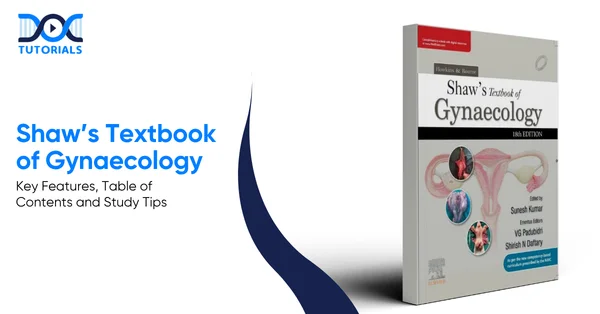
Shaw’s Textbook of Gynaecology is considered the most famous gynaecology textbook among medical students in India. It is aimed at undergraduate learners and those about to take postgraduate entrance exams, but it can also be valuable to allied health courses.
This guide offers a review of Shaw’s Textbook of Gynaecology, one of the most commonly used reference books among medical students. It outlines the structure, key points, and academic relevance of the latest edition, and provides a comparison with other popular gynaecology textbooks in the MBBS curriculum. Keep reading to know more.
Overview of Shaw’s Textbook of Gynaecology, 18th Edition
Shaw’s Textbook of Gynaecology is a long-standing approved source of Indian medical education. It is intended to fulfil the requirements of MBBS students and the NEET PG aspirants, and has now been revised to a new version.
Shaw’s Textbook of Gynaecology is organised in a logical manner, beginning with simple anatomy and physiology, leading the students to complex gynaecological diseases and oncological treatment. The content has been simplified with point-wise descriptions, boxes, flowcharts, and tables, which enable rapid revision.
New clinical guidelines from the World Health Organisation (WHO) and the International Federation of Gynaecology and Obstetrics have also been introduced in the latest edition, along with clinical case scenarios to reinforce practical, examination-focused learning.
Howkins & Bourne: Shaw’s Textbook of Gynaecology, 18th Edition, recognises the authors of the original text and continues the long academic tradition of the book. The main official information about the most recent version of the 18th edition (2022) is:
- Title: Howkins & Bourne: Shaw Textbook of Gynaecology, 18th Edition, – name of the subtitle “Howkins and Bourne” acknowledges the names of the original authors of this text.
- Editors/Authors: Sunesh Kumar, V. G. Padubidri, and Shirish N. Daftary (Professor Daftary is Emeritus, Nowrosjee Wadia Hospital, Mumbai).
- Publisher and Date: Elsevier India, published in October 2022 (copyright 2023).
- Page Count: Approximately 596 pages.
Key Features of Shaw’s Latest Edition
The latest edition of Shaw’s gynaecology has been aimed at exam-oriented learners. It provides solid structure, sufficient illustrations, practice aids, and review questions to develop solid concepts and provide assistance.
Shaw’s textbook of gynaecology, 18th edition, is designed to assist medical students in conceptual learning as well as in examination preparation. The editors have created the book to comply with the contemporary teaching techniques and revised medical curriculum.
It helps students to prepare for university and competitive exams by explaining complex gynaecological terms, using visual aids or revision tools, and making everything simple.
The 18th edition of Shaw includes a number of features mentioned by the publisher as advantageous to students:
- Logical, Curriculum-Aligned Content: Each chapter is arranged in a logical order, starting with anatomy and physiology to study disorders and specific clinical conditions, helping students develop concepts in steps. The book comprehensively covers the gynaecology curriculum in a lucid narrative.
- Illustrations and Images: The texts include coloured diagrams, pathology photographs, surgical images, and ultrasound scans that support visual learning and the explanation of anatomical processes and diseases.
- Key Points for Review: Key points are summarised by each chapter in order to enable students to revise basic information right before examinations.
- Self-Assessment Questions: End-of-chapter practice questions help students review their knowledge and build exam-type question fluency.
- Current Guidelines: The book incorporates the most recent guidelines and categorisation from the International Federation of Gynaecology and Obstetrics, including the latest staging and management guidelines.
- Curriculum Updates (CBME): The edition has been updated to align with the competency-based model of medical education proposed by the National Medical Commission to better meet current medical training needs.
- Clinical Case Discussions: There are numerous chapters that include clinical case scenarios in which students learn to diagnose and treat common gynaecological cases and can make an association between theoretical learning and practical clinical scenarios.
All these aspects collectively make the textbook a complete study guide that assists with classroom learning and prepares undergraduate medicine students to take the examination.
Table of Contents of Shaw’s Textbook of Gynaecology, 18th Edition
The table of contents of Shaw’s Textbook of Gynaecology, 18th edition, is as follows:
Approach to a Gynaecological Patient
Section 1: Anatomy, Physiology and Development of Female Reproductive Organs
Chapter 1; Anatomy of Female Genital Tract
Chapter 2: Normal Histology of Ovary and Endometrium
Chapter 3: Physiology of Ovulation and Menstruation
Chapter 4: Development of Female Reproductive Organs and Related Disorders
Chapter 5: Puberty, Adolescence and Related Gynaecological Problems
Chapter 6: Menopause and Related Problems
Chapter 7: Breast and Gynaecologist
Chapter 8: Sexual Development and Variations of Sexual Development
Section 2: Disorders of Menstruation
Chapter 9: Common Disorders of Menstruation
Chapter 10: Abnormal Uterine Bleeding (AUB)
Chapter 11: Primary and Secondary Amenorrhoea
Chapter 12: Fibroid Uterus
Chapter 13: Endometriosis and Adenomyosis
Chapter 14: Hormonal Therapy in Gynaecology
Section 3: Common Conditions in Gynaecology
Chapter 15: Infertility – Male and Female
Chapter 16: Ectopic Gestation
Chapter 17: Acute and Chronic Pelvic Pain
Chapter 18: Temporary and Permanent Methods of Contraception
Chapter 19: Medical Termination of Pregnancy
Section 4: Benign Conditions in Gynaecology
Chapter 20: Genital Prolapse
Chapter 21: Displacements of the Uterus
Chapter 22: Diseases of the Broad Ligament, Fallopian Tubes and Parametrium
Chapter 23: Benign Diseases of the Ovary
Chapter 24: Benign Diseases of the Vulva
Chapter 25: Benign Diseases of the Vagina
Section 5: Infections in Gynaecology
Chapter 26: Pelvic Inflammatory Disease
Chapter 27: Tuberculosis of the Female Genital Tract
Chapter 28: Sexually Transmitted Diseases Including HIV Infection
Section 6: Urinary and Intestinal Tract in Gynaecology
Chapter 29: Diseases of the Urinary Tract
Chapter 30: Urinary Fistula and Stress Urinary Incontinence
Chapter 31: Injuries of the Genital Tract and Intestinal Tract
Section 7: Gynaecological Malignancies
Chapter 32: Preinvasive and Invasive Carcinoma of the Cervix
Chapter 33: Cancer of the Body of the Uterus
Chapter 34: Pathology of Ovarian Tumours
Chapter 35: Ovarian Malignancies
Chapter 36: Vulval and Vaginal Cancer
Chapter 37: Gestational Trophoblastic Diseases
Chapter 38: Radiation Therapy, Chemotherapy and Palliative Care for Gynaecological Cancers
Section 8: Imaging Modalities, Endoscopic Procedures and Major and Minor Operations in Gynaecology
Chapter 39: Imaging Modalities in Gynaecology
Chapter 40: Endoscopy in Gynaecology
Chapter 41: Major and Minor Operations in Gynaecology
Chapter 42: Obesity, Polycystic Ovaries and Hirsutism
Chapter 43: Instruments Used in Gynaecology
What is New in Shaw’s Latest 18th Edition?
The latest version (18th) includes new updates that reflect curriculum modifications and international standards. It is a contemporary version of Shaw’s Gynaecology, incorporating new educational norms (CBME) and international/Indian practices, and is fully up-to-date with modern MBBS and NEET programs.
The 2022 (18th edition) of Shaw’s textbook of Gynaecology includes some critical updates in comparison to the previous editions:
- CBME Alignment: It has been updated to align with the Competency-Based Medical Education (CBME) framework developed by the National Medical Commission, focusing on expected competencies, skills, and clinical attitudes.
- Integrated Topics: The edition encourages vertical and horizontal integration by connecting gynaecology with adjacent fields, including genetics and community health.
- Guidelines on Female Genital Tuberculosis: Given the Indian clinical setting, the book incorporates new advice on genital tuberculosis in line with guidelines from the World Health Organisation (WHO) and the Government of India.
- Revised Cancer Staging: Recent staging and classification principles of the International Federation of Gynaecology and Obstetrics are included, especially in cervical cancer and other gynaecological malignancies.
- Clinical Case Examples: Most chapters contain realistic clinical scenarios that depict patient presentations, diagnoses, and treatments, allowing students to relate the concepts learnt in theory to clinical situations.
Edition Comparison of Shaw’s 16th, 17th and 18th Edition
The following table shows how Gynaecology by Shaw has developed (16th-18th editions):
| Edition (Year) | Editors | Notable Features/Updates |
| 16th (2014) | V.G. Padubidri, S.N. Daftary | Completely updated, with pointwise systematic presentation for clarity. Included additional tests, figures and tables. Added self-review and recommended readings. |
| 17th (2018) | S. Kumar, V.G. Padubidri, S.N. Daftary | Modified to a narrative format with bullet emphasis. Inserted additional flowcharts and colour pictures. Follows the entire curriculum and has end-of-chapter review questions. |
| 18th (2022) | S. Kumar, V.G. Padubidri, S.N. Daftary | According to the new CBME curriculum. Contains new WHO/Govt. of India guidelines (e.g. Female Genital TB), revised FIGO cancer staging, and clinical case discussions. The content of the chapters is rewritten to be up-to-date. |
The new editions are based on the previous versions and incorporate the newest medical knowledge and teaching methods.
| Feature Category | Features of the 17th Edition | Features of the 18th Edition |
| Curriculum Alignment | Based on the traditional, subject-isolated medical curriculum. | Fully updated and revised according to the new competency-based medical curriculum and vertical and horizontal integration. |
| Visual Elements | The use of traditional anatomical black-and-white diagrams is widespread. | More than 60 monochrome images were replaced with high-quality colour illustrations, contemporary pathologic slides, and precise sonographs. |
| Clinical Guidelines | Older oncological staging and traditional World Health Organisation (WHO) protocols. | Includes the most recent World Health Organisation (WHO) recommendations, Indian government attitudes toward Genital Tuberculosis, and recent oncological staging. |
| Practical Examination Aid | Random, descriptive references to surgical tools. | Includes a new chapter with structured, dedicated description of all main instruments of gynaecology. |
| Clinical Application | Centred on standard theory descriptions of disease. | Presents detailed clinical cases at the end of chapters to impart specifics about patient workup and differentials. |
| Digital Integration | Simple access to an electronic book without multimedia additions. | Improved online accessibility of additional videos and special lecture notes on difficult surgical operations. |
Shaw’s Textbook vs Other Gynaecology Books
The question of which primary textbook to choose is a constant battle for medical students, between narrative conciseness and exhaustive reference detail. While one excels at developing fundamentals for university exams, the other stands out as a comprehensive clinical guide for postgraduates.
A popular argument among medical undergraduates concerns which textbook is the best primary gynaecology textbook, notably between Shaw’s Textbook of Gynaecology and theTextbook of Gynaecology by DC Dutta.
Comparing their teaching style, structure, and depth will help students choose the most appropriate resource to meet their study needs. The given table shows the primary distinctions between the two textbooks:
| Evaluation Parameter | Shaw’s Textbook of Gynaecology | DC Dutta’s Textbook of Gynaecology |
| Primary Approach | Narrative prose, a rational pattern of disease causation, and a highly conceptual framework. | Detailed, data-driven, structured and a lot of bullets. |
| Content Depth | Short and to the point, it addresses the fundamental needs of the undergraduate curriculum. | Tiring and encyclopedic; covers a lot of surgical and medical details at the postgraduate level. |
| Readability | Fluent, narrative structure; extremely easy to read and continuous without early fatigue. | Long, reference-style text; cognitively heavy, and may be exhausting when one has to read it fast. |
| Best Utilised For | Basic undergraduate reading, conceptual clarity development, and learning the anatomy. | Deep reference reading, which utilises specialised treatment algorithms, and postgraduate residency survival. |
Study Tips for Shaw’s Textbook of Gynaecology
Effective preparation with Shaw’s text involves following the curriculum’s order, reviewing the main points, and practising self-assessment questions. Practical tasks, such as sketching out drawings, note-taking with bullets, and discussing topics with peers, improve recall.
Strategic preparation entails working with the book’s content to practice questions and also concentrate on the high-yielding topics. General study tips include:
● Follow the Curriculum Sequence: Begin with the simple anatomy and physiology of the whole female genital system, and proceed subsequently to pathology, just as Shaw organises the material. This secures a good conceptual basis.
● Use Key Points and Questions: After reading one chapter, read the summaries of the Key Points and take up the self-assessment questions. This is a test of retention and readiness for examination.
● Draw & Visualise: Redraw reproductive anatomy, menstrual cycle or surgery. Your notes may be guided by Shaw regarding coloured images. The visual mnemonics are used to remember information when taking exams.
- Practice Clinical Cases: Complete the clinical case scenarios found in the book. Another step is to practice past NEET questions on those cases (e.g., infertility or a diagnostic workup for bleeding).
● Make Bullet Lists for Recall: As Shaw is presented in an essay format, summarise every chapter in bullet notes or flowcharts. Bold keywords (e.g. causes of amenorrhoea) so that they can be easily recalled.
● Discuss and Teach: Make group discussions and test each other on topics such as birth control methods or cancer screening policies. Use yourself to teach others and reinforce your knowledge of what Shaw teaches.
● Focus on High-Yield Topics: Spend a little longer time on common gynaecological emergencies (ectopic, haemorrhage), endocrine causes of infertility and cancer epidemiology. The new chapters on these topics covered by Shaw (e.g., the newest FIGO staging) need to be read carefully.
Although everyone has different studying habits, Shaw should be supplemented with active revision (notes, MCQs, flashcards) as a time-tested method. For NEET and MBBS, it is better to go through the chapters, map them to the official exam syllabus, and practice.
FAQs about Shaw’s Textbook of Gynaecology
- What is the latest edition of Shaw’s Textbook of Gynaecology?
The most recent edition is the 18th (2022), edited by Sunesh Kumar, V. G. Padubidri, and Shirish N. Daftary. Published by Elsevier India, it has approximately 596 pages.
- Who is the target audience for Shaw’s Gynaecology?
Its primary audience is the MBBS undergraduate learners and candidates who are about to undertake exams such as the National Eligibility cum Entrance Test for Postgraduate (NEET PG). It is also a good resource for nursing and other allied health students.
- Is Shaw’s textbook enough for NEET PG preparation?
It effectively discusses prominent obstetrics and gynaecology concepts and can be relied upon to promote sound basics. Nonetheless, students typically combine it with MCQ practice, question banks, and revision notes to achieve comprehensive preparation.
- Does Shaw’s textbook include practice questions and summaries?
Yes. At the end of every chapter, there will be summaries of the key points and self-assessment questions, helping students to revise vital topics and assess the acquired knowledge.
- Where can students view the table of contents or sample chapters?
The previews and table of contents are usually posted on the websites of publishers and certain online bookstores so that students can check the chapter arrangement before purchasing.
- Are there any drawbacks to Shaw’s textbook?
Certain students find the essay format to be just slightly more difficult than memorising points. Many learners thus formulate their own summary notes as they learn.
- Is upgrading to the latest edition necessary?
Yes. The 18th edition contains updates in accordance with the competency-based curriculum presented by the National Medical Commission and revised clinical guidelines and cancer staging systems.
- Is Shaw’s Textbook of Gynaecology valuable beyond exam preparation?
It is a valuable reference for clinical postings and internships, enabling students to integrate theory into patient care. It provides a solid foundation in reproductive health and gynaecology through a clear conceptual framework.
- What are some high-yield gynaecology topics for entrance exams?
Notable ones are Abnormal Uterine Bleeding, Polycystic Ovary Syndrome, infertility management, Ectopic Pregnancy, and the staging and screening of tumours such as Cervical Cancer and ovarian malignancies usually assessed in postgraduate entrance exams.
- How does the narrative style of the Shaw textbook compare to other major reference books for postgraduate preparation?
It is recognised as an excellent textbook that has a readable style and is best suited to early MBBS learning. Comparatively, other references are too thick to be read by beginners. For postgraduate prep, students rely on notes and question banks, using standard texts mainly to clarify complex topics.
Conclusion
Shaw’s Textbook of Gynaecology aids students in knowing the critical clinical concepts and pathophysiology required in university and competitive exams. Overall, textbook reading, MCQ training and revision using case studies bring concepts and examination readiness.
For structured academic support, DocTutorials can be your study partner. We offer 3D & 2D animated videos, CBME-based video lectures, and structured mentorship and guidance by experts. This ensures aspirants gain complete clarity over complex medical concepts.
Join DocTutorials today and explore our MBBS curriculum to excel in your medical career!

Latest Blogs
-

9 Essential MBBS Preparation Tips for Success
Achieving the dream of becoming a doctor is not easy. You need to be determined and have the right mindset…