DNB in General Surgery: Course, Scope, and Career Path in India
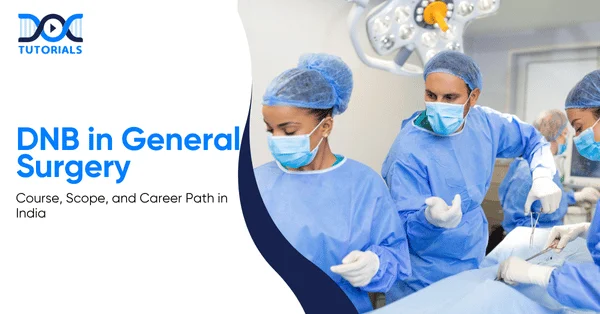
DNB (Diplomate of the National Board) in General Surgery stands out as a preferable choice for many doctors who want to pursue a postgraduate degree. This qualification is recognised nationally by the National Board of Examinations (NBE) and is considered equivalent to MD/MS (Doctor of Medicine/Master of Surgery) programs.
This article provides comprehensive details about the DNB in General Surgery course. Keep reading to understand the admission process, eligibility, syllabus, and job opportunities offered by the degree in India.
What is DNB in General Surgery?
DNB in General Surgery refers to the 3-year postgraduate medical course for MBBS graduates under the National Board of Examinations. The course comprises hands-on clinical training and exposure to research that prepares the doctors to become a General Surgeon, Surgical Specialist, or Medical Educator in top-ranked hospitals and healthcare institutes.
DNB in General Surgery stands for Diplomate of the National Board in General Surgery. It is a 3-year postgraduate course for MBBS degree holders. If you have a postgraduate diploma in surgery, then it is possible to do a 2-year secondary diploma course in DNB in General Surgery.
DNB in General Surgery falls under the awarding body of the National Board of Examinations (NBE) and is similar to courses like Master of Surgery (MS) in General Surgery recognised by the National Medical Commission (NMC).
DNB in General Surgery: Course Highlights
The DNB in General Surgery course prepares candidates for various surgical roles in the healthcare setting. The key details about the DNB in general surgery course are shared below:
| Particulars | Details |
| Course Name | DNB in General Surgery |
| Course Duration | 3 Years |
| Admission Process | Entrance Exam |
| Entrance Exams Accepted | NEET PG, NEET SS, DNB PDCET |
| Eligibility Criteria | MBBS degree, completion of internship, and registration with the Medical Council of India or State Medical Council |
| Average Salary | ₹3.6 – ₹19.20 LPA |
| Top Recruiters | Apollo Hospitals, Fortis Healthcare, AIIMS, and other reputed medical institutions |
| Job Profiles | General Surgeon, Surgical Specialist, Hospital Administrator, Medical Educator, Researcher |
DNB in General Surgery: Course Structure
If you have completed your MBBS degree, then you can apply for the DNB in General Surgery course. But, those individuals who already have a postgraduate diploma in surgery have the option to choose the secondary DNB course, which is of 2 years.
The entire training and curriculum are structured to ensure that students can get a grasp of the foundation and, with gradual progression, move towards independent surgical practice.
- Year 1: Focus is given on the basics of surgical anatomy, wound management, and aseptic techniques. Students also gain first-assist experience in various surgical procedures.
- Year 2: Residents in this year go through rotations across different subspecialties in surgery, such as orthopaedics, oncology, urology, etc. They are also a part of the emergency surgical care. Preparation for theory examinations begins at this point.
- Year 3: Here, emphasis is given on independent case management, learning and participating in advanced surgeries and research projects. Residents also work for the OSCE (Objective Structured Clinical Examination) training for the final practical assessment.
What is the Admission Process for DNB in General Surgery?
Admission to the DNB in General Surgery is done via national-level entrance examinations such as NEET-PG and DNB PDCET, which are subsequently followed by centralised counselling conducted by the NBE. The candidate should hold an MBBS degree, complete a one-year internship, and have valid registration with MCI/NMC or a State Medical Council.
The admission for DNB in General Surgery happens through national-level examinations and after that through centralised counselling. The admission process can vary slightly depending upon the specific institution, but overall, it follows a similar generalised framework.
The official instructions for the admissions are often issued by the National Board of Examinations (NBE) and other authorised bodies. The admission process for DNB in general surgery follows the following steps:
- Step 1: Check Eligibility: Candidates will need to have an MBBS degree and complete their first year of mandatory rotating internship. Details of the eligibility for this course are discussed later in detail.
- Step 2: Registration: Eligible candidates need to visit the official website of the National Board of Examinations (NBE). Read the official instructions clearly and fill in the online registration form with appropriate details.
- Step 3: Appear for Entrance Test: Among the standard entrance tests to gain admission into DNB courses, one is NEET-PG. Candidates will be required to appear and pass this entrance test.
- Step 4: Attend Counselling: Candidates who make it to the merit list have to follow the counselling schedule and thereby attend the centralised counselling conducted by the NBE. A candidate at this stage can choose the hospitals and institutions.
- Step 5: Confirmation of Admission – Once the list with seat allotment comes out, candidates move on to the next step, which is to verify and submit the required documents and certificates, following which the candidate can deposit the fees and secure their seats.
What is the Eligibility for DNB in General Surgery?
The aspiring candidate must meet the following eligibility criteria if they wish to pursue DNB in General Surgery:
| Criteria | Requirement |
| Academic Qualification | MBBS degree from a recognised MCI/NMC institution |
| NEET-PG Qualification | Minimum qualifying percentile – 50% (General), 40% (OBC/SC/ST), 45% (PwD) |
| Internship | Completion of a one-year compulsory rotating internship |
| Registration | Permanent or provisional registration with MCI/NMC/State Medical Council |
| Age Limit | No upper age limit for DNB admission |
| Number of Attempts | Unlimited attempts allowed |
| Foreign Medical Graduates | Must have cleared the FMGE (Foreign Medical Graduate Examination) before applying |
What are the Entrance Exams for General Surgery?
Candidates need to take national-level entrance exams for admission into DNB courses. The following table provides you with a quick overview of the entrance exams for DNB in General Surgery.
| Exam Name | Conducting Body | Purpose |
| NEET PG (National Eligibility cum Entrance Test – Postgraduate) | National Board of Examinations (NBE) | Considered the main entrance exam for admission to DNB in General Surgery. |
| DNB PDCET (Post Diploma Centralised Entrance Test) | National Board of Examinations (NBE) | After a post-graduate diploma, candidates can appear for this exam if they want to pursue a secondary DNB course. |
| NEET SS (National Eligibility cum Entrance Test – Super Speciality) | National Board of Examinations (NBE) | Conducted for admission into DNB Super Speciality (DrNB) and MCh programs after MD/MS/DNB. |
What is the Syllabus for DNB in General Surgery?
General Surgery’s syllabus includes applied basic sciences, general surgical principles, pre- and postoperative care, trauma and critical care, oncology, and system-based surgery. It also embodies laparoscopic and minimal access surgery, research and ethics, and rotational clinical postings in the specialities of neurosurgery, cardio-thoracic, urology, and oncology to ensure comprehensive surgical training and clinical competence.
The DNB in General Surgery syllabus covers a vast array of topics updated by the National Board of Examinations (NBE). The subjects are listed below:
1. Applied Basic Sciences
- Applied anatomy, physiology, biochemistry, microbiology, pharmacology, and pathology
- Molecular and cell biology, inflammation, regenerative medicine
- Wound healing, shock, fluid & electrolyte balance, acid-base management
- Principles of asepsis, sterilisation, antibiotics, and anaesthesia
2. General Surgical Principles
- History of surgery, surgical infections, nutrition, and burns
- Principles of laparoscopy, endoscopy, and robotic surgery
- Oncology basics and management
- Trauma and emergency surgical care
- Blood transfusion, hemostasis, and universal precautions (HIV, hepatitis)
3. Pre- & Post-Operative Care
- Pre-operative assessment and anaesthesia preparation
- Infection control, aseptic techniques, and antibiotic prophylaxis
- Post-operative complications and their management
- Pain control, ventilatory support, nutritional care
4. Trauma and Critical Care
- Assessment and resuscitation (ATLS, BLS)
- Management of chest, abdominal, and pelvic trauma
- Head and spinal injuries, burns, gunshot wounds
- ICU management: ventilation, sepsis, renal failure, multi-organ support
5. Oncology and Palliative Care
- Cancer biology, staging, and principles of surgery, chemotherapy, and radiotherapy
- Screening, pain management, and palliative care
- Ethics, medico-legal aspects, and communication in cancer care
6. System-Based Surgery
The topics covered under this subject are explained in the table below:
| System/Region | Key Topics |
| Locomotor System | Fractures, joint injuries, amputations, bone infections, arthritis, metabolic bone disease |
| Vascular Surgery | Arterial & venous diseases, aneurysms, DVT, varicose veins, lymphatic disorders |
| Head, Neck & Endocrine | Thyroid, parathyroid, adrenal, pituitary, salivary gland, and neck swellings |
| Paediatric Surgery | Congenital anomalies, neonatal emergencies, hernias, pyloric stenosis, Hirschsprung’s disease |
| Abdomen & GIT | Hernias, intestinal obstruction, peritonitis, appendicitis, colorectal disorders, haemorrhoids, fissures |
| Hepato-Pancreato-Biliary | Gallstones, jaundice, pancreatitis, liver tumours, portal hypertension, hepatic trauma |
| Upper GI & Esophagus | Kidney stones, prostate disorders, urinary tract obstruction, and infections |
| Genito-Urinary System | Kidney stones, prostate disorders, urinary tract obstruction and infections |
| Neurosurgery | Head injury, hydrocephalus, cranial/spinal tumours, peripheral nerve lesions |
| Cardiothoracic Surgery | Lung diseases, chest trauma, vascular reconstruction, valvular and cardiac conditions |
| Orthopedics | Peptic ulcers, reflux disease, upper GI bleeding, oesophageal motility, and strictures |
| Plastic & Reconstructive Surgery | Skin grafts, flaps, tissue expansion, reconstruction after trauma or cancer |
| Transplantation | Renal and hepatic transplantation, immunology of rejection, immunosuppression |
7. Laparoscopic and Minimal Access Surgery
- Laparoscopic anatomy, ports, and instruments
- Pneumoperitoneum, electrocautery, and laser safety
- Diagnostic and therapeutic laparoscopy
- Complications, equipment handling, robotic assistance
8. Research, Ethics, and Biostatistics
- Research methodology, clinical trials, surgical audit, and data interpretation
- Health policy issues and medico-legal responsibilities
- Biomedical waste management and ethical surgical practice
9. Clinical Postings
- Mandatory: Accident & Trauma (1 month), ICU (1 month)
- Rotational (6 weeks each): Cardiothoracic, Neurosurgery, Surgical Gastroenterology, Oncology, Pediatric, Plastic, and Urology
What are the Scope and Career Opportunities for DNB in General Surgery?
DNB in General Surgery offers a career in clinical practice, teaching, research, and super-specialisations. Graduates can be employed as surgeons, consultants, educators, or hospital administrators in government and private hospitals. They can also pursue DM/MCh super-specialities or engage in medical research with organisations like ICMR and WHO.
Earlier, DNB was less recognised as compared to its equivalent courses like MD and MS. But, as it has reached full equivalent under the National Medical Commission (NMC), the recognition has opened up great career opportunities.
The scope and career opportunities after completing DNB in General Surgery are discussed below:
- Clinical Practice in General Hospital: Job opportunities, such as special doctors and consultants, are available for DNB in general surgery graduates in both government and private hospitals.
- Teaching and Academic Roles: The degree also makes them eligible for faculty and specialist posts. DNB graduates can have a career as Assistant Professors in a medical college.
As long as the students meet NMC’s teaching and publication requirements, they can also serve in roles as associate professors and other higher teaching positions.
- Chance to Pursue Super-Specialisations: Graduates can further advance their skills and career as they are eligible to apply for super-speciality courses such as DNB Super-Speciality or DM/MCh in various areas. Super specialisation opens up opportunities for high-paying leadership roles.
- Research Opportunities: Organisations like ICMR, WHO, and other well-known pharma companies provide opportunities for DNB graduates to contribute to clinical trials and biomedical research, and pharmaceutical studies.
The scope for DNB in General Surgery is vast and varied. It is also ever-evolving with new opportunities. Therefore, we can understand DNB in General Surgery as a rewarding and versatile career path.
A brief overview of the job roles and their average salary is provided in the table below:
| Job Role | Description | Average Salary (Per Annum) |
| General Surgeon | Perform a wide range of surgical procedures to treat medical conditions. Work in hospitals, clinics, and surgical centres across various specialities. | ₹16.4 LPA |
| Hospital Administrator | Manage the surgical departments, healthcare staff, and work towards efficient hospital operations while maintaining high standards of patient care. | ₹6.4 LPA |
| Medical Educator | Teach undergraduate and postgraduate students. | ₹3.6 LPA |
| Researcher | Contribute towards the development and advancement of the medical field. Work towards finding improved medical techniques in surgery and research for new procedures. | ₹9.3 LPA |
| Surgical Specialist | Obtain specialisation in varied areas like orthopaedics, cardiothoracic, or gastrointestinal surgery. | ₹19.2 LPA |
What are the Top Colleges for DNB in General Surgery?
The list of top-ranking institutes and hospitals that offer the course of DNB in General Surgery is given below in the table.
| College / Hospital Name | Type |
| Sir Ganga Ram Hospital, New Delhi | Private |
| Swami Dayanand Hospital | Government |
| Hindu Rao Hospital, Delhi | Government |
| Northern Railway Central Hospital, Delhi | Government |
| Deenanath Mangeshkar Hospital, Pune | Private |
| Deen Dayal Upadhyay Hospital, New Delhi | Government |
| Seth V.C. Gandhi & M.A. Vora Municipal General Hospital | Government |
| Southern Railway Headquarters Hospital, Chennai | Private |
| Govt. Multi-Speciality Hospital, Chandigarh | Government |
| Max Smart Super Speciality Hospital, Delhi | Private |
| GMERS Valsad | Government |
| Holy Family Hospital, Bandra, Mumbai | Private |
| P.D. Hinduja National Hospital, Mumbai | Private |
| Rajiv Gandhi Medical College, Thane | Government |
| St. Stephen’s Hospital, New Delhi | Private |
What are the Key Differences between DNB and MD/MS in General Surgery?
While both postgraduate courses, the DNB and MS/MD in General Surgery, are recognised by NMC, they majorly differ in governing bodies, training setups, and recognition. DNB is offered by the National Board of Examinations in accredited hospitals, while MS/MD is offered by medical universities.
DNB (Diplomate of National Board) and MD/MS (Doctor of Medicine/Master of Surgery) in General Surgery are both well-known postgraduate degree courses in India.
The first question that arises amongst candidates is that if these courses are recognised by the National Medical Commission (NMC), then what are the significant features that distinguish them from each other?
The table below provides you with a comprehensive comparison between these courses to help you understand this distinction:
| Aspect | DNB (Diplomate of National Board) | MD/MS (Doctor of Medicine / Master of Surgery) |
| Governing Body | National Board of Examinations (NBE), under the Ministry of Health and Family Welfare | National Medical Commission (NMC) / respective state medical universities |
| Training Setup | Conducted mainly in accredited private, trust, and government hospitals (non-medical colleges) | Conducted in medical colleges and university-affiliated teaching hospitals |
| Recognition | Equivalent to MD/MS as per NMC guidelines, but less preferred for academic posts in government colleges | More traditionally accepted and preferred for teaching and government jobs |
| Admission Process | Based on NEET PG or DNB PDCET scores, centralised counselling by NBE | Based on NEET PG or INI CET scores, counselling by NMC/state medical authorities |
| Training Exposure | Depends on the hospital setup; exposure may vary depending on case volume and infrastructure | Usually structured with consistent exposure to high surgical case loads in medical colleges |
| Exam Pattern & Difficulty | National standardised exams have with lower pass percentage due to stringent evaluation | University-level exams with relatively higher pass rates |
| Super-Specialization Options | Eligible for DNB SS or MCh courses; some institutes may prefer MS graduates for MCh | Eligible for both MCh and DNB SS; often given preference for MCh seats |
| Career Opportunities | Excellent opportunities in corporate hospitals, private practice, and research; limited in government academia without teaching experience | Preferred for academic teaching positions, government hospitals, and senior residency posts |
| Teaching Eligibility | Candidates are eligible for teaching roles after 3+ years of experience as per NMC norms | Graduates are eligible for faculty roles in most government and medical college setups |
| Cost and Accessibility | Often more affordable. It is also accessible in terms of seat availability | Competitive admission; may have higher tuition in private colleges |
FAQs about DNB in General Surgery
1. What is the duration of DNB in General Surgery?
The duration for this entire course is 3 years for MBBS degree holders. If you have completed a postgraduate diploma in surgery, then you can opt for the 2-year secondary DNB course.
2. Is DNB in General Surgery the same as MD/MS in General Surgery?
Yes, the DNB stands for Diplomate of National Board, and according to guidelines laid down by the NMC, it is equivalent to an MD/MS. Both are postgraduate qualifications in surgery.
MD/MS is awarded by the universities and medical colleges themselves, whereas DNB is conducted by the National Board of Examinations and offered through accredited hospitals.
The DNB graduates usually get to see a larger number of diverse hospital setups, while the students of MD/MS get their training in university-affiliated teaching hospitals.
3. What is the age limit for admissions in DNB in General Surgery?
No, there is no upper age limit for DNB in General Surgery admissions.
4. Are there any scholarships available to students pursuing DNB in General Surgery?
Candidates can apply for state-funded or government-funded scholarships for medical scholarships. However, students should check with the respective institutes they want to apply to to check for the availability of scholarships and grants.
5. What is the average salary that one can get after a DNB in General Surgery?
The salary for a person with a DNB in General Surgery varies and changes with exposure and experience. It usually ranges from ₹10 lakh to ₹30 lakh.
6. Is DNB in General Surgery exam harder than MS?
DNB final exam questions are set to national standards and are known for strict evaluation, which often results in a lower pass percentage than university-level examinations. However, with proper focus and study, one can pass the DNB General Surgery exam and later practice.
7. What are the career opportunities after completing DNB in General Surgery?
After completing DNB in General Surgery, you can work as general surgeons, surgical specialists or consultants in government or private hospitals or apply for academic roles as well. You can also opt for pursuing super-specialisation in specific fields such as urology, surgical oncology or cardiothoracic surgery.
8. Can I practice abroad with a DNB degree in General Surgery?
Yes, you can practice abroad with a DNB degree in General Surgery, as the DNB degree is recognised in many countries. However, you need to appear for the respective local licensing exams, such as PLAB or USMLE, to practice.
9. What are the eligibility criteria for admission in DNB General Surgery?
Before starting the admission process in DNB General Surgery, the aspirant needs to have the following prerequisites:
- MBBS degree from an NMC-recognised institution
- Completion of one year of rotatory internship
- Hold permanent provisional registration with the NMC or State Medical Council.
10. Which entrance exam is required for pursuing DNB General Surgery?
To pursue DNB General Surgery, the aspirants need to appear for the NEET-PG ( National Eligibility cum Entrance Test- Postgraduate) examination. After qualifying for NEET-PG, aspirants must register and attend counselling to secure a seat at their preferred college in their selected branch.
Conclusion
Pursuing DNB in General Surgery is a strong choice for MBBS graduates seeking comprehensive surgical training and a nationally recognised qualification. With its NMC-approved equivalence to MS/MD, the program provides opportunities in clinical practice, academics, research, and further super-specialisation.
For aspirants preparing for the PG Residency pathway, structured guidance from platforms like DocTutorials can help streamline preparation and enhance understanding throughout the course.
Join DocTutorials and explore our PG Residency course today!

Latest Blogs
-

NEET SS Exam 2024: Analysis, Key Dates, Counselling
The NEET SS 2024 exam kicked off on March 29, 2025. Over two days and two slots, candidates across 13…
-

INI SS Topper: 1 Dream, 1 Study Buddy, 1 Rank – The Journey of Dr. Prithivi Raaj, CML 1 & (AIIMS) AML 1 in DM Cardiology
Achieving the top rank in a competitive exam like the INI SS DM Cardiology requires tireless dedication, a structured approach,…
-

INI SS Results: Merit List, Exam Insights, and What Comes Next
The INI SS results for October 2024 are just around the corner. This is a life-changing moment for thousands of…