NEET SS Revision: High-Yield Topics You Can’t Afford to Miss

The National Eligibility cum Entrance Test for Super Speciality (NEET SS) is a nationwide entrance test that the National Board of Examinations in Medical Sciences (NBEMS) organises every year. Therefore, you must have a deep understanding of the PG curriculum, and practical skills.
As a clinical student, it is hard to go through all the topics while practising and taking mock tests. Following a targeted approach is the best path, as it involves studying high-yield topics and employing effective last-minute revision strategies to improve your scores.
This guide provides subject-wise high-yield topics, effective revision strategies, and resources to maximise your NEET SS score and help you achieve your dream career. Read ahead to learn more!
Importance of High-Yield Topics in NEET SS
In case your time to prepare for NEET SS is limited, then it will be good to concentrate on high-yield topics during the final phase of your preparation.
These are the most important topics that are frequently asked in past year papers, and working on these can greatly increase your NEET SS score. High-yield topics can help you:
- Increase Efficiency
With the little time you have left, mastering the high-yield topics enables you to use your study hours in the best way possible. It helps you cover the most important materials from the exam point of view and brings clarity.
- Improve Performance
Focusing on the topics that carry high weightage helps you cover a significant part of your syllabus and boosts your scoring potential. It lets you revise better and make the best use of your limited time.
- Optimise Preparation
If you start from scratch at the final phase, then you may overlook or skip any important topic. Studying the most important topics first allows you to keep a balanced approach to preparation, making sure that all the parts get their due attention.
- Boost Confidence
Studying the topics that are worth a lot in the exam helps to build your confidence, leading to a positive mental attitude. It helps you stay calm and learn better.
Focusing on these high-yield topics that are in trend from the past years helps you make the best use of the limited time period in your final phase of NEET SS preparation.
Subject-Wise High-Yield Topics for NEET SS
There are a total of 13 groups focusing on various medical specialisations in the NEET SS entrance exam. Here are the subject-wise important and high-yield topics to focus on for better performance:
- Medical Group
The students of the medicine group can focus on these important topics as per their chosen specialisation:
| Subject | Topic |
| Cardiology | Pulse, JVP, CCP vs Cardiac tamponade, VT vs SVT, Angina/MI – classification, treatment & complications, RHD, Infective endocarditis, Aortic aneurysm, VHD.Different trials on drugs, Renovascular hypertension, Heart sounds/splitting, murmur, PTE, WPW syndrome, Aortic dissection, Brugada syndrome, Pulmonary oedema, Marfan syndrome, Types of cardiomyopathies. |
| Neurology | Localisation of lesion, Stroke (various syndromes), Myasthenia vs LEMS, CNS Tumours, Tuberous sclerosis, NF-1, NF-2, Headache, Alzheimer.Muscular Dystrophies, Guillain-Barré Syndrome, Multiple Sclerosis, MND, Parkinson, Meningitis, Sturge-Weber Syndrome, VHL Syndrome, Huntington, Dermatomyositis. |
| Hematology | Coomb’s test, Prognostic indicators of AML/CML/CLL/ALL/HL/NHL, Multiple myeloma, Von Willebrand Disease, Lupus anticoagulant, DIC, TTP, Haemolytic, Uremic Syndrome, MCHC.Henoch-Schonlein Purpura, Immune Thrombocytopenic Purpura, Anaemia, Thalassemia, Pernicious Anaemia, Vitamin K-dependent factors, APLA. |
| Nephrology + Electrolytes | Difference between Prerenal vs Renal, Phases of ARF, Lupus Nephritis, Acidosis.Alkalosis, Diabetic Nephropathy, RCC, Drugs acting on various parts of the nephrons, Glomerulonephritis, Nephrotic syndrome, Urinary Casts, Renal stones, PKD, Anaemia in CKD, Electrolyte imbalance – ECG, ATN. |
| GIT + Liver | Celiac disease, Whipple disease, Schilling test, Irritable Bowel Syndrome, Hepatitis B, Hepatitis C, MELD score, PELD score, Diffuse Oesophageal Spasm, Achalasia Cardia, Barrett’s Oesophagus, H. Pylori.NASH, Child-Pugh Score, Acute Pancreatitis Scores, Hepatic Encephalopathy, HCC, SAAG. |
| Endocrinology | MEN-1, MEN-2, Diabetes Insipidus, Cushing’s disease, Conn’s disease, Addison’s disease, Panhypopituitarism.Acromegaly, Hypothyroidism and Hyperthyroidism, Insulinoma, Pheochromocytoma, Diabetes mellitus -Diabetic complications, SIADH. |
| Respiratory | Obstructive vs restrictive pattern, Types of respiratory failure, Emphysema, Bronchiectasis, Lung cancer, Paraneoplastic syndromes, Sarcoidosis.Spirometry, ARDS, Typical vs Atypical Pneumonia, TB, Bronchial Asthma, OSA, Occupational lung diseases, ABPA, Hypersensitivity pneumonitis. |
| Rheumatology & CTD | Vasculitis (Large vessel, medium vessel, Small vessel), Rheumatoid arthritis (RA), SLE (Systemic Lupus Erythematosus), Seronegative arthritis, Gout. |
| Genetics | Mutations, Disjunctions, Anticipation, Genomic imprinting, Mitochondrial diseases, Trinucleotide repeats. Chromosomal breakage disorders, Trisomy 13, Trisomy 18 and 21, Klinefelter syndrome, Turner’s syndrome. |
| Nutrition | Mineral Deficiency or Excess (Mn, Zn, Mg, Selenium, copper), Vitamin Deficiency & Toxicity, Kwashiorkor, Marasmus. |
| Infections | HIV, HIV and TB, Post-Exposure Prophylaxis, H1N1, SARS, Dengue, Malaria, Leptospira, HHV & its types. |
| PSM | Sensitivity, Specificity, Positive Predictive Value, Negative Predictive Value, Prevalence, Incidence, Blinding. Randomised Control Trials, Types of Sampling, Screening, Various Types of Biases, Case-Control Study, Cohort study, etc. |
- Surgical Group
The students of the surgery group can focus on these important topics as per their chosen specialisation:
| Subject | Topic |
| Breast & Endocrine | Carcinoma of the Breast, Fibroadenoma, Breast Cyst, Juvenile Papillomatosis, Germline Mutations, Breast Cancer Types, Oncoplastic procedure (Sx), Sentinel Lymph node biopsy, Lobular Carcinoma in SITU (LCIS).Paget’s Disease of the Nipple, Thyroglossal Cyst, Non-Toxic Goitres & its types, Hyperthyroidism, Graves’ disease, Toxic Multinodular Goitre, Subacute or de Quervain’s thyroiditis, Riedel’s thyroiditis.Acute suppurative thyroiditis, Retrosternal Goitre, Anaplastic Thyroid Cancer, Medullary Thyroid Cancer (MTC), Non-Hodgkin’s lymphoma (NHL), Lymphoma of the Thyroid Gland.Adrenal metastasis, Hereditary PPGL syndrome, Pheochromacytomas, Pheochromocytoma, Somatostatinoma, Glucagonoma, Men-1 Associated Pnet, Neurotensinoma, Grfoma & PpomaNeuroendocrine Tumours, Vipoma |
| Genitourinary | Burns, Aesthetic Surgery, Cleft Lip and Palate, Vascular Anomalies, Malignant Melanoma, Basal Cell Carcinoma, and Squamous Cell Carcinoma. |
| Transplantation | PTLD (Post-Transplant Lymphoproliferative Disorder), Kidney Transplant, Liver Transplant, Types of Liver Transplantation, Pancreatic Transplant, Islet Cell Transplantation, Small Bowel Transplantation, Heart Transplantation, Lung Transplantation. |
| Trauma | Development Of the Urogenital System, Primitive Kidney, Pronephros, Mesonephros, Ureteric Bud, Congenital Anomalies Of the Urinary Bladder, Evaluation Of Urological Patient: History And Physical Examination.Hematuria: Evaluation And Management, Congenital Anomalies Of the Kidney, Renal Dysgenesis And Cystic Disease Of The Kidney, Luts (Lower Urinary Tract Symptoms), Hematuria, Vesicoureteral Reflux, Unilateral Urinary Obstruction, Bilateral Urinary Obstruction, Post Obstructive Diuresis.Ureteropelvic Junction Pelvic Obstruction, Ureteral Stricture Disease, Lower Urinary Tract Catheterisation, Urological Trauma, Undescended Testis, Testicular Torsion, Injuries of the Testis, Testicular Carcinoma, Turp, Male Infertility, Peyronie’s Disease, Priapism.Prune Belly Syndrome, Renovascular Hypertension, Renal Stones, Megaureter, Ectopic Ureter, Posterior Urethral Valves, Schistosomiasis.Malakoplakia, Carcinoma Of the Bladder, Balanitis Xerotica Obliterans (Bxo), Urethroplasty, Peyronie’s Disease, Paraphimosis, Carcinoma Penis, Transitional Cell Carcinoma, Male Puc, Female Puc, Chronic Kidney Disease, Immunosuppression Drugs in Renal Transplant. |
| GIT, Hepatobiliary & Pancreatic Surgery | Motility Disorders of the Oesophagus, Gastroesophageal Reflux Disease, Hiatus Hernia, Diverticular Disorders of the Oesophagus, Acquired Benign Disorders of the Oesophagus, Benign Rare Tumours of the Oesophagus, Oesophageal Cancer & Oesophageal Cancer Management. Peritoneum, Mesentery Omentum, Retroperitoneum, Inguinal Hernia, Femoral Hernia, Ventral Hernia, Unusual Hernia, Complications of Hernia Repair, Acute Abdomen in Special Patient Populations.Acute Upper GI Bleeding, Acute Lower GI Bleeding, Specific Causes of Lower GI Bleeding, Stress Gastritis, Post-Gastrectomy Syndromes, Gastric Lymphoma, GIST, Small Bowel Obstruction.Appendix, Infectious Colitis and Other Colonic Infections, Large Bowel Obstruction and Pseudo-Obstruction, Diverticular Disorders, Neoplasia, Colorectal Polyps, Hereditary Cancer Syndromes, Carcinoma Colon, Carcinoma Rectum, Anorectal Disorders, Anal Neoplasms.Amoebic Liver Abscess, Pyogenic Liver Abscess, Hydatid Cyst, Benign Liver Tumours, Liver Cell Adenoma, Hepatocellular Carcinoma, Viral Hepatitis, Calculous Biliary Disease, Hemobilia & Bilhemia, Carcinoma of the Gall Bladder, Cholangiocarcinoma.Chronic Pancreatitis: Diagnosis and Treatment, Pancreatic Cancer, Adenocarcinoma Pancreas, Tumours, Cysts and Abscesses of the Spleen. |
| Head & Neck | Warthin’s Tumour, Mucoepidermoid Carcinoma, Acute Necrotising Sialometaplasia, Parotid Duct Stones, Chronic Sialadenitis, Superficial Parotidectomy, Retromolar Trigone, Chronic Hyperplastic Candidiasis.Carcinoma of the Buccal Mucosa, Carcinoma of the Retromolar Trigone, Carcinoma of Hard Palate and Maxillary Alveolus, Neck Dissections & their types, Carotid Body Tumour, Cystic hygroma (Lymphangioma). |
| Perioperative | Bedside Surgical Procedures, Tracheostomy, Day Care Surgery, Intravenous Anaesthesia Drugs, Inhalational Anaesthesia, Opioids, Post-Operative Care, Post-Operative Problems and Management, Nutrition. |
| Skin & Subcutaneous | Burns, Aesthetic Surgery, Cleft Lip and Palate, Vascular Anomalies, Malignant Melanoma, Basal Cell Carcinoma and Squamous Cell Carcinoma. |
| Surgical Oncology | Bone Tumors, Tumor Biology, Tumor Markers, Cancer Therapy, Soft Tissue Sarcoma, Cancer Aetiology and Carcinogenesis. |
| Cardiothoracic and Vascular Surgery | Fractures of the Brain & Its Management, Extradural Hematoma (EDH), Subdural Hematoma (SDH), SAH (SubArachnoid Haemorrhage), Diffuse Axonal Injury, Monro Kellie Doctrine, and Herniation Syndromes.Types of Herniation of the Brain, Medical Management Control of ICP, Drugs in Head Injury, Maxillofacial Injury, Neck Injuries, Thoracic Trauma, Abdominal Trauma. |
- Paediatrics
The students of the Paediatrics group can focus on these important topics for the upcoming NEET SS exam:
| Subject | Topics |
| Growth and Development | Principles of Growth and Development, Assessment of Growth and Development, Normal growth and development (Fetal, Infant, Preschool, Early school, School, Adolescence). |
| Perinatalogy & Neonatalogy | Perinatal Care, Normal Newborn, High-risk pregnancy and high-risk neonates, Care in the labour room and resuscitation, Preterm and low birth weight newborn, Newborn feeding.Common transient phenomena: Respiratory distress, Apnea, prenatal, perinatal and postnatal infections, Jaundice, anaemia and bleeding disorders, Neurologic disorders, Gastrointestinal disorders, Renal disorders, Malformations, Thermoregulation and its disorders.Neonatal emergencies-Metabolic infections, cardiac, respiratory, gastrointestinal, endocrine, renal, and neurologic -understanding of perinatal medicine and pharmacology, ventilation (Invasive and Non-Invasive). |
| Nutrition | Nutritional Requirements- Water, energy, Protein, CHO, Fats, Minerals, Vitamins, Protein energy malnutrition, Obesity, Adolescent nutrition, Parenteral and enteral nutrition.Vitamin D deficiency and excess, Vitamin A deficiency and excess, Nutritional management of systemic neonates and children, Chronic Illness (Celiac disease, Hepatobiliary disorders, nephrotic syndrome), Inborn Errors of Metabolism (IEM), I.E.M of proteins and amino acids, carbohydrates, Lipids, etc. |
| Cardiovascular System | Congenital heart diseases (cyanotic and acyanotic), Rheumatic fever and rheumatic heart disease, Infective endocarditis. |
| Respiratory System | Congenital and acquired disorders of the nose, Development and Function of the Lung, Infections of the upper respiratory tract, Obstructive sleep apnea, and Congenital anomalies of the lower respiratory tract.Foreign body in larynx, trachea & bronchus, Trauma to the larynx.Neoplasm of the larynx and trachea, chronic, Bronchitis, Bronchiolitis, Aspiration pneumonia, GER, Acute pneumonia, Bronchial asthma. |
| GIT | Congenital pyloric stenosis, Intestinal obstruction, Malabsorption syndrome, Acute and chronic diarrhoea, Hirschsprung’s disease, Anorectal malformations, Hepatitis & hepatic failure.Chronic liver disease, Autoimmune Hepatitis, Wilson’s disease. |
| Nephrological and Urological Disorders | Embryology, functions, evaluation, Nephrotic syndrome, Hemolytic uremic syndrome, Urinary tract infection, VUR and renal scarring.Renal involvement in systemic diseases, Renal tubular disorders (RTA, DI), Wilm’s Tumour Fluid and Electrolyte Disturbances. |
| Neurological Disorders | Seizure and non-seizure paroxysmal events- Epilepsy and epileptic syndromes, Meningitis of childhood, Neurocysticercosis, HIV encephalopathy.SSPE, Cerebral palsy, Neurodegenerative disorders, Neuromuscular disorders, Mental retardation, Learning disabilities, Muscular dystrophies.Acute flaccid paralysis and AFP surveillance, Ataxias, Movement disorders of childhood, Malformations and Neuronal Migration Disorders. |
| Hematology & Oncology | Development of the Hematopoietic System, Deficiency anaemias, Hemolytic anaemias, Aplastic anaemias, Thrombocytopenia, Hemorrhagic Disorders (Acquired and Congenital, Physiology, Bleeding and Coagulation disorders).Blood component therapy, Transfusion-related infections, Bone marrow transplant/stem cell transplant, Acute and chronic leukaemia, Myelodysplastic syndrome, Hodgkin disease, Non-Hodgkin’s lymphoma, Neuroblastoma, Retinoblastoma. |
| Endocrinology | Embryology, functions, evaluation, Nephrotic syndrome, Hemolytic uremic syndrome, Urinary tract infection, VUR, and renal scarring.Renal involvement in systemic diseases, Renal tubular disorders (RTA, DI), Wilm’s Tumour Fluid and Electrolyte Disturbances. |
| Infections | Fever, Fever without focus, Sepsis and shock, Tuberculosis, Nosocomial, HIV, Immunisation- Principles, Schedules, Controversies, Standards, and Optional vaccines: Recent advances in Vaccines. |
- Obstetrics & Gynaecology
The students of the Obstetrics & Gynaecology group can focus on these important topics for the upcoming NEET SS exam:
| Subject | Topics |
| Maternal Fetal Medicine | Maternal health and gynaecological disorders, Fetal development, ultrasounds, and antenatal care. |
| Gynecologic Oncology | Cancers, menstrual disorders, and pelvic surgery. Management of gynaecological emergencies. |
| Reproductive Medicine | Polycystic Ovarian Syndrome (PCOS), Endometriosis, Fibroid uterus and adenomyosis, Endometrial hyperplasia and polyps.Infertility and assisted reproductive technologies, Pharmacology of contraceptives and other obstetric drugs. |
| Urogynecology | Pelvic organ prolapse and urinary incontinence. |
| Obstetrics | Pregnancy complications, labour, and delivery management. Pharmacology of obstetrics drugs and contraceptives. |
Last-Minute Revision Tips to Improve Your NEET SS Score
Cramming during the final phase of preparation can impact your NEET SS scores. Here are a few last-minute revision tips and hacks to increase your efficiency:
- Master all the Important and High-Yield Topics
Try to cover all the important topics first to ensure high scores in the exam. Review the subject-wise frequently asked questions in the past papers and prepare accordingly.
- Review Your Notes and Flashcards
It is advised to prepare comprehensive handwritten notes for faster revision. Review your notes for preparing high-yield topics. Prepare flashcards for key formulas and concepts to review them instantly. Revise these flashcards every day to solidify your memory.
- Take the Demo Exam
NEET SS is an online computer-based exam. Thus, taking the demo test will help you get familiar with the exam format to avoid last-minute confusion during exams. You can access the demo test on the website https://natboard.edu.in.
- Practise Previous Question Banks and Mocks
Practising previous year question banks is a must if you are short on time to prepare for the NEET SS exam. It will help you identify the recurring questions and your weaker areas that require more practice.
You can try the reverse reading method, where you take a mock test, identify your weaker areas and then revise those concepts to get clarity.
- Focus More on Clinical Scenarios
The NEET SS exam focuses on the practical aspect of the medical profession and is based on clinical case scenarios, decision-making, and problem-solving. So, it is advised to practice case scenarios to refine your clinical decision-making.
It also helps to better understand different perspectives of the physicians, radiologists, pathologists, etc, towards the cases.
- Smart Study Techniques
Use various smart study techniques to memorise concepts faster, like active recall and spaced repetition. For active recall, you can use flashcards to revise concepts, formulas, and tables. For memorising difficult concepts, use spaced repetition. Revisit them multiple times with breaks in between to ensure better understanding.
FAQs about NEET SS Revision
- How can I create an effective study plan for NEET SS 2025?
An effective study plan for NEET SS comprises covering key concepts, revision, practice of previous year questions, and mock tests. Ensure that your study plan covers the entire syllabus in a structured manner.
Divide your time accordingly and allocate ample time for revision and practice to strengthen your understanding.
- How much time should I dedicate daily to NEET SS preparation?
It is advised to study for at least 6 to 8 hours per day, depending on your foundational knowledge and preparation. Try to maintain a balance between theory, MCQ practice, and revision. Adjust this based on your level of preparation and comfort with the syllabus.
- Is practising past NEET SS question papers helpful?
Yes, practising past NEET SS question papers helps you understand the exam pattern, difficulty level, and frequently asked topics. It also helps you identify your weaker areas and understand time management during the actual exam.
- How to manage time effectively during the NEET SS exam?
Time management is essential to answer all the questions effectively in the NEET SS exam. Start by attempting the easier questions and your areas of strength. Take mock tests regularly to improve your speed and accuracy in answering questions within the time limit.
- How important is revision during the NEET SS preparation?
Revision is essential for retaining concepts and ensuring clarity in key concepts. Dedicate the last few weeks before the exam to revision, focusing on high-yield topics and your weaker areas.
- What are the cut-off trends for the NEET SS exam?
Cut-offs differ every year based on difficulty level and the number of candidates. However, generally the qualifying cut-off is 50 percentile. But, for competitive specialities such as Cardiology, Neurology, and Gastroenterology, the ranks close within the top few hundred.
- Which books should be referred to while preparing for the NEET SS exam?
The books that are usually referred to by the students preparing for the NEET SS exam are:
- Surgery Sixer – Dr. R. Rajamahendran
- Schwartz’s Principles of Surgery – F. Charles Brunicardi
- Pediatric Primary Care – Burns
- MCQ Books in Medicine – Dr. Deepak Marwah & Dr. Mudit Khanna
- Who is eligible to appear for the NEET SS Exam 2025?
To appear for the NEET SS Exam 2025, the candidates need to possess a provisional pass certificate in a postgraduate degree course such as MD, MS, DNB, etc., or any other equivalent degree.
- Is it possible to prepare for the NEET SS while continuing with the current job?
Yes, it is possible to prepare for the exam while continuing with the current job. However, it is important to be able to study consistently for at least 4 to 8 hours a day. It is always advisable to take a break from the current job for at least the last 2 to 3 months.
- What if I’ve studied only from NEET SS notes and not textbooks?
It is always advisable to start reading textbooks immediately because it is very important to have strong concepts and knowledge to perform well in the exam.
Conclusion
Preparing for the NEET SS exam requires strategic revision, targeted practice, and effective time management. Efficient revision of high-yield topics, studying based on mock tests, and previous year question papers can really boost your performance. Allocate ample time to weaker areas while keeping in touch with your strengths to improve your scores.
For extra guidance, DocTutorials can be your study partner. We offer quick revision program (QRP) videos, video-based notes, high-yielding Qbank, targeted test series, and live doubt-clearing sessions. This ensures students are well-prepared in advance, unlocking their true academic potential.
Join DocTutorials today and explore our NEET SS course to excel in your medical exam!
Latest Blogs
-

NEET SS Exam 2024: Analysis, Key Dates, Counselling
The NEET SS 2024 exam kicked off on March 29, 2025. Over two days and two slots, candidates across 13…
-
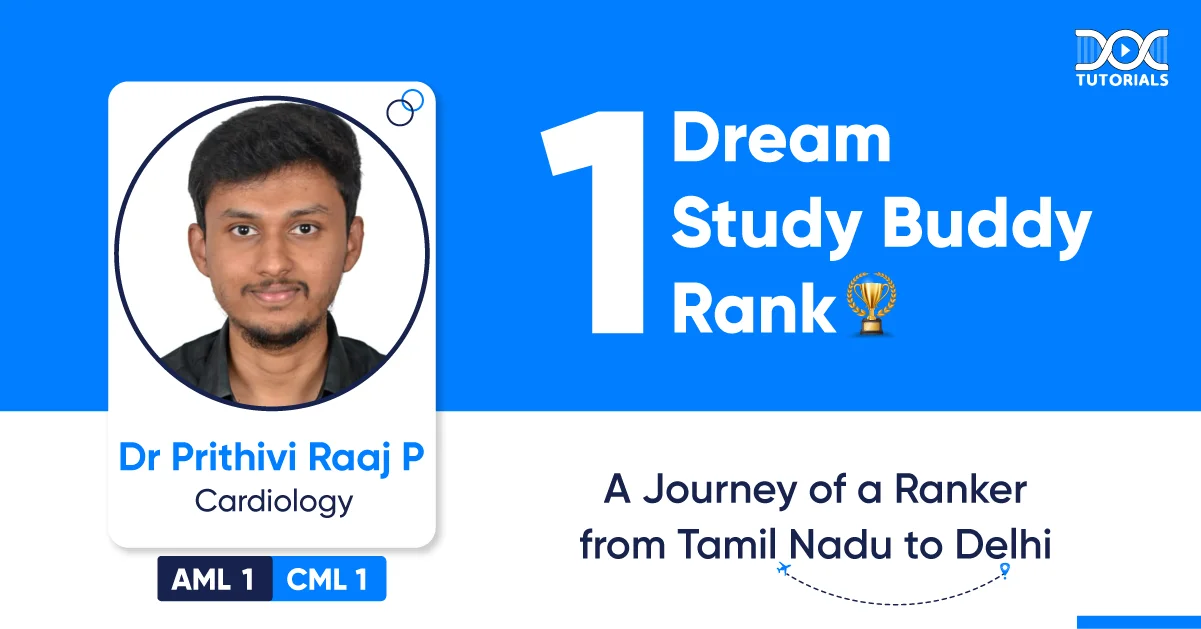
INI SS Topper: 1 Dream, 1 Study Buddy, 1 Rank – The Journey of Dr. Prithivi Raaj, CML 1 & (AIIMS) AML 1 in DM Cardiology
Achieving the top rank in a competitive exam like the INI SS DM Cardiology requires tireless dedication, a structured approach,…
-
INI SS Results: Merit List, Exam Insights, and What Comes Next
The INI SS results for October 2024 are just around the corner. This is a life-changing moment for thousands of…