Medicine Residency: What You Need to Expect as A Resident Physician?
The medicine residency is an important stage for a medical graduate to become a physician. In India, after graduation in MBBS or with the completion of an internship, physicians register for a 3-year residency in MD (General Medicine) in an institution, where they get proper clinical training, research, and academic learning.
Read on to learn more about medicine residency, duration, duties of a resident doctor, qualities required by resident doctors, and so on.
Medicine Residency in India: Overview
A medicine residency in India is a postgraduate 3-year training programme for doctors after completing their MBBS and internship, with a speciality developed through clinical rotations, research, and hands-on practice.
In India, a medicine residency is a significant time in a doctor’s experience after their MBBS. Generally, it lasts three years in General Medicine under the MD (Doctor of Medicine) program.
Over the course of three years, residents have been trained through intensive academic, clinical, and research programmes in different subspecialties like cardiology, neurology, nephrology, and critical care.
Their duties involve various activities, such as managing patient cases, attending to emergencies, participating in case discussions, and conducting research or completing a thesis.
At the end of this period of training, doctors will be ready to choose the paths of independent practice, super-specialisation, or academic and research in internal medicine.
What is the Duration of a Medical Residency?
The length of residency training varies based on the specialty a doctor selects, but it typically lasts around 4 years. The best residency programmes can range from 3 to 7 years, with surgical residencies requiring at least 5 years.
After completing their residency, some doctors go for training, which lasts for one to three years. According to the NRMP (National Resident Matching Program), the ten medical specialties with their durations are as follows:
| Medical Specialty | Duration |
| Internal Medicine | 3 years |
| Emergency Medicine | 3 to 4 years |
| Family Medicine | 3 years |
| Psychiatry | 4 years |
| Transitional Medical Year | 1 year |
| Paediatrics | 3 years |
| Surgery | 5 years |
| Medicine (Preliminary Year) | 1 year |
| Anaesthesiology | 4 year |
| Obstetrics-Gynaecology | 4 year |
Medicine Residency: Key Skills Required for Resident Doctors
Medicine residency requires several skills and qualities to excel as a doctor. This is how medical graduates make a transition from academic learning to hands-on patient care.
As a resident physician, you are expected to apply your knowledge of medicine and develop the essential professional and personal qualities that define a successful doctor. Here are the top 10 skills and qualities every resident physician should possess or develop:
- Professionalism
Professionalism is required in every field. As a resident doctor, you encounter patients in their vulnerable state. Maintaining proper behavioural discipline when interacting with patients gives them security and respect. Confidentiality, integrity, and ethics assure patients of your good character and earn you the reputation of a trustworthy doctor.
- Continuous Learning
The field of medicine is changing, and you must stay up-to-date. Opt for every opportunity, discuss various medical cases, participate in seminars, and clinical rounds. A balanced combination of clinical experience with self-directed learning can improve both your clinical judgment and skill.
- Time Management
With long hours, multiple patients, and responsibilities, the important thing is to manage time in a strategic manner. Organisational skills enable residents to get things done and handle emergencies while maintaining a healthy balance between work and personal life. Proper time management increases productivity and also reduces burnout.
- Attention to Detail
Medicine demands this accuracy, especially in fast-paced hospital settings. Besides, there is a need to develop strong observation skills regarding all minute clinical details to ensure patient safety and maintain high-quality care.
- Stress Management
The heavy workloads and emotional challenges, together with the demanding schedules, are part of residency. Managing your stress can be achieved with exercise, rest, mindfulness, or peer support. This helps maintain focus, resilience, and compassion in patient care.
- Interpersonal and Communication Skills
Communicating clearly with the patient, family, and health care teams is important. Whether explaining a diagnosis or collaborating in a setting, communication develops understanding, trust, and coordinated care. Strong interpersonal skills also smoothen difficult conversations in a professional way.
- Empathy
Medicine involves both human connection and science. Showing empathy allows residents to understand the perspectives, fears, and emotions of patients. Compassionate care enhances patient satisfaction and outcomes.
- Collaboration
Residency needs teamwork. You will be working with nurses, specialists, and other professionals to provide comprehensive care. Collaborative skills such as active listening, respect for diverse roles, and openness to feedback enhance teamwork and improve patient outcomes.
- Technical Competence
The residents have to be acquainted with fundamental procedures and diagnostic skills, such as injection techniques, insertion of IV lines, and assisting during surgeries, among others.
Technical proficiency in these areas requires regular practice, mentors’ guidance, and attention to technique to develop confidence and competence eventually.
- Positive Attitude
Residency is complex, but the right attitude keeps you motivated and focused. A positive approach lifts not just your spirits but also those of the patient and colleagues.
Challenges viewed as chances for growth and opportunity are a path to personal growth and professional success.
What are the Key Duties of a Resident Doctor?
A resident doctor is a medical graduate in training who works under supervision in hospitals and clinics, diagnoses patients, conducts procedures, prescribes treatments, and manages care on rounds. They gain practical experience in all specialities while continuing their education through medicine residency programmes to grow independent clinical expertise.
General medical residency is the practical training after medical college, during which doctors apply their academic knowledge in real clinical settings. Residents work in hospitals or clinics under the supervision of senior physicians. In this setting, residents gradually take greater responsibility as experience is obtained.
Here are the primary duties that every resident doctor needs to perform:
- Direct Patient Care
Their primary roles include diagnosing, managing, and treating patients. They take medical histories, perform physical exams, order tests, and create treatment plans-all under the guidance of senior doctors. This forms the basis of their clinical training.
- Rounding on Patients
The residents join the daily hospital rounds, visiting the patients to assess their progress, reviewing lab results, and updating treatment plans. These also serve as important learning opportunities through discussions of cases and feedback from senior doctors.
- Performing Procedures
Gradually, residents learn to carry out medical or surgical procedures: first by observing, then assisting, before finally independently undertaking tasks such as suturing wounds, inserting IV lines, or assisting with surgeries, depending on their speciality.
- Ordering and Interpreting Tests
However, interpreting diagnostic tests and imaging is a major part of residency. Residents learn to analyse lab reports, CT (computed tomography) and MRI (magnetic resonance imaging) scans, and X-rays to monitor recovery and guide patient management.
- Prescribing and Monitoring Medications
They prescribe medications, including antibiotics, pain medications, and other forms of medication, learning about the appropriate dosages, side effects, and patient follow-up. Prescription writing changes in response to a patient’s needs or evolving clinical conditions.
- Outpatient Clinic Duties
Besides the hospital, residents also see patients in outpatient clinics for consultations, pre-surgery evaluations, and post-treatment follow-ups that help enhance patient communication and long-term care management skills.
- Surgical Observation and Practice for Surgical Residents
Surgical residents first observe and assist with operations. Gradually, they advance to performing minor surgeries and then conduct more complex ones under the supervision of a professional, gaining skill and confidence.
FAQs about Medical Residency
- What happens after medical residency?
After a medical residency, physicians may have a few career options. Many start practising in hospitals or in their private clinics; some pursue super-specialisation like DM courses in cardiology, gastroenterology, or nephrology.
Some turn towards academics or research, contributing to teaching and innovation in medicine. The residents can also work abroad, provided they fulfil the licensing requirements of the respective country.
- What are the questions asked at a medical residency interview?
Most interviews for residency start with broad introductory questions such as “Tell me about yourself” or “Why did you choose this speciality?” Some questions may be either behavioural and reflective, for example: “How do you earn a patient’s trust?”.
Interviewers may also ask questions on personal interests, such as “What book are you currently reading?” Review your ERAS personal statement and CV extensively before the interview, because most questions are asked based on your experiences, research, and personal journey in medicine.
- What are the requirements for Indian medical residency?
To qualify for Indian medical residency, you need to have finished your MBBS degree and successfully passed the NEET-PG exam. You also have to comply with the age and other eligibility requirements established by the National Board of Examinations (NBE) or the Medical Council of India (MCI).
- How much do Indian medical residents earn?
The earnings of Indian medical residents differ based on the institution, speciality, and the state where the residency takes place. Generally, medical residents in India receive a stipend that falls between ₹40,000 and ₹70,000 each month.
- Is medical residency harder than medical school?
Both medical school and residency are challenging, just in different ways. Medical school can be very academically intense, while residency is demanding because of the long hours, real patient care, and higher responsibility.
Difficulty depends very much on personal strengths, with those who enjoy studying usually liking medical school and hands-on learners finding residency more rewarding.
- Can international medical graduates apply for Indian medical residency?
Yes, international medical graduates (IMGs) can apply for medical residency in India if they meet the eligibility criteria. This includes a recognised MBBS degree, clearing FMGE (if required), and obtaining a valid NEET-PG score. Admission depends on the counselling rules and seat availability.
- How long does the Indian medical residency program last?
The Indian medical residency program generally lasts three years for MD/MS courses. The duration may vary by speciality, with diploma courses being shorter and super-speciality programs requiring additional training years.
- What are the most competitive medical residency specialities in India?
The most competitive medical residency specialities in India include Radiology, Dermatology, Cardiology and Orthopaedics.
- How are candidates selected for Indian medical residency?
Candidates are selected primarily based on their NEET-PG score and rank. Academic performance may be considered by some institutions. Seat allotment is done through centralised counselling, and the process can vary by speciality and institution.
- How to Succeed in Medicine Residency
Thrive in medicine residency by prioritising tasks, mastering core clinical skills, asking for help, maintaining physical and mental health, communicating clearly, knowing your patients, respecting your team, studying smartly, and embracing challenges to grow into a competent, confident doctor.
Conclusion
Medicine residency requires commitment and hands-on experience. It’s that stage when, as future physicians, they will refine their skills, adapt to new technologies, and discover their true calling in medicine.
Preparing for medical exams can be challenging, and that’s why DocTutorials can be your study partner.
We offer hard-copy notes for Medicine, Paediatrics, and MS General Surgery courses under PG Residency. This ensures aspirants are well-prepared before their exam days.
Join DocTutorials and explore our PG Residency course to excel in your medical journey.

Latest Blogs
-

NEET SS Exam 2024: Analysis, Key Dates, Counselling
The NEET SS 2024 exam kicked off on March 29, 2025. Over two days and two slots, candidates across 13…
-
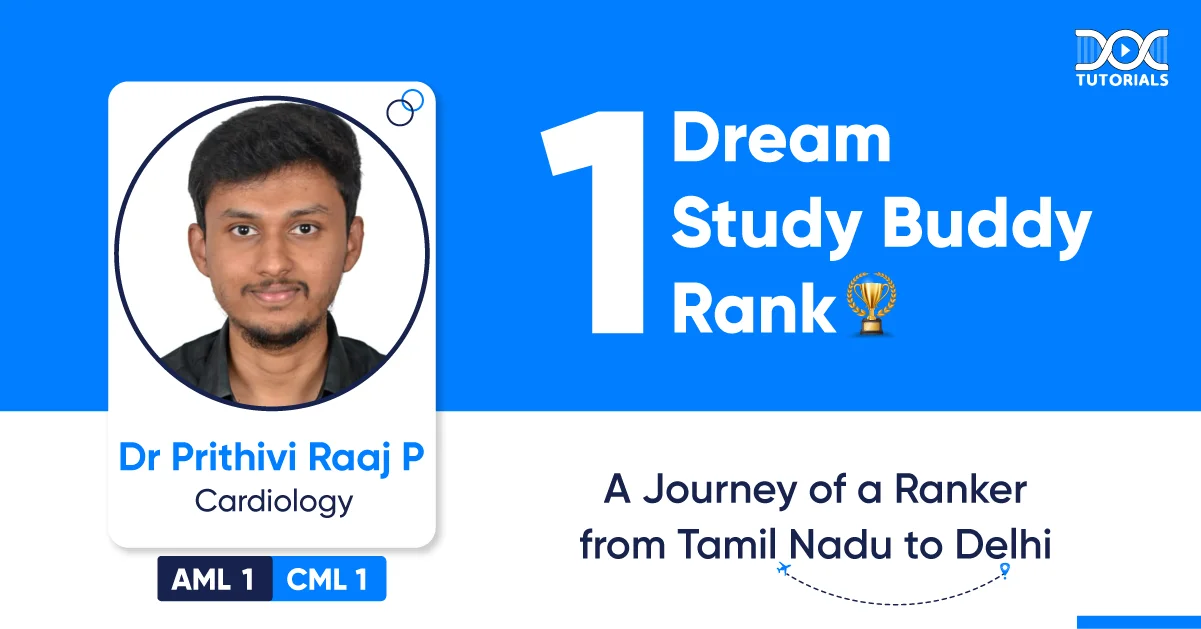
INI SS Topper: 1 Dream, 1 Study Buddy, 1 Rank – The Journey of Dr. Prithivi Raaj, CML 1 & (AIIMS) AML 1 in DM Cardiology
Achieving the top rank in a competitive exam like the INI SS DM Cardiology requires tireless dedication, a structured approach,…
-
INI SS Results: Merit List, Exam Insights, and What Comes Next
The INI SS results for October 2024 are just around the corner. This is a life-changing moment for thousands of…