Family Medicine Residency in India: Shaping the Future of Comprehensive Healthcare
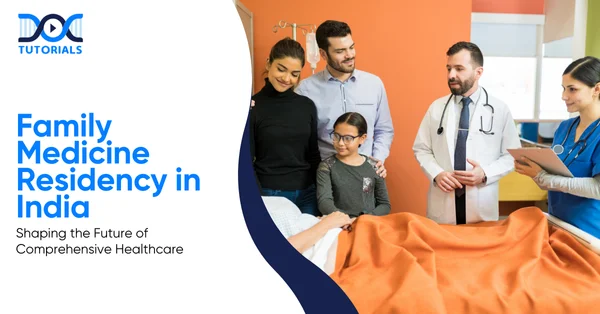
In India, family medicine residency has been one such emerging field that focuses on providing continuous and compassionate care to individuals and families across the entire age spectrum, regardless of gender or disease condition.
In India, family medicine residency programmes and DNB family medicine courses play a crucial role in developing skilled physicians who are oriented to community needs and help bridge the gap in providing primary healthcare.
Read on to learn more about family medicine residency, duration, qualities required by resident doctors, and so on.
Family Medicine Residency in India: Overview
Family medicine residency in India aims to equip doctors with skills for comprehensive, lifelong, community-based health care. It builds skilled primary care physicians through structured postgraduate programmes.
Family Medicine PG in India is a postgraduate speciality that encompasses holistic, continuous care for individuals and families. The training is available as a 3-year DNB (NBE) and MD (MCI-recognised) program.
Although the concept had been in place for decades, structured training has been initiated recently to strengthen primary healthcare and reduce the burden on secondary and tertiary hospitals.
The first FM MD programme started at Calicut Medical College (Kerala) in the year 2012. A PG Diploma in family medicine will also provide focused training for community-based generalist practitioners.
Why is Family Medicine Residency in India Important?
Family medicine residency in India is crucial in shaping doctors who can provide comprehensive, continuous, and community-oriented healthcare across all ages and conditions. Here is why it is important:
- Wide Scope of Practice
Family medicine residents are trained to diagnose, treat, and manage diverse health problems, from acute illnesses to chronic diseases, with emphasis on prevention, wellness, and holistic care. Training spans from hospital-based to community-based practice to ensure accessible healthcare for all.
- Evolution and Academic Recognition
Emerged as a recognised speciality in 1983, family medicine has gained structure through residency programmes at the levels of MD and DNB.
The National Board of Examinations and National Medical Commission now lay emphasis on increasing the training slots and making family medicine an integral part of the MBBS foundation course to meet India’s increasing health needs.
- Relevance to Healthcare Reform
India’s healthcare system has a significant imbalance, with well-equipped urban hospitals contrasting sharply with poorly equipped rural centres. Family physicians are on the front line, providing low-cost, quality services and helping to minimise avoidable hospitalisations.
Family Medicine Residency Programmes in India: Course Structure
By pursuing family medicine residency programmes, doctors learn to provide ongoing, all-encompassing healthcare for people and families of all ages. The training lasts 3 years and combines hospital rotations, community practice, and electives to create a solid base in primary care.
The objective of family medicine residencies is to prepare promising doctors for delivering thorough medical care that encompasses the full range of a patient’s life stages. Discussed below is the course structure of family medicine residency programmes:
- 1st Year: Core Clinical Rotations
First-year family medicine residents have rotations in different specialities for laying a solid clinical foundation. They manage long-term illnesses like diabetes, high BP, and heart disease in internal medicine, care for babies, children, and teenagers in paediatrics, and learn to handle pregnancies, deliveries, and women’s health issues in obstetrics and gynaecology.
Besides, they also treat urgent and life-threatening conditions in emergency medicine, and receive basic surgical and musculoskeletal management skills in surgery and orthopaedics. During this year, the residents also began treating their own patients seen in a family medicine clinic under the supervision of a senior doctor.
- 2nd and 3rd Year: Advanced Skills and Electives
In the second and third years of family medicine residency, physicians are given more responsibility and spend more time providing outpatient primary care, including preventive health and patient education.
Residents can select electives of interest, such as sports medicine to manage and treat injury; geriatrics, to care for older patients with multiple chronic diseases; palliative care, which focuses on symptom management and quality of life for patients with serious illnesses; and global health, to gain insight into healthcare in resource-poor settings.
During this time, residents also hone their procedural competencies, including suturing lacerations, administering joint injections, taking skin biopsies, and placing Intrauterine Devices (IUDs), among other procedures, in preparation for independent clinical practice.
Note: Many doctors opt for online family medicine courses to enhance their learning during residency.
Career Options for Family Medicine Residency
Family medicine graduates can have various career paths in India, from clinical practice and hospital medicine to public health and academics. They can also pursue fellowships in geriatrics, sports medicine, or sleep medicine in any of the hospitals, community centres, or private practice settings.
After finishing a family medicine residency, you have many career choices. The flexibility of family medicine allows you to work in diverse settings and tailor your practice to your preferences. Some effective options are as follows:
- Outpatient Primary Care
Most family doctors work in outpatient primary care environments, whether in private practices, community health centres, or group practices. In this role, you will provide comprehensive care to patients of all ages, emphasising preventive care, managing chronic illnesses, and coordinating with specialists when needed.
- Hospitalist/Nocturnist
Some family doctors opt to work as hospitalists, caring for patients who are hospitalised. In this position, you will manage acute medical issues, coordinate with other specialists, and oversee patient admissions and discharges.
Hospitalist positions often have more regular hours, such as 7 days on and 7 days off. Nocturnists have similar duties but work on night shifts, admitting and managing patients overnight, often with more time off or higher pay.
- Urgent Care
For family doctors who enjoy a quicker pace without the continuity of care, urgent care is an excellent choice. In this environment, you will treat patients with urgent problems like infections, minor injuries, or fractures.
While urgent care centres may not build the same long-term relationships as primary care, they offer a seamless and varied clinical experience that helps physicians develop strong diagnostic and procedural skills.
FAQs about Family Medicine Residency
- Are family medicine and community medicine the same?
Family medicine and community medicine represent two distinct postgraduate medical specialities. Family medicine is a clinical speciality where physicians are trained to treat patients across all age groups; in contrast, community medicine is a non-clinical speciality focused on promoting community health and providing health education.
- How long is a family medicine residency in India?
Family Medicine residency is a three-year broad-based postgraduate training programme that encompasses multiple disciplines, be it MD or DNB. The residents are exposed to clinical learning in the hospitals and community to manage comprehensive care for a patient’s lifetime.
- Who should pursue a family medicine residency?
This is ideal for individuals who enjoy diagnosing and managing conditions across the age spectrum.
- Is DNB Family Medicine a postgraduate speciality?
Yes, the National Board of Examinations administers the family medicine residency examinations in India. Upon successful completion of a three-year residency programme, candidates receive the Diplomate of National Board (Family Medicine) qualification.
- Is DNB family medicine acknowledged by the MCI?
Family medicine is recognised as a postgraduate speciality by both the Medical Council of India (MCI) and the National Board of Examinations (NBE).
- What is the NBEMS Diploma in Family Medicine?
The NBEMS Diploma in Family Medicine (D Fam. Med), also referred to as the National Board of Examinations in Medical Sciences Diploma in Family Medicine (D Fam. Med. NBEMS), is a postgraduate programme designed for physicians in India, undertaken following the completion of their MBBS degree.
This postgraduate course spans 2 years and covers a broad spectrum of medical conditions, providing comprehensive healthcare services to individuals across all age groups.
- What happens after Family Medicine residency?
After completing a Family Medicine residency, doctors can pursue fellowship programs in areas like geriatrics, sports medicine, palliative care, or emergency medicine, or work as primary care physicians in hospitals, clinics, academics, or independent practice.
- Does a doctor get paid during Family Medicine residency?
Yes. Doctors receive a monthly stipend/salary during Family Medicine residency. The amount varies by country, institution, and year of residency, and usually increases with each year of training.
- How do I apply for a family medicine residency?
Apply through the standard residency match process. Prepare a personal statement, CV, medical school transcript, and dean’s letter. Submit 3–4 recommendation letters (preferably one from a family physician). Attend interviews from October–January, rank programs, and match results are released in March.
- What’s a family medicine residency like?
A family medicine residency trains doctors to provide comprehensive care to patients of all ages, from infants to the elderly. The first year focuses on core hospital rotations like medicine, pediatrics, obstetrics, and emergency care.
Conclusion
In summary, a family medicine residency in India offers an excellent opportunity for medical students to train as expert healthcare providers capable of meeting diverse patient needs.
Admission to the three-year post-MBBS DNB family medicine course is carried out through DNB CET and Centralised Merit-Based Counselling conducted by the National Board of Examinations.
With DocTutorials, aspirants receive expert guidance, hard-copy notes for Medicine, Paediatrics, and MS General Surgery courses under PG Residency, and proper support to succeed confidently in their medical journey. Join DocTutorials today and explore our PG Residency course to excel in your medical career!

Latest Blogs
-

NEET SS Exam 2024: Analysis, Key Dates, Counselling
The NEET SS 2024 exam kicked off on March 29, 2025. Over two days and two slots, candidates across 13…
-
INI SS Topper: 1 Dream, 1 Study Buddy, 1 Rank – The Journey of Dr. Prithivi Raaj, CML 1 & (AIIMS) AML 1 in DM Cardiology
Achieving the top rank in a competitive exam like the INI SS DM Cardiology requires tireless dedication, a structured approach,…
-

INI SS Results: Merit List, Exam Insights, and What Comes Next
The INI SS results for October 2024 are just around the corner. This is a life-changing moment for thousands of…