Residency in Obstetrics and Gynaecology: A Complete Guide for Medical Graduates
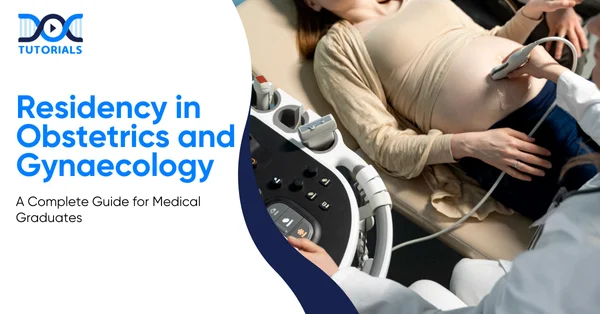
In Obstetrics and Gynaecology (OB-Gyn), residency is a speciality that gives a closer look into the health problems of women, including pregnancy, childbirth, fertility, and reproductive care. Trainees get substantial exposure to complex cases, and they also participate in surgical procedures under the guidance of their instructors.
In this article, we will explore all the aspects you need to know about pursuing a residency in Obstetrics and Gynaecology, including the required educational path in India and career prospects. Keep reading for a detailed insight.
What is a Residency in Obstetrics and Gynaecology?
A residency in OB-GYN is a rigorous postgraduate program designed to train doctors in women’s reproductive health, childbirth, and surgery. It combines clinical exposure, hands-on practice, and academic learning to build well-rounded specialists.
An Obstetrics and Gynaecology (OB-GYN) residency is a focused post-graduate medical training program that equips medical graduates to become proficient in female reproductive health. The rigorous program is typically completed in 4 years and integrates extensive clinical exposure with academic learning.
The training includes rotations in various subspecialties and provides a balanced clinical experience to the residents. They must counter clinical practice with intense academic training throughout the program.
Since the program is intensive, it is critical that the OB-GYN residents develop effective time management and study strategies to pass the examinations and be competent in the actual medical practice.
What Does an OB-GYN Doctor Do?
OB-GYN doctors provide comprehensive care for women, covering pregnancy, childbirth, fertility, and reproductive disorders. They diagnose, treat, and perform surgeries to maintain women’s health throughout all life stages.
Obstetrician-gynaecologists are healthcare professionals dedicated to specialising in women’s health, providing medical and surgical care for a wide array of health conditions affecting women throughout their lifespan.
These specialists typically practice in hospitals or dedicated clinics, offering a diverse portfolio of essential services:
- Prenatal Care: OB-GYNs take care of pregnant women starting from the first prenatal visit up to delivery. They may also assist girls in pregnancy planning and discuss the best birth control methods or give information on cessation.
- Childbirth: OB-GYNs deliver babies both vaginally and by cesarean section. They also care for women after delivery during the postpartum period.
- Gynaecological Examinations: OB-GYNs conduct pelvic exams, Pap tests, and other medical procedures to screen for and diagnose gynaecological diseases and disorders. They can also treat gynaecological conditions such as endometriosis, ovarian cysts, and chronic pelvic pain.
- Infertility Treatment: They can assist those women who are experiencing issues with conceiving. They offer a variety of treatments, which can include medication, surgery, and assisted reproductive technology.
- Sexual Health: The doctors can provide information and advice about sexual health, including contraception, sexually transmitted infections, and menopause.
What are the Courses to Become an OB-GYN in India?
Becoming an OB-GYN in India involves completing MBBS followed by a postgraduate degree like MD, MS, DNB, or DGO. Advanced fellowships in infertility, oncology, or fetal medicine enhance expertise and career growth.
To become an OB-GYN specialist, you need to go through several years of education and training:
1. MBBS – Bachelor of Medicine and Bachelor of Surgery
- Duration: 5.5 years incl. 1-year internship
- Entry through NEET-UG
- Foundation of your medical career
2. MD/MS in Obstetrics and Gynaecology
- Duration: 3 years
- Admission through NEET-PG or INI-CET
- MD/MS is the postgraduate qualification to become a specialist.
- Trains you in childbirth, surgical skills, infertility, and women’s health
3. DNB (Diplomate of National Board) in Obstetrics & Gynaecology
- Equivalent to MD/MS
- Conducted by NBE
- Duration: 3 years
- Entry through NEET-PG
4. Diploma in Gynaecology and Obstetrics (DGO)
- Duration: 2 years
- Less comprehensive than MD/MS
- Good for those who want quicker clinical practice.
5. Super Specialisations/Fellowships (After MD/MS)
- Reproductive Medicine (Infertility Specialist)
- Gynecologic Oncology (Cancer in reproductive organs)
- Maternal-Fetal Medicine (High-risk pregnancy)
- Urogynecology (Pelvic floor disorders)
- Laparoscopic and Robotic Surgery
- Fetal Medicine
These offer advanced skills and higher career opportunities.
How to Become an OB-GYN in India?
The journey starts with an MBBS degree, followed by clearing NEET-PG and pursuing specialisation in Obstetrics and Gynaecology. Additional fellowships and super-specialisations open pathways to advanced clinical roles.
Becoming an OB-GYN calls for an individual to pursue an MBBS degree, followed by postgraduate specialisation in obstetrics and gynaecology. Here are the steps:
- Complete Class 12 with PCB (Physics, Chemistry, Biology)
- At the 10+2 level, take up the Science stream with PCB subjects.
- The candidate should secure at least 50% marks in PCB for the general category and 40% for the reserved categories.
- Focus especially on biology, as that’s heavily weighted in the entrance exams.
- Appear for NEET-UG and Secure MBBS Admission
In order for someone to become a doctor, one has to qualify for NEET-UG (National Eligibility cum Entrance Test), conducted by the NTA.
Overview of the MBBS Program:
- Duration: 5.5 years (4.5 years academic + 1-year internship)
- Subjects Covered: Anatomy, Physiology, Biochemistry, Pathology, Pharmacology, Forensic Medicine, Surgery, Medicine, Paediatrics, Psychiatry, Obstetrics & Gynaecology, etc.
The basics regarding obstetrics and gynaecology are taught in the final year of your MBBS curriculum and during your internship.
- Complete MBBS and Gain Experience
With the completion of MBBS and internship, you will be a licensed doctor. To specialise in obstetrics and gynaecology, you must pursue post-graduation.
- Clear NEET-PG and Enrol in MS/MD in Obstetrics and Gynaecology
For postgraduate specialisation, one has to appear for NEET-PG, a national-level entrance test for MD/MS/DNB programs.
Specialisation options include:
- MS in Obstetrics & Gynaecology: 3 years
- MD in Obstetrics & Gynaecology: 3 years
- DNB in Obstetrics & Gynaecology: 3 years (offered by NBE)
In this course, you will get in-depth training in the reproductive health of women, surgery, pregnancy, infertility, and other topics.
- Optional Super-Specialisation (MCh/DM/Fellowship)
If you want to specialise further, you may take up a super-speciality or fellowship in a sub-field such as:
- Gynecologic Oncology
- Fetal Medicine
- Reproductive Medicine & IVF
- Urogynecology
- Maternal-Fetal Medicine
- Gynecologic Endoscopy/Laparoscopy
These courses typically last 1–3 years and are recommended for individuals working in corporate hospitals or as senior consultants.
Summary of OB-GYN Education Path
This table provides a concise overview of the minimum sequential stages required to become a certified OB-GYN specialist:
| Stage | Course Name | Duration |
| Step 1 | 10+2 with PCB | 2 years |
| Step 2 | MBBS | 5.5 years |
| Step 3 | MS/MD/DNB in OB-GYN | 3 years |
| Optional Step 4 | DM/MCh/Fellowship (Optional) | 1–3 years |
What are the Skills Required to Become an OB-GYN?
A successful OB-GYN combines surgical expertise, empathy, communication, and quick decision-making. The ability to handle high-pressure situations and connect with patients emotionally is key in this field.
Success in OB-GYN requires a combination of technical expertise, quick thinking, and strong interpersonal skills. Here are the main required skills:
- Strong Knowledge of Medicine and Surgery: Adequate mastery of theory and practice related to obstetrics and gynaecology.
- Excellent Communication and Empathy: The ability to convey sensitive information with clarity and connect with patients compassionately is non-negotiable.
- Decision-Making Under Pressure: The ability for quick and clear judgment is paramount, especially in time-sensitive obstetric emergencies.
- Surgical Skill and Dexterity: Precise and fine surgical skills are needed in open or laparoscopic surgeries.
- Patience and Emotional Resilience: The capacity to manage high-stress situations, deal with emotional patient scenarios, and maintain professional composure.
- Understanding of Female Psychology and Cultural Sensitivity: The holistic care requires an awareness of the psychological state and culture of the patient.
What are the Career Options after an MD/MS in Obstetrics and Gynaecology?
After completing postgraduate training, OB-GYNs can work as consultants, IVF specialists, oncologists, professors, or researchers. Each career path offers unique opportunities to contribute to women’s health.
Completion of postgraduate training offers a myriad of opportunities for specialisation in career paths related to women’s health. They are discussed in the table below:
| Career Option | Description |
| Obstetrician | Specialises in the management of pre-pregnancy care, labour, delivery, and immediate postpartum care. |
| Gynecologist | Focuses on the diagnosis and comprehensive treatment of diseases affecting the female reproductive and urinary organs. |
| IVF Specialist | Provides expertise in fertility evaluation, pharmacological treatments, and assisted reproductive conception technologies. |
| Laparoscopic Surgeon | Performs gynaecological operations using minimally invasive surgical techniques, speeding up patient recovery. |
| Gynecologic Oncologist | Specialises in the surgical and often systemic treatment of cancers of the reproductive organs (e.g., ovarian, cervical). |
| Fetal Medicine Specialist | Manages and monitors high-risk pregnancies, performing detailed fetal diagnostic procedures and interventions. |
| Medical Professor | Engages in teaching and training medical students and residents in affiliated medical colleges. |
| Clinical Researcher | Conducts clinical trials and research projects focused on advancing women’s health and treatment innovations. |
What are the Super Specialisations after Completing OB-GYN?
OB-GYNs can pursue advanced fellowships in fields like Reproductive Medicine, Fetal Medicine, or Gynecologic Oncology. These specialisations help doctors master niche areas and achieve higher recognition.
For further specialisation, these advanced fields require dedicated post-MD/MS training:
| Field | Description |
| Reproductive Medicine | Focus on infertility, IVF, and IUI |
| Fetal Medicine | Diagnosing fetal conditions via scans and genetics |
| Urogynecology | Treatment of urinary problems in women |
| Gynae Oncology | Surgery and management of reproductive cancers |
| Laparoscopic & Robotic Surgery | Modern surgical techniques for minimal invasion |
What is the Salary of OB-GYN Doctors in India?
OB-GYN salaries in India vary by experience and workplace. From ₹1 lakh in government jobs to over ₹20 lakhs per month in private practice, this field offers both respect and rewarding earnings.
OB-GYN salaries can vary based on experience, setup, location, and specialisation. Here’s how:
- Government Jobs (After PG)
- ₹1,00,000 – ₹1,80,000 per month
- Other allowances such as HRA, DA, pension, etc.
- Private Hospitals
- Entry-level: ₹1,50,000 to ₹2,50,000/month
- Senior Consultants: ₹3,00,000 to ₹6,00,000/month
- Own Clinic/Nursing Home
- Earnings depend on practice, location, and reputation.
- ₹5–₹20 lakhs/month possible in metro cities.
- IVF/Fertility Specialists
- ₹3,00,000 to ₹10,00,000 per month
- IVF success rate affects income
- Overseas Opportunities
- OB-GYN doctors are in demand in:
- Gulf countries (UAE, Oman, Saudi Arabia)
- UK, Canada, Australia, and New Zealand
- Salaries: ₹1–2 crore annually
Top Colleges for MD/MS in Obstetrics and Gynaecology in India
Top medical institutes like AIIMS, PGIMER, and CMC Vellore offer leading OB-GYN programs. These institutions provide exceptional clinical exposure, academic mentorship, and research opportunities.
Admission to a highly-ranked institute guarantees excellent clinical exposure and superior academic mentorship. Here are some of the top medical colleges for MD/MS in Obstetrics and Gynaecology in India:
| Institute | Location |
| All India Institute of Medical Sciences (AIIMS) | New Delhi |
| Postgraduate Institute of Medical Education and Research (PGIMER) | Chandigarh |
| Christian Medical College (CMC) | Vellore |
| Jawaharlal Institute of Postgraduate Medical Education and Research (JIPMER) | Puducherry |
| Seth GS Medical College & KEM Hospital | Mumbai |
| Maulana Azad Medical College | Delhi |
| BJ Medical College | Ahmedabad |
| Sanjay Gandhi Postgraduate Institute of Medical Sciences (SGPGI) | Lucknow |
| Nil Ratan Sircar Medical College and Hospital (NRS) | Kolkata |
| Lady Hardinge Medical College | Delhi |
Recommended Books for OB-GYN Students
Books like Williams Obstetrics and DC Dutta’s Textbook are must-reads for OB-GYN residents. They provide comprehensive coverage of theory, procedures, and case studies essential for mastering the speciality.
These texts are considered mandatory reading and crucial references for all students and residents specialising in Obstetrics and Gynaecology:
- DC Dutta’s Textbook of Obstetrics
- DC Dutta’s Textbook of Gynaecology
- Williams Obstetrics
- Novak’s Gynaecology
- Shaw’s Textbook of Gynaecology
- Atlas of Ultrasound in Obstetrics and Gynaecology
What are the Effective Study Techniques for OB-GYN Residents?
Balancing clinical work and study is vital in OB-GYN residency. Strategic time management, case-based learning, and regular mock tests help residents strengthen both theoretical and practical knowledge.
To successfully navigate the immense workload of residency and excel in certifying exams, a well-planned and strategic approach to studying is essential for maximising efficiency. Here’s how:
- Focus on Managing Time Effectively
Time management is arguably the most crucial element for survival and success in an obstetrics and gynaecology residency. Resident physicians face extremely heavy schedules, juggling demanding clinical shifts, surgical responsibilities, and mandatory academic requirements.
Developing and strictly adhering to a structured study schedule is vital, as it ensures you dedicate time for academic work, patient care, and, critically, personal rest and self-care. Prioritising adequate rest prevents burnout and directly enhances the quality of your learning during study periods.
- Diversify Your Learning Approaches
Adopting a variety of learning modalities leads to more productive and engaging study sessions. Do not rely on passive reading alone; incorporate a number of methods to actively reinforce knowledge retention.
- Video Lectures: High-quality, conceptual video lectures ensure a highly effective coverage of the vast and complex syllabus. Visual and auditory learning is highly effective for enhancing conceptual understanding and long-term recall.
- Peer Teaching: Try to explain difficult ideas to a fellow worker or colleague. To teach anything, you really need to know your subject well, thereby solidifying your own learning and identifying knowledge gaps at once.
- Mock Tests and Simulation: Routine practice through mock tests, which accurately resemble the format and length of the real test, is a must. The practice will help you assess how much you presently know, work on your speed, and gain confidence on the actual test day.
- Integrate Clinical Cases into Daily Study
The best way to learn in a residency program is to transform each patient interaction into a learning experience. Right after your shift, get into the habit of critically reviewing the cases you handled. Keep a personal log of cases where you record important patient histories, diagnoses, treatment plans, and outcomes.
This method not only refreshes your theoretical knowledge but also practices it with fast and accurate clinical recall during clinical duties and exams.
FAQs about Residency in Obstetrics and Gynaecology
- Is NEET necessary for becoming an obstetrician-gynaecologist?
Yes, you need to qualify for NEET-UG for admission to the MBBS course and then again clear the NEET-PG to get admission for the MD/MS/DNB specialisation course in Obstetrics and Gynaecology.
- Is OB-GYN a good career in India?
Yes, definitely. OB-GYN has always been a great career path with a lot of benefits, including being a highly respected field with a constant demand, excellent job security, a diverse and interesting professional life, and a fair income, especially in private and metro-city practice.
- Where do gynaecologists get paid the most?
The salary is varied based on geographic location, sector (private usually being higher than government), experience, and speciality. Highly skilled and well-experienced gynaecologists in the private sector and those with successful super-specialised practices (like IVF or Gynae Oncology) typically command the highest salaries.
- What are the career prospects for a gynaecologist?
Gynaecologists have ample career openings in Government and Private hospitals, private clinics/nursing homes, defence hospitals, IVF fertility centres, and community health centres.
Some of the job profiles include general practitioners and specialised consultants, lecturers, gynaecologist-oncology specialists, reproductive medicine specialists, senior residents, and researchers.
- What is the difference between MD and DNB in OB-GYN?
Both MD (Doctor of Medicine) and DNB (Diplomate of National Board) are nationally recognised, equivalent postgraduate degrees for speciality practice. The MD is typically university-based (conferred by a university-affiliated college), while the DNB is hospital-based (conferred by the National Board of Examinations) and is fully recognised by the MCI/NMC.
- What is the duration of residency in Obstetrics and Gynaecology in India?
Residency in Obstetrics and Gynaecology in India usually lasts 3 years. This consists of structured clinical training, academic training, emergency duties, and hands-on surgical experience.
- What are the eligibility criteria for OB-GYN residency after MBBS?
In order to gain eligibility for OB-GYN residency, candidates must have completed MBBS from an NMC-recognised medical college and must have completed the mandatory one-year rotating internship. Admission is based on qualifying the NEET PG, followed by counselling conducted by central or state authorities.
- What entrance exams are required for admission to Obstetrics and Gynaecology residency?
NEET PG is the mandatory entrance examination for admission into MD, MS, and DNB Obstetrics and Gynaecology programs in India. The selection ideally depends on the NEET-PG score, rank, category, and seat availability.
- What skills are essential to succeed during OB-GYN residency training?
Successful OB-GYN residents require strong communication skills, effective clinical reasoning, and good medical knowledge. Additional skills such as time management, teamwork, and regular learning is essential during the training period.
- What are the work hours and lifestyle like during an OB-GYN residency?
The residency period in OB-GYN can be demanding, with long work hours, night duties, and emergency calls due to unpredictable labour and obstetric emergencies.
Conclusion
The journey of residency in Obstetrics and Gynaecology in India is no less than challenging and transformational; it demands precision, calls for compassion, and builds resilience. It is an experience that shapes confident and skilled professionals ready to make a lasting impact.
A strong academic record with a good clinical background is the key to unlocking the goal of joining the most prestigious OB-GYN residency programs. For added guidance, DocTutorials can be your medical study partner. As one of the prominent PG residency preparation platforms in India, we can help you prepare effectively.
Join DocTutorials today and explore our PG Residency course to excel in your medical exams!

Latest Blogs
-

NEET SS Exam 2024: Analysis, Key Dates, Counselling
The NEET SS 2024 exam kicked off on March 29, 2025. Over two days and two slots, candidates across 13…
-
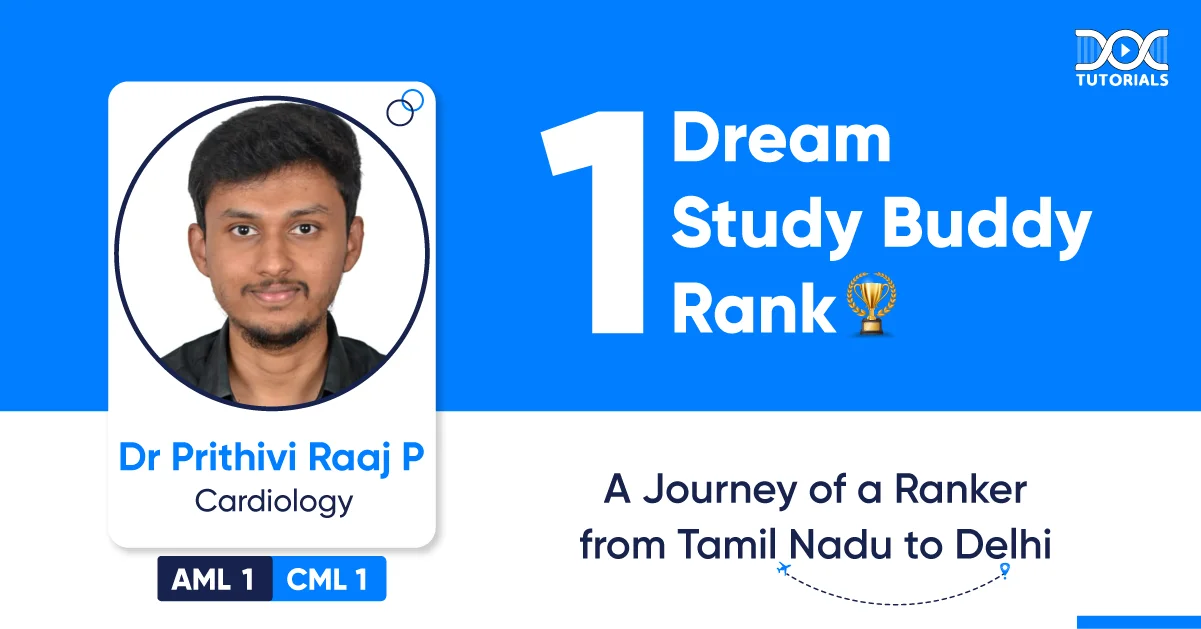
INI SS Topper: 1 Dream, 1 Study Buddy, 1 Rank – The Journey of Dr. Prithivi Raaj, CML 1 & (AIIMS) AML 1 in DM Cardiology
Achieving the top rank in a competitive exam like the INI SS DM Cardiology requires tireless dedication, a structured approach,…
-
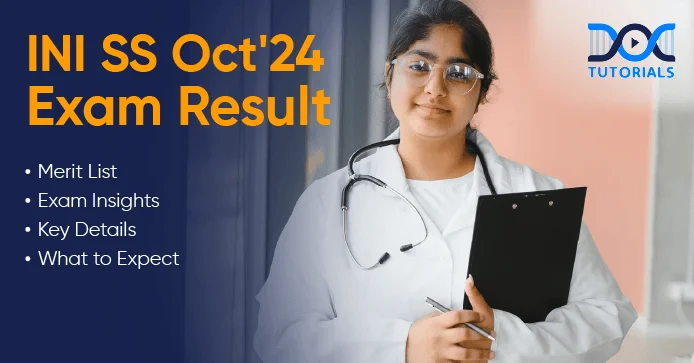
INI SS Results: Merit List, Exam Insights, and What Comes Next
The INI SS results for October 2024 are just around the corner. This is a life-changing moment for thousands of…