The Ultimate NEET PG Study Timetable for Working Interns

Let’s be real for a second. Preparing for NEET PG while doing your internship feels like running two marathons at the exact same time. You have heavy hospital duties. Ward rounds that never seem to end. Then, you come back to your room, look at the mountain of a syllabus, and wonder, “How on earth do I finish this?” But here is the good news. It is absolutely doable. Countless seniors have done it, and you can too. You just need a smart plan.
Get free, handwritten-style notes covering the most high-yield NEET PG topics!
Why Interns Need a Different NEET PG Study Plan
Regular aspirants might have 10 to 12 hours a day to study. Interns? You are lucky if you can squeeze out 4 to 5 hours. That is just the reality of Indian medical colleges.
Because of this, your NEET PG study timetable cannot be a simple copy-paste of a regular student’s schedule. You need intense flexibility. Educational studies based on the Ebbinghaus Forgetting Curve suggest that active recall and spaced repetition are way more effective than passive reading. This is especially true when you are sleep-deprived after a heavy casualty posting. Your strategy must shift from “reading absolutely everything” to “retaining high-yield topics.”
The Golden Rule: Consistency Over Intensity
Do not wait for a perfect 8-hour window. It will never come. Instead, grab those small 20-minute pockets of time. It all adds up.
Q: How many hours should an intern study daily for NEET PG?
A: Aim for 4 to 5 hours on regular days, broken down into manageable chunks. Try sneaking in 1 hour during hospital breaks to solve MCQs, 2 hours before your morning shift, and 1 to 2 hours after you get back. On Sundays or off days, stretch your sessions to 8-10 hours. It is all about daily consistency, not overnight cramming!
A Practical NEET PG Study Timetable for Working Interns
Having a macro plan gives you a bird’s-eye view of your NEET PG preparation. Here is a rough 6-month roadmap designed for working interns aiming for both NEET PG and INI-CET.
Month 1 to 2: Foundation and High-Yield Subjects
Start with the heavyweights. Pathology, Pharmacology, and Microbiology. These form the base of your clinical understanding. If your foundation is strong, medicine and surgery become much easier to tackle later. Keep your primary focus on understanding core concepts.
Month 3 to 4: Clinical Subjects & Integration
Now move to Medicine, Surgery, OBG, and PSM. This is where your ward work actually helps. When you see a clinical case in the hospital, correlate it with your books. This practical integration builds a deeper understanding that strengthens retention.
Month 5: Short Subjects & Rapid Revision
Focus on Dermatology, Psychiatry, Radiology, Anesthesia, and Orthopedics. They are highly scoring. This is also the time to heavily rely on PYQs (Previous Year Questions) to understand examiner trends.
Month 6: Mock Tests & Consolidation
Stop reading new materials. Focus entirely on grand tests, analyzing your mistakes, and revising your weak areas.
Daily Schedule Template
Here is a practical breakdown of how a working intern can manage a typical weekday.
| Time of Day | Activity | Focus Area during NEET PG Preparation |
| 05:30 AM – 07:30 AM | Morning Study Session | Fresh mind. Tackle complex concepts or watch Syllabus Videos. |
| 08:30 AM – 04:00 PM | Hospital Duty (Internship) | Utilize tea/lunch breaks for solving MCQs or reading Smart Flashcards. |
| 05:00 PM – 06:30 PM | Evening Study Session | Review topics related to cases you saw in the ward today. |
| 07:30 PM – 09:30 PM | Practice & Active Recall | Give Topic-Wise Mini Tests or review Custom QBank Modules. |
| 09:30 PM – 10:00 PM | Next Day Planning | Quickly glance over Mindmaps for the next day’s topics. |
Maximize Your Hospital Hours (The Hidden Time)
You spend a massive chunk of your day in the hospital. Use it smartly. During OPD lulls or while waiting for lab reports, pull out your phone.
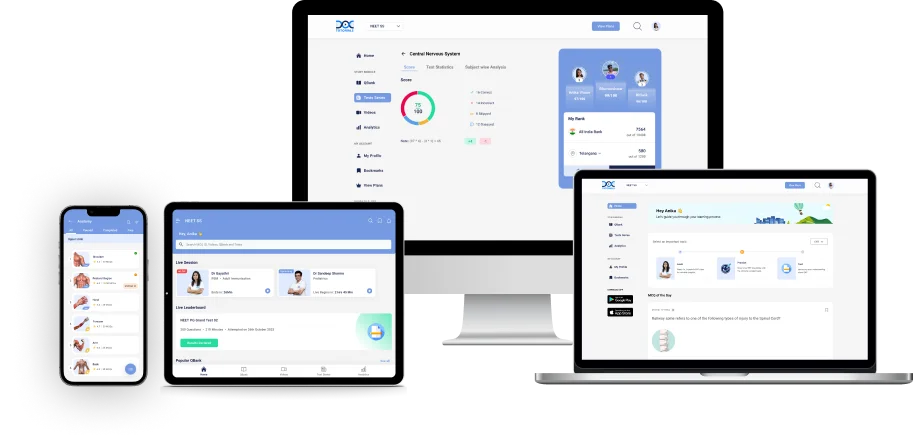
This is exactly where having the right digital ecosystem completely changes the game. If you are tired of juggling between ten different apps and PDF notes, you will genuinely appreciate the DocTutorials NEET PG Power Pack. It is an ultimate, all-in-one preparation ecosystem perfectly tailored for medical graduates with zero time to waste.
Instead of aimlessly scrolling your phone, you can open the V6 QBank. It has over 20,000+ MCQs, IBQs, and VBQs created by India’s top NEET PG faculty. You can easily create a custom module based on whatever subject you are revising that week. The detailed explanations come with concept links, making it super easy to learn on the go.
They also offer Smart Flashcards and Mindmaps. These are absolute lifesavers for quick, interactive revision of volatile stuff like drug interactions or syndromes while you are walking between hospital wings.
Weekend Strategy: Your Catch-Up Window
Weekends are your golden ticket. This is when you compensate for the light study days.
Give Grand Tests
Your NEET PG study timetable is incomplete without Grand Tests. They build your stamina. The DocTutorials Power Pack includes 60+ Grand Tests that replicate the actual NEET PG and INI-CET exam interfaces. Taking these on weekends helps you master time management and pattern recognition.
Focus on PYQs and QRPs
Spend your Sunday afternoons analyzing your test performance using the Performance Analytics Dashboard. Then, watch detailed PYQ Recall Videos or the 500+ high-yield QRP V6 (Quick Revision Program) videos. These are designed specifically for rapid recall. They even have Hinglish QRP videos, which feel just like a friendly senior explaining complex topics to you in the simplest way possible.
Smart Integration for INI-CET Aspirants
If you are also aiming for INI-CET, your approach needs a slight tweak. AIIMS and JIPMER focus heavily on clinical reasoning and image-based learning. Thankfully, you can rely on System-Based Videos to connect concepts across multiple disciplines. A dedicated INI-CET preparation layer—with specific mock tests and QBank modules—ensures you are perfectly aligned with the latest exam patterns.
Final Thoughts for Your NEET PG Preparation
Remember, building a NEET PG study timetable for working interns is about being realistic. Some days, casualty will be chaotic, and you will barely study for an hour. That is okay. Forgive yourself and start fresh the next day. Stay positive. Keep your resources crisp, trust your hard work, and keep moving forward. You are going to make a fantastic specialist very soon!
Quick FAQs on NEET PG Preparation for Interns
1. Is 6 months enough for NEET PG preparation during an internship?
Yes, absolutely. With a focused approach, high-yield resources, and consistent daily study, 6 months is a solid timeframe to secure a great rank.
2. How do the interns balance duty and studies?
The trick is micro-study. Break every 15 minutes to do MCQs on your phone, and reserve deep-focus reading for early mornings or late evenings.
3. Which subject should I start first for NEET PG?
Start with foundation subjects like Pathology and Pharmacology. They make understanding clinical subjects much easier.
4. Are grand tests important during the internship?
Very important. Even if you haven’t finished the syllabus, take Grand Tests to build stamina, understand time management, and identify your weak spots.
5. What is the best resource for quick revision?
Interactive tools are the best. Smart Flashcards, Mindmaps and short revision videos (like QRP modules) are great for quick recall.
6. Can I crack NEET PG without quitting my job or taking a drop?
Every year many top rankers do it. It takes a lot of discipline, no FOMO, and sticking to one reliable study platform.
7. How many MCQs should I solve daily?
50 to 100 MCQs daily at least. Increase this number over the weekend or on light duty days.
8. How important are PYQs (Previous Year Questions)?
PYQs are the holy grail. They help you understand the examiner’s mindset and highlight recurring high-yield topics.
9. Should I read standard textbooks during my internship?
It is generally tough to read standard textbooks cover-to-cover during an internship. Rely on concise notes, clinical-case-based questions, and targeted syllabus videos instead.
10. How do I avoid burnout during NEET PG prep?
Plan breaks. Get a minimum of 6 hours sleep, eat well and do not punish yourself if you miss a target for study. It’s better to be consistent than perfect.

Latest Blogs
-

INI CET Exam 2026: Your Roadmap to Success – Key Topics, Strategies, and Lessons from Last Year’s Papers
The INI CET exam is more than just a test; it’s a significant milestone for many medical students aiming to…
-

INI CET Exam Success: Previous Year Question Papers & Ultimate Guide – INI CET PYQ
One can feel overwhelmed while preparing for the INI CET (Institute of National Importance Combined Entrance Test). A vast syllabus,…
-

NEET PG 2026 Preparation with Live Power Pack: Your Path to Success in 2026
Preparing for the NEET PG 2026 can be an overwhelming journey because of its vast syllabus and the pressure to…