MBBS Exam Archives -

MBBS 1st Prof Exam Preparation: Tips and Strategies 

mbbs 1st prof Exam

The first professional MBBS exam can feel overwhelming because of the vast syllabus and complex concepts. It’s also a time when many students start doubting themselves. Most early struggles are not due to a lack of ability or effort, but because of poor study methods. 

Medical studies require a structured approach and regular revision. Building these habits early makes the journey much easier. This guide is designed to help first-year MBBS students understand what the exam demands and how to prepare for it in a sustainable and effective manner. Keep reading to know more. 

Overview of the MBBS 1st Prof Exam 

The MBBS course lasts 5.5 years and is divided into three stages. The first professional exam is held at the end of the first year, after the pre-clinical phase, and is an important step before moving to the next stage. 

The MBBS course is a rigorous 5.5-year programme comprising 4.5 years of academic study and 1 year of compulsory internship. It has three primary stages: 

  • Pre-clinical (first year) 
  • Para-clinical (second year) 
  • Clinical (third year onwards) 

At the end of this pre-clinical phase is the 1st professional examination. The pre-clinical stage comprises two semesters of 6 months each. The MBBS first prof exam is conducted at the end of the second semester. 

Subjects Covered in the MBBS 1st Prof Exam 

In the first year of MBBS, you focus on three core subjects: Anatomy, Physiology, and Biochemistry. Together, they help you understand the human body, how it works, and the basic processes that keep it running, forming the base for everything you’ll learn later. 

The three core subjects evaluated in the MBBS Exam that form the foundation of the 1st Prof examination are: 

  • Anatomy: The study of the structure and organisation of the human body, covering gross anatomy, microanatomy, embryology, genetics, and neuroanatomy. It is the largest and most detail-intensive subject, often dominating the MBBS Exam Question Paper
  • Physiology: The study of how the body functions, covering cardiovascular, respiratory, renal, neurological, and gastrointestinal systems, among others. It bridges structure and function and forms a conceptual foundation for clinical reasoning. 
  • Biochemistry: The study of the chemical and molecular basis of life, including biomolecules, enzymes, metabolic pathways, and their clinical correlations. 

Pattern of the MBBS 1st Prof Exam 

The MBBS 1st Prof exam in India includes theory papers, practical/clinical exams, and a viva to test both knowledge and skills. Each subject usually has two theory papers and a practical exam. 

In India, at the end of the professional year, all medical students are evaluated through a theory paper, practical and clinical exams, and a viva voce to assess their skills and knowledge. According to the MBBS Exam Pattern, most subjects have two theory papers of 100 marks each, which consist of long answer type, short answer type, and MCQ questions. 

Each subject also has a practical exam worth 100 marks to test practical skills such as specimen identification, laboratory experiments, and demonstrations. 

It is to be noted that the internal assessment marks throughout the year, such as unit tests, practical records, assignments, etc., are counted separately but contribute to eligibility for the university examination. So, the best way to help the students is to be consistent throughout the year and not prepare at the last moment. 

MBBS 1st Prof Exam Preparation Tips and Strategies 

Preparing for the MBBS 1st Prof exam is about staying consistent, understanding concepts clearly, and revising regularly. Focus on the basics, practice well, and take care of your health along the way. 

Below are a few preparation tips and strategies for the MBBS 1st Prof exam: 

1. Understand the Syllabus Before You Start Studying: Before memorising a textbook, every student should have a clear picture of what needs to be covered. Students must understand the MBBS Prof syllabus and allocate time to each subject. 

The 1st Prof syllabus is divided across three subjects, each with its own breadth and internal structure: Anatomy is the largest and most detail-intensive section, heavily featured in any MBBS Exam Question Paper. The syllabus covers four main areas: 

  • Gross Anatomy is the study of the upper and lower limbs, thorax, abdomen, pelvis, head, and neck in different parts of the body. 
  • Microanatomy (Histology) is the study of the microscopic structure of organs and tissues. 
  • Embryology and Genetics encompass human development from fertilization to organogenesis, as well as fundamental principles of medical genetics. 
  • Neuroanatomy is the study of the structure of the central and peripheral nervous systems, including their tracts and nuclei, with clinical correlations. 

Physiology studies how the body’s major systems work. Some important areas are: 

  • General physiology is the study of the cell membrane, how things move around, and body fluids. 
  • Cardiovascular physiology includes the cardiac cycle, cardiac output, and the regulation of blood pressure. 
  • Respiratory physiology includes the study of the mechanics of breathing, gas exchange, and transport. 
  • Renal physiology encompasses filtration, reabsorption, and fluid homeostasis. 
  • Neurophysiology encompasses nerve conduction, synaptic transmission, and specialized sensory modalities. 
  • Physiology of the gastrointestinal, endocrine, and reproductive systems. 

Biochemistry is the study of the chemical and molecular basis of life. Below are the main topics: 

  • Biomolecules include carbohydrates, proteins, lipids, and nucleic acids. 
  • Enzymes: types, how they work, and how to stop them. 
  • Metabolic pathways include glycolysis, the Krebs cycle, oxidative phosphorylation, gluconeogenesis, and lipid metabolism. 
  • Molecular biology includes DNA replication, transcription, translation, and recombinant DNA technology. 
  • Clinical biochemistry, genetic errors in metabolism, vitamins, minerals, and not getting enough nutrients. 

At the start of the year, students should map out the entire syllabus so they can plan their time wisely, identify high-yield topics early, and avoid the common mistake of spending too much time on some areas while neglecting others. 

2. Build a Realistic and Consistent Study Schedule: A study schedule is only useful if you can stick to it. Schedules that are too ambitious and fall apart in the first week do more harm than good because they make people feel like they have failed, which hurts their motivation. 

  • Instead of spending whole days on one subject, set aside specific times each day for each subject. 
  • Students need to study for at least 8 hours a week so that they can go over everything in depth and have time to review. 
  • Start including weekly review sessions at the beginning of the year, not just the weeks before the test. 
  • Include short breaks and days off to keep your productivity up over the long preparation period. 

3. Prioritise Conceptual Understanding Over Rote Memorisation: The most common mistake first-year students make is to treat medicine as a memorisation exercise. Emphasize conceptual learning rather than rote memorisation of facts. Know the why behind each process. This is particularly true of Physiology and Biochemistry, where learning the mechanism behind a process is much easier to remember and apply than memorising a list of facts. In Anatomy, although some memorisation is inevitable, knowing the functional and clinical relevance of structures improves recall. 

4. Use the Right Study Resources for Each Subject: Choosing appropriate textbooks and supplementary resources for each subject matter greatly. Sometimes students waste a lot of time on books that are either too detailed or too superficial for exams. 

Below are a few book suggestions for each subject: 

  • Anatomy: BD Chaurasia’s Human Anatomy remains the standard reference for Indian medical students, offering detailed regional coverage. Grey’s Anatomy for Students is a strong supplementary resource for conceptual clarity. 
  • Physiology: Ganong’s Review of Medical Physiology and Guyton and Hall’s Medical Physiology are both widely used and examination relevant. 
  • Biochemistry: Satyanarayana and Chakrapani’s Biochemistry is particularly well-suited to the Indian curriculum and examination pattern. 

Alongside standard textbooks, video lectures, particularly for complex topics in Physiology and Biochemistry, can significantly improve understanding and reduce the time needed to grasp difficult concepts. 

5. Make Diagrams, Flowcharts, and Notes a Daily Habit: Students can use mnemonics to learn anatomical structures and flashcards to memorise factual information. These techniques aid better learning and retention. Memorising flowcharts and mind maps to correlate topics simplifies the given information. 

After each lecture or study session, students should summarize key points in their own words. It can be done through short notes, diagrams, or flowcharts. This dramatically improves long-term retention. This habit also makes revision considerably faster and more effective in the weeks leading up to the examination. 

6. Take Practicals Seriously: First-year students often make the mistake of considering practical work less important than theory. Indeed, practical examinations constitute a major part of the marks, and the skills acquired from dissection, laboratory work, and demonstrations are directly tested in the university examination. Students can consider the following tips: 

  • Attend all practical sessions and maintain accurate, neat laboratory records. 
  • Practice identifying specimens, slides, and models regularly throughout the year. 
  • Use practical sessions as opportunities to consolidate theoretical knowledge by observing real structures and processes. 

7. Solve Previous Years’ Question Papers: Regular review of previous years’ papers and question banks is helpful for checking recall of facts. Essay and short-answer questions should be written in a clear, concise style that highlights the major points. 

Solving past papers has many advantages. It familiarizes students with the examination format, exposes them to frequently tested topics, and helps identify areas of weakness to work on. Practising under timed conditions also helps you learn to write clearly and completely within the time constraints of the actual exam. 

8. Revise Regularly and Do Not Leave it to the End: Revision should not be left to the last few weeks before the examination. The 1st Prof, with a syllabus so vast, can make the topics studied in the first semester fade away easily until the exam comes, if not revisited periodically. Weekly revision of completed topics makes a significant difference to retention and examination performance. 

9. Study in Groups: Learning with classmates and friends helps consolidate understanding. If anyone gets stuck on a topic, others can help to clear the concept and move on with the subject. Group study is best for revision-based discussions and for clearing doubts. It’s not great if you’re a first-time learner who needs focused, individual work. 

When students discover the right sort of balance between independent study and collaborative revision, they are learning a skill that will stand them in good stead throughout the MBBS course. 

10. Take Care of Physical and Mental Well-being: Preparation for any professional examination is demanding, and the first year of MBBS is particularly so because students are simultaneously adjusting to a new academic environment, a new city, and an entirely new way of learning. Neglecting physical health and rest in favour of additional study hours is counterproductive. 

  • Maintain regular sleep, as memory consolidation occurs during rest. 
  • Eat balanced meals and avoid long periods without food during study sessions. 
  • Seek support from seniors, faculty, or counsellors if the pressure becomes overwhelming. 

FAQs about MBBS 1st Prof Exam Preparation 

  1. What are the subjects in the MBBS 1st Prof Exam?  

The MBBS 1st Professional Examination covers three pre-clinical subjects: Anatomy, Physiology, and Biochemistry. These subjects, which are a major focus of the MBBS Exam, educate students about the structure and function of a healthy human body and form the foundation on which all subsequent clinical learning is built. 

  1. When is the MBBS 1st Prof Exam conducted?  

The MBBS first professional exam is conducted at the end of the second semester of the medical course. The pre-clinical phase lasts for a total of two semesters, with each semester lasting six months. The exact dates vary by university, but are typically announced on the official college or university website. 

  1. What is the passing criteria for the MBBS 1st Prof Exam?  

A candidate shall obtain a cumulative 50% marks in the university-conducted examination, including theory and practical, and not less than 40% separately in theory and in practical, to be declared as passed in that subject. Under the standard MBBS Exam Pattern for subjects that have two papers, the learner must secure a minimum of 40% marks in aggregate across both theory papers together. 

  1. How many attempts are allowed for the MBBS 1st Prof Exam?  

No student shall be allowed more than four attempts for the first year of the first professional MBBS. In these four years, the maximum number of attempts permitted shall be four. Students who are unable to clear within this limit are required to leave the MBBS programme. 

  1. What is the minimum attendance required to appear for the 1st Prof Exam?  

At least 75% attendance in theory and 80% in practical or clinical training is mandatory for MBBS students to appear in the supplementary examination following the regular annual examination. Students falling short of these thresholds must attend remedial classes and sit the examination with the next academic batch. 

  1. Which subject typically has the most difficult MBBS Exam Question Paper?  

Anatomy is generally considered to have the most challenging MBBS Exam Question Paper. It encompasses a huge amount of factual information, diagrams, spatial visualization, and memorisation. It becomes difficult for most students to memorise the complex structures of the human body. That said, difficulty varies from student to student depending on individual strengths. 

  1. How many hours should a student study daily for the 1st Prof Exam?  

On average, six to eight hours of focused study is sufficient if done consistently. The amount of time dedicated to each subject should depend on the student’s individual proficiency, allocating more time to weaker subjects whilst maintaining regular contact with stronger ones. 

  1. What happens if a student fails the 1st Prof Exam?  

If any candidate fails the supplementary examination as well, he or she shall join the batch of the next academic year. There shall be no supplementary batches. A student who fails in the first professional examination shall not be allowed to join the second professional phase until all subjects are cleared. 

  1. Does performance in the 1st Prof Exam affect NEET PG eligibility?  

Yes. The marks scored in each professional year examination are taken into account when calculating the academic score used in NEET PG and certain postgraduate admission processes. Beyond marks, a thorough understanding of 1st Prof subjects directly supports NEET PG preparation, as these subjects form the conceptual basis of many high-yield clinical topics tested in postgraduate entrance examinations. 

  1.  Are internal assessment marks added to the final university examination score?  

Internal assessment shall not be added to summative assessment. However, internal assessment marks in absolute marks should be displayed under a separate column in a detailed marks card. Internal assessments do, however, determine eligibility to sit the university examination and reflect continuous academic performance throughout the year. 

Conclusion 

The MBBS 1st Prof Examination is challenging, but it is not beyond the reach of any student who approaches it with consistency, clarity, and the right strategy. Knowing the exam pattern, having a steady study plan, focusing on understanding concepts, and revising regularly are key habits. 

For added guidance, DocTutorials can be your study partner. We offer 3D & 2D animated videos, CBME-based video lectures, and expert mentorship. This helps ensure aspirants gain complete clarity over complex medical concepts to excel in the exam. 

Join DocTutorials and explore our MBBS curriculum to stay ahead in your medical career! 

DocTutorials App Download Now

Latest Blogs

How Many Marks are Required in NEET for MBBS?

Every year, millions of students in India aim to secure admission to an MBBS programme. During this process, a common question often arises: how many marks are required in the NEET exam to get an MBBS seat?

The answer typically depends on several factors, such as your category, the level of competition, the type of college you are targeting, and the number of seats available in a given year. In this article, we will explain these factors simply to help you understand the expected NEET score for MBBS admission. Keep reading to know more.

NEET Exam Pattern 2026: Structure Overview

The NEET exam pattern helps students plan their preparation and manage time effectively during the test. With Physics, Chemistry, and Biology contributing to a total of 720 marks, and Biology carrying the highest weightage, accuracy and smart subject prioritisation are key to scoring well.

Before discussing how many marks are required for NEET MBBS, we must learn about the exam structure, since knowing the pattern will help students allocate their time for each subject early on. Overview of the NEET exam structure is tabulated below:

ParticularDetails
Exam ModeOffline (Pen & Paper)
Duration3 Hours
Total Questions180
Total Marks720
SubjectsPhysics, Chemistry, Biology
Question TypeMultiple Choice Questions
Negative MarkingYes

There are 3 subjects tested in the NEET exam: Physics, Chemistry & Biology. Biology carries the highest weightage, making it a crucial subject for scoring well. Here’s an overview of the subject-wise distribution of marks:

SubjectQuestionsMarks
Physics45180
Chemistry45180
Biology (Botany + Zoology)90360
Total180720

The following is the marking scheme of the NEET for the MBBS exam:

  • Correct answer: +4 marks
  • Incorrect answer: -1 mark
  • Unanswered question: 0 marks

Negative marking has an important impact on your final score. Random guessing may cost you points, which could affect your rank and admissions.

What are the NEET Passing Marks for MBBS?

The NEET passing marks, or qualifying cut-off, are the minimum scores required to pass the exam and become eligible for counselling, based on category-wise percentiles set by the NTA. These expected cut-off ranges vary each year depending on factors like exam difficulty and the number of candidates appearing.

The passing marks for NEET, also known as the qualifying cut-off, are the minimum marks a student must score to pass the examination and become eligible for counselling. Below is the overview of category-wise qualifying percentile:

CategoryQualifying Percentile
General / EWS50th percentile
General-PwD45th percentile
OBC / SC / ST40th percentile
OBC / SC / ST-PwD40th percentile

Now, let’s see an overview of the category-wise qualifying percentile:

CategoryExpected Cut-Off Range
General / EWS720 – 138
OBC / SC / ST137 – 108
UR-PwD137 – 122
OBC / SC / ST-PwD121 – 108

These marks are based on previous trends and are subject to change each year depending on various factors such as exam difficulty and the number of candidates.

NEET Qualifying Marks vs Admission Cut-Off

A common confusion among students is the difference between qualifying marks and admission cut-offs in NEET. While qualifying marks only make you eligible for counselling, the admission cut-off is much higher and determines whether you can secure an MBBS seat due to intense competition and limited seats.

As a student, one of the biggest sources of confusion is the distinction between qualifying marks and admissions cut-offs. Qualifying marks are the minimum number of marks required to pass NEET. Admission cut-off marks are the minimum marks required to secure an MBBS seat in a college.

For example, a student may achieve a qualifying score of approximately 138 marks in the NEET ‘General’ category, but this would be insufficient to secure admission to most MBBS colleges. Because of tough competition & limited seats, the admission cut-off is usually much higher than the qualifying marks.

Minimum Marks Required in NEET for MBBS

The marks required for MBBS admission vary based on factors such as category and college type, with government colleges having higher cut-offs due to lower fees and better infrastructure. In contrast, private medical colleges have relatively lower cut-offs, but students must account for significantly higher tuition fees.

The marks required for admission to the MBBS course vary depending on various factors. Some factors include the category and type of college. The details are as follows:

Government Medical Colleges

These medical colleges are preferred by students as the cost is less and the infrastructure is good. Hence, the cut-offs are high.

CategoryExpected Marks
General610 – 650+
OBC600 – 630+
SC480 – 520+
ST450 – 500+

These marks may vary depending on the state and counselling quota.

Private Medical Colleges

Private medical colleges have a lower cut-off compared to government colleges. However, the fee is high.

CategoryExpected Marks
General450 – 550
OBC420 – 500
SC350 – 420
ST300 – 380

Minimum Marks for MBBS through AIQ Counselling

AIQ counselling covers 15% of government medical college seats, where students from across the country compete for admission. Due to this nationwide competition, the cut-offs under AIQ are generally higher than those in state counselling.

AIQ counselling includes 15% seats from government medical colleges:

CategoryExpected Marks
General620 – 680
OBC610 – 650
SC500 – 540
ST480 – 520

Cut-offs for AIQ counselling are high as students from all states compete for the seats.

Minimum Marks for MBBS through State Counselling

State counselling is conducted for 85% of seats in government medical colleges. Cut-offs under state counselling are usually slightly lower than AIQ, but they remain competitive. Let’s see an example trend of minimum marks for MBBS through state counselling:

StateGeneralOBCSC
Uttar Pradesh610 – 640600 – 620470 – 510
Rajasthan620 – 650610 – 640500 – 530
Karnataka580 – 610570 – 600450 – 480

What is a Safe Score for MBBS Admission?

Instead of focusing only on passing marks, students should aim for a safe score that improves their chances of securing an MBBS seat. Generally, scoring above 600 marks significantly increases the likelihood of admission into government medical colleges.

Focusing just on how many marks you need to pass is not an effective way to aim for qualifying for the NEET for the MBBS exam. Instead, you should target a safe score, which would increase your chances of getting accepted into a medical program.

Marks RangeChances of Admission
650+Top government colleges
620 – 650Government colleges in many states
580 – 620Government colleges in some states
500 – 580Private colleges / limited government seats
400 – 500Mostly private colleges
Below 400Limited options

If you achieve above 600 marks in the NEET exam, then you would have a higher chance of being accepted into a government-sponsored seat to study MBBS.

What are the Factors Affecting NEET Cut-Off Every Year?

The NEET cut-off varies every year based on factors such as the number of candidates, exam difficulty, availability of MBBS seats, and overall student performance. Additionally, reservation policies also influence category-wise cut-offs, leading to different score requirements for different groups.

It is crucial to understand the following factors affecting NEET cut-off every year, which will help you to comprehend better the scope of clearing the examination and prepare accordingly to achieve the desired score:

1. Number of Candidates

The number of students who appear for the examination directly influences the level of competition between students. The more students appear for the examination, the greater the competition to secure the limited MBBS seats.

2. Difficulty Level of the Exam

The overall difficulty level of the examination directly influences the cut-off trends. For instance, if the examination is tougher, aspirants are likely to score fewer marks, thereby lowering the cut-off levels, especially for top government medical colleges.

3. Availability of MBBS Seats

The availability of seats in medical colleges also plays a role in determining cut-off scores. If a large number of medical colleges are added or the number of seats is increased, it can reduce competition to some extent and lead to a fall in cut-offs.

4. Overall Performance of Students

The overall performance of the students also affects the cut-offs. If a large number of students perform well and attain higher marks, the cut-off automatically rises. On the other hand, if students’ overall performance is low, the cut-off falls.

5. Reservation Policy

Cut-offs of NEET scores vary across different categories, such as General, OBC, SC, ST, and PwD, as the reservation policy affects the cut-offs of different categories. The required score varies by student category.

6. Type of Counselling (AIQ vs State Quota)

NEET score cut-offs also vary by type of counselling. Cut-offs are higher in All India Quota counselling. In this type of counselling, a large number of candidates from various states of India participate.

On the other hand, the cut-off of the state quota counselling session may lead to comparatively lower cut-offs depending on the region.

What are the Tips to Score High in NEET for MBBS?

Achieving a high score in NEET depends on a balanced approach that combines clear concepts, efficient time management, and smart study techniques rather than simply increasing study hours. Prioritising NCERT, regularly practising MCQs, attempting mock tests, and maintaining consistent revision can greatly enhance accuracy and overall performance.

Scoring well in NEET demands a good strategy, conceptual clarity, and time management, but also requires learning in the right manner. It is about learning more, but also in the right way.

Here are some of the best strategies that can definitely help you perform better:

1. Focus on NCERT Textbooks

NCERT textbooks are the primary resource for NEET preparation, especially for Biology and Chemistry. Most NEET questions are based on the NCERT or are closely related to it.

Students should go through all the chapters of the NCERT textbooks, understand all the concepts, and especially focus on diagrams, tables, and other points marked in the book. Revising NCERT textbooks again and again can do wonders for you.

2. Practice MCQs Regularly

NEET is an MCQ-based exam, so students should practice MCQs regularly. This will not only help you improve your speed, accuracy, and problem-solving skills but also make you familiar with different types of questions.

The more you practice, the more confident you will be about taking the exam, and this will definitely reduce your anxiety levels.

3. Solve Previous Years’ Papers

One of the best ways to prepare for the NEET exam is to go through the previous year’s question papers. This approach provides a better idea of the exam pattern and the questions being asked. It will also provide an idea of the difficulty level.

4. Take Mock Tests

Mock tests are an essential part of the preparation strategy. They provide a real-life experience of the NEET for MBBS, along with an idea of the time management required for the 3-hour-long exam.

It is essential to analyse the mistakes made after the mock test, as this will provide an idea of the improvements required.

5. Revise Consistently

Revision is the key to the success of the entire preparation strategy. Without proper revision, it is very easy to forget the vast NEET syllabus. Creating short notes, flashcards, or summary sheets can make revision quicker and more effective.

FAQs about How Many Marks are Required in NEET for MBBS

1. How many marks are required in NEET for MBBS?

To apply to a government medical college, you will need at least 600 or more marks out of 720 after taking the NEET exam. For admission to a private college, on average, you will need a minimum of 450 to 550.

2. What are NEET passing marks?

To pass the NEET exam, you will need to achieve a certain number of marks (or percentile). These marks or percentiles will vary depending on whether you belong to the “General”, SC/ST/OBC category.

3. Is qualifying for NEET enough for MBBS admission?

To secure an MBBS seat after taking the NEET exam, you must first qualify for the NEET, but to receive an admission offer to that seat, you must achieve a considerably higher number of marks.

4. What is a safe score in NEET?

A score of 620/720 would be considered safe for NEET admission to government colleges.

5. How many students qualify for NEET every year?

Approximately 11 to 12 lakh students qualify for the NEET exam each year, while only about 1.1 to 1.2 lakh secure an actual MBBS seat.

6. Does the NEET cut-off change every year?

Yes, cutoffs change from year to year depending on the exam’s difficulty and the total number of candidates who appear for it.

7. Can I get an MBBS with 500 marks?

You may be eligible to get into private colleges and/or select government colleges, depending on which category you belong to.

8. Is 400 a good score in NEET?

Unfortunately, a score of 400 or less will limited your options. Most of your options will relate to admission into private colleges and/or alternative courses.

9. What are the total marks in NEET?

The NEET Exam has a total of 720 marks.

10. What should I aim for to get a government MBBS seat?

To secure a government MBBS seat, students should aim for a minimum score of 620.

Conclusion

While it is important to understand the expected NEET score for MBBS admission, focusing only on the minimum marks is not enough. Admission depends on several factors, including the level of competition, the number of candidates appearing for the exam, and the availability of seats across colleges.

Therefore, instead of aiming just to qualify, students should focus on achieving the highest possible score to improve their chances of securing a seat in a good medical college. For structured academic support, DocTutorials can be your study partner.

We offer crisp videos, clinical Qbank, exam-focused edition notes, flashcards, and mind maps. This ensures aspirants gain complete clarity over complex medical concepts. Join DocTutorials today and explore our MBBS Course to excel in your medical career.

DocTutorials App Download Now

Latest Blogs

MBBS Course Subjects: Complete Year-Wise Syllabus & Subject List

MBBS Course Subjects

The MBBS curriculum in India has been meticulously designed to develop and transform capable science students into competent medical professionals with strong clinical judgment and ethical responsibility. Spanning 5.5 years, the course blends deep theoretical learning with real-world hospital experience.
Thus, understanding the MBBS subjects list, syllabus structure, and training phases helps aspirants prepare better, stay focused, and excel.
Keep reading to learn more and ace your MBBS preparation!

MBBS Course Subject List: Overview and Key Details

The MBBS course is divided into pre-clinical, para-clinical, and clinical courses. It covers medical science subjects, speciality subjects, and practical training. Knowledge of each MBBS subject will help candidates gain a better understanding of the course.

Discussed below is a comprehensive overview of the 20 MBBS course subjects, along with their scope and key areas of study:

  1. Anatomy

Anatomy is one of the most fundamental MBBS subjects, focusing on the structure of the human body. It serves as the foundation for understanding disease, surgery, and clinical examination. These topics are taught under this subject:

  • Gross Anatomy: The study includes gross anatomy, such as bones, muscles, joints, cardiovascular, respiratory, digestive, genitourinary, endocrine, nervous, and lymphatic systems; surface and cross-sectional anatomy; and dissection courses involving cadavers.
  • Micro Anatomy (Histology): It involves the microscopic study of cells, tissues, organs such as glands, muscles, nerves, etc., and the entire human system.
  • Embryology: Includes fertilisation, aspects of human development, abnormalities, as well as the fundamentals of human genetics.
  • Neuroanatomy: It offers in-depth analysis and description of structures such as the brain, spinal cord, and peripheral nervous system.
  1. Biochemistry

Biochemistry is the study of the chemical and molecular basis of life. It includes the study of biomolecules, enzymes, metabolism, nutrition, hormones, immunology, cancer biology, and tumour markers, as well as the practical work in the analysis of urine, liver, and renal function tests.

  1. Physiology

Physiology involves the study of the functioning of the human body. Topics covered in the study of physiology include general physiology, cardiovascular, respiratory, gastrointestinal, reproductive, neurophysiology, electroencephalography, and experiments such as blood cell counts.

  1. Forensic Medicine and Toxicology

This is a subject that has both medical and legal aspects. The course features forensic pathology, medical jurisprudence, forensic psychiatry, clinical forensic medicine, and toxicology, as well as hands-on practice in post-mortem investigations, foetal age determination, and blood group detection.

  1. Microbiology

Microbiology is the study of infections and the methods to prevent and treat disease. Its domain includes bacteriology, virology, parasitology, mycology, immunology, vaccines, and microbiological diagnosis. 

  1. Pathology

Pathology encompasses disease mechanisms and forms the foundation for all clinical diagnoses. It comprises general pathology, cardiovascular pathology, respiratory pathology, haematopathology, musculoskeletal pathology, neuropathology, and practical skills such as blood grouping and venipuncture handling.

  1. Pharmacology

Pharmacology introduces the fundamental principles concerning drug action and the importance of responsible prescribing. Learning areas in this field include general pharmacology, central nervous system medications, hormones, autacoids, and chemotherapy, with practical exercises, drug interactions, and prescriptions.

  1. Anaesthesiology

Anaesthesiology is an introduction to perioperative care and critical medicine for medical students. It deals with pain relief, anaesthesia approaches, emergency medicine, and care of unconscious people.

  1. Community Medicine

Community medicine focuses on preventive healthcare and public health. It includes epidemiology, biostatistics, behavioural sciences, maternal and child health, occupational health, health education, rehabilitation, and health administration. 

  1. Clinical Postings

Practical experience is gained through clinical postings, where a student gets hands-on experience in caring for and managing patients in a hospital setting. 

  1. Dermatology and Venereology

The topics in this subject are skin disorders and sexually transmitted diseases. They may involve diagnosing skin problems, performing laboratory diagnostic tests, treating leprosy, and gaining practical experience with common skin problems such as scabies and alopecia. 

  1. Medicine

Medicinal subjects, such as the diagnosis, treatment, and management of adult diseases, are taught in pharmacy. It includes internal medicine, systemic disorders, genetics, and medical ethics.

  1. Obstetrics and Gynaecology

This topic completely focuses on female reproductive health. It includes pregnancy physiology, anatomy of the female reproductive organs, contraception, childbirth, and disorders in gynaecology.

  1. Ophthalmology

Ophthalmology concerns eye health and vision care, including diseases of the eye, prevention of blindness, visual disorders, skills such as checking visual acuity, and general eye care.

  1. Orthopaedics

Orthopaedics deals with disorders in bones, joints, and muscles. This encompasses the inclusion of paediatric orthopaedics, trauma care, oncology, and radiology concerning the musculoskeletal system.

  1. ENT (Otorhinolaryngology)

ENT specialises in diseases affecting the ear, nose, and throat. It encompasses the diagnosis and management of disorders related to the ENT organs, as well as other procedures like septoplasty and tracheostomy. 

  1. Paediatrics

The field of paediatrics deals with infant and child care. These comprise studies on growth and development, diseases of infancy and childhood, nutrition, and practical training in the care of paediatric patients.

  1. Psychiatry

Psychiatry focuses on mental health and how people act. It aims to understand personality traits, ways of thinking, behavioural problems, and mental illness.

  1. Surgery

Surgery teaches MBBS students about operations and emergency care. It covers the basics of surgery, surgical emergencies, and different types of surgeries.

  1. Internship

The required one-year internship provides practical training in areas such as medicine, surgery, paediatric and women’s health. This gets students ready to work as doctors on their own.

MBBS Course Syllabus: Semester-Wise Distribution

The MBBS programme is an undergraduate degree programme conducted on a full-time basis and spans 5.5 years, comprising 9 semesters, including a 1-year internship. The curriculum can be broadly divided into the pre-clinical, para-clinical, and clinical phases.

Here are the details of the MBBS course syllabus arranged semester-wise:

SemestersPhase of MBBSSubjects Covered
Semester 1 – 2Pre-ClinicalAnatomy, Physiology, Biochemistry
Semester 3 – 5Para-ClinicalPathology, Microbiology, Pharmacology, Forensic Medicine & Toxicology, Community Medicine, Introduction to Clinical Postings (Wards & OPD)
Semester 6 – 9ClinicalGeneral Medicine, General Surgery, Paediatrics, Obstetrics & Gynaecology, Psychiatry, Dermatology & Venereology, Ophthalmology, Otorhinolaryngology (ENT), Orthopaedics, Anaesthesiology

Tips to Prepare for the MBBS Exam Successfully

Preparing well for an MBBS course will require hard work, dedication, and attentiveness. While the MBBS course has a broad curriculum and requires extensive clinical exposure, a well-planned preparation strategy can help students manage the pressures and exam situations with confidence.

Here are the essential tips to prepare for MBBS in the right way and achieve long-term success in your medical journey:

  • Understand the MBBS Syllabus Thoroughly

Before preparing your study schedule, thoroughly review the entire MBBS syllabus. The syllabus functions as your study guide, as it shows how much time each subject will require to prepare and which key areas you need to focus on more. 

Based on the syllabus, you can create effective academic strategies to prepare for the pre-clinical, para-clinical, and clinical subjects. 

  • Start Early and Revise Regularly

Early preparation is one of the biggest advantages in MBBS. Beginning your study sessions early will help you curb stress while promoting better learning. You can also divide your syllabus into smaller parts to streamline your examination preparations. 

  • Create a Realistic and Flexible Study Plan

An effective study plan for MBBS should comprise equal amounts of theoretical learning, practical studies, clinical training, and revision time. You need to establish attainable objectives and a well-planned study timetable based on the complexity of the subjects.

Having an effective study plan will help you complete every chapter and topic on time and also enable you to invest more time in difficult subjects without hassle. 

  • Use Study Materials Wisely

Stick to standard textbooks for building up a strong conceptual base on your MBBS course subjects. Once your concepts are clear, prepare notes and study guides, and focus on online resources for revision. 

For better preparation, consider solving previous years’ question papers in order to understand the question pattern and exam difficulty. Using too many sources leads to confusion. Quality resources with focused study are way more effective for exam preparation.

  • Focus on Revision

Revision is the key to long-term retention. Even short weekly revision sessions help consolidate concepts and avoid forgetting. Consistent revision work ensures that important topics remain fresh in your mind, especially during exams and clinical assessments.

  • Undergo Mock Tests 

The mock tests serve as an influential tool for your preparation in MBBS. It gives you an idea of the exam’s pattern, improves your time management, and highlights your weak areas. 

Instead of focusing on the scores and comparing your preparation with other students, find out your mistakes and work on improvement. Regular practice builds confidence and prepares you for the examination.

  • Give Importance to Practical and Clinical Learning

MBBS programmes require students to develop both theoretical knowledge and practical skills. Students must develop their practical skills through clinical experience to demonstrate their knowledge in real-world clinical settings. This method helps students understand concepts better while developing their ability to make clinical decisions.

  • Learn from Mentors and Faculty

Your professors and mentors are valuable guides. Contact them for your academic doubts, exam preparation methods, and career development advice. Their experience will help you address your challenges more effectively and make the best decisions.

  • Manage Stress and Maintain a Positive Mindset

Medical studies can be stressful, but managing your mental well-being is crucial. The combination of meditation and yoga with deep breathing exercises creates an effective method to decrease anxiety. Maintaining a positive attitude helps you stay motivated during difficult times.

  • Take Care of Your Health and Sleep

Students need sufficient sleep because it helps them remember things, stay focused, and maintain good health. Additionally, inadequate sleep reduces your ability to learn effectively. 

FAQs about MBBS Course Subjects 

  1. What does the MBBS course entail?

The MBBS (Bachelor of Medicine, Bachelor of Surgery) is a professional medical qualification that encompasses theoretical education, practical clinical training, and an internship, equipping students to pursue a career as physicians.

  1. What is the number of subjects in the First Year of MBBS?

The first-year curriculum of the MBBS programme consists of three major subjects, i.e., Anatomy, Physiology, and Biochemistry.

  1. Which of the subjects in MBBS courses is regarded as the toughest?

Human anatomy is recognised as the toughest course in the entire MBBS syllabus, especially during the first year. It involves extensive memorisation, strong visual memory, and constant revision.

  1. What does Anatomy cover in the MBBS 1st year?

Anatomy consists of gross anatomy, microanatomy, neuroanatomy, and embryology with genetics. It plays a significant role in helping students understand the human body in an organised way and serves as the foundation for clinical and surgical subjects in later years.

  1. What topics are included in the MBBS Biochemistry syllabus?

The MBBS Biochemistry curriculum covers essential topics such as Molecular Biology, Biological Cells, Hormones, Metabolic Pathways, Enzymes, Cancer and Cancer Markers, Biomolecules, Food Assimilation, Nutrition, and more.

  1. What does Physiology teach in the MBBS 1st year?

Physiology explains how the human body functions normally and is a key part of the MBBS syllabus. Topics include general physiology, nerve-muscle function, cardiovascular system, respiratory system, kidneys, blood, neurophysiology, nutrition, and yoga. A strong grasp of physiology helps students understand disease processes and patient management.

  1. Which are some of the top colleges offering MBBS courses in India?

Some of the finest colleges in India offering MBBS courses include AIIMS, PGIMER, CMC Vellore, JIPMER, Banaras Hindu University, Kasturba Medical College, and King George’s Medical University. They are renowned for providing quality education and hands-on clinical exposure, with a staff of experienced professionals who ensure students have comprehensive knowledge of all subjects in the MBBS curriculum.

  1. Are there Physics, Chemistry, and Biology in the MBBS course?

Yes, Physics, Chemistry, and Biology are all considered as one of the important subjects in MBBS.

  1. What is the MBBS exam pattern in India?

The MBBS exam pattern in India is essentially designed around core MBBS course subjects and involves multiple formats of assessment. The theory examinations are conducted through essay-type questions, short-answer questions, and MCQs, while practical exams involve lab work, specimen identification, clinical case analysis, and a viva. 

Many universities use the OSCE (Objective Structured Clinical Examination) format during examinations and evaluations in clinical subjects to assess practical skills and clinical competence.

  1. What subjects are covered during the clinical years of MBBS?

The clinical phase of the MBBS course begins in the third year, with a focus on practical clinical diagnosis and treatment. The major subjects covered in this phase of the MBBS course include: General Medicine, Surgery, Paediatrics, Obstetrics & Gynaecology, Forensic Medicine, and Community Medicine.

Conclusion

The MBBS course in India combines theoretical study with clinical training and hands-on practical work to develop doctors who possess both technical skills and human compassion. An early understanding of the MBBS course subjects, training phases, and subject matter enables students to create effective study plans, boosting their confidence for future challenges. 

Your goal of becoming a specialist doctor will be easier to achieve with expert guidance and your commitment to hard work. 

At DocTutorials, we understand the challenges medical aspirants face. Our highly experienced faculty, structured learning approach, and student-centric mentorship support you at every stage of your MBBS preparation journey—helping you turn your medical dreams into reality. Check out our MBBS course to boost your confidence for the exams!

DocTutorials App Download Now

Latest Blogs

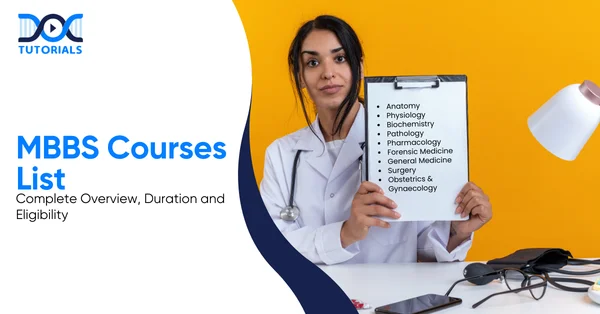
MBBS Courses List: Complete Overview, Duration, and Eligibility

MBBS Courses List

The MBBS programme (Bachelor of Medicine, Bachelor of Surgery) is the oldest undergraduate programme for aspiring medical professionals in India. This is a rigorous academic and clinical training programme that combines academic studies with clinical experiences.

The primary channel for admission to MBBS courses in India is the NEET (National Eligibility Cum Entrance Test), a national-level entrance examination conducted by the National Testing Agency.

Read on to explore the MBBS course details, including subjects, duration, and eligibility criteria in depth.

MBBS Course Overview Table

The Bachelor of Medicine and Bachelor of Surgery (MBBS) is a foundational undergraduate degree that certifies students as licensed medical professionals and physicians.

An MBBS degree is widely recognised internationally as a basic requirement for becoming a medical doctor or physician. The programme comprises 19 subjects of MBBS, and other core topics under each of them.

Here’s an overview table regarding the crucial MBBS course details:

ParameterDetails
Course NameMBBS (Bachelor of Medicine and Bachelor of Surgery)
Course Duration5.5 Years (4.5 years academic + 1 year compulsory internship)
LevelUndergraduate
Eligibility Criteria10+2 with Physics, Chemistry, Biology; Minimum 50% marks (40% for SC/ST/OBC)
Minimum Age17 years at the time of admission
Entrance ExamNEET-UG (National Eligibility cum Entrance Test)
Admission ProcessBased on NEET rank, followed by counselling
Course StructurePre-clinical, Para-clinical, Clinical subjects + internship
Regulatory BodyNational Medical Commission (NMC), India
Career OptionsGeneral Physician, Surgeon, Medical Officer, Postgraduate Studies (MD/MS)
Average Course Fee₹5 – ₹25 lakhs (varies by government/private/deemed institutions)

The MBBS Courses List: A Complete Guide

The MBBS courses list comprises an exhaustive list of all possible paths in medical education, from basic B.Sc. courses through advanced specialisations (MD/MS) and post-doctoral fellowships.

Below is the comprehensive list of medical undergraduate and postgraduate programs by speciality and duration. This guide is a roadmap for medical practitioners who want to progress from core medical training to highly specialised medical expertise.

Refer to the MBBS courses list tables below:

1. DM/M.Ch. (03 Years) Courses

S.No.CourseSubjectDepartmentDuration
1DMCardiac AnaesthesiologyAnaesthesiology3 Years
2DMCritical Care MedicineAnaesthesiology3 Years
3DMNeuroanaesthesia and Critical CareAnaesthesiology3 Years
4DMOnco-AnaesthesiaAnaesthesiology3 Years
5DMPain MedicineAnaesthesiology3 Years
6DMPaediatric AnaesthesiologyAnaesthesiology3 Years
7M.Ch.Plastic, Burns & Reconstructive SurgeryBurns & Plastic Surgery3 Years
8DMMetabolic MedicineBiochemistry3 Years
9DMCardiologyCardiology3 Years
10M.Ch.Cardiovascular and Thoracic SurgeryCardiothoracic and Vascular Surgery3 Years
11DMEndocrinologyEndocrinology3 Years
12DMForensic Radiology & Virtual AutopsyForensic Medicine & Toxicology3 Years
13DMGastroenterologyGastroenterology & Hepatology3 Years
14DMClinical Immunology & RheumatologyGeneral Medicine3 Years
15DMHospital Medicine & Critical CareGeneral Medicine3 Years
16DMInfectious DiseaseGeneral Medicine3 Years
17M.Ch.Minimal Access Surgery & General SurgeryGeneral Surgery3 Years
18M.Ch.Breast SurgeryGeneral Surgery3 Years
19DMClinical HaematologyMedical Oncology Haematology3 Years
20DMMedical OncologyMedical Oncology Haematology3 Years
21DMNeonatologyNeonatology3 Years
22DMNephrologyNephrology3 Years
23DMNeurologyNeurology3 Years
24M.Ch.NeurosurgeryNeurosurgery3 Years
25M.Ch.Gynaecological OncologyObst. & Gynaecology3 Years
26M.Ch.Joint Replacement & ReconstructionOrthopaedics3 Years
27M.Ch.Paediatric OrthopaedicOrthopaedics3 Years
28M.Ch.Spine SurgeryOrthopaedics3 Years
29M.Ch.Paediatric SurgeryPaediatric Surgery3 Years
30DMPaediatric GastroenterologyPaediatrics3 Years
31DMPaediatric NeurologyPaediatrics3 Years
32DMPaediatric Pulmonology & Intensive CarePaediatrics3 Years
33DMHaemato-PathologyPathology3 Years
34DMClinical PharmacologyPharmacology3 Years
35DMHigh Altitude MedicinePhysiology3 Years
36DMPulmonary Medicine, Critical Care & Sleep MedicinePulmonary Medicine3 Years
37DMInterventional RadiologyDiagnostic & Interventional Radiology3 Years
38M.Ch.Surgical GastroenterologySurgical Gastroenterology3 Years
39M.Ch.Head Neck Surgery & OncologyOtorhinolaryngology3 Years
40M.Ch.Surgical OncologySurgical Oncology3 Years
41M.Ch.Sports InjuryTrauma Surgery & Critical Care3 Years
42M.Ch.Trauma Surgery & Critical CareTrauma Surgery & Critical Care3 Years
43M.Ch.UrologyUrology3 Years
44DMVirologyMicrobiology3 Years
45M.Ch.Cosmetic GynaecologyObst. & Gynaecology

2. PG Courses (MD/MS/MDS)

S. No.Course TypeCourse NameDepartmentDuration
1MDMD AnaesthesiologyAnaesthesiology3 Years
2MDMD AnatomyAnatomy3 Years
3MDMD BiochemistryBiochemistry3 Years
4MDMD Community MedicineCommunity & Family Medicine3 Years
5MDMD Family MedicineCommunity & Family Medicine3 Years
6MDMD Dermatology, Venereology and LeprosyDermatology3 Years
7MDMD Diagnostic & Interventional RadiologyRadiology3 Years
8MDMD Emergency MedicineEmergency Medicine3 Years
9MSMS ENTENT3 Years
10MDMD Forensic Medicine and ToxicologyForensic Medicine & Toxicology3 Years
11MDMD General MedicineGeneral Medicine3 Years
12MSMS General SurgeryGeneral Surgery3 Years
13MDMD Geriatric MedicineGeriatric Medicine3 Years
14MDMD MicrobiologyMicrobiology3 Years
15MDMD Nuclear MedicineNuclear Medicine3 Years
16MD/MSMD/MS Obst. & GynaecologyObst. & Gynaecology3 Years
17MDMD OphthalmologyOphthalmology3 Years
18MSMS OrthopaedicsOrthopaedics3 Years
19MDMD PaediatricsPaediatrics3 Years
20MDMD PathologyPathology3 Years
21MDMD PharmacologyPharmacology3 Years
22MDMD Physical Medicine & RehabilitationPM&R3 Years
23MDMD PhysiologyPhysiology3 Years
24MDMD PsychiatryPsychiatry3 Years
25MDMD Respiratory MedicinePulmonary Medicine3 Years
26MDMD Radiation OncologyRadiation Oncology3 Years
27MDMD Transfusion MedicineTransfusion Medicine3 Years
28MDSMDS Oral and Maxillofacial SurgeryDentistry3 Years
29MDSMDS PeriodontologyDentistry3 Years
30MDSMDS PeriodonticsDentistry3 Years

3. M.Ch. (06 Years) Integrated Courses

S. No.Course NameDepartmentDuration
1M.Ch. Plastic, Reconstructive & Burns SurgeryBurns & Plastic Surgery6 Years
2M.Ch. Cardiovascular & Thoracic SurgeryCTVS6 Years
3M.Ch. Neuro SurgeryNeurosurgery6 Years
4M.Ch. Paediatric SurgeryPaediatric Surgery6 Years
5M.Ch. Trauma Surgery & Critical CareTrauma Surgery6 Years
6M.Ch. UrologyUrology6 Years

4. Post-Doctoral Fellowship (PDF) Courses

S. No.SubjectDepartmentDuration
1Gastro BiochemistryBiochemistry1 Year
2Breast ImagingRadiology1 Year
3Cross-sectional Body ImagingRadiology1 Year
4Gastro-RadiologyRadiology1 Year
5Paediatric RadiologyRadiology1 Year
6Musculoskeletal RadiologyRadiology1 Year
7Emergency Critical CareEmergency Medicine1 Year
8Emergency ToxicologyEmergency Medicine1 Year
9Paediatric EndocrinologyEndocrinology1 Year
10DiabetologyGeneral Medicine1 Year
11Lifestyle Disease ManagementGeriatric Medicine1 Year
12Infectious DiseasesMicrobiology1 Year
13CorneaOphthalmology1 Year
14Squint & OrthopticsOphthalmology1 Year
15Musculoskeletal & Tumour Bone BankingOrthopaedics1 Year
16Foot & Ankle SurgeryOrthopaedics1 Year
17Maternal & Foetal MedicineObst. & Gynaecology1 Year
18Molecular DiagnosticsPathology1 Year
19CytopathologyPathology1 Year
20Radiation Oncology (Head, Neck & Neuro)Radiation Oncology1 Year
21Radiation Oncology (Urogenital & Gyn)Radiation Oncology1 Year
22Apheresis Technology & Blood Component TherapyTransfusion Medicine1 Year
23Spine TraumaTrauma Surgery1 Year
24Sleep MedicinePsychiatry2 Years

5. Allied Health Sciences and Other Courses

S.No.Course / SubjectDepartmentDuration
1Anaesthesia TechnologyAnaesthesiology3+1 Year
2Dental HygieneDentistry3+1 Year
3Dental Operating Room AssistantDentistry3+1 Year
4Medical Laboratory Technology (BMLT)Microbiology3+1 Year
5Medical Radiology & Imaging Technology (BMRIT)Radiology3+1 Year
6Neuro Monitoring TechnologyOrthopaedics3+1 Year
7Nuclear Medicine TechnologyNuclear Medicine3+1 Year
8B. OptometryOphthalmology3+1 Year
9Orthopaedics TechnologyOrthopaedics3+1 Year
10Perfusion TechnologyCTVS3+1 Year
11Radiotherapy Technology (BRTT)Radiation Oncology3+1 Year
12Respiratory TherapyPulmonary Medicine3+1 Year
13Sleep Laboratory TechnologyPsychiatry3+1 Year
14Urology TechnologyUrology3+1 Year
15Medical BiochemistryBiochemistry3 Year
16Medical PharmacologyPharmacology3 Year
17Medical PhysiologyPhysiology3 Year
18Perfusion Technology (M.Sc.)CTVS2 Year
19MPH CourseCommunity & Family Medicine2 Year
20Ph.D.Ph.D. Cell

6. College of Nursing Courses

S. No.Course / SubjectDepartmentDuration
1B.Sc. Hons NursingCollege of Nursing3.5 + 0.5 Years
2M.Sc. Medical Surgical NursingCollege of Nursing2 Years
2.1Cardiothoracic and Vascular NursingCollege of Nursing2 Years
2.2Neurological NursingCollege of Nursing2 Years
2.3Orthopaedics NursingCollege of Nursing2 Years
2.4Oncology NursingCollege of Nursing2 Years
2.5Critical Care NursingCollege of Nursing2 Years
3M.Sc. Community Health NursingCollege of Nursing2 Years
4M.Sc. Psychiatric NursingCollege of Nursing2 Years
5M.Sc. Paediatric NursingCollege of Nursing2 Years
6M.Sc. Obstetrics and Gynecological NursingCollege of Nursing2 Years

What is the MBBS Course Duration?

The MBBS programme spans 5.5 years, divided into 4.5 years of rigorous academic and practical study followed by a mandatory one-year clinical internship.

The duration of the MBBS course in India has 2 components:

  • Academic Study: This is the main academic study period for the students. The period usually lasts for 5 years. The students will study a range of medical science topics, gaining a solid foundation for their clinical practice.
  • Compulsory Internship: After the completion of the academic curriculum, all MBBS graduates are required to complete a mandatory internship program. This internship usually lasts for 1 year.
  • Academic Study: 4.5 years (typical)
  • Internship: 1 year (mandatory)
  • Total Duration: 5.5 years (approximate)

What is the MBBS Eligibility Criteria?

Applicants must be at least 17 years old and hold a 10+2 qualification with Physics, Chemistry, and Biology, with a minimum of 50% marks (40% in the case of reserved categories).

Applying for the MBBS course in India requires meeting the eligibility criteria set by the National Medical Commission (NMC). The criteria help ensure that applicants have the necessary qualifications to pursue the course:

  • Academic Qualifications

The candidates must have passed a 10+2 or equivalent exam from a recognised board. The candidates must have had physics, chemistry, biology, biotechnology, and English as their core subjects.

The general candidates must obtain a minimum of 50% aggregate marks in PCB. The candidates belonging to SC, ST, or OBC communities must obtain a minimum of 40% marks, while the candidates belonging to the PwD category must obtain a minimum of 45% marks in PCB subjects.

  • Age Requirement

The applicants should be at least 17 years old as of 31st December of the year of admission. As per the latest guidelines from the NMC, there is no upper age limit for the NEET-UG, but this may change.

  • Entrance Examination Qualification

The qualifying NEET-UG is mandatory for admission to MBBS courses in all universities in India – government, private, and deemed. The final admission is based on the ranking in NEET and the participation in the counselling process conducted by MCC or the concerned authorities.

  • Nationality Criteria

Indian nationals, NRIs, OCIs, PIs, and Foreign Nationals can apply for MBBS courses. This is as per the rules and regulations of the respective universities.

How to Select the Right Medical Specialisation from the MBBS Courses List?

Deciding the right MBBS specialisation depends on your interests, career goals, job demand, and work-life balance. Exploring different fields and seeking guidance from seniors can help you make the right choice.

Choosing the right specialisation from the MBBS courses list is a crucial step in shaping a successful medical career. Here are some top factors to consider:

  • Personal Assessment: The first thing that you should do is think about the fields in the medical profession that excite you the most. The key to finding your perfect match is to know your strengths, your values, and your interests.
  • Explore Specialities and Subspecialties: Investigate the various medical specialities. Learn about the scope of practice, the type of patients, and the work environment for the different specialities.

Network with people in the field and utilise your clinical rotations to have direct experience with different specialities.

  • Market Demand: Assess the market demand for your specialities. The demand could be in your region and internationally. There are certain specialties that are always in high demand. These include Emergency Medicine, Radiology, and Obstetrics & Gynaecology.
  • Mentorship and Guidance: Seek guidance from mentors or senior physicians who can share insights regarding their choice of specialisation. This will provide a reality check regarding what one can expect in a certain field of specialisation.
  • Long-term Goals: You should also consider your career goals. Each field has different career paths based on your specialisation, and it is important that your goals match your field of interest.
  • Work-Life Balance: Certain fields, such as Surgery or Emergency Medicine, could be highly unpredictable and challenging, while others, including Dermatology or Radiology, are relatively more balanced. You must think about how your specialisation would affect your personal and professional life.

FAQs about the MBBS Courses List

  1. How much time does the MBBS course last in total in India?

The total course lasts for 5.5 years. This is followed by 4.5 years of academic education (consisting of 9 semesters) and 1 year of compulsory rotatory internship in a recognised hospital.

  1. Is the NEET-UG exam compulsory for admission to all medical colleges?

Yes. Whether you apply for Government, Private, or Deemed University (including AIIMS and JIPMER), the only requirement for you to have an MBBS seat in India is that you have to qualify for the NEET-UG Examination.

  1. Is there any maximum age limit for taking the NEET exam?

According to the 2026 guidelines, there is no age restriction for NEET-UG. However, the candidate should be at least 17 years old as of December 31st of the year of admission.

  1. Can NRI or Foreign National students apply for MBBS in India?

Yes. Candidates belonging to the categories of Non-Resident Indian, Overseas Citizen of India, and Foreign Nationals can be given admission, mainly through the 15% quota in private and deemed universities. They also need to be eligible for the NEET-UG exam.

  1. What is the “Compulsory Rotating Medical Internship”?

This is the 12-month internship training session after completing 4.5 years of academics. Students intern in departments such as Medicine, Surgery, Paediatrics, and Community Health to gain practical experience before they are licensed to practice.

  1. Which medical speciality after MBBS requires the shortest training path?

The Family Medicine profession has been considered the easiest in terms of training requirements, as it only takes a three-year training program after graduating from a medical school. It is also considered a relatively short training process compared to others.

  1. What is the most challenging course offered in the MBBS program?

Among the core medical sciences, Anatomy is often considered the most challenging, particularly in the first year of MBBS courses. This is due to the large number of terms involved in the subject and the significant number of hours spent in the dissection room.

  1. What subject is the most critical foundation in the MBBS course?

It is important to have a great command of basic knowledge in Anatomy, Physiology, Pathology, and Microbiology to have an insight into how different diseases develop and present in patients. This knowledge would help future doctors to diagnose and treat different medical conditions effectively.

  1. Which year in MBBS is generally the most challenging?

The final year of the MBBS course is considered the most challenging period in the medical course of a student. A student has to cope with the academic burden and the difficulty of managing their time effectively while on clinical rotations. This period can be the most challenging for a student, often requiring a test of their endurance and concentration abilities.

  1. Which countries have the most competitive admission processes into medical school?

The United States and Canada are arguably the most difficult places to gain admission into a medical school program. Both countries generally require applicants to complete an undergraduate degree before applying, adding years of preparatory study and making the admissions process highly competitive.

Conclusion

MBBS is an extensive career option that equips you with the knowledge and skills to become a qualified doctor. With proper planning and commitment, you can easily meet the eligibility criteria and navigate the admission process.

By carefully evaluating colleges and MBBS courses details, candidates can make informed decisions that align with their long-term professional goals. For more guidance, DocTutorials can be your study partner. We offer 3D & 2D animated videos and structured mentorship by experts, ensuring aspirants gain complete clarity on the subjects.
Join DocTutorials today and explore our MBBS curriculum to excel in your medical career!

DocTutorials App Download Now

Latest Blogs

How to Prepare for PG Entrance While Studying MBBS?

Studying NEET PG During MBBS

Studying for the PG entrance exam, along with the MBBS schedule, requires more than hard work; it requires planning and strategy. It requires a long-term plan that includes study strategies, planning, resources, and avoidance of pitfalls.

Continue reading to know how to prepare for the NEET PG entrance exam as you pursue the MBBS and how you can effectively plan, use resources, and balance both requirements.

Why Should You Start PG Preparation Early in MBBS?

Early PG preparation helps lower academic stress, enhances clarity of conceptual knowledge, and takes time to cover the syllabus. Preparing for NEET PG during MBBS, but more particularly, in the third year, forms a firm foundation towards competitive exams.

PG entrance exams are an integrated and application-based test of the entire MBBS syllabus. The early introduction allows students to repeat the subjects more than once, see the weak points, and prevent the last-minute rush. 

The third MBBS year is the most appropriate time since this is the year in which core paraclinical topics, such as Pathology, Pharmacology, and Microbiology, are introduced. Early preparation will also aid students to have an exam temperament, MCQ-based assessment familiarity and good revision habits.

What are the Study Strategies for NEET-PG During MBBS?

Preparation for NEET-PG must happen gradually. You may begin by building clear basics, balance studies with clinical work in later years, and focus mainly on revision and MCQs during internship.

A proper study plan is idea-based. Building strong fundamentals in MBBS subjects will pay dividends in PG exams. Strategies include:

Phase-Wise Preparation Strategies

A successful PG rank is constructed step-wise, starting with building the concept, transitioning to its consolidation, and lastly, high-yield revision. This section is divided into the roadmap for 3rd-year students, final-year students, and interns.

1. Phase 1: The Foundation (3rd Year)

The emphasis here must be on the basic clinical courses: Ophthalmology, ENT, Forensic Medicine, Toxicology, and PSM (Community Medicine). These are the subjects for the 3rd Professional exams.

  1. Goal: Study the theory and the video lectures, completely covering these three subjects.
  2. Strategy: Read solid textbooks or watch extensive video lectures. Complete the QBank on these particular subjects right after finishing the topic.
  3. Bonus: Provided there is enough time, begin to construct a foundation of Medicine and Surgery by gaining knowledge of the appropriate Anatomy and Pathology.

2. Phase 2: The Balancing Act (Final Year)

The final year is voluminous. Students will have to balance Medicine, Surgery, OBGYN, and Pediatrics with their ward postings.

  • Goal: Pass university exams based on good ideas and keep a watch on the trends of the PG.
  • Strategy: Do not attempt to work out the whole of the QBank on final year subjects at this point–you can never do so. Rather, emphasise on “Integrated Learning”. Read the appropriate chapter of Surgery when posted on this ward.

3. Phase 3: The Sprint (Internship)

This is the most intensive phase:

  1. Goal: Revise all 19 subjects and maximise MCQ practice.
  2. Strategy: Replacement of regular textbooks with Revision Notes and High-Yield Video lectures. The main emphasis is on Grand Tests (GTs).

Subject-Wise Approach to Studying

Different types of subjects have to be treated differently: pre-clinical subjects should be taught visually, para-clinical, and clinical through the lens of case-based learning. Individual approaches to methods of study increase retention.

1. Pre-Clinical (Anatomy, Physiology, Biochemistry)

These are the primary subjects:

  • Anatomy: Heavily relies upon visual memory. Make use of image questions and atlases.
  • Biochemistry: Focus on cycles and enzymes. Flowcharts are basic in this case.
  • Physiology: These are conceptual. When learnt, it hardly requires rote memorisation.

2. Para-Clinical (Pathology, Pharmacology, Microbiology)

These form the bridge subjects:

  • Pathology: The heart of medicine. Relate each of these diseases to its clinical presentation in Medicine.
  • Pharmacology: Learn to use mnemonics to aid memorisation; however, learn how the mechanism of action works.
  • Microbiology: Highly factual. Should be revised regularly with the help of flashcards.

3. Clinical (Medicine, Surgery, OBGYN, Pediatrics, etc.)

Approach: Read the theory and apply it immediately to a clinical case. When researching “Preeclampsia” in OBGYN, visualise a patient, what investigations are necessary and how things are handled step by step.

What are the Essential Study Resources for PG Preparation During MBBS?

Selecting the right study resources plays a crucial role in making PG entrance preparation structured and time-efficient. Along with standard MBBS textbooks and NCERT for core concepts, many aspirants use concise review books and subject-wise question banks to focus on high-yield topics.

The preparation efficiency is gained through the right books and materials. In addition to MCBS textbooks and NCERT in the basics, most aspiring students are using brief review series and Q-banks.

The table below lists representative books often recommended by NEET-PG toppers and experts:

SubjectRecommended Book/ResourceAuthor(s)
AnatomySelf-Assessment & Review of AnatomyRajesh Kaushal
PhysiologyReview of PhysiologySoumen Manna
BiochemistrySelf-Assessment & Review of BiochemistryRebecca James (review)
PharmacologyReview of PharmacologyGobind Rai Garg & Sparsh Gupta
MicrobiologyReview of Microbiology & ImmunologyRachna Chaurasia / Apurba Sastry
PathologyReview of Pathology & GeneticsSparsh Gupta & Devesh Mishra
MedicineComplete Review of Medicine for NBEDeepak Marwah
SurgerySurgery EssencePritesh Singh
Obstetrics/GynaeSelf-Assessment & Review of Obstetrics & GynaeSakshi Arora
PediatricsReview of Pediatrics & NeonatologyTaruna Ghai (or OP Ghai)

Beyond books, question banks and online courses can be invaluable. Reputed online platforms offer video lectures, Qbanks, and mock-test series aligned to NEET-PG. They help track progress and simulate exam conditions.

For classnotes and quick reviews, some students use digital flashcards or apps. Importantly, use previous years’ question papers to understand exam patterns and repeatedly practice similar MCQs.

How to Practice Tests and Mock Exams During PG Preparation?

Consecutive self-evaluation using time-bound mocks develops endurance and precision towards NEET-PG. Start with full-length tests on a weekly basis and then start taking more frequently as the exam approaches.

Self-assessment is an essential aspect of NEET-PG preparations. Mock exams simulate testing conditions and develop stamina in taking exams. Ideally, include at least a full-length mock/ past-paper attempt within a week, and on a day-to-day basis as the exam approaches. It is important to analyse after each test, point out weak areas, and review them.

The National Board of Examinations (NBE) offers an official sample test on their site that is free and that students should take at an early stage to get used to the interface. Besides official mocks, numerous coaching institutes provide online test series that are useful in terms of peer-level benchmarking.

Speed and accuracy are enhanced with practice in the long term. One of the tips is to practice simulation of sectional timing, thus learning how to manage sectional time. Always keep in mind that quality is important; train to learn by making mistakes instead of merely passing the tests.

How to Balance MBBS Curriculum with PG Preparation?

Balancing MBBS academics with PG prep is tough but achievable through synergy. Use MBBS exams as PG revision opportunities and relate clinical cases to exam patterns to improve retention. Time-block daily slots for classes and PG study, and maximise early internship months for intensive prep.

It can be a challenge to maintain academics in MBBS and prepare at the same time for a PG entrance exam. Use every MBBS subject exam as a revision of a PG subject. As an example, in the final year studying cardiology, it also touches on the related physiology and pharmacology that will be seen in NEET-PG.

Time-blocking is effective; establish rigid timetables of MBBS sessions and of daily review of the revision with the PG. In clinical postings, the ability to actively relate patient cases to exam patterns will enhance retention. Final-year and internship are more flexible; make the most out of the early months of internship as a full-time student of the PG.

Nevertheless, MBBS requirements should not be overlooked, as attendance and exam performance should not be negatively affected. Effective strategies include taking summary notes during MBBS lectures so they can be reviewed briefly for the PG review, and studying the parts progressively after the hospital rounds.

What are the Smart Tips to Prepare for NEET PG During MBBS?

Preparing for NEET PG is a long journey, so it’s important to study smart without burning out. Set realistic goals, take breaks, sleep well, and keep your resources limited. Focus on your own progress, avoid comparisons, and don’t hesitate to seek help when things feel overwhelming.

PG preparation is a marathon that can bring stress and burnout if not managed well. Common issues include information overload, inconsistent study pace, and exam anxiety. To combat these, follow these tips:

  • Set Realistic Goals: Do not overload the schedule with activities (e.g., attempting to cover 3 or 4 full subjects per week). Experts recommend the division of bigger goals into small daily or weekly objectives. The SMART strategy (Specific, Measurable, Achievable, Relevant, Time-bound) makes the goals clear and achievable.
  • Take Regular Breaks: Short, periodic breaks during study sessions enhance retention. As an example, it is better to work in 45-50-minute shifts with a 5-10-minute break that re-energises focus. Breaks are never wasted, as they refresh the brain.
  • Prioritise Sleep: Do not compromise on the quality of sleep. A relaxed mind (67 hours of sleep at night) consolidates memory and keeps concentration. Cramming at late hours might appear to be effective, but it can always backfire with exhaustion.
  • Limit Resources: Using too many courses or books may lead to confusion. Use a limited number of reliable sources to maintain consistency.
  • Avoid Comparison: Each student has a unique pace. Rather than judging your scores or progress against others, you should keep track of your advancements in order to remain motivated.
  • Seek Support: In case the stress becomes too overwhelming, address mentors or friends. Mental health can be maintained by studying in groups, discussing doubts, and even counselling.

FAQs about How to Prepare for PG Entrance while Studying MBBS

  1. How can I balance MBBS academics with PG preparation?

Approach MBBS exams as a time to do some PG revision and time-block to continue with further preparations.

  1. What role does an internship play in PG preparation?

The first few months of internship may be less demanding in clinical terms, which gives more time to focus on intensive PG study.

  1. How do I handle overlapping subjects between MBBS and PG exams?

Revise holistically through the integration of physiology, pathology, pharmacology and clinical subjects.

  1. Should I focus more on clinical or pre-clinical subjects for PG preparation?

Both matters—Both issues improve clinical problem-solving, which is intensively examined in the PG exams and strengthened by pre-clinical bases.

  1. How do I avoid burnout while preparing for PG during MBBS?

Make short pauses, work out, and do not work too hard; good study is better than hours spent studying.

  1. How many revision cycles are needed before appearing for the PG entrance exam?

Most aspirants should aim to revise the complete MBBS syllabus at least three to four times. Short notes, MCQs and question-based revision tend to be used by high-scoring candidates to revise the key subjects again and again to strengthen recall.

  1. Is understanding concepts more important than memorising facts for PG exams?

Yes. The key to success on the entrance to PG is conceptual understanding. These examinations are centred on clinical reasoning and application. Memorisation can only be effective when the underlying concepts are clear.

  1. Do short notes and flashcards really help in PG entrance preparation?

Absolutely. Flashcards and short notes have an effective power of revision, particularly in hectic academic schedules. They assist in rapid recall, memorisation, and are handy when one needs to revise at the last moment.

  1. When should I begin attempting grand tests during PG preparation?

Grand tests can be started from the final year of MBBS. During the initial stages, the aim must be to interpret errors and find areas of weakness, rather than scores. Frequent examinations contribute to building exam confidence and time management.

  1. How can I use semester breaks or vacations productively without spoiling my break?

Complete one difficult major subject like Pathology or Obstetrics and Gynaecology on vacation. Spend approximately four active hours in the morning, and reserve the rest of the day to your leisure. This relaxed approach improves understanding without affecting your holiday.

Conclusion

The PG preparation requires a strategic and consistent approach throughout the MBBS years. You must rely on authoritative books and MCQ resources, and practice extensively with mocks to build speed and confidence. It is also essential to maintain a balance; be healthy through proper sleep and rest time, and eliminate stress.

For added guidance in PG preparation, DocTutorials can be your study partner. We offer crisp videos, clinical Qbank, exam-focused notes, flashcards, and mind maps. This ensures students are well-prepared before exams and have complete clarity over complex medical concepts.

Join DocTutorials today and explore our NEET PG course to excel in your medical career!

DocTutorials App Download Now

Latest Blogs

Pathology in MBBS: Important Topics and Study Tips

Pathology: Important Topics and Preparation Tips

When you are in your second year of MBBS, you start observing how practising medicine is becoming more crucial than ever. Among all subjects, pathology is the one in which all scattered concepts start to fall into place.

This subject helps make every medical concept fit into a coherent narrative. With proper MBBS pathology notes and study materials, you will be able to learn and understand pathology in a comprehensive, quick, and easy manner.

Keep reading to learn more!

What are the Key Topics to Be Covered in MBBS Pathology?

Pathology is the backbone of clinical medicine in MBBS courses and helps students understand the mechanisms and consequences of disease. Learning these high-yield topics is obligatory to link clinical symptoms with microscopic and molecular alterations.

During the preparation of notes for pathology, MBBS students should determine the major, commonly asked topics in pathology.

Here are the important topics to be covered in MBBS pathology:

1. Haematology

  • Megaloblastic Anaemia
  • Coagulation Pathway
  • Blood Bank
  • Haemophilia
  • Haemolytic Anaemia
  • Multiple Myeloma
  • Iron Deficiency Anaemia
  • Sickle Cell Anaemia
  • Thalassemia
  • CML & MDS
  • Lymphoma
  • Hypercoagulability
  • Acute Leukaemia (AML/ALL)
  • Stain
  • Waldenstrom’s Disease and Heavy Chain Disorders
  • Paroxysmal Nocturnal Haemoglobinuria

2. Cell Biology

  • Cellular Adaption
  • Free Radical Injury
  • Pigmentation
  • Necrosis
  • Cell Injury Concept
  • Irreversible Injury 1 and 2

3. Renal

  • Diabetic Retinopathy
  • Glomerular Nephritis
  • Alport Syndrome
  • Renal Spotters
  • PSGN
  • ADPKD
  • Renal Cell Carcinoma
  • Nephrotic Syndrome
  • Renal Stones

4. CNS

  • Prion Disease
  • Malformations of the Brain
  • CSF Analysis
  • CNS Tumour
  • Meningitis
  • Medulloblastoma
  • Meningioma
  • CNS Degenerative Disease
  • Neuroblastoma

5. GIT

  • Fatty Liver
  • Celiac Disease
  • Liver Disorders
  • Inflammatory Bowel Disease
  • Acute and Chronic Gastritis
  • Congenital GIT Anomalies
  • Jaundice
  • Hepatitis
  • Ulcerative Colitis
  • Whipple Disease
  • GI Polyps
  • Peptic Ulcer Disease
  • GIT Tumour
  • Mesothelioma

6. Lung

  • TB Lung Lesions
  • Obstructive Lung Disorders
  • Pulmonary Hypertension
  • ARDS
  • Emphysema
  • Adenocarcinoma
  • Lung Abscess
  • Lung Cancer
  • COPD
  • Occupational Disease
  • Infective Lung Disorders
  • Neonatal Respiratory Distress Syndrome
  • Asbestosis

7. CVS

  • DCM & HCM
  • Vasculitis
  • Bleeding Disorders
  • Clotting Factor Disorders
  • Myocardial Infarction
  • Aortic Aneurysm
  • Rheumatic Heart Disease
  • Infective Endocarditis
  • Platelets Disorders
  • Vascular Sclerosis
  • Blood Transfusion and Blood Grouping

8. Endocrine

  • Follicular Carcinoma
  • Parathyroid and Thyroid Disorders
  • Papillary Thyroid Carcinoma
  • Pheochromocytoma
  • Adrenal Gland Disorders

9. Breast

  • Breast Cancer
  • Fibroadenoma
  • Breast Oncogenesis
  • TNM Staging

10. Malignancy

  • Tumour Marker
  • Bone Tumours
  • Tumour Suppressor Gene
  • Molecular Hallmark of Cancer
  • Seminoma
  • Melanoma
  • Hodgkin & Non-Hodgkin Lymphoma

11. Inflammation

  • Plasma Chemical Mediators
  • Coagulation Cascade
  • Chronic Inflammation
  • Neutrophil Extracellular Trap
  • Inflammatory Markers

12. Genetics

  • Gene Repair Defects
  • Down Syndrome
  • TNR Disorders
  • Single Cell Disorder
  • Inheritance Pattern
  • Turner Syndrome
  • Specific Cytogenetic Disorders

13. Immunology

  • Granuloma
  • Hypersensitivity Reactions
  • Immunodeficiency Disorders
  • Complement Pathway

14. Miscellaneous

  • Marfan & Ehlers Danlos Syndrome
  • HIV
  • Aging
  • Diabetes
  • Transplantation
  • Hypertension
  • Amyloidosis

What are the Tips for Preparing Pathology Notes for MBBS Students Effectively?

Proper pathology notes are essential for MBBS students to master core concepts like cell injury, inflammation, and systemic diseases. Taking notes smartly with active learning improves memory retention and clinical understanding. Using well-organised pathology notes also helps you revise for exams faster.

Here are some strategies that can be used to develop quality pathology notes:

  • Take Clear and Well-Structured Pathology Notes

MBBS pathology notes should be kept short, logical, and exam-oriented. Diagrams, flowcharts, and tables should be used to clarify topics such as inflammation and cell injury. Having structured notes will give you faster, less stressful revision at the very last moment.

  • Use Visual Tools for Cell Injury and Inflammation

A better understanding can be achieved by converting texts into gists, charts, and mind maps. The cell injury pathology notes can be visually organised into causes, mechanisms, and outcomes. Besides, diagrams are a great help in retaining complicated pathways.

  • Practice Active Recall for Pathology

Self-testing should be done frequently through the use of flashcards and short questions. Active recall strengthens memory for inflammation mediators, stains, and disease mechanisms. One-page high-yield pathology notes are most effective for repeated revision.

  • Revise Daily for Long-Term Retention

Opt for 10 to 15 minutes of revision of MBBS pathology notes on a regular basis. Constant reviewing prevents forgetting and helps in understanding complex concepts.  Small daily efforts lead to strong conceptual clarity.

  • Highlight Vital Points and Utilise Mnemonics

Colours and mnemonics can be used to memorise lists and classifications. The major mechanisms in inflammation pathology notes and types of necrosis are to be highlighted. Visual cues serve to facilitate quick recall during exams.

  • Opt for Hand-Written Notes to Stay Organised

Making pathology notes by hand is a good practice since it improves the understanding and retention of the material. Manually prepared notes effectively organise the pathology of cell injury and inflammation.

  • Stay Consistent and Study Smart

Pathology can appear quite vast, but smart techniques can make it manageable. Combined use of figures, flashcards, and group discussions while emphasising MBBS and NEET PG preparation. Consistency is the key to mastering MBBS pathology notes.

FAQs about Pathology in MBBS

  1. What are the four categories of pathology?

The branches of pathology encompass general pathology, anatomical pathology, chemical pathology, clinical pathology, genetics, immunology, haematology, and microbiology.

  1. What are the important topics of pathology in MBBS?

Important pathology topics in MBBS include haematology, cell injury, inflammation, systemic diseases, malignancies, anaemias, leukaemia, Multiple Myeloma, free-radical injury, GI disorders, renal diseases, CNS conditions, lung and cardiac infections, breast cancer, tumour suppressor genes, genetic disorders, and systemic diseases.

Emphasising these topics while making notes on pathology will help your preparation in such a way that you will feel conceptually sound, along with preparing for the exams.

  1. What are the common mistakes students make while preparing pathology notes in MBBS?

The most frequent error students make when preparing pathology notes is memorising them without understanding the concepts, disregarding the microscopic structure of tissues and their practical relationships, and falling behind in MCQ practice. 

Smart pathology notes must be concept-based, regularly reviewed, and combined with MCQs to enhance exam performance.

  1. What are the educational objectives of studying Pathology in MBBS?

The aim of pathology in the MBBS curriculum is to help students understand disease at the cellular and tissue levels and to develop an ordered approach to diagnosis. By taking notes in pathology, students can apply their knowledge of lab experiments, histopathology, and their application in managing patients.

Conclusion

Pathology is where medicine really comes alive, transforming students into reflective practitioners who grasp diseases in depth. A sound understanding of pathology not only improves examination results but also instils enduring confidence in practising clinicians. 

At DocTutorials, we understand the dynamic requirements of medical students. We offer 3D-animated lectures, comprehensive syllabus coverage, complimentary hardcopy notes, and structured mentorship through our “Pathology Simplified” plan.

We assist medical students in establishing solid bases, continuity, and confidence to progress into budding medical specialists. Join DocTutorials today and explore our MBBS curriculum to excel in your medical career!

DocTutorials App Download Now

Latest Blogs

Best Career Options after MBBS in India 2026

Career Options after MBBS | DocTutorials

In the healthcare industry, continuous medical education has become essential, opening doors to better growth opportunities for aspiring doctors. Yet despite this structured path, many students are confused about what to do after MBBS.

It’s entirely normal for fresh graduates to feel uncertain about their next step, especially when the medical field offers so many diverse possibilities. This article will introduce you to the list of PG Courses after MBBS and help you find the path that matches your ambitions.

Keep reading for a comprehensive ​‍​‌‍​‍‌​‍​‌‍​‍‌overview.

Top 12 Career Options after MBBS for Medical Graduates

The best career options after MBBS involve either pursuing clinical specialisation (MD/MS/DNB) via competitive exams like NEET PG, or transitioning into high-growth non-clinical roles such as healthcare management (MBA/MHA), public health (MPH), or joining prestigious government services (UPSC CMS).

The majority of people think that MBBS graduates have no other option than to practise clinically and teach. This is a misconception, as medicine is as broad a field as any other one and has numerous options.

Here, we have outlined 12 career paths that you may consider post MBBS courses:

  1. MD/MS/Diploma

The most popularly chosen route after a medical degree for those who intend to pursue their medical career is the MD/MS/Diploma. You can earn your post-graduation in a variety of different medical specialities such as internal medicine, general surgery, gynaecology, paediatrics, and so on.

If you are determined to get a degree from an Indian college, you will be required to clear an entrance test that will secure you a seat in a good college. After MBBS, you will have to qualify either the NEET PG or the INI-CET exams to get a seat in any government or private college for MD/MS courses.

MD/MS is a 3-year degree course, whereas a diploma is a 2-year program. MD/MS prepares a specialist doctor who’s always in demand.

  1. Customary Courses after MBBS

If you want to finish your medical degree in another country, you will have to take another set of entrance exams. To be able to take these tests, you need to have an MBBS degree or something similar from a recognised university.

You would need to take the USMLE for PG aspirants who want to pursue courses after MBBS in the US. If you want to continue your education after getting your MBBS in the UK, you will have to take the PLAB test. In Australia, graduates take the AMC test, administered by the Australian Medical Council, after course completion.

  1. Diplomate of National Board (DNB)

For MBBS graduates who want to continue their journey toward becoming specialist doctors, the DNB program is one of the strongest career options. It is a postgraduate degree offered by the National Board of Examinations and is fully recognised by the Medical Council of India (MCI). However, pursuing a DNB comes with certain challenges.

The pass rate in DNB programs is generally low and varies by course and the hospital where training is completed. Additionally, many hospitals still prefer candidates with MD/MS degrees over those with a DNB.

Another drawback is that most DNB training takes place in private hospitals, where clinical exposure, especially in surgical branches, is often less extensive than in government hospitals.

  1. Combined Medical Services (CMS)

MBBS graduates can appear for the Combined Medical Services Examination conducted by UPSC annually in July or August, through which they can be appointed as Medical Officers in the RPF, various Central Government Organisations, and other such prestigious institutions like the Railways and Municipal Corporations.

The exam is open to candidates who have passed the final year of MBBS. For most people, getting a UPSC job is at the top of their list of priorities because of the respect and honour it brings. This job is excellent for those who desire a secure position in the government and wish to become a part of the administrative structure in healthcare.

  1. Master’s in Science (M.Sc)

After MBBS, an option can also be M.Sc. Any of the following areas can be taken up for a master’s degree by MBBS graduates:

  • Aerospace Medicine
  • Anatomy
  • Anesthesia
  • Biochemistry
  • Dermatology, Venereology & Leprosy
  • Forensic Medicine
  • Geriatrics
  • ENT and many more
  1. Master’s in Business Administration in Healthcare Management (MBA)

The rise of private hospitals and pharmaceutical companies has led to a significant increase in demand for doctors with managerial skills. Hence, many MBA colleges have now started to actively invite medical graduates for their programs.

Top institutes such as IIMs, FMS Delhi, IBS Hyderabad, MDI Gurgaon, and XLRI Jamshedpur admit students based on their CAT exam performance. An MBA can open doors to leadership roles in healthcare management, hospital administration, medical marketing, and healthcare consulting.

  1. Clinical Research

One of the fastest-growing sectors in India is clinical research. The increasing need for scientific studies, drug trials, and innovation mainly fuels the growth.

MBBS graduates may take up jobs at prestigious research institutions, such as ICMR, CIMAP, CCMB, and St John’s Research Institute. They may also be engaged in research activities by global organisations such as the WHO. 

Besides, many elite institutes such as AIIMS, PGI, NIMHANS, and TIFR offer PhD programs for graduate students seeking to conduct advanced research. This path is best suited to students who have a strong passion for scientific research, new developments, and evidence-based medicine.

  1. Master’s in Health Administration (MHA)

The MHA is a three-year postgraduate degree (M.D. in Health Administration) designed to equip medical graduates with the administrative and managerial skills needed to run healthcare systems effectively.

This course helps students to learn how to run big multi-speciality hospitals, clinics, insurance companies, and other healthcare institutions. Due to the increasing complexity of healthcare delivery, this specialisation is associated with excellent job opportunities and substantial financial benefits.

  1. M.Tech in Biomedical Engineering and Biological Sciences

MBBS graduates who are not interested in direct patient care but want to pursue a career in technology or research may consider an M.Tech in Biomedical Engineering or Biological Sciences.

This is primarily a program offered by the IITs, and it is perfect for those who wish to develop medical devices, design novel healthcare instruments, or contribute to advances in medicine through technology. The program combines engineering and medicine to develop better patient care solutions.

  1.  Master’s in Medical Science and Technology (MMST)

Another technical pathway available to MBBS graduates is the Master’s in Medical Science and Technology (MMST), also offered by the IITs. The course covers technical areas such as bioinformatics, medical biotechnology, and healthcare imaging.

The program is perfect for those with a medical background who want to integrate it with the scientific technology of the modern world.

  1.  Master’s in Public Health (MPH)

Public health has become a major concern globally, including in India. Doing a Master’s degree in Public Health is one of the best options for MBBS graduates to make a career in community health, epidemiology, global health, policymaking, and public healthcare administration.

There are many open positions in this field for government bodies, NGOs, research institutes, and international health organisations.

  1.  Work with Primary Health Centres

MBBS graduates may also decide to become medical practitioners in Primary Health Centres (PHCs) that are situated in rural or remote areas. This kind of placement will enable young doctors to gain hands-on experience, help underserved communities, and, at the same time, build a strong clinical background.

Several states have included postings to rural areas as part of their healthcare initiatives, making it a convenient and effective career option.

What are the Specialisations after MBBS?

The most common specialisations are pursued via MD/MS/Diploma in fields like General Medicine, General Surgery, Paediatrics, and Gynaecology, requiring NEET PG/INI CET for admission.

When you are deciding what to do after MBBS, the most common option for candidates is to specialise in their field of interest. At this point, ideal medical courses include MD/MS or a Diploma in Medicine.

To get admission into MD/MS courses in India, one needs to appear for a few common PG exams after MBBS, such as NEET PG and INI CET. The table below presents the specialisations that one can select in the MD, MS, and other diploma programmes:

MD SpecialisationsMS SpecialisationsDiploma Specialisations
Aerospace MedicineENTAnaesthesia
AnatomyGeneral SurgeryClinical Pathology
AnesthesiaObstetrics & GynaecologyObstetrics & Gynaecology
BiochemistryDVL (Dermatology, Venereology & Leprosy)Community Medicine
Dermatology, Venereology & LeprosyOrthopaedicsForensic Medicine
Family MedicinePediatricsOccupational Health
General MedicinePsychiatryPathology
GeriatricsPhysical Medicine & RehabilitationPharmacology
Health AdministrationPulmonary MedicineRadiation Medicine
ImmunohaematologyRadio-diagnosisRadiotherapy
MicrobiologySports MedicineTropical Medicine
Nuclear Medicine
Ophthalmology
Physiology

What are the MBBS Careers in the Government Sector?

MBBS careers in the government sector include stable and respected roles like Medical Officers, Specialist Doctors, Public Health Officers, and Health Administrators, offering significant contributions to public health.

In India’s government sector, MBBS graduates can find work in a variety of sectors and organisations. The government sector provides steady employment, prospects for MBBS career progression, and the chance to contribute significantly to public health and healthcare delivery.

Some of the common MBBS job roles in the government sector are given below:

  1. Medical Officers

Medical Officers are primarily responsible for delivering healthcare services to the community, including diagnosing, treating, and preventing diseases in patients. They are frontline healthcare professionals who care for individuals’ health through holistic medical care.

  • Average Salary: INR 11.1 LPA
  1. Specialist Doctors

Specialist Medical Practitioners are also called specialist physicians or consultants. They help the healthcare sector by providing advanced medical expertise and by giving patients the most advanced medical care possible.

  • Average Salary: INR 26.5 LPA
  1. Public Health Officers

Public Health Officers are among the most dedicated professionals. Their main aim is improving community health through different public-health interventions and activities. They work relentlessly to execute programmes and policies that aim to improve the general well-being of populations.

  • Average Salary: INR 4.2 LPA
  1. Medical Researchers

Medical researchers are the ones responsible for the scientific advancements in the healthcare field. They take on various research topics and experiments to expand medical knowledge, improve patient care, and advance medical science, which ultimately leads to breakthroughs and discoveries.

  • Average Salary: INR 3.5 LPA
  1. Health Administrators

Health administrators, typically called healthcare managers or administrators, are the ones responsible for the efficient running of the healthcare organisations and institutions. To maintain the effectiveness of the organisation, they manage the operations, finances, and staff. A great quality of life can be ensured for the patients through these actions.

  • Average Salary: INR 6.9 LPA

What are the MBBS Jobs in the Private Sector?

MBBS jobs in the private sector offer diverse opportunities like General Practitioners, Specialist Doctors, Telemedicine Consultants, and Corporate Health/Occupational Medicine physicians in private hospitals and corporate settings.

The private sector in India presents several options for MBBS graduates in different healthcare organisations. Some of the regular MBBS positions in the private sector include the following:

  1. General Practitioners/Family Physicians

MBBS graduates can build their careers as general practitioners or family physicians, offering medical care in private clinics, nursing homes, and various healthcare centres.

  • Average Salary: INR 7.1 LPA
  1. Specialist Doctors

MBBS graduates with post-graduate specialisation (MD/MS) can be employed as specialist doctors in private hospitals, speciality clinics, and corporate healthcare organisations.

  • Average Salary: INR 26.5 LPA
  1. Emergency Medicine Physicians

Hospitalists are doctors who specialise in the care of patients admitted to hospitals.

  • Average Salary: INR 12 LPA
  1. Telemedicine Consultants

With the growing popularity of telemedicine, MBBS graduates can work as telemedicine consultants for online healthcare platforms, telehealth organisations, and medical technology startups.

  • Average Salary: INR 6 LPA
  1. Corporate Health and Occupational Medicines

MBBS graduates can fill the corporate healthcare department’s vacancy, where they will be entrusted with providing medical services to company employees.

  • Average Salary: INR 11.8 LPA

What are the Career Opportunities Abroad After MBBS?

A global career path requiring specific licensing exams, such as USMLE (USA), PLAB (UK), or AMC (Australia), for specialist training and clinical practice in foreign countries.

The table below discusses the career scope after MBBS abroad:

CountryExam/ProcessCareer Opportunities
USAUSMLEResidency, specialist training, clinical practice
UKPLABWork as an NHS junior doctor, access specialist pathways
AustraliaAMC ExamWork and registration after qualification
GermanyApproval process, language testPractice after clearing local licensing exams and language requirements

Each​‍​‌‍​‍‌​‍​‌‍​‍‌ country has a different set of procedures, requirements, and regulations for getting a license. It is highly recommended to always verify the most up-to-date criteria from the official websites of the embassy and the medical council for your ​‍​‌‍​‍‌​‍​‌‍​‍‌destination.

FAQs about Various Career Options After MBBS in India

  1. What are the best courses after MBBS without NEET PG?

Many MBBS graduates may look into less-traditional options for a postgraduate degree, such as online clinical fellowships, short-term diplomas like PG Diplomas, and certificate courses in various specialisations.

Emergency medicine, diabetology, radiology, psychiatry, and family medicine are fields that offer well-defined, recognised pathways to gain clinical experience without the need for NEET PG after MBBS.

  1. Can I do a postgraduate diploma or MSc after an MBBS?

Yes. A variety of internationally reputed universities offer one-year PG Diploma and two-year MSc programs for medical graduates.

The programs are practice-oriented and are usually accompanied by a hospital training option in which the candidate can complete their medical training.

  1. Is it worth doing online medical courses after MBBS?

Yes, online medical courses after MBBS are worth it, provided they are internationally recognised and clinically structured. Such programs offered by reputed institutions combine academic depth, global relevance, and optional clinical training, making them valuable for skill development and career advancement.

  1. What are alternative or non-clinical career options after MBBS?

Alternative and non-clinical career options after MBBS include:

  • Hospital administration and healthcare management
  • Medical writing and medical journalism
  • Pharmaceutical industry jobs (pharmacovigilance, drug safety)
  • Clinical research and data management
  • Medico-legal advisory or forensic medicine consultancy

These careers offer flexibility and growth without the need for clinical practice.

  1. What skills can help me excel in non-clinical career options after MBBS?

Cultivating skills such as communication, research, critical thinking, leadership, and adaptability will prove to be a great advantage in non-clinical career options. Besides, you can boost your chances by getting the relevant experience through internships, volunteering, or by taking additional certification courses in these fields.

Conclusion

The medical education and career progression after MBBS are changing. While postgraduate degrees such as MD, MS, and DNB still carry significant weight, they are no longer the only viable options for moving forward. Doctors now have access to a range of structured academic options and online MSc and PG Diploma programmes.

For added guidance, DocTutorials can be your study companion. We offer a wide range of resources, including 3D-animated video lectures, a clinical Qbank, previous-year questions, and structured mentorship across our medical courses.

Join DocTutorials today and explore our MBBS Course to excel in your medical career!

DocTutorials App Download Now

Latest Blogs

MBBS Notes: Where to Find Reliable Microbiology Notes and Resources

MBBS Microbiology Notes | DocTutorials

Fundamental knowledge of Microbiology is the initial step towards understanding infectious diseases in medicine. In the case of MBBS students, it is easier to study specifically designed and well-prepared Microbiology notes to learn about bacteria, viruses, fungi, and parasites that affect human health. Good notes make difficult ideas easier, improve your memory, and enable you to concentrate on the things that really matter in an exam.

This is your complete guide to the MBBS Microbiology notes: what they cover, why you should study them, and how they can be used to help make your studies smarter and better throughout the course.

Read further to get clear and well-organised guidance!

Effective MBBS Microbiology Note-Taking Strategies

To assimilate and retain Microbiology concepts, organised and clear notes are necessary. Inserting basic drawings of microbial structures, using charts and tables, naming mechanisms of pathogens as disease-causing components, and combining handwriting and typing are among the most-recommended techniques. 

In order to perform well in Microbiology, make clear and well-organised notes in lecture rooms and study on your own. Use headings on separate topics and charts or tables to make comparisons, e.g., Gram-positive vs Gram-negative bacteria, or DNA vs RNA viruses. Insert basic drawings of the structures of microbes – the process of drawing empowers the memory and knowledge.

The combination of handwriting and typing, with the help of modern tools, simplifies the process of note-taking. Many students use tablets to sketch diagrams, annotate slides, and type text simultaneously. It can also be expanded by recording lectures (where allowed), colour-coding issues, and summarising long chapters in bullets or flow-charts, which will enhance clarity and memorability. 

For example:

  • Name mechanisms of pathogens in the form of disease-causing components (endotoxins of Gram-negative, exotoxins of Gram-positive, viral cytotoxicity, etc.).
  • Description of lab procedures: e.g., Gram stain method: crystal violet (30s) → iodine (30s) → decolourise → safranin (counterstain).
  • Prepare a hypersensitivity summary: Type I (IgE, allergy), Type II (IGG/IgM cytotoxic), Type III (immune complexes), Type IV (T-cell mediated) – many review sources provide quick tables.

Furthermore, use frequent reviews. Rewrite or test yourself to review. The gap can be addressed with the help of group study, where notes are compared. Be careful to keep your notes brief yet comprehensive, including main definitions, features of the organism, and clinical associations. 

Lists (e.g., Mycobacterium tuberculosis features) are easy to memorise with flashcards (physically or digitally). Precisely, your notes must be a sort of individual guide, which points out the fundamentals and connects to related topics.

Finding MBBS Microbiology Notes (PDFs and Handwritten)

MBBS students can find reliable Microbiology notes from medical college portals. Public health organisation websites (WHO, CDC), NCBI Bookshelf, Medical Study Zone, Scribd, WhatsApp study groups, NPTEL modules, etc.

Medical learners nowadays can get access to a variety of online resources offering very high-quality PDF notes, PowerPoint presentations, and textbooks. The smart use of these resources can make revision in the field of Microbiology quicker, more understandable, and more focused on exams.

Official Academic Sources

It is the most reliable, updated, and professionally validated source of MBBS Microbiology.

Examples include:

  • Medical College Portals – Numerous institutions frequently release lecture notes, module course handouts, lab work manuals, practical work manuals, and occasionally even collections of past-year question papers as PDF files that students may download on an almost weekly basis.
  • Public Health Organisation Websites
    • WHO – Gives fact sheets, an overview of the disease, the sterilisation and disinfection process, and world healthcare guidelines which can be used to study epidemiology and infection control.
    • CDC – Provides information about pathogen profiles, infection control guidelines, outbreak information, and convenient, quick-read material to gain knowledge about how Microbiology can be applied in practice.

Why Use Them?

  • Verified, reliable, and revised in accordance with existing scientific norms.
  • Suggestions useful in definitions, classifications, diagnostic criteria, and standard treatment guidelines that are administered in theory exams and viva exams.

Free Medical Textbooks (NCBI, etc.)

NCBI Bookshelf provides access to well-known and popular medical textbooks without any charges. These include:

  • Medical Microbiology – Covers the basics, system-wide infections, and details of pathogens.
  • Immunology Resources – Assists in the interpretation of host reactions, vaccines, and hypersensitivity.
  • Pathogen-specific Chapters – Detailed descriptions of bacteria, viruses, fungi, and parasites.

These books are good for gaining deeper conceptual knowledge, developing long-answer writing, and being used as a correct source of information during practical record preparation. 

MBBS Resource Websites (Student-Friendly)

Several student-centred learning websites offer access to PDF documents, standard textbooks, revision textbooks, and topic-based summaries.

Common Platforms:

  • Medical Study Zone – Microbiology Notes by Dr Preeti Sharma, which are very concise and are said to be extremely popular in exam revision since they make topics easier to learn and memorise.
  • All MBBS Books PDF 2025 – Offers access to core Microbiology texts and revision guides to learners who are seeking to revise at a fast pace, which are helpful in college-level internals, as well as university exams.
  • Other Student Sites – Often list standard MBBS Microbiology books, such as:
    • Ananthanarayan & Paniker
    • Jawetz & Adelberg
    • Parija

User-Uploaded Notes (Handwritten PDFs)

Handwritten notes are very popular, as they also contain colourful diagrams, simplified flowcharts, and quick explanations which replicate classroom learning.

Common Platforms:

  • Scribd – Search handwritten Microbiology notes.
  • SlideShare – Offers summary slides and lecture notes on a topic basis.
  • Forums – Reddit, Studypool, and similar academic communities in which students post their personal notes.

Why Students Prefer Them:

  • Flowcharts and diagrams that are easy to understand.
  • Student-friendly language.
  • Instant recall of topics during the last-minute revision.

Social & Peer-Sharing Channels: 

Informal student networks actively share Microbiology notes PDFs. These include:

  • Telegram channels
  • WhatsApp study groups
  • Seniors’ shared Google Drives

These are of major assistance with accessing:

  • Class handouts and summary notes of lectures
  • Last-minute revision sheets
  • Q&A lists and spotters of practical exams

Digitised Notes & Study Bundles (Paid/Optional)

A small group of digital creators offers aesthetically oriented, structured, and simple-to-browse study bundles.

Examples:

  • Etsy Study Bundles – e.g., Microbiology Lab Study Guide or Microbiology Notes Bundle – are created to be able to study quickly with a visual guide.

The materials can be useful in complementing concept mapping and organisation, although they must be complemented with the regular reference textbooks when needed.

Supplementary Online Learning Aids

These navigation platforms complement your visualisation-enabled learning on PDFs and conceptual video education.

Resources include:

  • NPTEL Modules – Free courses on Microbiology and immunology, offered by IIT and university lecturers.
  • Coursera & Osmosis – Provide simpler video demonstrations that are best suited to deconstruct complicated Microbiology concepts.
  • YouTube Educators – Well-known instructors such as Dr Najeeb and Armando Hasudungan (mostly useful in diagram-driven learning and mechanisms).

Handwritten vs. PDF Notes for MBBS Microbiology (Pros and Cons)

Handwritten notes are graphically appealing, mimic teaching, and enrich the memory through writing. However, they are time-consuming and hard to read on digital devices. Meanwhile, typed PDF notes are well-formatted and easy to type and copy, but may lack personal emphasis and can omit minor but crucial details.  

Note FormatAdvantagesDisadvantages
Handwritten (Scanned or Digital)Graphically appealing due to diagrams, colours, and drawings.
• Mimics teaching and provides individual learning prompts.
• Enriches the memory by writing.
• Famous at student forums (e.g., Scribd)
Time-consuming to create
• It could be too personal or not satisfactory.
• A pain to read when scanned improperly.
• Hard to search without an OCR implementation.
Typed PDF Notes• Well-formatted (good with lists/tables) 
• Easy to search and copy
• Concise and exam-based (e.g. the PDFs of Dr Preeti)
• Extensively distributed through study groups.
• May lack personal emphasis or creative flair
• Passive study because you have not written them
• Can omit minor details important to you

Many students often choose a combination of these techniques: making key diagrams and charts by hand, typing the main content, or writing on printed slides. You can easily annotate notes using tablet apps such as Notability or OneNote, and you can also write on your printed PPTs without difficulty.

Finally, the notes that fit your learning style are the best. It is a good way to use both: adhere to a systematic PDF on theory and use sketches you or your classmates create to memorise the main processes, such as Gram staining or immune pathways.

FAQs about MBBS Microbiology Notes

  1. Are handwritten Microbiology notes useful for exams?

Yes. Handwritten notes are excellent for instant revision, and so are diagrams, pathways, and visual concepts. They also aid memory retention compared to PDFs.

  1. Are the downloadable Microbiology notes updated as per the latest MBBS syllabus?

Not always. Many PDFs are outdated, so it is best to compare them with your university curriculum or more recent textbooks.

  1. Can I trust handwritten Microbiology notes shared by seniors or online?

Mostly yes, but with caution. They are practical, though their accuracy may not be constant. Make sure that important topics are checked with reliable textbooks.

  1. Should I study from typed PDFs or handwritten Microbiology notes?

A mix works best. Typed PDFs are clearer and more organised, whereas handwritten notes are useful for memorising and revising quickly.

  1. How should I use my notes effectively during Microbiology exam prep?

PDFs are used in conceptual reading, and handwritten notes are used in last-minute revision. Best results are achieved by combining textbook references with frequent self-testing.

Conclusion

MBBS Microbiology is an extremely broad topic, touching on both elementary microbial science and clinical pathogens, and it cannot be mastered without properly organised and dependable notes. To enhance your comprehension, it can be of great value to use a combination of typed PDFs to create a visual experience and use handwritten notes to gain a deeper and better summary. Accuracy and exam preparation are ensured by regular revision, thorough self-testing, and verifying facts with reliable sources such as NMC updates, WHO/CDC guidelines, and standard textbooks.

In this regard, DocTutorials would be your ideal academic partner to help you simplify Microbiology. We provide concise, high-yield hard-copy notes, video lectures, expert faculty assistance, Q-banks, and more, ensuring top-notch preparation. Check out our Microbiology notes today!

DocTutorials App Download Now

Latest Blogs

Career Options After MBBS: Specialisations and Opportunities

PG Courses after MBBS

Completing your MBBS degree is a significant milestone, but it’s just the beginning of your medical journey. Many graduates find themselves asking, “What after MBBS?” as they navigate through numerous career pathways available in the medical field.

The healthcare sector offers diverse opportunities for MBBS graduates, ranging from clinical practice to research and administrative roles. Understanding these options early can help you make informed decisions about your future career trajectory.

NEET PG students and healthcare professionals who want to advance their medical careers must know the various specialisations, opportunities, and pathways available after completing MBBS.

Keep reading to learn more!

Overview of Career Options

After MBBS, graduates have multiple pathways, each offering unique opportunities for professional development and specialisation. The most common routes include pursuing postgraduate medical education, entering clinical practice, or exploring alternative career paths within the healthcare ecosystem. The majority of fresh medical graduates opt to work in junior doctor or resident medical officer jobs in community hospitals and clinics.

After completing their MBBS in India, most graduates move on to have successful international medical careers by passing a screening test specific to these countries, such as the US, UK, and Australia. These tests evaluate your competence, skills, and readiness to practice in these healthcare systems, preparing you for further training, such as a fellowship or membership, and providing you with a global experience. Clearing major foreign exams after MBBS widens your career in such a way that one gets to work, specialise, or even go for research beyond your home nation, which imparts a lot of growth in your career and as a professional. With each country having its own rules and test structure, understanding what they are looking for and studying accordingly is crucial to succeeding.

PG courses after MBBS are among the most popular choices for medical graduates. These programs allow doctors to specialise in specific medical fields, enhancing their expertise and career prospects. The duration of PG courses after MBBS typically ranges from 2 to 3 years, depending on the specialisation chosen. 

Specialisations and Fields

The medical field offers numerous options through PG after MBBS programs. The popular clinical specialisations after MBBS include:

  • Surgery: This specialisation involves surgical procedures and operative care across various medical conditions. Surgeons perform complex operations to treat diseases, injuries, and deformities through invasive techniques.
  • Paediatrics: This field specialises in children’s health and development from birth through adolescence. Paediatricians provide comprehensive healthcare services, including preventive care, diagnosis, and treatment of childhood diseases.
  • Obstetrics and Gynaecology: This dual specialisation concentrates on women’s childbirth and gynaecological disorders throughout a woman’s life.
  • Orthopaedics: Orthopaedics relates to problems of the musculoskeletal system (bones, joints, muscles, and ligaments). Orthopaedic surgeons treat fractures, joint problems, and spine conditions using surgical and nonsurgical methods.
  • Dermatology: Dermatology deals with the skin, hair, and nails. Dermatology doctors diagnose and treat diseases of the skin, as well as perform cosmetic procedures that address skin health.

Some of the non-clinical PG courses after MBBS include:

  • Community Medicine: This branch emphasises public health and preventive health care of the population. Public health physicians focus on the health of a population and are concerned with reducing the spread of disease. Community physicians work to proactively prevent disease and promote health and well-being, as well as develop healthcare policy.
  • Forensic Medicine: This discipline deals with the legal aspects of medicine and medical jurisprudence. FORENSIC MEDICINE EXPERTS issue medical evidence in legal circumstances and investigate deaths suspected to have been caused.
  • Pharmacology: This type of science deals with drug action and interactions within the body. Pharmacologists study the effects of drugs, drug development, and the safe and effective use of medications.
  • Diploma courses after MBBS: These courses provide shorter specialisation courses ranging from 1 to 2 years. Such courses offer concentrated training in particular topics without the long duration of a degree programme.

Opportunities and Growth

The medical field continues to evolve, creating new options after MBBS for graduates seeking diverse career paths. These are some opportunities that can help you align your career goals with market demands and personal interests:

  • Government healthcare services: These services offer stable career prospects with benefits such as job security, pension schemes, and opportunities for career advancement. Positions include medical officers in government hospitals, health centres, and public health departments.
  • The private healthcare sector: This provides numerous opportunities for MBBS graduates, including positions in corporate hospitals and diagnostic centres. These roles often offer competitive salaries and modern working environments.
  • Research and Academia: After MBBS, one can pursue careers in medical research, clinical trials, and academic medicine. These routes usually involve extra specialisations, but allow for the chance to advance medical science.

FAQs About Career Options After MBBS

  1. After MBBS, how can one switch to a research career from a clinical one?

Many MBBS-qualified students come into biomedical research or clinical trials by applying for either research fellowships or a PhD.

  1. Can I take diploma courses after MBBS without pursuing a full PG degree?

Yes, post-MBBS diploma courses are of shorter duration (1-2 years) and focused on specific clinical skills. They’re best if you want to specialise faster or work in a particular niche.

  1. Can I change my field after I’ve completed my MBBS to get a non-clinical job?

Yes, you can opt for a career in healthcare management, research, and medical writing after MBBS.

  1.   Can I work immediately after MBBS without pursuing PG?

Yes, one can work immediately after MBBS as a medical officer in hospitals, clinics, or healthcare centres. However, doing PG after MBBS improves career opportunities, and one can specialise in one’s area of interest.

  1.  Is it possible to switch specialisation after joining PG?

No, there is no possibility of changing specialisation after joining the PG course after MBBS. One must think twice before choosing their path post MBBS and factor in the right specialisation to save oneself from future hassles.

Conclusion

Life after MBBS has so many options. It ranges from general practice and postgraduate specialisations to fulfilling roles in health management, research, or technology. Examining the resources and seeking advice to identify the path that matches your goals is crucial. Many MBBS graduates can have fulfilling careers if they make the right decision based on their interests and career goals. However, every career decision is unique, so aspiring medical professionals should receive proper guidance and mentorship.

It is essential for NEET PG students and medical professionals to know the various PG courses after MBBS, specialisation requirements, and career pathways to make informed decisions about their medical careers.

DocTutorials provides students with detailed study materials for NEET PG in various medical specialisations and other key areas. With our organised curriculum and professional coaching, students can become successful doctors and have a deep understanding of their chosen medical speciality.

Check out our NEET PG notes today!

DocTutorials App Download Now

Latest Blogs

MBBS Internship in India: Tenure, Schedule & Salary

MBBS Internship in India

An MBBS internship is a crucial 12-month training phase for every student pursuing a career in medicine. It is also commonly referred to as a compulsory rotatory residential internship (CRRI), which is an essential part of your 5.5-year MBBS course.

Over the training schedule, you need to work across various departments to gain hands-on experience with the system. You must also complete the internship at an MCI or NMC-approved hospital. However, any non-compliance behaviour, such as poor attendance or failed assessments, may result in a tenure extension.

Therefore, completing the MBBS internship helps you obtain registration as a doctor and pursue higher degrees. Keep reading for a detailed insight into the MBBS internship.

What is the Tenure of the MBBS Internship?

The MBBS internship is a 12-month training integrated into your curriculum and must be completed without fail. The timespan is compromised in such cases due to poor attendance or an unprofessional approach, resulting in an incomplete internship assessment.

The MBBS internship lasts for one full year with no provision for shortening its duration. However, the internship period may be extended in certain circumstances, such as:

  • Poor attendance may lead to an extension in time beyond one year.
  • Incompetence or lack of professionalism.
  • Failed internship assessment.
  • NMC/MCI guided extensions.

What are the Eligibility and Regulations for an MBBS Internship?

An MBBS internship is compulsory for medical practice and for pursuing higher studies like MD or NEET PG. Students must complete the one-year internship in an NMC/MCI-recognised hospital; internships done in unrecognised centres are invalid and must be repeated.

An MBBS internship is mandatory for medical practice and for those aiming for higher degrees, such as MD or NEET PG.

Most medical undergraduates complete their internship in college-affiliated hospitals; they may also opt to work in MCI/NMC-accredited organisations. Internship obtained through unrecognised hospitals is not counted and may be repeated.

Here are the important highlights:

  • Required for medical practice and pursuing a higher degree.
  • Mandatory to complete in NMC/MCI authorised hospitals.
  • Regulated under MCI-2021 norms.

What are the MBBS Internship Rules?

As per NMC, the following rules are applied to the interns:

  • Interns cannot issue medical certificates to patients.
  • They cannot engage in medico-legal procedures (like autopsies) without supervision.
  • Interns are not eligible to teach at their respective medical colleges.
  • They must comply with the hospital/institution conduct and attendance policies.

What is the MBBS Internship Schedule Breakdown?

During the MBBS internship, interns rotate through key clinical departments to build diagnostic, procedural, and patient-management skills. After completing the mandatory rotations, interns undergo a 15-day elective posting in various fields. By completing the full schedule, the intern earns an official internship certificate from the medical college.

An MBBS intern must understand the function of various departments in a hospital. Over the 12-month tenure, they work across the following domains under the guidance of experienced medical practitioners to develop diagnostic skills and build clinical confidence.

Here’s a tabular representation of the duration of the MBBS internship across multiple departments and subjects:

DepartmentDuration
Community Medicine2 Months
General Medicine1.5 Months
Surgery1.5 Months
Psychiatry1 Month
Pediatrics1 Month
Obstetrics & Gynaecology1.5 Months
Anasthesiology and Critical Care2 Weeks
Emergency/Trauma Care2 Weeks
Forensic & Toxicology1 Week
Dermatology, Venereology & Leprology1 Week
Orthopedics2 Weeks
ENT (Otorhinolaryngology)2 Weeks
Ophthalmology2 Weeks
Laboratory Science & Hospital Support2 Weeks

Upon successful completion of the schedule mentioned earlier, the intern is assigned a 15-day elective posting in one of the following branches: Radio-Diagnosis, Forensic Medicine, Blood Bank, Psychiatry, Dermatology, or TB & Respiratory diseases.

Afterwards, the intern receives the honorary certificate upon completing the schedule at the respective medical college.

What is the Stipend Structure for the MBBS Internship in 2026?

Stipend for an MBBS internship differs across medical colleges in India, depending on whether the institution is government or private. Overall, the stipend is intended to support interns during their compulsory rotational posting and may vary based on institutional rules, state norms, and available resources.

Remuneration may vary depending on the quality of the NMC- or MCI-approved medical institution. However, generally, government medical colleges offer higher stipends, while private colleges may offer comparatively lower amounts or follow their own remuneration norms.

The brief idea is given in the following table:

Institution TypeSalary Per Month
AIIMS & Top Government Colleges₹30,000
State Government Colleges₹20,000 – ₹28,000
Private HospitalsVaries (often higher)
Tire-2/Tire-3 City Colleges₹10,000 – ₹20,000

FAQs about MBBS Internship

1. How many years is the MBBS internship duration?

The duration of the MBBS internship in India is 12 months. It has to be completed through NMC/MCI-accredited organisations. Moreover, after 12 months, interns are offered a 15-day elective position to become acquainted with the real-world hospital environment.

2. Are foreign medical graduates required to complete CRRI?

Yes, foreign graduates are also required to complete the MBBS internship, commonly known as CRRI, after qualifying for the FMGE exam.

3. Do the interns get paid during the MBBS internship?

The interns are paid in accordance with NMC/MCI norms, which vary depending on the quality of the medical organisation.

4. Is it possible to complete the degree course without completing the internship?

As it is an integral part of the medical course, one must complete the internship to obtain the graduation certificate. Incompletion may result in the degree course being failed by the respective organisation.

5. Can MBBS internship in India be done outside the parent medical college? 

Yes, MBBS internship in India can be done outside the parent college only in NMC-approved hospitals with prior official permission. Internships completed without approval may be declared invalid and require repetition.

6. Is MBBS internship in India mandatory for NEET PG eligibility?

Yes, doing an MBBS internship is mandatory in India to be eligible for NEET PG. Candidates shall have to complete the entire 12-month internship and produce the certificate of completion before NBEMS specified cut-off date.

7. What happens if attendance is short during MBBS internships in India?
If minimum attendance is not met during MBBS internships in India, the internship period is extended. As per NMC rules, attendance shortfalls or unsatisfactory performance must be compensated with additional posting time.

8. Is MBBS internship in India the same in government and private colleges?

MBBS internship in India has the same NMC-prescribed pattern in government as well as private colleges. Stipends, workloads, and exposure to patients and hospital facilities are potential considerations in the specific institution.

9. Can an MBBS internship in India be postponed or deferred?

In India, MBBS internships cannot usually be deferred. Leaves are sanctioned on the grounds of “urgent” requirement or “medical emergencies”, as granted by the medical college and approved as per NMC norms.

10. Would MBBS internships in India be considered as foreign clinical experience?

MBBS internship in India is considered clinical training by most countries. But acceptance depends on foreign medical councils, and additional licensing exams or supervised training may still be necessary.

Conclusion

An MBBS internship is essential for students who aim to build clinical confidence and diagnostic skills. As experienced medical practitioners guide them at their respective organisations, they can gain a better understanding of the real-world hospital environment, which will help them in the future.

Moreover, earning the internship certificate allows one to complete graduation and pursue higher education, such as an MD, NEET PG, and more. For added guidance, DocTutorials can be your study partner. We offer 3D & 2D animated videos, CBME-based video lectures, university theory & practical exams, and expert mentorship and guidance.

Join DocTutorials today and explore our MBBS curriculum to excel in your medical career!

DocTutorials App Download Now

Latest Blogs

NEET PG Online Live Power Pack
DocTutorials App Download Now