MBBS Exam Pattern Archives - Page 7 of 7 -

Anatomy Notes for MBBS First Year: A Complete Guide
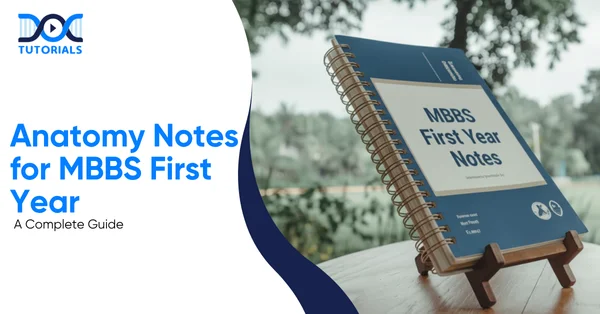
MBBS Anatomy Notes | DocTutorials

Entering medical college and being introduced to such a vast subject like anatomy can be overwhelming for every new student. However, effective note-taking can help students with a strategic approach, which consequently will help them to ace the exams and build the core clinical knowledge that is required for lifelong clinical practice.

Whether self-made or pre-made, the most crucial feature of anatomy notes is having clear and concise diagrams for better retention. In this guide, we will explore the significance of MBBS anatomy notes for the 1st year, discuss effective note-taking strategies, and outline resources to enrich note-taking information.

Keep reading for a detailed insight.

Why are MBBS 1st Year Anatomy Notes Necessary?

Anatomy is known to lay the base of medical science by providing a fundamental knowledge of the human body structure, which is required to understand the bond between different organs and their physiological structures.

Go through the following section to understand the importance of MBBS 1st year anatomy notes:

  1. Helps in Active Learning: Making notes while listening to the class stimulates active learning in the students and helps them to memorise the topics better, producing better academic results.
  2. Can be Used as a Revision Tool: Revising the whole textbook before the exams appears quite a challenging task; hence, the notes serve as a useful revision tool before the exams and whenever required.
  3. Complex Concepts are Broken Down: Notes break down complex anatomical structures, simplifying them for students to remember more effectively.
  4. Builds Core Concepts: Making MBBS anatomy notes from the 1st year itself forms a strong base for the subsequent clinical subjects, enabling practical clinical application.

How to Make Use of the MBBS Anatomy 1st Year Notes?

The following section lists the various tips to make your MBBS anatomy notes more effective and useful:

  1. Write Notes using Mnemonics: Anatomy is an extensive subject, and remembering everything word-for-word can be difficult for students. Hence, using mnemonics while making notes can be beneficial and easier to remember.
  2. Make Use of A.V. Aids: Audiovisual aids are more appealing and effective while studying. As anatomy is all about structures of the human body, learning through audiovisual aids helps students remember better and retain information more effectively than text.
  3. Draw Diagrams: Diagrams are a great tool while studying MBBS anatomy. Drawing diagrams stimulates active visualisation and enhances memory retention abilities. Drawing along with labelling helps grasp the terminologies and functions that might take a long time to understand.
  4. Take Help from Online Resources: Various online platforms, such as DocTutorials, enhance your anatomy learning experience by providing access to virtual dissection tools and 3D models, which help you make better notes.
  5. Go through your Mistakes: Review your anatomy notes and note down the gaps that you have identified. Rectify them and clarify your doubts with your teachers or by extensive textbook reading.

How to Prepare the MBBS Anatomy 1st Year Notes?

Note-taking is an art, and it becomes beneficial during MBBS anatomy exams if done in a proper manner. The following section highlights the key points of how you can make your own MBBS anatomy first-year notes effectively:

  1. Avoid the Common Mistakes: Writing too much or not writing enough, and not revising the notes after writing, can degrade the quality of your notes. Hence, avoiding common mistakes will help students make effective notes during study sessions. 
  2. Handwrite your Notes: Although handwritten notes sound quite old-school, this method never fails. While writing, it partly helps the student to memorise, and the key points get stuck in the mind.
  3. Write the Important Points: Anatomy is a vast subject, and hence writing only the key points helps to prepare a concise and compact note that is easier to study and memorise.
  4. Follow a Note-taking System: Various note-taking methods aid students in their study process. Incorporating flashcards, diagrams, and using different colours in the text makes the anatomy notes look interesting, which intrigues the reader’s interest.
  5. Review your Notes: Never forget to review your MBBS anatomy notes, as you may have missed a point or two while jotting the points down, or you may have skipped a topic. This step helps you to note the key points without overlooking.

How to Choose the Best MBBS Anatomy Notes for 1st Year?

The tips mentioned below will help you choose the best MBBS anatomy notes for the 1st year:

  1. Quality and Quantity of Anatomy Notes: Clear, concise, and properly labelled diagrams are the heart of MBBS anatomy notes. Hence, choose a note that offers clear, easy-to-reproduce and remember diagrams to score better in the university exams.
  2. Alignment with the Concerned University: Review the notes to determine if they are suitable for your university or college, or if they are intended for NEET PG or professional exams.
  3. Platform Reputation: Popular coaching centres offer notes with video lectures by senior and experienced faculty that help the students with authentic data made simpler for better understanding.
  4. User-Friendly Interface: When considering digital notes, the clarity of the diagrams and text is of utmost importance. Apart from this, question banks and quizzes should also be of high quality. 
  5. Clinical Correlation: Notes having applied anatomy or clinical anatomy provide the best notes for the relevant topics. This helps to score well as well as strengthen the core of medical science.

How Does DocTutorials Help with the MBBS Anatomy Notes for 1st Year?

DocTutorials is one of the best platforms to choose if you are looking for information-rich anatomy notes for the MBBS 1st year. Here’s why:

  1. Video-Lecture Based Notes: The notes are made in accordance with the video lectures, providing a seamless learning experience to the students where they can follow the lectures along with the pre-made digital notes. It saves time as well as makes learning interesting.
  2. Concise Content: The notes are easy to understand, featuring crisp content organised in bullet points that focus on high-yield topics essential for university exams.  
  3. Expert Faculty: The notes and lectures are made by experienced and expert faculty in their respective fields, having clear teaching styles and optimum clinical orientation.
  4. Rich in Visual Aids: The notes feature high-end images, diagrams, mind maps, and 3D animated videos, providing a deeper understanding and better retention for students.
  5. Focuses on Clinical Relevance: The notes are made with the competency-based medical education in mind, which integrates clinical correlations and PYQs. This helps students bridge the gap between theoretical knowledge and clinical practice. 
  6. Dual Availability: Students can choose between digital notes and hard copies, depending on their convenience.

FAQs about Anatomy Notes for MBBS First Year

  1. Should I make my own notes or use the pre-made notes for MBBS Anatomy 1st year?

The decision of using self-made or pre-made notes completely depends on the individual and their learning style. Self-made notes stimulate deeper learning and allow the reader to focus on several topics, while the pre-made notes save time and come with interesting visual aids.

  1. Are notes important in the MBBS anatomy 1st year?

Making notes and practising anatomy diagrams are crucial to score well in university exams. Hence, anatomy notes in 1st year of MBBS are important to have better academic outcomes and results.

  1. What are the resources for MBBS anatomy 1st year notes?

Some of the resources for MBBS anatomy notes for 1st years are:

  • Textbooks
  • Video Lectures
  • Coaching Platforms
  • Textbooks
  1. How can you identify good MBBS anatomy notes for the 1st year?

Any effective anatomy MBBS 1st year notes should have the following qualities:

  • Diagram-rich
  • Clinically relevant 
  • Structured and easy to read 
  • Concise and crisp
  1. Are digital notes helpful for anatomy?

Digital notes are very useful for studying anatomy, combining PDFs of lectures, annotated diagrams, interactive apps, and YouTube video summaries. They enhance understanding by providing visual aids, concise explanations, and interactive tools, making complex structures easier to learn and remember.

  1. How should I study Anatomy notes effectively?

To study Anatomy effectively, combine theory with diagrams, practice labelling structures, use mnemonics for complex facts, and revise regularly. Repetition and active recall are key strategies to remember structures, relationships, and clinical relevance for exams.

  1. Are diagrams important in Anatomy notes?

Yes, diagrams are extremely important in Anatomy. They help you visualise structures, spatial relationships, and anatomical variations, making it easier to understand, memorise, and recall information during exams and practical assessments.

  1. Which textbooks should Anatomy notes be based on?

Anatomy notes are best prepared from standard textbooks. BD Chaurasia is excellent for exam-focused content, Gray’s Anatomy for Students helps with conceptual understanding, and Vishram Singh provides clear diagrams and explanations for easier visualisation.

  1. Are mnemonics important in Anatomy notes?

Yes, mnemonics are very useful in Anatomy for remembering nerve roots, muscle actions, vessel branches, and foramina contents. They help in quick recall during exams, reducing the burden of memorising long lists of facts.

  1. Can Anatomy notes be used for NEET-PG or NEXT preparation later?

Yes, well-prepared Anatomy notes from the first year form a strong foundation. They are very handy for rapid revision and concept reinforcement when preparing for NEET-PG or NEXT exams, saving time and improving retention.

Conclusion

Medicine is a crucial field where doctors need a clear understanding of the concepts, as it deals with human life. So, to have a strong base, the students should have access to quality MBBS anatomy notes from the first year itself.

A proper knowledge and understanding of a pre-clinical subject like anatomy will help future doctors to learn the clinical subjects seamlessly in the subsequent years to come. DocTutorials is known for its concise and crisp notes that integrate all the essential and relevant topics, aligning with the CBME curriculum.

It also integrates applied anatomy, which helps the students to correlate their theoretical knowledge with practical scenarios. So, join DocTutorials and explore our MBBS course to excel in your medical career!
DocTutorials App Download Now

Latest Blogs

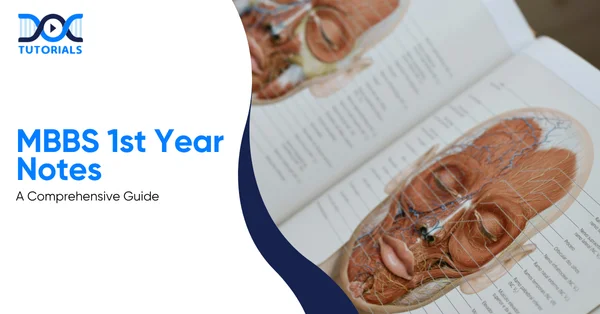
MBBS 1st Year Notes: A Comprehensive Guide

MBBS 1st Year Notes | DocTutorials

The first year of MBBS is the most crucial period for a medical student, marking the commencement of their medical journey. In this period, the students learn introductory preclinical courses, such as Anatomy, Physiology, and Biochemistry. A proper understanding of these fundamentals is critical towards advancement into medical practice in future.

A strong foundation enables students not only to get through the MBBS exam but also to excel in advanced subjects such as Pathology and Pharmacology. The importance of academic success and a promising medical career depends on consistent academic study and revision.

In this guide, we will explore the significance of MBBS 1st year notes, how to utilise them effectively, and the most valuable resources for supporting your studies. Keep reading for a detailed insight.

Why are MBBS 1st Year Notes Important?

Ever tried to construct a house without a blueprint? This is what it feels like to study MBBS without organised notes. Here’s why these notes matter:

  • Simplify Complex Concepts

There are complicated terms, processes, and mechanisms associated with medical subjects. To simplify complex concepts, a well-written note can break them down into comprehensible language.

  • Save Time

The time you spend needlessly leafing through two or three textbooks is better spent on proper notes, which contain all the most critical points in a single place, helping you revise faster.

  • Improve Knowledge Retention

Ever studied a chapter overnight before an exam, only to forget it hours later? Some notes, summarised and pictorially illustrated, enable you to remember longer.

  • Clear Focus on Important Topics

Not all information in textbooks is vital in exams. Properly arranged notes are those that highlight high-yielding areas, helping you focus on what truly matters to you.

What Makes the MBBS 1st Year Notes More Effective?

Not every note is created equal. There are disorganised ones, some of them old and unfinished. What makes a set of notes effective and useful is as follows:

  • Clarity

Clarity of study notes implies presenting information in a straightforward and easy-to-comprehend format without a lot of technical language. This eases complicated medical terms, particularly among first-year students.

  • Concise Content

Concise content aims to deliver the main idea and essential facts instead of having all available details. This will help students focus on the most relevant information to include in the exams and practical knowledge.

  • Visual Aids

Drawing images, flowcharts, and tables is significant in the simplification of complex processes. Sometimes, a graph can illustrate a point better and faster than a substantial portion of a text.

  • Updated Syllabus

It is essential to keep the notes indexed with a changed syllabus, since medical knowledge and exam patterns keep changing. The new notes can be used to ensure that students access information that is not only up-to-date but also relevant to their university needs.

How to Make the Most of Your MBBS First Year Notes?

Simply having notes won’t make you top of the class. You need to use them smartly. Here are practical tips to get the best results:

1. Active Reading

Active reading involves engaging with the study material by highlighting important points, writing brief annotations in the margins, and summarising complex topics in one’s own words. This approach helps in better understanding and retention of complex concepts.

2. Regular Revision

Regular revision plays a key role in strengthening memory and reinforcing knowledge. Revisiting notes periodically allows the brain to retain information more effectively over time, making recall easier during exams.

3. Practice Questions

Practice questions serve as an effective way to assess understanding of studied topics. Working through question banks that reflect real exam patterns helps students identify knowledge gaps and improve their problem-solving skills.

4. Group Study

Group study provides an opportunity for collaborative learning, where discussing challenging topics with peers can lead to a deeper understanding. Explaining concepts to others often helps clarify one’s own knowledge and offers new perspectives.

Tips for Choosing the Best 1st Year MBBS Notes

Finding reliable notes can be tricky. Here’s what you should check before choosing:

FactorsWhy It Matters
Source CredibilityAlways choose notes from trusted sources like DocTutorials or reputed medical educators.
Syllabus AlignmentThe notes must cover every topic your university requires. Otherwise, you might miss essential chapters.
Peer RecommendationsAsk seniors or batchmates for suggestions. Personal experience matters a lot as well.
Trial VersionsSome platforms offer sample notes. Check those before committing to full access.

What are the Other Resources to Boost Your Study?

Your 1st year MBBS notes are a powerful tool, but don’t stop there. Combine them with other valuable resources, such as the following:

  • Standard Textbooks

Standard textbooks are widely regarded for providing in-depth explanations and comprehensive coverage of core medical concepts. They serve as essential resources for a detailed understanding of human anatomy and physiological processes.

  • Online Lectures

Online lectures available on a few platforms offer simplified video explanations of challenging medical topics. These visual resources help break down complex subjects into easily digestible lessons, which are especially helpful for visual learners.

  • Question Banks

Question banks designed for medical students provide extensive practice material that mirrors actual exam patterns. Certain apps compile large sets of MCQs and case-based questions, allowing students to practice regularly and assess their preparation.

  • Study Apps

Study applications offer tools for fast memorisation through flashcards and interactive quizzes. These apps are helpful for quick revision and reinforcing key concepts on the go.

How Does DocTutorials Help You Succeed in Your MBBS Exam?

If you’re looking for the best 1st year MBBS notes, DocTutorials is a top choice. Here’s why:

  1. Regularly Updated & Comprehensive Notes

Well-structured and regularly updated MBBS first-year notes are designed to align with the latest medical curriculum. They include a comprehensive coverage of the basic subjects, and they must be clear and precise to reflect current academic requirements.

  1. Focus on Concepts, Not Rote Learning

These notes emphasise understanding concepts rather than rote memorisation. Rather than memorising processes such as renal filtration, it is about explaining why every step is taking place, thereby enabling the students to develop a solid conceptual base, which reinforces their deeper learning.

  1. Visual Learning Made Easy

Complex subjects, such as neuro-muscular transmission and metabolic pathways, are explained using images in the form of detailed diagrams, flowcharts, and tabular representations. Complex concepts become easier to understand and remember with the help of these visual means.

  1. Exam-Oriented Approach

Exam-oriented practices are based on high-yield concepts, which are repeatedly tested through a large number of practice questions and case studies that simulate the real exam pattern. The strategy would guide the students to concentrate on the issues that are most important in getting a high score.

  1. Easy Access Anytime, Anywhere

Access your notes anytime, anywhere—ideal for making the most of your busy MBBS schedule!

  1. Expert-Curated Content

Experienced medical educators prepare all notes. You get accurate, reliable, and structured notes that save you from wasting time searching for helpful resources.

FAQs about MBBS 1st Year Notes

  1. Which is better: handwritten or digital MBBS 1st year notes?

Both handwritten and digital notes have their advantages. Handwritten notes help improve memory retention and promote active learning. Digital notes (PDFs) are easy to access, well-organised, searchable, and often include diagrams and practice questions. The most effective approach is to use a combination of both methods.

  1. Can I rely on online MBBS 1st year notes for practical knowledge?

Online MBBS first-year notes are excellent for understanding theoretical concepts. However, they do not always cover practical skills such as dissection techniques or lab procedures. It is essential to complement these notes with hands-on learning by attending practical classes, using detailed textbooks, or watching video tutorials.

  1. What subjects are covered in the MBBS 1st year notes?

MBBS 1st year notes mainly cover three core subjects:

  1. Anatomy – The structure of organs, muscles, bones, and blood vessels.
  2. Physiology – How the body functions, including circulation, nerve impulses, and respiration.
  3. Biochemistry – Chemical processes inside cells, metabolism, and genetic mechanisms.
  4. How frequently should I revise MBBS 1st year notes for the best results?

Regular and consistent revision is crucial for long-term retention. Ideally, you should revise each topic:

  • Right after studying it the first time
  • After a few days, using spaced repetition
  • Just before exams to reinforce memory

This approach helps improve understanding and exam performance.

  1. How can I organise my MBBS 1st year notes for better revision?

To organise your MBBS 1st year notes effectively:

  • Divide them by subjects and chapters.
  • Highlight key concepts using colour codes.
  • Include diagrams, tables, and flowcharts for quick understanding.
  • Create a revision schedule to ensure regular review of topics.

6. Are MBBS 1st Year notes enough to pass exams?
Notes are helpful for revision, but standard textbooks are necessary for clear concepts. Using only notes is not recommended for first-time study.

7. What makes good MBBS 1st Year notes?
Good notes are concise, well-organised, syllabus-oriented, rich in diagrams, and include clinical correlations and important exam-focused points.

8. Are diagrams important in MBBS 1st Year notes?
Yes. Diagrams are essential, especially in Anatomy and Physiology. They improve visualisation, understanding, and overall exam presentation.

9. Can MBBS 1st Year notes help in future exams like NEET-PG?
Yes. Well-made first-year notes create a strong base and are useful for quick revision during NEET-PG preparation.

10. What mistakes should be avoided while using MBBS 1st Year notes?
Avoid skipping textbooks, rote memorisation without understanding, ignoring diagrams, and failing to update notes after lectures.

Conclusion

Having access to quality 1st year MBBS notes is indispensable for your success in the first year of medical school. This clarity allows you to plan your study strategy more efficiently and focus on high-yield topics without feeling overwhelmed.

Thoroughly familiarise yourself with the syllabus and regularly revise your notes to reinforce your understanding. DocTutorials help you with organised, concept-focused notes that simplify learning and help you concentrate on critical areas. Enhance your study with case studies, MCQs, diagrams, and mnemonics to simplify complex concepts.

Join DocTutorials and explore our MBBS course to excel in your medical exam!

DocTutorials App Download Now

Latest Blogs

9 Essential MBBS Preparation Tips for Success

MBBS Preparation Tips

Achieving the dream of becoming a doctor is not easy. You need to be determined and have the right mindset and a well-structured preparation plan. In this blog, we will walk you through the essential preparation tips to succeed in your MBBS journey.

These tips will help you master the MBBS syllabus along with how to handle the pressure and even choose the best coaching platform.

1. MBBS Syllabus – Understand It

MBBS consists of a vast syllabus with various topics to study. Sometimes, it feels overwhelming, but don’t worry. Understanding the syllabus can help you stay focused. MBBS syllabus is your map and let it guide you through the year.

PhaseSemestersSubjects or Syllabus
Pre-clinical1 – 2: Two semesters1. Anatomy
2. Bio-chemistry
3. Physiology
Para-clinical3 – 5: Three semesters1. Community Medicine
2. Forensic Medicine
3. Pathology
4. Pharmacology
5. Microbiology
6. Clinical postings inwards
7. OPDs to begin here
Clinical6 – 9: Four semesters1. Community Medicine
2. Medicine and allied
3. Subjects – Psychiatry, Dermatology
4. Obstetrics & Gynaecology
5. Pediatrics
6. Surgery and allied subjects –
Anesthesiology, E.N.T., Ophthalmology, Orthopedics
7. Clinical postings

To maximize your chances of success, refer to previous years’ exam papers to identify recurring topics that are frequently tested, and focus on those questions.

2. Revise Your Subjects Early

The earlier you start, the better it is. You require both dedication and consistency to revise & master your MBBS syllabus. Revising your MBBS subjects at the earliest possible time will avoid last-minute cramming and unnecessary stress.

Break down the syllabus into smaller and manageable sections and stick to your study plan. Consistency and steady preparation will help you understand tough concepts and build a strong foundation for future years.

3. The Right Coaching for MBBS Preparation

Whether you’re attending offline classes or opting for MBBS online coaching, you ensure it aligns with your learning style because the right coaching platform will make all the difference in your MBBS preparation.

DocTutorials – One of India’s best MBBS online coaching platforms, provides you with everything you need to excel in your MBBS university exams. 3D animated videos, expert video lectures covering all your subjects, and more are among the best study materials that you can use to boost your preparation.

4. Create a Realistic Study Plan

Your MBBS study plan should balance theory, practicals, and revision. With unrealistic targets, don’t overburden yourself. Set realistic goals and ensure you have sufficient time for each subject. With a good study plan, you will cover all topics gradually without feeling rushed.

Keep the plan flexible as some days might need more focus on one subject, while others require a shift in focus.

5. Utilize Study Materials Effectively

The MBBS journey is vast but rewarding. Beyond essential textbooks, tools like online lectures and MBBS online coaching platforms like DocTutorials can elevate your preparation, boosting confidence with interactive visuals, charts, and diagrams.

Remember, less is more—stick to focused resources to avoid confusion. Embrace the process; every step brings you closer to your dream of healing lives.

6. Regular Revision is The Secret to Retention

One of the crucial things in MBBS preparation is revision. It helps you retain the concepts that you’ve learned and refreshes your memory. Revise every week, even if it’s just for an hour or so.

Doing so will prevent concepts from slipping from your mind and ensure that you remember key concepts when you need them the most.

7. Stay Positive and Manage Stress

Managing stress when you are overwhelmed is key to keeping your preparation on track. Meditation, yoga, and simple breathing exercises can help clear your mind and relax. Remember, maintaining a positive mindset is just as important as your routine.

8. Practice with Mock Tests & Previous Year’s Papers

Secret weapons for MBBS exams are mock tests and previous year’s question papers. With these, you get familiar with the exam pattern and can improve your time management skills. Don’t just focus on scoring high in mock tests.

Use them as a tool to analyze your weak points and focus on improving those areas in your exams. Make it a habit to take at least one mock test every week to assess your progress.

9. Learn from Experts

Experienced mentors are your guiding light in the MBBS journey. Whether through MBBS coaching or online coaching, their expert insights simplify complex topics and streamline your preparation. Engage actively in their sessions—ask questions, participate, and absorb their wisdom. These mentors don’t just teach; they shape your path to success, ensuring you’re ready for every challenge ahead.

Final Thoughts

The journey to becoming a doctor is challenging, but with the right mindset, preparation, and support, you can achieve your MBBS goals. Stay focused and kind to yourself—you’re never alone in this pursuit. Success isn’t just about hard work; it’s about believing in yourself.

The road to becoming a doctor may be long, but it is worth every step. Good luck, and may you achieve the success you’ve worked so hard for.

Latest Blogs

NEET PG Online Live Power Pack
DocTutorials App Download Now