Fellowship in Emergency Medicine: Programme Overview, Eligibility & More
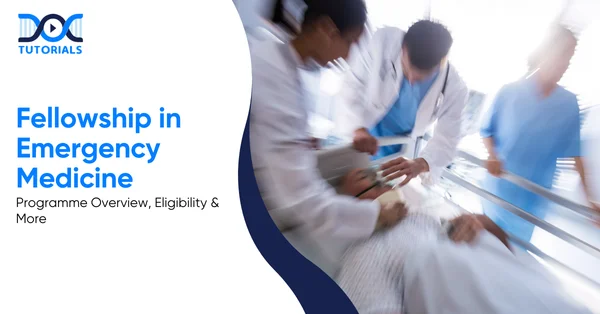
Emergency medicine is a field that requires health professionals to think and act quickly, with great precision, and under immense pressure. Joining emergency medicine means being part of a challenging, ongoing journey where each day brings different and complex experiences.
For medical graduates who thrive under pressure and are eager to be involved in active patient care, emergency medicine can be an ideal choice. A Fellowship in Emergency Medicine enables professionals to acquire in-depth knowledge in managing emergencies and saving precious lives.
Keep scrolling for the Fellowship in Emergency Medicine programme overview, eligibility criteria, and other crucial details!
Fellowship in Emergency Medicine: Programme Overview
The Fellowship in Emergency Medicine is a structured learning programme aimed at MD/MS/DNB graduates to help them establish careers in acute and critical care management. Equipped with global accreditations and hands-on training, it will turn physicians into capable frontline emergency care providers.
The Fellowship in Emergency Medicine is a full-time programme designed for MD/MS/DNB graduates, intended to help them develop advanced skills in treating acutely sick and injured patients of all ages.
Combining e-learning activities with hands-on training in multi-speciality hospitals, this programme provides in-depth experience in dealing with emergencies across medical, surgical, cardiac, toxicology, trauma, ICU, and environmental specialities.
Key Areas of Focus:
- Management of patients in cardiac arrest and post-cardiac arrest care
- Infectious diseases – sepsis
- BLS & ACLS (Basic Life Support & Advanced Cardiovascular Life Support)
Emergency Procedures (Hands-on Experience):
- IV Cannulation
- ABG (Arterial Blood Gas)
- Intubation
- Arterial Line
- ICD Insertion
- Central Line
- Pericardiocentesis
- Point-of-care ultrasound (eFAST)
- Cricothyroidotomy
Paediatric Emergencies:
- Specialized training in Paediatric Emergencies to ensure competence in managing critical pediatric cases.
This fellowship program is designed to equip physicians with the necessary skills and knowledge to handle acute and life-threatening emergencies, preparing them for a successful career in emergency medicine.
Fellowship in Emergency Medicine: Programme Details
The Fellowship in Emergency Medicine curriculum offers a structured training system that covers all areas of core and advanced emergency care. It builds systematically from basic emergency care in the emergency department to lifesaving techniques in airway management, trauma, emergency medicine and surgery, and complex cases in toxicology and environmental emergencies.
The table below discusses the detailed programme outline for the Fellowship in Emergency Medicine:
| Module | Curriculum Details |
| Introduction and Emergency Systems | Introduction and Overview of Emergency Medicine Organisation of the Emergency Medicine Department Organisation of Emergency Medical Services Disaster Management Legal Aspects of Emergency Medicine |
| Airway and Ventilatory Management | Introduction to Airway Care Airway Management Techniques Assisted Ventilation Pulse Oximetry Ventilator Basics Nasogastric Tube Insertion |
| Trauma and Neurological Assessment | Trauma Evaluation and Management Neurology in Trauma |
| Orthopaedic Emergencies | Overview and Orthopaedic Emergencies Types and Orthopaedic Emergencies Basic Management of Orthopaedic Emergencies Fracture Management Hand and Wrist Injuries Forearm, Elbow, Upper Arm, and Shoulder Injuries Pelvis, Hip, and Femur Injuries Lower Leg and Ankle Injuries Complications of Orthopaedic Injuries |
| Wounds, Pain and Analgesia | Wound Assessment and Management Local and Regional Anaesthesia Chronic Pain Management |
| Cardiac and Respiratory Emergencies | Renal, Gastrointestinal, and Hepatic Emergencies |
| Surgical, Urogenital, and Transfusion Emergencies | Endocrine Emergencies Neurological Emergencies Psychiatric Emergencies Shock and Hemodynamic Instability |
| Surgical, Urogenital, and Transfusion Emergencies | Renal Emergencies Gastrointestinal and Hepatobiliary Emergencies Liver Cirrhosis |
| Surgical, Urogenital and Transfusion Emergencies | Surgical Emergencies Urogenital Emergencies Transfusion Emergencies Blood Transfusion Protocols |
| Obstetric, Gynaecologic and Paediatric Emergencies | Obstetric Emergencies Gynaecologic Emergencies Paediatric Emergencies Female Reproductive Tract Disorders Endometriosis IUCD-related Emergencies Polycystic Ovarian Disease (PCOD) Preeclampsia |
| ENT (Ear, Nose, Throat) and Ophthalmic Emergencies | Otolaryngological Emergencies Ophthalmic Emergencies |
| Toxicology and Poisoning Management | Approach to the Poisoned Patient Commonly Used Antidotes Management of Drug-Induced Hypotension Carbon Monoxide Poisoning Illicit Drugs and Substance Abuse Alcohol Withdrawal Digitalis Toxicity Calcium Channel Blocker Toxicity Acetaminophen Hepatotoxicity Salicylate Overdose Tricyclic Antidepressant Overdose Monoamine Oxidase Inhibitor Overdose Arsenic, Cyanide, Iron, and Lithium Poisoning Serum Osmolality Assessment Ethanol and Ethylene Glycol Poisoning Organophosphate and Organocarbamate Poisoning Management |
| Environmental and Special Emergencies | Environmental Emergencies Burns Management Dive-Related Emergencies Anaphylaxis Bites and Stings |
Note: The syllabus will tend to differ based on the institute you choose.
Fellowship in Emergency Medicine: Key Features
The Fellowship in Emergency Medicine is designed to provide training applicable to real-life situations in the field of emergency medical care. Candidates also learn rapid assessment and stabilisation techniques, gain enhanced diagnostic competence, and foster leadership and communication excellence.
Mentioned below are the key features of the Fellowship in Emergency Medicine:
- Practical Clinical Experience: Obtain direct practical exposure under the supervision of qualified specialists in emergency medicine at a multi-speciality hospital.
- Flexible Hybrid Learning Model: Take advantage of a blended learning format that brings online academic courses combined with practical training in the real world for working professionals to separate study from practice.
- High-Quality Expert-Led Programme: Acquire knowledge from a very experienced faculty who have excellent track records in the fields of emergency medicine and critical care.
- Rapid Assessment and Stabilisation Techniques: Develop the skill of effectively assessing, stabilising, and treating critically ill and injured patients in emergency situations.
- Advanced Trauma and Emergency Procedures: Enhance skills in managing trauma cases, providing basic emergency care, and performing resuscitation.
- Enhanced Diagnostic Competence: Improve diagnostic competencies to detect and manage acute diseases/conditions in time-sensitive situations.
- Emergency Pharmacology and Equipment Familiarity: Acquire hands-on experience with the emergency drugs and medical equipment regularly used and vital to the emergency department’s care.
- Leadership and Communication Excellence: Develop seamless communication, teamwork, and leadership skills to perform efficiently even in the most difficult emergency situations.
- Investigation Selection and Interpretation: Become an expert at selecting appropriate diagnostic investigations, correctly interpreting results, and prioritising the patient’s safety.
- Patient-Centred Emergency Communication: Be able to understand and apply the principles of clear, ethical, and empathetic communication in emergency settings with patients and their families.
- Continuous Learning and Skill Upgradation: Keep up with the latest in emergency medicine by continuous learning and exposure to new clinical practices and protocols.
- Global Recognition and Accreditation: Get the globally recognised fellowship award accredited by CPD.
Fellowship in Emergency Medicine: Eligibility Criteria
The Fellowship in Emergency Medicine is aimed at medical graduates and healthcare professionals seeking to develop skills in acute and critical care. MD/MS/DNB holders are eligible to opt for this course.
Here are the eligibility parameters for the Fellowship in Emergency Medicine:
- Minimum qualification must be MD/MS/DNB or an equivalent medical degree
- MD, MS, DNB, or FNB holders aiming to enhance emergency care competencies
- Current medical residents actively working in healthcare settings
- AYUSH doctors with relevant clinical or emergency care experience
- International Medical Graduates (IMGs) interested in emergency medicine training
Career Opportunities After Fellowship in Emergency Medicine
Candidates completing a Fellowship in Emergency Medicine programme can opt for job roles like Consultant or Specialist in Emergency Medicine, Academic Faculty or Medical Trainer, Consultant or Head of Emergency Department, and more, along with international career opportunities.
A Fellowship in Emergency Medicine is not just a qualification; it serves as a gateway to a versatile, future-ready career. It will prepare physicians for high-level roles across clinical care, leadership, academia, disaster response, and other areas, both nationally and internationally.
Here are the major career opportunities one can access after clearing this fellowship successfully:
- Consultant or Specialist in Emergency Medicine: Doctors can work as frontline emergency physicians in hospitals, trauma centres, and multispeciality healthcare facilities. Due to the shortage of trained emergency doctors, employability remains high across the public and private sectors.
- International Career Opportunities: As a notable medical speciality, emergency medicine has attained global recognition. The United Kingdom, Canada, Australia, and countries in the Middle East actively recruit trained emergency physicians. In fact, they offer excellent professional exposure and international standards of remuneration.
- Academic Faculty or Medical Trainer: The doctors passionate about teaching can join medical colleges, emergency medicine training programmes, or simulation labs. This role includes teaching, curriculum development, mentoring, and contributing to the academic growth of the speciality.
- Consultant or Head of Emergency Department: With experience, doctors may progress to leadership positions such as ED Consultant or Department Head. Such jobs involve patient care as well as administrative duties.
- Disaster Medicine and Emergency Response Expert: Such professionals have the skills that can be applied to disaster response and humanitarian responsibilities. They can be employed by government agencies, non-governmental organisations, and international institutions to respond to disasters involving large numbers of casualties and pandemics.
- Private Practice and Telemedicine Roles: The rise of telehealth has created new channels for emergency physicians to reach patients for virtual consultations and urgent care, serving rural and underserved communities.
- Research, Innovation, and Continuing Professional Education: Doctors are often involved in clinical research, innovation, and policy formulation to enhance emergency care practices.
FAQs about Fellowship in Emergency Medicine
- Can I pursue a Fellowship in Emergency Medicine with my job?
Yes, the Fellowship in Emergency Medicine will enable practicing doctors to continue working while upskilling. Online learning modules and the flexibility in scheduling allow one to manage emergency duties and complete coursework at times convenient to them, even in the evenings or on weekends.
- What is the time frame and structure of the Fellowship in Emergency Medicine course?
The Fellowship in Emergency Medicine is a structured 12-month training programme. It comprises 10 months of theory sessions delivered via online classes, with practical training in a live emergency setup in the remaining 2 months.
- How is the curriculum in the Fellowship in Emergency Medicine designed?
A Fellowship in Emergency Medicine course covers emergency medicine in detail, progressing from basics to advanced or specialised aspects of the field.
- What are the best career scopes after completing a Fellowship in Emergency Medicine?
Doctors can seek opportunities in hospital-based emergency medicine departments, trauma units, urgent care settings, academia, and research institutions. The programme also creates scope for working in national and international emergency medicine settings.
- Who is eligible to apply to the Fellowship in Emergency Medicine?
Candidates applying for Fellowship in Emergency Medicine need to have a valid MD/MS/DNB Degree from a recognised medical institution. This fellowship course is intended for physicians seeking guidance and practical experience in emergency and acute care medicine.
- What is the process for the clinical training in the Emergency Medicine Fellowship?
In the Emergency Medicine Fellowship, training will include hands-on work in the emergency department, direct patient care, involvement in medical and trauma emergencies, and guided instruction under the supervision of skilled emergency medicine professionals.
- What is the fee structure for the Fellowship in Emergency Medicine?
The cost of pursuing the Fellowship in Emergency Medicine may range from ₹2 to ₹10 lakhs across different institutions and training centres.
- What is the admission process for Fellowship in Emergency Medicine?
The candidate must submit a completed application form and the required documents, meet eligibility requirements, attend medical interviews or participate in counselling sessions, if applicable, and enrol in the course by submitting the required documents and making payment within the specified timeframe.
- What salary can I expect after completing the Fellowship in Emergency Medicine?
The expected starting salaries for professionals completing the Fellowship in Emergency Medicine range from ₹10 to ₹15 lakhs per annum. This can also increase based on the candidate’s experience, skills, and institutional affiliation.
- What professional credibility does a Fellowship in Emergency Medicine bring?
The Fellowship in Emergency Medicine programme enhances professional credibility by providing specialised knowledge in emergency medical care. It also acknowledges a professional’s skills, passion for excellence, and learning efforts, and provides recognition from a renowned educational institution.
Conclusion
A Fellowship in Emergency Medicine is your ultimate journey into the very core of acute medicine. For young physicians looking to start their careers with purpose and relevance in today’s rapidly changing world, the programme is truly promising. At DocTutorials, we provide Fellowship and Observership programmes through collaborations with the best super-speciality hospitals across India.
Our practical fellowships and specialised observerships combine the best of guidance, practical exposure, and globally recognised certification, enabling medical practitioners to advance their careers, improve patient care, and contribute effectively to the future of healthcare.
Check out our fellowship programmes today!