Fellowship in Neurosurgery: Programme Details, Key Features, Eligibility, and Career Options
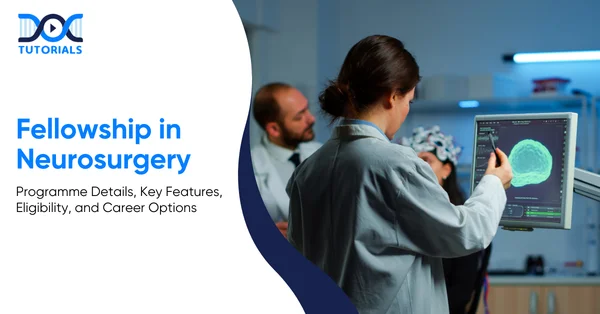
The Fellowship in Neurosurgery is designed to deliver in-depth knowledge and hands-on experience in critical aspects of neurosurgery to medical professionals. Practising neurosurgeons can join this programme to enhance their expertise and proficiency in the subject.
Candidates enrolling can learn from the experts in this field and gain immersive learning and detailed knowledge. Keep reading to learn more about the features, eligibility, and career options after the Fellowship in Neurosurgery programme.
Fellowship in Neurosurgery: An Overview
The Neurosurgical Fellowship offers you skills for the diagnosis, treatment, and management of neurosurgical conditions such as trauma, tumours, and spinal problems. It teaches technical proficiency, critical thinking, ethics, and research for independent practice.
The goal of a Fellowship in Neurosurgery is to help future neurosurgeons develop a broad range of skills. Its primary goal is to provide comprehensive expertise in the diagnosis, treatment, and management of complicated neurosurgical conditions.
The fellowship helps develop practical proficiency by combining theoretical instruction, which covers anatomy, pathology, and advanced surgical techniques, with practical clinical rotations, simulations, and real-world case management.
In the end, this approach helps fellows to succeed as independent practitioners in high-stakes neurosurgical settings. It gives them technical proficiency along with critical thinking, ethical decision-making, and research acumen.
What are the Programme Details of Fellowship in Neurosurgery?
Candidates pursuing a Fellowship in Neurosurgery can gain an in-depth understanding of various critical aspects of neurology. The programme covers neuro-endoscopy, spine surgery, micro-neurosurgery, etc. Candidates can also learn about spine surgeries such as discectomy, laminectomy, etc.
The Fellowship in Neurosurgery covers the following curriculum:
1. Neuro-Endoscopy
- Endoscopic anatomy of skull, ventricles, and sella
- ETV in hydrocephalus
- Pituitary and extended skull base approaches
- Dural repair and CSF leak management
2. Micro-Neurosurgery
- Skull base and calvarial craniotomies
- Techniques of anterior clinoid and petrosal drilling
- Practical sessions with surgical simulations
3. Spine Surgery
- Open vs. minimally invasive spine procedures
- Anterior cervical fixation of cage vs. cage + plate
- Odontoid screw fixation
4. Surgical Exposure
- Microvascular Decompression & RF Ablation for Trigeminal Neuralgia
- Pain Procedures, including nerve blocks, facet ablation, etc.
- Aneurysm Clipping
- Craniotomies for meningiomas, gliomas, and pituitary adenomas
- Endoscopic Pituitary Surgery
- VP Shunt Placement for Hydrocephalus
- Spine Surgeries such as Laminectomy, Discectomy, Instrumented Fixation (Open, MIS, Endoscopic)
What are the Key Features of a Fellowship Programme in Neurosurgery?
Neurosurgery fellowship features mentorship from top experts, a comprehensive curriculum that covers cranial, spinal, oncology, paediatric, and advanced techniques like MISS. It also covers endoscopy, offers hands-on training via OT observations, simulations, and rotations for practical mastery.
Here are some of the key features of Fellowship in Neurosurgery:
- Mentorship by Expert Faculty
You can learn from renowned neurosurgeons and neuroscientists with decades of experience. Fellows will receive personalised guidance regarding their skill development through real-time feedback and case insights.
They will also receive practical training and direct access to leaders in clinical practice and academia.
- Comprehensive Curriculum
The fellowship programme includes important topics such as paediatric neurosurgery, MISS, neurotrauma, neuro-oncology, cranial/spinal surgery, endoscopic, and functional neurosurgery.
The syllabus focuses on technologies and evidence-based practices to give participants flexible expertise in this field.
- Hands-On Surgical Training
It comprises real-time occupational therapy observations, pre/post-operative conversations, procedure assistance, simulations, and rotations.
Through direct participation in actual patient cases, this approach develops practical proficiency and decision-making skills.
Who is Eligible for a Fellowship in Neurosurgery?
Postgraduates with an MS, MD, DNB, or equivalent degree can apply for a neurosurgery fellowship programme. Medical practitioners who want to upgrade their skills are also eligible to apply for this fellowship programme.
Here are the eligible candidates for a Fellowship in Neurosurgery:
- MD, MS, DNB postgraduates or equivalent
- Practising medical professionals
- All documents are subject to verification
What are the Career Opportunities after Completing a Fellowship in Neurosurgery?
After the fellowship programme, candidates can seek job roles as a neurosurgeon at reputed hospitals. They can opt for private practice and work independently. They can also contribute to research and development for advancement in neurosurgery.
Here are some career opportunities after a Fellowship in Neurosurgery programme:
- Expert Neurosurgeon
Candidates can gain exposure to every detail of neurosurgery through hands-on practice. Thus, they can start a career as a neurosurgeon in renowned hospitals. They become the experts in this field, mastering every aspect of neurosurgery.
- Research and Innovation
After completing the training, fellows can contribute to the research and development of neurosurgery. This can lead to the advancement of neurosurgery in India and help develop advanced techniques and learning methods for further development.
- Academic Job Role
Candidates can also take up job roles as professors of neurosurgery in reputed educational institutions and prepare upcoming candidates.
FAQs about Fellowship in Neurosurgery
- What is a neurosurgery fellowship?
Fellowship in Neurosurgery is a post-residency programme that provides advanced training in subspecialties like spine, neuro-oncology, or vascular surgery. It usually lasts for 3 months -1 year, focusing on complex cases, research, and surgical skills to prepare fellows for specialised practice.
- What are the eligibility criteria to apply for a Fellowship in Neurosurgery?
Candidates with postgraduate degrees in MD, MS, or DNB, or equivalent, can apply for the fellowship programme. Medical practitioners can also apply for the programme to enhance their skills and knowledge.
- How long does a Fellowship in Neurosurgery last?
Most of the programmes are of 3 to 12 months clinical fellowships with high operative volume. However, for split research and clinical training, the duration may exceed 2 years. Some combined programs extend to 18-24 months for comprehensive expertise.
- What subspecialties are available under a Neurosurgery Fellowship programme?
This programme includes subspecialties such as spine, vascular/endovascular, skull base/neuro-oncology, functional/epilepsy, peripheral nerve, paediatric, and minimally invasive techniques. Programs emphasise emerging tech like robotics and endoscopy.
- What hands-on experience in a Fellowship in Neurosurgery is provided?
Fellows assist expert neurosurgeons in live OT observations, simulations, pre/post-op discussions, and rotations. The training programme focuses on real-time procedures in high-volume centres.
- Is research required in a Neurosurgery Fellowship?
Research may be encouraged or mandatory in 2-year tracks, involving clinical trials, publications, and grants. Many programs offer protected time for translational research in tumours or neuromodulation.
- How to apply for a Fellowship in Neurosurgery?
Candidates can apply for the programme through the website of the preferred institution. They need to submit an enquiry form with all their details and upload all their educational documents. If shortlisted, candidates will be invited to an interview for final selection.
- Are international applicants accepted in Fellowship in Neurosurgery?
Yes, many programmes welcome international candidates with specific certification and prior training. Some programmes offer short-term observerships or research fellowships.
- What are the career outcomes of a Fellowship in Neurosurgery?
After completing this fellowship programme, candidates can seek job roles in academic positions, private practice, or leadership in subspecialty centres. This programme enhances employability in high-demand areas like oncology or functional neurosurgery.
- Can I pursue a Fellowship in Neurosurgery while continuing my profession?
Yes, these programmes are conducted online by various organisations to ensure flexibility for medical professionals. They can upgrade their skills and knowledge while continuing their profession.
Conclusion
A Fellowship in Neurosurgery transforms residents into specialists through expert mentorship, comprehensive subspecialty training, and immersive hands-on experience.
In this regard, DocTutorials can provide you with the much-needed assistance. In addition to DocTutorials’ collaboration with super-speciality hospitals in India, we offer advanced clinical fellowship programs of 3, 6, and 12 months, hands-on training, and advanced techniques.
Join our Clinical Fellowship programs today to enhance your skills!