Laparoscopic Fellowship: Features and Eligibility Criteria
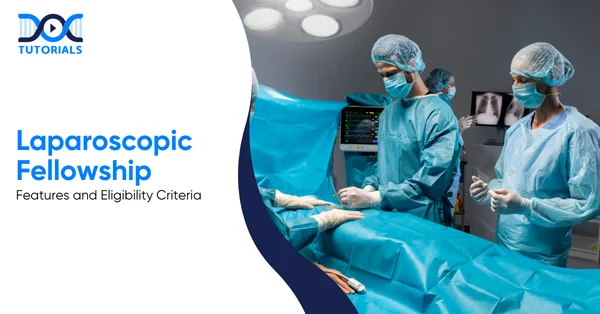
The field of surgical procedures is developing with newer advancements. This has further increased the demand for advanced laparoscopy techniques among present-day surgeons. The Fellowship in Laparoscopy or minimally invasive surgery (FMAS) has been established to provide practical experience in minimal access surgery.
Continue reading to know more about the Fellowship in Laparoscopy and its value in administering advanced surgical procedures.
Fellowship in Minimal Access Surgery (FMAS) or Laparoscopic Fellowship: Programme Overview
Fellowship in Minimal Access Surgery (FMAS) widely termed as Laparoscopic Fellowship is an accredited postgraduate course meant for surgeons who are desirous to effectively deal with laparoscopies. The course involves hands-on training, experience in surgical sessions, and supervision while pursuing learning at renowned institutions.
The Fellowship in Minimal Access Surgery (FMAS), or Laparoscopic Fellowship, is an innovative surgical procedure. The medical programme is ideal for healthcare practitioners who have a background in surgery and interested in learning advanced studies in minimally invasive surgery.
The surgical course aims to provide hands-on training and experience via live OT observation. The fellowship selection procedure requires candidates to pass their university exams in this domain, followed by expert assessments.
In this programme, the fellowship is issued by a UGC-recognised university that holds international recognition under the UNESCO guidelines, ensuring global academic and clinical credibility. With global recognition, FMAS trains surgeons to become safe, accurate, and future-ready minimally invasive surgeons.
Fellowship in Minimal Access Surgery or Laparoscopic Fellowship: Programme Details
The Laparoscopic Fellowship, or the fellowship in the FMAS programme, is an all-encompassing skill-building training module in minimally invasive surgery. It includes both basic and advanced laparoscopic surgical techniques, with a strong emphasis on practice. The curriculum aims to fill the gap between open surgery and laparoscopy.
The FMAS programme, or Fellowship in Laparoscopy, is designed to enable the development of strong theoretical knowledge, technical skills, and confidence in the application of minimally invasive surgical techniques.
The main programme details are as follows:
- Basic and advanced laparoscopic surgery techniques.
- Laparoscopic colorectal surgery, including resections and bowel procedures.
- Minimally invasive bariatric surgery: sleeve gastrectomy and gastric bypass.
- Encompasses core surgery techniques like laparoscopic cholecystectomy, appendectomy, and hernia repairs.
- Endoscopic approaches in minimal access surgery.
- Laparoscopic management of trauma and emergency surgical conditions.
- Post-operative care and complication management in minimal access surgery.
- Principles of minimising surgical trauma and enhancing recovery times.
- Complex abdominal procedures: laparoscopic gastrostomy and gastrectomy.
- Ergonomics in minimal access surgery (MAS) – focusing on optimizing surgeon posture, position of equipment, and workflow to prevent musculoskeletal strain
- Hands-on wet lab training, including live animal model procedures.
- Development of hand–eye coordination and adaptation to 2D vision in laparoscopy.
- Understanding indications, contraindications, and limitations of MIS.
- Abdominal access techniques include Veress needle insufflation, open approach(Hasson technique), optical trocar, and direct trocar.
- Sterilisation, maintenance, and handling of laparoscopic and video equipment.
- Documentation, data storage, and case presentation skills.
- Safe transition from lab-based learning to human surgical practice.
- Principles of anaesthesia in laparoscopic surgery.
- Use of prosthetic meshes, fixation devices, and organ retrieval systems.
- Management of complications in minimally invasive surgery.
- Two-hand coordination for precise dissection and safe energy use.
- Training in electrosurgery and newer energy sources.
- Basic and advanced endo-knotting and intracorporeal suturing techniques.
- Exposure to advanced laparoscopic procedures in HBP, bariatric, upper GI, hernia, and colorectal surgery.
Fellowship in Minimal Access Surgery or Laparoscopic Fellowship: Key Features
The FMAS or Laparoscopic Fellowship is an advanced training program in minimally invasive surgery. It focuses on realistic OT-based learning and advanced surgical technologies. The course equips surgeons with capabilities that enhance patient and professional success.
The objective of Laparoscopic Fellowship is to develop advanced technical skills, an insight in procedural expertise, and a crystal-clear understanding of the added benefits of minimally invasive surgery.
Here are the key features of this fellowship programme:
- Advanced Laparoscopic Skill Development: The training session encompasses intracorporeal and extracorporeal suturing, binding with contralateral port placement, tissue extraction, and safe closure of port sites.
- Surgical Video Documentation and Presentation: Participants will be trained to use advanced video capture tools and the software required for recording, viewing, and displaying various laparoscopic surgical procedures.
- Operation Theatre Training – General Surgery: Practical exposure in OT includes laparoscopic appendectomy, cholecystectomy, inguinal hernia repair (TAPP and TEP), stapled haemorrhoidectomy (MIPH), and ventral hernia repair using laparoscopic IPOM methods.
- Operation Theatre Training – Gynaecology: The gynaecologists undergo specialised OT training in laparoscopic sterilisation procedures, salpingectomy, ovary cystectomy, salpingo-oophorectomy, ovarian drilling, laparoscopic-assisted vaginal hysterectomy (LAVH), total laparoscopic hysterectomy (TLH), alongside diagnostic and operative hysteroscopy.
- Specialised Training – Paediatric Surgery: They assist with laparoscopic appendectomy, diaphragmatic hernia repair, laparoscopic hernia repair, and orchidopexy as paediatric surgeons.
- Specialised Training – Urology: During this course, doctors will be trained in both laparoscopic varicocelectomy and laparoscopic nephrectomy.
- Core Principles of Minimal Access Surgery: The programme maintains its focus on reduced postoperative pain, shortened hospital stays, minimal scarring, increased surgical precision, and quicker patient recovery.
- Evidence-Based Advantages Over Open Surgery: During seminars, participants will develop an evidence-based understanding of laparoscopy’s advantages.
- Career Growth and Professional Impact: It aims to increase surgical competence, enhance employability, improve earning potential, and foster a more patient-centred approach to modern surgical care.
Fellowship in Minimal Access Surgery or Laparoscopic Fellowship: Eligibility Criteria
Eligibility for a Fellowship in Laparoscopy or FMAS is defined to ensure strong surgical fundamentals. The course targets suitably qualified and registered doctors with previous training in surgery. Both Indian and international candidates meeting recognised standards can apply.
Here are the eligibility criteria to pursue a Fellowship in Laparoscopy or FMAS:
- Candidates must hold an MS or DNB in General Surgery from a recognised institution.
- Indian degrees should be MCI/NMC accredited; overseas candidates must have equivalent qualifications.
- Applicants should possess a valid medical registration in their respective country.
- International candidates with recognised postgraduate surgical qualifications are eligible.
- An MD/MS/DNB or equivalent qualification is mandatory.
- A minimum of 3 years of post-registration clinical experience in General Surgery or Gynaecology may be required in certain programmes.
- Online application submission is typically sufficient for admission into the FMAS programme.
Career Opportunities after Fellowship in Minimal Access Surgery or Laparoscopic Fellowship
Pursuing a Fellowship in Minimal Access Surgery (FMAS) or a Laparoscopic Fellowship will play a significant role in upgrading one’s status as a surgeon in today’s advances in surgery. FMAS certification ensures competency in minimal-access surgery and provides access to key surgical positions.
The major job opportunities after clearing the Fellowship in FMAS or the Laparoscopic Fellowship course are as follows:
- Consultant Laparoscopic/Minimal Access Surgeon: Provide consulting services in corporate hospitals, multipurpose medical facilities, and advanced surgical centres performing a host of minimally invasive surgeries.
- Specialist in Advanced Laparoscopic Subspecialties: Engage in specialised practice in bariatric surgery, colorectal surgery, GI surgery, urology, or gynaecologic laparoscopy, and deal with complicated cases in high-volume hospitals.
- Bariatric Surgeon (Minimally Invasive): Build a career around metabolic and bariatric surgery by applying laparoscopy expertise to treat obesity along with its metabolic complications.
- Colorectal and GI Laparoscopic Surgeon: Participate in highly specialised gastrointestinal and colorectal surgeries using laparoscopic techniques, mostly at recognised hospitals that handle diverse digestive disorders.
- Trauma and Emergency Laparoscopic Surgeon: Apply minimally invasive surgery methods in trauma and emergency situations, which are new areas with potential in the field, and help patients to have an easier postoperative recovery.
- Academic Faculty and Surgical Trainer: Use your skills by joining medical colleges, teaching institutes, or skill development institutes as a faculty or trainer to train surgeons in laparoscopy.
- Minimally Invasive Surgery Researcher: Involve yourself in the various clinical researches, innovations, and outcome-oriented studies related to laparoscopic and endoscopic techniques that help you in strengthening academic credentials.
- Further Fellowships and International Opportunities Platform: Build a strong foundation for FMAS in order to pursue advanced national and international fellowships, observerships, and certifications that lead to global career mobility.
Overall, FMAS or and Laparoscopic Fellowship make surgeons technologically specialised, credible, and versatile to succeed in modern surgery, including clinical excellence, training, and research, for further sub-specialisation.
FAQs about Laparoscopic Fellowship
- What do you mean by the Fellowship in Laparoscopy or Minimal Access Surgery?
Fellowship in Laparoscopy or Minimal Access Surgery is an advanced training programme that helps surgeons acquire expertise in the latest techniques of minimally invasive surgery, emphasising accuracy, safety, and better outcomes with the latest advancements in laparoscopy.
- Why is accreditation important for a Fellowship in Laparoscopy or Minimal Access Surgery?
Accreditation is a process that ensures that a Laparoscopic Fellowship meets certain standards of quality and safety, helps to gain the trust of employers and institutions, allows for greater recognition of credentials, and helps to ensure that surgeons are provided with reputable, constantly assessed training in minimally invasive surgery.
- Is laparoscopic surgery more expensive than general (open) surgery?
Although the initial cost of laparoscopic surgery might be slightly higher, it is also more cost-effective because of shorter hospital stays, quicker recovery times, and fewer complications.
This is one of the main reasons why many students choose to pursue a Laparoscopic Fellowship or FMAS surgery to fulfil the increasing demand from patients and hospitals.
- Who is eligible to apply for a Laparoscopic Fellowship?
Candidates with MS or DNB in General Surgery can apply for a Laparoscopic Fellowship or theFMAS. This course is designed for those professionals who want to acquire expertise in minimally invasive surgery.
- What is the training emphasis of a Laparoscopic Fellowship?
The Fellowship in Laparoscopy deals with “Minimally Invasive Surgery” and includes topics such as abdominal, gastrointestinal, colorectal, and bariatric surgery. The fellowship programme aims at training in operative skills, operation theatre experience, and safe use of advanced laparoscopic surgery.
- What is the application process for a Laparoscopic Fellowship in India?
When selecting a Fellowship in Laparoscopy or FMAS programme, it is essential to identify one that aligns with your career objectives and is conducted by a prestigious institution with strong clinical exposure.
- Can international candidates apply for a Laparoscopic Fellowship?
Yes, international applicants with similar surgical qualifications can apply for a Laparoscopic Fellowship position. Most fellowship programmes offer institutional support to facilitate a smooth training and enrolment process for international applicants.
- What should you look for in a Fellowship in Laparoscopy or FMAS?
The FMAS or Laparoscopic Fellowship application process may include eligibility confirmation, enrolment in courses, and participation in a structured hands-on training program.
The candidates need to undergo theory, practical, and viva exams, and after successful completion, the fellowship certificate is awarded to them.
- Can I pursue a Fellowship in FMAS or Laparoscopic Surgery alongside my job?
Yes, many FMAS and Fellowship in Laparoscopy programmes are designed in a flexible learning format that includes a combination of short-term training and modules, which enable surgeons to upskill while juggling their professional commitments.
- Is it necessary for all MD/MS/DNB doctors to have a fellowship in FMAS or laparoscopic surgery?
No, it is not obligatory. However, pursuing an FMAS or Laparoscopic Fellowship in India can be immensely helpful for MD/MS/DNB doctors who want to specialise early, improve their skills, and keep themselves updated with the latest advancements in surgery.
Conclusion
Laparoscopic Fellowship or Fellowship in Minimally Invasive Surgery (FMAS) is an excellent way to become skilled in modern surgical procedures. Through formal medical training, global certification, and hands-on experience, FMAS is setting the surgeons for the future of the medical realm.
At DocTutorials, we assist the aspiring individuals with the best laparoscopic fellowship in India. Along with DocTutorials’ collaboration with super-speciality hospitals in India, we offer specialised Clinical Fellowship training programmes with expert guidance, clinical exposure in well-equipped hospitals and laboratories, and increased expertise.
Join our Clinical Fellowship programmes today to excel in your medical career!