Hereditary Spherocytosis: Causes, Symptoms, Diagnosis, and Treatment
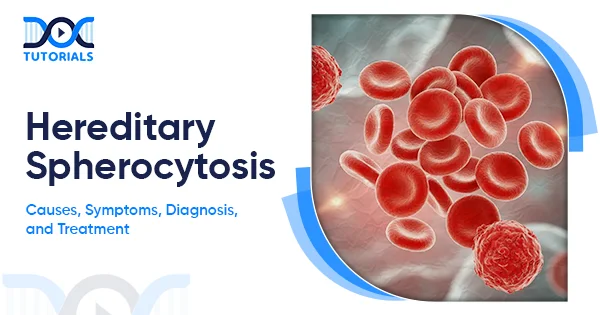
Hereditary spherocytosis is a foundational topic in Pathology, representing a unique intersection among genetics, membrane biology, and clinical presentation. It is a complex process in which a defect in the RBC membrane transforms the cell’s normal biconcave shape into a highly vulnerable, fragile sphere.
This structural transformation triggers continuous hemolysis, leading to jaundice and splenomegaly, making it both clinically significant and a very informative topic in pathology. The study of hereditary spherocytosis is necessary to enhance your knowledge of hemolytic anaemias.
Keep reading for a detailed analysis.
What is Hereditary Spherocytosis?
Hereditary spherocytosis is one of the inherited hemolytic anaemias resulting from a defective membrane protein of the RBC. Consequently, rigid and spherical red blood cells are formed. These spherocytes get trapped within the spleen and subsequently destroyed, leading to chronic extravascular hemolysis.
Hereditary spherocytosis is a genetic hemolytic anaemia due to inherited abnormalities of the RBC membrane component. Such proteins may include spectrin, ankyrin, and band 3 (4.2) protein. Structural defects weaken the RBC membrane, leading to the sequential loss of its parts.
As a result, red blood cells gradually assume a more spherical shape, becoming spherocytes that are smaller, denser, and more inflexible than normal biconcave RBCs.
Since spherocytes do not assume the normal shape, they cannot easily navigate the complex meshwork channels of the cords of Billroth, which traps them and eventually destroys them mechanically via splenic macrophages. This pathway produces chronic extravascular hemolysis as a hallmark of hereditary spherocytosis.
What are the Types of Hereditary Spherocytosis?
Hereditary spherocytosis presents clinical types based on the degree of anaemia, the amount of hemolysis, and the total number of symptoms. This classification helps inform management intervention decisions, including whether to transfuse or perform a splenectomy.
Here is the table showing the clinical classification of Hereditary Spherocytosis based on severity:
| Severity | Haemoglobin (Approx.) | Reticulocyte Count | Symptoms | Splenomegaly |
| Mild HS | 11–15 g/dL | Slightly increased | Often asymptomatic or with only mild symptoms. | Mild |
| Moderate HS | 8–12 g/dL | Markedly elevated | Anaemia, intermittent jaundice, and fatigue. | Moderate |
| Severe HS | <8 g/dL | Very high | Significant anaemia, requiring transfusions, gallstones, and growth delay. | Prominent |
What are the Causes of Hereditary Spherocytosis?
Hereditary spherocytosis arises from inherited defects in RBC membrane proteins that cause membrane instability and progressive loss of surface area. The result will be the transformation of red cells into inflexible spherocytes that predominantly get destroyed in the spleen, leading to chronic hemolysis.
Hereditary spherocytosis is caused by inherited mutations of genes encoding key red blood cell membrane proteins. These proteins are responsible for strength and elasticity, thereby supporting the stability and flexibility of the RBC membrane.
The most common defects include:
- Spectrin (α or β chains)
- Ankyrin
- Band 3 protein
- Protein 4.2
These proteins attach the cytoskeletal network to the lipid bilayer. If any of them is abnormal or deficient, there will be weaker vertical connections between the two layers. This instability results in a progressive loss of membrane fragments and a reduction in the RBC’s surface area while its volume remains constant.
Hence, it changes into a spherocyte, which is typically rigid and unable to deform. Spherocytes cannot flex and extend as healthy biconcave red blood cells do, so they cannot easily pass through the splenic sinusoids.
The spleen detects them as defective and begins removing them from the circulation, initiating extravascular hemolysis. Most cases follow an autosomal dominant inheritance, meaning a single mutated allele is sufficient to cause disease.
The remaining cases are autosomal recessive, usually producing more severe forms due to the complete loss of functional protein.
What are the Risk Factors of Hereditary Spherocytosis?
The most significant risks for hereditary spherocytosis are in families, since this disease has a strong predilection towards autosomal dominant inheritance. It is more prevalent among individuals of Northern European descent, though it can be observed worldwide and can also result from de novo mutations.
Several factors predispose one to get hereditary spherocytosis, primarily because it is a genetic disease:
- Family History
One of the major risk factors is having a parent with the condition since most cases are autosomal dominant. Affected individuals transmit the mutation to their offspring in half of the cases. Autosomal recessive cases also occur and are identified when carrier parents, who do not show any symptoms, have an affected child.
- Genetic Ancestry
Northern European populations show higher frequencies, although reports indicate a dominant occurrence of hereditary spherocytosis in Japanese families, North Africa, Brazil, and worldwide. In any ethnic group, the condition may manifest itself despite regional clustering.
- Spontaneous Mutations
Around one-fourth of cases arise from new (de novo) mutations in RBC membrane protein genes, even without a family history.
- Early Neonatal Jaundice
Babies who show frequent jaundice soon after birth, especially if it is out of proportion to physiological expectations, may be at increased risk of harbouring hereditary spherocytosis that will declare itself with recurrent hemolytic episodes later in life.
What are the Symptoms of Hereditary Spherocytosis?
Hereditary spherocytosis may present with common anaemia, jaundice, and splenomegaly since it is a chronic hemolytic process, but patients can also develop pigment gallstones or severe neonatal jaundice.
The severity of symptoms in hereditary spherocytosis ranges from asymptomatic to severe hemolytic disease, depending on the degree of membrane protein deficiency.
Common clinical symptoms include:
- Anaemia
Patients often present with signs such as fatigue, pallor, reduced exercise capacity, and irritability in children. These symptoms may worsen during infections due to increased hemolysis.
- Jaundice
Elevated unconjugated bilirubin from ongoing RBC breakdown leads to scleral icterus and yellowish skin discolouration. Intermittent jaundice is especially common in adolescents and adults with hereditary spherocytosis.
- Splenomegaly
In patients with hereditary spherocytosis, the spleen enlarges and becomes soft as it continuously clears spherocytes from the circulation. Persistent splenic trapping contributes to chronic hemolysis.
- Pigment Gallstones
Chronic bilirubin overproduction predisposes patients, often in adolescence or early adulthood, to black pigment gallstones, which may present with abdominal pain.
- Severe Neonatal Jaundice
Newborns with hereditary spherocytosis may experience marked hyperbilirubinemia requiring phototherapy or, in rare cases, exchange transfusion.
- Aplastic Crisis
A sudden drop in RBC production, most frequently triggered by Parvovirus B19, can cause profound anaemia. This is a medical emergency and a classic complication in hereditary hemolytic disorders.
How is Hereditary Spherocytosis Diagnosed?
The diagnosis of hereditary spherocytosis is made based on clinical and laboratory findings, confirmed by specific tests. The findings include evidence for hemolysis, typical red cell morphology, and the exclusion of other causes.
Here is the table summarising the diagnostic tests for Hereditary spherocytosis (HS):
| Test | What it Assesses | Finding in HS | Clinical Relevance |
| Peripheral Smear | RBC morphology | Spherocytes, polychromasia | First clue: visual identification of characteristic cells. |
| CBC Indices | Red cell parameters | Increased MCHC (Mean Corpuscular Haemoglobin Concentration), normal/low MCV (Mean Corpuscular Volume) | Supports diagnosis; high MCHC is a hallmark of HS. |
| Reticulocyte Count | Bone marrow response | Elevated | Indicates active hemolysis (red cell destruction). |
| Osmotic Fragility Test | Red cell membrane stability | Increased fragility (hemolysis at higher saline concentration) | Classical test: spherocytes lyse easily in a hypotonic solution. |
| EMA Binding Test (Flow Cytometry) | Band 3 protein (anion exchanger) | Decreased fluorescence | Most sensitive screening test; assesses deficiency of key membrane proteins. |
| Direct Antiglobulin Test (DAT) | Presence of antibodies on RBCs | Negative | Differentiates HS from Autoimmune Hemolytic Anaemia (AIHA), where it is positive. |
What are the Treatment Options for Hereditary Spherocytosis?
Treatment of hereditary spherocytosis runs from supportive care, which includes folic acid supplementation and regular monitoring, to definitive treatment, i.e., splenectomy in moderate to severe cases. Splenectomy greatly reduces hemolysis and improves symptoms.
The various treatment options for Hereditary Spherocytosis include the following:
- Supportive Measures
Hereditary spherocytosis is initially managed with supportive therapy, as continuous red blood cell destruction increases the marrow’s need to produce new ones. Supportive therapy involves:
- Folic acid supplementation to maintain adequate erythropoiesis in the setting of chronic hemolysis.
- Routine monitoring for progressive anaemia, increasing jaundice, and early signs of hemolytic or aplastic crises.
- Paediatric follow-up, especially in younger patients, to assess growth, splenic enlargement, and overall disease progression.
- Splenectomy (Definitive Treatment)
When symptoms become significant, such as persistent anaemia, marked jaundice, or recurrent crises, splenectomy becomes the primary definitive option.
Partial splenectomy may be considered in children to reduce infection risk. Splenectomy is regarded as the first-line treatment because:
- Reduces hemolysis by removing the organ where abnormal RBCs are predominantly destroyed.
- Recommended for moderate to severe cases, or when complications like growth failure or frequent transfusions occur.
- Can be performed as a total or partial splenectomy, based on age and risk–benefit considerations.
- Cholecystectomy
Long-standing hemolysis increases the bilirubin load, predisposing patients to pigment gallstone formation.
Symptomatic stones can cause abdominal pain, jaundice, or biliary obstruction; hence, timely surgical management through cholecystectomy is important. Cholecystectomy is considered for:
- Patients with symptomatic pigment gallstones or recurrent biliary colic.
- Often performed simultaneously with splenectomy to minimise hospitalisation and prevent future biliary complications.
- Blood Transfusions
Some patients may experience sudden worsening of anaemia, especially during viral illnesses such as Parvovirus B19 infection. In these situations, transfusion support becomes essential until the bone marrow recovers.
Blood transfusions are:
- Used in episodes of severe anaemia when haemoglobin drops rapidly.
- Commonly required during aplastic crisis, where temporary suppression of erythropoiesis occurs.
- Usually, a short-term measure, as needs decrease significantly after splenectomy.
What are the Complications of Hereditary Spherocytosis?
Hereditary spherocytosis, if left untreated, will eventually lead to progressive hemolytic anaemia, pigment gallstones, and a life-threatening aplastic crisis. Chronic folate deficiency may precipitate megaloblastic changes.
The lack of recognition and appropriate management of hereditary spherocytosis can result in not only the continued destruction of red blood cells (RBCs) along with metabolic strain, but also multiple short and long-term complications.
These are:
- Extreme Hemolytic Anaemia
The ongoing destruction of RBCs may exceed the bone marrow’s capacity to compensate, leading to severe anaemia with fatigue, pallor, and limited ability to exercise.
- Pigment Gallstones
Chronic hemolysis creates large amounts of unconjugated bilirubin, which is typically stored in the liver. This excess bilirubin can form black pigment gallstones, leading to biliary colic, cholecystitis, or obstructive jaundice.
- Aplastic Crisis
Infection with Parvovirus B19 may transiently decrease the rate of erythropoiesis by destroying erythrocyte progenitors in the bone marrow, leading to an abrupt and life-threatening decline in haemoglobin levels.
This situation is considered to be a medical emergency in patients with hereditary hemolytic disorders.
- A Megaloblastic Crisis
An increase in marrow activity leads to an increased demand for folate; when the demand for folate exceeds the available supply, folate deficiency will ultimately lead to megaloblastic changes in the marrow and to further deterioration of anaemia and impairment of the formation of RBCs.
- Growth Delay in Children
Untreated through proper medical monitoring, chronic anaemia and the increased metabolic burden will typically slow down physical development and delay important developmental milestones in children.
- Pulmonary Hypertension (Uncommon)
Prolonged episodes of hemolysis can impact endothelial cell function and result in the depletion of nitric oxide, placing certain patients at risk for the development of pulmonary hypertension in acute or chronic settings.
FAQs about Hereditary Spherocytosis
1. Is hereditary spherocytosis always inherited?
This does not always happen. Approximately 25% of patients with hereditary spherocytosis have no familial history of this condition. The other 75% of cases are inherited from an affected parent.
2. Are spherocytes pathognomonic for hereditary spherocytosis?
Spherocytes are not exclusively pathogenic to hereditary spherocytosis but are also seen in autoimmune haemolytic anaemia. Therefore, to differentiate between hereditary spherocytosis and autoimmune haemolytic anaemia, it is essential to perform a Direct Antiglobulin test.
3. Can hereditary spherocytosis be cured?
There is no genetic cure for hereditary spherocytosis. However, a splenectomy can substantially decrease hemolysis and improve symptoms. Although the membrane defect will remain the same.
4. Is splenectomy safe in children?
Splenectomy is usually delayed until after the child has reached 5 years of age to minimise the risk of severe infections. Immunisations and other methods to minimise infection are usually administered before and after splenectomy.
5. Why is MCHC increased in hereditary spherocytosis?
Hereditary spherocytosis causes a decreased surface area of the RBC membrane, resulting in less total intracellular fluid (H2O) within each RBC. The decrease in H2O leads to increased total Hb concentration in each RBC, thereby causing the MCHC to be elevated compared to normal erythrocytes.
Conclusion
Hereditary spherocytosis is classified as a genetic hemolytic anaemia that creates spherocyte production and red blood cell destruction within the spleen. The patient outcome can be improved with an early diagnosis, folic acid supplementation, and timely surgical intervention, through performing a splenectomy, cholecystectomy, or blood transfusions.
NEET-PG requires candidates to know the definitions of molecular defects, diagnostic tests, and clinical complications related to hereditary spherocytosis. For added guidance, DocTutorials can be your study partner.
We offer crisp videos, clinical Qbank, exam-focused notes, flashcards, and mindmaps to ensure aspirants are well-prepared and gain complete clarity over complex NEET PG concepts. Join DocTutorials today and explore our NEET PG course to excel in your medical career!

Latest Blogs
-

9 Essential MBBS Preparation Tips for Success
Achieving the dream of becoming a doctor is not easy. You need to be determined and have the right mindset…