Anatomy Syllabus MBBS 1st Year: A Guide
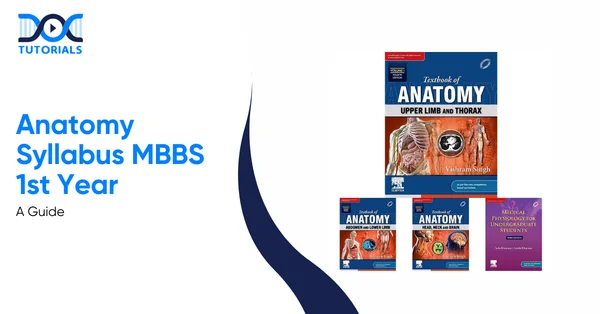
The Anatomy syllabus for the MBBS 1st year is the foundation of medical education. Anatomy is one of the primary subjects that helps medical students understand the structure of the human body and its relevance to clinical practice.
That is why a proper understanding of Anatomy is essential for diagnosing diseases, performing clinical examinations, and understanding surgical procedures. The 1st year MBBS anatomy syllabus covers a variety of branches, which are crucial for concept clarity for students.
Keep reading to get a complete overview of the Anatomy syllabus to help students prepare effectively.
Why is Anatomy Important in MBBS?
Anatomy is considered to be the backbone of medical sciences as it explains the structural basis of the human body and its functions. Without proper anatomical knowledge and understanding, clinical subjects such as surgery, orthopaedics, and radiology can become difficult.
The Anatomy syllabus for the MBBS 1st year helps students understand human body structures and prepares them to identify abnormalities and disease conditions. It also helps students interpret imaging techniques and perform physical examination accurately.
This is why the 1st year MBBS anatomy syllabus plays a vital role in preparing students for future clinical learning. Therefore, it is crucial to have the foundational subjects like Anatomy well-prepared to climb up the ladder of the next MBBS subjects more easily.
What are the Main Components of the 1st Year MBBS Anatomy Syllabus?
The 1st year MBBS Anatomy syllabus covers core branches such as Gross Anatomy, Histology, Embryology, Neuroanatomy, Osteology, Surface Anatomy, and Radiological Anatomy. These components build a foundation by helping students understand the human body at structural, developmental, clinical, and imaging levels.
The Anatomy MBBS 1st year syllabus is divided into several major branches. Each branch focuses on different aspects of human anatomy, and it is essential for students to have a proper understanding, as it is the foundation subject for any medical degree.
The major components of Anatomy include:
- Gross Anatomy
- Histology
- Embryology
- Neuroanatomy
- Osteology
- Surface Anatomy
- Radiological Anatomy
Each of these components is essential for students to understand the human body on a deeper level, both theoretically and practically.
1. Gross Anatomy
Gross anatomy is the study of the body structures visible to the naked eye. It forms the largest portion of the Anatomy syllabus, MBBS 1st year and is mainly taught to students through cadaveric dissection, anatomical models, and demonstrations.
- Upper Limb
Students study the bones, joints, blood supply, nerve supply, and lymphatic supply of the upper limb. Special emphasis is made on the region of the brachial plexus, shoulder joint, surrounding structures, and their related pathologies.
- Lower Limb
The lower limb focuses on the major joints such as the hip joint, knee joint, ankle joint, and tarsal-metatarsal joints. Students must also learn about related fractures, ligaments, and nerve-related injuries.
- Thorax
The thorax covers the region of the thoracic wall, lungs, pleura, heart, and mediastinum. Students are required to study the anatomy of the heart, which is essential for understanding cardiovascular disease.
- Abdomen
The abdominal region consists of the digestive organs such as the stomach, liver, pancreas, spleen, and intestines. Students also must study the peritoneal structures and abdominal blood supply.
- Pelvis and Pernineum
This section covers the reproductive organs, urinary bladder, pelvic muscles, and perineal anatomy.
- Head and Neck
The head and neck region involves the skull, cranial nerves, sensory organs, and pharyngeal and laryngeal structures.
2. Histology
Histological study, also known as microscopic anatomy, involves the study of tissues and cellular structures under a microscope. It helps students understand how cells and tissues contribute to organ function.
3. Embryology
Embryology focuses on human development from fertilisation to birth. It helps explain the formation of organs and congenital abnormalities.
4. Neuroanatomy
This part of anatomy deals with the structure of the nervous system. It is often considered more difficult in comparison to other parts of the anatomy due to its complexity.
5. Osteology
Osteology is the study of bones and skeletal structures. Students are required to learn about bone features, muscle attachments, and joint functions.
6. Surface Anatomy
Identifies the internal body structures through external landmarks. It helps students perform clinical examinations and medical procedures accurately.
7. Radiological Anatomy
Radiological anatomy teaches students to imaging techniques such as X-rays, CT (computed tomography) scans, MRI (magnetic resonance imaging), and ultrasound. Students learn to identify anatomical structures in radiological images.
What Does Practical Training in Anatomy Include in MBBS?
Practical training in MBBS Anatomy helps in hands-on learning through cadaveric dissection, histology slide identification, bone examination, and anatomy demonstrations.
The majority of the anatomy syllabus focuses on applied training through cadaveric dissection. Practical training helps students develop hands-on skills and better conceptual understanding.
Practical components include:
- Cadaver dissection
- Histology slide identification
- Bone examination
- Radiological interpretation
- Surface anatomy demonstrations
What are the Recommended Books for the MBBS 1st Year Anatomy?
Recommended books for 1st year MBBS Anatomy include BD Chaurasia’s Human Anatomy and Netter’s Atlas of Human Anatomy. These references help students gain conceptual clarity and exam-oriented preparation.
Standard textbooks help students cover the anatomy MBBS 1st year syllabus effectively. Common reference books for students include:
- BD Chaurasia’s Human Anatomy
- Grey’s Anatomy for Students
- Vishram Singh Anatomy
- Inderbir Singh Histology
- Langman’s Embryology
- Netter’s Atlas of Human Anatomy
FAQs about Anatomy Syllabus for MBBS 1st Year
- What are the topics in anatomy in the MBBS 1st year?
The MBBS 1st year Anatomy syllabus mainly includes the following topics: gross anatomy, histology, embryology, neuroanatomy, osteology, surface anatomy, and radiological anatomy.
- How to prepare for Anatomy for the MBBS 1st year?
In order to study Anatomy effectively, students must study daily, divide topics into smaller sections, practice regularly, actively participate in cadaver dissection, make flow charts for quick revision, and focus on clinical correlations to understand concepts better.
- Is Anatomy difficult in 1st year of MBBS?
Anatomy is considered challenging because of its vast syllabus and heavy requirement for memorisation of structures, nerve supply, and muscle attachments.
- What are the 4 branches of Anatomy in the MBBS 1st year?
The four major branches of anatomy are gross anatomy, microscopic anatomy, developmental anatomy, and neuroanatomy.
- What is medical Anatomy about?
Medical anatomy focuses on studying the structure of the human body and its relationship with clinical practice. It helps students understand organ structure, body system relationships, clinical examination techniques, and surgical and diagnostic procedures.
- How many hours should an MBBS student study Anatomy daily?
Most students should ideally study anatomy for 2-3 hours daily, along with regular clinical practice and cadaveric dissections. This can allow students to retain information effectively and allow them to make better diagnoses in various conditions.
- What is the toughest part of Anatomy in the MBBS 1st year?
The toughest part of anatomy in 1st year of MBBS is neuroanatomy, as it involves the study of complex brain pathways, cranial nerves, and functional correlations.
- Is cadaver dissection compulsory in MBBS Anatomy?
Yes, cadaver dissections are a major part of anatomy training. It helps students understand bodily functions and improves clinical understanding.
- How is Anatomy examined in the MBBS 1st year?
Anatomy is assessed through theory examinations, practical examinations, viva voce, spotter identification tests, and dissection-based questions.
- Is memorisation necessary in Anatomy?
Yes, memorisation is essential in Anatomy; however, a proper understanding of the topic allows better learning.
Conclusion
Anatomy forms the foundation of medical education, covering essential branches like gross anatomy, histology, embryology, neuroanatomy, radiological anatomy, osteology, and surface anatomy. This subject helps students understand body structures, clinical examinations, disease diagnosis, and surgical procedures.
For further guidance, DocTutorials can be your study partner. We offer in-depth study resources, such as 2D & 3D video lectures, and structured mentorship to help aspirants gain clarity over complex medical concepts.
Join DocTutorials today and explore our MBBS curriculum to excel in your medical exam!

Latest Blogs
-
INI CET Exam Pattern 2026: A Complete Guide with Subject-Wise Weightage
INI CET Exam Pattern 2026: A Complete Guide with Subject-Wise Weightage The Institute of National Importance Combined Entrance Test (INI…
-

NEET PG Registration 2026: An Essential Guide For Exam Prep
The NEET PG registration, which is conducted online, is a crucial step in the exam process. Filling out the NEET…
-

NEET PG Exam 2025- Date, Pattern, Marking Scheme, Subject Wise Weightage, and Exam Mode
NEET PG Exam 2025 is the ultimate gateway for medical graduates aspiring to pursue postgraduate courses in medicine, including MD,…