Goodman and Gilman’s The Pharmacological Basis of Therapeutics: A Guide for 2nd Year MBBS
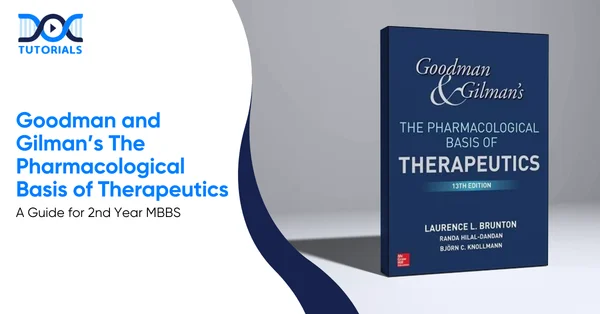
Goodman and Gilman’s The Pharmacological Basis of Therapeutics discusses pharmacodynamics and pharmacokinetics and individual organ systems. Its major sections are drug action principles, nervous system drugs, cardiovascular drugs, hormones, gastrointestinal drugs, chemotherapy (infectious disease drugs), cancer drugs, and others.
For MBBS 2nd-year students, the Goodman and Gilman pharmacology book is a comprehensive reference of what they need to learn in classes, as well as more advanced information to learn further. Each chapter begins with an outline and a list of abbreviations to help students navigate the material.
This guide gives a detailed breakdown of the textbook in detail, including its structure, editions, and practical tips on what medical students can do in order to utilise it effectively throughout their academic journey.
Keep reading!
Overview of Goodman and Gilman’s The Pharmacological Basis of Therapeutics
Goodman & Gilman’s is known as the blue bible of pharmacology. First published in 1941, it is a mixture of basic science and solid clinical practice, describing the action of drugs in physiology and disease. It is a strong reference tool as opposed to a cover-to-cover read due to its clearly formatted tables, illustrations, and Drug Fact summaries.
Goodman & Gilman’s The Pharmacological Basis of Therapeutics is a classic textbook of pharmacology, often referred to as the “blue bible” of the field. Louis Goodman and Alfred Gilman originally penned The Pharmacological Basis of Therapeutics in 1941, and it has since become the benchmark for pharmacological texts.
Its balanced coverage of basic science and clinical application has made it an authoritative reference for students and physicians. The book describes drug action with respect to physiology and disease, taking the reader through drug absorption, drug targets, drug effects, and uses in disease treatment.
The mechanisms of action are explained in summary tables and illustrations, and Drug Fact Tables provide key insights for major drug classes. Concisely, this Goodman and Gilman pharmacology book is not simply a read-through book but rather a solid reference source.
Contents of Goodman and Gilman’s The Pharmacological Basis of Therapeutics
The most recent editions are grouped by 10 major sections, starting with the main principles of pharmacology, then systemic and disease-specific pharmacology. It is organised into simple mechanisms for antimicrobials, oncology, and special systems, with a year-in-review of new drugs that closes the list, making it systematic and clinically geared.
The most recent versions of Goodman and Gilman break down the content into general sections. As an illustration, the 14th Edition (2023) is divided into 10 chapters that represent significant pharmacology themes. These include:
Section I: General Principles
- Chapter 1: Drug Discovery: From Medicinal Plants to Computer-Aided Drug Design
- Chapter 2: Pharmacokinetics: The Dynamics of Drug Absorption, Distribution, Metabolism, and Elimination
- Chapter 3: Pharmacodynamics: Molecular Mechanisms of Drug Action
- Chapter 4: Membrane Transporters and Drug Response
- Chapter 5: Drug Metabolism
- Chapter 6: The Gastrointestinal Microbiome and Drug Response
- Chapter 7: Pharmacogenetics and Pharmacogenomics
- Chapter 8: Postmarketing Drug Safety
- Chapter 9: Principles of Clinical Toxicology
Section II: Neuropharmacology
- Chapter 10: Neurotransmission: The Autonomic and Somatic Motor Nervous Systems
- Chapter 11: Muscarinic Receptor Agonists and Antagonists
- Chapter 12: Anticholinesterase Agents
- Chapter 13: Neuromuscular Junction and Autonomic Ganglia; Nicotine, Muscle Relaxants, and Spasmolytics
- Chapter 14: Adrenergic Agonists and Antagonists
- Chapter 15: 5-Hydroxytryptamine (Serotonin) and Dopamine
- Chapter 16: Neurotransmission in the Central Nervous System
- Chapter 18: The Blood-Brain Barrier and Its Influence on Drug Transport to the Brain
Chapter 19: Drug Therapy of Depression and Anxiety Disorders - Chapter 20: Pharmacotherapy of Psychosis and Mania
- Chapter 21: Pharmacotherapy of the Epilepsies
- Chapter 22: Treatment of Central Nervous System Degenerative Disorders
- Chapter 23: Hypnotics and Sedatives
- Chapter 24: Opioids, Analgesia, and Pain Management
- Chapter 25: General Anaesthetics and Therapeutic Gases
- Chapter 26: Local Anaesthetics
- Chapter 27: Ethanol
- Chapter 28: Drug Use Disorders and Addiction
Section III: Modulation of Pulmonary, Renal, and Cardiovascular Function
- Chapter 29: Drugs Affecting Renal Excretory Function
- Chapter 30: Renin and Angiotensin
- Chapter 31: Treatment of Ischemic Heart Disease
- Chapter 32: Treatment of Hypertension
- Chapter 33: Therapy of Heart Failure
- Chapter 34: Antiarrhythmic Drugs
- Chapter 35: Treatment of Pulmonary Arterial Hypertension
- Chapter 36: Blood Coagulation and Anticoagulant, Fibrinolytic, and Antiplatelet Drugs
- Chapter 37: Drug Therapy for Dyslipidemias
Section IV: Inflammation, Immunomodulation, and Hematopoiesis
- Chapter 38: Introduction to Immunity and Inflammation
- Chapter 39: Immunosuppressants and Tolerogens
- Chapter 40: Immune Globulins and Vaccines
- Chapter 41: Lipid-Derived Autacoids: Eicosanoids and Platelet-Activating Factor
- Chapter 42: Pharmacotherapy of Inflammation, Fever, Pain, and Gout
- Chapter 43: Histamine, Bradykinin, and Their Antagonists
- Chapter 44: Pulmonary Pharmacology
- Chapter 45: Hematopoietic Agents: Growth Factors, Minerals, and Vitamins
Section V: Endocrine Pharmacology
- Chapter 46: Introduction to Endocrinology: The Hypothalamic-Pituitary Axis
- Chapter 47: Thyroid and Antithyroid Drugs
- Chapter 48: Estrogens, Progestins, and the Female Reproductive Tract
- Chapter 49: Androgens and the Male Reproductive Tract
- Chapter 50: Adrenocorticotropic Hormone, Adrenal Steroids, and the Adrenal Cortex
- Chapter 51: Endocrine Pancreas and Pharmacotherapy of Diabetes Mellitus and Hypoglycemia
- Chapter 52: Agents Affecting Mineral Ion Homeostasis and Bone Turnover
Section VI: Gastrointestinal Pharmacology
- Chapter 53: Pharmacotherapy for Gastric Acidity, Peptic Ulcers, and Gastroesophageal Reflux Disease
- Chapter 54: Gastrointestinal Motility and Water Flux, Emesis, and Biliary and Pancreatic Disease
- Chapter 55: Pharmacotherapy of Inflammatory Bowel Disease
Section VII: Chemotherapy of Infectious Diseases
- Chapter 56: General Principles of Antimicrobial Therapy
- Chapter 57: DNA Disruptors: Sulfonamides, Quinolones, and Nitroimidazoles
- Chapter 59: Miscellaneous Antibacterials: Aminoglycosides, Polymyxins, Urinary Antiseptics, Bacteriophages
- Chapter 58: Cell Envelope Disruptors: β-Lactam, Glycopeptide, and Lipopeptide Antibacterials
- Chapter 60: Protein Synthesis Inhibitors
- Chapter 61: Antifungal Agents
- Chapter 62: Antiviral Agents (Nonretroviral)
- Chapter 63: Treatment of Viral Hepatitis (HBV/HCV)
- Chapter 64: Antiretroviral Agents and Treatment of HIV Infection
- Chapter 65: Chemotherapy of Tuberculosis and Nontuberculous Mycobacteria, Including Leprosy
- Chapter 66: Chemotherapy of Malaria
- Chapter 67: Chemotherapy of Protozoal Infections: Amebiasis, Giardiasis, Trichomoniasis, Trypanosomiasis, Leishmaniasis, and Other Protozoal Infections
- Chapter 68: Chemotherapy of Helminth Infections
Section VIII: Pharmacotherapy of Neoplastic Disease
- Chapter 69: General Principles in the Pharmacotherapy of Cancer
- Chapter 70: Cytotoxics and Antimetabolites
- Chapter 71: Protein Kinase Inhibitors and Pathway-Targeted Small Molecules
- Chapter 72: Antibodies, CAR T Cells, and Proteins to Treat Cancer
- Chapter 73: Hormones, Hormone Receptor Antagonists, and Related Agents in the Therapy of Cancer
Section IX: Special Systems Pharmacology
- Chapter 74: Ocular Pharmacology
- Chapter 75: Dermatological Pharmacology
- Chapter 76: Environmental Toxicology
Section X: The Goodman & Gilman Year in Review
- eChapter 2011 (Part 1): The Goodman & Gilman Year in Review: 2011 New and Noteworthy FDA Approvals
- eChapter 2011 (Part 2): The Goodman & Gilman Year in Review: 2011 New and Noteworthy FDA Approvals
- eChapter 2012 (Part 1): The Goodman & Gilman Year in Review: 2012 New and Noteworthy FDA Approvals
- eChapter 2012 (Part 2): The Goodman & Gilman Year in Review: 2012 New and Noteworthy FDA Approvals
- eChapter 2013 (Part 1): The Goodman & Gilman Year in Review: 2013 New and Noteworthy FDA Approvals
- eChapter 2013 (Part 2): The Goodman & Gilman Year in Review: 2013 New and Noteworthy FDA Approvals
- eChapter 2014: The Goodman & Gilman Year in Review: 2014 New and Noteworthy FDA Approvals
- eChapter 2016 (Part 1): The Goodman & Gilman Year in Review: New and Noteworthy FDA Approvals
- eChapter 2016 (Part 2): The Goodman & Gilman Year in Review: New and Noteworthy FDA Approvals
- eChapter 2016 (Part 3): The Goodman & Gilman Year in Review: New and Noteworthy FDA Approvals
- eChapter 2017 Part 1: The Goodman & Gilman Year in Review: 2017 New and Noteworthy FDA Approvals
- eChapter 2017 Part 2: The Goodman & Gilman Year in Review: 2017 New and Noteworthy FDA Approvals
- eChapter 2017 Part 3: The Goodman & Gilman Year in Review: 2017 New and Noteworthy FDA Approvals
- eChapter 2018: Goodman & Gilman Year in Review New and Noteworthy FDA Approvals
- eChapter 2018: Goodman & Gilman Year in Review Biologics FDA Approvals
- eChapter 2018: Goodman & Gilman Year in Review New and Noteworthy FDA Regulatory Actions
- eChapter 2019: Goodman & Gilman Year in Review New and Noteworthy FDA Approvals
- eChapter 2019: Goodman & Gilman Year in Review New and Noteworthy FDA Regulatory Actions
- eChapter 2020: Goodman & Gilman Year in Review New and Noteworthy FDA Approvals
- eChapter 2020: Goodman & Gilman Year in Review New and Noteworthy FDA Regulatory Actions
- eChapter 2021: Goodman & Gilman Year in Review New and Noteworthy FDA Approvals
- eChapter 2021: Goodman & Gilman Year in Review New and Noteworthy FDA Regulatory Actions
Appendices
- Appendix I: Design and Optimisation of Dosage Regimens: Pharmacokinetic Data
- Appendix II: Drug-Drug Interactions
- Appendix III: Brandl’s Basic Pharmacology Flashcards
Editions and Comparison of Goodman & Gilman’s Textbook
The 14th edition was released at the end of 2022. It includes five new chapters to treat new issues:
- Pharmacovigilance
- The Blood-Brain Barrier
- Cannabis pharmacology
- Biologic agents (antibodies and CAR-T cells)
- The Gastrointestinal Microbiome’s Influence on Drug Response
More than 50 contributors revised and added more material with 600+ illustrations. In comparison, the 13th edition (2017/2018) added a number of new chapters as well:
- Pulmonary hypertension
- Immunity & inflammation
- Immunoglobulins & vaccines
- Viral hepatitis treatment
It has over 500 colour figures. These two editions focus on the contemporary mechanisms of drug action by a molecule.
Some of the significant differences and pricing between the most recent versions are summarised in the table below:
| Edition | Year | Pages | Key New Content | Approx. Price |
| 13th Edition | 2017 | Around 1808 | New chapters: Pulmonary HTN; Immunity and Inflammation; Immunoglobulins and Vaccines; Viral hepatitis | Around $197 (eBook), (print Around $213) |
| 14th Edition | 2022 | Around 1420 | New chapters: Pharmacovigilance, Blood-Brain Barrier, Cannabis pharmacology, Immune Checkpoint Inhibitors & CAR-T; GI Microbiome | Around ₹10,542 |
How MBBS 2nd-Year Students Should Use Goodman & Gilman?
Goodman & Gilman should be used as a reference rather than a primary book. Pay attention to materials that are relevant in the syllabus, summarise chapters in outlines, tables, and diagrams, and supplement them with the Goodman and Gilman Manual to make swift revision for clinical understanding.
Goodman & Gilman is very detailed, and you should not attempt to memorise it cover-to-cover to pass exams. Rather, engage it as an aid in understanding concepts and responding to difficult questions. Here are tips for students:
- Focus on Relevant Sections: Focus on the chapters that are related to your syllabus. As an example, in the case of cardiovascular medicines, refer to the cardiac therapeutics in Section III. In the case of the autonomic nervous system, pay attention to the main chapters of Section II.
- Use Chapter Outlines and Summaries: The chapters begin with a content outline and an abbreviation list. Have a look at it. Additionally, each chapter concludes with a summary of key drugs and applications, which provides revision with high efficiency.
- Leverage Illustrations and Diagrams: There are hundreds of full-colour drug mechanism figures in Goodman & Gilman. Memorise these diagrams because they can often describe complicated pharmacology better than writing. On certain topics, it is a good idea to watch related animations.
- Use the Manual for Quick Review: Besides the full textbook, McGraw-Hill also publishes Goodman & Gilman’s Manual of Pharmacology and Therapeutics (2nd ed.). The main content of this manual is summarised in high-yield sections and tabulations.
Goodman & Gilman’s Manual of Pharmacology and Therapeutics
Other than the primary textbook, Goodman & Gilman’s Manual of Pharmacology and Therapeutics is a pocket-sized manual that is easy to carry and contains essential facts about drugs in a concise form. It is around 1206 pages, crammed with exam material, and used as a reference during the test.
In addition to the primary textbook, Goodman & Gilman’s Manual of Pharmacology and Therapeutics (2nd Edition) is a pocket-sized handbook containing a condensed version. The manual is approximately 1206 pages in comparison to the full text of approximately 1420 pages edited by Randa Hilal-Dandan and Laurence Brunton.
It discusses similar areas but in short descriptions with bullets. The manual may be optimal for review on the go, for cramming for an exam, or for reviewing a very small portion of the narrative text; as such, it boils down to key facts and tables. A large number of students carry the manual in their study bag as a quick reference guide of drug classes and dosing instructions.
FAQs about Goodman & Gilman
- What is the Goodman and Gilman textbook?
Goodman & Gilman’s The Pharmacological Basis of Therapeutics is an introductory, but encompassing, textbook on Pharmacology. It describes the drug mechanisms and applications in a physiological and clinical setting. This is generally considered the supreme source in Pharmacology and is therefore referred to as the blue bible of Pharmacology.
- What is the latest edition of Goodman and Gilman?
The most recent edition of Goodman and Gilman is the 14th Edition (published in 2022). It included five new chapters on current issues (pharmacovigilance, blood-brain barrier, cannabis, biologics, and microbiome). The 15th edition will be published in the next few years, though the 14th edition is up to date in 2025.
- What are the differences between the 13th and 14th editions of Goodman and Gilman?
The 14th edition (2022) streamlined the book by reducing pages and adding five new chapters on emerging topics. It also features updated content, including CAR-T therapies and revised molecular insights. Meanwhile, the 13th edition (2017) added chapters on pulmonary hypertension, immunity, vaccines, and hepatitis.
- Is Goodman and Gilman only for specialists or also for students?
It serves both. Although it is very detailed and used by pharmacologists and clinicians, medical students use it as a learning tool. It’s not the primary exam text in India. Still, Goodman & Gilman is excellent for understanding the “why” behind drug action. Many students read selected chapters from Goodman & Gilman to build a strong conceptual foundation.
- Should I buy the manual or the full text of Goodman and Gilman?
Ideally, both! The full Goodman & Gilman is the complete reference; the Manual is a slimmed-down companion. If budget/space is limited, the manual gives you the essentials in one book. But the full text has much more depth and is better for thorough learning.
- Does Goodman and Gilman include clinical context?
Yes, Goodman & Gilman’s The Pharmacological Basis of Therapeutics incorporates therapeutic application with pharmacodynamics.
- Is Goodman & Gilman suitable for exam prep?
It’s excellent for in-depth understanding, though many students pair it with concise review books for exams.
- Does Goodman & Gilman have summary tables or figures?
Yes, Goodman & Gilman’s The Pharmacological Basis of Therapeutics contains detailed tables and diagrams that help clarify mechanisms and drug classes.
- How is Goodman & Gilman organised?
Goodman & Gilman is arranged into system-based sections covering general principles, neuropharmacology, cardiovascular pharmacology, and more.
- Does Goodman & Gilman get updated with new drugs?
Yes. Recent editions of Goodman & Gilman include new therapies and a “Year in Review” highlighting recent drug approvals.
Conclusion
Goodman & Gilman’s textbook remains an indispensable resource for pharmacology. For MBBS 2nd-year students, Goodman and Gilman provides the pharmacological basis behind the drugs you study. It connects drug therapy to physiology and disease, reinforcing key concepts from your courses.
Now, focusing only on a single book will not help you ace your exams. You need a structured learning approach with expert guidance, aided by concise high-yield notes, video lectures, mock tests, Qbanks, and more.
If you want all these under one platform, look no further than DocTutorials. Check out our MBBS courses today!
Latest Blogs
-
INI CET Exam Pattern 2026: A Complete Guide with Subject-Wise Weightage
INI CET Exam Pattern 2026: A Complete Guide with Subject-Wise Weightage The Institute of National Importance Combined Entrance Test (INI…
-

NEET PG Registration 2026: An Essential Guide For Exam Prep
The NEET PG registration, which is conducted online, is a crucial step in the exam process. Filling out the NEET…
-

NEET PG Exam 2025- Date, Pattern, Marking Scheme, Subject Wise Weightage, and Exam Mode
NEET PG Exam 2025 is the ultimate gateway for medical graduates aspiring to pursue postgraduate courses in medicine, including MD,…