MBBS 1st Year: Harper’s Illustrated Biochemistry Textbook Guide
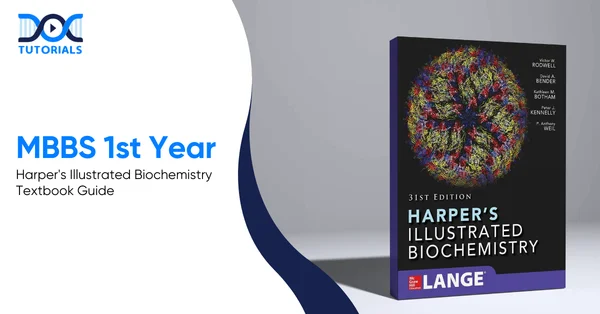
For 1st-year MBBS students, studying biochemistry is essential to build a foundation in medical science. In this regard, Harper Biochemistry is one of the most comprehensive books on biochemistry, explaining the complex biochemical concepts in an easy-to-understand manner.
With full-colour illustrations, correlations with medical practice, and the addition of new information on biochemical diseases, this book bridges the gap between the theoretical and the practical aspects of medical science.
Keep reading to learn more about why Harper’s Illustrated Biochemistry is the must-have textbook for every medical student!
Overview of the Latest Harper’s Illustrated Biochemistry Edition
The 33rd edition serves as a concise, high-yield clinical guide featuring over 300 illustrations and 400+ Q&A tailored for USMLE success.
The Harper Biochemistry latest edition (33rd) provides a comprehensive understanding of the principles of biochemistry and their direct application to clinical medicine. The book is concise yet informative, with full-colour illustrations and coverage of biochemical diseases. This helps in providing a clear, focused review of fundamental biochemistry concepts that are essential for every MBBS student to succeed in medical science.
The 33rd edition of the textbook also contains new information, 400+ Q&A, and more than 300 illustrations, making it the best reference guide for the USMLE exam and the top choice for learning the importance of biochemistry concepts in the field.
Key Features of the 33rd Edition:
- Full-colour format with more than 300 illustrations
- 317 review Q&A, including 100+ new Q&A added
- New short case histories highlighting clinical applications
- New information on vaccines
- Case studies that help readers learn the importance of biochemistry concepts
- Review questions at the end of each section
- Objectives highlighted in boxes at the end of each chapter
- Tables summarising the key information in the chapters
- Chapter summaries covering essential points from each chapter
33rd Edition of Harper’s Illustrated Biochemistry: Table of Contents
The 33rd Edition of Harper’s Illustrated Biochemistry is systematically organised into nine sections that transition from basic protein structures and bioenergetics to complex lipid metabolism and molecular genetics. It concludes with specialised medical topics, including signal transduction, nutrition, and the biochemistry of specific blood cells.
The latest edition of Harper’s Biochemistry is organised to provide a systematic and comprehensive learning experience for MBBS students. Each section is carefully structured to build understanding from fundamental principles to clinical applications, making it easier to grasp both theory and practical relevance.
Here is an overview of the table of contents:
Section I: Structures & Functions of Proteins & Enzymes
- Chapter 1: Biochemistry & Medicine
- Chapter 2: Water & pH
- Chapter 3: Amino Acids & Peptides
- Chapter 4: Proteins: Determination of Primary Structure
- Chapter 5: Proteins: Higher Orders of Structure
Section II: Enzymes: Kinetics, Mechanism, Regulation, & Role of Transition Metals
- Chapter 6: Proteins: Myoglobin & Haemoglobin
- Chapter 7: Enzymes: Mechanism of Action
- Chapter 8: Enzymes: Kinetics
- Chapter 9: Enzymes: Regulation of Activities
- Chapter 10: The Biochemical Roles of Transition Metals
Section III: Bioenergetics
- Chapter 11: Bioenergetics: The Role of ATP
- Chapter 12: Biologic Oxidation
- Chapter 13: The Respiratory Chain & Oxidative Phosphorylation
Section IV: Metabolism of Carbohydrates
- Chapter 14: Overview of Metabolism & the Provision of Metabolic Fuels
- Chapter 15: Saccharides (ie, Carbohydrates) of Physiological Significance
- Chapter 16: The Citric Acid Cycle: A Pathway Central to Carbohydrate, Lipid, & Amino Acid Metabolism
- Chapter 17: Glycolysis & the Oxidation of Pyruvate
- Chapter 18: Metabolism of Glycogen
- Chapter 19: Gluconeogenesis & the Control of Blood Glucose
- Chapter 20: The Pentose Phosphate Pathway & Other Pathways of Hexose Metabolism
Section V: Metabolism of Lipids
- Chapter 21: Lipids of Physiologic Significance
- Chapter 22: Oxidation of Fatty Acids: Ketogenesis
- Chapter 23: Biosynthesis of Fatty Acids & Eicosanoids
- Chapter 24: Metabolism of Acylglycerols & Sphingolipids
- Chapter 25: Lipid Transport & Storage
- Chapter 26: Cholesterol Synthesis, Transport, & Excretion
Section VI: Metabolism of Proteins & Amino Acids
- Chapter 27: Biosynthesis of the Nutritionally Nonessential Amino Acids
- Chapter 28: Catabolism of Proteins & of Amino Acid Nitrogen
- Chapter 29: Catabolism of the Carbon Skeletons of Amino Acids
- Chapter 30: Conversion of Amino Acids to Specialised Products
- Chapter 31: Porphyrins & Bile Pigments
Section VII: Structure, Function, & Replication of Informational Macromolecules
- Chapter 32: Nucleotides
- Chapter 33: Metabolism of Purine & Pyrimidine Nucleotides
- Chapter 34: Nucleic Acid Structure & Function
- Chapter 35: DNA Organisation, Replication, & Repair
- Chapter 36: RNA Synthesis, Processing, & Modification
- Chapter 37: Protein Synthesis & the Genetic Code
- Chapter 38: Regulation of Gene Expression
- Chapter 39: Molecular Genetics, Recombinant DNA, & Genomic Technology
Section VIII: Biochemistry of Extracellular & Intracellular Communication
- Chapter 40: Membranes: Structure & Function
- Chapter 41: The Diversity of the Endocrine System
- Chapter 42: Hormone Action & Signal Transduction
Section IX: Special Topics
- Chapter 43: Nutrition, Digestion, & Absorption
- Chapter 44: Micronutrients: Vitamins & Minerals
- Chapter 45: Free Radicals & Antioxidant Nutrients
- Chapter 46: Glycoproteins
- Chapter 47: Metabolism of Xenobiotics
- Chapter 48: Intracellular Traffic & Sorting of Proteins
- Chapter 49: The Extracellular Matrix
- Chapter 50: Muscle & the Cytoskeleton
- Chapter 51: Plasma Proteins & Immunoglobulins
- Chapter 52: Red Blood Cells
- Chapter 53: White Blood Cells
Past Editions of Harper’s Illustrated Biochemistry
Earlier versions of Harper’s Illustrated Biochemistry, ranging from the 28th to the 32nd editions, established the book’s reputation by introducing full-colour artwork and chapters on free radicals. Each iteration has consistently refined the balance between academic depth and the evolving requirements of medical board examinations.
Harper’s Illustrated Biochemistry has been updated regularly to reflect the latest developments in biochemistry and its applications in the field of medicine. The new editions of the book include refined information, case studies, and illustrations, making it an essential textbook for medical students to refer to during their examinations.
Harper’s Illustrated Biochemistry, 32nd Edition
The Harper Biochemistry 32nd edition pairs high-quality full-colour illustrations with comprehensive, authoritative coverage of biochemical diseases and clinical applications. Packed with medically relevant examples, Harper’s Biochemistry 32nd edition offers a clear and concise review of the core concepts every student needs to master for success in medical school.
Key Features:
- Full-colour presentation with 600+ illustrations
- Chapters have been updated to reflect the latest information
- Case studies focusing on the importance of biochemistry in the field of medicine
- Review questions after each of the 11 sections of the book
- Objectives of the chapters in boxes
- Tables summarising the important information provided in the chapters
- Importance of biochemistry in the field of medicine and chapter summaries
Harper’s Illustrated Biochemistry, 31st Edition
The Harper Biochemistry 31st edition highlights the importance of biochemistry in the field of medicine and the role of biochemistry in the understanding of diseases. The book contains full-colour illustrations, case studies, and review questions and answers, including a new chapter on transition metals, to help readers understand the importance of biochemistry in the field of medicine.
Key Features:
- Strong focus on the essential connection between biochemistry, disease mechanisms, diagnostic pathology, and clinical practice
- Numerous references highlighting various disease states throughout the text
- Introduction of a new chapter on the biochemical roles of transition metals
- Many review questions have been updated for enhanced learning
- Frequent tables summarising important links between biochemical concepts and diseases
- Updated content covering cryo-electron microscopy (cryo-EM) techniques
- Cover image showcasing the protein structure of the Zika virus, determined using cryo-EM
Harper’s Illustrated Biochemistry, 30th Edition
The Harper’s Illustrated Biochemistry 30th edition presents exceptional full-colour illustrations alongside authoritative, integrated coverage of biochemical diseases and clinical applications. With concise explanations and numerous medically relevant examples, this edition offers a clear and focused review of the essential biochemistry concepts that every medical student needs to master for success in medical school.
All fifty-eight chapters highlight the clinical and medical relevance of biochemistry. Here are the key features:
- Full-colour format featuring over 600 illustrations
- Each chapter includes a section on Biomedical Importance and concludes with a chapter summary
- Review questions are provided at the end of each of the eleven sections
- Case studies throughout emphasise the clinical application of biochemical principles
- New content covers toxic, naturally occurring amino acids; extraterrestrial biomolecules; computer-aided drug design; the complement cascade in bacterial and viral infections; secreted mediators of leukocyte communication; the roles of mast cells, basophils, and eosinophils; and the potential risks of antioxidants that suppress radical signalling for apoptosis, increasing cancer risk.
Harper’s Illustrated Biochemistry, 29th Edition
The 29th edition of Harper’s Illustrated Biochemistry builds on the strengths of previous editions, offering a clear, concise, and full-colour presentation that links biochemistry to the molecular basis of disease. It provides a thorough understanding of the principles of biochemistry and molecular biology as they apply to modern medicine. With 16 detailed case histories, this edition emphasises clinical relevance while helping students and professionals grasp complex concepts.
Key Features:
- Full-colour format with extensive illustrations enhancing clarity and comprehension
- 16 clinical case histories to reinforce real-world applications
- New chapters on Ageing, Cancer, and Clinical Chemistry
- Each chapter begins with objectives and a discussion of the biomedical importance of the topics
- Updated content reflecting the latest advances in biochemistry and molecular biology
- 250 multiple-choice questions for testing knowledge and comprehension
- Increased number of tables summarising essential information, including vitamin and mineral requirements
Harper’s Illustrated Biochemistry, 28th Edition
This edition of the Biochemistry book by Harper has modernised the book by incorporating colour illustrations and updating the content of each chapter. In addition, new chapters on free radicals, antioxidant nutrients, and case histories were added to emphasise the relation between biochemistry and disease. This edition also includes new appendices and tables, which are highly relevant to medical students and USMLE® reviews.
Key Features:
- Full-colour format featuring over 600 detailed illustrations
- Each chapter begins with a Summary of Biomedical Importance and ends with a comprehensive chapter review
- Two brand-new chapters: “Free Radicals and Antioxidant Nutrients” and “Biochemical Case Histories”, covering 16 clinical scenarios in depth
- Includes a new appendix with basic clinical laboratory results and an updated list of key websites and online journals
- Updated content covering significant topics such as the Human Genome Project and computer-aided drug design
Each of these editions has enhanced the clarity and educational content of Harper’s Illustrated Biochemistry, thereby making it a definitive guide for medical education.
How Harper’s Illustrated Biochemistry Helps Students and Professionals:
By blending vivid visual aids with deep clinical integration, Harper’s Illustrated Biochemistry helps learners master intricate metabolic pathways and their roles in disease pathology. It serves as a lifelong reference, supporting both undergraduate exam preparation and advanced postgraduate understanding of molecular mechanisms.
The following are the ways in which Harper’s Illustrated Biochemistry is an essential text for students and professionals, helping them understand complex concepts and apply them in practical ways:
- Clinical Integration: The text incorporates the biomedical importance in each of the chapters that assist in comprehending the practical use of biochemical mechanisms in disease, pathology, and diagnostics.
- Visual Learning: There are more than 600 full-colour illustrations to support the text, which include diagrams showing the mechanisms of metabolic pathways.
- Broad Scope: Encompasses significant issues, including protein, carbohydrate, and lipid metabolism, and molecular genetics, making it an essential text for medical studies.
- Study Tools: The content is divided into chapters, with clinical boxes and chapter summaries, helping students study efficiently.
- Advanced Understanding: It serves as an essential guide for understanding complex biochemical mechanisms in health and disease, making it an ideal text for undergraduate and postgraduate studies.
Harper’s is especially appreciated for its comprehensive coverage of metabolism, making it an ideal text for understanding complex biochemical mechanisms in health and disease.
FAQs about Harper’s Illustrated Biochemistry
- What are the features in Harper’s Illustrated Biochemistry that make it ideal for MBBS students?
Harper’s is an ideal text for understanding complex biochemistry concepts, presented in an easy-to-grasp manner, accompanied by full-colour illustrations, making it ideal for 1st year MBBS students.
- Which edition of Harper’s is currently the latest?
The latest edition is the 33rd, which includes updated clinical case histories, vaccines, and 400+ Q&A, along with 300+ full-colour illustrations to provide a concise and comprehensive learning experience.
- How does Harper’s integrate clinical relevance in its content?
Each chapter of Harper’s Illustrated Biochemistry latest edition includes the biomedical importance of biochemical principles, which are correlated with diseases and patient care to help students understand the practical applications of biochemical principles.
- How many illustrations are included in Harper’s 33rd edition?
More than 300 full-colour illustrations are included in the 33rd edition, which are detailed and cover metabolic pathways, molecular structures, and other biochemical principles.
- Are review questions included in Harper’s for exam preparation?
Yes, there are review questions present in Harper’s Illustrated Biochemistry to enable the students to revise and understand biochemical principles to pass exams like the USMLE.
- How do case studies in Harper’s Illustrated Biochemistry help students?
Harper’s Illustrated Biochemistry contains case studies that assist the students in comprehending biochemical principles and their implementation in real-world scenarios.
- Is Harper’s Illustrated Biochemistry useful for postgraduate studies as well?
Yes, Biochemistry book Harper is indeed helpful to postgraduate students and professionals, since it contains the more advanced principles in biochemistry, such as molecular mechanisms, enzyme kinetics, and metabolism.
- How has Harper’s evolved over the editions?
Between the 28th and 33rd editions, Harper’s Illustrated Biochemistry has continued to include numerous full-colour illustrations, revised clinical coverage, Q&A, and chapters such as Free Radicals, Transition Metals, and vaccine-related issues to stay current.
- How is Harper’s Illustrated Biochemistry structured for effective learning?
The chapters are divided into sections that address fundamentals, metabolism, molecular biology, and clinical applications with objectives, summaries, and tables so that they can be easily referenced.
- How can students maximise the benefits of Harper’s Illustrated Biochemistry?
Students can make use of Harper’s with other online guidance tools, such as DocTutorials, where videos, scenario questions, and quick revisions can provide a competitive edge over other students in examinations.
Conclusion
Harper Textbook of Biochemistry has remained a reference guide to both students of MBBS and medical practitioners. Over its 33 editions, Harper’s has permanently filled the gap between theoretical biochemistry and its practical applications through clear explanations, illustrations, case histories, and clinical applications. The book has successfully organised and simplified complex biochemical information in a structured, easy-to-use manner, making it useful for basic and clinical use.
Although Harper’s Illustrated Biochemistry is excellent study material, you will still need some guidance to crack the top score in your MBBS exams. In this regard, DocTutorials, with its quality video lectures, mock tests, Qbanks, scenario questions, and expert faculty, can be your ideal study partner.
Check out our Biochemistry notes today!

Latest Blogs
-
INI CET Exam Pattern 2026: A Complete Guide with Subject-Wise Weightage
INI CET Exam Pattern 2026: A Complete Guide with Subject-Wise Weightage The Institute of National Importance Combined Entrance Test (INI…
-

NEET PG Registration 2026: An Essential Guide For Exam Prep
The NEET PG registration, which is conducted online, is a crucial step in the exam process. Filling out the NEET…
-

NEET PG Exam 2025- Date, Pattern, Marking Scheme, Subject Wise Weightage, and Exam Mode
NEET PG Exam 2025 is the ultimate gateway for medical graduates aspiring to pursue postgraduate courses in medicine, including MD,…