Katzung’s Basic & Clinical Pharmacology for MBBS 2nd Year: Latest Edition Guide
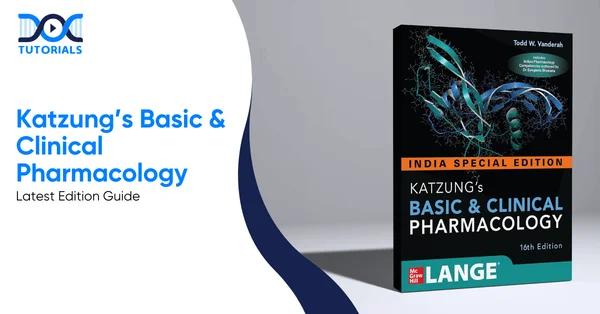
Pharmacology is considered the foundation of contemporary medicine. With the abundance of available resources, one name that often stands out as a gold standard is Katzung Pharmacology.
Whether you are taking your university-professional exams or laying the foundations to NEET PG, this reference book of Basic and Clinical Pharmacology by Bertram Katzung is a favourite among the top rankers.
Keep reading to learn how this book helps students perform well and strengthen their clinical understanding for future studies.
Overview of Katzung’s Pharmacology
Basic and Clinical Pharmacology is a classic pharmacology textbook by Katzung. The book is characterised by a concise, easy-to-read style, yet comprehensive. Clinical cases at the beginning and summary tables at the end of each chapter assist students in relating theory and practice.
- Audience: It is targeted for medical students (MBBS, MD) around the world. It is a popular curriculum in India for the second-year pharmacology course and competitive exams such as NEET-PG and INI-CET.
- Content Balance: Integrates basic science (molecular drugs, pharmacokinetics, pharmacodynamics) with clinical attention (therapeutics and case presentation/discussions)
- Format: Well-illustrated and full-coloured. Chapters include learning objectives, clinical cases, summaries of drugs, diagrams, tables, and review questions.
- Editions: Updated regularly. Earlier versions were written by Katzung, with co-authors; these more recent versions (15th, 16th) have Todd Vanderah as the main author, with Katzung recognised as the founder.
Katzung’s Basic & Clinical Pharmacology: Table of Contents
The 16th edition focuses on drug groups and prototypes and ensures a conceptual understanding of pharmacologic mechanisms. New drug tables and a broader discussion of emerging classes of therapy, including cannabinoids, are included as updates.
Katzung’s pharmacology, the latest edition, is structured according to pharmacological systems and principles. It begins with the general principles of pharmacology before proceeding to major drug classes.
The sections (and chapter examples) include:
SECTION I: BASIC PRINCIPLES
1. Introduction: The Nature of Drugs & Drug Development & Regulation
2. Drug Receptors & Pharmacodynamics
3. Pharmacokinetics & Pharmacodynamics: Rational Dosing & the Time Course of Drug Action
4. Drug Biotransformation
5. Pharmacogenomics
SECTION II: AUTONOMIC DRUGS
6. Introduction to Autonomic Pharmacology
7. Cholinergic-Activating & Cholinesterase-Inhibiting Drugs
8. Cholinoceptor-Blocking Drugs
9. Adrenoceptor Agonists & Sympathomimetic Drugs
10. Adrenoceptor Antagonist Drugs
SECTION III: CARDIOVASCULAR-RENAL DRUGS
11. Antihypertensive Agents
12. Vasodilators & the Treatment of Angina Pectoris & Coronary Syndromes
13. Drugs Used in Heart Failure
14. Agents Used in Cardiac Arrhythmias
15. Diuretic Agents
SECTION IV: DRUGS WITH IMPORTANT ACTIONS ON SMOOTH MUSCLE
16. Histamine, Serotonin, Anti-Obesity Drugs, & the Ergot Alkaloids
17. Vasoactive Peptides
18. The Eicosanoids: Prostaglandins, Thromboxanes, Leukotrienes, & Related Compounds
19. Nitric Oxide
20. Drugs Used in Asthma & Chronic Obstructive Pulmonary Disease
SECTION V: DRUGS THAT ACT IN THE CENTRAL NERVOUS SYSTEM
21. Introduction to the Pharmacology of CNS Drugs
22. Sedative-Hypnotic Drugs
23. The Alcohols
24. Antiseizure Medications
25. General Anaesthetics
26. Local Anaesthetics
27. Skeletal Muscle Relaxants
28. Pharmacologic Management of Parkinsonism & Other Movement Disorders
29. Antipsychotic Agents & Lithium
30. Antidepressant Agents
31. Opioid Agonists & Antagonists
32. Drugs of Abuse
SECTION VI: DRUGS USED TO TREAT DISEASES OF THE BLOOD, INFLAMMATION, & GOUT
33. Agents Used in Cytopenias; Hematopoietic Growth Factors
34. Drugs Used in Disorders of Coagulation
35. Agents Used in Dyslipidemia
36. Nonsteroidal Anti-Inflammatory Drugs, Disease-Modifying Antirheumatic Drugs, Nonopioid Analgesics, & Drugs Used in Gout
SECTION VII: ENDOCRINE DRUGS
37. Hypothalamic & Pituitary Hormones
38. Thyroid & Antithyroid Drugs
39. Adrenocorticosteroids & Adrenocortical Antagonists
40. The Gonadal Hormones & Inhibitors
41. Pancreatic Hormones & Glucose-Lowering Drugs
42. Agents That Affect Bone Mineral Homeostasis
SECTION VIII: CHEMOTHERAPEUTIC DRUG
43. β-Lactam & Other Cell Wall- & Membrane-Active Antibiotics
44. Tetracyclines, Macrolides, Clindamycin, Chloramphenicol, Streptogramins, Oxazolidinones, & Pleuromutilins
45. Aminoglycosides & Spectinomycin
46. Sulfonamides, Trimethoprim, & Quinolones
47. Antimycobacterial Drugs
48. Antifungal Agents
49. Antiviral Agents
50. Miscellaneous Antimicrobial Agents; Disinfectants, Antiseptics, & Sterilants
51. Clinical Use of Antimicrobial Agents
52. Antiprotozoal Drugs
53. Pharmacology of the Antihelminthic Drugs
54. Cancer Chemotherapy
55. Immunopharmacology
SECTION IX: TOXICOLOGY
56. Introduction to Toxicology: Occupational & Environmental
57. Heavy Metal Intoxication & Chelators
58. Management of the Poisoned Patient
SECTION X: SPECIAL TOPICS
59. Special Aspects of Perinatal & Pediatric Pharmacology
60. Special Aspects of Geriatric Pharmacology
61. Dermatologic Pharmacology
62. Drugs Used in the Treatment of Gastrointestinal Diseases
63. Cannabinoid Drugs
64. Therapeutic & Toxic Potential of Over-the-Counter Agents
65. Dietary Supplements & Herbal Medications
66. Rational Prescribing & Prescription Writing
67. Important Drug Interactions & Their Mechanisms
Appendix
Vaccines, Immune Globulins, & Other Complex Biologic Products
New Updates in the Katzung’s Basic & Clinical Pharmacology’s Latest Edition
The latest version is Katzung Pharmacology 16th Edition, which includes new chapters on cannabinoids, updated drug tables, and USMLE-style questions. It reflects the newest developments in immunopharmacology and pharmaceutical standards.
Medical science is evolving, and it is non-negotiable to be up-to-date. The Katzung Pharmacology 16th Edition is the latest edition of Katzung Pharmacology, which contains a number of critical updates compared to Katzung Pharmacology 15th Edition.
If you are looking to purchase Katzung Basic & Clinical Pharmacology, the 16th edition is highly recommended. Here is what has changed:
- New Chapters/Topics: The chapter on cannabinoids and greater coverage of new drug classes.
- Clinical Focus: Chapters now start with a real patient case and summaries in tables/diagrams.
- Latest Data: There are dozens of recently approved drugs. The text highlights modern mechanisms and treatment guidelines (according to the notes of McGraw-Hill).
- Illustrations & Tables: The edition includes approximately 330 full-colour illustrations and 100 drug tables. These images help understand the concepts (e.g. pathways, drug structures, dose charts).
- Practice Material: It has 50 questions in the format of a USMLE, with a lot of review tables, which will help in exam preparation.
- Study Aids: Strategies such as highlighting “key points”, using mnemonics, and including review questions in every chapter improve learning.
Although the Katzung Pharmacology 15th Edition remains a great resource, the Katzung Pharmacology 16th Edition ensures one does not miss new drugs approved in recent years and more recent treatment regimens.
Strengths of Basic and Clinical Pharmacology by Katzung
Katzung’s pharmacology text is richly illustrated and in full colour. It focuses on drug groups and prototypes, includes clinical case studies, and employs summary tables. These characteristics can assist MBBS students in a combination of basic science and clinical settings.
Basic and Clinical Pharmacology by Katzung is a reliable and interesting reference system used by medical students for decades. It is designed to follow the syllabus of the pharmacology course and discusses MBBS topics in a clear, sequential manner.
Its combination of explanatory text, clinical cases, and summary tables facilitates learning. Key strengths include:
- Comprehensive Coverage: Discusses all the important drug classes and systems in an ordered manner. Through receptors and pharmacokinetics, to antibiotics and cancer therapy, Katzung leaves few gaps.
- Case-Based Learning: The chapters are introduced by a clinical situation (case) to show the real application of the drugs. This strategy connects knowledge in textbooks to the care of patients.
- Prototype Emphasis: Drugs are studied in groups using prototypes. Katzung concentrates on the examples of each class (e.g. one or two typical beta-blockers), followed by a table with a list of other ones.
- Summary Tables: Tables used at the end of the chapters summarise drug names, dosages, side effects, etc.
- Full-Colour Illustrations: Concepts are explained using hundreds of detailed figures (pathways, mechanisms, chemical structures). An example is an illustration of drug-receptor interaction and signalling cascades.
How to Study Pharmacology with Basic and Clinical Pharmacology by Katzung?
To use Katzung effectively, read the case scenarios, focus on the conclusion tables, and complete the practice questions. Segmenting the study and following the book’s outlines makes the large amount of content manageable.
MBBS students will be able to develop a solid foundation in pharmacology by systematically working through Katzung and leveraging the study aids provided (summaries, questions). It aligns perfectly with the MBBS syllabi, ensuring study time is well spent on exam-relevant content.
Here are some tips to help MBBS students study Basic and Clinical Pharmacology by Katzung:
- Start with Objectives: Read the learning objectives (they are usually listed before every chapter). Upon which, read the given case at the beginning, and speculate on how you would treat it, before proceeding.
- Focus on Concepts: In Basic Principles (Section I), it is important to understand the concepts of drug pharmacodynamics/pharmacokinetics (dose response curve, half-life, receptors). These principles are applicable to every drug chapter.
- Use the Summary Tables: Once you have read about a drug class, review the tables containing examples of drugs, indications, and side effects. These brief on-page tables are superb for last-minute revising.
- Emphasise Prototypes: Katzung frequently emphasises prototype drugs (e.g. atenolol in the case of beta-blocker drugs, morphine in the case of opioid drugs). Study these sufficiently; from knowing prototypes, you can deduce other examples of the classification.
- Study by Sections: Organise sections in the way that Katzung does. E.g. do all autonomic drugs (Sec II) in the study block and then cardiac drugs (Sec III), etc.
- Review Illustrations: Look at diagrams (e.g. receptor signalling, neuronal synapse) because they visually support the ideas in the text.
- Practice Questions: Complete the end -of-chapter questions after reading a chapter or part. Any doubts in the given answers can be corrected through the process of reviewing the answers.
Comparison: Katzung vs Other Pharmacology Books
Although there are other books, such as Goodman and Gilman or KD Tripathi, Katzung hits the balance between detail and readability. It is not as dense as G&G but conceptually more rigorous than most review books.
Basic and Clinical Pharmacology by Bertram Katzung is your best bet as a medical student when it comes to spending your time productively. It gives just the right amount of details to respond to why without overwhelming you with research details.
Check out the table below:
| Feature | Katzung Pharmacology | Goodman & Gilman | Review Books |
| Depth | High (Conceptual) | Very High (Encyclopedic) | Low (Fact-based) |
| Readability | Moderate to High | Low (Very Dense) | High |
| Focus | Mechanism & Clinical | Research & Detail | Memorisation |
| Best For | MBBS 2nd Year & USMLE | PhD & Reference | Last-minute prep |
FAQs about Katzung Pharmacology
- Which edition of Katzung’s Basic and Clinical Pharmacology should I choose?
The 16th edition (2023) is the latest. In many Indian colleges, the 15th (2018) is still in use, but they both include the core syllabus. In the 16th edition, the drugs have been updated, and a new chapter on cannabinoids has been added.
- Is Katzung enough for the MBBS 2nd year pharmacology?
Yes, it is covering the MBBS syllabus entirely. Katzung is the primary source, though some students refer to authors such as K. D. Tripathi or Satoskar to quickly revise.
- What does “Basic & Clinical” of the book mean?
Basic covers the fundamentals, such as receptor theory and pharmacokinetics, whereas Clinical concentrates on treatment and the use of drugs in the patient. The book is a blend of both to provide conceptual clarity.
- How does Katzung support exam preparation?
It is exam-friendly because of its structured chapters, case-based approach, and review questions. Enhanced knowledge of mechanisms is helpful in applied MBBS as well as in competitive examinations.
- Is Katzung difficult to read?
It is academic and detailed, thus requiring special attention in reading. It is easier to follow when studying together with lectures/notes.
- Are the practice questions in Basic and Clinical Pharmacology by Katzung included?
Yes. The 16th edition has end-of-chapter questions written in the USMLE format,t and previous editions have self-testing review questions as well.
- Can the Basic and Clinical Pharmacology by Katzung be used for NEET-PG or USMLE?
Yes, it is very much used by many students in their postgraduate exams because of its depth. In the case of NEET-PG, it should be used together with MCQ banks and exam-focused guides.
- What is the best way to study Katzung?
Read one drug class at a time, pay attention to mechanisms and adverse effects and update it with summary tables and cases.
- Are case studies important in the Basic and Clinical Pharmacology by Katzung?
Certainly, they connect theory and clinical practice, and enhance thinking based on treatment for exams and viva.
- Is Katzung useful beyond MBBS?
Yes. It has a strong foundation in pharmacology, which is why it is useful in postgraduate entrance exams and in initial clinical training.
Conclusion
Learning Pharmacology in the 2nd year of the MBBS requires the right materials and guidance. Basic and Clinical Pharmacology by Bertram Katzung is a concise handbook that teaches the language of medicine. This book explains everything, from the foundations of Basic & Clinical Pharmacology to the complex treatment of systemic diseases.
Apart from that, if you need further guidance, DocTutorials can be your study partner. We offer in-depth study resources like 2D & 3D video lectures and structured mentorship and guidance to help aspirants gain complete clarity over complex concepts.
Join DocTutorials today and explore our MBBS curriculum to excel in your medical career!

Latest Blogs
-
INI CET Exam Pattern 2026: A Complete Guide with Subject-Wise Weightage
INI CET Exam Pattern 2026: A Complete Guide with Subject-Wise Weightage The Institute of National Importance Combined Entrance Test (INI…
-

NEET PG Registration 2026: An Essential Guide For Exam Prep
The NEET PG registration, which is conducted online, is a crucial step in the exam process. Filling out the NEET…
-

NEET PG Exam 2025- Date, Pattern, Marking Scheme, Subject Wise Weightage, and Exam Mode
NEET PG Exam 2025 is the ultimate gateway for medical graduates aspiring to pursue postgraduate courses in medicine, including MD,…