MBBS 2nd Year Pharmacology | Lippincott’s Guide
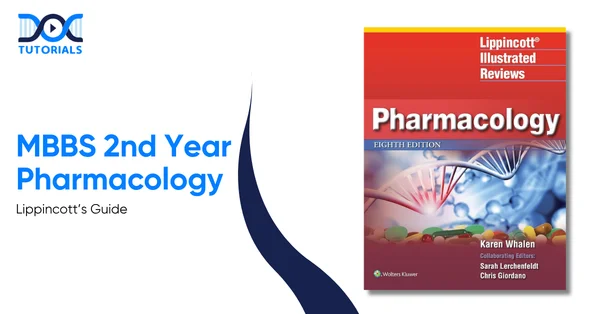
Pharmacology in the 2nd Year of MBBS is a major milestone in the educational journey of a medical student. It is the subject in which the student is first introduced to the practical applications of the concepts they have learned. At this stage, students need a resource that simplifies complexity while building lasting understanding.
For years, Lippincott’s Illustrated Reviews: Pharmacology has been a reliable friend for those who want to understand pharmacology with simplicity, organisation, and confidence. This book can help the student grasp vast concepts in a manner that is easy to understand, comprehend, and memorise.
Read on to know more about Lippincott Illustrated Reviews Pharmacology and how it can help you with confidence and clarity in the 2nd Year of MBBS!
About Lippincott’s Illustrated Reviews: Pharmacology
A comprehensive guide by Karen Whalen, Lippincott Pharmacology simplifies complicated pharmacology concepts with clear explanations, organised outlines, and vivid illustrations. It enables students to understand drug mechanisms, pharmacokinetics, and therapeutic uses of drugs with maximum efficiency.
Authored by Karen Whalen, Lippincott Illustrated Pharmacology is a renowned and student-favourite book for mastering pharmacology concepts. This book, written particularly for medical and healthcare students, has won widespread acclaim for presenting pharmacological concepts with a clear, organised, and outlined presentation of even the most complicated drug concepts.
It presents essential pharmacological principles in a concise yet comprehensive manner, making it ideal for both first-time learning and quick revision. With over a hundred full-colour illustrations, it visually explains drug mechanisms, pharmacokinetics, pharmacodynamics, and therapeutic uses, helping students connect theory with clinical relevance.
By seamlessly integrating foundational science with practical applications, this highly illustrated guide continues to support learners in building strong conceptual clarity and exam confidence.
About Lippincott’s Illustrated Reviews: Pharmacology – Latest Edition
The latest edition of Lippincott’s Illustrated Reviews: Pharmacology is the 8th edition. The book has been built on decades of trust with new information on drugs, real-life clinical cases, and visually appealing illustrations.
Lippincott Illustrated Reviews Pharmacology 8th Edition, a trusted study partner for generations of medical students, continues to be a student favourite for reviewing the basics of medical pharmacology. The latest edition of Lippincott’s Illustrated Reviews: Pharmacology offers the most current information on drugs in a way that is easy to grasp and review.
The book is part of the highly respected Lippincott’s Illustrated Reviews series, which features concise text, numerous illustrations, and visual sequences that simplify even the most difficult concepts in pharmacology. The book also contains review questions with answers at the end of each chapter, which can be used to reinforce learning and prepare for exams.
Key Features:
- Stepwise visual representation of the drug mechanism of action.
- Review questions with detailed answers to aid in exam preparation.
What’s New in the 8th Edition:
- Pharmacogenomics Chapter: An important and emerging area in clinical pharmacology.
- Clinical Application Boxes: Clinical scenarios to reinforce the practical applications of pharmacology.
- Chapter Summaries: Concise chapter recaps to aid in student review and understanding.
Additional Highlights:
- Updated drug content to reflect current clinical standards and advances in drug therapy.
- Unique outline format to help students review and understand complex material.
- High-quality, full-colour illustrations to aid in visual learning.
- Improved review questions to aid in student review and Board exam preparation.
Table of Contents of Lippincott’s Illustrated Reviews: Pharmacology, Latest Edition
The table of contents follows a systematic order that includes units on drug principles, major body systems, chemotherapeutic agents, and special topics, which will be very beneficial for students to study and review.
Here are the detailed units and chapters covered in Lippincott’s Illustrated Reviews: Pharmacology—Latest Edition, systematically arranged for structured learning and easy navigation.
UNIT I: Principles of Drug Therapy
- Pharmacokinetics
- Drug-Receptor Interactions and Pharmacodynamics
UNIT II: Drugs Affecting the Autonomic Nervous System
- The Autonomic Nervous System
- Cholinergic Agonists
- Cholinergic Antagonists
- Adrenergic Agonists
- Adrenergic Antagonists
UNIT III: Drugs Affecting the Cardiovascular System
- Antihypertensives
- Diuretics
- Drugs for Heart Failure
- Antiarrhythmics
- Antianginal Drugs
- Anticoagulants and Antiplatelet Agents
- Drugs for Hyperlipidemia
UNIT IV: Drugs Affecting the Central Nervous System
- Drugs for Neurodegenerative Diseases
- Anxiolytic and Hypnotic Drugs
- Antidepressants
- Antipsychotic Drugs
- Drugs for Epilepsy
- Anaesthetics
- Opioids
- CNS Stimulants
UNIT V: Drugs Affecting the Endocrine System
- Pituitary and Thyroid
- Drugs for Diabetes
- Estrogens, Progestogens, and Androgens
- Adrenal Hormones
- Drugs Affecting Bone Metabolism
UNIT VI: Chemotherapeutic Drugs
- Principles of Antimicrobial Therapy
- Cell Wall Inhibitors
- Protein Synthesis Inhibitors
- Quinolones, Folic Acid Antagonists, and Urinary Tract Antiseptics
- Antimycobacterial Drugs
- Antifungal Drugs
- Antiviral Drugs
- Antiprotozoal Drugs
- Anthelmintic Drugs
- Anticancer Drugs
- Immunosuppressants
UNIT VII: Special Topics in Pharmacology
- Histamine and Serotonin
- Anti-Inflammatory, Antipyretic, and Analgesic Agents
- Drugs for Disorders of the Respiratory System
- Gastrointestinal and Antiemetic Drugs
- Drugs for Urologic Disorders
- Drugs for Anaemia
- Drugs for Dermatologic Disorders
- Clinical Toxicology
- Drugs of Abuse
- Pharmacogenomics
Figure Credits
Lippincott’s Illustrated Reviews: Pharmacology – Previous Editions
The previous editions of Lippincott’s Illustrated Reviews: Pharmacology, including the 6th and 7th editions, have long been trusted by medical students for building a solid foundation in pharmacology. They offer clear explanations, detailed illustrations, updated drug information, and practical review tools that simplify complex concepts, support rapid learning, and enhance exam preparation.
The following are the two previous editions of Lippincott Illustrated Pharmacology:
Lippincott’s Illustrated Reviews: Pharmacology 7th Edition
A student favourite for reviewing the basics of medical pharmacology, Lippincott® Illustrated Reviews: Pharmacology, Seventh Edition provides students with drug information that is current and easy to understand, making it perfect for a quick and effective review.
Part of the trusted Lippincott® Illustrated Reviews series, this review guide offers a concise and simplified review of pharmacology basics in a straightforward writing style and hundreds of illustrations that help students understand complex pharmacological concepts easily.
Sequential illustrations help students understand the mechanism of action, which encourages visualisation instead of memorisation, making it easier to understand pharmacology basics.
The key features of this edition include:
- Updated drug content reflects the most current and clinically relevant pharmacology knowledge.
- The outline format simplifies complex topics for easier review.
- High-quality illustrations enhance comprehension with vibrant, detailed visuals.
- Enhanced review questions with answers allow students to evaluate their understanding and identify areas for improvement.
- eBook version available for purchase, offering a fast, convenient, and interactive learning experience with 24/7 access, searchability, note-taking, and highlighting features.
Lippincott’s Illustrated Reviews: Pharmacology 6th Edition
Lippincott Illustrated Reviews: Pharmacology, Sixth Edition, is an updated and enhanced version of the widely used student resource for mastering the essentials of medical pharmacology. As one of the most trusted guides in the Lippincott Illustrated Reviews series, Lippincott Pharmacology is written with clear, concise language and hundreds of detailed illustrations, which make it an excellent tool for quick review and assimilation of complex pharmacological principles.
Sequential, straightforward illustrations of drug mechanisms of action emphasise understanding rather than memorisation. The book has the following features:
- All New chapters on Drugs of Abuse, Drugs for Obesity, Antihistamines, Drugs for Urologic Disorders, Drugs for Hematopoietic Disorders, Drugs for Dermatological Disorders, and Drugs for Bone Disorders.
- Over 380 study questions.
- Nearly 600 annotated, full-colour illustrations visually explain complex processes.
- Outline format is excellent for quick review and basic learning.
7 Study Tricks to Master Lippincott Pharmacology
Master Lippincott Pharmacology with 7 proven study strategies, from one-fact-per-card notes to spaced repetition, visuals, system-based organisation, and exam-style questions, for deeper understanding and better recall.
Here’s where things get interesting. These 7 strategies separate a student who only “kind of recognises a drug” from one who can confidently explain its details even in the middle of the night during a clinical call.
Check them out below:
- One Fact Per Card
Avoid cramming an entire drug profile into a single study note. Instead, break it down into distinct components for easier learning and better retention:
- Mechanism of Action (MOA)
- Main Therapeutic Use
- Major Side Effects
- Contraindications
This approach helps to ensure that you understand each concept clearly and can memorise it individually, which makes it much more effective to have a spaced review session because you know exactly what you have mastered and what you need to work on more.
- Use Spaced Repetition
Instead of studying randomly, it is much more effective to follow a spaced repetition approach. After studying a concept, you should review it after a certain time and assess how well you understand it. You can then rate how confident you are about memorising each fact.
- Add Visuals for Complex Drugs
Visual aids are extremely useful in pharmacology. Whenever a drug has a complex mechanism, side effect profile, or therapeutic pathway, use diagrams, tables, or charts to supplement your notes.
The presence of the visual representation with the textual information forms a mental pattern, which makes it easier to remember detailed information about drugs like autonomic agents, antibiotics, or drugs with a complex side effect profile.
- Ask Questions When You’re Stuck
Engage actively with the material by questioning every drug you study. For example, when you are reading about beta-blockers, you may have the question, why do we use some beta-blockers but not others in heart failure?
Trying to find answers to such questions enhances in-depth knowledge and makes you reconcile pharmacological knowledge with clinical reasoning. This approach transforms passive memorisation into an encouraging form of learning and solidifies the concepts as well as their practical use.
- Organising Drugs by System
It is easier to manage pharmacology material when the drugs are grouped by organ systems or functional groups. For example:
- Cardiology: beta blockers, ACE inhibitors, diuretics
- Neurology: antiepileptics, antidepressants, antipsychotics
- Infectious Disease: antibiotics, antivirals, antifungals
By organising study material this way, you can focus on one block at a time, which is especially useful when preparing for system-specific exams or clinical rotations.
- Use Short, Daily Sessions
It is more productive to use short, daily study sessions instead of long, exhausting marathons. For example:
- Study for 10-20 minutes
- Have 1-3 short sessions per day
Short daily study sessions can steadily build your pharmacology knowledge. It can also prevent burnout.
- Incorporate Exam-Style Questions
It is not enough to remember facts; you must transform them into active, clinical questions. Examples include:
- What is the safe antihypertensive in pregnancy?
- What is the antibiotic that is associated with tendon rupture?
- Which drug commonly causes gingival hyperplasia?
Drawing questions from lectures, question banks, or Lippincott explanations allows you to apply knowledge in context, strengthen memory, and simulate the type of reasoning needed for exams.
With these seven study tips, students can move beyond surface learning to the functional level by organising information into a systematic, effective, and clinically meaningful pattern.
FAQs about Lippincott Pharmacology
- What is Lippincott’s Illustrated Reviews: Pharmacology?
Lippincott’s Illustrated Reviews: Pharmacology is a student-friendly book that aims to simplify the study of pharmacology for students
- Who is the author of Lippincott Pharmacology?
Lippincott Pharmacology is authored by Karen Whalen, a respected educator in medical pharmacology. Her clear and structured explanations make it a favourite resource for MBBS and healthcare students.
- Which edition is the latest for Lippincott Pharmacology?
The Lippincott Illustrated Reviews Pharmacology 8th Edition is the latest version, featuring updated drug information, a pharmacogenomics chapter, and enhanced clinical application boxes. It is designed for quick learning and efficient revision.
- What makes Lippincott Pharmacology student-friendly?
Lippincott Pharmacology is student-friendly due to its concise outline format, clear writing, and hundreds of illustrations. These features help students understand drug mechanisms easily while supporting exam-focused learning.
- How are drug mechanisms explained in Lippincott Pharmacology?
Drug mechanisms are discussed in a series of illustrations, which are focused on understanding rather than memorising. It is a visual method that enables students to understand the mechanism and the action of drugs.
- Is Lippincott Pharmacology suitable for exam preparation?
Yes, Lippincott Pharmacology provides review questions, chapter summaries, and structured content for exam-focused learning. Students can test themselves and reinforce concepts before practical exams and board tests.
- Does Lippincott cover clinical applications?
Lippincott covers clinical applications through dedicated Clinical Application Boxes. These scenarios demonstrate real-world drug use, helping students connect theoretical knowledge to practice.
- Can Lippincott Pharmacology help in long-term retention?
Lippincott supports long-term retention by combining visual aids, sequential illustrations, and clear summaries. Repeated exposure to structured content strengthens memory and improves conceptual understanding.
- Are previous editions of Lippincott useful?
The earlier editions of Lippincott, such as the 6th and the 7th, are still helpful in basic learning. They contain clear explanations, illustrations, and review questions that assist students in revisiting essential concepts of pharmacology.
- Is Lippincott useful for self-study?
Lippincott is ideal for self-study due to its organised layout, illustrations, and review questions. Students can independently learn, revise efficiently, and build confidence in their pharmacology knowledge.
Conclusion
The enduring relevance of Lippincott’s Illustrated Reviews: Pharmacology across multiple editions reflects its value in modern medical education. The book is effective at breaking down complex pharmacology topics, helping students understand drug actions, uses, and clinical principles. Moreover, it is an essential resource for MBBS 2nd-year students preparing for their examinations.
For those who want to gain an advantage in their learning and want to be better prepared, DocTutorials is an excellent platform.
Now, studying Pharmacology from Lippincott is not enough; you need dedicated, exam-focused support that will help you both master concepts and implement them in clinical scenarios. With high-quality video lectures, interactive tests, detailed question banks, scenario-based exercises, and quick revision modules, DocTutorials enhances understanding and boosts exam readiness.
Check out our Pharmacology notes today!

Latest Blogs
-
INI CET Exam Pattern 2026: A Complete Guide with Subject-Wise Weightage
INI CET Exam Pattern 2026: A Complete Guide with Subject-Wise Weightage The Institute of National Importance Combined Entrance Test (INI…
-

NEET PG Registration 2026: An Essential Guide For Exam Prep
The NEET PG registration, which is conducted online, is a crucial step in the exam process. Filling out the NEET…
-

NEET PG Exam 2025- Date, Pattern, Marking Scheme, Subject Wise Weightage, and Exam Mode
NEET PG Exam 2025 is the ultimate gateway for medical graduates aspiring to pursue postgraduate courses in medicine, including MD,…