How to Start NEET PG Preparation: Complete Beginner’s Guide

The National Eligibility cum Entrance Test for Postgraduate (NEET PG) is a national-level entrance examination for aspiring doctors who are looking for admission into the PG Diploma and MD/MS courses. The examination aims to assess the candidate’s knowledge and understanding with respect to various medical subjects covered during the MBBS course, such as anatomy, physiology, biochemistry, microbiology, pathology, pharmacology, and more.
The NEET PG examination includes all the subjects studied in the MBBS curriculum. Hence, it requires a thorough analysis of the subjects and the previous year’s questions asked. Thousands of candidates apply for a limited number of seats in the top medical colleges. A strategic NEET PG preparation plan and the right timing for preparation make a significant difference in passing the examination with flying colours.
Keep reading to know more!
When to Start NEET PG Preparation?
Several students wonder how to start NEET PG preparation. Most students begin early, during the first year of MBBS, or in the middle of the MBBS curriculum, during the 3rd year. It helps them to prepare effectively for the NEET PG by aligning the MBBS curriculum with the NEET PG syllabus. Moreover, some students start preparing during the last year or internship phase, which could help them gain excellent practical knowledge and utilise it in their preparation.
Ace Your NEET PG Prep With DocTutorials NEET PG Online Live Power Pack
Starting NEET PG preparation at the right time is essential to stay aware of the paper pattern and secure admission to the best medical college. Here are the common phases when students start preparing for the NEET PG and the strategies associated with them:
- Begin Early in the MBBS First Year
Beginning the NEET PG preparation from the first year of MBBS is suitable for students who are dedicated to clearing the examination in one go. Starting early helps them to build a strong foundation in basic subjects. Additionally, students can integrate the regular MBBS curriculum with the structured PG preparation to understand core concepts and enhance memorisation. The most essential advantage of early starters is that they have ample time for revision and to reinforce their weak areas.
Here are the strategies that early beginners can start for effective preparation:
- Stay Consistent: Build a realistic study plan and stick to topics that cover both MBBS and NEET PF materials.
- Practice Regularly: Start solving multiple-choice questions and previous year questions to familiarise yourself with the paper pattern and improve your accuracy.
- Use Standard Textbooks: Read the recommended textbooks for the MBBS syllabus, as they provide a detailed understanding of the subjects covered in the NEET PG examination.
- Midway Preparation in the Third Year
Many students plan to start the NEET PG preparation during the 3rd year of MBBS. At this stage, the students have covered most of the basic concepts and understood the core ideas of medical science. Starting the preparation in the 3rd year allows the students to focus on both basic sciences and practical subjects. Additionally, by the 3rd year, students gain access to valuable practical knowledge, which complements their theoretical understanding and helps break complex topics into simpler ones.
Follow these strategies to prepare effectively in the 3rd year of MBBS:
- Comprehensive Schedule: Curate a study plan that covers all essential subjects and allocate time to the more difficult parts based on your comfort level.
- Self-Assessment: Take several mock tests and practice papers to assess your progress and identify weak areas for improvement.
- Active Learning: Focus on active learning techniques, such as peer-led group discussions and case studies, to enhance your understanding.
- Intensive Preparation in the Final Year and Internship
Students who have missed starting preparation at the early stages of MBBS can begin intensive preparation during the final year and internship phases. A focused, strategic study plan can help them balance clinical duties while focusing on NEET PG preparation. Additionally, the internship can help them gain hands-on clinical experience, which helps in the practical learning of the essential concepts. The final year students can dedicate most of their time to NEET PG preparation after completing their clinical practice.
The strategies to enhance preparation in the final year are:
- Focus on Demanding Topics: A student should focus on high-yielding topics and frequently asked concepts to maximise the score in the NEET PG.
- Strategic Study Planning: A detailed study plan that includes revising all subjects helps improve scores.
- Time Management: Utilise your time by balancing clinical commitments and study hours for effective learning.
How to Clear NEET PG in the First Attempt?
By adhering to a simple strategic course of action and starting early, one can easily clear the NEET PG exam on the first attempt and join the best medical colleges. The students are supposed to focus on the right study material and learn to revise by doing multiple-choice questions every day and mastering time management.
Clearing the NEET PG on the first attempt is a goal for numerous medical graduates. The pressure may be overwhelming amid increased competition and limited seats. Nonetheless, it is not impossible, and it is completely possible to pass NEET PG on the first attempt. All you would need is a well-thought-out plan, rigid implementation, appropriate resource selection, and consistent updates.
Here is a practical roadmap to help you approach your preparation with confidence.
- Build a Strong Foundation by Understanding the Exam
You should know what you are preparing before you begin the preparation. NEET PG consists of 180 multiple-choice items based on preclinical, paraclinical, and clinical subjects in the MBBS curriculum. The exam duration is 3.5 hours. Every correct answer would have +4 marks, and all wrong answers would have -1 deduction.
Knowing the structure and marking scheme means you are already strategic. It will assist you in setting priorities on the relevant subjects, using negative marking usefully, and rehearsing. Becoming aware of the pattern puts a sense of direction on what you are doing.
- Start Early and Follow a Realistic Plan
One major advantage for first-attempt success is starting early. Ideally, serious preparation should begin during the MBBS itself and gain momentum during the internship. Waiting until the final months creates unnecessary pressure.
Draw a subject-wise plan according to weightage. There are those that will take a longer time and those that will need revision. Break your day into three parts: concept study, revision, and MCQ practice.
- Choose the Right Study Resources
Students these days tend to be confused by the plethora of books and online resources. Better preparation does not imply more material. One of the best decisions that you can make is to limit your resources.
Use standard textbooks to strengthen your concepts. Alongside, joining a structured coaching platform can save time and effort, as it provides integrated lectures, MCQs, previous year questions (PYQs), and grand tests in one place. When your material is organised, you avoid wasting time searching for notes or switching between multiple sources.
- Make Revision Your Priority
It is a common mistake among many students to focus on the first reading. As a matter of fact, revision makes your rank. NEET PG can never be read once. Intend to rewrite all the topics at least three or four times prior to the exam.
During your first reading, prepare short notes in your own words. These are the notes that will be used as the basis of your revision. One should not start new books near the exam. Flashcards, image-based learning, and fast revision charts help enhance retention. The greater the number of times you revise, the more confident and correct you feel when taking the exam.
- Practice MCQs Daily
Try solving 100-150 MCQs daily. It is not just sufficient to solve. Learn to critically examine your errors and comprehend the causes behind your incorrect response to a question, and revisit the subject in the same instance. Grand tests and subject-wise tests assist you in monitoring your progress. They also train your brain to handle exam pressure. Treat every mock test like the real exam.
- Focus on High-Yield Subjects
Not all subjects carry equal weight. Some consistently contribute more questions. Subjects like Medicine, Surgery, Obstetrics and Gynaecology, Pathology, and Pharmacology form the core of the exam.
While you must cover all 19 subjects, invest more time in these high-yield areas. Strong command over these subjects significantly improves your overall score.
- Master Time Management for Exam Day
Even those students who are well-prepared fail because of poor time management. Practice using 180 questions in 3.5 hours several times, then recover when the real test takes place.
Do not take too much time on a single question. In case of doubt, mark it as review and proceed. Get acquainted with the elimination technique in order to reduce the number of possibilities and make it more accurate. Trying to do it all blindly is less important than trying to do it smartly.
- Stay Consistent and Mentally Strong
Consistency is more important than motivation. There will be days when you feel tired or discouraged. That is normal. What matters is returning to your desk the next day.
Take short breaks to avoid burnout. Surround yourself with positive peers or join a discussion group for healthy academic interaction. Listening to toppers’ strategies can be helpful, but adapt them according to your own learning style.
Top Tips to Prepare for NEET PG
Preparing for NEET PG can feel overwhelming at first, but with the right direction and discipline, the journey becomes much smoother. Success in this exam is not only about studying hard; it is about studying smart, staying consistent, and maintaining balance.
Here are some practical and easy-to-follow tips that can truly make a difference in your preparation:
- Build a Practical and Effective Strategy
The first step toward NEET PG clearance is to develop a plan for preparation in the most convenient way. The first step would be to evaluate the amount of time before the exam and schedule your time. A good strategy will always be realistic. Do not overwork yourself with unrealistic goals that are hard to achieve. Rather, establish a schedule that you can stick to.
Also, it is necessary to know the exam pattern and weight of the subject. Having knowledge of subjects that have higher marks will enable you to spend your study time more effectively. Your planning will automatically become more focused on the exam requirements when your strategy is in line with them.
- Understand Your Strengths and Weaknesses
It is better to spend a few moments and critically review what you know regarding each subject before immersing yourself in the preparation. Learn what you know and what you need to work a little harder on. This self-research is useful for creating a personalised plan of study.
Do not avoid subjects simply because they seem lengthy or uninteresting. Ignoring weaker or “boring” subjects can cost valuable marks in the final exam. Instead, break them into smaller sections and tackle them step by step.
- Set Clear and Achievable Targets
It is good to have a plan, but adhering to it requires precise objectives. Establish short-term (daily and weekly) and medium-term (monthly) goals. Even little success acts as a catalyst and keeps you going until the preparation period is over.
For example, you can aim to complete a fixed number of topics every day or solve at least two previous years’ question papers each week. When you complete your targets, it boosts your confidence and pushes you to stay consistent.
- Practice Previous Year Questions Regularly
One of the most important aspects of NEET PG preparation is solving previous years’ questions (PYQs). These questions give you a clear idea about the exam pattern and the type of questions commonly asked.
Practice PYQs regularly and attempt them with a timer. Time management plays a crucial role in competitive exams, and practicing under timed conditions prepares you for the real exam environment. It also helps you track your speed and accuracy.
- Take Care of Your Physical and Mental Health
While preparing intensely for NEET PG, it is easy to ignore your health. However, your mind performs best when your body is healthy. Avoid unhealthy habits like binge eating junk food, skipping meals, staying up all night unnecessarily, or isolating yourself completely.
Make sure you get adequate sleep, eat balanced meals, and include light physical activity in your daily routine. Even a short walk or a simple stretch can refresh your mind and improve your concentration.
FAQs about How to Start NEET PG Preparation
- When should I start preparing for NEET PG?
You should ideally begin NEET PG preparation during your first year of MBBS. Early preparation gives you enough time to understand concepts, revise thoroughly, and practice questions. However, even with limited time, a focused and disciplined approach can help you cover high-yield topics effectively.
- How do I make a study plan for NEET PG?
Start by assessing the time left before the exam and dividing subjects accordingly. Allocate more time to weak areas and high-weightage topics. Create daily and weekly targets that are realistic. Keep space for revision and mock tests. A balanced, flexible timetable improves consistency and prevents burnout.
- Which books should I follow for NEET PG preparation?
Stick to standard MBBS textbooks for concept clarity and complement them with a reliable NEET PG review book or notes. Avoid using too many resources, as it creates confusion. Limited and repeated revision of trusted materials is far more effective than constantly switching study sources.
- Is coaching necessary to crack NEET PG?
Coaching is not mandatory, but it can provide structured guidance, updated study material, and regular mock tests. Many students also clear NEET PG through self-study. The key is discipline, consistent revision, and regular question practice. Choose the method that matches your learning style and schedule.
- How important are previous years’ question papers?
Previous years’ questions are extremely important. They help you understand the exam pattern, frequently asked topics, and difficulty level. Solving them improves time management and boosts confidence. Analyse both correct and incorrect answers to strengthen your concepts and avoid repeating mistakes.
- How many hours should I study daily for NEET PG?
There is no fixed number of hours, but quality matters more than quantity. On average, 6–8 focused hours daily can be effective. During the internship, adjust according to duty hours. Consistency, active learning, and regular revision are more important than simply studying for long hours.
- How can I manage an internship and NEET PG preparation together?
Create a flexible schedule that fits around your duty hours. Use small time gaps for revision or flashcards. Focus on high-yield topics and practice MCQs regularly. Weekend revisions and planned targets can help maintain balance. Proper time management reduces stress during busy postings.
- How often should I revise during preparation?
Revision should be continuous. Ideally, revise a topic within a week of studying it and again during monthly reviews. Multiple revisions strengthen memory retention. Short notes, flashcards, and highlighted points make quick revision easier, especially during the final months before the exam.
- How do I stay motivated during NEET PG preparation?
Set small, achievable goals and track your progress regularly. Completing targets builds confidence and keeps you motivated. Avoid comparing your journey with others. Take short breaks, maintain a healthy lifestyle, and remind yourself of your career goals to stay focused throughout preparation.
- What is the biggest mistake beginners make in NEET PG preparation?
The most common mistake is using too many study resources and frequently changing strategies. This leads to confusion and incomplete revision. Another mistake is ignoring weaker subjects. Focus on limited, reliable material, practice regularly, and maintain consistency to build a strong foundation.
Conclusion
Starting your NEET PG preparation may seem challenging, but the right approach makes all the difference. Begin with a clear plan, understand your strengths and weaknesses, and focus on consistent revision and regular practice of MCQs.
Avoid overloading yourself with too many resources and stick to a realistic timetable. Most importantly, maintain your physical and mental well-being throughout the journey. With discipline, smart strategy, and persistence, you can steadily move closer to achieving your NEET PG goal.
Additionally, you can take help from trusted platforms like DocTutorials for expert guidance, high-yield notes, exam-oriented question banks, PYQs, and more. Check out our NEET PG courses today!


Latest Blogs
-

INI CET Exam 2026: Your Roadmap to Success – Key Topics, Strategies, and Lessons from Last Year’s Papers
The INI CET exam is more than just a test; it’s a significant milestone for many medical students aiming to…
-
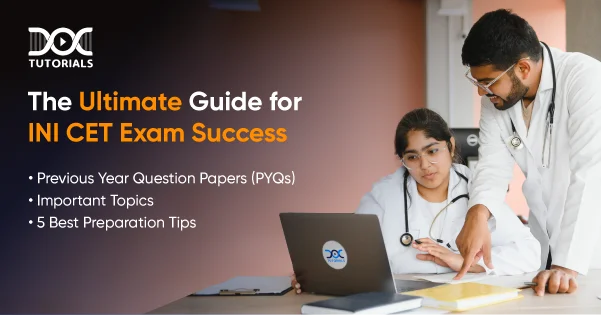
INI CET Exam Success: Previous Year Question Papers & Ultimate Guide – INI CET PYQ
One can feel overwhelmed while preparing for the INI CET (Institute of National Importance Combined Entrance Test). A vast syllabus,…
-

NEET PG 2026 Preparation with Live Power Pack: Your Path to Success in 2026
Preparing for the NEET PG 2026 can be an overwhelming journey because of its vast syllabus and the pressure to…