Microbiology Sterilisation Methods: Classification, Importance & More
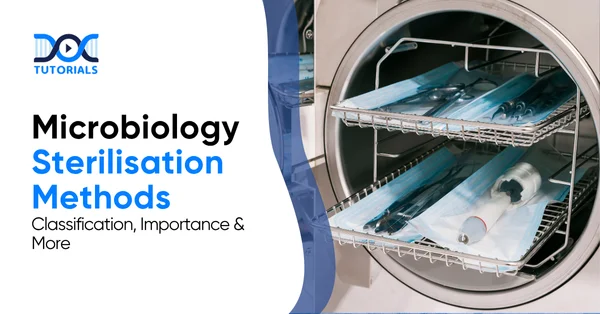
Sterilisation is one of the most foundational topics in medical microbiology. It keeps all living germs, including spores, out of instruments, media, dressings, and other critical equipment or devices in labs, clinics, and hospitals. These procedures help future medical professionals protect patients, maintain the integrity of the lab, and meet stringent infection control requirements.
Sterilisation is not just a theory for medical aspirants in preclinical years or for NEET PG preparation; it is a useful barrier against infection and a topic that is well covered in tests.
Keep reading this guide to learn about the different types of sterilisation methods, their importance in medicine, and other crucial aspects!
What is Sterilisation?
The word “sterilisation” refers to the total eradication or elimination of all microbial life, including resistant bacterial spores. It is particularly essential in instruments that pierce or prick the skin, enter sterile body surfaces, or are used in diagnostic microbiology. It is different from disinfection, which kills microbes but not to absolute sterility.
This is an important process in clinical practice, where a single contaminant can jeopardise the safety of the patient, create hospital-acquired infection, or nullify laboratory test results.
Classification of Sterilisation Methods
The methods of sterilisation are classified according to how microbes are destroyed or eliminated. It is used in determining the best-suited way for different instruments and materials.
There are three major methods of sterilisation:
- Physical Sterilisation Methods
Physical methods are one of the most frequent modes of sterilisation for healthcare and laboratory practice due to their increased efficacy, predictability, and absence of toxic residues. Microorganisms are eliminated by physical agents like heat, filtration, and radiation.
Each process possesses an action mechanism, a range of parameters, and a suitable application depending on the material to be sterilised.
Let us learn each of these approaches in detail:
- Heat Sterilisation
Heat sterilisation achieves its effect through denaturing proteins, oxidation of vital cellular components, and cell membrane disruption, which eventually kills microorganisms such as spores. It is effective and widespread due to the ease with which it can be standardised and controlled.
There are two primary types of heat sterilisation:
- Moist Heat Sterilisation
Moist heat sterilisation is a standard procedure at hospitals and laboratories. Pressurised steam for high-velocity and uniform sterilisation is utilised. Moist heat is superior to dry heat since steam is an excellent heat energy conductor and can penetrate easily through materials.
Principle
The heat-moisture brings about denaturation and immunisation of microbial proteins, leading to irreversible harm and cell death. As water is a better heat conductor than air, the process continues faster and at lower temperatures than dry heat.
Standard conditions for routine autoclaving are as follows:
- Temperature: 121 °C
- Pressure: 15 psi
- Exposure Time: 15–20 minutes
The conditions are well controlled for effective sterilisation. Modern autoclaves are equipped with onboard sensors and digital displays to ensure accuracy.
Applications
Moist heat sterilisation is common in pressure- and steam-resistant equipment. These include:
- Surgical instruments and dressings which must be sterile to avoid infection of surgical wounds.
- Microbiology laboratory culture media that need to be free from contamination before inoculation.
- Linens and rubber products, which need to be sterilised without destruction.
Advantages
Moist heat sterilisation is rapid, efficient, and economical. It is nontoxic and can be used for most general routine sterilisation requirements.
Limitations
Although it is advantageous, moist heat cannot be used on materials that are susceptible to damage by moisture or deteriorate at elevated temperatures, including powders, oils, and some sensitive instruments.
- Dry Heat Sterilisation
Dry heat Sterilisation is a significant alternative for materials intolerant of moisture but that can withstand elevated temperatures. It uses hot air, usually in the form of a hot air oven, to destroy microorganisms through mechanisms of oxidative processes.
Principle
Dry heat kills microorganisms by oxidative breakdown of cellular components and protein denaturation. It differs from moist heat in that it employs higher temperatures and longer periods to provide the same sterility.
Typical parameters:
- 160 °C for 2 hours or
- 170 °C for 1 hour
Applications
Dry heat sterilisation is especially convenient for:
- Glass equipment, like test tubes, Petri plates, and pipettes that are not affected by high temperatures.
- Metal equipment, such as surgical instruments, that do not corrode or rust when dried.
- Powders and oils that cannot be sterilised by steam because they are hydrophobic.
Advantages
The process is best for moisture-sensitive materials, prevents corrosion of equipment, and is fairly easy to accomplish in most laboratory environments.
Limitations
Dry heat sterilisation has a longer cycle time than moist heat and may be less uniform in heat distribution. The uneven heating may lead to incomplete sterilisation if procedures are not strictly followed.
- Filtration Sterilisation
Filtration is especially helpful in sterilising heat-sensitive solutions in which the heat will destroy the active agents. Rather than destroying microorganisms, filtration removes them from liquid or air by passing fluids or air through filters with extremely fine pores.
Principle
Since the solution is pushed through the filter, microorganisms are caught because their size is larger than the pores of the filter. This works to render the resulting filtrate bacteria- and other foreign particle-free.
Types of widely used filters:
- Membrane Filters (0.22 µm): These are regularly employed to eliminate bacteria from heat-labile solutions such as sera and antibiotics. They are disposable and yield reproducible filtration data.
- HEPA Filters: High-efficiency particulate air (HEPA) filters will remove 99.97 % of suspended particles in the air ≥0.3 µm and are used in clean rooms, laminar flow hoods, and operating theatres to give aseptic conditions.
- Seitz Filters: Asbestos or equivalent depth filters. Though previously widely available, they have largely been displaced by membrane filters because of issues of safety and efficiency.
Applications
Sterilisation by filtration is essential in:
- Vaccine and antibiotic production, where biological activity is to be preserved.
- Sterilisation of air in laminar flow cabinets, ICUs, and operating rooms to create asepsis during critical procedures.
Advantages
This technique is suitable for temperature-sensitive compounds and does not disturb the chemical stability of the solution. This is also a fast technique and does not involve exposure to harmful chemicals.
Limitations
Filters are unable to trap viruses or bacterial toxins with a size smaller than the pore size, and they necessitate rigorous aseptic procedures upon use to avoid contamination following filtration.
- Radiation Sterilisation
This is a very effective terminal process of sterilisation, especially ideal for products that cannot be exposed to heat or moisture. It employs high-energy radiation to cause damage to the microbial DNA, making them unable to reproduce and ultimately causing cell death.
Principle
Both non-ionising and ionising radiations cause damage to microbial DNA and other cellular structures. Ionising radiation possesses penetrating power and can be utilised for sterilising bulk material, while non-ionising radiation can be utilised for surface as well as air disinfection.
Form of Radiation
- Ionising Radiation: Gamma rays (Cobalt-60) and electron beams. It is very penetrative in nature, can be used to target any type of microorganism, and is extensively used in industrial sterilisation plants.
- Non-ionising Radiation: Mainly ultraviolet (UV) light, which forms thymine dimers within DNA, blocking replication. UV has limited penetration but is utilised to sterilise surfaces and air within a contained environment.
Applications
Gamma radiation is applied extensively for the bulk sterilisation of disposable medical devices like syringes, catheters, gloves, and IV sets.
UV radiation is utilised daily to sterilise air and surfaces within microbiology labs, biosafety cabinets, and operating rooms.
Advantages
No heating is needed in radiation sterilisation, which is applicable to sensitive materials. It is suitable for bulk sterilisation and is very reliable when done under controlled conditions.
Limitations
There is limited penetration with UV radiation, and it is only suitable for surface application. Gamma irradiation is very efficient but needs specialised machinery and strict precautionary measures, making it less convenient for small-scale operations.
2. Chemical Sterilisation Methods
Where wet or dry heat physical processes are impossible to implement, most notably where sensitive or heat-damaged materials are involved, chemical agents are a certainty. These processes are most useful in sterilising medical equipment made of plastic, rubber, or other sensitive materials that cannot withstand high heat.
Chemical sterilisation is equally critically important in infection control in healthcare settings, able to promise sterility without compromising the integrity of sensitive equipment.
- Ethylene Oxide Gas
Ethylene oxide (EtO) gas sterilisation is among the most common chemical sterilisation methods used in healthcare centres.
Principle
Ethylene oxide alkylates proteins and nucleic acids of microorganisms. The process damages the shape of DNA and essential enzymes, ultimately destroying the germ. EtO can penetrate even the deepest surfaces due to its high penetrative power.
Applications
EtO sterilisation is effective, especially if the equipment is not resistant to heat. It is frequently used to sterilise catheters, heart-lung machines, plastic instruments, and other intricate medical equipment. These types of items have complex pieces that make conventional methods of sterilisation undesirable.
Advantages
One of the principal strengths of EtO is its penetration ability, which is extremely high and enables it to sterilise the equipment even through packaging. It is also possible to apply it at lower temperatures, thereby making it more suitable for sensitive and temperature-sensitive equipment. This makes it a primary sterilisation method in hospitals and pharmaceutical companies.
Limitations
Though successful, EtO sterilisation is not without serious disadvantages. The gas is hazardous to humans and therefore requires strict handling and instrument aeration following sterilisation to avoid residues. The process also falls short in terms of cost and time, with increased cycle times and post-sterilisation ventilation usually required. Its application, therefore, requires rigorous safety measures and competent staff.
- Formaldehyde and Glutaraldehyde
Two other chemical sterilising agents that are commonly used in healthcare are formaldehyde and glutaraldehyde. Both are very powerful antimicrobial chemicals with broad-spectrum activity.
- Formaldehyde: Formaldehyde can be applied in both liquid and gas forms. It is most frequently applied for fumigation of operating rooms, cabinets, and rooms. Formaldehyde is rather effective but always needs to be utilised with proper ventilation, since its vapours are irritating and toxic to mucous membranes.
- Glutaraldehyde (2% solution): Glutaraldehyde is commonly applied as a cold disinfectant for sensitive equipment like endoscopes, bronchoscopes, and other heat-labile devices. The equipment is immersed in the solution for a few minutes for sterilisation.
Principle
Glutaraldehyde and formaldehyde act by cross-linking microbial nucleic acids and proteins. They interfere with essential cell functions and cause the death of bacteria, fungi, viruses, and even certain spores.
Advantages
These agents are efficient and can sterilise equipment without subjecting it to heat. They have wide antimicrobial activity that makes them effective for critical medical equipment and environmental disinfection.
Limitations
The two agents, however, are toxic and irritating and require careful handling and adequate personal protective equipment (PPE). Their application must be in accordance with standard infection control principles to ensure effectiveness and safety.
- Hydrogen Peroxide Plasma
It is a new low-temperature sterilising technique that is increasingly being used in high-precision medical settings and sophisticated operating rooms.
Principle
Free radicals are produced when hydrogen peroxide vapour is converted into plasma throughout the procedure. Due to their high reactivity, free radicals swiftly break down proteins, nucleic acids, and microbial cell walls, exposing surfaces to complete disinfection.
Applications
For complex surgical devices like laparoscopes, cameras, and other temperature-sensitive equipment, this method works well. The treatment preserves the functional integrity of sensitive and advanced devices used in minimally invasive operations since it is conducted at low temperatures.
Advantages
Hydrogen peroxide plasma supports quick sterilisation cycles, which is indeed quite useful in busy, high-activity operating rooms where turnaround time is of the essence. Additionally, it does not deposit any toxic residues, and therefore, it is environmentally friendly and safer for handling by medical professionals. Its compatibility with a vast range of materials typically used in contemporary medical devices is another advantage.
Limitations
Despite its effectiveness, this method can only be used on solid devices. It cannot be used to sterilise liquids or powders. Furthermore, the cost of the equipment required to perform plasma sterilisation may make it less practical for smaller healthcare facilities.
3. Physico-Chemical Sterilisation Methods
Physico-chemical sterilisation methods fill the gap that lies between chemical and physical methods. They are most appropriate for those products that are resistant to intense heat or chemical concentration when applied individually.
By the addition of slight heat accompanied by chemical action or employing heat at below-boiling temperatures, these methods provide efficient microbial control without destroying sensitive biological fluids and equipment in the laboratory.
- Pasteurisation
Pasteurisation is the oldest but most common physico-chemical technique of sterilisation. It was eponymously named after Louis Pasteur, who first conceived it to stop beverages such as milk and wine from spoiling, but the process has been applied to many medical and laboratory liquids.
Principle
The process operates by heating liquids to sub-boiling temperatures, high enough to kill the greater portion of vegetative forms of pathogenic microorganisms but low enough to maintain the fluid’s necessary properties, such as taste, nutritional value, and functional properties. This benefits from being maximally appropriate for the sterilisation of delicate materials for boiling or autoclaving.
Methods
Two main methods are employed:
- The Holder Method: It is an older method in which the fluid is heat-shocked for 30 minutes at 63 °C. The longer time is adequate for the effective killing of most vegetative bacteria and some viruses.
- Flash Method: It is a new method in which the fluid is first heated to 72 °C for 15 seconds and then rapidly cooled. It is faster, uses less energy, and is more effective in maintaining delicate constituents of the fluid.
Both are designed to decrease microbial load to safety levels without changing the structural or chemical makeup of the liquid. Neither will destroy spores, though, which is why pasteurisation is technically a form of disinfection and not a procedure of complete sterilisation.
Applications
Pasteurisation is widely utilised in milk, serum, and other heat-sensitive biological fluids. Clinically, it is most beneficial when sterility is required, but simultaneously, the activity of some proteins or enzymes is to be retained as well.
Limitations
The only significant disadvantage of pasteurisation is that it cannot kill bacterial spores. It has therefore never been used as a terminal process in critical medical usage. Proper temperature control and handling must also be observed to be effective because if the pathogens are not properly heated, they survive.
- Tyndallization
Tyndallization or periodic sterilisation is a very old physico-chemical method. Although not commonly employed in laboratories today, it remains a useful concept for the teaching of principles of sterilisation.
Principle
Tyndallization is performed by heating the material at 100 °C for 20 minutes for three successive days with incubation gaps in between. The rationale behind it is simple but powerful.
The first heat kills the vegetative cells, and the spores present are given time to germinate during the incubation time. The next heating cycles then kill these freshly germinated microbes. During a cycle, this process vastly enhances the chances of obtaining sterility without exposing the material to extreme conditions.
Applications
Tyndallization is especially found to be useful in order to sterilise culture media with heat-labile components, like sugars, gelatine, or serum proteins, which can be inactivated at autoclaving temperatures. In early microbiological practices, nutrient media were required to be prepared by this process, as it safeguarded their integrity.
Limitations
While effective, tyndallization is slow and time-consuming, needing close temperature control as well as frequent manipulation. It has fallen into disuse with the development of more efficient and mechanised sterilisation procedures. However, it is still valuable for educational purposes in order to investigate microbial resistance and the need to target vegetative cells and spores.
Why Sterilisation Matters in Medicine?
Sterilisation is more than a technical process; it’s the foundation of infection prevention in every healthcare environment. You can observe its applicability in operating theatres, laboratories, and public health centres, and hence it is a subject that you will encounter multiple times in entrance examinations.
Here’s why it matters:
- Prevention of Healthcare-associated Infections (HAIs)
HAIs may be caused by contaminated instruments, surfaces, or even the air. Correct sterilisation techniques go a long way towards preventing this.
- Correct Diagnostic Results
In microbiology labs, even a small contamination can change culture outcomes, resulting in misdiagnosis or inappropriate antibiotic prescription.
- Safe Clinical and Surgical Practice
From surgery stitches to laparoscopic surgery, sterilised equipment is the guarantee of patient safety and rapid recovery.
- Pharmaceutical Production and Vaccine Storage
Sterilisation units are required to produce injectables and biologics free from contaminants.
- Regulatory Compliance
Hospitals and laboratories must adhere to sterilisation protocols provided by the WHO, CDC, and national accrediting bodies to obtain a licence and win patients’ confidence and trust.
Sterilisation vs Disinfection vs Antisepsis
| Feature | Sterilisation | Disinfection | Antisepsis |
| Microorganisms Killed | All, including spores | Most, except spores | Vegetative forms only |
| Common Agents | Autoclave, EtO | Alcohol, phenol | Chlorhexidine, iodine |
| Use | Instruments, media | Surfaces | Living tissues |
Monitoring and Validation of Sterilisation
Successful sterilisation demands regular, documented surveillance to create patient safety, infection prevention, and regulatory compliance.
- Biological Indicators
These hold very resistant bacterial spores (e.g., Geobacillus stearothermophilus). It is usually extremely difficult to easily remove such spores, and a failure to kill them, therefore, indicates a failure of the sterilisation process.
- Chemical Indicators
Chemical strips or autoclave tapes change colour when exposed to valid sterilisation conditions and provide rapid visual verification of cycle adequacy.
- Mechanical Monitoring
Continuous record and documentation of pressure, temperature, and time help in ensuring that every cycle meets the provided parameters.
Precautions and Limitations of Sterilisation
Despite their efficiency, sterilising procedures have practical limits that regulate their actual use and ways of use:
- Material Compatibility
Moist heat is unsuitable for powders or oils, whereas ethylene oxide (EtO) works well for delicate plastics, catheters, and other sensitive instruments.
- Toxic Residues
Certain chemical sterilants must be properly aerated or neutralised after sterilisation before usage.
- Cost and Infrastructure
Since therapies like gamma irradiation are specialised and require specialist facilities, trained people, and stringent regulatory oversight, they are more expensive to run.
FAQs about Microbiology Sterilisation Methods
- What is the most effective method of sterilisation?
Autoclaving in microbiology is the standard for most instruments (121°C, 15 psi, 15–20 minutes), as it is capable of killing even resistant spores.
- Why is filtration used for sterilising some solutions?
Filtration is ideal for heat-sensitive liquids like sera and antibiotics. It kills microbes without altering the chemical composition of the liquid.
- How is UV sterilisation done?
UV light kills microbial DNA and hence is used for air and surface disinfection, but with superficial penetration.
- Is pasteurisation an example of sterilisation?
Pasteurisation minimises microbial load but not spores. It is a physico-chemical process, not complete sterilisation.
- Why is it important to monitor sterilisation?
Indicators confirm if the sterilisation cycle was effective, promoting patient and lab health.
Conclusion
Sterilisation isn’t just a laboratory process; it’s one of the most crucial safeguards in the medical sphere. It ranges from safeguarding operations and surgeries against infection to providing reliable laboratory test results and producing sterile vaccines. Its uses are manifold.
Understanding sterilisation techniques, their fundamental principles, parameters, and limitations provides medical students with a sound academic and clinical platform.
For INICET, NEET PG, and MBBS aspirants, this subject provides conceptual clarity along with scoring potential. Additionally, a systematic and integrated study through platforms like DocTutorials, offering video lectures, mock tests, live sessions, and more, takes exam preparation to the next level. Check out DocTutorials’ NEET PG course today!


Latest Blogs
-
INI CET Exam Pattern 2026: A Complete Guide with Subject-Wise Weightage
INI CET Exam Pattern 2026: A Complete Guide with Subject-Wise Weightage The Institute of National Importance Combined Entrance Test (INI…
-

NEET PG Registration 2026: An Essential Guide For Exam Prep
The NEET PG registration, which is conducted online, is a crucial step in the exam process. Filling out the NEET…
-

NEET PG Exam 2025- Date, Pattern, Marking Scheme, Subject Wise Weightage, and Exam Mode
NEET PG Exam 2025 is the ultimate gateway for medical graduates aspiring to pursue postgraduate courses in medicine, including MD,…